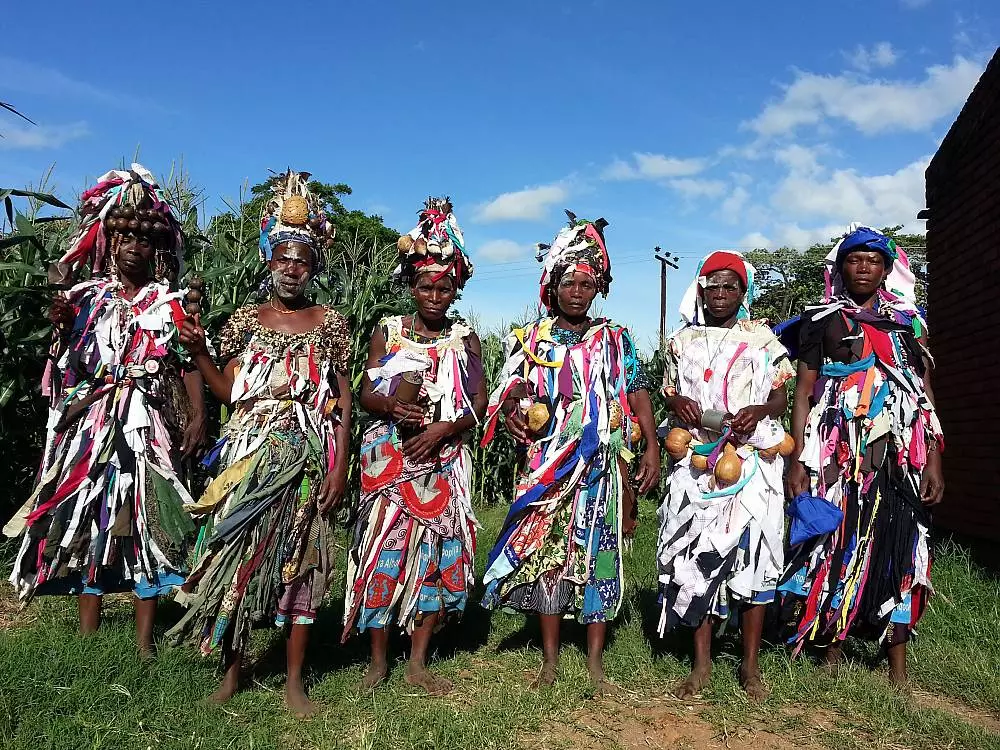
When fellow Tchopa practitioners had more fieldwork than they could manage, others helped. The UNESCO committee’s 2014 decision records detail the work of making drums and costumes and passing on the dance. Among the Lhomwe communities in southern Malawi described in the nomination, people who gathered to practise and perform also supported one another outside the dance circle.
Tchopa’s 2014 UNESCO inscription record describes how Lhomwe practitioners made drums and costumes, taught the dance and helped one another beyond it.
Why people gathered to dance
The account submitted by Malawi describes Tchopa being performed to celebrate good harvests and successful hunting trips. It also records performances that accompanied offerings to ancestral spirits after calamities such as drought or disease outbreaks. UNESCO inscribed Tchopa as a “sacrificial dance” in 2014. That title names one reason for performing it, but the account also documents occasions for celebration. The committee’s decision describes twenty to thirty dancers moving in a circle and crossing one another’s paths, accompanied by singing and drumming. A photograph in the nomination materials shows one way the circle was marked. According to its caption, the dancers followed a line of maize flour that was also part of the sacrificial offering. In that performance, the flour marked a route and formed part of the offering. The caption documents both uses for that particular circle.
What one dancer wore and carried
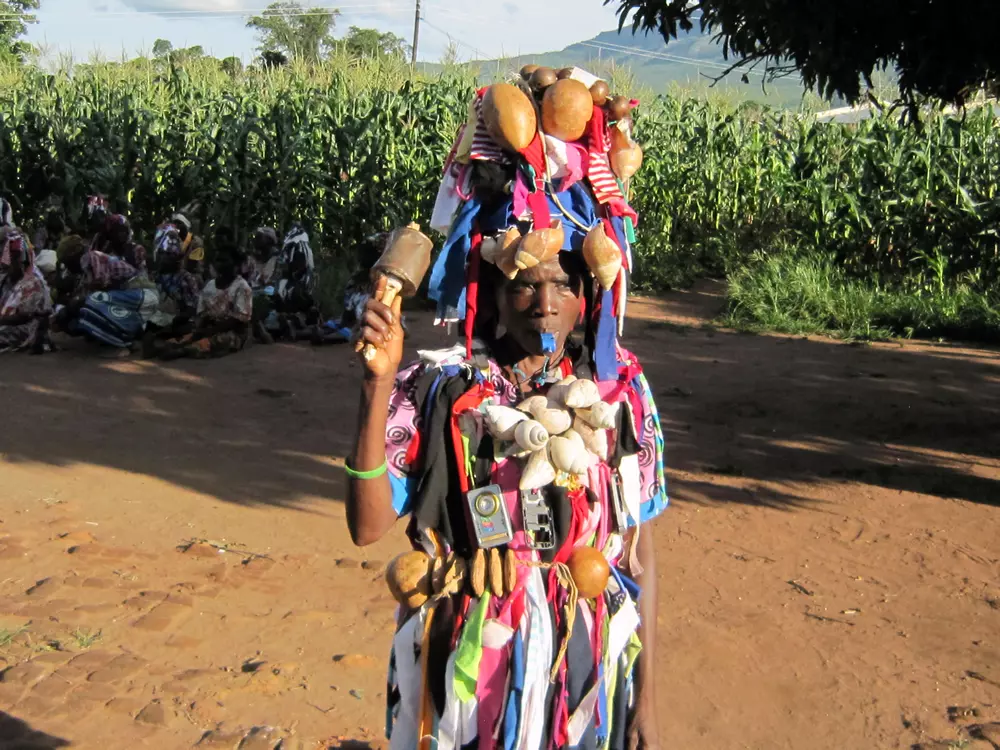
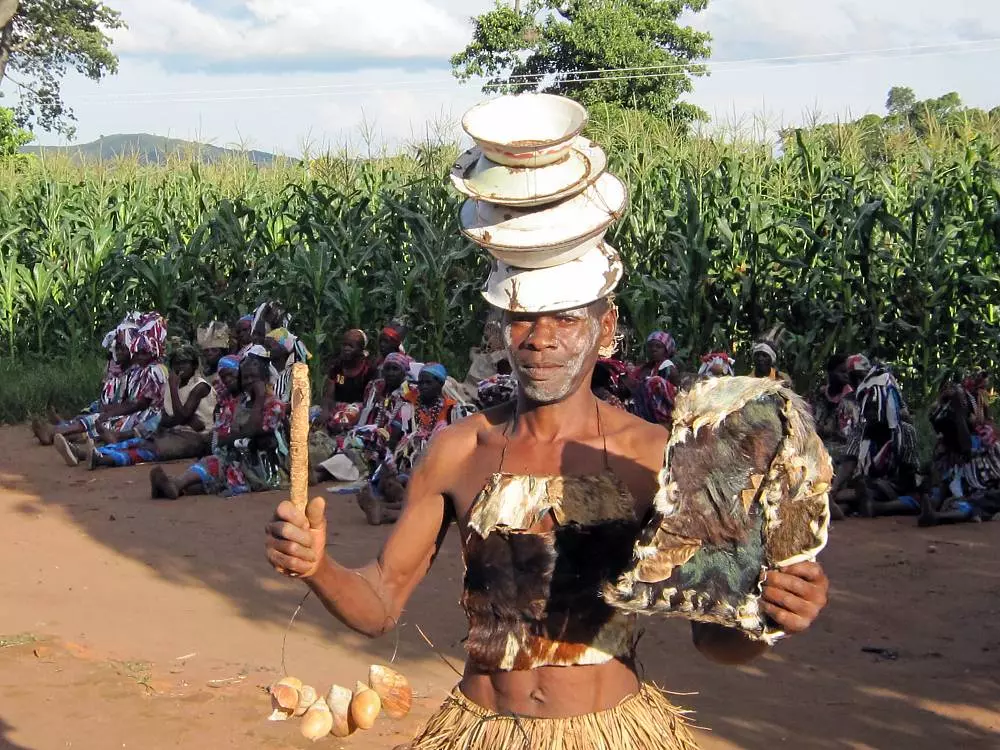
One nomination photograph shows a man whose clothing the caption identifies as headgear, a reed skirt and leg shakers. He also carries a pack that the caption says contains food and other essentials. The caption interprets the pack as a sign that he was ready for whatever might arise. That explanation belongs to the photographed example: it does not establish that all Tchopa dancers carried the same things or that every pack conveyed the same meaning.
Who made the performance possible
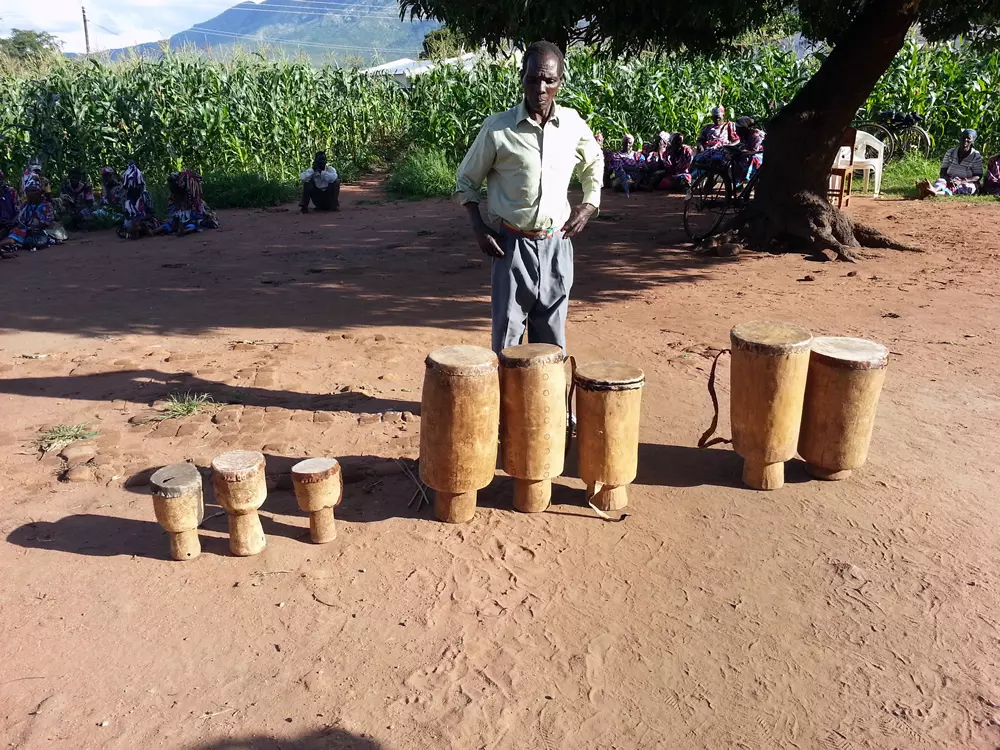
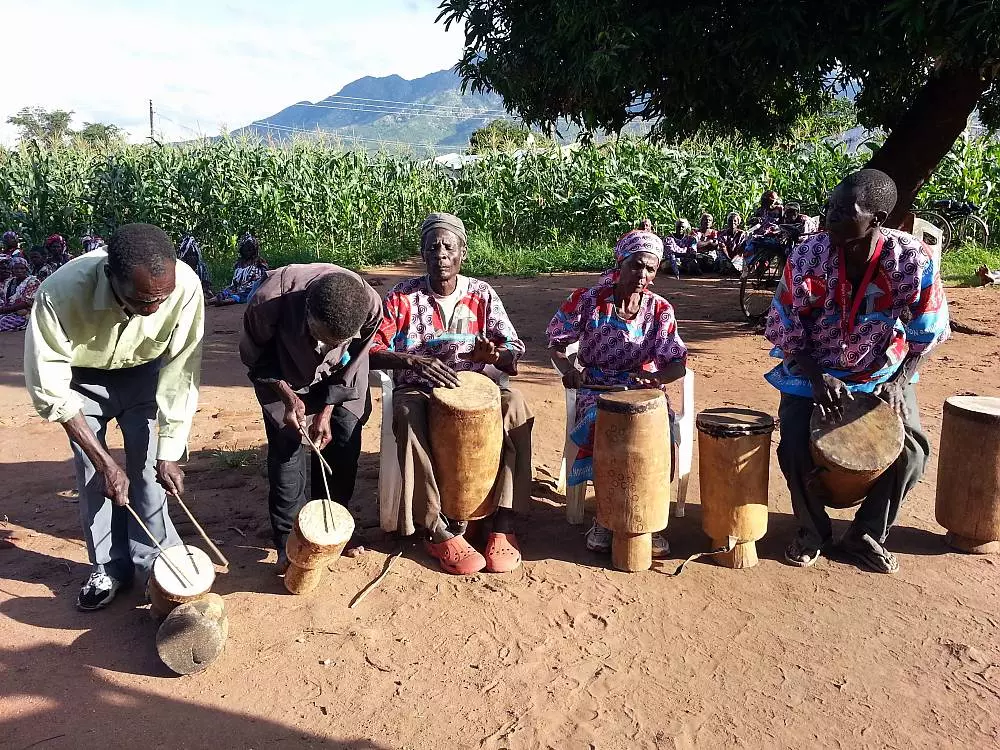
The committee’s decision names several kinds of work: making drums and dance costumes, drumming, whistling and dancing. It does not assign each person to a single role. The nomination photographs identify three drum sizes: Mbera, the smallest; Khwinyale, the middle-sized drum; and Namalema, the largest. Naming the instruments alongside the people who made them helps show what had to be prepared before the dancers could take their places. The inscription record identifies older Lhomwe women and men as the principal custodians of Tchopa and notes that children were increasingly taking part. It describes practice sessions and occasional performances as opportunities to pass on knowledge and skills. Learning did not happen only in preparation for a performance; the record identifies performance as one way people learned.
The work beyond the circle
Alongside fieldwork, the committee’s decision records practitioners supporting one another through illness and bereavement. These are concrete examples of what the decision calls social cohesion. The record does not say that dancing caused people to help one another. It shows that the relationships it describes were not confined to rehearsals or performances.
The Omiren Argument
A photograph can show what a dancer wore or how a circle was marked. The inscription record tells us something a photograph cannot: who helped make the dance possible, how people learned it and what help they gave one another beyond it. Making a drum and helping with fieldwork are different kinds of labour. Keeping them distinct gives a fuller picture of the people documented in the nomination, without asking an object to stand for their relationships or a single practice to stand for Malawi as a whole.
Also Read:
- The Complete Guide to Afro-Venezuelan Barlovento Dress and the Tambor Festival Wardrobe
- Afro-Peruvian Women’s Chincha Dress: Clothing, Dance, and Cultural Memory
- The Skirt That Sounds Like Celebration: Shangaan-Tsonga Dress and the Xibelani’s Unfinished Global Moment
- Dressed by the Dead: The Ndau Dress Tradition Fashion Has No Language For
Frequently Asked Questions
What is Tchopa?
Tchopa is a performing art practised among Lhomwe communities in southern Malawi. According to the account submitted by Malawi, it is performed to celebrate good harvests and successful hunting trips, and alongside offerings to ancestral spirits after calamities such as drought or disease outbreaks. UNESCO inscribed it in 2014 as a “sacrificial dance”, though the account documents occasions for celebration too.
How many dancers take part, and how is the circle marked?
The committee’s decision describes twenty to thirty dancers moving in a circle and crossing one another’s paths, accompanied by singing and drumming. One nomination photograph caption says the dancers followed a line of maize flour that was also part of the sacrificial offering. The caption documents both uses for that particular circle.
Who made the performance possible?
The committee’s decision names makers of drums and dance costumes, drummers, whistlers and dancers, and does not assign each person to a single role. Nomination photographs identify three drums by size: Mbera, the smallest; Khwinyale, the middle-sized drum; and Namalema, the largest. Older Lhomwe women and men are identified as the principal custodians.
Does the record show that dancing caused people to help one another?
No. The committee’s decision records practitioners supporting one another through illness and bereavement, and members helping others who had more fieldwork than they could manage. It calls these examples of social cohesion. The record does not say that dancing caused that help; it shows the relationships were not confined to rehearsals or performances.