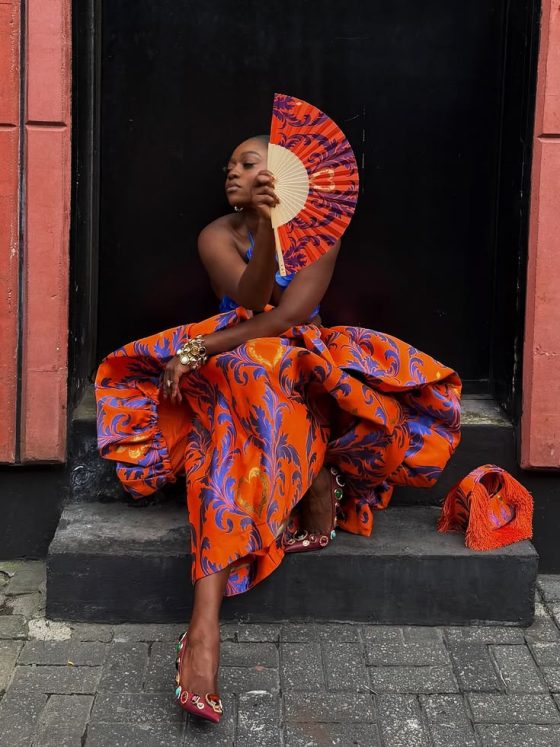
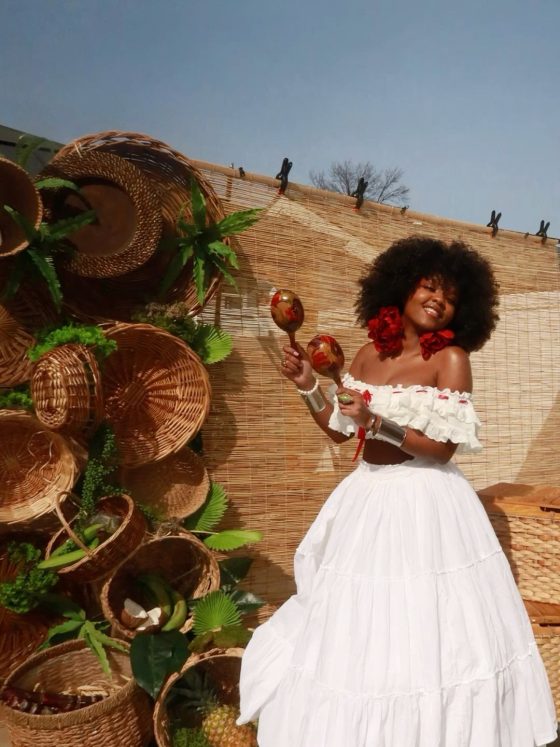
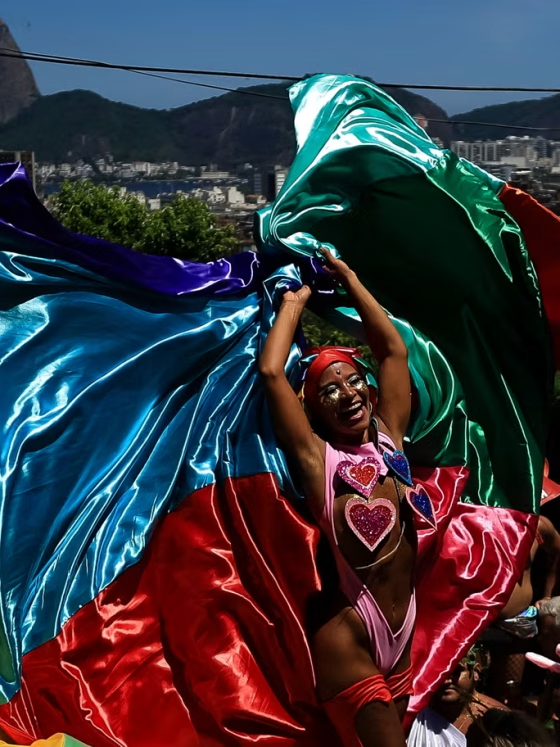
The African fashion market is worth 31 billion dollars. The African diaspora dress traditions built across the Americas over four centuries represent a parallel archive of equal complexity and significantly less documentation. In Chincha Province on Peru’s south-central coast, particularly in El Carmen, Afro-Peruvian women’s dress traditions have been maintained and transmitted through performance — through festejo, alcatraz, the Hatajo de Pallitas, and the broader ceremonial life of communities whose African-descendant identity has been central to coastal Peruvian culture for three centuries. These garments are not costumes for performance. They are performance technology. The skirt that swings with a cajón beat is not decoration. It is rhythm made visible. The paper tail in alcatraz is not a prop. It is the game itself, attached to clothing. The Pallita’s veil is not theatre. It is devotion, worn in public. Reading these garments correctly requires understanding what each one is built to do.
As Omiren Styles’ full documentation of Afro-Peruvian coastal textile traditions confirms, the dress culture of Chincha and El Carmen is not a regional folk variant of Peruvian national costume. It is a distinct tradition built from cotton rather than wool, from performance logic rather than Andean weaving cosmology, and from the African-descendant communities whose cultural knowledge produced the festejo, the cajón, and the specific dress vocabulary that gives both their visual dimension. That tradition deserves the same quality of editorial attention given to any dress culture of equivalent depth.
Afro-Peruvian women’s Chincha dress is performance technology, not costume. From festejo skirts to Pallitas veils, each garment is built for rhythm, devotion, or play.
Chincha and El Carmen: Why Place Matters
Chincha is located on Peru’s south-central coast and is considered the cradle of Afro-Peruvian culture. El Carmen, a district within Chincha, is the community most closely associated with the concentrated transmission of Afro-Peruvian performance traditions across generations: the cajón drum, the festejo dance, the atajo de negritos, and the specific dress codes that accompany each. The Ballumbrosio family, whose patriarch Amador Ballumbrosio was a master cajón player and cultural guardian, has maintained these practices in El Carmen for generations, and the family home remains a site of active cultural transmission.
This geographic specificity matters because Afro-Peruvian women’s dress in Chincha is not a fixed national uniform. It developed through work, climate, Catholic devotion, plantation history, and performance, and it can look significantly different depending on the occasion, the dance tradition, and the community context. The clothing worn for a staged festejo follows different codes from the dress used in the Hatajo de Pallitas Christmas devotion or the Epiphany comparsa. These are related traditions connected by shared cultural inheritance, not a single interchangeable outfit.
These garments are not costumes for performance. They are performance technology. The skirt that swings with a cajón beat is not decoration. It is rhythm made visible.
Festejo Dress and the Performance Silhouette
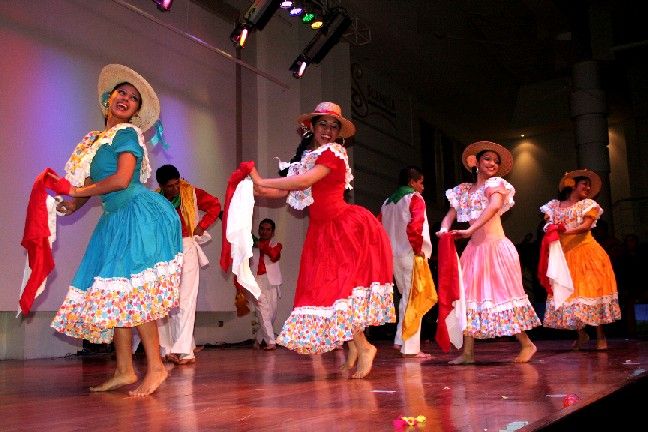
Festejo is the foundational dance of Afro-Peruvian culture, originating in the coastal communities of Cañete and Chincha and built around the cajón, Creole guitar, rapid hip movements, and footwork rooted in Bantu-influenced dance traditions. The dress worn for festejo is not incidental to the performance. It is part of the performance’s logic, and its most visible feature is the skirt.
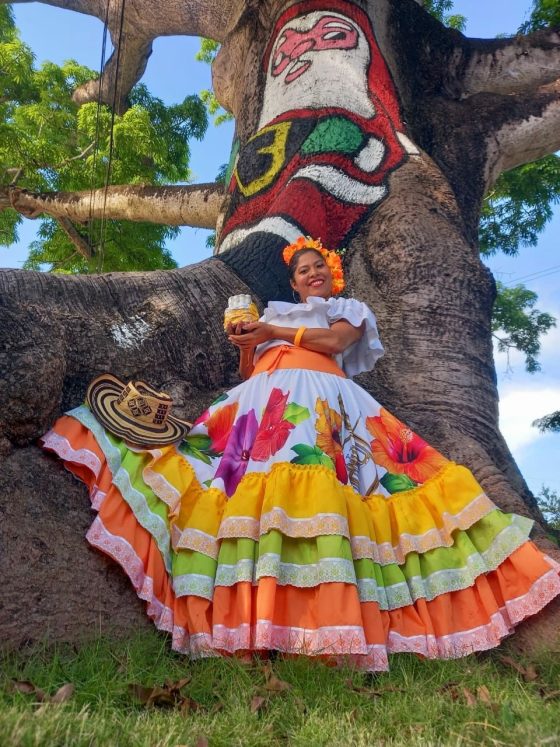
The skirt gives the dancer’s lower body a visual response to rhythm. It swings, lifts, circles, and catches air with each change of direction, making the choreography legible to an audience through fabric as well as movement. In a dance culture built around percussion, call-and-response energy, and hip-driven physicality, the garment becomes an extension of the performance rather than its covering. A wide skirt may appear excessive when the dancer stands still. It becomes exactly correct once the dancer moves.
Headscarves and fitted tops complete the performance silhouette. The headscarf frames the face, secures hair during active movement, and creates visual definition within a group of performers. The fitted top keeps the upper body’s movements readable while allowing the skirt’s swing to dominate the lower register of the performance space. The combination is not arbitrary. It is the result of generations of adjustment between what the dance requires and what the clothing can provide.
The Valentina Style: Why It Is Not Simply About Revealing Clothing
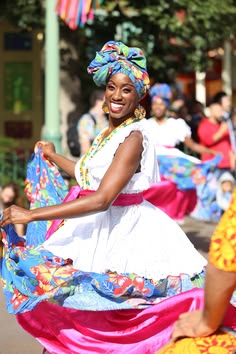
From the mid-1970s, a women’s festejo performance look that some musicians called the Valentina style became increasingly visible. The style combined colourful skirts with bras or fitted crop tops, allowing greater freedom of hip movement while giving the dancer a bold stage presence. This development is frequently described in terms of the clothing becoming more revealing. That description misses what the style is actually doing.
The Valentina style belongs to a specific performance logic. It foregrounds motion: the shoulders, torso, hips, and skirt all remain visible as active instruments of the dance. The look gives dancers freedom to move with force while presenting Afro-Peruvian womanhood as confident, physically capable, and central to the performance rather than decorative within it. It makes the body’s relationship to rhythm legible. This is not a costume that happens to allow movement. It is a performance solution that resolved a specific choreographic problem: how to make hip-driven, percussion-led dance visible and powerful in a stage context.
The Valentina style was a deliberate aesthetic development by performers who understood that how you dress for the dance is part of what the dance communicates. The Omiren Styles documentation of Afro-Peruvian textile traditions establishes that the festejo tradition’s dress evolved alongside the broader cultural politics of how Afro-Peruvian culture was presented and understood, both within Peru and internationally. The valentina style is part of that evolution.
Alcatraz: When the Dress Is the Game
Alcatraz is an Afro-Peruvian dance tradition associated with flirtation, humour, and quick movement in which a dancer tucks a piece of cloth or paper into their waistband and performs. At the same time, a partner attempts to light it with a candle. The dancer’s skill is in the hip movements that keep the flame away from the paper without losing the performance’s theatrical tension. As documentation of Afro-Peruvian dance traditions in Chincha confirms, the dance is a community tradition in which the clothing is not merely worn for the performance — it is the performance’s central mechanism.
The dress for alcatraz must allow maximum hip mobility while carrying the paper or cloth element whose preservation or destruction is the point of the dance. This practical requirement is inseparable from the performance. A skirt that restricts hip movement fails the dance. A fitted design that makes the attached element difficult to reach makes the game too easy. The clothing has to solve the choreographic problem while sustaining the theatrical tension. Alcatraz is the clearest example in Afro-Peruvian dress culture of what is true across all of these traditions: the garment is designed to do specific work, and its design cannot be understood without understanding the work it must do.
The Hatajo de Pallitas: Devotional Dress and the UNESCO Recognition
The Hatajo de Negritos and the Hatajo de Pallitas are complementary Christmas and Epiphany traditions from Peru’s south-central coast. As UNESCO’s 2019 inscription on the Representative List of Intangible Cultural Heritage confirms, these traditions combine African-descendant rhythmic inheritance, Andean values, and Catholic devotion into a form of intergenerational community practice that the Peruvian state and international heritage institutions have recognised as significant.
The Pallitas are women performers who dance and sing to guitar or violin accompaniment in homage to the Virgin of Carmen and the Christ child. Their dress is devotional rather than theatrical: light-coloured or bridal-style gowns, veils, and azucena staffs carried in procession. This is a different visual register from the festejo’s colourful skirts and the valentina style’s bold stage presence. The Pallitas’ dress communicates collective devotion, communal identity, and religious affiliation rather than individual physical virtuosity.
The distinction is the point. Afro-Peruvian women’s Chincha dress is not one tradition with one visual code. It is a set of related dress practices, each built for a different kind of cultural work. The festejo skirt is built for rhythm. The alcatraz outfit is built for the game. The Pallitas’ gown is built for devotion. Understanding the dress traditions requires understanding what each one is for, not treating them as variations on a single folkloric costume.
Epiphany Comparsas and the Dress of Belonging
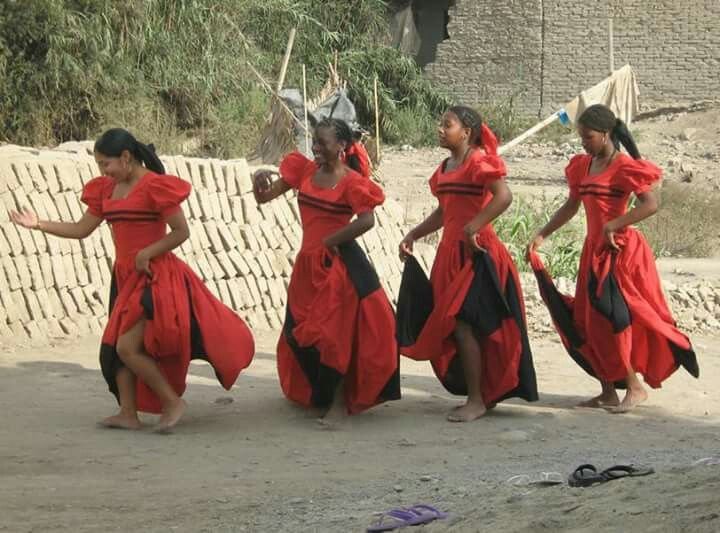
At Epiphany celebrations in Chincha, comparsas wear coordinated dress that signals group membership, devotional affiliation, and collective participation. As documentation of Chincha’s festival traditions records, groups can be recognised by embroidered shirts, crossed sashes, ribbons, and devotional imagery associated with the Virgin of Carmen. The dress does not express individual identity. It expresses collective belonging: which group, which devotion, which community a wearer is part of.
This dimension of Chincha dress demonstrates another function that is easily missed when garments are read purely as aesthetic objects. The comparsa outfit is social infrastructure. It makes the group visible as a group, distinguishes one comparsa from another, and positions each participant within the collective practice of the celebration. The colour, the embroidery, and the accessories are chosen to perform this social function, not primarily to create visual interest for outside observers.
Colour as Cultural Assertion
Bright red, blue, white, black, polka dots, and bold prints create immediate visual impact across Afro-Peruvian performance dress in Chincha. This colour vocabulary serves a function that goes beyond aesthetic preference. Afro-Peruvian communities have been marginalised in official accounts of Peru, which have historically foregrounded Andean Indigenous heritage while giving substantially less attention to African-descendant histories and cultural forms.
In this context, highly visible dress becomes a form of cultural assertion. The message communicated by Chincha performance dress is not simply that Afro-Peruvian culture is colourful. It is that Afro-Peruvian culture is visible, embodied, public, and carried by communities who have the authority to define how it appears. As Omiren Styles has documented in the parallel question of diaspora fashion and cultural identity, the dress traditions that African-descended communities in the Americas have maintained since the slave trade carry a political dimension that is inseparable from their aesthetic one. Visibility is not vanity. It is a survival strategy, made public.
Dress as Transmission
Afro-Peruvian Chincha dress holds cultural memory because it is taught through use rather than archived in text. A young performer learning to tie a headscarf, manage a full festejo skirt, or position the alcatraz paper correctly is simultaneously learning rhythm, choreography, social context, and community history. The clothing is the curriculum made physical.
That transmission is particularly important in El Carmen, where performance traditions have been sustained through families, cultural centres, local celebrations, and the active practice of communities that understand their role as custodians of a specific cultural inheritance. As Peru’s cultural heritage ministry documentation of the Hatajos confirms, these traditions were inscribed as Peruvian Intangible Cultural Heritage of Humanity in 2019, recognition that places them in the same category as the most significant living traditions anywhere in the world.
This is why the question of authenticity requires careful handling in relation to contemporary Chincha dress. A modern performance costume may use synthetic fabric, sequins, or commercially produced prints rather than the materials of an earlier generation. That does not automatically make it less authentic. Tradition survives because communities continue to wear, adapt, teach, and perform it. The knowledge of what the dress is for matters more than the precise material from which any particular version is made.
The Omiren Argument
The African fashion market is worth 31 billion dollars. The Afro-Peruvian dress traditions of Chincha represent a case study in what fashion editorial consistently fails to document when it confronts diaspora dress from communities without significant commercial power in global fashion markets. Chincha’s festejo skirts, alcatraz outfits, Pallitas gowns, and comparsa shirts are routinely described as folk costume, as heritage attire, as the visual dimension of dance, as if the garments were secondary to the performance they clothe. This reading gets the relationship exactly backwards.
The festejo skirt is not worn during the festejo. It performs during the festejo. The alcatraz outfit is not dressed for the game. It is the game’s mechanism. The Pallitas’ gown is not symbolic of devotion. It is devotion, worn publicly in procession. Each garment in the Chincha dress system is built to do specific cultural work. That work is as sophisticated, as precisely calibrated, and as historically grounded as the work done by any garment that has received serious fashion documentation. The difference is not in the quality of the tradition. It is in whose communities produced it, and in how thoroughly those communities have been marginalised from the channels through which global fashion attention is distributed.
Omiren Styles documents Afro-Peruvian women’s Chincha dress on the same terms it would document any dress tradition of equivalent depth. Not as folk heritage adjacent to fashion. As fashion: performance-engineered, community-transmitted, and carrying the cultural authority of three centuries of African-descendant coastal Peruvian life.
ALSO READ:
- Colombian Designers Bringing Pacific Coast Heritage to the Global Stage
- Afro-Cuban Designers Influencing Fashion Culture Within and Beyond the Island
- Maasai Beadwork: Meaning, Symbolism, and the Language of Identity
- Dancehall Fashion: Jamaica’s Most Influential Export That Fashion Media Refuses to Credit
Frequently Asked Questions
What do Afro-Peruvian women wear in Chincha?
The dress varies significantly by occasion and dance tradition. For festejo and alcatraz performance, women commonly wear colourful full skirts, fitted tops or bras, and headscarves. The valentina style, visible from the 1970s, uses colourful skirts and bras designed for maximum hip freedom and stage presence. For the Hatajo de Pallitas Christmas tradition, women wear light-coloured or bridal-style gowns and veils, carrying azucena staffs in a devotional procession. Epiphany comparsa dress uses coordinated embroidered shirts, sashes, and devotional imagery. These are distinct dress codes, not variations on one costume.
What dances are connected to Chincha dress?
Chincha dress traditions are connected to festejo, alcatraz, zapateo, the Hatajo de Negritos, and the Hatajo de Pallitas. The UNESCO inscription of the Hatajos in 2019 placed these traditions among the world’s most significant intangible cultural heritage. Each dance has its own dress logic built around different choreographic and ceremonial requirements.
Why is the skirt so important in festejo performance dress?
The festejo skirt makes movement visible. Its volume and swing give the dancer’s lower body a visual response to rhythm: it circles, lifts, and catches air with each change of direction, making the choreography legible to the audience through fabric as much as through footwork. In a dance built around cajón percussion and hip-driven movement, the skirt is not decoration. It is the garment’s work.
What is the valentina style?
The Valentina style is a women’s festejo performance look that became increasingly prominent from the mid-1970s. It combines colourful skirts with bras or fitted crop tops designed to allow strong hip movement and bold stage presence. It is frequently described as revealing clothing, but the more accurate description is performance-specific design: the style makes the body’s relationship to rhythm legible while presenting Afro-Peruvian womanhood as confident and physically capable. It was a deliberate aesthetic development, not simply a fashion of the era.
What is the UNESCO significance of the Hatajo de Pallitas?
UNESCO inscribed the Hatajo de Negritos and the Hatajo de Pallitas from Peru’s south-central coast on its Representative List of Intangible Cultural Heritage of Humanity in 2019. The Pallitas are women performers who dance and sing in homage to the Virgin of Carmen and the Christ child during Christmas celebrations, wearing devotional gowns and veils. The UNESCO inscription recognises these traditions as combining African-descendant rhythmic inheritance, Andean values, and Catholic devotion in a form of intergenerational community practice of worldwide significance.
Explore More
Read the full Diaspora > Afro-Latino Identity and Culture > Ceremony and Ritual sections for Omiren Styles’ documentation of African-descendant dress traditions across the Americas, their performance logics, and the cultural authority they carry.