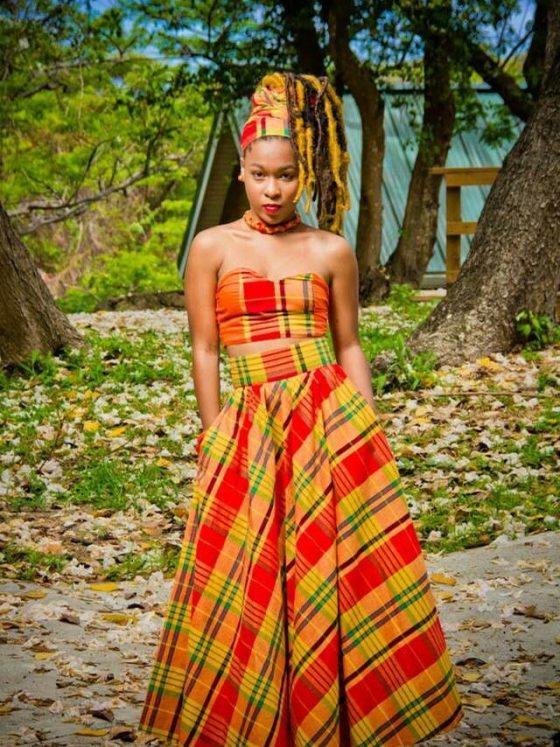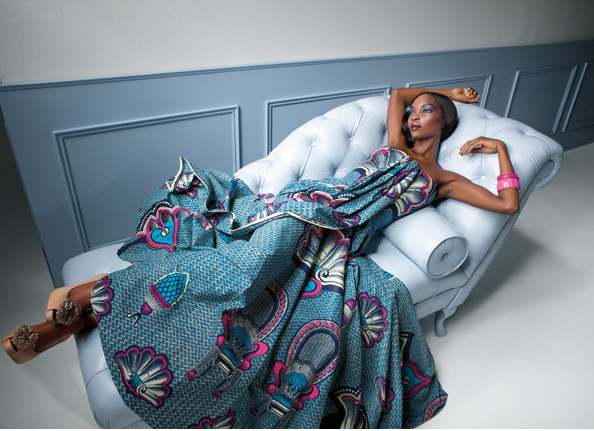
A Vlisco pattern in the Victoria and Albert Museum’s account of African wax print has a factory reference, VL03686.024, and two names. Santana recalls Madame Santa Anna Nelly, a Togolese textile trader. Darling, Don’t Turn Your Back on Me reads like one person addressing another. The reference number identifies the pattern; the two names tell us what a number cannot. One connects the print to a woman in the trade. The other gives people a phrase by which to recognise and talk about it.
The V&A’s account of wax print in the African diaspora says Nelly “secured exclusive rights over this rare pattern”. It does not reproduce the agreement or explain what those rights covered. There is enough evidence to name Nelly and recognise that her relationship to the print involved exclusivity. There is not enough to say she owned the design or could authorise someone else to reproduce it. The distinction is why we start with Santana: once the rights, the name, and the physical cloth are separated, there is more to say about each.
A Vlisco print named for Togolese trader Madame Santa Anna Nelly shows what the record can tell us about exclusivity, cloth names and ownership.
Ankara is not a factory name.
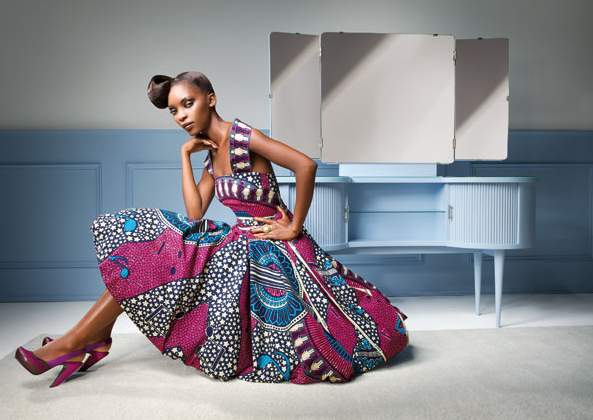
Ankara can identify a category of printed cloth without identifying the factory that produced it or the method used to make it. Vlisco identifies a particular manufacturer and brand. African textiles is broader than either term. The V&A’s guide to cloth in Africa, the fashion exhibition, describes industrial processes that used a resin resist, as well as later one-sided printing that did not. The label on its own is not proof that a particular process was used.
The technical link to Indonesian batik is specific. European manufacturers sought to reproduce effects achieved through batik, in which a resist keeps dye from selected areas of cloth. The V&A describes an industrial method that used rollers to apply resin to cotton. It produced related visual effects through different means; the same method did not move to another country. The British Museum also documents wax-print production in Ghana and elsewhere in Africa, which is another reason not to read “Dutch wax” as an automatic statement of where an individual cloth was made. Omiren’s African Textile Glossary is the place to look up the terminology; Santana is a case for asking what the name and manufacturing record leave out.
Santana: What the record establishes about Madame Santa Anna, Nelly
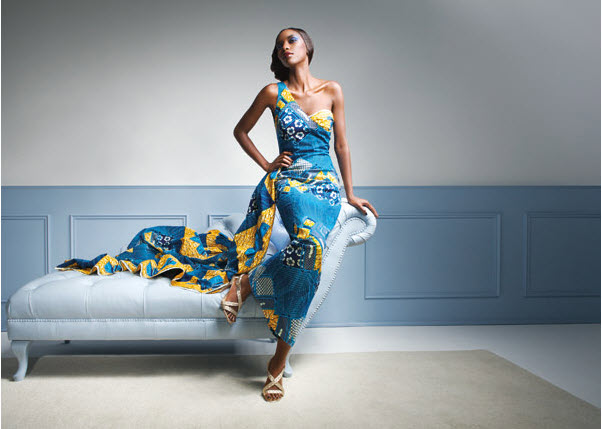
The V&A places Nelly among the Nana Benz, the Togolese women traders who connected textile manufacturers with buyers through wholesale and retail networks. In the museum’s account, Santana takes its name from her. That gives the reader something a record of manufacture would not: the identity of a trader associated with a specific pattern, rather than a general statement that women were important to the wax-print trade.
The exclusivity is worth keeping in the story at exactly the level the evidence supports. The museum links it to the pattern, but its published account does not give the scope, duration or territory of the arrangement. It does not specify whether the rights concerned distribution, reproduction or some other use. Describing them as “exclusive selling rights” would resolve a question the source leaves open. Describing Nelly as the design’s legal owner would go further still. Neither inference is needed to establish that she had a documented commercial relationship with Santana beyond simply buying a length of cloth.
The second name, Darling, Don’t Turn Your Back on Me, does different work. On its face, it sounds like a request or reproach. That is a reading of the words, not a reconstruction of how the name arose. The V&A’s account records the name without establishing who coined it or what a particular wearer intended by choosing the cloth. Both names are worth retaining because they are not interchangeable evidence: one preserves a connection to Nelly; the other gives the print a way of being recognised that has nothing to do with reciting a product number.
Speed Bird: What changes when the name changes?
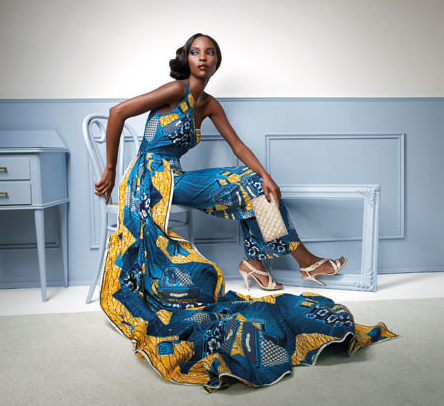
The V&A records another Vlisco design, reference VL0H524.061, as Speed Bird. In Togo, it is also known as Air Afrique; in Ghana, the museum records Rich Today, Poor Tomorrow. The first name points to an airline. The second makes a statement about how quickly prosperity can change. The print doesn’t have to change for the name’s focus to shift. A buyer asking for Air Afrique and one asking for Rich Today, Poor Tomorrow could be referring to the same design while describing it in quite different terms.
Those names do not tell us who made the cloth, who coined either expression or how widely each name was used. They do establish, however, that the manufacturer’s name for the design was not the only one in circulation. This is where Speed Bird differs from Santana. The V&A uses the former to show a pattern known by different names in different markets. Its account of the latter attaches a name to a particular trader and reports an arrangement involving exclusivity. Treating every market name as evidence of commercial control would obscure the difference between the two cases.
The ABC kaba: What the purchaser did with the cloth
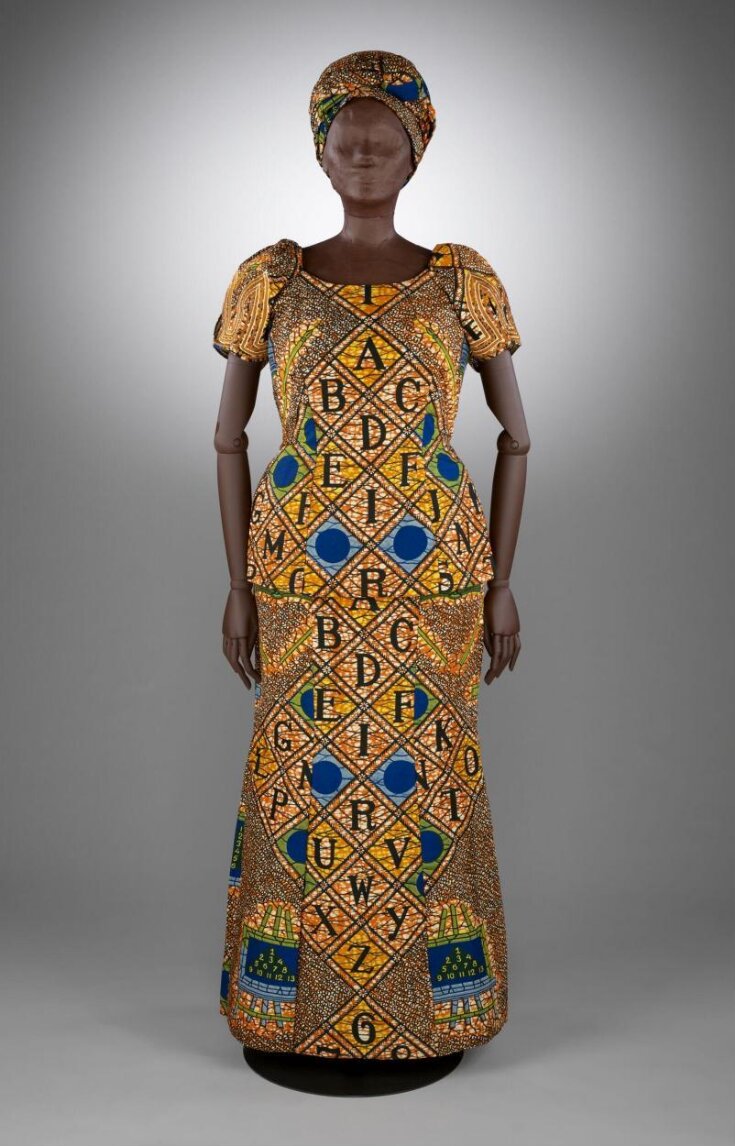
The V&A’s ABC kaba ensemble, object T.36-2022, gives the reader something different again: an outfit, not just a pattern. The museum records that the cotton was manufactured in the Netherlands and that the wearer purchased it in Ghana. The wearer made it into an ensemble in the 1990s. The museum traces the alphabet design to at least the 1920s and associates it with the value of education. That history belongs to the pattern; the 1990s date belongs to the garment. One should not be substituted for the other.
The record lets us name an action the wearer took: she bought the cloth. It also traces what happened next: the cloth was made into something to wear. The record does not tell us that she chose the alphabet because she wanted her outfit to make a statement about education. The education association is part of the museum’s interpretation of the design, not evidence of her motive. The garment nevertheless makes her role more visible than a record of the textile alone would. A factory could produce the alphabet cloth; that does not explain this purchase or account for this particular outfit.
Read alongside Santana and Speed Bird, the ensemble brings the ownership question down to a scale where it can be answered responsibly. Nelly’s case is about what a museum records of a trader’s commercial arrangement. Speedbird is about how a pattern was named in different markets. The ABC kaba is about a cloth’s manufacture, purchase and transformation into a garment. None of these examples settles the legal status of Ankara as a category. Their value is that they make specific contributions identifiable.
The Omiren Argument
The V&A’s account of Santana lets us name a trader where a factory reference alone would leave her out. It records Madame Santa Anna Nelly’s exclusive rights over the pattern without specifying their scope. The other name, Darling, Don’t Turn Your Back on Me, establishes something different: the print could be recognised and discussed on terms that a product number does not capture. Neither finding has to be inflated into ownership of the design for Nelly’s role (or the life of the print beyond the factory) to matter.
Fashion coverage often asks where a textile was made and treats the answer as the decisive fact about its identity. Manufacture matters, but so do the actions a manufacturing record cannot describe: a trader securing a commercial arrangement, a pattern acquiring a name in a market, or a wearer buying cloth and having it made into a dress. They are not competing answers to the same question. They are parts of the history that become visible when we stop asking one word (ownership) to account for all of them.
Also Read:
- Nana Benz of Lomé: How Togolese Women Traders Built West Africa’s Wax Print Empire
- African Print Made in Kyoto: The Textile Trade Behind the Archive
- Arewa Textiles: The Nigerian Factory Behind a Japan–Africa Textile History
- Wax Prints and Beyond: Fabrics Defining Ivorian Fashion
Frequently Asked Questions
Is Ankara the same as Vlisco?
No. Ankara is a name used for a category of printed cloth. Vlisco is a manufacturer and brand. The word Ankara does not, by itself, identify a factory, country of manufacture or printing method. The V&A’s Santana example shows the difference: the print has a Vlisco factory reference and two names, one recalling a trader.
What does the V&A say about Madame Santa Anna and Nelly’s rights over Santana?
The V&A says Nelly secured exclusive rights over the pattern. Its public account does not set out the terms, so it does not establish whether those rights covered distribution, reproduction or another use. It does not establish that she owned the design.
Why can one wax print have several names?
Different names can recognise a design as it circulates. The V&A records the same Vlisco design as Speed Bird, Air Afrique in Togo and Rich Today, Poor Tomorrow in Ghana. Those names tell us something about how the print was known, not where it was manufactured or who held legal rights to it.
Is industrial wax print the same as Indonesian batik?
No. Indonesian batik influenced industrial wax printing, but the V&A distinguishes hand-applied wax from industrial methods that used rollers and a resin resist. The techniques are related historically, not interchangeable. The British Museum also documents wax-print production in Ghana and elsewhere in Africa, so “Dutch wax” is not an automatic statement of where a cloth was made.