Menu
  • CULTURE
    • Style & Identity
    • Ceremony & Ritual
    • Art & Music
    • Cultural Inspirations
    • Black Culture
    • Heritage Stories
  • DIASPORA
    • Diaspora Voices
    • Diaspora Connects
    • UK Scene
    • US Scene
    • Caribbean Diaspora
    • Afro-Latino Identity
    • Migration & Identity
  • FASHION
    • Trends
    • Street Style
    • Runway
    • Sustainable Fashion
    • Tailoring
    • Luxury Fashion
    • Designers & Brands
  • BEAUTY
    • Skincare
    • Makeup
    • Hair & Hairstyle
    • Fragrance
    • Beauty Traditions
    • Natural Beauty
  • Style
    • Women’s Style
    • Evening Glam
    • Workwear & Professional
    • Streetwear for Women
    • Accessories & Bags
    • Bridal
    • Men’s Style
    • Grooming Traditions
    • Traditional & Heritage
    • The Modern African Man
    • Menswear Designers
  • INDUSTRY
    • Editorial Intelligence
    • Market Trends
    • Brand Strategy
    • Retail & Commerce
    • Partnerships
    • Reports
    • Omiren Style Index
    • Insights
    • Founders Profile
  • NEWS
    • Cover Stories
    • Fashion Weeks
    • Opinion & Commentary
    • Style Icons
    • Rising Stars
    • Press Release
Omiren Magazine Partner With Us Advertise Style Index
Subscribe
OMIREN STYLES OMIREN STYLES

Fashion · Culture · Identity

OMIREN STYLES OMIREN STYLES OMIREN STYLES OMIREN STYLES
  • CULTURE
    • Style & Identity
    • Ceremony & Ritual
    • Art & Music
    • Cultural Inspirations
    • Black Culture
    • Heritage Stories
  • DIASPORA
    • Diaspora Voices
    • Diaspora Connects
    • UK Scene
    • US Scene
    • Caribbean Diaspora
    • Afro-Latino Identity
    • Migration & Identity
  • FASHION
    • Trends
    • Street Style
    • Runway
    • Sustainable Fashion
    • Tailoring
    • Luxury Fashion
    • Designers & Brands
  • BEAUTY
    • Skincare
    • Makeup
    • Hair & Hairstyle
    • Fragrance
    • Beauty Traditions
    • Natural Beauty
  • Style
    • Women’s Style
    • Evening Glam
    • Workwear & Professional
    • Streetwear for Women
    • Accessories & Bags
    • Bridal
    • Men’s Style
    • Grooming Traditions
    • Traditional & Heritage
    • The Modern African Man
    • Menswear Designers
  • INDUSTRY
    • Editorial Intelligence
    • Market Trends
    • Brand Strategy
    • Retail & Commerce
    • Partnerships
    • Reports
    • Omiren Style Index
    • Insights
    • Founders Profile
  • NEWS
    • Cover Stories
    • Fashion Weeks
    • Opinion & Commentary
    • Style Icons
    • Rising Stars
    • Press Release
  • Heritage Clothing

Botswana Men’s Beadwork: Wearing and Giving Beads

  • Rex Clarke
  • November 18, 2026
Botswana Men’s Beadwork: Wearing and Giving Beads
Photo: Magnific.
Total
0
Shares
0
0
0

In a 2012 article in Botswana Notes and Records, Robert K. Hitchcock reports that women, children and some men wore ostrich-eggshell jewellery in the San and Bakgalagadi settings he discusses. That puts men in the record without making the jewellery an exclusively male accessory. The study describes long necklaces wound several times around the neck and several strings worn together. It does not identify either arrangement as a sign of rank, marriage or age.

A Kalahari study and a Botswana necklace show what the record reveals about men wearing ostrich-eggshell beads and jewellery exchanged as gifts.

A necklace without a named wearer
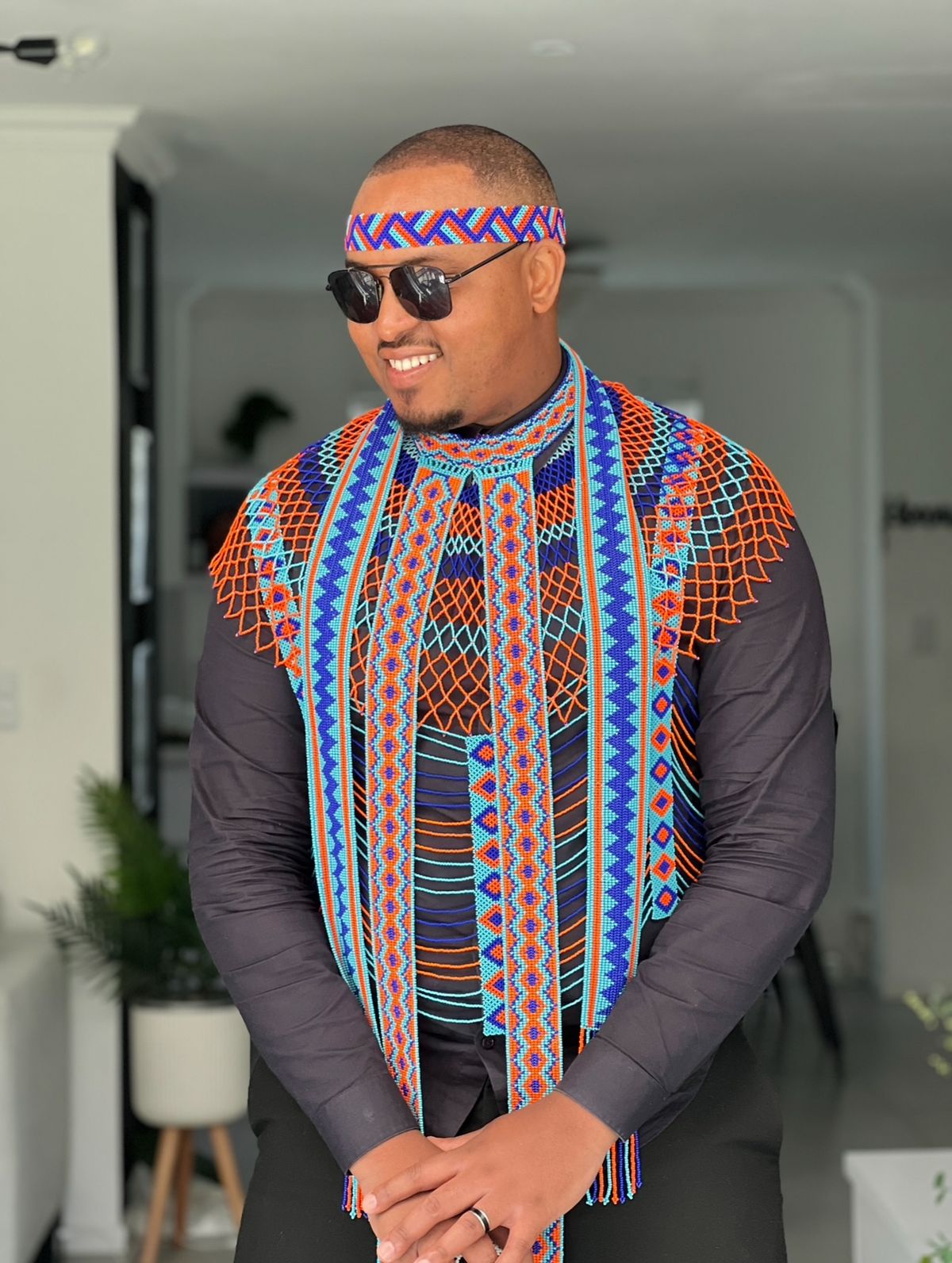
A necklace without a named wearer
Photo: Pinterest.

The Penn Museum catalogues necklace 31-2-182 as coming from Botswana and lists ostrich eggshell, cane and fibre among its materials. The entry identifies an object we can describe, but it does not name a wearer or record an occasion on which the necklace was worn. Hitchcock’s account establishes that some men wore jewellery made with ostrich-eggshell beads; it does not establish that a man wore this necklace.

What giving beads could do

The evidence becomes more specific when it turns from wearing jewellery to giving it. Drawing on anthropologist Polly Wiessner’s research, Hitchcock discusses hxaro, a practice of reciprocal gift-giving among Ju/’hoan San exchange partners. Necklaces and other jewellery could pass between partners as gifts, helping sustain relationships across distance. What mattered in this account was who gave the jewellery to whom and the relationship the gift helped maintain. The account does not describe the exchange as exclusively male or suggest that someone seeing the necklace on a wearer could identify that relationship from the beads alone.

The Omiren Argument
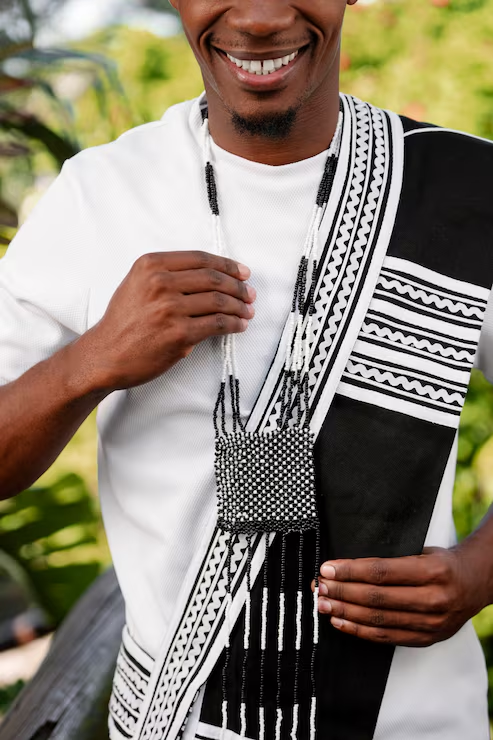
What giving beads could do
Photo: Magnific.

The record tells us two things worth keeping distinct. Men were among the documented wearers of ostrich-eggshell jewellery. And in the Ju/’hoan exchange practice Hitchcock discusses, jewellery could help people maintain ties over distance. The first finding gives men a place in the history of how these beads were worn. The second shows how a necklace could matter for what happened when it changed hands, not just for how it looked on the person who wore it.

Also Read:

  • Gold, Coral, and Cowrie: The Power Codes of African Ornament
  • The Silent Dialogue: Zulu Beadwork as an Archive of Intent 
  • Nama Traditional Dress Namibia: The Victorian Adoption, the Genocide, and the Dress Nobody Photographs 
  • Owambo Dress Traditions in Namibia: The Communities the Fashion Press Rarely Names

Frequently Asked Questions

What does the record say about men wearing ostrich-eggshell jewellery?

In a 2012 article in Botswana Notes and Records, Robert K. Hitchcock reports that women, children and some men wore ostrich-eggshell jewellery in the San and Bakgalagadi settings he discusses. That places men among the wearers without making the jewellery exclusively male. The study does not identify long necklaces or several strings worn together as signs of rank, marriage or age.

Can the Penn Museum necklace be linked to a male wearer?

No. The Penn Museum catalogues necklace 31-2-182 as coming from Botswana, with ostrich eggshell, cane and fibre among its materials. The entry does not name a wearer or record an occasion on which the necklace was worn. Hitchcock establishes that some men wore ostrich-eggshell jewellery, but not that a man wore this necklace.

What is hxaro, according to Hitchcock’s account?

Drawing on Polly Wiessner’s research, Hitchcock discusses hxaro as a practice of reciprocal gift-giving among Ju/’hoan San exchange partners. Necklaces and other jewellery could pass between partners as gifts, helping sustain relationships across distance. What mattered in the account was who gave the jewellery to whom and the relationship the gift helped maintain.

Could someone identify an exchange relationship from the beads alone?

The account does not suggest so. It does not describe the exchange as exclusively male, and it does not suggest that seeing a necklace on a wearer would let someone identify the relationship from the beads alone. Two findings stay distinct: men were among documented wearers, and jewellery could help people maintain ties over distance when it changed hands.

Post Views: 111
Total
0
Shares
Share 0
Tweet 0
Pin it 0
Related Topics
  • Bead Gifting
  • Botswana beadwork
  • cultural heritage
  • Men’s Adornment
Avatar photo
Rex Clarke

rexclarke@omirenstyles.com

You May Also Like
West African Dress as a Living Record: What Oral History Reveals About Cloth
View Post
  • Heritage Clothing

West African Dress as a Living Record: What Oral History Reveals About Cloth

  • Tobi Arowosegbe
  • November 17, 2026
Althea McNish’s Tomee: Designing Colour for Everyday Life
View Post
  • Heritage Clothing

Althea McNish’s Tomee: Designing Colour for Everyday Life

  • Rex Clarke
  • October 7, 2026
How Adire Cloth Holds Memory, Labour and Place
View Post
  • Heritage Clothing

How Adire Cloth Holds Memory, Labour and Place

  • Peace Vera
  • October 6, 2026
Can Textile Provenance Protect the People Who Make the Cloth?
View Post
  • Heritage Clothing

Can Textile Provenance Protect the People Who Make the Cloth?

  • Rex Clarke
  • October 6, 2026
A Textile Archive Can Be Corrected. Who Gets to Request the Change?
View Post
  • Heritage Clothing

A Textile Archive Can Be Corrected. Who Gets to Request the Change?

  • Adams Moses
  • October 2, 2026
The Maker-Credit Test: What a Heritage Fashion Product Page Should Clarify
View Post
  • Heritage Clothing

The Maker-Credit Test: What a Heritage Fashion Product Page Should Clarify

  • Peace Vera
  • September 30, 2026
How Is Ecuador’s Toquilla Weaving Described at the Point of Sale?
View Post
  • Heritage Clothing

How Is Ecuador’s Toquilla Weaving Described at the Point of Sale?

  • Tobi Arowosegbe
  • September 30, 2026
Urhobo Traditional Attire for Women: Clothing, Beads and Ceremony Style
View Post
  • Heritage Clothing

Urhobo Traditional Attire for Women: Clothing, Beads and Ceremony Style

  • Abubakar Umar
  • September 30, 2026
The Omiren Argument

African fashion and culture are not emerging. They are foundational. We document, interpret, and argue for the full cultural weight of African and diaspora dress. With precision. Without apology.

Omiren Styles Fashion · Culture · Identity

All 54 African Nations
Caribbean · Afro-Latin America
The Global Diaspora

Platform

  • About Omiren Styles
  • Our Vision
  • Our Mission
  • Editorial Pillars
  • Editorial Policy
  • The Omiren Collective
  • Campus Style Initiative
  • Sustainable Style
  • Social Impact & Advocacy
  • Investor Relations

Contribute

  • Write for Omiren Styles
  • Submit Creative Work
  • Join the Omiren Collective
  • Campus Initiative
Contact
contact@omirenstyles.com
Our Reach

Africa — All 54 Nations
Caribbean
Afro-Latin America
Global Diaspora

African fashion intelligence, in your inbox.

Editorial features, designer profiles, cultural commentary. No noise.

© 2026 Omiren Styles — Rex Clarke Global Ventures Limited. All rights reserved.
  • Privacy Policy
  • Editorial Policy
  • Terms of Use
  • Accessibility
Africa · Caribbean · Diaspora
The Omiren Argument

African fashion and culture are not emerging. They are foundational. We document, interpret, and argue for the full cultural weight of African and diaspora dress. With precision. Without apology.

Omiren Styles Fashion · Culture · Identity
  • About Omiren Styles
  • Our Vision
  • Our Mission
  • Editorial Pillars
  • Editorial Policy
  • The Omiren Collective
  • Campus Style Initiative
  • Sustainable Style
  • Social Impact & Advocacy
  • Investor Relations
  • Write for Omiren Styles
  • Submit Creative Work
  • Join the Omiren Collective
  • Campus Initiative
Contact contact@omirenstyles.com

All 54 African Nations · Caribbean
Afro-Latin America · Global Diaspora

African fashion intelligence, in your inbox.

Editorial features, designer profiles, cultural commentary. No noise.

© 2026 Omiren Styles
Rex Clarke Global Ventures Limited.
All rights reserved.

  • Privacy Policy
  • Editorial Policy
  • Terms of Use
  • Accessibility
Africa · Caribbean · Diaspora

Input your search keywords and press Enter.

Newsletter Subscribe

The Omiren Style Index

The reference directory for African, Caribbean and Afro-Latin fashion. New entries, taxonomy updates and intelligence signals — once a month. No noise.

.newsletter-form{
max-width:500px;
margin:auto;
text-align:center;
padding:30px;
}

.newsletter-form h3{
margin-bottom:10px;
font-size:28px;
}

.newsletter-form p{
margin-bottom:20px;
color:#666;
}

.newsletter-form input{
width:100%;
padding:14px 18px;
border:1px solid #ddd;
margin-bottom:15px;
border-radius:4px;
}

.newsletter-form button{
width:100%;
padding:14px;
background:#000;
color:#fff;
border:none;
cursor:pointer;
text-transform:uppercase;
letter-spacing:1px;
}