Menu
  • CULTURE
    • Style & Identity
    • Ceremony & Ritual
    • Art & Music
    • Cultural Inspirations
    • Black Culture
    • Heritage Stories
  • DIASPORA
    • Diaspora Voices
    • Diaspora Connects
    • UK Scene
    • US Scene
    • Caribbean Diaspora
    • Afro-Latino Identity
    • Migration & Identity
  • FASHION
    • Trends
    • Street Style
    • Runway
    • Sustainable Fashion
    • Tailoring
    • Luxury Fashion
    • Designers & Brands
  • BEAUTY
    • Skincare
    • Makeup
    • Hair & Hairstyle
    • Fragrance
    • Beauty Traditions
    • Natural Beauty
  • Style
    • Women’s Style
    • Evening Glam
    • Workwear & Professional
    • Streetwear for Women
    • Accessories & Bags
    • Bridal
    • Men’s Style
    • Grooming Traditions
    • Traditional & Heritage
    • The Modern African Man
    • Menswear Designers
  • INDUSTRY
    • Editorial Intelligence
    • Market Trends
    • Brand Strategy
    • Retail & Commerce
    • Partnerships
    • Reports
    • Omiren Style Index
    • Insights
    • Founders Profile
  • NEWS
    • Cover Stories
    • Fashion Weeks
    • Opinion & Commentary
    • Style Icons
    • Rising Stars
    • Press Release
Omiren Magazine Partner With Us Advertise Style Index
Subscribe
OMIREN STYLES OMIREN STYLES

Fashion · Culture · Identity

OMIREN STYLES OMIREN STYLES OMIREN STYLES OMIREN STYLES
  • CULTURE
    • Style & Identity
    • Ceremony & Ritual
    • Art & Music
    • Cultural Inspirations
    • Black Culture
    • Heritage Stories
  • DIASPORA
    • Diaspora Voices
    • Diaspora Connects
    • UK Scene
    • US Scene
    • Caribbean Diaspora
    • Afro-Latino Identity
    • Migration & Identity
  • FASHION
    • Trends
    • Street Style
    • Runway
    • Sustainable Fashion
    • Tailoring
    • Luxury Fashion
    • Designers & Brands
  • BEAUTY
    • Skincare
    • Makeup
    • Hair & Hairstyle
    • Fragrance
    • Beauty Traditions
    • Natural Beauty
  • Style
    • Women’s Style
    • Evening Glam
    • Workwear & Professional
    • Streetwear for Women
    • Accessories & Bags
    • Bridal
    • Men’s Style
    • Grooming Traditions
    • Traditional & Heritage
    • The Modern African Man
    • Menswear Designers
  • INDUSTRY
    • Editorial Intelligence
    • Market Trends
    • Brand Strategy
    • Retail & Commerce
    • Partnerships
    • Reports
    • Omiren Style Index
    • Insights
    • Founders Profile
  • NEWS
    • Cover Stories
    • Fashion Weeks
    • Opinion & Commentary
    • Style Icons
    • Rising Stars
    • Press Release
  • FASHION

Jackie Appiah’s Casablanca Shirt: Two Looks, One Garment

  • Rex Clarke
  • November 13, 2026
Jackie Appiah’s Casablanca Shirt: Two Looks, One Garment
All Photos: @jackieappiah/Instagram.
Total
0
Shares
0
0
0

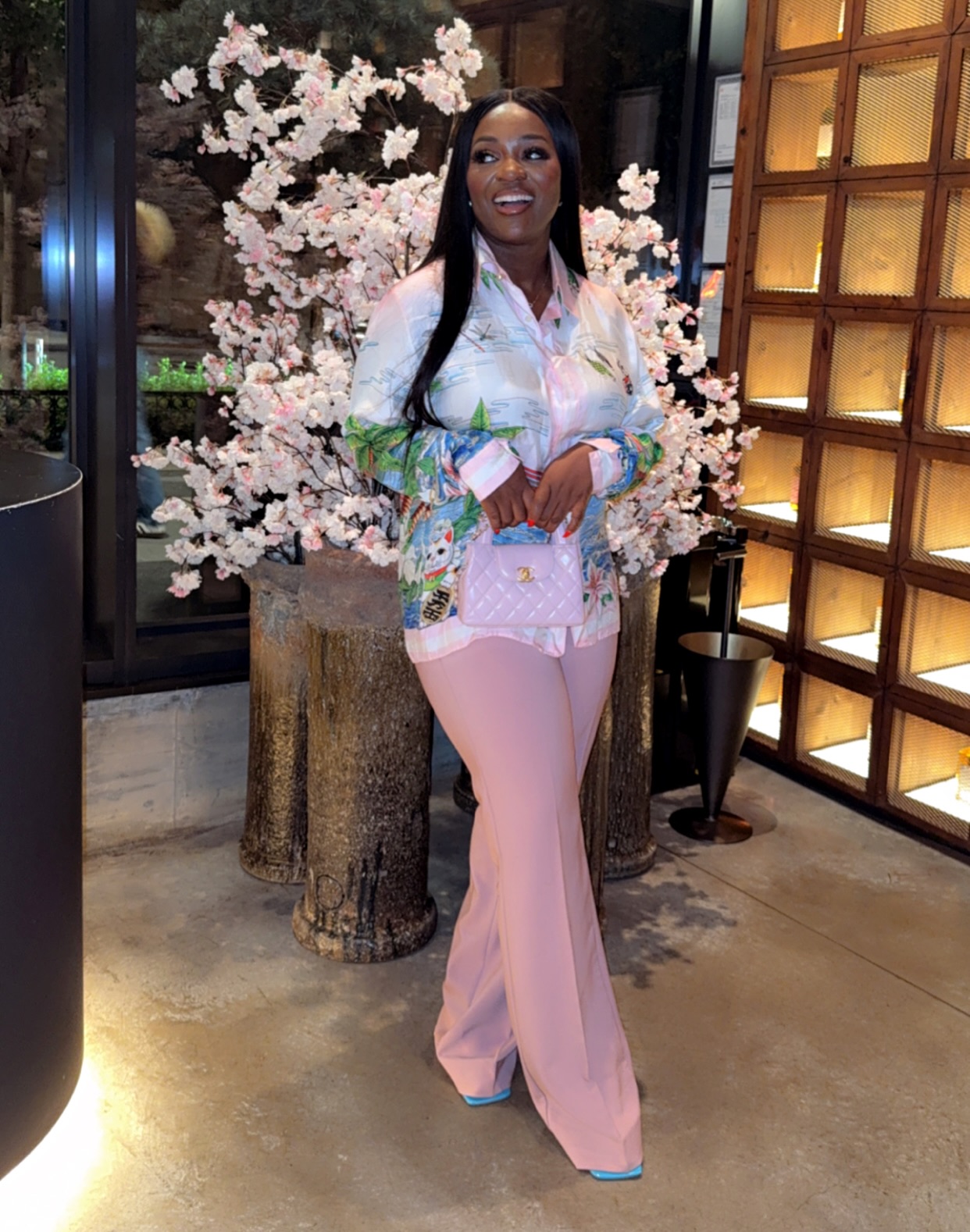
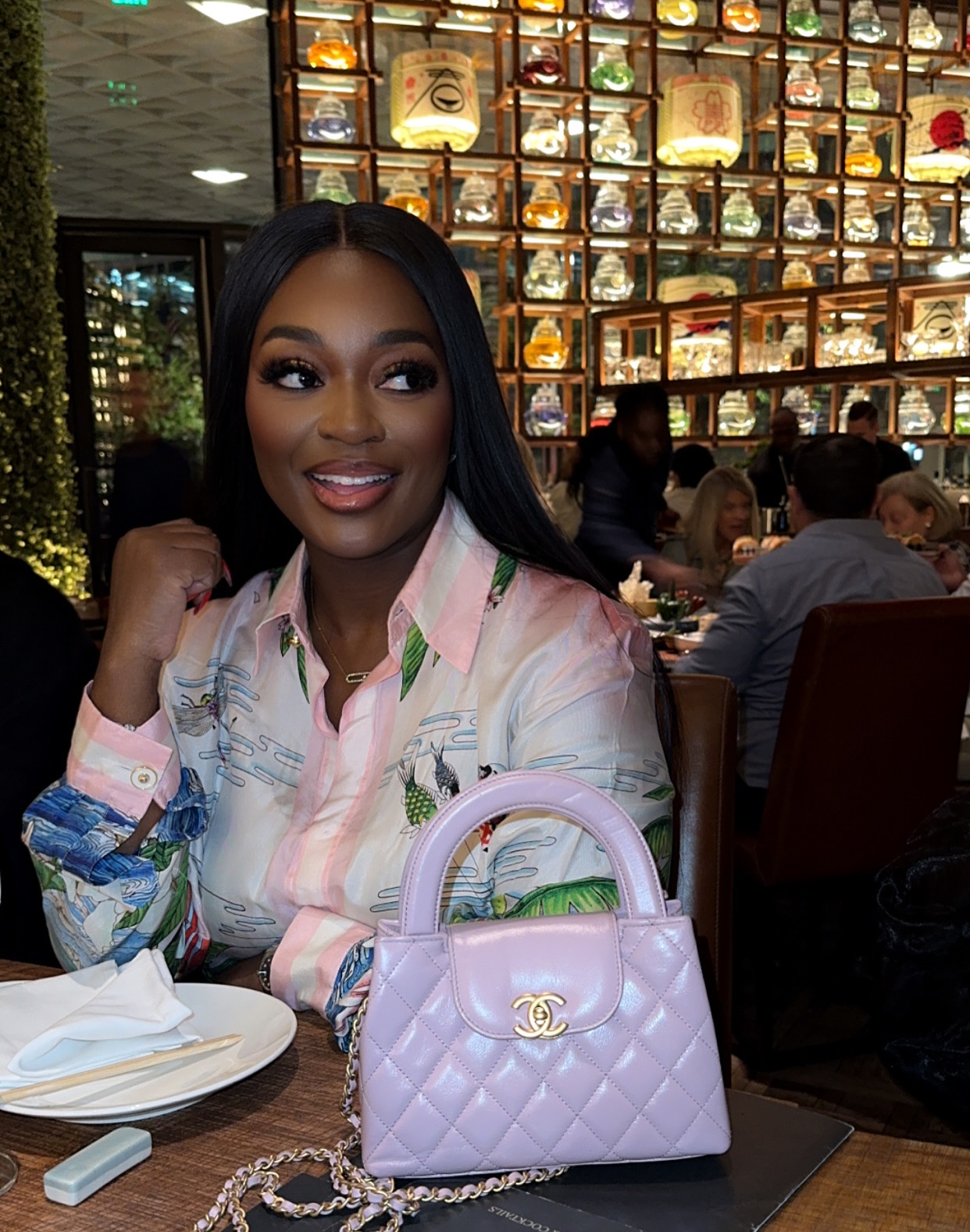
Jackie Appiah’s Casablanca shirt returned in a different combination. In the earlier appearance identified by YEN, the Ghanaian actress wore it with black ripped jeans, a blue bag and black heels. In the later photographs, she paired it with pink tailored trousers, a pink Chanel bag and blue open-toe heels for dinner with friends. The useful story is not that a public figure wore something twice. It is what changed around the garment. Denim gave way to tailoring; the bag moved from blue to pink; blue shifted into the footwear. The shirt remained while the supporting pieces were reorganised.

That is a modest but specific wardrobe decision. It shows a garment participating in more than one outfit without requiring alteration, a new purchase story or an explanation of environmental intent.

Jackie Appiah paired a Casablanca shirt with ripped jeans, then pink tailored trousers. Two documented looks show how one garment changed.

The Earlier Outfit Put the Shirt with Denim
The Earlier Outfit Put the Shirt with Denim
All Photos: @jackieappiah/Instagram.

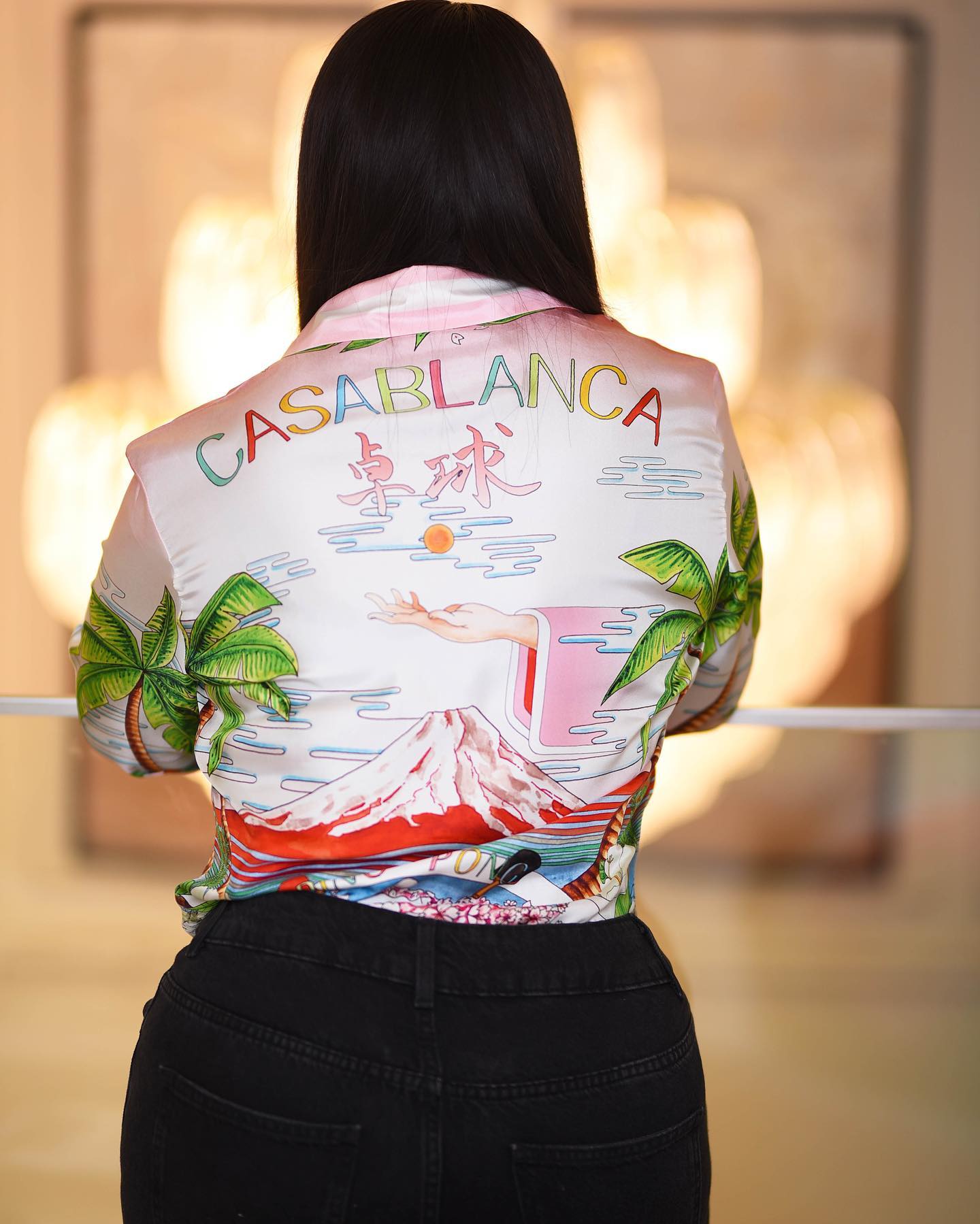
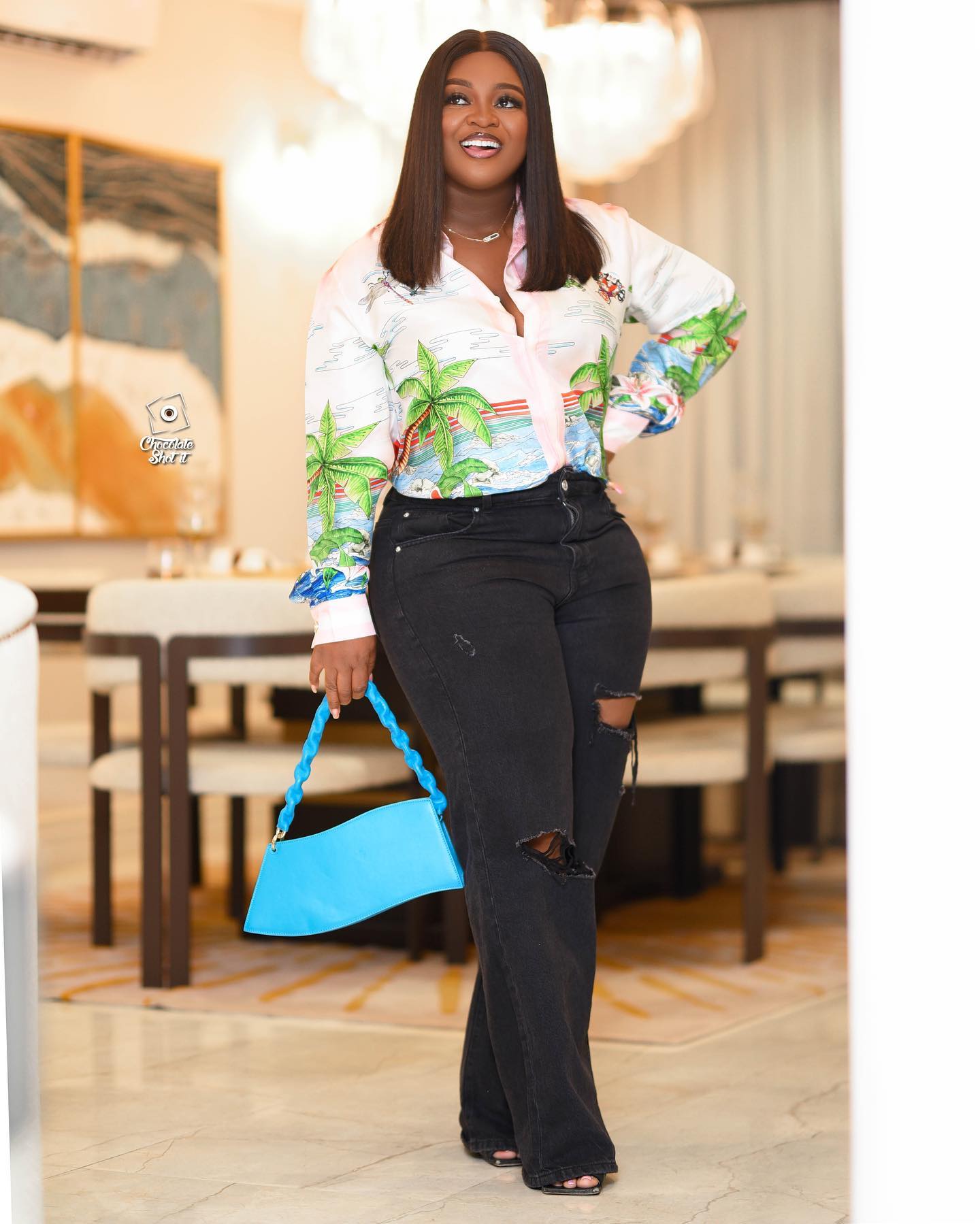
YEN dates the earlier appearance to 17 November 2022, describing a lunch outing in black ripped jeans and black high heels. Appiah carried a blue designer bag. The publication identifies the shirt as the same Casablanca piece appearing in its later comparison. Int combination, the trousers and shoes were both described as black; the bag was blue.The denim was supplied a different treatment from the tailored trousers used later. That distinction is more precise than declaring the whole outfit casual: heels and a designer bag were already part of the earlier arrangement.

The shirt therefore did not begin this comparison as something worn without consideration. Its surroundings were already selected. The later outfit changed those relationships rather than transforming an unstyled garment into a finished look.

Pink Tailoring Changed the Balance

For the later dinner photographs, YEN describes pink tailored trousers and a pink Chanel bag. It also identifies blue open-toe heels, saying their colour relates to the long-sleeved shirt’s design. The clearest change is the repeated pink across the trousers and bag. In the earlier account, the bag carried the blue; in the later one, it appeared in the shoes. The supporting colour did not disappear; it moved to another part of the outfit. This gives the comparison its substance. Appiah did not simply exchange one pair of trousers for another while retaining every accessory. Several components changed together. The pink pairing created a new connection between the clothing and the bag, while the footwear maintained another colour relationship with the shirt.

A Garment Can Stay While an Outfit Changes

The distinction between a garment and an outfit matters here. The shirt is the item YEN identifies as recurring. The complete combinations differ: different trousers, different bags, and different shoes. Calling this merely a repeated outfit would flatten those decisions. Equally, calling it a complete reinvention would exaggerate them. The published comparison shows a recognisable garment used in a different arrangement. That is where the story becomes relevant to a wardrobe rather than a celebrity novelty. Clothes are not necessarily exhausted by the combination in which they first appear publicly. In this instance, the evidence concerns the changed company, not the changed construction. No documented cutting, dyeing, or repair explains the change.

The Occasion Changed, but Motive Remains Unknown
The Occasion Changed, but Motive Remains Unknown

YEN describes the earlier appearance as a lunch outing and the later one as dinner with friends while Appiah was on holiday abroad. Those descriptions establish two settings in the publication’s account. They do not explain why she chose the shirt for either occasion. There is no attributable statement from Appiah saying she intended to demonstrate versatility, challenge outfit repetition or make a sustainability argument. Those would be attractive explanations, but the available evidence does not supply them. The styling can still be discussed without inventing a philosophy behind it. The documented action is enough: she appeared in what the publication identifies as the same shirt, with different accompanying pieces. An interpretation of the resulting combination should remain distinct from an explanation of her intentions.

What the Shirt’s Later Appearance Establishes

This is not a complete ownership history. The report does not identify the shirt’s product name, acquisition date or original purchase occasion. Nor does it establish every wearing between the two appearances. The November 2022 photograph is an earlier documented context, not proof that the garment was new then. Those limits leave a narrower but useful finding. The later appearance shows the shirt continuing to participate in Appiah’s dressing, rather than remaining tied to the earlier jeans-and-heels combination. Its relationship with trousers and accessories changed while its identity remained recognisable in the reporting.

The strongest reading is therefore about outfit composition. Pink tailoring and a matching bag gave the later combination a different organising relationship; blue footwear connected with the shirt’s design. The article need not turn that into a lesson about buying more, buying less or behaving correctly. It can simply recognise what the comparison shows.

The Omiren Argument
What the Shirt’s Later Appearance Establishes

The principle is recombination. A garment’s continued use does not always announce itself through alteration or dramatic transformation.

Here, the meaningful change occurred around the shirt. Different trousers, accessories and colour relationships produced another outfit without requiring the garment to become something else.

The value of the comparison lies in those specific decisions, not in treating repetition as surprising or assigning Appiah a message she has not expressed.

Also Read:

  • The Ghanaian Women Redefining Fashion on Their Own Terms 
  • How Nollywood Became One Of The World’s Most Powerful Fashion Influencers
  • African Workwear Essentials Every Modern Woman Needs in 2025 
  • Why the Ghanaian Professional Woman Is Fashion’s Most Overlooked Customer 

Frequently Asked Questions

Which garment connects the two looks?

YEN identifies a long-sleeved Casablanca shirt in both appearances. It does not supply a confirmed product name or season. The shirt is the item the publication identifies as recurring, while the complete combinations on each occasion differ in trousers, bags and shoes. The comparison therefore concerns a recognisable garment, not a repeated outfit.

What changed around it?

The earlier account describes black ripped jeans, a blue bag and black heels. The later account describes pink tailored trousers, a pink Chanel bag and blue open-toe heels. Denim gave way to tailoring, the bag moved from blue to pink, and blue shifted into the footwear.

Did Appiah explain why she wore it again?

Not in the report used here. The rewear identification and occasion descriptions come from the publication, not a wearer interview. Appiah makes no attributable statement about versatility, outfit repetition, or sustainability, so the article does not assign her a motive.

When was the earlier appearance?

YEN dates it to 17 November 2022 and describes a lunch outing in black ripped jeans and black high heels. The date is a reported appearance, not an established first wearing: the photograph is an earlier documented context, not proof that the garment was new then.

Post Views: 61
Total
0
Shares
Share 0
Tweet 0
Pin it 0
Related Topics
  • Casablanca Shirt
  • celebrity style
  • Jackie Appiah
  • Outfit Styling
Avatar photo
Rex Clarke

rexclarke@omirenstyles.com

You May Also Like
Medina Reworks Libyan Dress for a London Wardrobe
View Post
  • Designers & Brands

Medina Reworks Libyan Dress for a London Wardrobe

  • Rex Clarke
  • November 13, 2026
YAKU SS27 Makes Family Memory a Design Method
View Post
  • Designers & Brands

YAKU SS27 Makes Family Memory a Design Method

  • Adams Moses
  • November 13, 2026
Temi Otedola’s Zac Posen Wedding Outfit: From Worktable to Wardrobe
View Post
  • FASHION

Temi Otedola’s Zac Posen Wedding Outfit: From Worktable to Wardrobe

  • Peace Vera
  • November 13, 2026
Before You Buy: Five Construction Details Worth Inspecting
View Post
  • FASHION

Before You Buy: Five Garment Construction Details Worth Inspecting

  • Tobi Arowosegbe
  • November 13, 2026
Golden Angels: Does Panama Fashion Week Streetwear Work as Everyday Clothing?
View Post
  • Street Style

Golden Angels: Does Panama Fashion Week Streetwear Work as Everyday Clothing?

  • Adams Moses
  • November 13, 2026
iZaura and Quazi Design: Reading One Collaborative Look
View Post
  • FASHION

iZaura and Quazi Design: Reading One Collaborative Look

  • Rex Clarke
  • November 13, 2026
Ahluwalia Makes Celebration Part of the Political Wardrobe
View Post
  • Designers & Brands

Ahluwalia Makes Celebration Part of the Political Wardrobe

  • Adams Moses
  • November 12, 2026
Nicholas Daley Makes British Heritage a Living Practice
View Post
  • Designers & Brands

Nicholas Daley Makes British Heritage a Living Practice

  • Rex Clarke
  • November 12, 2026
The Omiren Argument

African fashion and culture are not emerging. They are foundational. We document, interpret, and argue for the full cultural weight of African and diaspora dress. With precision. Without apology.

Omiren Styles Fashion · Culture · Identity

All 54 African Nations
Caribbean · Afro-Latin America
The Global Diaspora

Platform

  • About Omiren Styles
  • Our Vision
  • Our Mission
  • Editorial Pillars
  • Editorial Policy
  • The Omiren Collective
  • Campus Style Initiative
  • Sustainable Style
  • Social Impact & Advocacy
  • Investor Relations

Contribute

  • Write for Omiren Styles
  • Submit Creative Work
  • Join the Omiren Collective
  • Campus Initiative
Contact
contact@omirenstyles.com
Our Reach

Africa — All 54 Nations
Caribbean
Afro-Latin America
Global Diaspora

African fashion intelligence, in your inbox.

Editorial features, designer profiles, cultural commentary. No noise.

© 2026 Omiren Styles — Rex Clarke Global Ventures Limited. All rights reserved.
  • Privacy Policy
  • Editorial Policy
  • Terms of Use
  • Accessibility
Africa · Caribbean · Diaspora
The Omiren Argument

African fashion and culture are not emerging. They are foundational. We document, interpret, and argue for the full cultural weight of African and diaspora dress. With precision. Without apology.

Omiren Styles Fashion · Culture · Identity
  • About Omiren Styles
  • Our Vision
  • Our Mission
  • Editorial Pillars
  • Editorial Policy
  • The Omiren Collective
  • Campus Style Initiative
  • Sustainable Style
  • Social Impact & Advocacy
  • Investor Relations
  • Write for Omiren Styles
  • Submit Creative Work
  • Join the Omiren Collective
  • Campus Initiative
Contact contact@omirenstyles.com

All 54 African Nations · Caribbean
Afro-Latin America · Global Diaspora

African fashion intelligence, in your inbox.

Editorial features, designer profiles, cultural commentary. No noise.

© 2026 Omiren Styles
Rex Clarke Global Ventures Limited.
All rights reserved.

  • Privacy Policy
  • Editorial Policy
  • Terms of Use
  • Accessibility
Africa · Caribbean · Diaspora

Input your search keywords and press Enter.

Newsletter Subscribe

The Omiren Style Index

The reference directory for African, Caribbean and Afro-Latin fashion. New entries, taxonomy updates and intelligence signals — once a month. No noise.

.newsletter-form{
max-width:500px;
margin:auto;
text-align:center;
padding:30px;
}

.newsletter-form h3{
margin-bottom:10px;
font-size:28px;
}

.newsletter-form p{
margin-bottom:20px;
color:#666;
}

.newsletter-form input{
width:100%;
padding:14px 18px;
border:1px solid #ddd;
margin-bottom:15px;
border-radius:4px;
}

.newsletter-form button{
width:100%;
padding:14px;
background:#000;
color:#fff;
border:none;
cursor:pointer;
text-transform:uppercase;
letter-spacing:1px;
}