The tartan on Nicholas Daley’s autumn/winter 2025 Modular Jacket with Carhartt WIP did not begin as a conventional woven check. It developed from a knitted interpretation made with his mother, Maureen, and her knitting circle, then became an all-over print. Applied to cotton herringbone, it covers a Harrington-inspired jacket with a zip fastening, onion-quilted lining and contrasting corduroy details. A domestic making practice enters a commercially produced garment without being reproduced in its original material. That transformation is more revealing than a general claim that the collection celebrates heritage. The jacket connects several kinds of knowledge: the family’s knitting practice, Daley’s choice of colour, the familiar structure of a casual jacket and Carhartt WIP’s product development. Its story resides in how those contributions meet.
Daley is often introduced through his Scottish mother and Jamaican father. The description is accurate, but it becomes useful criticism only when it explains something about the clothes. Across his collections, family experience raises particular questions about textiles, performance, and who belongs within a national design history. His strongest work does not require heritage to remain intact behind glass. It gives inherited materials and references another job.
Nicholas Daley connects British heritage with contemporary dress through specialist textiles, musical collaboration and a family history of making.
A Family Textile Becomes a Public Surface
The Modular Jacket makes that process unusually clear. GQ’s account of the collaboration explains that Daley selected colours referring to the flags of Scotland and Jamaica, while allowing his mother freedom to interpret the tartan. Her knitted swatch was then translated into a digital print for garments and accessories. Carhartt WIP credits the print’s development to the knitting circle she runs. The distinction between a knitted source and a printed result matters. This is not a hand-knitted jacket, nor is it a traditionally woven tartan garment. It translates between techniques, carrying the originating maker’s interpretation into another production process.
The jacket gives that print a firm structure. Its cotton herringbone body and quilted lining are joined by two-tone corduroy at the collar, pockets and cuffs. Those contrasting areas interrupt the all-over pattern, giving the garment changes of texture as well as colour. The turn-down collar and zip preserve the legibility of the Harrington reference. This is where the design can be understood without its accompanying biography. Pattern, texture and a familiar silhouette establish a visual proposition first. Learning how the print developed adds another layer; it does not have to supply the garment’s entire interest.
The collaboration also contains a useful tension. A knitted sample becomes a repeatable printed surface. The hand process is not preserved unchanged. Instead, its visual decisions travel into a different kind of object. Daley’s authorship lies partly in organising that passage, and keeping the contribution of his mother and her circle visible within it.
Music Can Change the Cut
An earlier collection demonstrates another route from cultural reference to garment. For autumn/winter 2018’s Red Clay, Daley researched the relationship between tweed and jazz, looking at Miles Davis’s changing style alongside his music. Blue Note record sleeves and Jean-Michel Basquiat’s artwork informed the palette. More consequentially, he asked musicians what they needed to wear. Their conversations concerned playing styles and what made a garment suitable for performance. Daley told the Crafts Council that those exchanges led to loose silhouettes, including an oversized tweed mac and high-waisted, zoot-suit-style trousers. He wanted freedom of movement.
That is a specific design intention, not proof of how every piece performed. Nevertheless, it establishes that the musicians were more than casting choices. Their requirements shaped the collection’s development. The mac and trousers also alter how tweed is positioned. A substantial fabric associated with established menswear conventions is placed within an expansive silhouette intended for an active wearer. Daley developed a bespoke Scottish herringbone, selecting its weight, yarn colours and finish rather than treating tweed as a fixed material category. At the presentation, Yussef Dayes, Mansur Brown, Alfa Mist and Shabaka Hutchings performed in bespoke outfits. The event put the stated relationship between movement and clothing before an audience: musicians wore the collection while playing, rather than standing in for an imagined musical life.
The critical question is not whether live music makes a presentation more atmospheric. It is what performance allows us to understand about the clothes. Here, it gives the loose proportions a context of use and makes the wearer’s activity part of the design’s explanation.
The Worker Inside the Textile Story
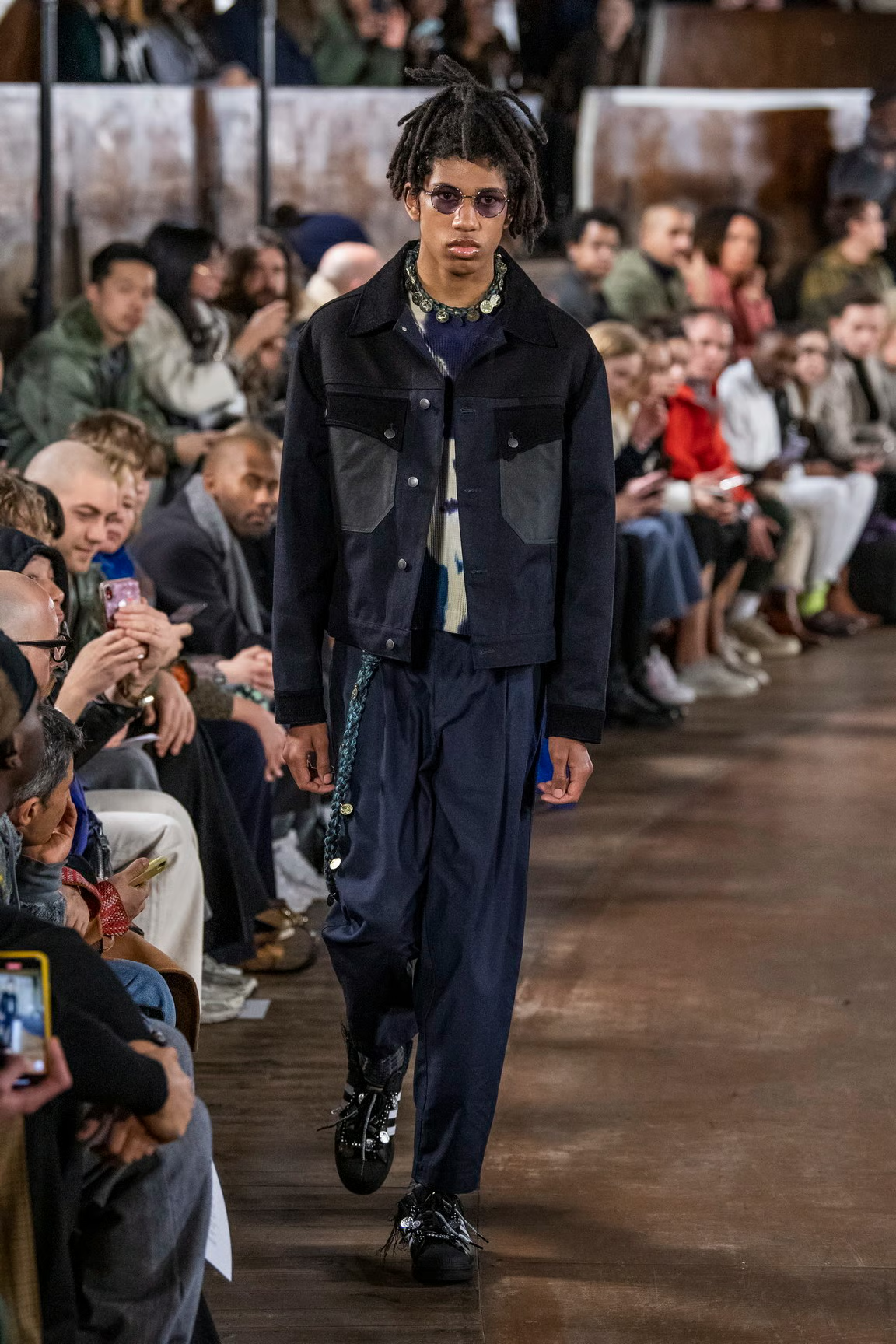
Daley’s attention to cloth also has a family history of labour. Generations of women on his mother’s side worked in Dundee’s jute mills. Their experience helped inform spring/summer 2017’s Juteopolis, which involved a collaboration with the city’s fabric manufacturer, Halley Stevensons. This changes the emphasis of a heritage narrative. A textile is not only the product of an admired institution. It also belongs to the lives of people whose work sustained production. V&A Dundee’s 2019 exhibition, Studio Nicholas Daley, placed these relationships within the same space. Alongside garments and research materials, it displayed a notebook of poems and songs by Dundee mill worker and political activist Mary Brooksbank. It also included a travel rug Maureen Daley had crocheted from Lochcarron Mill fabric selvedges.
The rug brings industrial remnants into a family making practice. Material left at the edge of one production process becomes the substance of another object. The connection is practical before it becomes symbolic: someone recognises what can be made from what is available. The 2025 Carhartt WIP collaboration shows this interest continuing in a different form. Maureen is not present only as a figure in the designer’s biography. Her making contributes to the product’s development. The movement from the exhibition’s crocheted rug to the later printed tartan is not a claim that both objects are technically alike. It shows that family skill remains an active resource rather than a finished origin story.
Reggae Klub Was a Space Someone Had to Make
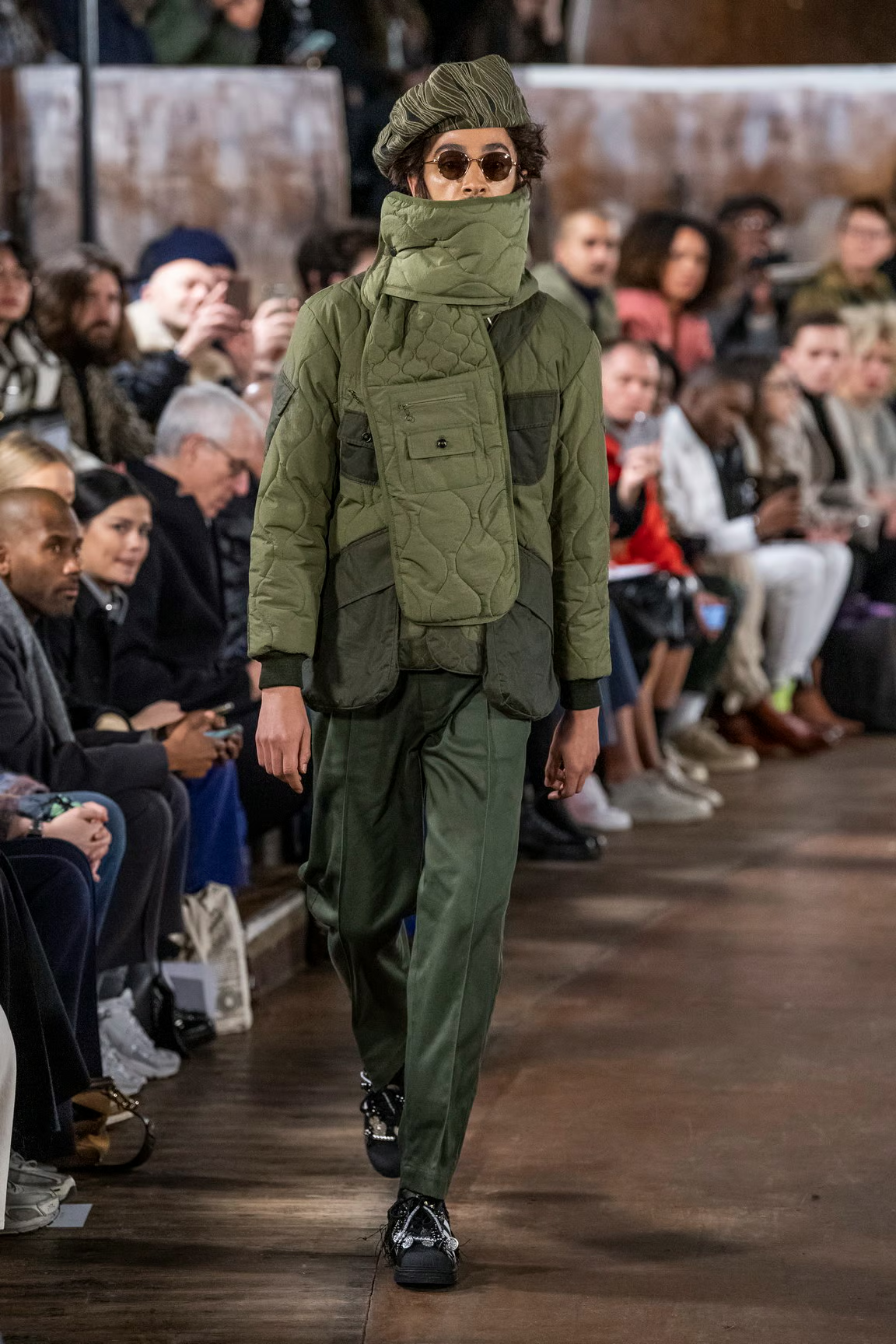
The musical inheritance is equally specific. Daley’s parents ran Reggae Klub nights in Scotland, creating a space for music they felt lacked room. The history became part of the history explored at V&A Dundee, where an original Reggae Klub T-shirt his father designed and wore was displayed alongside other family material. “My parents started a reggae club because they felt at that time in Scotland there wasn’t a space for that type of music,” Daley said in the exhibition announcement. He connected his fashion shows and the exhibition itself to carrying on that family legacy.
The inheritance is organisational as well as aesthetic. His parents assembled a place, music and an audience. His presentations bring garments into encounters between performers and viewers. That does not make every collaboration a community or every event an enduring institution. The useful connection is narrower: cultural participation requires practical arrangements. Someone has to create the occasion and decide who takes part. Daley’s early presentations demonstrate how those decisions can affect the reading of a collection. The performers are not merely evidence that the designer likes music. They help place the clothes within a social and physical setting.
The Archive Becomes Material Again
By spring/summer 2027’s Sonic Tapestry, reported in July 2026, Daley was working with a different musical archive. The collection drew on spiritual jazz figures including Don Cherry, Laraaji, Gary Bartz and Kahil El’Zabar, while Moki Cherry’s collages and tapestries informed its visual references. The clearest development, however, is material rather than biographical. Hypebeast documented a collaboration with West Yorkshire quilter Chris English, who reconstructed archival Nicholas Daley fabrics into patchwork used for a Harrington-inspired jacket and the label’s patchwork kilt. Where Red Clay involved developing new herringbone, this project returned existing fabrics to production through cutting and assembly. The archive became something to work with, not simply something to quote.
The jacket and kilt also offer different structures for that textile. One carries patchwork into a familiar outerwear form; the other places it within a garment category already significant to Daley’s investigations of Scottish identity. Their shared material establishes a relationship across different ways of dressing. That does not, by itself, prove an environmental benefit or establish how much fabric was reused. Its documented significance is the design operation: cloth from the label’s earlier work is reorganised through another practitioner’s skill. It offers productive continuity with the Modular Jacket. In one, knitted work becomes print. In the other, archived fabrics become a reconstructed textile. Heritage is not a single technique preserved indefinitely. It is a series of decisions about what to carry forward and how.
What the Clothes Must Do
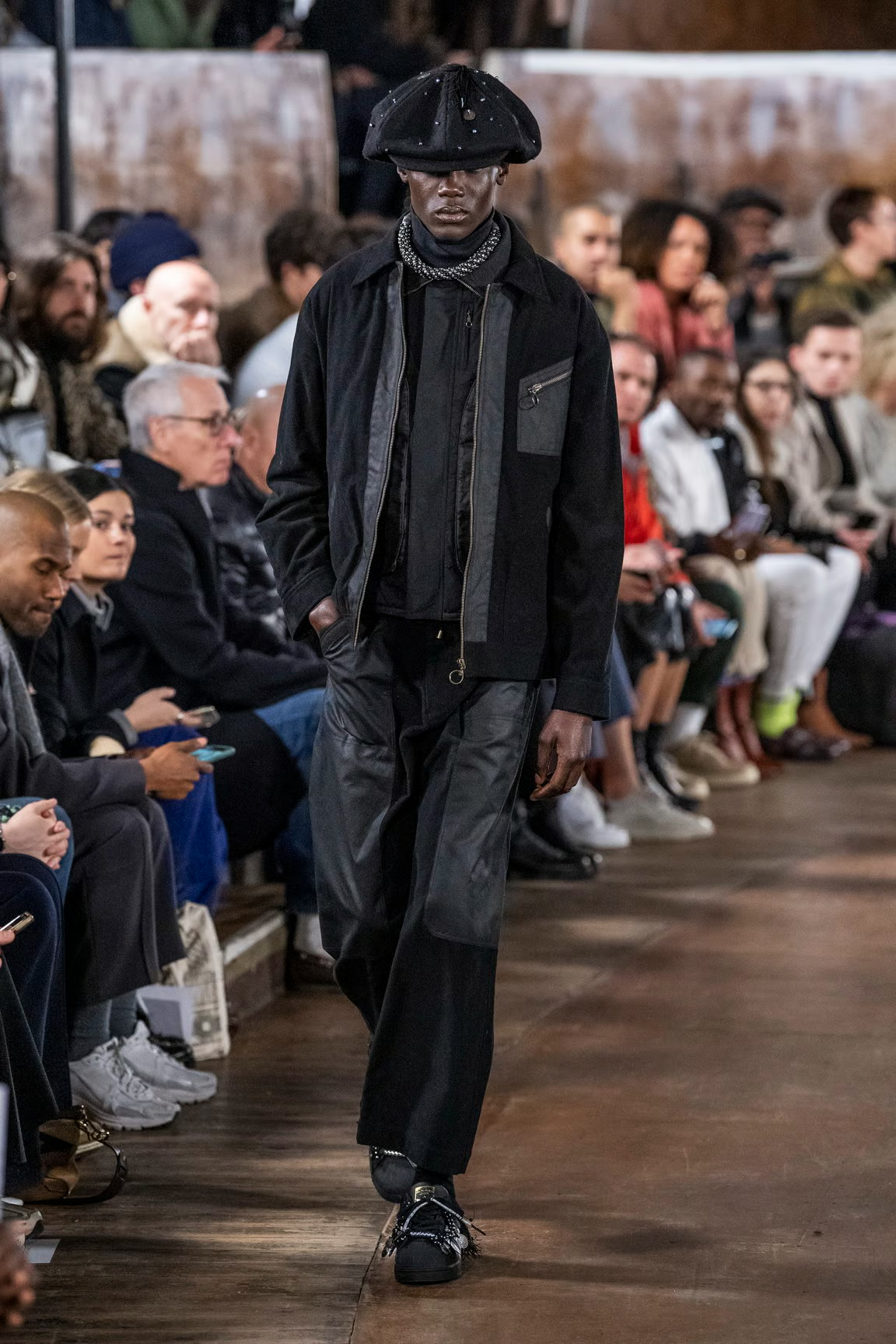
Historical research can deepen a garment, but it cannot excuse an unresolved one. A collection still has to establish relationships between shape, material, colour and the body. Daley’s practice is most persuasive where those relationships can be named: the contrast between printed herringbone and corduroy; generous proportions developed through conversations about performance; archival cloth reorganised into patchwork. These examples do not all operate in the same way. That is their value. They show a designer moving between commissioning, adapting and reconstructing materials, rather than relying on cultural reference alone. His British heritage is consequently neither a closed inventory nor a purity test. It contains specialist production, domestic skill, Black musical experience and the labour histories of particular places. The clothes give those relationships a form people can wear.
The Omiren Argument
Nicholas Daley’s contribution is not simply to place Scottish and Jamaican references side by side. It is to make the relationships between people, histories and techniques productive within clothing.
The strongest evidence is in the transformation: a knitted sample becomes a jacket’s surface; a musician’s requirements influence proportion; and archived cloth becomes a new patchwork material.
That is what makes heritage a living practice here. It is neither untouched nor merely displayed. Other hands enter the process, materials change form, and the resulting garment has to earn its place in the present.
Also Read:
- Imperfection as Intention: Why “Undone” Dressing Defines 2026 High Fashion Handmade Craft in Fashion: Why It Feels Radical Again
- Why Crochet and Knitwear Are Entering the Luxury Conversation
- Grace Wales Bonner at Hermès: The First Black Woman to Lead Menswear at a Major European Luxury House
Frequently Asked Questions
Who is Nicholas Daley?
Nicholas Daley is a London-based menswear designer raised in Leicestershire, with Scottish and Jamaican family roots. He founded his label in 2015 after graduating from Central Saint Martins. His work draws on his mother’s knitting, his parents’ Reggae Klub nights and the textile history of Dundee, which shape the questions his collections ask about materials and belonging.
How does music influence his design?
Music informs Daley’s research, colour and presentation. For Red Clay, conversations with jazz musicians about playing styles shaped the collection’s loose silhouettes, including an oversized tweed mac and high-waisted trousers, and its intended freedom of movement. Yussef Dayes, Mansur Brown, Alfa Mist and Shabaka Hutchings then performed in bespoke outfits at the presentation.
What connects his work to Scottish textiles?
His practice includes family connections to Dundee’s jute industry, a bespoke Scottish herringbone developed for Red Clay, and textile development involving his mother’s knitting practice. These are distinct relationships, not evidence that every garment is produced in Scotland. Each one gives a different Scottish material or skill a defined job in the clothes.
What is the Carhartt WIP Modular Jacket?
The Modular Jacket is a Harrington-inspired jacket from the autumn/winter 2025 collaboration between Daley and Carhartt WIP. Its cotton herringbone body carries a tartan print developed from a knitted swatch by his mother, Maureen, and her knitting circle. It has a zip fastening, onion-quilted lining and contrasting corduroy details at the collar, pockets and cuffs.