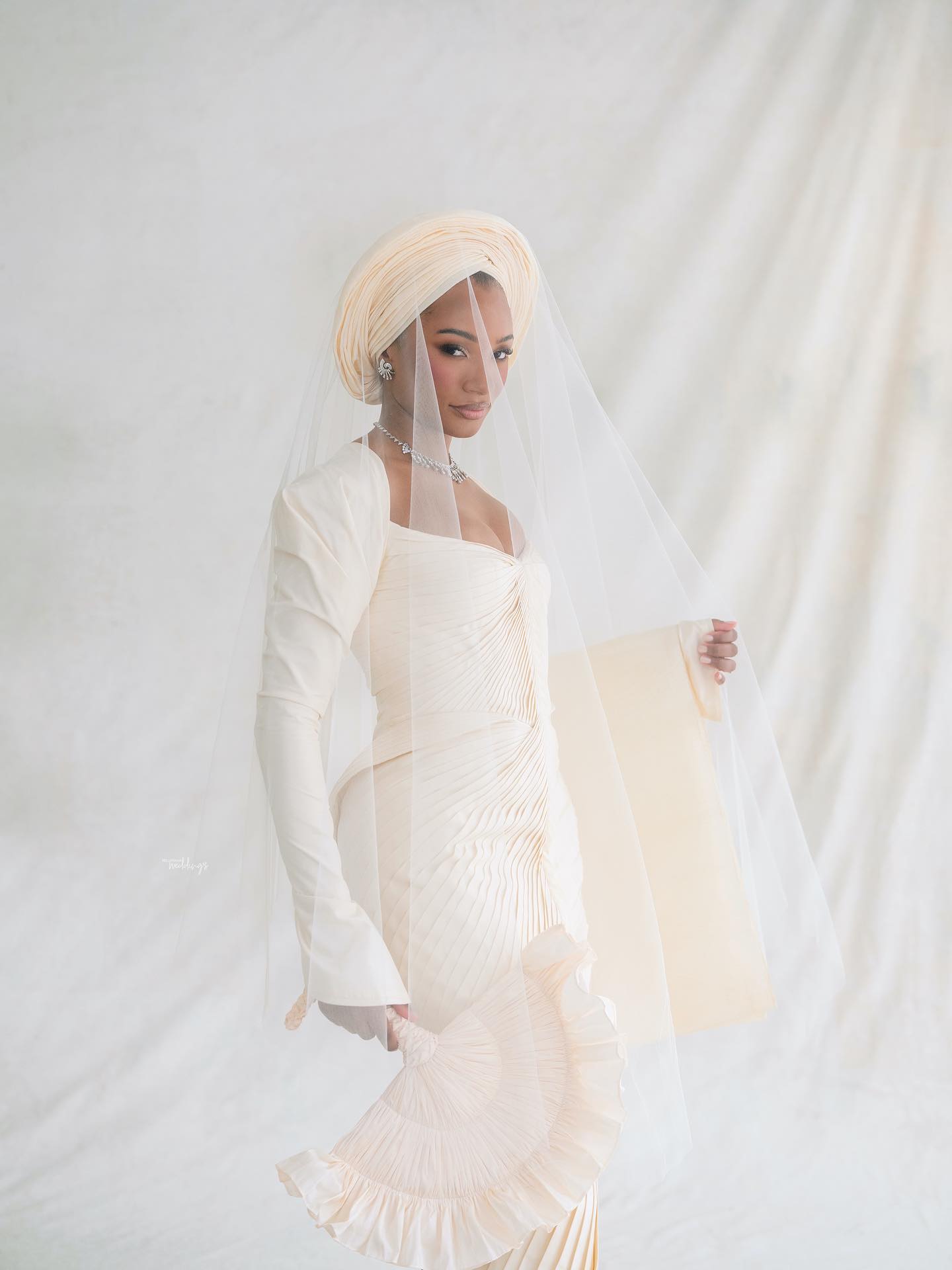
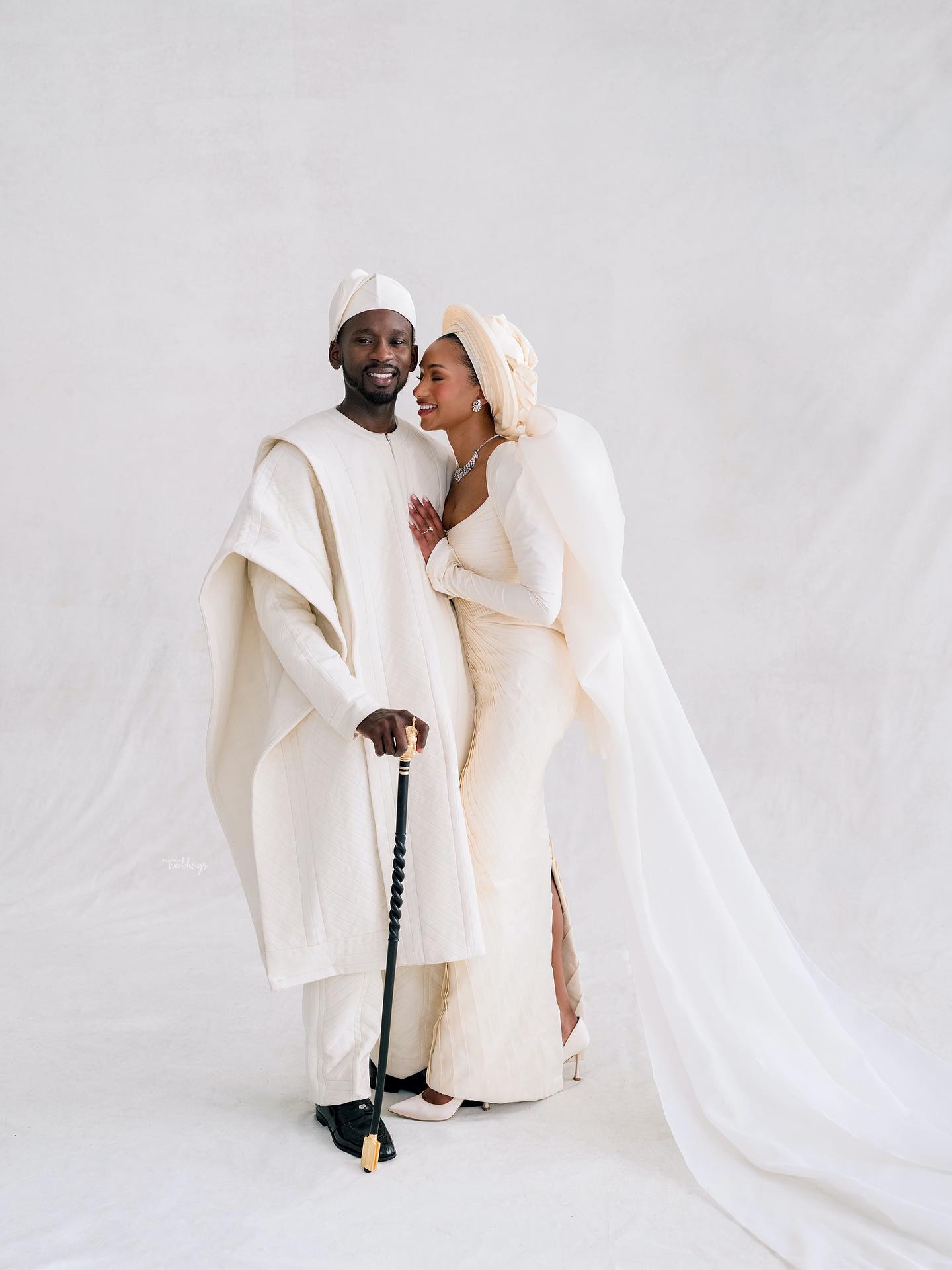
Temi Otedola remembered the pleating. In her caption accompanying Vogue’s wedding photographs, she recalled watching Zac Posen mould the gown by hand on a mannequin before she wore it for her Yoruba ceremony. Her appreciation of the finished dress was connected to something she had seen being done, not only to its appearance when delivered. The outfit comprised a custom duchesse satin dress and a complementary gele. Posen described a body-following shape with a statement bow at the back, conceived to resemble dove wings. Otedola described the result as his interpretation of a classic Yoruba bridal silhouette.
Between those accounts sits the story of this commission: a wearer asking for a personal interpretation of traditional attire, a designer explaining his formal choices, and a finished outfit entering the occasion for which it was made.
Temi Otedola watched Zac Posen hand-shape her wedding gown. Their published accounts connect its making, bridal brief and ceremonial use.
The Brief Began with the Wearer
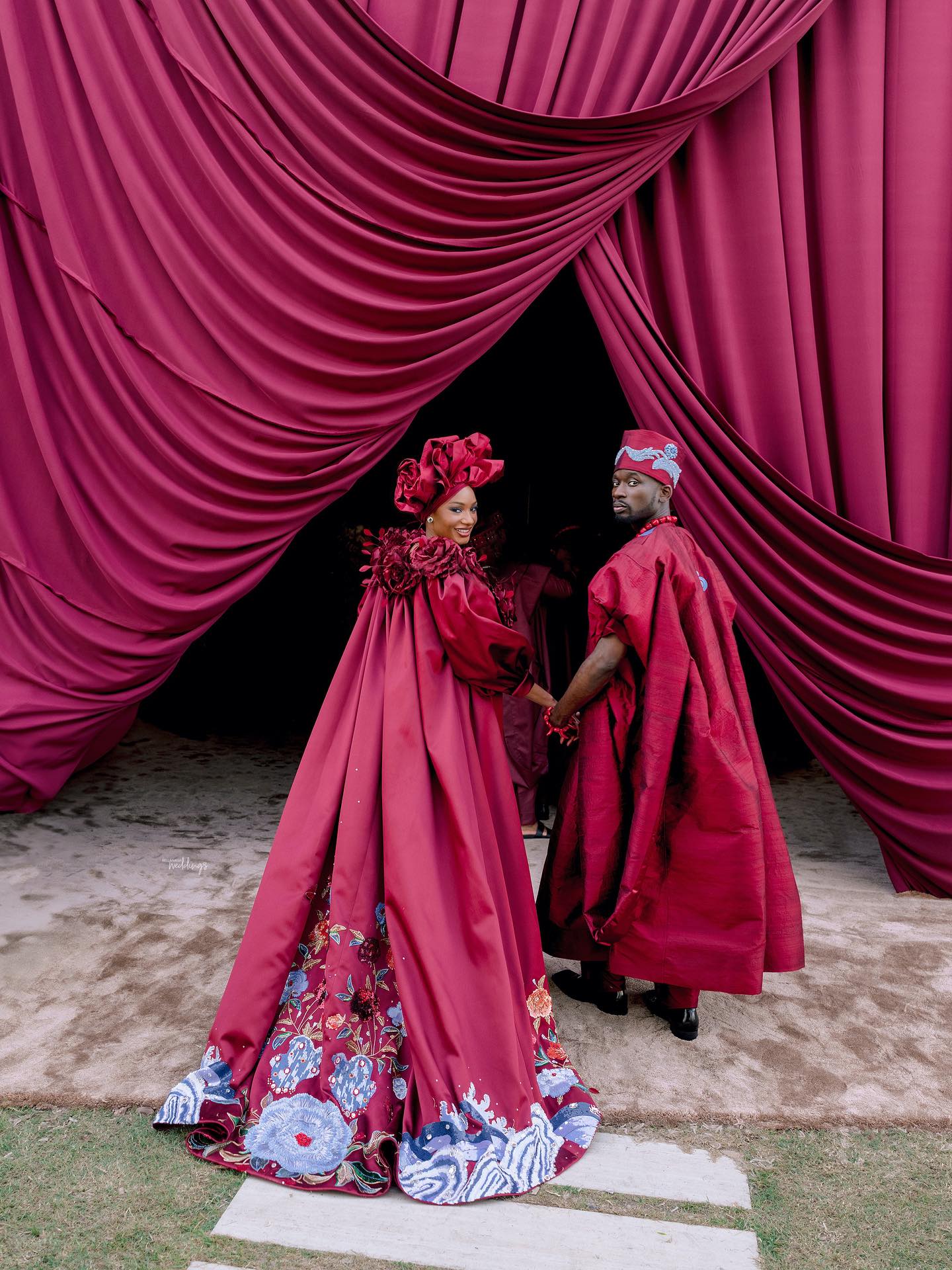
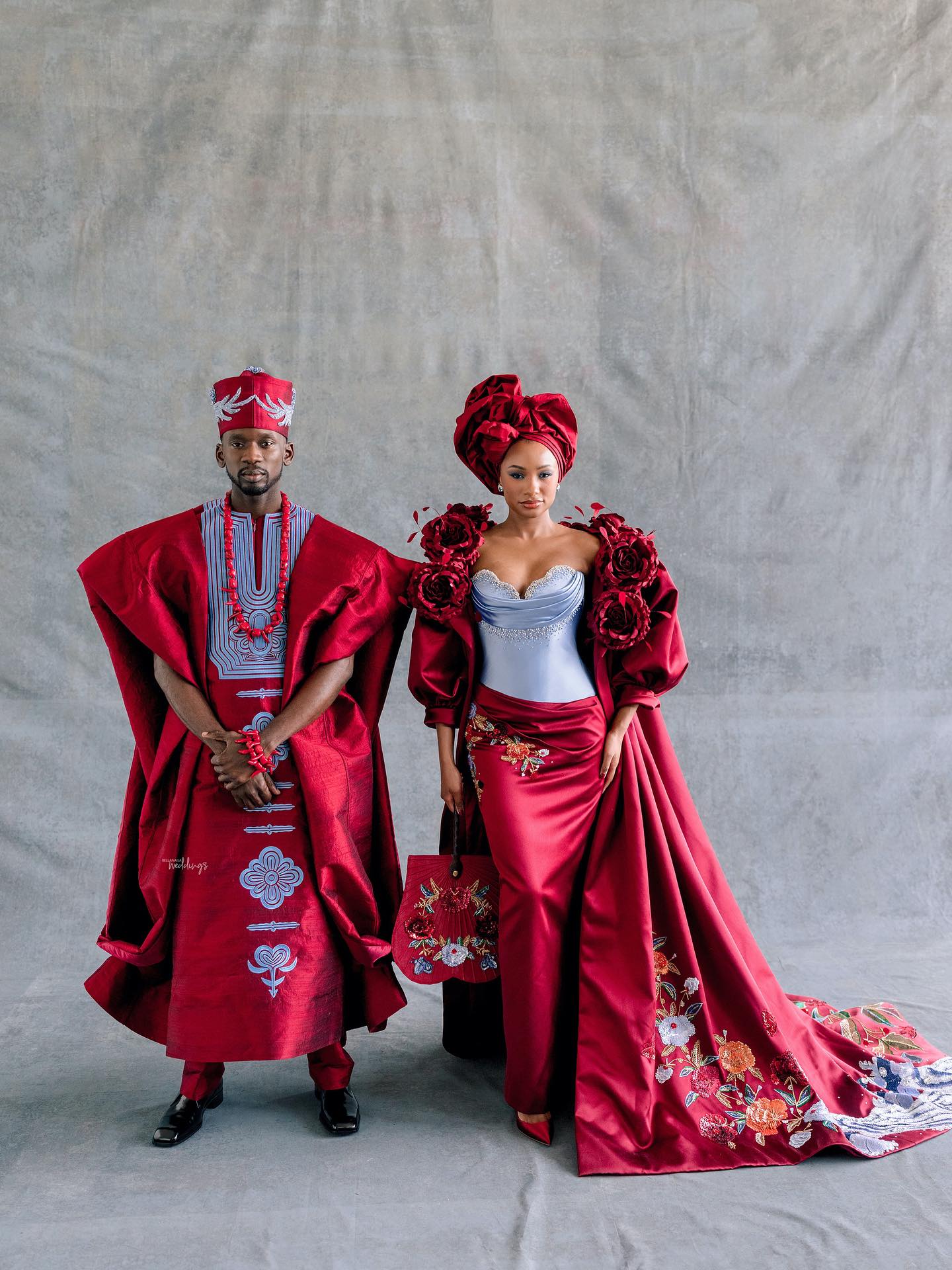
For her traditional wedding wardrobe, Otedola wanted some of her favourite designers to create Nigerian attire. Posen’s commission was one of four outfits prepared for the Dubai celebration, alongside looks by Miss Sohee, Lisa Folawiyo and Oscar de la Renta. Carrie Goldberg of CLG Creative and Momo Hassan-Odukale assisted as bridal stylists. The important detail is not the number of designers but the nature of the request. Otedola was seeking interpretations from people whose work she admired. In a photograph caption, she described wanting to be a Nigerian bride in a way that felt new to her; in the accompanying interview, she expressed enthusiasm for the designers’ responses.
That establishes her ambition without supplying a technical brief the source does not disclose. There is no published list of required seams, volumes or fastening arrangements. The clearest evidence of the commission’s direction comes from what she asked for and how she subsequently described Posen’s result.
A Sculpted Dress and a Statement at the Back
Vogue identifies the material as duchesse satin and describes the dress as following the contours of Otedola’s body. Posen’s explanation combines that close relationship to the figure with a more expansive gesture: the bow at the back. Its intended resemblance to dove wings gives his account of the design a specific feature. He also invokes Nefertiti and describes a mixture of historical character and modernity. Those references belong to his explanation; they should not be mistaken for a documented historical source for every part of the outfit. The more concrete relationship is between the body-following dress and the wing-like bow.
The gele completes the named commission. It matters because the outfit was not simply a gown worn with unspecified headwear: Vogue credits Posen with creating the complementary gele as well. That design attribution does not, however, identify everyone responsible for constructing or finishing either component.
The Wearer Witnessed the Shaping
Otedola’s recollection adds the strongest detail to the making story. She watched Posen work directly on a mannequin and singled out the gown’s pleating when describing the finished piece. The source therefore connects a named designer with a particular act of hand shaping on this garment. Her account also changes the meaning of her praise. She was not only responding to a polished final presentation. She linked the result to the care she witnessed during its development. The making became part of what she valued when she wore it. This is not a complete workshop record. The feature does not set out the fitting schedule, alteration sequence or full production team. Its value lies in a narrower connection: the wearer saw part of the dress take form and later identified that work as significant to her experience of the outfit.
From the Mannequin to the Ceremony
Otedola wore the Posen dress and gele for the Yoruba ceremony at her family’s home in Dubai in 2025. The celebration followed the couple’s civil wedding in Monaco and preceded their wedding in Iceland. Keeping those occasions distinct also keeps this outfit separate from the other garments in her bridal wardrobe. The published photographs and captions place the completed commission within its intended setting. Otedola’s caption about designing the gown with Posen praises his understanding of the figure and identifies the result with the Yoruba bridal dress. In the following caption, she draws attention to the bow.
Those responses give the account a specific destination. The wearer recognised both the relationship to the body and the conspicuous rear detail. The dress was not merely finished and photographed; it was worn for the ceremony and discussed by the person who had commissioned it.
What the Two Accounts Establish
Posen and Otedola do not explain the outfit in identical terms. He discusses an image, a contour-following form and dove-like wings. She discusses pleating, witnessed care and a bridal interpretation she recognised. Their accounts overlap without becoming the same story. That difference is productive. A wearer need not adopt every reference in a designer’s explanation for a commission to make it meaningful. Here, Otedola’s response shows which aspects mattered to her: the shaping she had watched, the treatment of the figure and the connection she perceived with the occasion. The strongest documented outcome is therefore personal and specific. Otedola valued the interpretation and wore it for its intended purpose. The source does not establish prolonged comfort, freedom of movement or durability, and her appreciation should not be converted into an independent technical assessment.
The Omiren Argument
The principle is correspondence: what was requested, what was made and what the wearer recognised should be connected, but need not be identical.
This outfit’s story is strongest where those connections become particular. Otedola asked for an interpretation of Nigerian attire, witnessed part of the shaping and later described what she valued in the finished result.
That is more informative than a designer credit alone. It shows how making entered the wearer’s understanding of her clothes.
Also Read:
- The Evolution of Bridal Fashion in Nigeria: From Tradition to Statement
- When the Gele Speaks: The Cultural Language of Yoruba Head-Tying
- Top 5 Aso-Oke Styles for Yoruba Women 2026 – Diaspora Looks
- How African Diaspora Love Stories Are Elevating Luxury Weddings Worldwide
Frequently Asked Questions
Which outfit does this article follow?
Temi Otedola’s custom Zac Posen duchesse satin dress and complementary gele, worn for her 2025 Yoruba wedding ceremony in Dubai. Vogue credits Posen with designing both pieces. The article follows the commission from his explanation and her comments to its ceremonial use, not through her wider bridal wardrobe.
What making process is actually documented?
Otedola recalls seeing Posen mould the gown by hand directly on a mannequin. Her caption specifically praises the pleating. The source does not provide a complete construction sequence, nor does it set out the fitting schedule, alteration sequence, or full production team.
Did Posen make every component himself?
The feature credits him with the design and attributes the witnessed shaping to him, including the complementary gele. It does not identify the full team or establish who carried out every production operation, so the design credit should not be read as a record of who constructed or finished each component.
What other outfits were part of the Dubai celebration?
Posen’s commission was one of four outfits prepared for the Dubai celebration, alongside looks by Miss Sohee, Lisa Folawiyo and Oscar de la Renta. Carrie Goldberg of CLG Creative and Momo Hassan-Odukale assisted as bridal stylists. The celebration followed the civil wedding in Monaco and preceded the wedding in Iceland.