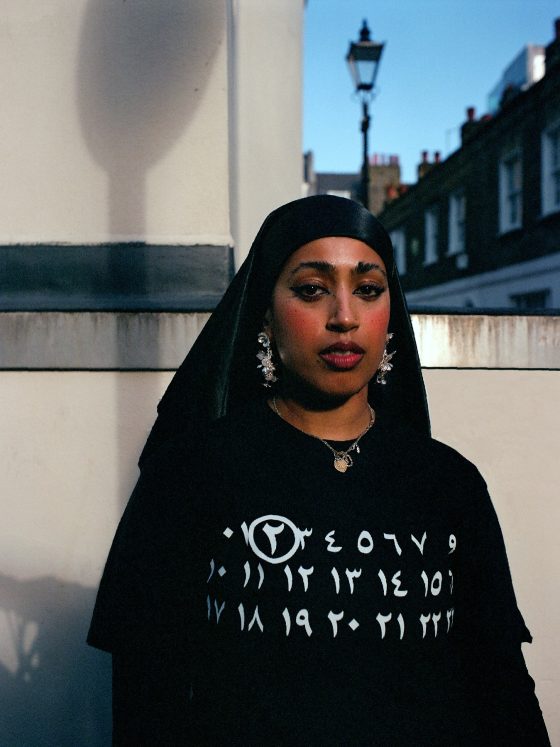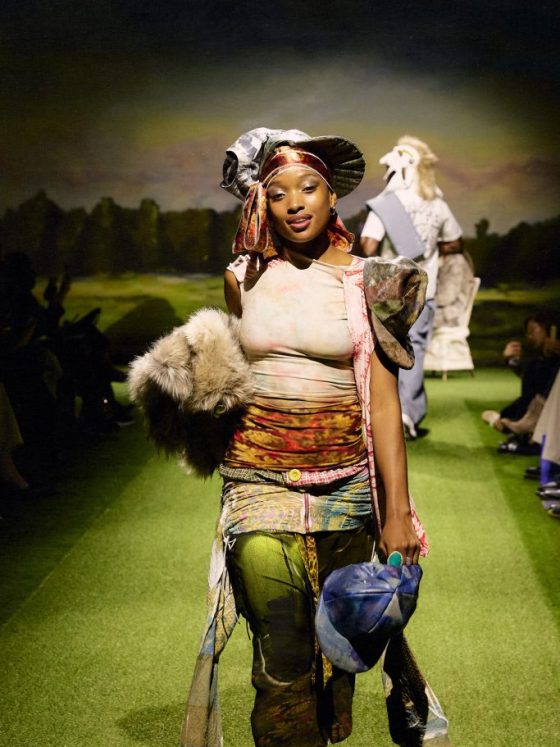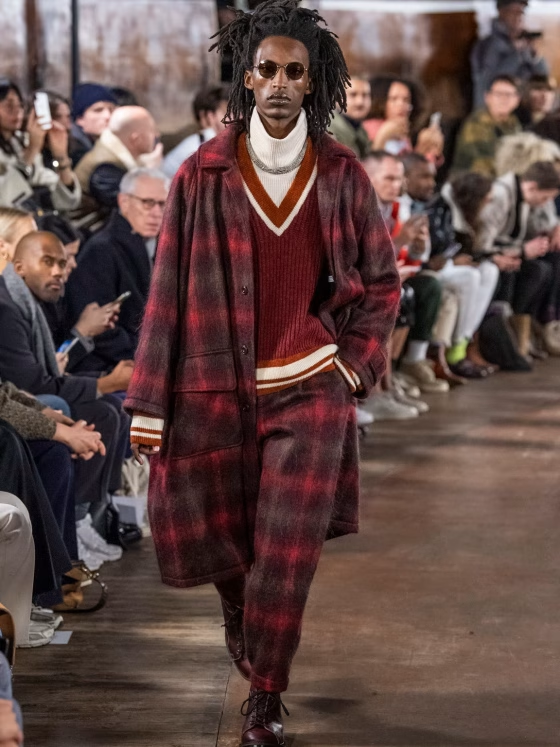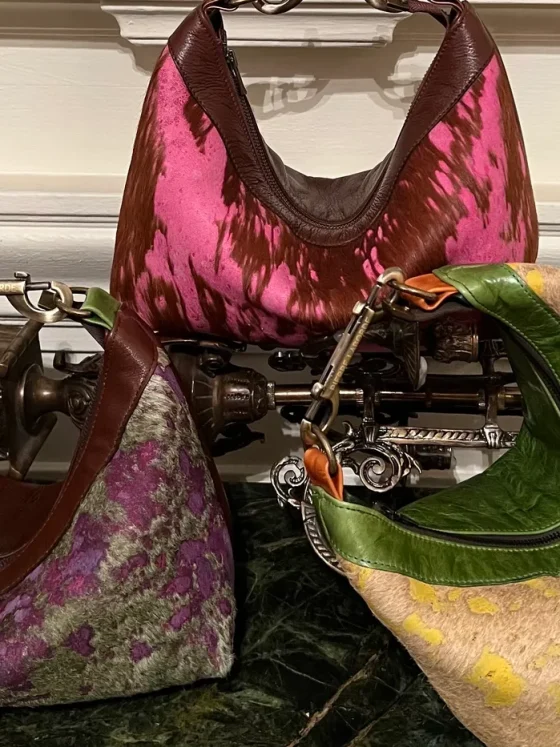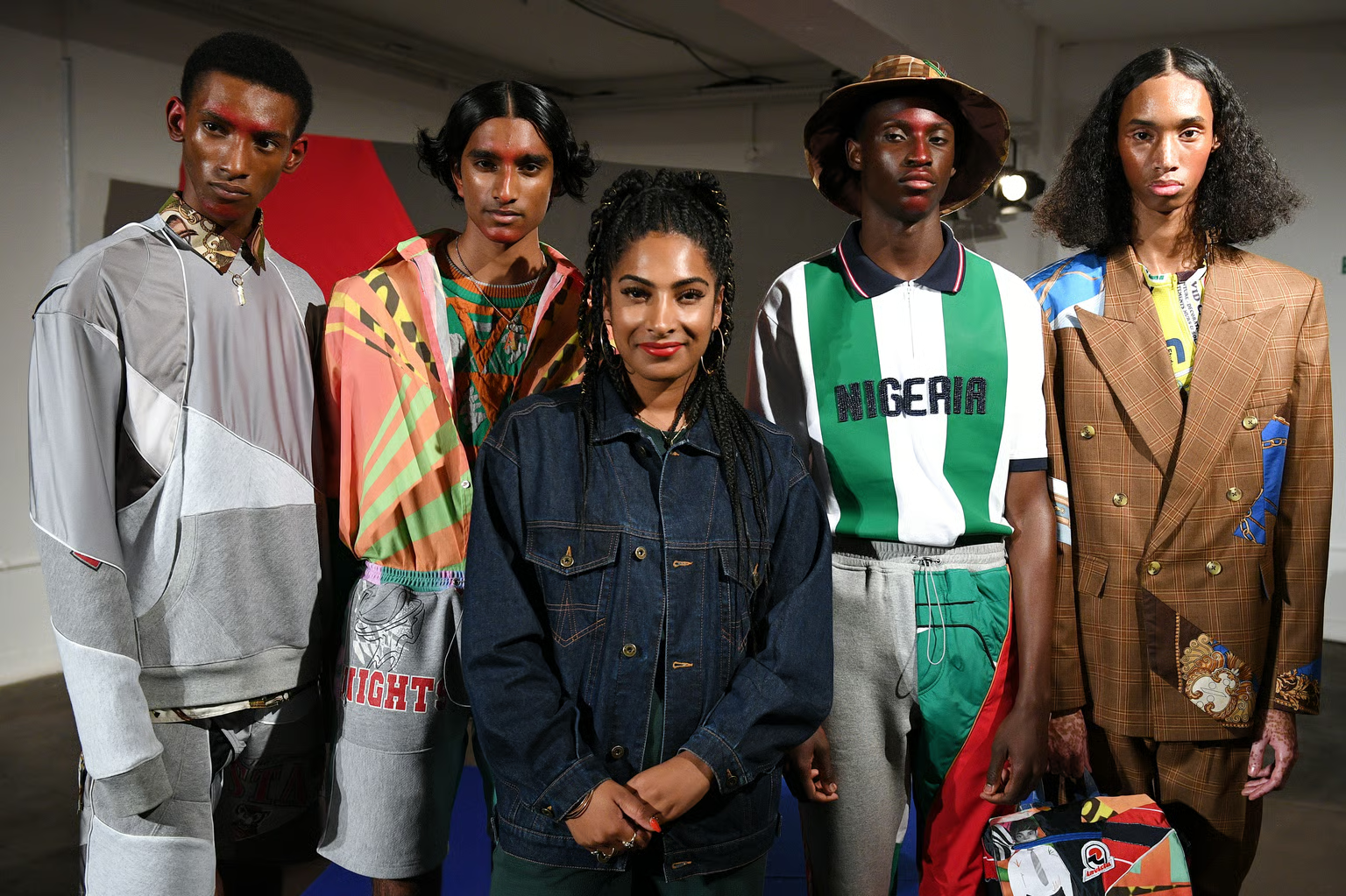
Priya Ahluwalia’s spring/summer 2027 collection began with resistance movements, and then shifted through photographs of people at home. Images of former Black Panther members, away from their public roles, shifted her attention towards rest and the relationships that make endurance possible. In the label’s account of Revel, lightness became a deliberate choice rather than an absence of seriousness. That change matters because it alters what a politically informed wardrobe might contain. It makes room for an evening out, informal company and the pleasure of choosing something to wear. The person in the archive is no longer required to remain permanently in a posture of confrontation.
Presented at the Rosewood London in September 2026, Revel brought that perspective into a collection spanning sportswear, tailoring and occasionwear. Its other major reference was FESTAC ’77, approached partly through architectural imagery translated into print. The most convincing connection between these sources is not a shared period aesthetic. It is a question about collective life: what do people wear when gathering is an occasion for enjoyment as well as conviction?
Ahluwalia’s Revel collection connects Black cultural memory with contemporary dress through festival-inspired print, relaxed tailoring and occasionwear.
A Festival Enters the Fabric
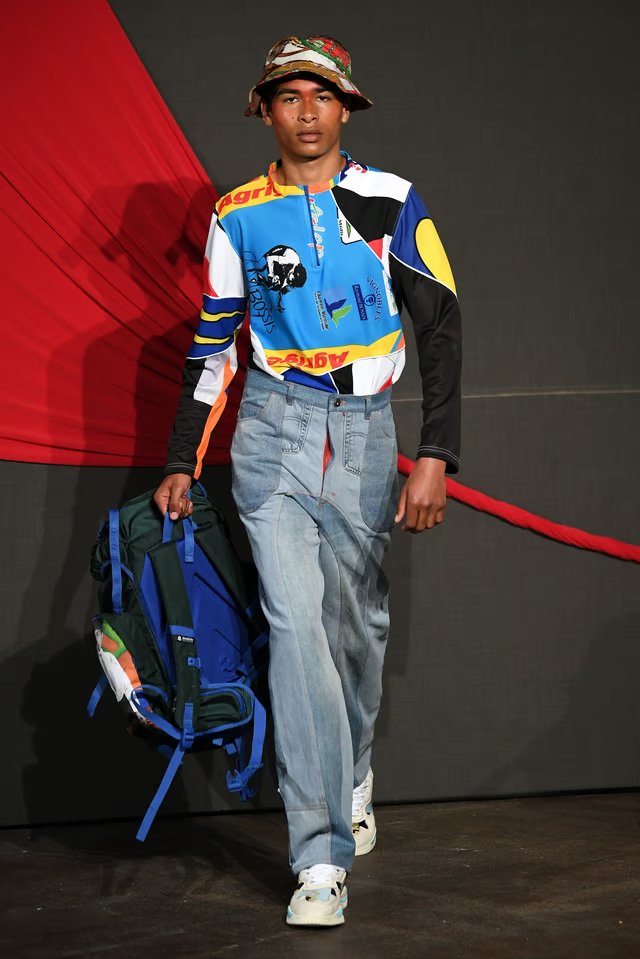
FESTAC ’77, the Second World Black and African Festival of Arts and Culture, took place in Lagos in 1977. It gives Revel a reference point for cultural assembly across Africa and the Black diaspora, rather than one isolated national tradition. Ahluwalia did not rely solely on photographs of the participants. She told Vogue that an abstract red-and-green print on white came from aerial photographs and floor plans associated with the festival venue. The published account does not identify the precise building or drawing, so the reference is best understood at that documented level.
The choice of architectural material creates some distance from literal commemoration. A portrait invites recognition of a person. A floor plan begins with arrangement: boundaries, routes and spaces in relation to one another. Translated into pattern, that source can become visually engaging without remaining immediately identifiable. This is the collection’s clearest act of interpretation. The archive supplies material for a new surface rather than an image simply transferred onto clothing. Its success depends on that surface being useful beyond a single statement piece. In Revel, the print appears across an off-the-shoulder dress, a panelled football shirt and a shirt-and-Bermuda-shorts set.
One Print, Three Ways of Dressing
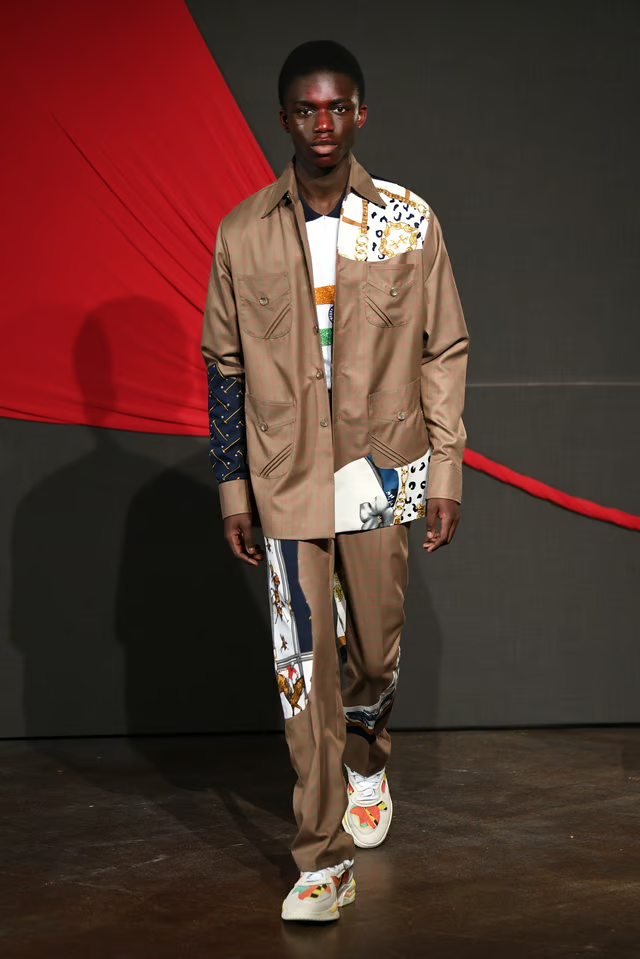
Those applications create different relationships between pattern and silhouette. The off-the-shoulder dress concentrates the print within a close-fitting form. The uncovered shoulder line gives it a defined upper boundary, while the body becomes the principal support for the pattern. It is the most direct occasionwear proposition of the three: the print does not have to compete with an elaborate layering system to make its presence felt. The football shirt introduces a different structure. Its panelled construction places the design within a recognisable sporting format, allowing the historical source to enter everyday clothing without becoming a commemorative T-shirt. The shirt remains a shirt someone might choose for its visual energy, even without knowing what generated the image.
The coordinated shirt and Bermuda shorts distribute the pattern across two garments. Instead of concentrating attention on one continuous silhouette, the set makes repetition part of the outfit’s identity. It also allows the pieces to be separated, giving the print a life beyond the complete runway combination. The documented application supports that possibility, although it does not establish how the garments will ultimately be sold. Together, these uses make a more persuasive argument for plurality than a statement about dressing “everyone”. They offer distinct levels of exposure, formality and coordination while preserving a common visual element.
The football shirt and matching set are particularly important to the collection’s premise. They prevent celebration from being represented only by a dramatic dress. Pleasure can belong to an informal afternoon or an evening gathering as readily as to a formal event.
Looking Beyond the Political Emblem
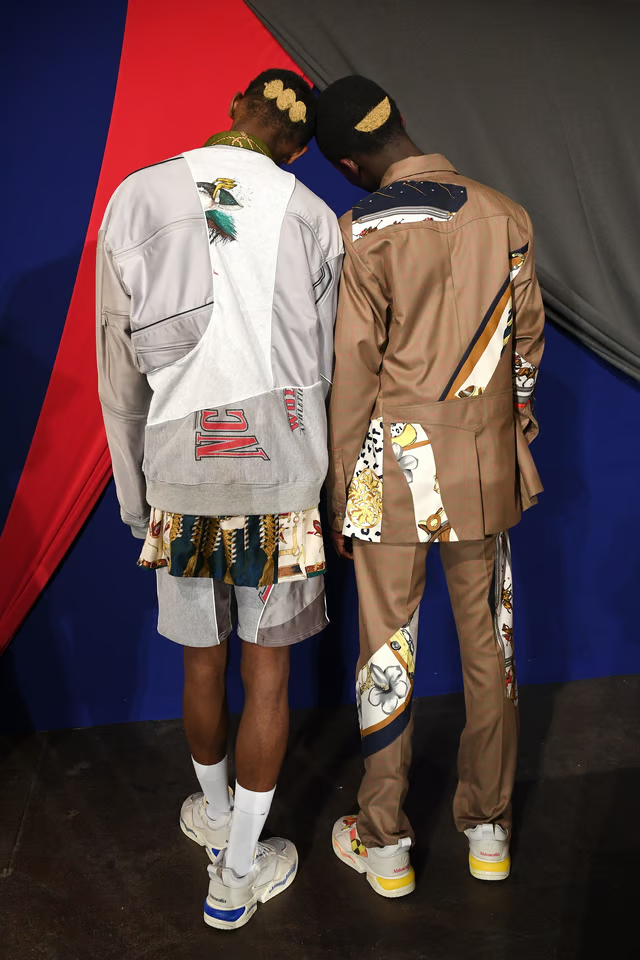
The Black Panther reference requires a different kind of care. Ahluwalia’s official notes identify photographs of former members at home as a turning point in her research. That is a more specific starting point than a general fascination with revolutionary style. The distinction shifts attention from the organisation’s public image towards the people within and around it. Domestic photographs can reveal a different register of self-presentation: not an abandonment of political identity, but a life that cannot be reduced to its most widely circulated symbols. Vogue’s collection report connects this research to berets, layered tailoring and loose denim. Of these, the beret carries the most immediate historical association. It can establish a reference quickly, but that speed is also its limitation. Recognition is not the same as interpretation.
The tailoring and denim offer a less literal route. Formal layers and relaxed trousers allow the collection to move between composed appearance and ease. They suggest that conviction need not require one fixed standard of dress. Here, Revel is more interesting as a wardrobe than as a catalogue of symbols. Its strongest proposition is the coexistence of different registers. A person can move between them without being asked to choose between political seriousness and personal enjoyment. That reading should remain an interpretation of the collection, not a claim about the private lives of everyone represented in its research. The garments raise a question; they do not settle the archive’s meaning.
Celebration Is Not One Dress Code
Ahluwalia’s own account places kindness, optimism and companionship at the centre of Revel. The collection’s shift towards lightness followed her recognition that people engaged in resistance also need rest. That is a more grounded premise than treating joy as an automatically transformative force. It locates pleasure within sustaining relationships: who makes time for someone, who offers company, and who makes an occasion feel possible. The range of clothing matters in that context. Occasion dresses establish one level of display, while sportswear and relaxed separates offer others. The collection does not need every wearer to perform celebration at the same volume.
A useful tension also exists between the title Revel and the domestic origins of its research. Revelry suggests public exuberance; the photographs that informed the collection focused on more unguarded moments. The wardrobe occupies the space between them. This is where the concept becomes more nuanced than a simple opposition between protest and partying. Rest, intimacy and celebration are different experiences. They connect here through the idea that political life is lived by people whose needs extend beyond their public commitments. The clothes are most convincing when they preserve that range instead of translating it into a single heroic image.
From the Friendship Bracelet to a Shared Wardrobe
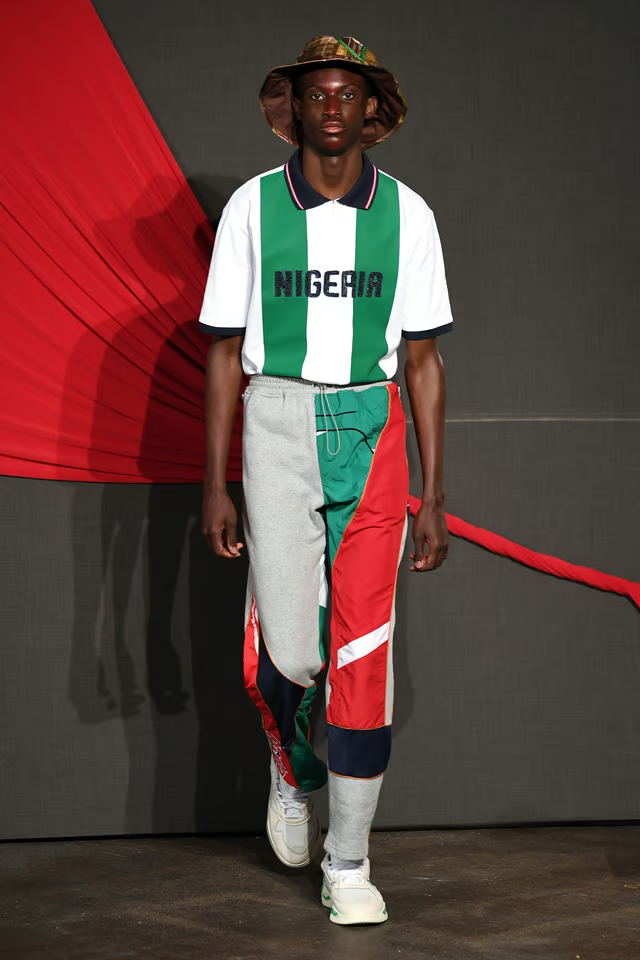
The preceding autumn/winter 2026 collection, Birds of a Feather, provides a useful comparison. It focused on friendship and chosen kinship, with braiding developed across tops, tailoring, corsetry and denim. Its technique was more visibly structural. In the examples described in Anna Cafolla’s Vogue review, braided elements crossed the upper body, reshaped lapels and contributed to fitted forms. The relationship between the theme and the garment was immediate: intertwined material became part of how the piece was organised. Revel works less through one repeated construction device and more through the distribution of references across a wardrobe. Its print can link an evening dress and sportswear without requiring them to share the same shape.
That change is worth noticing without turning it into a complete theory of Ahluwalia’s practice. Two collections demonstrate a developing interest, not a universal rule. They do, however, show different ways of approaching shared life through design. One makes connection visible within the garment. The other allows distinct garments to belong to a common visual setting.
The Brand Beyond Its Founding Shorthand
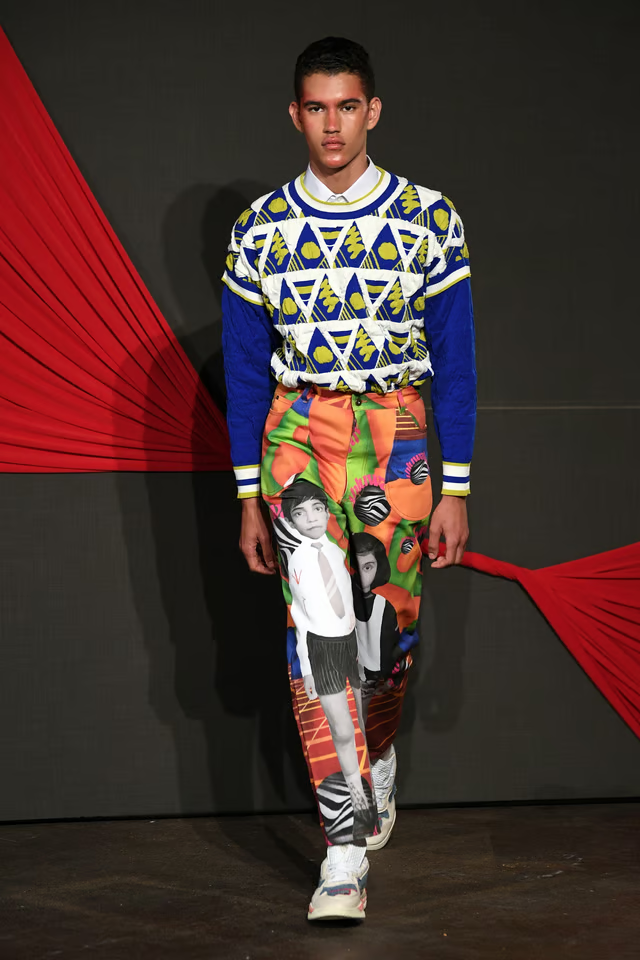
Ahluwalia launched her label in 2018. Its official biography connects her Indian-Nigerian heritage and London upbringing with an interest in reworking vintage and surplus materials through textile and patchwork techniques. Books, films and collaborative projects also form part of the practice. Those foundations explain important aspects of the label, but they should not replace looking at each collection. An account centred only on upcycling would miss the spatial research behind Revel’s print. An account centred only on identity would leave the design decisions unexplained. Neither the material method nor the biography can stand in for a reading of the clothes.
The collection’s cultural references are most productive when they lead to an identifiable transformation. Architectural research becomes a pattern. That pattern survives changes of garment type. Informal political imagery opens the wardrobe beyond an expected uniform. These operations give the collection substance beyond the importance of the subjects it names.
Where Revel Is Most Persuasive
The print provides Revel with its clearest organising device. It links different modes of dressing while keeping the source abstract enough for the garments to be encountered on their own terms. The historical accessories carry a greater risk of shorthand. A familiar emblem can communicate quickly, but it may also encourage recognition to do the work of design. The collection gains depth when its references affect the relationship between garments, rather than relying on one object to announce the politics. Its breadth is consequently both an ambition and a test. A wardrobe spanning sportswear, tailoring and occasionwear needs continuity without making every piece alike. The repeated print offers that continuity more directly than the historical narrative alone.
Ahluwalia’s achievement here is not to produce a definitive image of Black celebration. It is to propose several ways of dressing within a shared cultural conversation, and to make the differences between them part of the point.
The Omiren Argument
Revel is strongest where a shared reference creates room for different kinds of dress. Its festival-derived print connects an occasion dress, a football shirt and coordinated separates without making them interchangeable.
That is a more useful expression of collective life than a single prescribed image. People can occupy the same cultural space while choosing different degrees of formality, exposure and display.
Ahluwalia makes celebration part of the political wardrobe by expanding what that wardrobe can accommodate. The result is most persuasive when the history gives the clothes possibilities, not instructions.
Also Read:
- Priya Ahluwalia and the Design Intelligence of Double Diaspora
- African-Indian Design Is Not a Fusion Trend: It Is a Fashion History the Industry Has Failed to Name
- Reclaiming the Narrative: How Cultural Resistance Shaped the World’s Most Powerful Style Movements
- Notting Hill Carnival Is a Fashion Institution. British Fashion Media Has Failed to Treat It Like One.
Frequently Asked Questions
Who founded Ahluwalia?
Priya Ahluwalia founded the London label in 2018. Her Indian-Nigerian heritage, London upbringing and interest in textile transformation are central to its stated foundations. The official biography links these to reworking vintage and surplus materials through textile and patchwork techniques, while books, films, and collaborative projects also form part of the practice.
What is Revel?
Revel is Ahluwalia’s spring/summer 2027 collection, presented at the Rosewood London in September 2026. Its official notes describe a deliberate turn towards lightness, optimism and togetherness. The collection spans sportswear, tailoring and occasionwear, and its print appears on an off-the-shoulder dress, a panelled football shirt and a shirt-and-Bermuda-shorts set.
Which historical sources informed the collection?
The research included photographs of former Black Panther members at home and material relating to FESTAC ’77. Architectural imagery associated with the festival informed a recurring red-and-green print on white. Vogue also connects the Panther research to berets, layered tailoring and loose denim, so the sources shape both the print and the wardrobe.
What is FESTAC ’77?
FESTAC ’77, the Second World Black and African Festival of Arts and Culture, took place in Lagos in 1977. It gives Revel a reference to cultural assembly across Africa and the Black diaspora. Ahluwalia told Vogue the print came from aerial photographs and floor plans associated with the festival venue, though the published account does not name the precise building.