A garment can look convincing on its hanger while carrying a puckered seam, a ragged buttonhole or an uneven hem. The University of Georgia Extension identifies these as construction details worth examining before purchase. Its guidance also makes an important distinction: a higher price does not necessarily establish higher quality. The useful response is not to hunt for the most elaborate interior. Instead, examine whether the construction is tidy, functional, and appropriate to the garment. Five checks offer a manageable starting point: the join between fabric pieces, the treatment of their cut edges, buttonholes, zips and hems.
This is an inspection of the actual item in front of you. It differs from checking an online tailoring specification or identifying what a lining contributes. The aim is narrower: notice an existing fault, ask a precise question and decide whether you are comfortable buying the garment as it stands.
Inspect seams, raw edges, buttonholes, zips and hems before buying. Five practical checks show what visible construction can and cannot tell you.
1. Seams: Look at the Join, Not Only the Stitching

Start with one accessible seam and follow it along its length. Look for puckering, fabric caught in the stitching, or a join that doesn’t lie flat. The University of Georgia Extension specifically identifies these conditions as warning signs in garment construction. On a woven shirt, for example, inspect the side seam from the underarm towards the hem. Then check the corresponding area on the outside. You are checking whether the join sits smoothly or gathers the surrounding cloth into an unintended ridge. On a fitted dress, examine the ends of visible darts as well: The extension guidance notes that poorly tapered darts can produce puckering or bulges.
Keep the judgement specific. “This seam puckers near the waist” is a useful observation. “This garment will fall apart” is not a conclusion the observation alone supports. If the feature might be deliberate gathering or shaping, ask the retailer to explain it rather than treating every departure from flatness as a defect.
2. Cut Edges: Check What Is Happening Beside the Seam
The seam joins the pieces; the seam allowance is the fabric extending beyond that join. Looking at both prevents a neat row of stitches from becoming the whole assessment. The University of Georgia Extension advises checking whether raw edges are finished to prevent fraying where the material requires it. Consider an unlined woven skirt. With permission, turn a small accessible section inside out and inspect the fabric beside the side seam. Does a finish contain the edge, or are loose threads already working towards the stitching? A useful question is not simply “Has this been finished?” But “Is the edge treatment controlling the fraying visible on this item?” The extension guidance connects inadequate allowances and ravel-prone fabric with the risk of the seam deteriorating.
Do not turn this into a contest for the most decorative interior. The check concerns the finish’s condition, and you should assume that a visible allowance does not guarantee an alteration is possible; if letting the garment out matters to the purchase, have the relevant area assessed before relying on it.
3. Buttonholes: Examine the Opening and Try the Button

Inspect the buttonhole itself, not only the button. Look for ragged edges, loose stitching and threads obstructing the opening. The University of Georgia Extension recommends closely stitched, machine-made buttonholes without loose threads and buttons that are securely attached and fit their openings easily. A shirt cuff provides a specific test. Fasten and unfasten it gently, watching whether the button passes through without catching on loose thread. Repeat with another frequently used fastening, such as the shirt front. This is a functional check, not permission to pull hard on the button or stretch the opening.
More elaborate construction is not automatically better for the job. The extension guidance explicitly says that the absence of bound buttonholes is not a sign of poor quality, and that bound buttonholes are unsuitable for some washable sports and casual garments. Judge the fastening against its intended use rather than a hierarchy of expensive-looking techniques.
4. Zips: Check the Movement and the Surrounding Fabric
Examine a zip as both a fastening and a sewn-in component. The University of Georgia Extension recommends secure attachment, fabric that does not pucker or buckle alongside it, and smooth operation. These are separate observations: a zip may move while its insertion still distorts the garment. On a skirt with a back zip, first inspect the closed fastening. Does the surrounding fabric sit smoothly? Then open and close it gently, keeping fabric clear of the slider. If it catches, stop and establish what is obstructing it rather than forcing it. The object is to identify a problem before buying, not create one during the inspection.
If the fastening works when the garment is off but pulls awkwardly during the try-on, do not immediately diagnose a defective zip. Ask for help distinguishing fit from fastening. The purchase decision should address the problem you actually have, not rest on the reassuring fact that the zip closed once.
5. Hems: Look Underneath, Then Look Again While Wearing
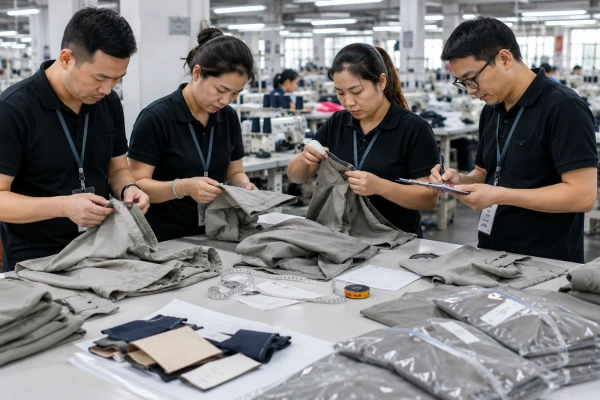
Inspect the inside edge and the garment’s hanging appearance. The University of Georgia Extension advises checking that the hems lie flat and hang smoothly and evenly, with a consistent width, as described in the construction. An attractive outer edge alone does not reveal everything beneath it. For a straightforward skirt hem, look underneath for bunching or an abruptly changing fold. Then try the skirt on and check the intended line around the body. For trousers, examine both leg openings rather than inspecting one and assuming the other is identical. The practical question is whether the finish supports the garment’s intended appearance.
If lengthening is part of your plan, investigate before purchase. Extension guidance recommends checking whether there is enough hem allowance and considering whether the existing crease will press out. A folded reserve of fabric is not, by itself, a promise that an alteration will leave no trace.
Make the Finding Useful
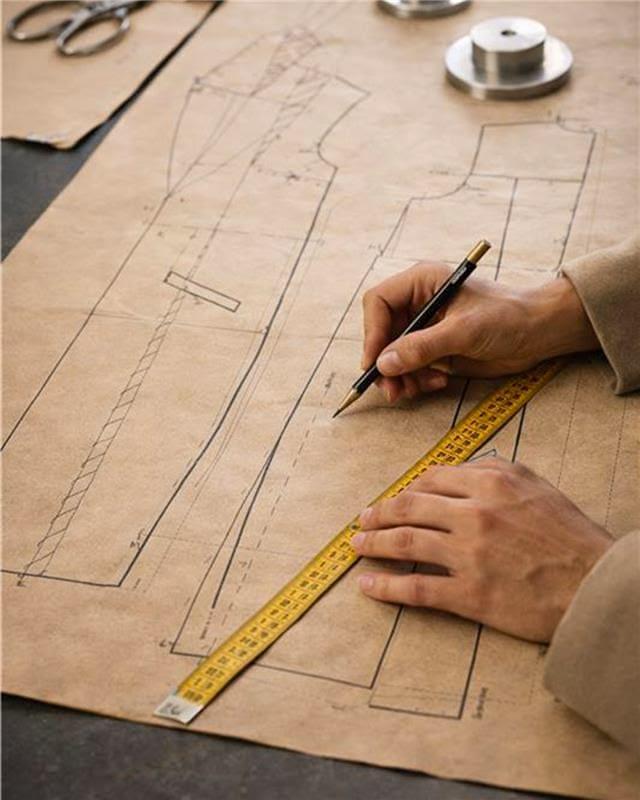
An inspection should produce a precise observation, not an instant verdict on the whole brand. “There is loose stitching around this buttonhole” gives a retailer something to address. “The quality feels wrong” is harder to resolve. Where you find a problem, ask to inspect another example of the item or establish what correction is being offered before paying. Do not buy on the assumption that an unexplained fault will disappear in washing or that an alteration will be straightforward. These checks can reveal visible construction problems and fastening difficulties. They do not establish wash performance, long-term durability or the conditions under which the garment was made. A useful inspection narrows uncertainty; it does not eliminate it.
The Omiren Argument
The principle is fitness for purpose. A bound buttonhole is not inherently superior to a suitable machine-made one, and a complicated interior is not automatically better.
Inspect what the detail is meant to do. Does the seam sit properly? Is fraying controlled? Does the fastening work? Does the hem support the intended line?
The value of looking closely is not that it makes every buyer a technician. It makes the purchase depend on something more specific than price, presentation or the word “quality”.
Also Read:
- How a Seam Becomes a Statement: The Hidden Language of Garment Construction
- Second-Hand Aso-Oke and the Inheritance Economy
- How a Boutique Chooses Which Labels Belong on Its Racks
- What to Buy Before You Leave Lagos, Accra, or Nairobi: The Fabric Edition
Frequently Asked Questions
Does a neat interior prove that a garment will last?
No. A neat interior can show orderly finishing, but these checks are not a durability test. They do not establish wash performance, long-term durability or the conditions under which the garment was made. Assess the particular detail without turning its appearance into a lifetime guarantee.
Should every garment have the same seam finish?
This guide doesn’t prescribe a single finish. The extension guidance makes the requirement conditional: where the material ravels, finish the edges to control it. Judge the finish by whether it controls the fraying visible on the item in front of you, not by one preferred technique.
Is one loose thread enough to reject a garment?
Establish what is loose before deciding. A thread obstructing a buttonhole or an area of insecure stitching deserves attention, because the University of Georgia Extension recommends closely stitched buttonholes without loose threads. Do not pull it or assume it is merely excess thread; ask the retailer to assess it.
What if I cannot inspect the inside?
Do not guess. Ask to see an accessible area or request a clear photograph. Record what remains unknown rather than treating a polished exterior as evidence of hidden construction. If the retailer cannot show you the inside, that uncertainty stays part of your purchase decision.