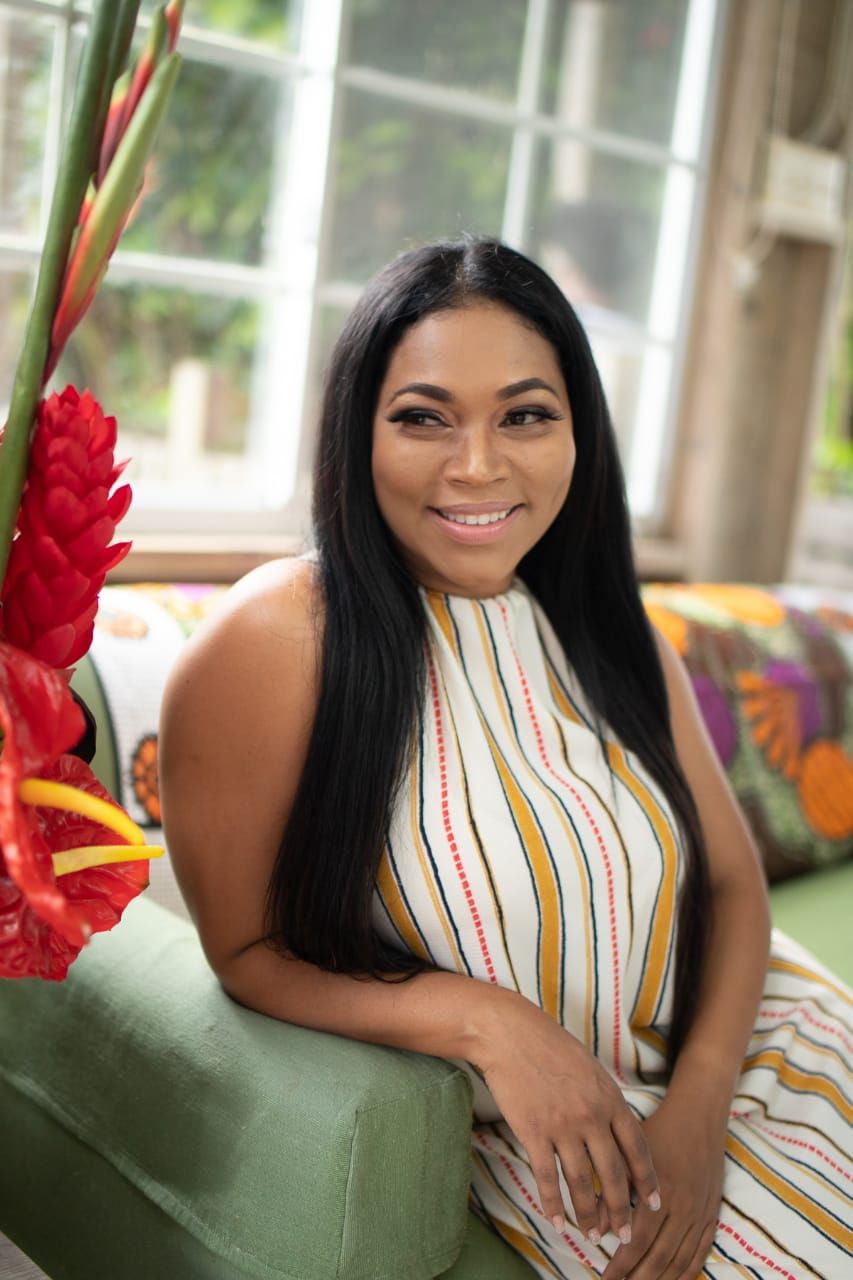
Jamaica 64 arrives with a clearly articulated proposition: Independence dressing can express national belonging without becoming a uniform. In its published account of the collection, Urban Vine Media connects a limited-edition release with “Emancipendence”, Bougainvillaea, and an image of Jamaican femininity that accommodates both elegance and exuberance.
That is a promising campaign idea. It is not yet a complete design argument.
The distinction matters because the account makes substantial claims for the collection’s visual character without identifying individual Jamaica 64 garments. It describes confidence, softness, resilience, and cultural connection but doesn’t explain which cut, material, surface treatment, or combination of pieces produces those effects.
Reading beyond the campaign therefore requires a different kind of attention: separating what the published narrative establishes from what it asks the reader to accept.
The result is not a verdict that the clothes fail. It is a more specific finding about the evidence available.
Jamaica 64 has an identifiable public story, and the sources reviewed do not establish whether particular garments carry that story independently.
Tamia Carey’s Jamaica 64 links Independence dressing with Bougainvillaea. We examine the collection’s public narrative and what remains unproven about the clothes.
National pride without a prescribed uniform

Urban Vine Media frames Jamaica 64 as an alternative to a narrow interpretation of patriotic dressing. Its account suggests that national pride can coexist with personal glamour, individuality and a broader range of visual expression.
The collection’s “emancipative” identity connects emancipation and independence within that narrative.
This is the campaign’s strongest premise. It leaves room for the wearer rather than prescribing a single appearance as the correct expression of belonging.
For a fashion collection, however, that premise needs a garment-level mechanism. Individuality might emerge through varied silhouettes, alternative combinations, or different degrees of ornament, but Jamaica 64 assign any of those possibilities. It shouldn’t be assigned to Jamaica 64 without identifiable examples.
“An invitation is easy to write. The work is in the clothes that make the invitation believable.” Omiren Styles Editorial Intelligence
The distinction is between an invitation and its execution. The invitation is clear: wear national pride on personal terms, and the execution must show how the clothes accommodate those terms.
The published coverage does not supply that comparison. Its description of patriotism as an attitude rather than a uniform is therefore best understood as the collection’s stated positioning, not an independently demonstrated assessment of the range.
That does not empty the proposition of meaning. It identifies what the design analysis still needs to test.
Bougainvillaea: a reference with several possible roles
Bougainvillaea supplies the collection’s most specific reported visual association.
The Urban Vine account interprets the flower through abundance and resilience, then connects those qualities to a woman presented as soft but not fragile and polished but not restrained. These are the writer’s symbolic readings of the collection’s imagery and promotion.
A floral reference can enter fashion in several different ways. It may become an image on a surface, a source for colour relationships, a three-dimensional ornament, or a cue for styling; the important question is which of those operations actually occurs.
The reviewed account does not identify a Jamaica 64 garment and explains that operation. It does not establish whether bougainvillaea appears through print, embroidery, applied decoration or another treatment.
Consequently, the flower’s symbolic presence is better documented than its translation into clothing.
Evocative language should not blur that difference. Calling an image resilient does not explain a sleeve, neckline or hem, and describing a campaign as feminine does not establish how its garments organise volume or relate to the body.
The useful critical question is not whether Bougainvillaea makes an attractive reference. It is whether the collection transforms that reference into a recognisable design decision.
The brand catalogue adds context, not automatic attribution.
Carey’s website provides evidence of a wider bougainvillaea vocabulary. Its “Bougainvillaea by TAMIA” page lists earrings in numerous named colours and formats, including Pink, Poinciana Red, Fiesta Orange, Jamaica Gold and Love Bird Green, alongside hoop, triangle and pentagon variants.
This establishes that bougainvillaea is not confined to the wording of the Jamaica 64 article. It appears as an organised accessory category within the brand’s own catalogue.
But the catalogue page does not identify those earrings as part of Jamaica 64 in the retrieved material. They cannot simply be added to the collection to provide the missing specificity.
The difference is consequential. A brand may use a visual reference across several releases or product categories, and that continuity can explain its broader vocabulary without proving the contents of one particular collection.
The accessory names also cannot establish construction. A floral title does not independently identify an earring’s material, fastening, scale, or manufacturing process.
What the page contributes is narrower and useful: bougainvillaea has a documented place in Carey’s retail language. Whether particular accessories participated in the Jamaica 64 campaign remains a separate attribution question.
Earlier clothes must stay in their own collection.
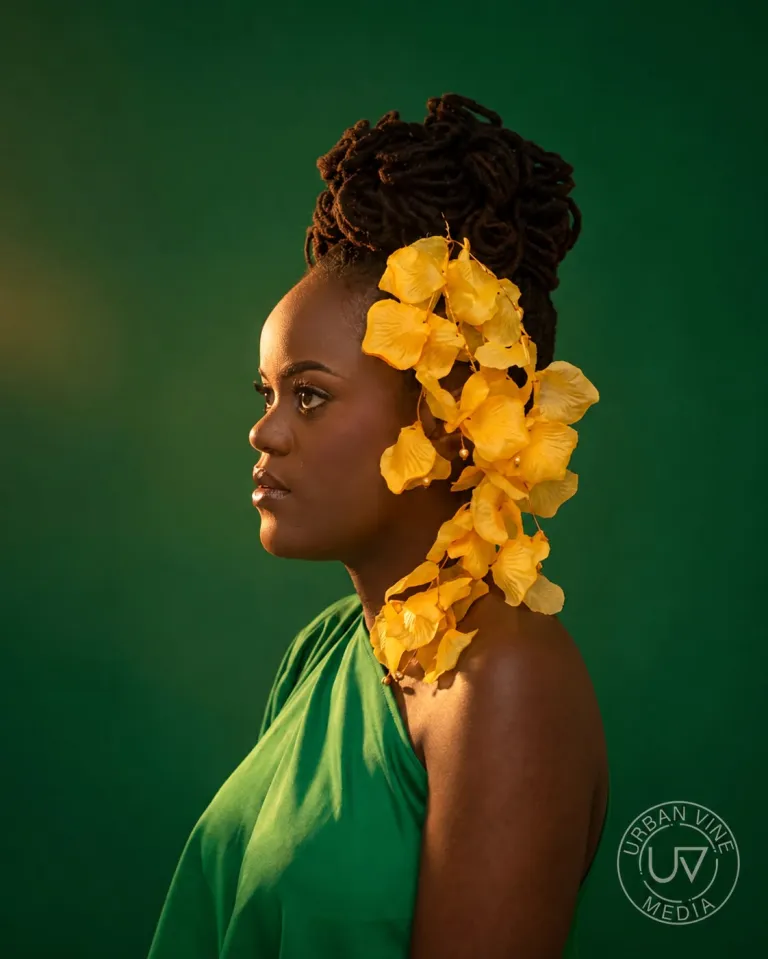
The most concrete garment references in the Urban Vine article belong to an earlier release.
Discussing Carey’s 2022 Born Free collection, the article names dresses, the Chikita top, Ankara-print dashiki minidresses, handbags and Jamaica 60 fabric slides. It uses that history to frame Jamaica 64 as a continuation of an approach to Independence dressing.
The Jamaica Observer’s 2022 report on the same collection corroborates those pieces. It describes the Chikita as a yellow-and-green top, the Ankara-print dashiki minidress, limited-edition Jamaica 60 slides, and matching handbags, all created for the 60th anniversary.
The historical connection is relevant. It suggests that the later release belongs within an ongoing strand of Carey’s work rather than appearing as an isolated campaign.
However, continuity of intention is not continuity of inventory.
The Chikita top cannot become a Jamaica 64 example just because it appears nearby in the same article, and a reference to earlier Ankara-print garments cannot establish the later collection’s pattern language.
This is where a collection analysis can become misleading without making an obviously false statement. A paragraph may begin with a new release, move through earlier garments and return to a broad judgement about the designer, leaving the reader with a more detailed impression of the current clothes than the evidence supports.
Keeping the releases distinct protects the work. It lets the earlier collection provide context without making it serve as the evidentiary lookbook for the later one, and the Observer’s 2024 report on Jamaica 62 shows the same pattern: a new release each Independence season.
What Carey’s wider practice can explain
A designer profile published by Port of Spain Fashion Week describes Carey’s background in styling and personal shopping, her return to Jamaica in 2010 and the development of her clothing and accessories line. It characterises the label through prints, patterns, and bold colour, and says Carey designs its dresses, tops, and bags and has them sewn in Jamaica.
That profile provides useful context for the breadth of her practice. Clothing and accessories sit within the same authored wardrobe proposition, while styling experience forms part of the professional background described.
It does not establish the manufacturing location, composition or production arrangements of every Jamaica 64 item.
The profile also describes a target customer and a size range. Those are statements about the label as presented in that profile, not a verified fit assessment of this collection.
The distinction keeps biography in its proper place. Professional history can explain the context in which a collection is developed, but it cannot establish that a particular garment succeeds.
For Jamaica 64, the more productive use of that background is to ask whether the clothing, accessories, and campaign form a coherent whole, and then to identify each contribution. Without the relevant garment sequence and creative credits, the answer remains incomplete, and our piece on why the Global South never got credit for what it made explains why those credits matter.
Limited edition is a release description, not a performance finding.
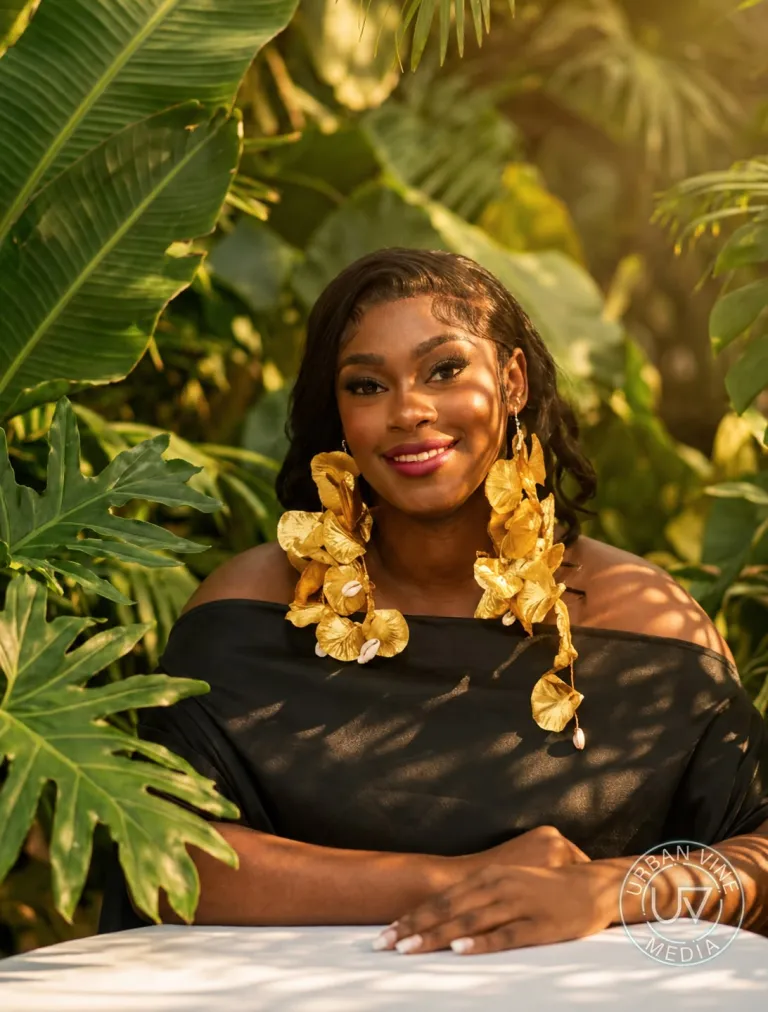
Urban Vine Media describes Jamaica 64 as limited edition and develops that framing into an argument about keepsakes, memory and clothing that can outlast an Independence season.
Those ideas need separating.
“Limited edition” describes how the release is presented. Without production information, it does not establish the extent of its scarcity.
Likewise, a piece can be intended as a keepsake without evidence that buyers collect it or retain it over time. A campaign can encourage wear beyond a national celebration without demonstrating durability or repeated use.
The article’s suggestion that the collection is timely but not disposable is therefore an interpretation, not a verified finding about material performance.
The reviewed sources establish no sales, returns, or reorder data. Consequently, there is no basis to turn the election’s narrative appeal into a commercial success claim.
Keeping these categories distinct leaves room for an honest discussion of intention without manufacturing outcomes.
Where the campaign’s work ends
The public account of Jamaica 64 does substantial interpretive work for the reader. It names the occasion, explains the flower, proposes a customer identity and connects the release with earlier work.
It does not provide a sufficiently specific route from those ideas to individual clothes.
That gap changes the appropriate conclusion. It would be unjustified to praise the collection’s construction but equally unjustified to dismiss its design because the available writing does not describe it adequately.
The limitation belongs to the record under review.
A fuller assessment would need attributable images of specific garments, along with enough information to distinguish clothing from accessories and to assess photographic presentation. Material claims require their own documentation, and physical performance remains a separate question.
Those distinctions are not obstacles to criticism. They define what kind of criticism the evidence can support.
The Omiren Argument
Jamaica 64 has a legible campaign proposition: belonging need not require visual conformity. Its bougainvillaea association gives that proposition a recognisable reference, while its relationship to earlier Independence work supplies context within Carey’s practice.
The unresolved issue is translation.
The reviewed coverage does not show how specific Jamaican 64 garments translate that proposition into silhouette, surface, or construction. The broader accessory catalogue and the earlier Born Free pieces cannot supply that missing proof.
The appropriate finding is therefore neither endorsement nor rejection of the clothes. The campaign’s argument is more fully documented than the collection’s design.
Going beyond the campaign means preserving that distinction. National significance, personal expression, and floral symbolism may explain why a collection matters to its maker or audience, but the garments themselves must still show whether they carry those ideas.
More of our Jamaican fashion coverage is at Omiren Styles.
Also Read:
- Jamaican Designers Building a fashion identity on Their Own Terms
- Dancehall Fashion History: How Kingston Dressed the World First
- Carnival Fashion vs Everyday Caribbean Style: The Gap the Media Has Never Closed
- Mia Amor Mottley: The Prime Minister Who Wears the Caribbean on the World Stage
Frequently Asked Questions
What is Jamaica 64?
Published coverage describes it as Tamia Carey’s limited-edition collection associated with Jamaica’s Independence season, “Emancipendence”, and bougainvillaea.
Are the Chikita Top and Jamaica 60 Slides part of this collection?
The reviewed article places those items in the earlier Born Free collection. They are not established as Jamaica 64 garments.
Are the Bougainvillaea by TAMIA earrings confirmed collection pieces?
The brand’s website lists them within a separate accessory category. The retrieved page does not establish their inclusion in Jamaica 64.
Does this article assess construction or fit?
No. It examines published collection coverage and its limits. It does not claim first-hand garment inspection or a wear test.