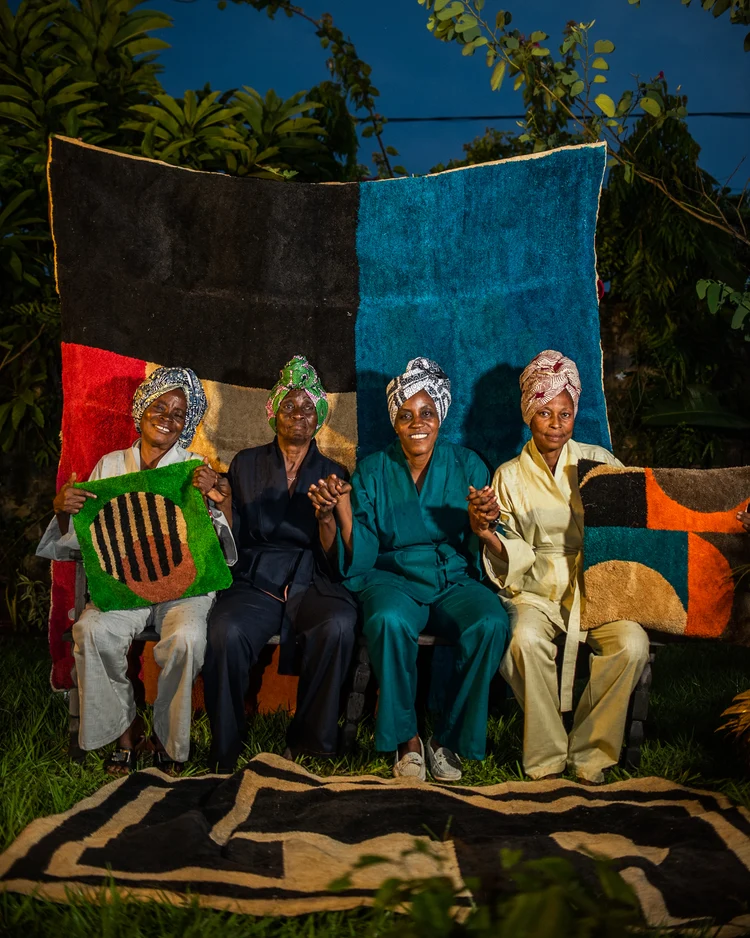
Maman Louise, Maman Jacquie, Maman Astride and Maman Carole hold pillowcases they made. A photograph published with Oury Sene’s June 2025 profile of Kilubukila names them from left to right.
It also credits the photographer, Azagard Wenga Itambo, and identifies the image as supplied courtesy of the workshop.
The caption does something essential: it connects named women to finished work. It does not present them simply as figures inside an atelier or anonymous representatives of a craft tradition; it states their contribution to the objects.
That record provides a starting point for examining Jess Kilubukila’s design practice. Rather than beginning with the founder’s biography and bringing the makers in later, it puts the people associated with the work at the centre.
“A name beside an object is a claim about who did the work. Credit begins by saying exactly what that claim covers.” Omiren Styles, Editorial Intelligence
The documentation is meaningful but incomplete. It does not assign each pillowcase to an individual, identify every production stage or explain who determined particular patterns.
The question, therefore, is not whether the women should receive recognition, because the published caption already establishes their contribution. It is how precisely that contribution can be described, and how it sits alongside the founder’s role and the Kuba knowledge he says informs the work.
Four named cushion makers anchor an examination of Jess Kilubukila’s workshop, Kuba textile knowledge and the evidence behind creative credit.
Begin with the makers, not an anonymous workshop.
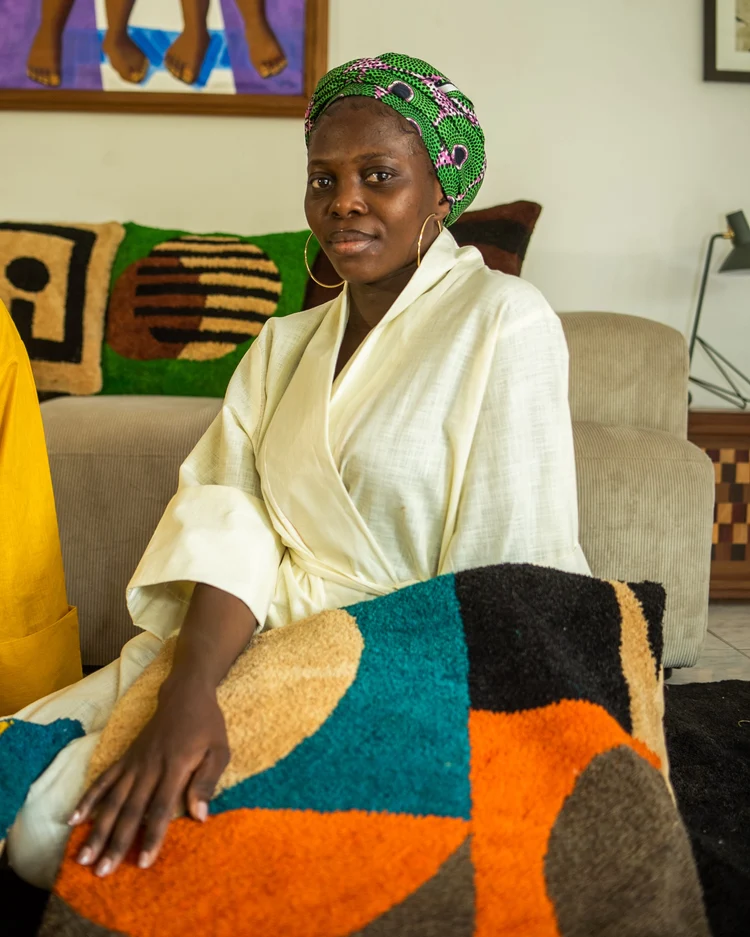
In Sene’s profile for Guzangs, the four women’s names accompany a specific group of objects. That is more informative than a general reference to products made by “local artisans”, because it gives readers an identifiable relationship between people and work.
The same profile describes Kilubukila as a cultural design house and social enterprise based in Kinshasa, founded in 2017 by Jess Kilubukila, a Congolese-French entrepreneur who left a finance career in London. It says the brand makes handmade cushions, rugs and wall hangings from raffia palm, woven with women artisans in Kinshasa and Kasai.
The subject here is the documented cushion-making group, not a formally named collection. The source does not provide a collection title, commission brief, or object register for these pillowcases, and assigning one would create a project history the available record does not establish.
The attribution is collective. It does not show whether each woman completed a cover independently or whether several women contributed to each piece, so both possibilities remain open.
That distinction does not weaken the credit; it prevents overstatement from making the recognition inaccurate. Louise, Jacquie, Astride and Carole are identified as makers of the pillowcases they hold, and their individual responsibilities within that work are not specified.
The photograph also carries a separate authorship credit. Itambo made the image through which the work is being encountered, and keeping the photographic and making credits visible recognises different contributions without collapsing them into the workshop’s name.
What Jess Kilubukila says he contributes
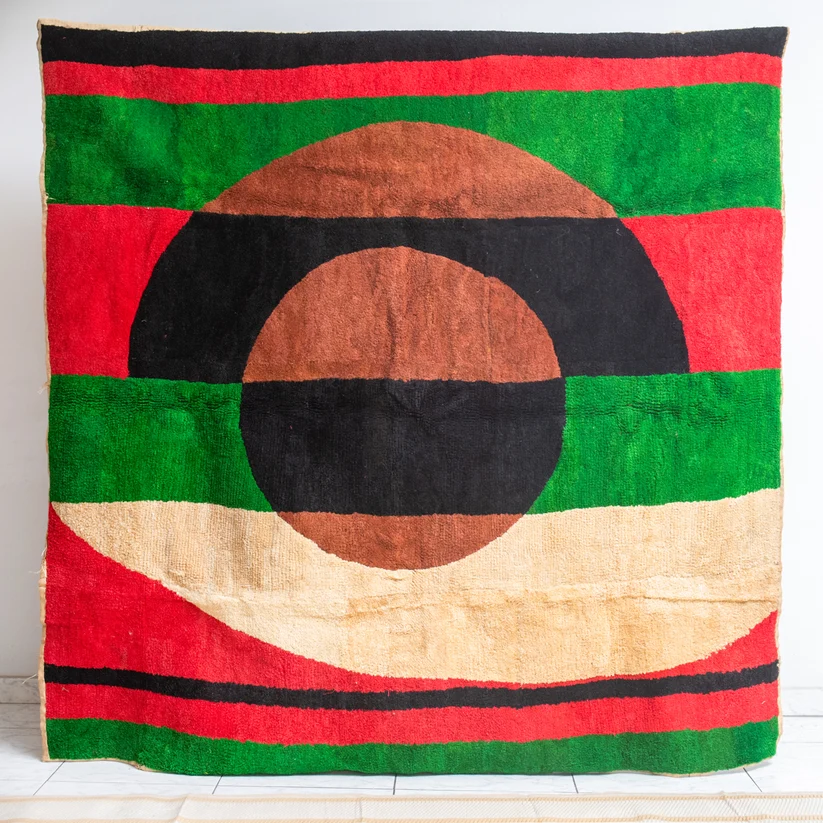
Jess Kilubukila describes his role more fully in an interview with Omotola Saba, published by Marmalade Collective in June 2025. He identifies cushions and rugs as leading products and describes combining traditional Kuba textile techniques with new objects, patterns, designs and colours.
His explanation distinguishes aesthetic development from the making processes he wants to retain. He presents himself as more willing to change visual direction than to alter established techniques, which is his account of the practice rather than an independently observed production record.
It nevertheless helps clarify the founder’s stated contribution. Product development, pattern direction and colour decisions are creative work, and they should be recognised without being made to explain everything between an initial proposal and a finished object.
Kilubukila also describes the practical demands of coordinating production, including material delays and workshop problems. His account places organisation alongside design within his responsibilities.
A founder can contribute through both. Neither contribution requires the makers to become invisible, and the stronger account identifies how different roles meet, rather than assigning the complete creative result to whichever name appears on the label.
Making knowledge is not passive execution.
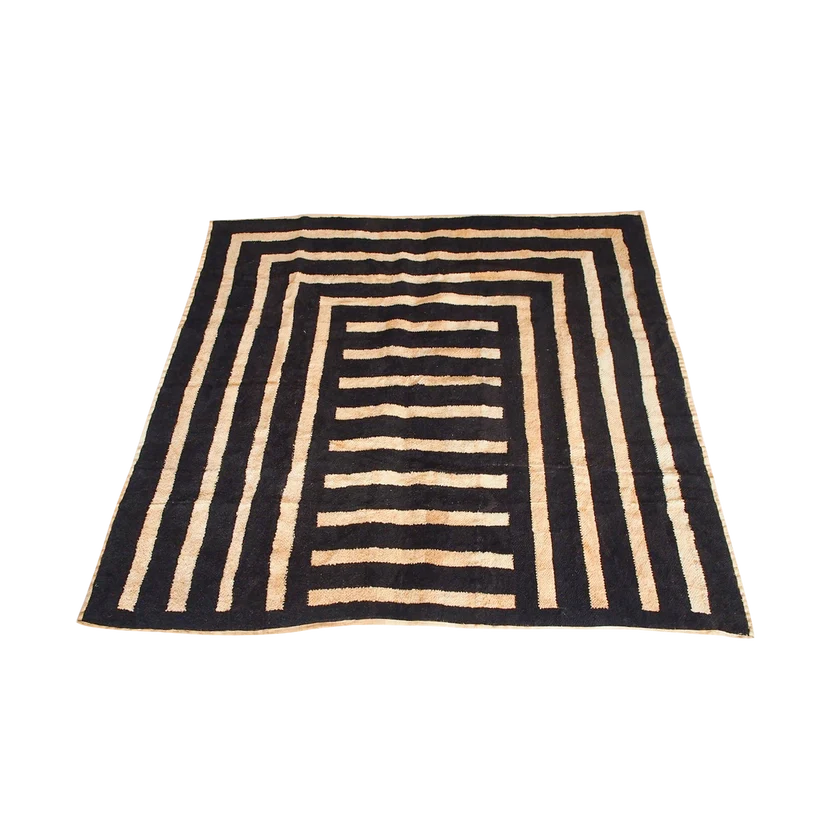
Sene’s profile quotes Kilubukila describing the women as “culture bearers, designers, and storytellers” and presenting the process as co-creation. His language acknowledges knowledge and creative contribution, not simply the delivery of instructions.
That statement matters, but it does not provide a complete authorship record for the photographed pillowcases. The source does not establish who proposed a particular arrangement, adjusted a technique or resolved a production problem.
A description of collaboration and documentation of a specific decision are different forms of evidence. The first explains the founder’s stated approach, and the second would show how that approach operated within an object.
The sources reviewed here do not include Louise, Jacquie, Astride or Carole explaining the pictured work in their own words. That limits the published perspective, though it does not establish that they lack a voice within the workshop itself.
Their own accounts would add something distinct: how they describe their expertise, where they identify creative decisions and what they consider their contribution. They should not be replaced by assumptions about what a maker must have done.
The workshop’s other named responsibilities
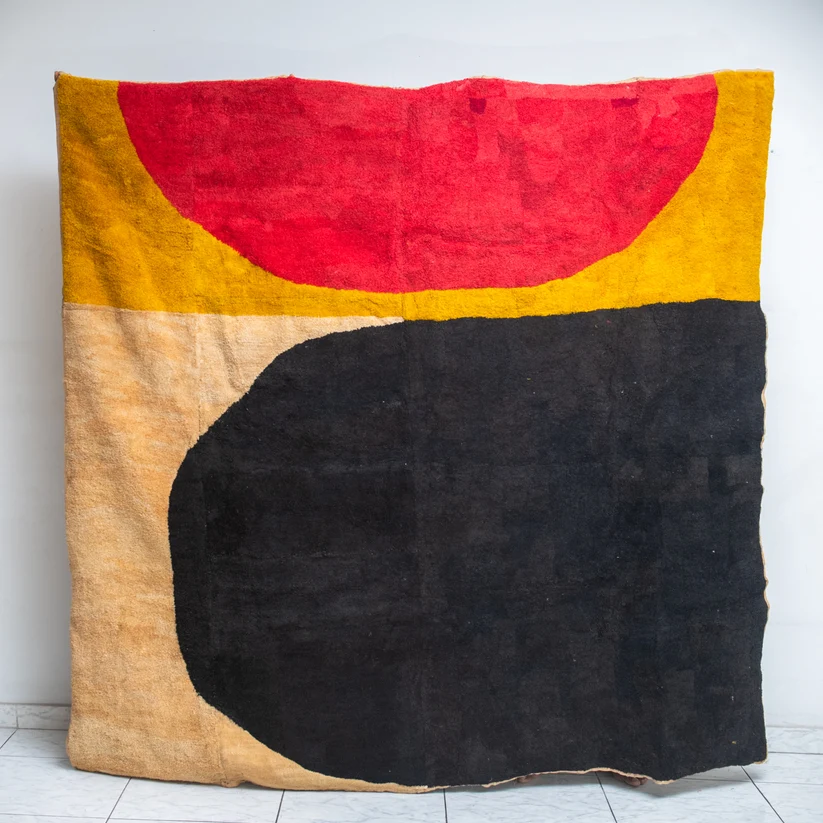
Another caption in the Guzangs’ profile identifies Maman Irène as studio manager and Maman Marthe as quality lead. They appear with Louise and Jacquie in a separate workshop photograph.
These descriptions make the organisation more visible. The atelier is not presented only as a founder surrounded by an undifferentiated group of craftspeople, since management and quality responsibilities are attached to named women.
The source does not define the full authority, working arrangements or duties associated with either role. It would therefore be premature to describe the decisions Irène or Marthe made about these particular pillowcases.
Their inclusion still matters. Studio management and quality oversight should not disappear into a general celebration of handmade production, because the published account recognises them as functions.
At the same time, the second photograph cannot be used to establish participation in every object shown elsewhere. The workshop roles and the cushion-making caption are connected records, but they are not interchangeable.
A signature can keep a name with an object.
In the Saba interview, Kilubukila says makers sign their products so recipients can know who made them. He says they intend to keep individual identity attached to the work beyond the workshop, and the Guzangs’ profile likewise says each piece is signed by its maker.
That is a useful attribution policy as stated. A product can circulate separately from the article, social post, or photograph that first introduced it, and a signature keeps a name attached to the object.
However, the reviewed documentation does not provide readable signatures for each pictured pillowcase or match the covers individually to the four women. The practice must remain attributed to Kilubukila, rather than presented as independently verified across this group.
A signature also needs context. It could identify a contributor to one stage or several stages, and the available sources do not explain its scope for these objects.
The policy points towards individual recognition and a clear explanation of what the signature credits would make that recognition more precise. We make the same case for product pages in what a heritage fashion product page should clarify.
Materials require their own evidence.
The profiles also show why material claims must be checked separately from maker recognition. Sene’s account describes locally sourced raffia and natural dyeing broadly.
In the longer interview, Kilubukila gives a more qualified explanation: he says most colours are natural, but not all, and acknowledges importing some pigments, with blue given as one that is not available locally.
The more specific statement prevents the workshop from being described categorically as using only local, natural colourants. It does not establish the materials used in every object.
For the pillowcases held by Louise, Jacquie, Astride and Carole, the reviewed documentation does not supply an item-specific composition or dye record. Those details should not be assigned from a general description of the atelier.
The distinction matters because reassuring claims often cluster around handmade products. Named makers do not verify a sourcing statement, and a natural-material description does not establish authorship or environmental performance.
Each claim needs its own evidence, as we set out in how to verify a fashion brand’s fabric claims. Keeping them separate allows the women’s documented contribution to stand without certifying every other aspect of production.
Recognition, consent and compensation are different questions.
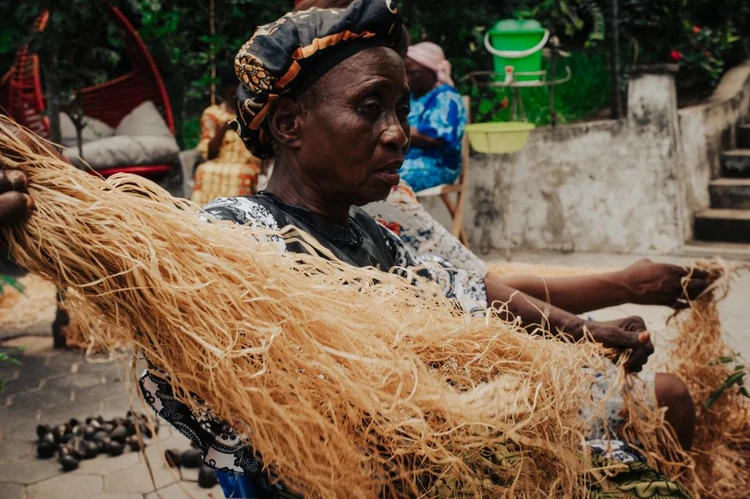
Kilubukila describes training, shared workspace and support intended to help artisans develop their work. The Marmalade interview lists textile training, sales and marketing skills, and medical and financial support, and the Guzangs profile reports business training supported by outside partners.
These are founder and publication statements about the enterprise, not independently audited findings about the four named women.
The published caption does not establish what they were paid, how terms were agreed or whether they approved particular subsequent uses of their images. Nor does a signature alone establish ownership of a design.
The absence of those records from the articles does not prove that arrangements were absent or improper. An unanswered question is not a negative finding.
This boundary protects the article from two opposite errors: presenting a positive brand account as a complete ethical assessment or treating incomplete public documentation as evidence of wrongdoing.
Recognition establishes one relationship, while consent, compensation and benefit concern others. They may be connected, but none should be used as shorthand for all the rest.
Keeping Kuba knowledge and individual names together
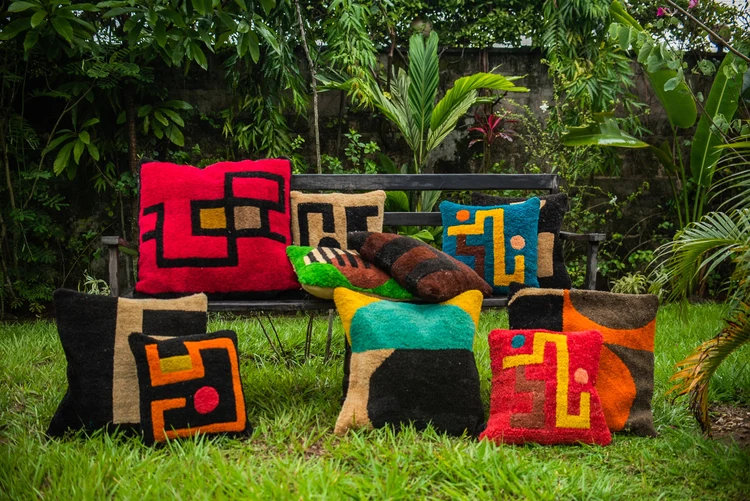
Kilubukila’s account places Kuba textile techniques within the development of contemporary cushions and rugs. It describes a relationship between a body of making knowledge and new products, rather than simply borrowing a visual association.
Atelier 55 describes a separate Mandombé collection built on Kuba cloth skills, using shapes from a script created in 1978 and handwoven organic raffia. It reports that the project began as a collaboration between female artisan weavers and linguists, and it names none of the weavers.
That context shows how often Kuba knowledge is acknowledged without naming the individuals who carry it. For the pictured pillowcases, the sources do not establish each woman’s training, community affiliation or responsibility for a particular technique, and these details cannot be inferred from names or appearance.
A cultural acknowledgement and an individual maker credit answer different questions. Referring to Kuba knowledge identifies a stated source of the practice, while naming Louise, Jacquie, Astride and Carole identifies people associated with documented objects.
Neither should replace the other. A fuller record would connect the knowledge involved, the people contributing it, and the decisions made within a particular piece, as we argue in protecting the cloth makers behind the fabric.
The Omiren Argument
The clearest evidence is the caption: Maman Louise, Maman Jacquie, Maman Astride and Maman Carole are named as makers of the pillowcases they hold. Other captions identify workshop responsibilities, while Kilubukila describes his contributions to design and coordination.
Together, these records support an account with several contributors. They do not establish a complete allocation of authorship, labour or ownership.
For Omiren, credit means explaining a person’s relationship to the work as accurately as the evidence permits. It is more than adding names to a founder’s story, and it is not a substitute for documenting payment or consent.
Here, the starting point is substantive: four named women and objects they made. Their knowledge and labour belong within the design account itself, not at its margins.
Also Read:
- Who Should Define Cultural Authority in Fashion? Start With the Makers
- Kuba Cloth Is Not a Print: What Designers Need to Know Before Referencing It
- How to Source Authentic Kuba Cloth: A Buyer’s Guide to Raffia, Provenance and Ethical Use
- A Show Note Is Not Consent: Who Benefits When African Craft Appears on a Luxury Runway?
Frequently Asked Questions
Which Kilubukila work does this article examine?
It examines cushion-making documented in a June 2025 Guzangs profile, particularly a photograph of four women holding pillowcases they made. The source does not give that group a formal collection title.
Who are the named makers?
The caption identifies Maman Louise, Maman Jacquie, Maman Astride and Maman Carole. It does not assign each woman individual covers or production stages.
Does Kilubukila credit individual makers?
Jess Kilubukila says makers sign their products. This article reports that policy, as his statement; signatures on the pictured pillowcases have not been independently verified.
Does named credit establish payment or consent?
No. The reviewed documentation does not establish those arrangements for this particular group. No findings are made here.