Let’s start with what we actually know. Lagos Fashion Week 2025 generated approximately $1.7 million in estimated media value and reached 44 million people digitally during the Lagos fashion season. Africa’s textile and fashion market is estimated at somewhere between $61 billion and $82 billion, depending on who is counting. Designers from Nairobi, Dakar, Lagos and Addis Ababa are showing at Paris Fashion Week, Milan, and New York. Moda Operandi sent buyers to Lagos Fashion Week for the first time in 2024. The coverage exists. The audiences exist. The creative quality clearly exists.
Now the harder question: how many of those 44 million digital impressions became wholesale orders? How many of the buyers who attended Lagos Fashion Week 2025 placed purchase orders within the following three months? The honest answer is that nobody has published that number because most African fashion events don’t measure it, and most African fashion coverage doesn’t ask for it. The industry is exceptionally good at counting visibility and significantly less good at counting what visibility converts into.
As Clearly Invincible’s March 2026 analysis of the state of fashion data in Africa noted, African fashion platforms do not trace downstream conversion: visitor spending, buyer order volumes, diaspora purchasing behaviour. South African Fashion Week, Dakar Fashion Week and other continental platforms lack equivalent frameworks, making cross-market comparison nearly impossible. The media value number exists because someone commissioned the research. The order volume number does not exist because nobody has built the infrastructure to capture it.
African fashion generates millions in media value and tens of millions in digital reach. The downstream question – how many wholesale orders followed? – is the one the industry cannot yet answer. This piece examines why.
The Gap Has a Name
The gap between visibility and revenue is well documented among people who work inside the African fashion industry, even when it doesn’t make it into press releases. A designer profiled in five international publications and photographed for three fashion weeks may still run production on a made-to-order basis from a studio that cannot process more than forty units a month. The visibility is real. The commercial infrastructure behind it has not grown at the same rate.
TalkTalk Nigeria put it directly in their August 2026 coverage of Nigerian designers at Africa Fashion Week London: “The gap between them is where Nigerian fashion has been losing money for twenty years.” The ‘them’ in that sentence is the gap between design quality, which is world-class and undersupplied, and buyer access, which has been improving slowly via London but remains the weakest link in the chain. Working capital is expensive or unavailable. Volume production is thin and oversubscribed. Export logistics are unreliable. The creative output is not the problem. Everything else around it often is.
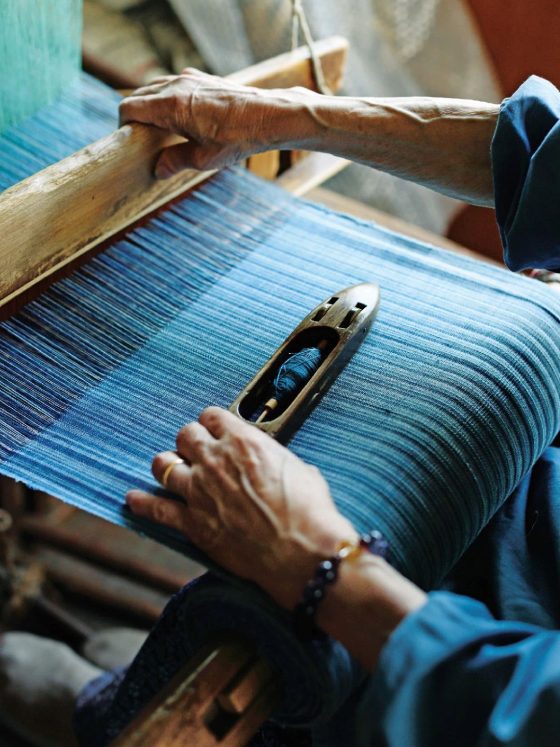
This is not a new observation, and it is not a criticism of the designers. It describes a structural gap that affects even brands with significant international recognition. A large ceremonial order has historically been distributed across several weavers, which works when the buyer is a family commissioning a wedding and stops working the moment the buyer is a retailer expecting 200 consistent garments in twelve weeks. Demand scale doesn’t match supply infrastructure. That mismatch is a gap visibility alone can’t close.
What Buyers Actually Need
A buyer who attends a fashion show and sees a collection they want to stock faces specific requirements before they can place an order. They need a line sheet with the wholesale price per unit, minimum order quantity, lead time to delivery, fibre composition for label compliance, and country of manufacture for import documentation. They need a legal entity name for the purchase order. They need payment terms. They need confirmation that the pieces they saw on the runway will be available in the colourways they want at the sizes their customers need.
As Omiren Styles has established in its buyer intelligence series, the line sheet is the commercial instrument that converts runway presence into an order. A designer who shows at a fashion week without a line sheet has done the creative work and left the commercial work undone. An interested buyer moves to the next brand on their list not because the collection wasn’t good enough, but because the documentation needed to complete the transaction wasn’t available. This happens constantly across African fashion weeks, and it is one of the most preventable causes of the visibility-to-revenue gap.
The runway is the start of a commercial conversation, not the end. A collection that generates media coverage without generating a buyer-ready line sheet has half a strategy.
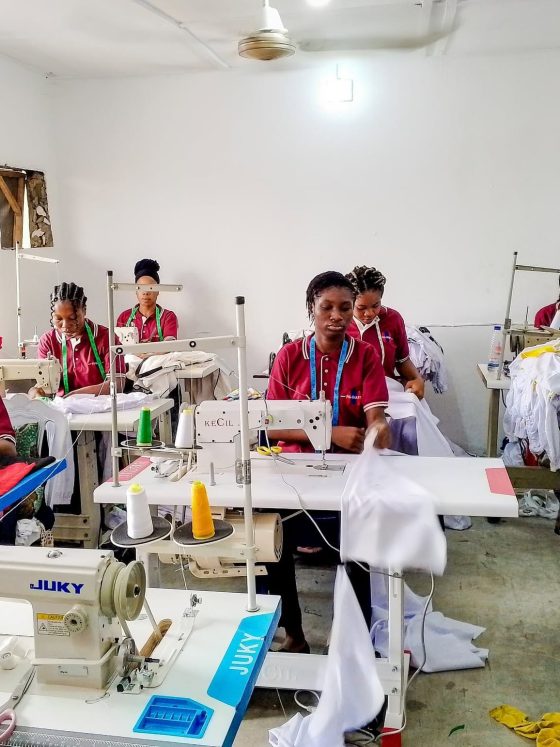
The documentation gap is one part of the problem. The production gap is another. Even when a buyer places an order, the designer must fulfil it, which means having access to consistent fabric supply. This manufacturer must handle the volume and quality the international buyer expects, provide reliable shipping, and have the working capital to finance production before the buyer’s invoice is paid. In many African markets, all four requirements are difficult to satisfy at the same time. The buyer is ready. The supply chain behind the designer is not.
Where Things Are Improving

The picture is not static. Things are shifting in specific places and in specific ways, and it is worth naming them precisely rather than dealing in general optimism.
At Lagos Fashion Week 2025, 68 per cent of attending brands reported securing new financing or distribution agreements, according to Innovation Village’s December 2025 analysis. That is a significant proportion, suggesting the conversion rate between fashion week attendance and commercial outcomes is improving, at least for brands prepared for the conversation. The Green Access accelerator, now in its 8th edition at Lagos Fashion Week under the theme Crafted in Practice, is one of the structured programmes that helps brands build the commercial readiness to have that conversation.
Africa Fashion Week London’s 2026 edition introduced a shop. The Runway format in Lagos closes the gap between runway visibility and retail revenue: buyers, stylists, and media could purchase from participating designers on the day of the show. This is not a small procedural change. It is a commercial model that converts the fashion week audience from spectators into buyers, eliminating the follow-up friction that loses orders between the show and the line sheet. Formats like this are the architecture the industry needs at scale.
Industrie Africa, The Folklore, and Raise Fashion have built digital platforms that give African designers international market visibility without requiring them to attend trade fairs in person. These platforms lower the barrier to entry for designers who can’t afford international travel but can present their collections digitally to buyers. The limitation, which the industry is increasingly honest about, is that platform visibility is still visibility. The designer who receives buyer enquiries through a platform still needs the production capacity and the documentation to convert those enquiries into orders.
The Production Infrastructure Question
As Omiren Styles’ September 2026 analysis of the African fashion production gap established, most African designers remain unable to scale beyond the creative output that first generated their market visibility because the production intelligence needed to convert buyer interest into sustainable wholesale volume is not systematically available in the markets where they operate. This is a structural problem, not an individual failure. The investment required to build that infrastructure is beyond most designers’ means. The gap is systemic, which means it requires systemic solutions rather than individual effort.
Ghana’s announcement of three garment factories targeting 27,000 jobs is one example of manufacturing infrastructure investment that, if designed to support the local fashion design sector as well as export garment manufacturing, could provide the production access that designers need to translate buyer relationships into wholesale orders. Ethiopia’s established garment manufacturing sector has attracted international brands but has not yet fully integrated Ethiopian designers in a way that lets them use that manufacturing capacity. These are policy choices as much as commercial ones.
The Nigerian Export Promotion Council has ramped up buyer matchmaking, market intelligence and compliance training for non-oil sectors including textiles and apparel. That kind of institutional support, when it is specific and technical rather than aspirational and generic, does help. It helps designers understand what documentation international buyers require, what import compliance means in specific markets, and how to price their work for export without either losing money or pricing themselves out of the market they are trying to enter.
What Has to Change
The visibility-to-buyer gap will not close by itself. Three things need to happen together, and all three require deliberate investment rather than goodwill.
First, fashion event commercial infrastructure has to be built alongside the creative programme, not added as an afterthought. A fashion week that does not measure buyer attendance separately from general attendance, does not capture post-show order data, and does not require participating brands to have buyer-ready documentation before they walk the runway invests in spectacle and hopes the commercial outcomes follow. They do not reliably follow. The infrastructure has to be designed for conversion, not just for coverage.
As Omiren Styles has established in its analysis of what fashion show outcomes an editor can actually verify, the day-of review and the post-show commercial record are two different documents, and fashion journalism currently produces one of them. The same applies to fashion events: coverage and conversion are two different outcomes, and only one is currently being measured.
Second, production infrastructure investment must align with designer needs, not just garment export volumes. A factory that produces 50,000 units of basic garments for international fast fashion brands is not the same resource as a manufacturer that can produce 200 units of a complex cut in a specific heritage fabric, with the consistency and timeline an international boutique buyer requires. African fashion designers need the second kind of manufacturer, and most African markets lack it.
Third, the data gap has to be closed. The industry cannot advocate for investment in African fashion commercial infrastructure if it cannot demonstrate what that infrastructure produces in revenue, orders, stockist relationships and repeat business. The media value numbers exist because the research was commissioned. The order volume numbers need to exist for the same reason: someone has to decide that measuring downstream conversion is as important as measuring reach.
The Omiren Argument
African fashion has earned its visibility. The creative quality is not in question. The international interest is not in question. What is in question is whether the industry has built the commercial architecture behind the creative output that lets that interest convert into sustained revenue for African designers, rather than sustained media coverage of African fashion in international publications.
Visibility starts a commercial conversation. The buyer who attends a Lagos Fashion Week show and sees a collection they want has done half the work. The designer who walks the runway without a line sheet, a production partner, a realistic lead time, or a legal entity the buyer can address a purchase order to is not in a position to complete the conversation the buyer came to have.
African fashion has never needed external validation to know its own value. What it needs now is the commercial infrastructure to convert that value into revenue at the scale the global interest warrants. The buyers are looking. The question is whether the industry has built what they need to find when they arrive.
ALSO READ
- African Fashion Does Not Need Another Marketplace. It Needs Production Intelligence.
- Africa Fashion Week London 2026: Design Beyond Borders
- After a Fashion Show, Which Outcomes Can an Editor Actually Verify?
- A Line Sheet a Buyer Can Act On: The Information That Belongs Beside the Image
- The Global South Made Fashion. It Just Never Got Credit.