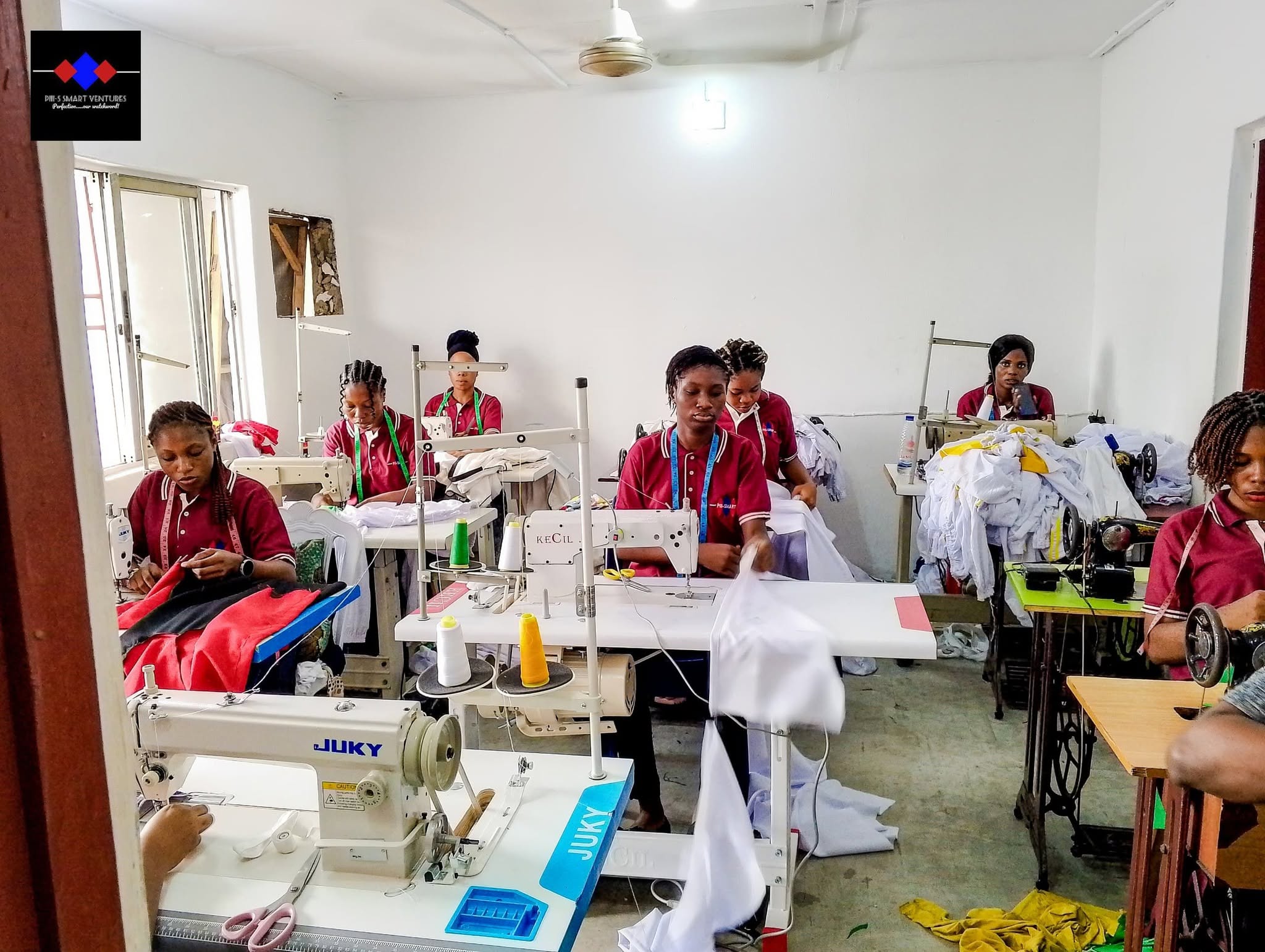
The fastest-growing category in the Lagos fashion market is bespoke tailoring.
As the Omiren Styles Lagos Fashion Market Report 2026 documented, bespoke tailoring is one of the three fastest-growing categories in the Lagos market, alongside Afrocentric prints and social-native women’s wear. At the mid-market tier, local tailoring is experiencing renewed demand as consumers turn away from imported ready-to-wear in favour of custom Ankara, Adire and lace garments made locally. A custom outfit at this tier typically ranges from NGN 15,000 to NGN 80,000. That is a large and growing market.
The tailoring businesses serving that market have a structural problem that the market data does not show.
The business model that makes bespoke tailoring worth its price to the customer is precisely the business model that resists growth. Everything that creates value in a made-to-measure garment- the personalised fit, the client relationship, the time invested in the pattern, the fitting, the adjustment, the craft knowledge applied to this specific body for this specific occasion- is time-intensive, practitioner-dependent and relationship-specific. These qualities cannot be compressed without destroying what the customer is paying for.
The scaling problem in bespoke tailoring is not a marketing problem, a distribution problem, or even primarily a capital problem. It is a capacity problem with a structural cause: a tailoring business’s output is bounded by the physical hours of its best practitioners, and those hours cannot be multiplied without changing the nature of the product.
This article maps the specific economic constraints that made-to-measure tailoring businesses face in African cities, the mechanisms through which capacity limitations translate into revenue ceilings, and the commercial infrastructure approaches that allow tailoring businesses to scale without reducing what makes their product worth its price.
Made-to-measure tailoring businesses have a structural scaling problem specific to their model. Everything that makes the product worth its price resists the mechanisms businesses usually use to grow. The solution is not to industrialise.
Understanding the Unit Economics
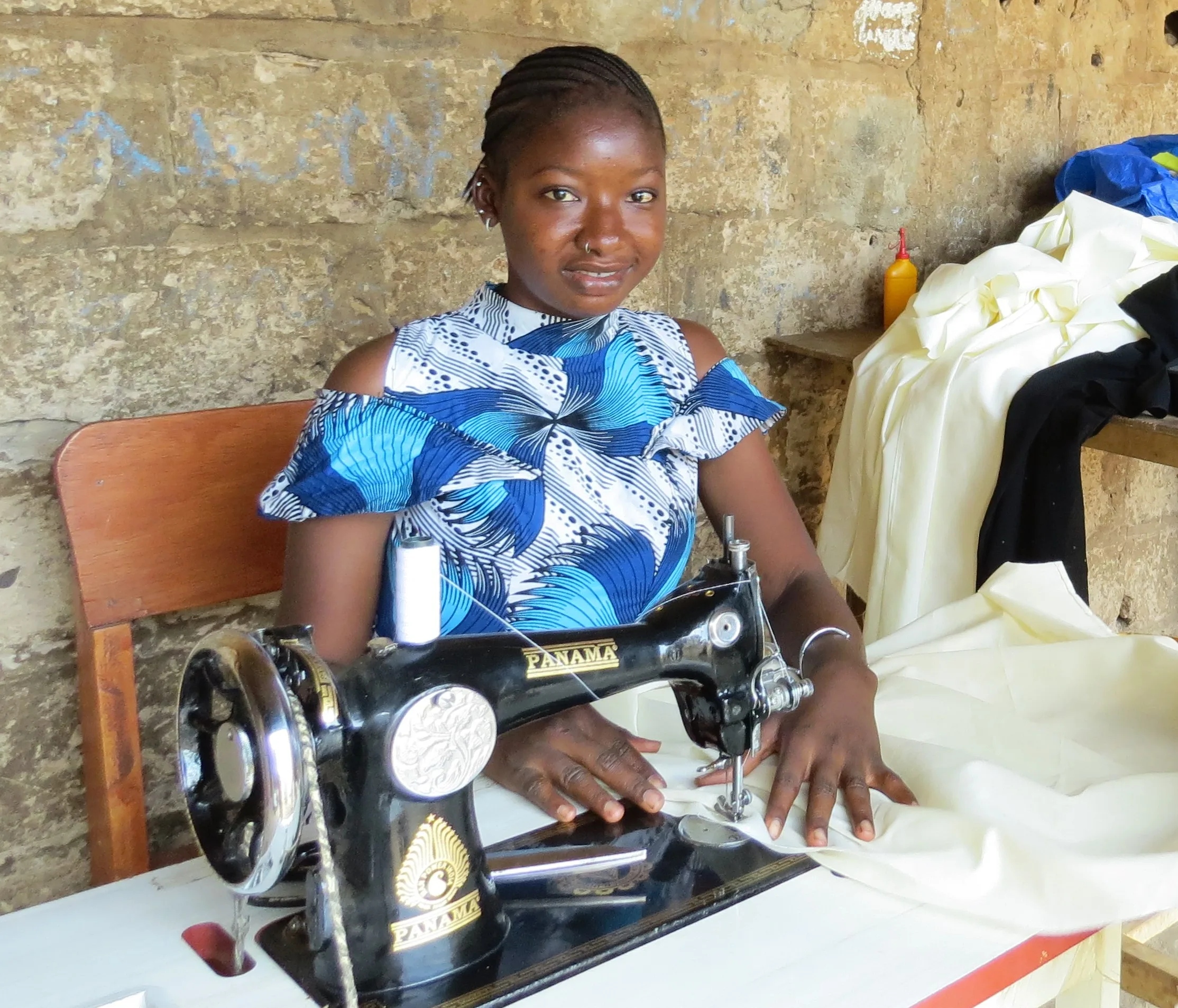
The first step in solving the scaling problem is understanding the unit economics precisely.
A made-to-measure garment has a different cost structure from a ready-to-wear product. Material cost is typically the smallest variable component: fabric, lining, thread, buttons, and notions. The labour cost is the dominant variable: the time of the cutter, who takes the measurements and drafts the pattern; the sewer, who constructs the garment; the finisher, who completes the hand-work at collar, cuffs and hem; and the fitter, who adjusts the garment across one or more fitting sessions.
Overhead allocation is the component tailoring businesses most commonly miscalculate. Studio rent, electricity, equipment maintenance, fabric storage, pressing equipment, client communication time, and the administration of appointment scheduling, order tracking and payment collection all carry costs that must be allocated per garment to produce an accurate unit cost. Many tailoring businesses, particularly at the studio level, allocate overheads loosely or not at all, which produces a price that feels fair to the customer and generates revenue but fails to cover the business’s full annual costs.
As Faire’s wholesale pricing guidance documents for product businesses more broadly, the starting point for correct pricing is the full unit cost — including materials, labour, overhead allocation and a margin for business investment — calculated before any reference to what the market will bear. For a tailoring business, this calculation must include the full time cost of each garment from initial consultation through fitting to final collection, not only the production time.
The practical implication is that most tailoring businesses in African cities are underpricing their work. Not because they are undervaluing themselves in the sense of lacking confidence, but because the full-cost calculation has not been performed. A tailor who spends forty minutes taking a client’s measurements, three hours cutting and constructing a garment, one hour at a fitting, and thirty minutes on final adjustments has spent five hours on a garment that may be priced at the material cost plus a round-number labour estimate. Overhead allocation, consultation time, and fitting time often do not appear in the price.
As Omiren Styles has shown in its analysis of sustainability metrics, a tailoring business that cannot see a tailor produces on demand with zero overstock, minimal transport cost, and high garment lifespan. These structural advantages do not show up in any sustainability certification, but they are real cost advantages relative to industrial fashion. Pricing that reflects these advantages should be higher than what the market currently accepts for mid-market bespoke work in most African cities—not higher than what customers will pay when the value is properly communicated, but higher than the price that makes sense when overheads are not allocated correctly.
The Capacity Ceiling and How It Creates a Revenue Ceiling
The structural scaling problem in bespoke tailoring is a capacity ceiling that translates directly into a revenue ceiling.
A skilled tailor has a finite number of productive hours per week. In a week of 50 productive hours, the number of garments that can be completed to the standard the business sells depends on the garment type: a simple dress may take five hours; a tailored suit may take 25 hours; a full wedding ensemble may take 60 hours across multiple sessions. The revenue ceiling is the number of garments of each type that fit within the available hours, multiplied by each garment’s price.
This ceiling is lower than it appears at first because productive hours include consultation, fitting, administration, and client communication, as well as production time. A tailor who is managing 15 active clients simultaneously is not spending 100% of their time cutting and sewing. They spend significant time on measurement appointments, fitting sessions, WhatsApp consultations about fabric choices, calls to fabric suppliers, and tracking which client’s garment is at which stage of production.
The revenue ceiling creates a strategic problem: when a tailoring business is fully booked, it cannot grow revenue without raising prices, hiring additional capacity, or changing the product model. Each response has specific implications for the character of the business.
Raising prices is the most direct response and the most underused in practice. A fully booked tailoring business has shown that demand for its work exceeds its current capacity. This is a market signal to raise prices until the demand and the supply come into balance. A fully booked tailor who does not raise prices is subsidising clients’ access to a scarce service. The correct response to consistent oversubscription is a price increase that brings the number of clients seeking appointments into balance with the number the business can serve at the quality level it wishes to maintain.
Hiring additional capacity is the most common growth response and the one most likely to compromise product quality if done incorrectly. Adding a junior cutter or a second sewing station increases production capacity but transfers some production to practitioners whose skill level may not match the standard customers are paying for. The tailoring business that maintains quality across expanded capacity does so through specific quality control mechanisms: standardised pattern development, clear production protocols, senior practitioner oversight of critical construction stages and a structured training system that brings new practitioners up to the house standard rather than letting them develop independently.
Changing the product model most directly addresses the scaling problem rather than working around it. A tailoring business that adds a made-to-measure line alongside a bespoke line, develops capsule collections in standard sizes alongside its custom work, or creates a fabric-and-pattern service that clients purchase for DIY finishing is developing revenue streams not bounded by the senior practitioner’s time. These additional revenue streams must be designed carefully to avoid devaluing the bespoke offer, but they create growth headroom that the capacity ceiling cannot provide.
Working Capital: The Production Financing Problem
The second major structural challenge in made-to-measure tailoring economics is working capital: the financing of production between fabric purchase and client payment.
In a typical tailoring business, the client places an order and pays a deposit. The deposit covers material costs and some proportion of the labour cost. The tailor purchases fabric, begins production, completes the garment and collects the balance at delivery. In a well-managed business with efficient production, the gap between deposit and balance collection is two to four weeks. With production backlogs, client-requested changes, fabric supply delays, or multiple fitting rounds, the gap can extend to six to ten weeks.
During that gap, the tailoring business has deployed the cost of materials, the labour cost of production and the overhead cost of the studio period on working capital that it does not yet hold as cash. Multiplied across multiple concurrent orders, this creates a structural working capital requirement that grows with the number of active commissions. A tailoring business with fifteen active orders at any moment, each with an average of four weeks in production, carries a working capital requirement equivalent to approximately one month of its full annual revenue.
The practical consequence is that high-demand tailoring businesses are often cash-constrained at precisely the moment their revenue pipeline is fullest. A tailor who has taken deposits on 20 orders has committed all of those deposits to material costs and early-stage labour, but has not yet collected the balances that represent the majority of the revenue. At the same moment, new enquiries are arriving that would require additional material investment before they generate balance payments. The cash constraint limits the ability to take on new work even when orders are available.
The solutions operate at three levels. Deposit structure management is the most immediate: structuring deposits to cover full material cost plus a meaningful proportion of labour cost, rather than the token 30–50% deposit that is common in the Nigerian tailoring market, reduces working capital exposure per order. Staged payment structures that collect an interim payment at the fitting stage, not only at deposit and final collection, smooth the cash flow across the production cycle. Production schedule management that limits concurrent orders to what the business’s working capital can finance, rather than taking all available orders and managing cash pressure as an operating reality, reduces the systematic cash strain that over-booking creates.
Client Management as Commercial Infrastructure
The relationship between a tailor and a client is the most commercially valuable asset a tailoring business holds, and the one most commonly managed informally.
A client whose measurements are on file, whose fabric preferences are documented, whose occasion calendar is understood and whose payment history is reliable represents a significantly higher revenue certainty than a new client at every appointment. The repeat client doesn’t need a measurement session. The fitting is faster because the pattern is already adjusted to their body. The fabric conversation is shorter because their preferences are known. The communication overhead is lower because the relationship is established. The revenue per hour of practitioner time invested in a repeat client is demonstrably higher than the revenue per hour invested in a new client.
Most tailoring businesses manage this valuable relationship through memory and WhatsApp rather than through any systematic client record. A tailor who keeps all client measurement records in a notebook, or stores client preferences in their head rather than in a documented system, has created a business entirely dependent on their continued presence. A skilled assistant cannot operate the business if the owner is ill. It cannot be sold as a going concern with client records. It cannot be analysed for patterns in client behaviour, seasonal demand or fabric preferences that would inform production planning.
Building client management infrastructure is therefore one of the highest-return investments a tailoring business can make. The infrastructure does not need to be expensive: a spreadsheet recording each client’s measurements, fabric preferences, order history, payment history and contact information is sufficient as a starting point. The critical discipline is consistency: every client record updated after every appointment, not retrospectively. A measurement record that is six months out of date for a client who has changed size is not useful. A payment history that records only completed orders does not capture clients who regularly request late-stage changes and create production disruption.
As Omiren Styles has established in its analysis of what buyers need from an independent label, the operational readiness signals that professional buyers assess when evaluating a fashion business include the quality of client and customer documentation. The same principle applies to a tailoring business’s relationships with private clients: documented, systematic, and consistent management of those relationships is the commercial infrastructure that lets the relationship’s value compound rather than remain locked in the practitioner’s memory.
Pricing for Growth, Not Just for Survival
The pricing that allows a tailoring business to survive and the pricing that allows it to grow are not the same price.
Survival pricing covers the direct costs of producing each garment plus the minimum overhead required to keep the studio operating. Growth pricing covers all of that plus a margin for business investment: hiring additional capacity, improving equipment, developing client management systems, investing in marketing and building the financial reserve that allows the business to take on larger orders, offer longer credit terms to clients and manage the production peaks and troughs that every seasonal tailoring business experiences.
The difference between survival pricing and growth pricing is typically 20–35% of the current price for a tailoring business that has not previously done a full-cost analysis. A garment priced at NGN 50,000 on survival pricing should be priced at NGN 60,000–68,000 on growth pricing, not because the quality has improved but because the business is now allocating sufficient margin to invest in the infrastructure that will allow it to continue producing at quality across two years rather than burning out the practitioner across six months.
Growth pricing is also what allows a tailoring business to attract and retain skilled employees rather than relying entirely on the founder’s personal labour. A business that survival prices must produce at the survival level indefinitely because there is no margin to hire. A business that prices for growth can invest the growth margin in a junior assistant who handles client communication and fitting preparation, freeing the senior practitioner’s time for the high-skill work that only they can do. Over eighteen months, that investment in an assistant typically generates more additional revenue than the salary cost, because the practitioner’s freed time can be applied to higher-value commissions.
As the capital and credibility gap analysis established, capital can remove structural barriers in a fashion business. Still, it cannot build the credibility and track record that sustain commercial relationships across time. The pricing decision is, in this sense, a credibility decision: a tailoring business that prices for growth is implicitly committing to the infrastructure investment that makes it commercially reliable across seasons, not only at its best in the current season.
The Infrastructure That Enables Scale
Scaling a made-to-measure tailoring business without losing fit requires building specific commercial infrastructure that most studio-level tailoring businesses do not yet have.
Production management infrastructure is the most immediately impactful. A physical or digital production calendar that shows every active order, its current stage, its promised delivery date, and any outstanding decisions removes production planning from memory, which often leads to missed delivery commitments. A fabric inventory system that tracks what is in stock, what has been committed to which order, and what needs to be ordered prevents a client’s fabric from being consumed for another order because the commitment was not documented. A pattern archive that stores the developed pattern for each client prevents the re-cutting of a pattern that already exists, reducing time cost on repeat clients by 30–40%.
Financial tracking infrastructure is the second critical component. A simple account that records, for each order, the deposit received, the material cost committed, the labour cost estimated, the balance due, and the date collected gives the owner a real-time picture of the business’s working capital position that cash-in-hand management cannot provide. This record does not require accounting software. A consistently maintained spreadsheet produces the information needed to manage the business’s cash cycle proactively rather than reactively.
Communication infrastructure is the third component. The tailoring business that manages all client communication through a single WhatsApp number, in the founder’s name, has built a communication channel that cannot be delegated without losing the client relationship. Building a studio name, a studio contact number and a studio communication identity, separate from the founder’s personal profile, creates communication infrastructure that an assistant can manage and that signals the commercial seriousness of a studio rather than the personal availability of an individual practitioner.
As Omiren Styles has established in its analysis of the Senegalese fashion industry’s future, Senegalese tailoring culture’s highly skilled tailors and pattern makers produce garments with precision and durability that many fast fashion systems cannot match. The technical foundation is strong. The commercial infrastructure that turns that technical foundation into sustainable business growth requires investment and development.
The Growth Pathways Available

Made-to-measure tailoring businesses in African cities have several specific growth pathways that are consistent with maintaining the product quality that justifies their pricing.
Studio expansion — adding physical capacity through workspace, equipment, and trained staff — is the most capital-intensive pathway and requires the most developed commercial infrastructure before it is worth pursuing. A studio expanding without production management systems, financial tracking, and client records is increasing the complexity of its problems rather than the scale of its solutions. The right sequence is to build the infrastructure first, then expand physical capacity.
Apprenticeship and training — developing junior practitioners to a standard that lets them handle lower-complexity production while the senior practitioner focuses on cutting, fitting, and finishing — is the growth pathway most consistent with maintaining quality. The training investment is significant: a practitioner capable of operating independently to a studio’s standard typically requires 12–18 months of structured development. But the return on that investment is a permanent increase in the studio’s capacity without a permanent decrease in quality.
Wholesale and institutional commissions—developing relationships with hotels, airlines, corporate clients, or retail brands that require uniform or capsule production—create revenue streams that operate at higher volume than private bespoke work. These relationships require commercial documentation, consistent delivery capability and the pricing discipline to ensure that volume commissions are priced at a margin that covers the full cost of production at scale, not at a discount that erodes the business’s financial position.
Digital client acquisition — building a studio profile, a portfolio and a booking system that allows new clients to discover and commission work without personal introduction — expands the market beyond the referral network that currently limits most tailoring businesses’ client acquisition. This investment does not require expensive photography or a sophisticated website: a consistent portfolio of documented work, a clear booking process, and a presence on the platforms where target clients discover new tailors is sufficient to generate new client enquiries.
The Omiren Argument
Made-to-measure tailoring is the most structurally sustainable fashion business model. It produces on demand, generates zero overstock, creates high garment lifespan, and builds economic value in the communities where it operates through practitioner employment, fabric supply chain relationships, and the maintenance of craft knowledge that industrial fashion has tried to replicate through “artisanal” marketing for two decades.
The economic argument for investing in the commercial infrastructure that allows these businesses to scale is therefore not only a business argument. It is an industrial argument: scaling tailoring businesses in African cities means scaling the most sustainable production model in the fashion ecosystem, in the cities where fashion’s next market growth is concentrated, by investing in the practitioners who already have the craft knowledge that the global luxury market is increasingly willing to pay for.
The barriers to scaling are specific and addressable. Underpricing is a calculation problem, not a market problem. Working capital constraints are a cash flow management problem, not a revenue problem. Client relationship management is a systems problem, not a relationship problem. Production capacity is a training and infrastructure investment problem, not a talent problem. Tailoring businesses in Lagos, Accra, Dakar, Nairobi, and Addis Ababa are not failing to scale because they lack skill. As the tailors of Piassa and Kirkos in Addis Ababa demonstrate, those practitioners feed entire city economies with their output without passing through any runway or press infrastructure. They are not waiting to be discovered. They are waiting for the commercial infrastructure that allows their skill to compound into durable commercial growth.
That infrastructure starts with a full-cost calculation, a documented pricing structure, a systematic client record and a production calendar. It costs less to build than one month of rent in most African city studios. The time and discipline it requires is the one investment that cannot be substituted with capital, marketing, or distribution. As the African fashion investment analysis established, the preconditions for institutional capital are governance, scale and predictability. The commercial infrastructure described in this article is what governance and predictability look like at the studio level. Build that first. Scale will follow.
ALSO READ
- The Sustainability Metrics That Cannot See a Tailor
- Lagos Fashion Market Report 2026: Retail, Price Points and Growth Categories
- Radical Tailoring for Men Is Reshaping Style in 2026
- Capital Can Fix Manufacturing. It Cannot Fix the Credibility Gap African Designers Face.
- The Future of Fashion in Senegal: Sustainability, Tailoring and Global Reach
Frequently Asked Questions
Why do made-to-measure tailoring businesses struggle to scale?
The structural scaling problem in bespoke tailoring has a specific cause: everything that makes the product worth its price- the personalised fit, the client relationship, the time invested in pattern development, fitting and adjustment, and the craft knowledge applied to a specific body for a specific occasion- is time-intensive, practitioner-dependent and relationship-specific. These qualities cannot be compressed without destroying what the customer is paying for. The output of a tailoring business is bounded by the physical hours of its best practitioners, and those hours cannot be multiplied without changing the nature of the product. The solution is not to industrialise the model, but to build the commercial infrastructure — pricing systems, client records, production management, working capital discipline — that lets the model grow on its own terms.
How should a tailoring business price its work correctly?
As in Faire’s wholesale pricing guidance documents, start with the full unit cost calculated before any reference to what the market will bear. For a tailoring business, this means calculating the full time cost of each garment from initial consultation through fitting to final collection, not only the production time. Include material cost, full labour cost across all sessions, overhead allocation per garment, and a growth margin for business investment. Most tailoring businesses in African cities underprice because overhead allocation and consultation time don’t appear in the calculation. Survival pricing covers direct costs. Growth pricing adds 20–35% more to fund infrastructure investment, staff development, and financial reserves that allow the business to grow rather than sustain itself indefinitely at the same scale.
What working capital challenges do tailoring businesses face?
In a typical tailoring business, the client pays a deposit at commission, the tailor buys materials and begins production, and collects the balance at delivery. In a well-managed business, the gap between deposit and balance collection is two to four weeks; in businesses with production backlogs or multiple fitting rounds, it can extend to six to ten weeks. During that gap, the business has deployed material costs, labour costs and studio overhead on working capital it does not yet hold. Multiplied across fifteen or twenty concurrent orders, this creates a structural working capital requirement that grows with demand. The solutions include structuring deposits to cover full material cost plus a meaningful proportion of labour, collecting an interim payment at the fitting stage rather than only at deposit and delivery, and limiting concurrent orders to the level the business’s working capital can finance.
What client management systems does a tailoring business need?
A tailoring business’s repeat clients represent its highest-return revenue because the pattern already exists, the fitting is faster, the fabric conversation is shorter, and the communication overhead is lower. Managing this valuable relationship through memory and WhatsApp rather than systematic records creates a business entirely dependent on the founder’s personal presence and cannot be delegated, analysed, or sold. The minimum viable client management system is a spreadsheet that records each client’s measurements, fabric preferences, order history, payment history, and contact information, updated consistently after every appointment. A studio name, a studio contact number, and a studio communication identity separate from the founder’s personal profile create communication infrastructure that can be delegated and signal the commercial seriousness of a studio to new clients.
What are the growth pathways available to a made-to-measure tailoring studio?
Four growth pathways are available without industrialising the model. Studio expansion, adding workspace, equipment and trained staff, is the most capital-intensive and requires the most developed commercial infrastructure before it is worth pursuing; the correct sequence is to build infrastructure first, then expand capacity. Apprenticeship and training, developing junior practitioners to handle lower-complexity production while the senior practitioner focuses on cutting, fitting and finishing, is the pathway most consistent with maintaining quality; a practitioner capable of operating independently typically requires 12–18 months of structured development. Wholesale and institutional commissions from hotels, airlines, corporate clients or retail brands create higher-volume revenue streams, but require consistent delivery capability and correctly calculated pricing. Digital client acquisition through a studio portfolio and booking process expands the client base beyond the referral network that currently limits most tailoring businesses.
What is the minimum commercial infrastructure a tailoring business needs before it can scale?
Four components constitute the minimum commercial infrastructure for a scalable tailoring business. A production management system, whether a physical calendar or a simple digital tool, showing every active order, its current stage, its promised delivery date and any outstanding decisions. A financial tracking record for each order showing deposit received, material cost committed, labour cost estimated, balance due and date collected. A client record system with measurements, fabric preferences, order history and payment history for every client. A studio communication identity, separate from the founder’s personal contact details, that allows client communication to be delegated. These four components cost little to build and can be maintained in a spreadsheet. The investment of time and discipline required to maintain them consistently is what governance and commercial predictability look like at the studio level — the preconditions for growth that no amount of marketing or distribution investment can substitute.
EXPLORE MORE
Read the full Industry and Careers sections at Omiren Styles for ongoing analysis of tailoring business economics, African fashion market data and the commercial infrastructure that allows craft businesses to grow without losing what makes them worth their price. Discover travel and heritage intelligence across Africa at Rex Clarke Adventures.