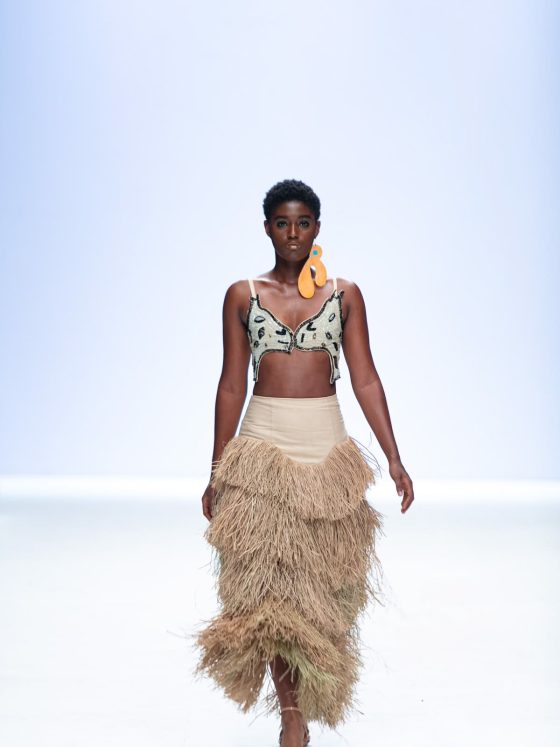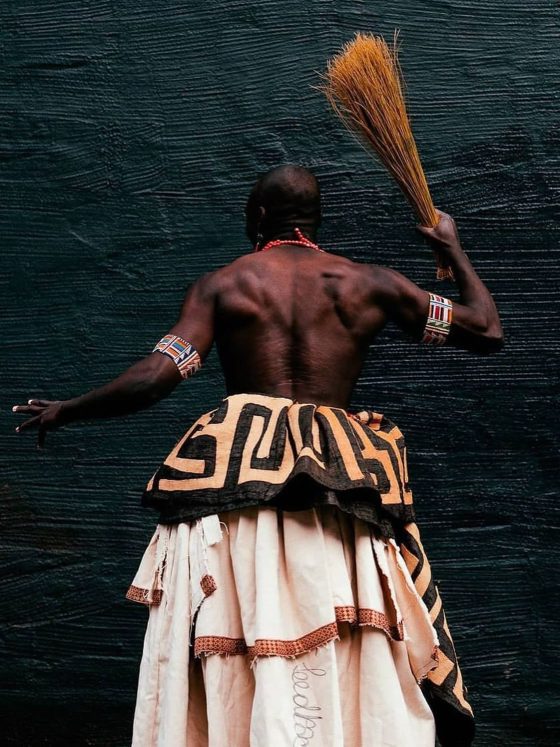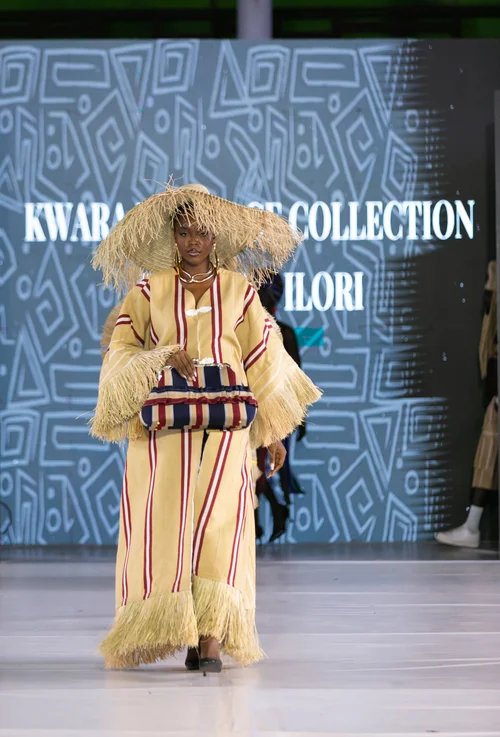
In November 2025, Prince William’s Earthshot Prize awarded Lagos Fashion Week one million pounds sterling.
The prize was not awarded for producing a runway show. It was awarded, as Omiren Styles has documented, in its analysis of the Lagos Fashion Week effect on Nigerian designer revenue, that Lagos Fashion Week had built circular fashion infrastructure at scale: mandatory sustainable practice requirements for every designer on the runway, a circular fashion hub in development for Lagos, and a replication framework targeting Kigali, Dakar and Accra by 2030. The prize confirmed what fifteen years of data had already shown. Lagos Fashion Week is not a fashion event with industry ambitions. It is an industry infrastructure project with a fashion event attached.
The response to this news from the global fashion press was characteristically brief. Lagos Fashion Week won the Earthshot Prize the same month it was named a finalist. Omoyemi Akerele, its founder, had already been listed by Time magazine as one of its most influential climate leaders of 2025. A platform that had directly impacted more than 3,800 beneficiaries, reached 14,000 more indirectly, and seen 68% of attending brands secure new funding or distribution deals after the event had just beaten 2,500 nominees from 72 countries to win one of the world’s most prominent environmental prizes. The international fashion press offered a paragraph.
The criticism of African fashion weeks has historically been faster, louder and more widely published than any account of what those fashion weeks were actually building. The critics were measuring them against Paris. The organisers were building something Paris was never asked to build: an entire industry from the ground up, in cities without the commercial infrastructure that the European fashion weeks inherited from two hundred years of industrial textile history.
This article is an account of what the fashion weeks built while the criticism was being written. It names the platforms, the outcomes, the networks and the infrastructure decisions whose results are now visible in ways that the discovery-narrative coverage of African fashion consistently fails to document.
African fashion weeks are not failed attempts to replicate Paris. They built a pan-continental network of designers, buyers, press and investors in cities whose commercial fashion infrastructure was being constructed simultaneously. This is what they actually built.
What the Criticism Got Wrong
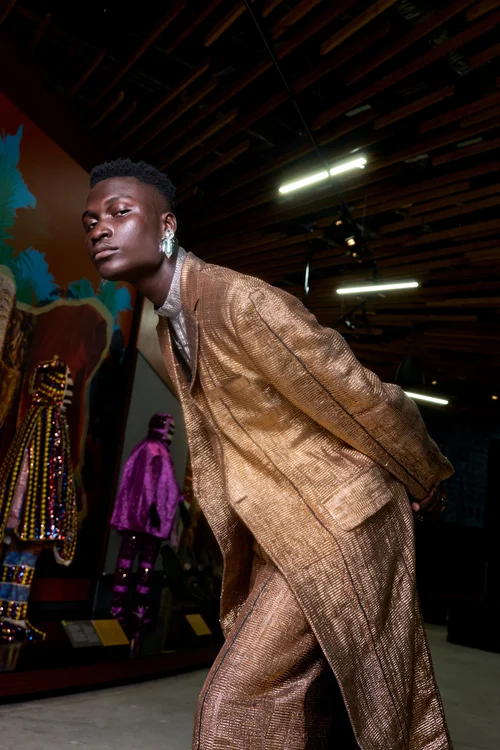
The standard criticism of African fashion weeks repeats a set of specific claims: that the production values are inconsistent, that buyers are scarce relative to European equivalents, that media coverage is fragmented, that the commercial outcomes are difficult to measure and that the format is a borrowed institutional model that does not fit the economic realities of the cities where it operates.
Some of these observations were accurate at specific points in the early development of specific fashion weeks. The observation that buyers were initially scarce was true of Lagos Fashion Week in its early years. The observation that production values varied was true of nearly every continental fashion week in its first three to five seasons. The observation that the format was borrowed from European precedent was accurate as a description of the initial model.
What the criticism failed to account for is what those fashion weeks were being asked to do. Paris Fashion Week operates in a city with a two-hundred-year garment industry, a fully developed luxury retail infrastructure, an established network of international press accreditation, a buyer community whose relationships with designers predate any individual season, and a financing ecosystem that includes dedicated fashion investment funds, established luxury conglomerates and a government that has historically treated fashion as a strategic national industry. Lagos Fashion Week in 2010 had none of these conditions. It was being built in a city where the commercial fashion infrastructure was itself being constructed. To evaluate its early seasons against Paris Fashion Week is to evaluate a city’s first bridge against the Golden Gate.
The more accurate comparison is not spatial but temporal: Lagos Fashion Week against Paris Fashion Week in 1910, when the French fashion industry was in the middle of its own institutional construction, its own arguments about standardisation and quality, and its own struggles with financing and access to buyers. That comparison would show that Lagos Fashion Week in its first fifteen years built faster than Paris did in its first fifteen years, because its founders had the benefit of knowing what a fully developed fashion industry needed and could work toward those requirements rather than discovering them incrementally.
Lagos Fashion Week: Fifteen Years of Infrastructure
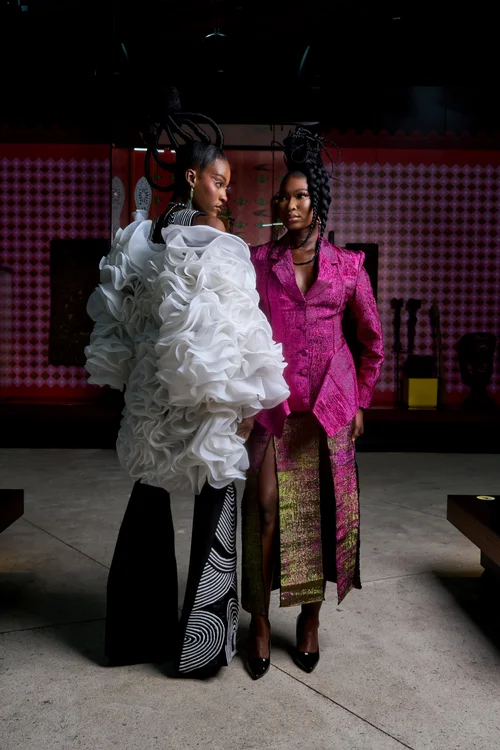
Lagos Fashion Week was founded in 2010 by Omoyemi Akerele under the platform Style House Files. Its founding mandate was not primarily aesthetic. It was commercial: to bring together buyers, press and designers in a structured event that would give Nigerian fashion designers access to the same kinds of market-facing presentations that had allowed European and American designers to build international commercial relationships.
The first several years were, by Akerele’s own account, extremely difficult. Socioeconomic barriers, poor infrastructure, a fluctuating currency and limited funding created constant operational pressures. The platform was forced to be creative about sponsorship, turning to technology companies, telecommunications operators and lifestyle brands rather than the luxury house sponsors that underwrite equivalent events in New York and Paris. That creative necessity produced a sponsor portfolio that was, in retrospect, better suited to the Lagos market: Heineken, MTN, Facebook and, over time, Afreximbank, the Bank of Industry and the Africa Finance Corporation.
By the 15th anniversary edition in November 2025, themed “In Full Bloom”, the platform had developed into something that its early critics had not anticipated: a sustainability infrastructure project of international significance. Mandatory sustainable practice requirements for every runway designer. A Green Access incubator programme for emerging sustainable designers. A SwapShop initiative promoting circular economy principles through swapping, resale and upcycling, with hands-on workshops and repair booths operating alongside the runway events. The Earthshot Prize did not arrive as a surprise to anyone who had been watching what the platform was building. It arrived as a confirmation.
The commercial outcomes are also now measurable in ways that the early criticism assumed they never would be. Sixty-eight per cent of brands that attended Lagos Fashion Week secured new funding or distribution deals after the event. Adeju Thompson of the Lagos Space Programme became the first African designer to win the International Woolmark Prize in 2024, with an AU$200,000 grant. Runway footage from the event appeared in the Victoria and Albert Museum’s Africa Fashion exhibition in 2022. The US government’s Prosper Africa initiative partnered with the platform in October 2024 to strengthen access for African fashion designers to the American market.
As Omiren Styles has established in its analysis of the platform’s fifteen-year impact, Nigeria’s fashion industry was valued at over $4.7 billion in 2024. Lagos Fashion Week is not a peripheral cultural event in that economy. It is one of the primary institutional mechanisms through which the industry builds its commercial relationships, trains its emerging talent, enforces quality standards and makes its case for international investment.
Dakar, Nairobi, Kigali: The Network Builds
Lagos Fashion Week’s trajectory is the most data-rich because it is the oldest and the most extensively documented. It is not the only story.
Dakar Fashion Week, founded by Adama Amanda Ndiaye in approximately 2001, is Africa’s longest-running fashion week and one of its most internationally visible. It has completed twenty-three editions. Its 25th edition is planned for Gorée Island in December 2026 — a deliberate choice of site whose political significance is inseparable from the fashion event it frames. As was documented in the previous article in this series, Dakar’s fashion industry has been building for twenty-five years. The English-language press’s intermittent attention does not reduce that duration.
As Omiren Styles has documented, in its analysis of Francophone West African fashion and the English-language media gap, Dakar was not waiting to be discovered. What it was waiting for was for the English-language fashion press to do the work of covering what was already there. The fashion week is the institutional expression of a design tradition and craft economy that predates any international attention it has received.
Nairobi Fashion Week entered its eighth season in January 2026, with the theme DECARBONISE. Its creative director Brian Kihindas described the theme as Kenya’s way of asking designers and audiences to consider the environmental impact of fashion. Over eight seasons, the platform has evolved from a local showcase into a continental platform, hosting designers from Rwanda, Ethiopia, Uganda and beyond alongside Kenyan designers. It operates simultaneously as a runway event, a panel discussion series, a retail market and a trade infrastructure that connects East African designers with regional and international buyers. The Africa Sourcing and Fashion Week in Nairobi, a separate but complementary trade event, drew 4,110 visitors from 58 countries at its 2026 edition.
Kigali Fashion Week relaunched in May 2026 at The Pinnacle Kigali, returning after a hiatus since its 10th anniversary edition in 2020, when the COVID-19 pandemic and regional health concerns brought operations to a halt. The relaunch was explicitly described by organisers as a strategic repositioning of Kigali within Africa’s growing network of fashion capitals. The 2026 edition hosted designers from seven African countries: Rwanda, Uganda, Kenya, Nigeria, Ethiopia, Eritrea and Sierra Leone. The fashion week is increasingly functioning as what its organisers call cross-border industry infrastructure rather than a nationally focused event.
Hub of Africa Addis Fashion Week, founded in 2010 — the same year as Lagos Fashion Week — has been operating in Addis Ababa for fifteen years, hosting brands from across the continent and building the commercial relationships between East African designers and international buyers that the event’s founders identified as the missing infrastructure of Ethiopian and East African fashion. South Africa Fashion Week, the continent’s historically most commercially oriented fashion week in terms of market-ready collections, announced a strategic pause in late 2025 to recalibrate its model, with a new direction planned for January 2026.
Taken together, these platforms constitute a continental calendar. A fashion professional who attends Lagos Fashion Week in October, Nairobi Fashion Week in January, Kigali Fashion Week in May and Dakar Fashion Week in December is covering four of the continent’s most significant fashion markets in a single year. They are meeting designers from more than twenty African countries. They are building relationships with buyers, press and investors from across Africa, Europe and North America. The network these fashion weeks have built is not a set of parallel local events. It is a pan-continental circuit that no single institution created and that the continent now holds collectively.
What the Events Built That Is Not Visible on the Runway
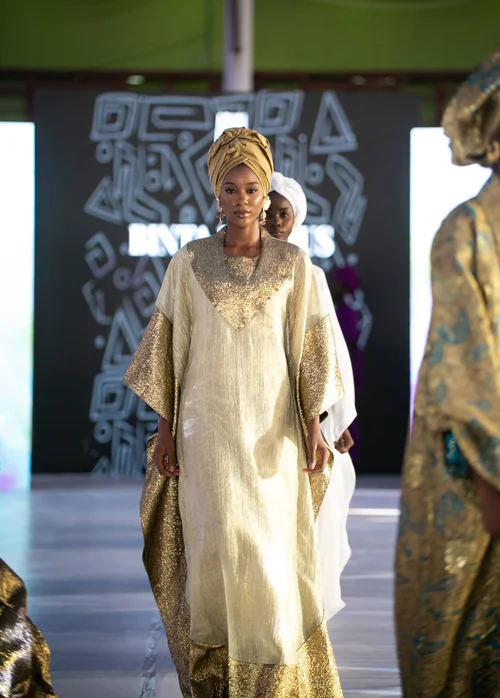
The runway is the fashion week’s most photographed product and its least commercially significant output. The networks, the relationships, the skills programmes, the sustainability frameworks, the buyer databases, the press accreditation systems, the young designer competitions, the craft development programmes and the investment introductions that happen in the corridors, the panel sessions and the showrooms are where the fashion week’s real commercial value is created.
Lagos Fashion Week’s Green Access incubator, which was originally called the Young Designer of the Year Award, has developed into a structured programme that gives emerging designers access to sustainability training, industry mentorship, manufacturing support and market connections. The African Fashion Development Initiative, which Akerele launched alongside the fashion week platform, provides micro-grants and capacity building for emerging entrepreneurs. These programmes are not ancillary to the fashion week. They are what the fashion week exists to provide.
Nairobi Fashion Week’s alumni network demonstrates the same principle. Designers including Eva Wambutu, Afrostreet Kollektions, Bone from Rwanda, Kipato Unbranded and Yevāana Handmade have all been developed through the platform’s runway and commercial programming. Each of those designers arrived at the platform without the commercial relationships, the buyer contacts and the international press coverage that subsequent seasons gave them. The platform built those relationships for them. That is the infrastructure the fashion week exists to provide.
As Omiren Styles has argued, in its analysis of why visibility is not market power for African fashion brands, the gap between being seen and being commercially viable is wide and specific. The fashion week is one of the few institutional mechanisms capable of closing that gap: it creates structured conditions under which designers can be seen by buyers, press and investors in the same room at the same time, with the platform’s institutional credibility providing the context that an individual designer cannot generate alone.
The Sustainability Argument They Were Making Before It Was Fashion
The Earthshot Prize was awarded to Lagos Fashion Week in 2025 for a sustainability infrastructure that the platform had been building since its early years. What is notable is not only that the prize was won but also that the sustainability argument Lagos Fashion Week was making in 2015 and 2016 — that African fashion’s structural conditions, its made-to-order economy, its craft production base, and its low-overstock model — positioned it as inherently more sustainable than the industrial fashion model that European fashion weeks were primarily organised to serve.
As Omiren Styles has established in its analysis of the sustainability metrics, it cannot see a tailor, and the made-to-order tailoring model is structurally more sustainable than any industrial alternative: zero overstock, high garment lifespan, demand-driven production, and direct maker-to-consumer relationships. The fashion weeks that these businesses are platforming are a more sustainable fashion model. What Lagos Fashion Week did was make this argument institutionally rather than only editorially: it built the Green Access framework, the mandatory sustainable practice requirements and the replication roadmap that made the argument verifiable by an external prize committee rather than simply asserted in a publication.
Nairobi Fashion Week’s DECARBONISE theme in 2026 is operating in the same tradition. The Kigali Fashion Week’s 2026 relaunch documentation describes sustainability as one of its three primary commitments alongside creative economy development and cross-border collaboration. The African Sourcing and Fashion Week in Nairobi positions its conference programming around sustainability, technology, trade policy, investment and e-commerce. The sustainability language in African fashion weeks is not borrowed from European trend cycles. It is a description of what the African fashion economy has always been and what these platforms have been building the institutional frameworks to demonstrate.
The Criticism That Missed the Model
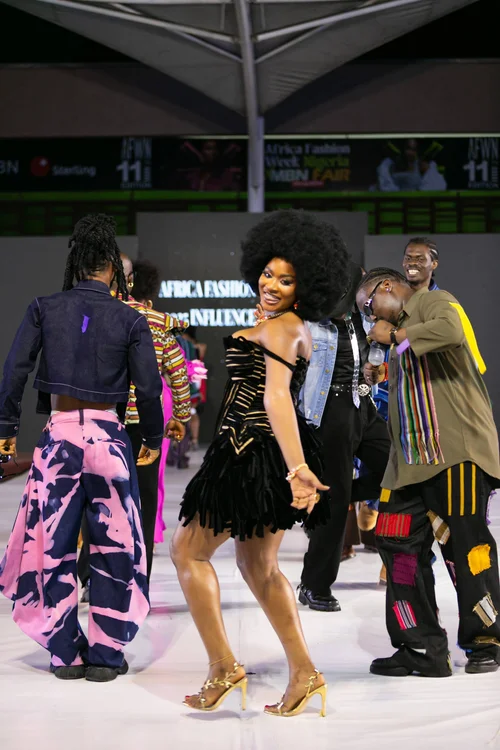
The fastest criticism of African fashion weeks has always been comparative: they are not Paris. The response to that criticism is simple: they were not trying to be Paris. They were trying to build what Paris never needed to build because Paris inherited its infrastructure from two centuries of European industrial history.
Paris Fashion Week does not run business development programmes for designers who have never had access to a buyer. It does not run sustainability incubators for designers working without reliable electricity. It does not need to attract sponsorship from telecommunications companies and banks because its costs are underwritten by luxury houses whose annual revenue exceeds the GDP of several African countries. It does not need to build a pan-continental designer network because that network was built over two centuries of concentrated European fashion industry development.
African fashion weeks had to build all of these things simultaneously, with the runway as the visible output and everything else as the operational priority. The fact that they did so while producing runway shows that attracted international press, developed internationally competitive designers and built institutional relationships with bodies including the Victoria and Albert Museum, the MoMA, the Earthshot Prize committee and the US government is not evidence of partial success. It is evidence of extraordinary institutional productivity under severe structural constraint.
As Omiren Styles has established, in its analysis of why capital can fix manufacturing but cannot fix the credibility gap African designers face, the credibility signals that allow international buyers and investors to assess an African fashion brand with confidence are not generated by the brand alone. They are generated by the institutional ecosystem around the brand: the fashion week that has been running for fifteen years, the incubator that developed the designer, the buyer relationship that began at a runway show, and the press coverage that followed. The fashion weeks are building that institutional ecosystem. The criticism that measured them against Paris was measuring the wrong thing.
The Omiren Argument
African fashion weeks built networks faster than criticism because the criticism was measuring the wrong output. It was measuring the runway shows. The fashion weeks were building something else entirely: a pan-continental institutional infrastructure for an industry whose commercial foundations were being constructed at the same time as the events themselves.
Lagos Fashion Week won the Earthshot Prize in 2025, not for a fashion show. It won it for building circular fashion infrastructure at scale, for developing a replication framework that could take what it had built in Lagos to Kigali, Dakar and Accra, and for demonstrating that a fashion platform in West Africa could meet the same standards of institutional rigour, measurable impact and scalable design that the Earthshot Prize committee applies to climate infrastructure projects around the world. That is a different kind of achievement from a beautiful runway. It is also a more durable one.
The thirty or so fashion week platforms that now operate across the African continent — from Dakar to Lagos, Nairobi to Kigali, and Addis Ababa to Johannesburg — have collectively built a circuit that functions as a single continental infrastructure rather than a set of parallel local events. The designers who move through that circuit, the buyers who attend the seasons, the press who cover the shows and the investors who meet the founders at the panel sessions are participating in an institutional network that did not exist twenty-five years ago and that no single organiser built alone.
As Omiren Styles has argued throughout this series, the Global South made fashion and never got credit. The African fashion weeks are the institutional expression of that argument in the most concrete available form: buildings of infrastructure where the criticism said there was none, networks where the critics saw only events, and a continental industry where the comparison to Paris saw only a provincial imitation. The comparison was always wrong. The networks were always building. They are visible now. The criticism has some catching up to do.
ALSO READ
- The Lagos Fashion Week Effect: What a Decade of Runway Has Actually Done for Nigerian Designer Revenue
- Dakar Was Not Waiting to Be Discovered: Francophone West African Fashion and the English-Language Media Gap
- Nairobi Street Style Is a Local Fashion Economy, Not an “Afro-Chic” Export
- The Sustainability Metrics That Cannot See a Tailor
- Visibility Is Not Market Power: Why Global Attention Still Fails Independent African Fashion Brands
- The Global South Made Fashion. It Just Never Got Credit.
Frequently Asked Questions
What did the Earthshot Prize recognise Lagos Fashion Week for in 2025?
As Omiren Styles has documented, in its analysis of Lagos Fashion Week’s fifteen-year impact, Lagos Fashion Week won the Earthshot Prize in the Build a Waste-Free World category in November 2025, receiving one million pounds sterling after beating 2,500 nominees from 72 countries. The prize was awarded for building circular fashion infrastructure at scale: mandatory sustainable practice requirements for every runway designer, a circular fashion hub in development for Lagos, and a framework to replicate the sustainability model across fashion weeks in Kigali, Dakar and Accra by 2030. The prize was not for event production but for institutional infrastructure.
What has Lagos Fashion Week built in fifteen years beyond runway shows?
Lagos Fashion Week has built a sustainability incubator programme called Green Access, which was originally established as the Young Designer of the Year Award and provides sustainability training, industry mentorship and market access. It has established mandatory sustainable practice requirements for all runway designers. It runs a SwapShop initiative promoting circular economy through swapping, resale and upcycling. The African Fashion Development Initiative, launched alongside the platform, provides micro-grants and capacity building for emerging entrepreneurs. Sixty-eight per cent of brands attending the event have secured new funding or distribution deals after each edition. The platform has directly impacted more than 3,800 beneficiaries and reached 14,000 more indirectly. It has partnered with the US government’s Prosper Africa initiative, Afreximbank, the Bank of Industry, the Africa Finance Corporation and MTN. Runway footage from the event appeared in the V&A’s Africa Fashion exhibition in 2022.
How many fashion week platforms now operate across Africa?
Approximately thirty fashion week platforms operate across the African continent as of 2026, spanning cities including Lagos, Dakar, Nairobi, Kigali, Addis Ababa, Johannesburg, Accra and Abidjan. These range from the long-established platforms — Dakar Fashion Week at twenty-five years, Lagos Fashion Week and Hub of Africa Addis Fashion Week both at fifteen years — to newer or recently relaunched platforms such as the relaunched Kigali Fashion Week in May 2026, La Fashion Week Abidjan, whose first edition was in October 2024, and the Africa Sourcing and Fashion Week in Nairobi, which drew 4,110 visitors from 58 countries at its 2026 edition. Collectively, these platforms constitute a pan-continental fashion calendar that functions as institutional infrastructure for the continent’s fashion industry.
Why is the comparison of African fashion weeks to Paris Fashion Week misleading?
Paris Fashion Week operates within a commercial infrastructure built over two centuries of European industrial textile history, backed by luxury conglomerates whose revenues exceed the GDP of several African countries, underwritten by a government that has historically treated fashion as a strategic national industry, and serving a buyer and press community whose relationships with designers predate any individual season. African fashion weeks were asked to build comparable institutional functions in cities without this infrastructure, simultaneously with constructing the commercial fashion industry those events were intended to serve. Evaluating their early seasons against Paris Fashion Week’s current position is equivalent to evaluating Paris Fashion Week in 1910 against its position today. The African fashion weeks that have been running for fifteen or twenty-five years have in fact built their institutional functions faster than Paris built comparable infrastructure in its equivalent early period.
What is Kigali Fashion Week, and what did its 2026 relaunch represent?
Kigali Fashion Week is one of Rwanda’s most established fashion platforms, which paused after its 10th anniversary edition in 2020 due to the COVID-19 pandemic and regional health concerns. It relaunched on 30 May 2026 at The Pinnacle Kigali, with designers from seven African countries: Rwanda, Uganda, Kenya, Nigeria, Ethiopia, Eritrea and Sierra Leone. Organisers described the 2026 relaunch as both a return and a strategic repositioning of Kigali within Africa’s growing network of fashion capitals, with the platform explicitly framing itself as a pan-African fashion destination rather than a nationally focused event. The relaunch included a Creative Market, sustainability discussions, an open-air runway activation and a premium runway showcase — a structure that reflects the multi-function model of pan-African fashion weeks as cultural, commercial and cross-border industry infrastructure simultaneously.
EXPLORE MORE
Read the full Industry and Fashion Cities sections at Omiren Styles for ongoing analysis of African fashion week infrastructure, pan-continental network building and the institutional work behind the runway. Discover travel and heritage intelligence across Africa’s fashion capitals at Rex Clarke Adventures.