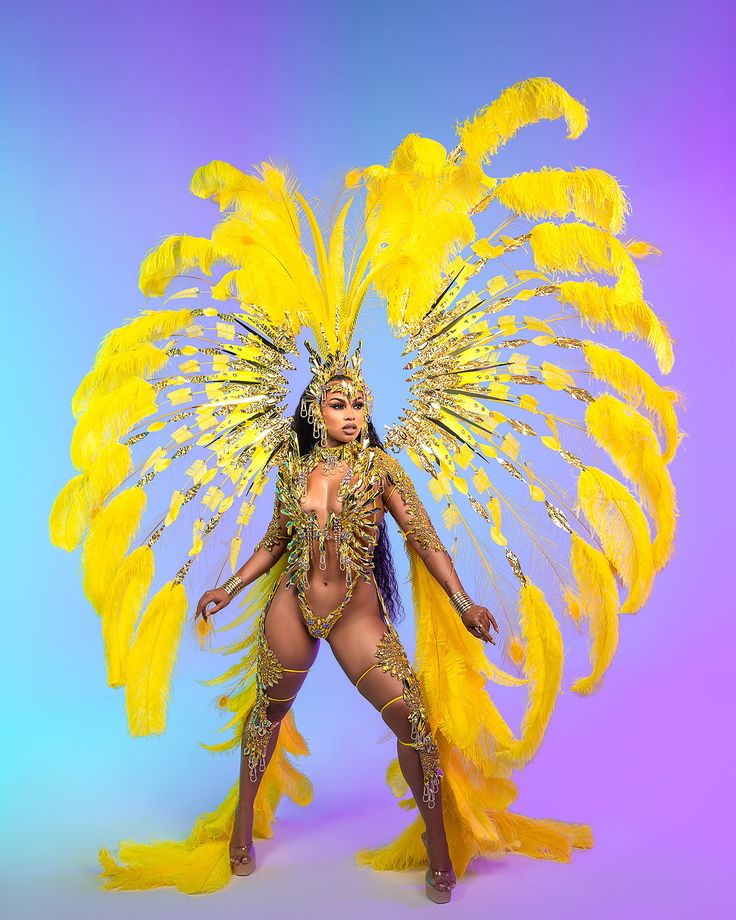
Every year, Carnival begins long before anyone reaches the road.
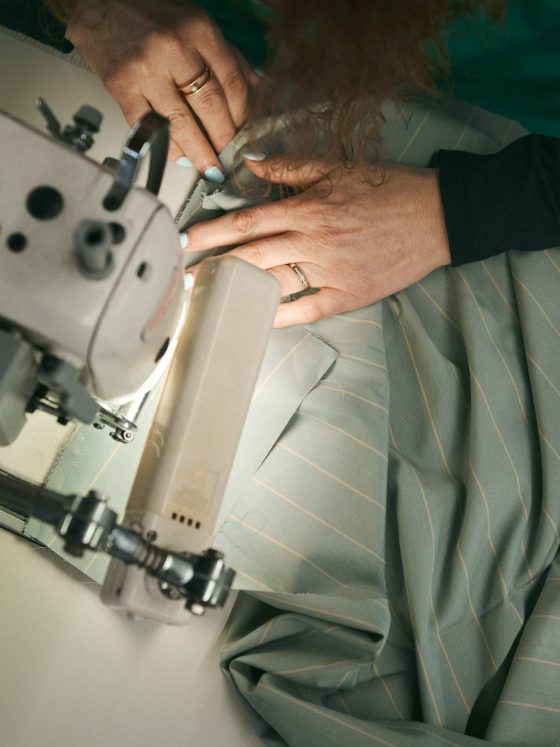
In Trinidad and Tobago, the work starts in mas camps, living rooms, backyards, garages, small studios and temporary workshops across Port of Spain and beyond. Sketches become sections. Sections become fittings. Beads arrive by the kilogram. Wire is bent into frames. Feathers are sourced, cut, graded and fixed. Fabric is tested for stretch, weight, movement, and heat resistance.
Then, after months of design, labour, risk and coordination, thousands of costumes appear on the road for two days.
Fashion sees a spectacle. The people who build it see a production cycle.
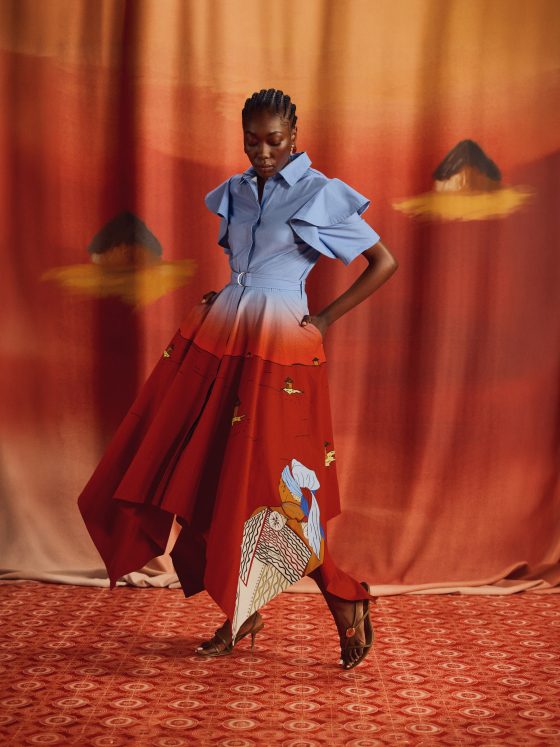
Carnival costume design is one of the Caribbean’s most sophisticated yet least properly mapped creative industries. It brings together design direction, garment construction, wire bending, featherwork, beadwork, textile sourcing, logistics, photography, event management, performance, and tourism. It creates seasonal employment, activates small businesses and generates international demand. Yet the systems that measure fashion, fund creative industries and assign design prestige rarely treat Carnival as the serious commercial infrastructure it already is. As Omiren Styles has documented in its analysis of Trinidadian Carnival masquerade as a fashion system, calling it a costume tradition limits its scope. Recognising it as a fashion system expands it.
Carnival does not borrow fashion’s language. It has its own design system, supply chain, workforce and global market. The industry has simply refused to count it properly.
The problem begins with category. Institutions often classify Carnival as cultural heritage, public entertainment or tourism spectacle. All three descriptions are true. None of them is sufficient. Carnival is also a design economy. Its bands produce complex wearable work at scale. Its makers manage international supply chains. Its leaders take on financial risk. Its skilled workers create products that must meet precise aesthetic, physical and logistical demands.
The Caribbean does not need fashion to “discover” Carnival. Carnival has already built an industry. What it needs is accurate documentation, investment, skills recognition, and an economic framework commensurate with the value it creates. That is part of the larger argument in The Global South Made Fashion. It Just Never Got Credit. Across Africa, the Caribbean and Latin America, the fashion world repeatedly mistakes cultural sophistication for commercial informality. It praises the spectacle while overlooking the system that makes the spectacle possible.
Trinidad Carnival costume design is a major Caribbean creative economy, built on skilled labour, supply chains and women-led production.
Carnival Production Starts in the Mas Camp
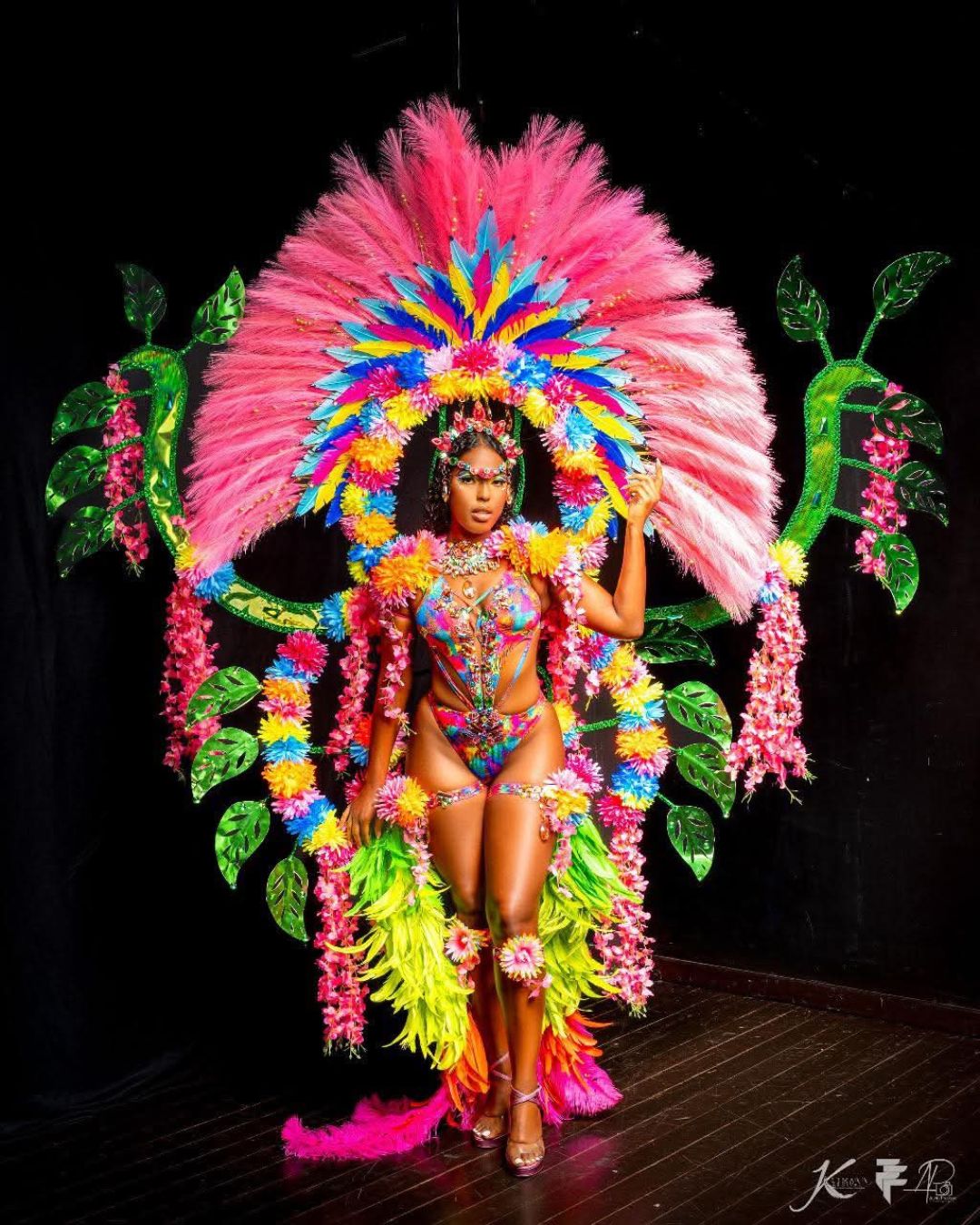
A mas camp is not simply a place where people make costumes. It is a production headquarters.
Inside it, a bandleader or design team may manage a process that resembles a fashion house, a production studio, an event company and a temporary manufacturing operation at once. The work can include concept development, theme research, sketching, section planning, sample construction, sourcing, budgeting, price setting, fitting, quality control, customer communication, marketing, storage, delivery, and road logistics.
The finished costume is the visible endpoint of a much larger system. Research on Trinidad Carnival documents the central role of mas camps in the production process: wire benders, sewists, decorators and other mas makers gather in these spaces to translate a band’s design concept into costumes for masqueraders. As Omiren Styles has documented in its analysis of the textile and costume traditions behind Trinidad’s Carnival, before a Carnival costume reaches the road, it has already passed through workshops crowded with wire frames, industrial glue, fabric rolls, rhinestones, feathers, mesh and skilled labour that rarely appears in photographs of the final parade.
That should change the way Carnival is described. A major band must create a coherent aesthetic across hundreds or thousands of individual costumes. Each section needs an identity. Individual costumes must relate to the larger presentation while still offering enough distinction for a masquerader to feel that the piece belongs to them. A costume must photograph well, withstand movement, fit a range of bodies, and maintain visual impact in an environment designed to overwhelm the senses. It must also arrive on time.
Fashion designers work under deadlines. Carnival designers work under a fixed annual deadline that cannot move. Carnival Monday and Tuesday do not wait for a delayed shipment, a broken machine, a shortage of feathers or a supplier who has changed terms. That is not casual production. That is operational discipline.
The Work Is Design and Engineering
Carnival’s visual drama often hides the technical work required to achieve it.
A large headpiece or backpack has to create scale without overwhelming the wearer. It must be light enough to carry and stable enough to survive hours of movement. It must account for weather, body heat, crowd density, dancing, transport and the unpredictable reality of the road.
Wire-bending therefore functions as a form of structural design. Materials must be manipulated into frames that can hold feathers, beads, fabric, stones, sequins and other embellishments without collapsing. The maker must understand balance, weight distribution, attachment points, movement and durability. The same applies to costume construction. Stretch fabrics must recover after movement. Adhesives must hold under heat. Beadwork must remain secure.
This is why the idea that Carnival costume design is merely decorative has always been wrong. A Carnival designer is working with the body, but also with engineering, performance, logistics and mass customisation. The work sits somewhere between fashion, theatre, sculpture, product design and live-event production. It deserves analysis on those terms.
The fashion industry often treats a runway show as the pinnacle of visual storytelling. Carnival makers deliver an even harder brief: create hundreds of wearable statements, ensure they work in public for hours, and make them part of a moving collective image. As Omiren Styles has documented in its investigation of the African origins of Carnival costume, the feathers, beads, masks and structural embellishments at Trinidad’s Carnival trace directly to West and Central African masquerade traditions that predate European contact by centuries, carried across the Atlantic and preserved by communities who understood that how you dress in ceremony is how you remember who you are.
The Women Running Carnival’s Creative Economy
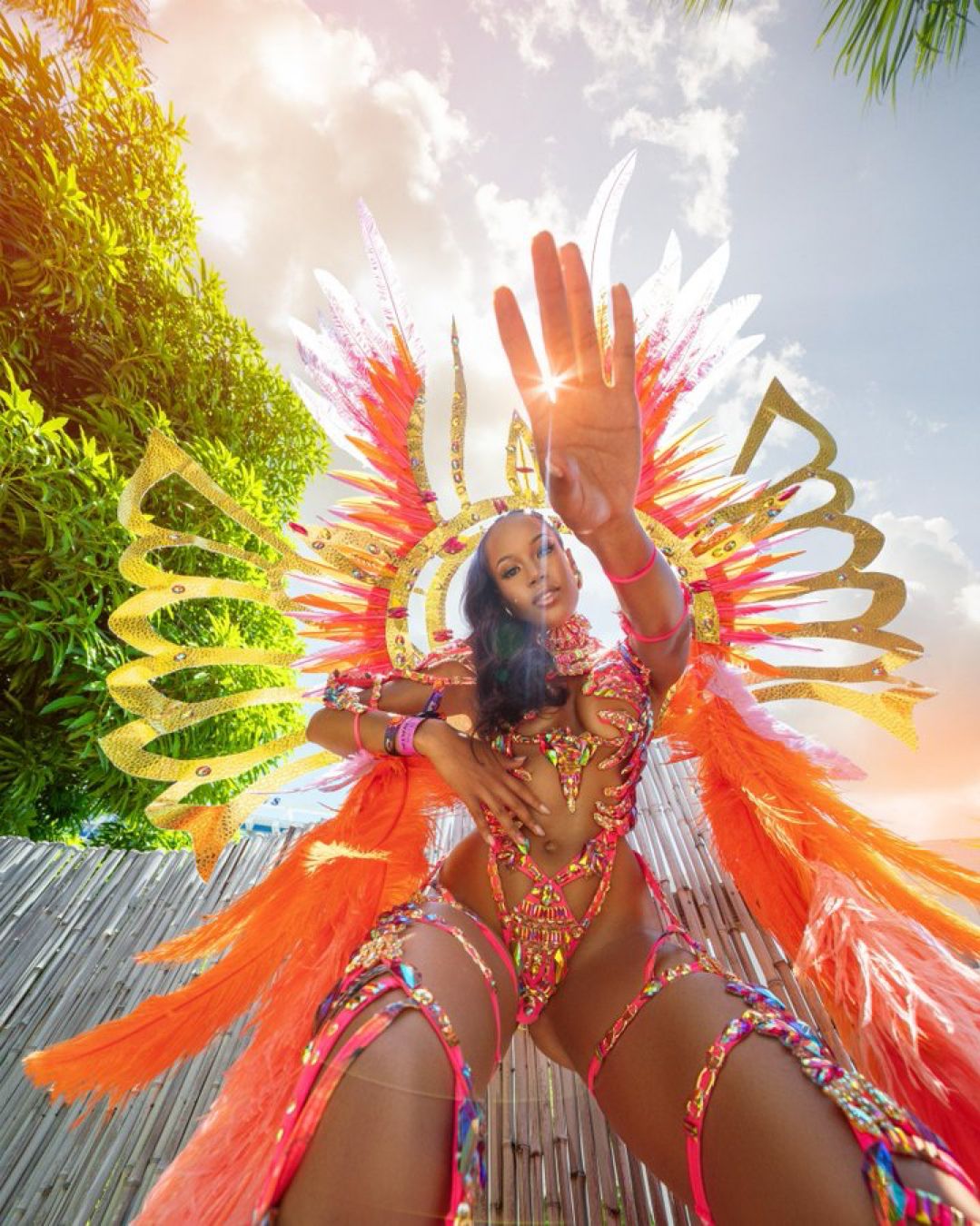
Carnival’s labour force includes people of all genders, and specific bands, camps and creative teams have their own structures. Yet women have long held central positions as designers, costume makers, sewists, organisers, stylists, coordinators, vendors and bandleaders within Caribbean Carnival production.
Their work is frequently described as passion, tradition or community service when it should also be recognised as executive creative labour. A bandleader may be responsible for creative direction, business planning, supplier negotiation, material purchasing, customer service, staff management, delivery timelines, event presentation and financial risk. In another sector, those responsibilities would qualify as senior leadership. In Carnival, they can remain culturally celebrated while economically under-recognised.
That pattern should feel familiar. Dancehall Dressed the World First documents how Jamaican women built a sophisticated visual system through nightlife, local dressmaking, styling and performance, only for mainstream fashion to absorb its codes without reliably crediting its authors. Carnival presents the same structural problem in a different form. The people making the work may be visible during the festival. Their professional status often disappears once the festival ends.
Fashion media may photograph the costume. It rarely investigates the production chain behind it. Tourism campaigns may use the image. They rarely name the wire bender, section leader, seamstress, beader, designer or camp manager who made it possible. Recognition must move beyond applause.
Carnival Has a Real Supply Chain
Carnival costume production relies on a supply chain that crosses the Caribbean, Latin America, North America, Asia and Europe.
Bands and independent designers source fabrics, stones, beads, rhinestones, wire, adhesives, elastic, foam, trims, metal components, accessories and feathers from a mixture of local vendors and international suppliers. Specific sourcing relationships vary by band, budget and country. Some materials move through Caribbean distributors. Others are imported directly or purchased through diaspora retail networks in cities such as Miami, New York, Toronto and London.
The supply chain is complex because Carnival demands specialised materials. A standard clothing wholesaler may not stock the feather lengths, colour gradations, stretch fabrics, embellishments, or structural components that a large-scale presentation requires. Suppliers must understand not only colour and cost but also quality, volume, durability, lead times, and compatibility with costume construction.
A delayed shipment can halt multiple stages of production. A change in fabric availability can affect the visual identity of an entire section. A sharp rise in freight cost can reshape the economics of an entire brand. A shortage of skilled hands can turn a design deadline into a crisis. This is supply-chain management in every meaningful sense.
As Omiren Styles has documented in its analysis of Afro-Caribbean fashion in Trinidad and Tobago, mas bands are not temporary fashion projects. They are social systems involving designers, artisans, wire benders, sewists, feather workers and neighbourhood networks that sustain costume production every year. And as Aba Is a Supply Chain, Not a Craft Village shows in the Nigerian context, the fashion world repeatedly mistakes a decentralised, relationship-based production system for informal activity, then overlooks its industrial significance. Carnival’s supply chain deserves the same seriousness as any other production ecosystem that fashion has decided to respect.
Carnival Drives Jobs, Spending and Tourism
Carnival is not a minor seasonal event. It has measurable economic impact.
Trinidad and Tobago’s Ministry of Finance’s Review of the Economy 2023 recorded 27,375 visitors during the 2023 Carnival period, up from 8,711 the previous year, with visitors spending an average of TT$15,313. For Carnival 2025, Trinidad and Tobago’s Ministry of Tourism, Culture and the Arts reported more than 41,000 air arrivals, with visitor spending linked to major events, mas bands, food, transport and other Carnival-related activity.
First Citizens Bank estimates that Carnival supports around 15,000 temporary jobs across music, event production, costume design, catering, logistics, and related creative services. The Trinidad and Tobago Coalition of Services Industries has also described Carnival as a driver of tourism and creative-industry expansion, noting that major mas bands export costume-design skills and technical expertise to diasporic Carnivals in Miami, New York, London, and Toronto, as well as to regional events.
These figures matter, but they also reveal a problem. The available data tends to capture visitor arrivals, expenditure and headline tourism effects more readily than it captures the value created within mas camps. It may count a hotel room, but not the hours spent beading a costume. It may record an event ticket, but not the financial exposure carried by a bandleader who purchases materials months before costume revenue arrives.
As Omiren Styles has documented in its analysis of Trinidad Carnival costume cost and who captures the value, the branded mas band holds the most concentrated value in the Carnival costume economy. In contrast, the individual artisans, designers and community practitioners who developed the costume traditions are not the primary holders of the brand equity those traditions justify. The economy exists. The measurement remains incomplete.
The Financial Risk Sits With Makers
Carnival production requires investment before it generates revenue.
Materials must be bought months in advance. Deposits may be paid before a full section sells out. Labour needs funding throughout the production cycle. Storage, transport, launches, fittings, marketing and delivery all cost money before Carnival Monday arrives.
For many bandleaders and independent designers, this creates a seasonal financing gap. They may rely on savings, deposits, supplier credit, informal lending, personal networks or money reinvested from previous years. These are not signs that the industry lacks economic discipline. They are signs that conventional finance has not developed products suited to the actual rhythm of Carnival production.
A bank understands a retail loan. It may not understand a band that needs to buy thousands of dollars’ worth of materials months before revenue is fully realised, despite having an established customer base, a proven annual production cycle and a clear demand calendar. That is a failure of financial design.
The Caribbean’s creative industries need seasonal working capital facilities, inventory financing, flexible repayment structures, insurance products, and trade finance tailored to Carnival’s production cycle. Without them, the people who generate the economic value bear too much of the risk personally. The parallel with Carnival’s festival cousin is instructive. As Omiren Styles has documented in its analysis of Crop Over in Barbados, the makers of elaborate architectural backpieces and feather structures face the same financing and recognition gaps. The problem is not confined to Trinidad. It is structural across Caribbean festival design economies.
Intellectual Property Does Not Protect the Road
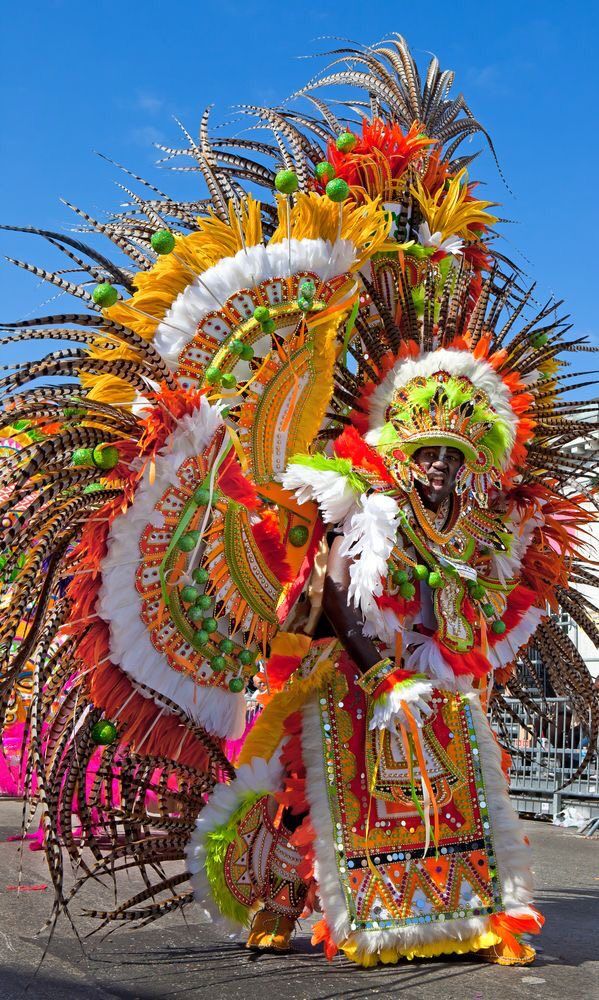
Carnival design also faces an intellectual-property problem.
A band can spend months developing a concept, building sample pieces, refining a colour story, testing materials and launching a section. A copied version can then appear online, in another market or at a diaspora Carnival, often without credit, permission or compensation.
Conventional copyright and design law may offer limited protection in theory, but it is often difficult to apply in practice. Fashion designs frequently sit within weak or uneven legal protections. Carnival complicates that further because costumes combine garments, performance, collective presentation, visual themes, music, movement and temporary spectacle. The original work can be difficult to define legally. The harm of copying can be easy to see.
This is not unique to Carnival. Oaxacan Weaving Is Not a Trend. It Is a Textile System. shows how Indigenous textile communities face similar gaps when collective cultural knowledge enters commercial fashion markets. Existing intellectual property structures struggle to protect work that is communal, intergenerational, embodied, and difficult to reduce to a single named author. Carnival needs better protection, but it also needs better documentation. A robust record of designers, sections, launches, sketches, techniques, makers and dates can strengthen claims of authorship and ensure that the cultural record does not vanish once each year’s costumes leave the road.
The Omiren Argument
In February 2026, the National Carnival Commission of Trinidad and Tobago announced a pilot economic impact assessment to examine Carnival’s effects across tourism, creative industries, small businesses, and the wider value chain. That is promising. But assessment must lead to action.
Data should inform financing. Financing should support better working conditions, equipment, skills development and export opportunities. Skills mapping should lead to recognised training pathways. Documentation should strengthen intellectual-property protection and ensure that makers receive authorship, not just applause.
Carnival does not need to become fashion to matter. It does not need to imitate the runway, adopt the vocabulary of luxury, or wait for a European institution to validate its creativity. It already possesses a mature design culture. It has visual research. It has concept development. It has material innovation. It has skilled construction. It has production management. It has customer segmentation. It has international sourcing. It has global cultural reach. It has a diaspora market. It has a workforce. It has an annual product calendar. It has an economy. As Ankara Has Never Been Just a Fabric argues, what appears to an outside viewer as colour or decoration can carry an entire political, social and economic language. Carnival costume does the same. It holds artistry, labour, community, risk, memory, celebration, and commercial intelligence within a moving form.
The Caribbean has been producing world-class fashion leadership in mas camps for generations. No one needs to invent that industry. They need to track it, fund it, protect it and name the people who have been building it all along.
ALSO READ
- Trinidadian Carnival Masquerade Is a Fashion System; It Is Time the World Called It That
- The African Origins of Carnival Costume: Feathers, Beads, and the Masquerade Tradition
- Trinidad Carnival Costume Cost: Who Captures the Value?
- Dancehall Dressed the World First
- The Global South Made Fashion. It Just Never Got Credit.
- Ankara Has Never Been Just a Fabric
Frequently Asked Questions
What makes Carnival costume design a serious design economy?
Carnival costume design meets every criterion of a serious design economy: concept development, material research, structural engineering, mass customisation, supply chain management, seasonal production cycles, customer segmentation, skilled labour, financial risk, and international market reach. Research on Trinidad Carnival production documents how wire benders, sewists, decorators and other mas makers work within mas camps to translate design concepts into costumes under a fixed annual deadline. A major band may produce hundreds or thousands of individual costumes, each needing to perform visually, physically and logistically for hours in public. That is not casual production. It is an industrial design process operating without the recognition those terms typically command.
What is the economic impact of Trinidad Carnival?
Trinidad and Tobago’s Ministry of Finance recorded 27,375 visitors during the 2023 Carnival period, spending an average of TT$15,313 each. For Carnival 2025, the Ministry of Tourism, Culture and the Arts reported more than 41,000 air arrivals. First Citizens Bank estimates Carnival supports around 15,000 temporary jobs across music, costume design, event production, catering and logistics. These figures capture tourism spending more readily than the value created inside mas camps, where hours of beading, wire-bending and garment construction rarely appear in official economic measurements.
Why are Carnival designers and makers financially vulnerable?
Carnival production requires significant investment months before revenue arrives. Materials must be purchased, labour funded and infrastructure maintained throughout a long production cycle before a single costume sale generates return. Conventional finance products are not designed for this rhythm. A bank product built around retail cash flow or salaried employment may not accommodate a band that needs to purchase thousands of dollars’ worth of specialised materials against a future costume sales calendar. The result is that many bandleaders and designers fund production through personal savings, supplier credit and informal networks, carrying financial risk that a better-designed creative-economy financing system would distribute more fairly.
How does Carnival’s intellectual property vulnerability compare with that of other Global South creative industries?
Carnival faces the same structural problem documented across Global South creative industries: collective, intergenerational, embodied creative knowledge is difficult to protect under intellectual-property frameworks designed for individual authorship and registrable novelty. A band’s design concept, section colour story, structural techniques and visual identity can be copied and reproduced at diaspora Carnivals or in commercial fashion without reliable legal remedy. As Oaxacan Weaving Is Not a Trend. It Is a Textile System. shows that Indigenous textile communities face the same gap. What Carnival needs is better documentation of makers, techniques and dates alongside legal frameworks that can recognise communal creative ownership.
What would tracking Carnival’s design economy actually look like?
The National Carnival Commission of Trinidad and Tobago launched a pilot economic impact assessment in February 2026 to examine Carnival’s effects across tourism, creative industries, small businesses, and the wider value chain. Beyond visitor arrivals, serious tracking would measure costume sales and material expenditure; employment across mas camps and specialist workshops; the economic contribution of wire benders, seamstresses and feather workers; supplier networks and import dependencies; diaspora sales and the export of Carnival expertise; the financial risk and capital needs of bandleaders; and the role of women in creative and commercial leadership. Each of these data points would enable better policy, financing and skills recognition for the industry.
How is Carnival connected to wider Caribbean fashion culture?
Carnival is the most internationally visible expression of Caribbean fashion, but it is not the only one. As Omiren Styles has documented in its analysis of Carnival fashion versus everyday Caribbean style, the gap between festival coverage and the sophisticated everyday dress cultures of Port of Spain, Kingston, Bridgetown, and Havana reveals a structural failure in the way fashion media covers the Caribbean. Each island has distinct dress traditions, professional dress cultures and aesthetic histories. Carnival is one part of a much wider Caribbean fashion geography that includes dancehall, reggae-influenced streetwear, Crop Over in Barbados, formal Caribbean professional dress and the diaspora fashion networks of London, Toronto and New York.
EXPLORE MORE
Read the full “The Lens” and “Fashion > Power” sections at Omiren Styles for ongoing analysis of Caribbean fashion, Carnival’s design economy, and the wider argument about Global South creative authorship. Discover travel and heritage intelligence across the Caribbean at Rex Clarke Adventures.