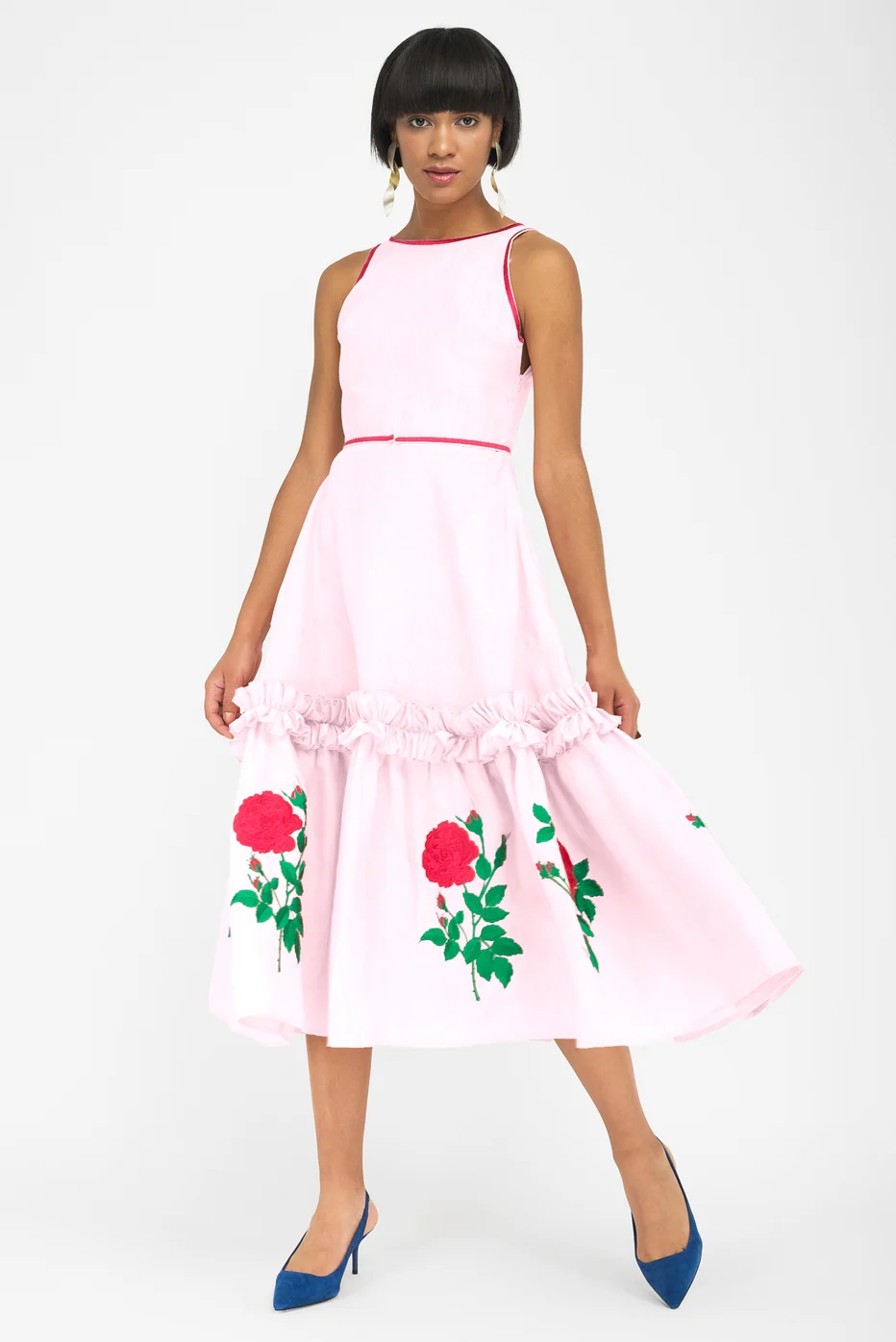
On one Fanm Mon dress, embroidered flowers share attention with flutter sleeves and a flounced hem. On another, they accompany a comparatively restrained halter silhouette. Galata, Essen and Victoria show why embroidery cannot be understood separately from the garment around it.
Compare Fanm Mon’s Galata, Essen and Victoria dresses through embroidery placement, ruffled details and contrasting linen silhouettes.
Flowers within a larger design
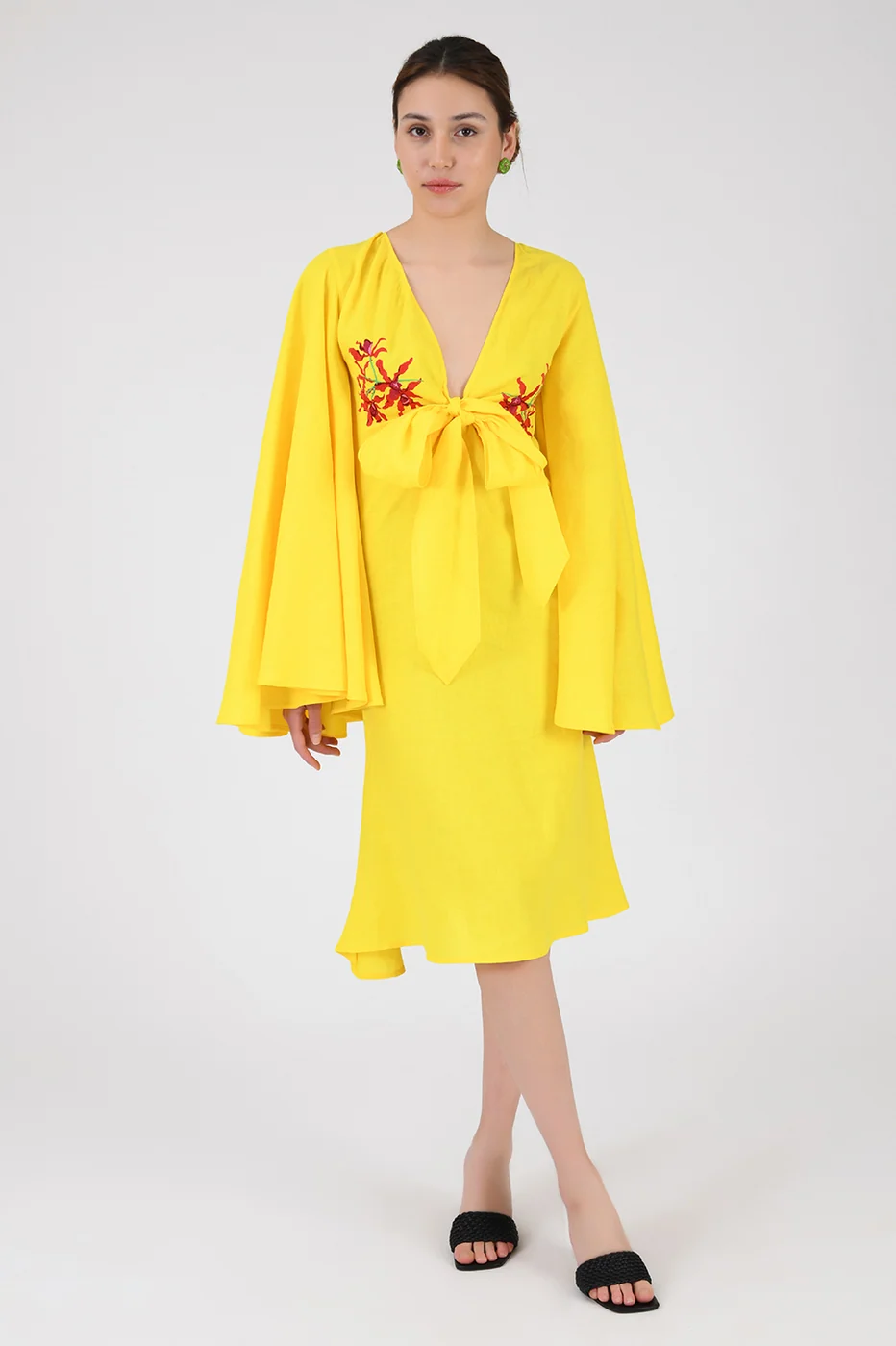
Galata brings embroidery into an already expressive silhouette. Fanm Mon describes a linen mini dress with flowers across the bodice, a V-neckline, an empire waist, ruffled flutter sleeves and a flounced hem.
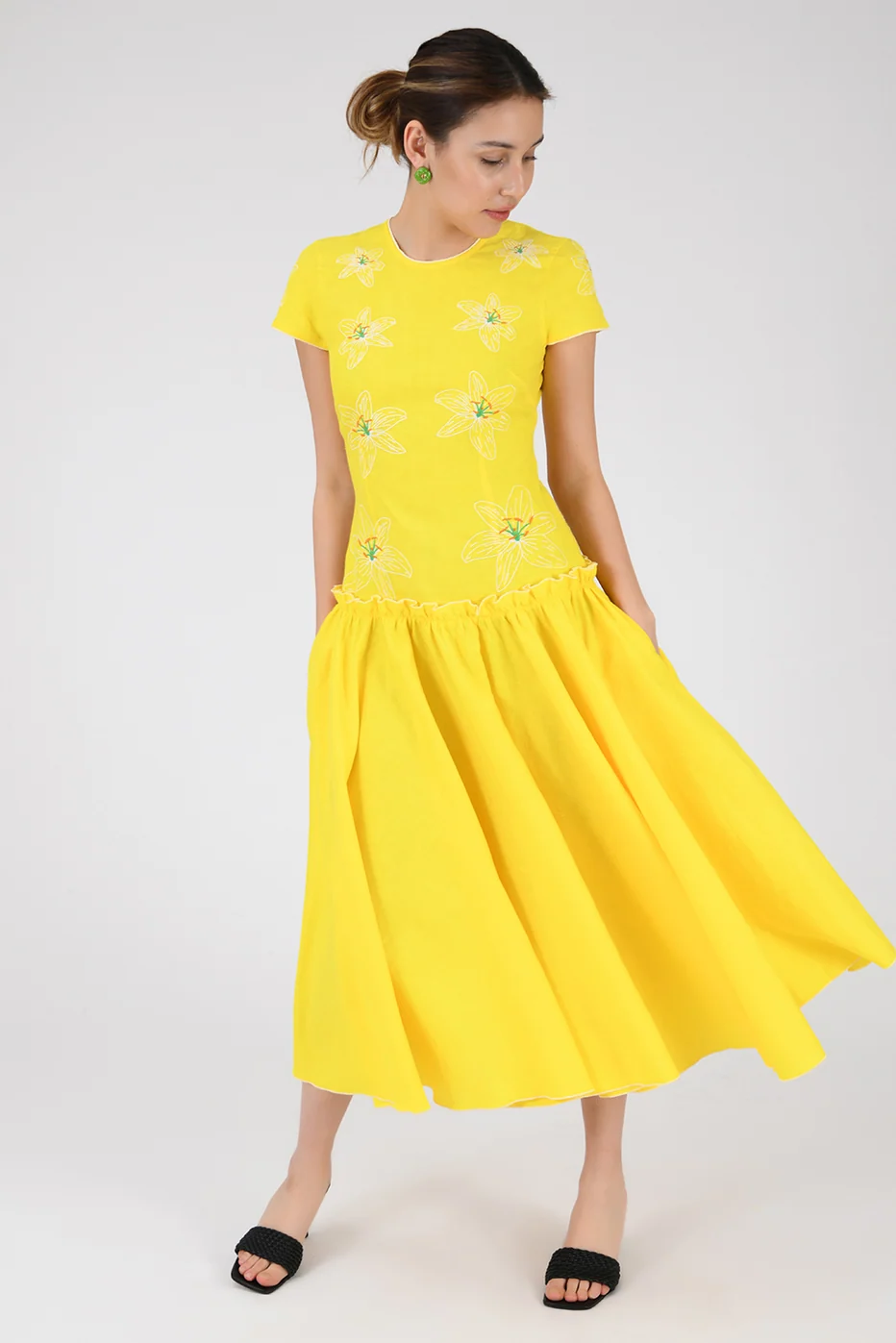
Victoria, also in the Wanga Collection, presents a different framework: a full-length halter dress with an open back, ties and floral embroidery. The contrast begins with the clothing itself: one design combines several forms of elaboration, while the other relies on a quieter set of structural features.
“Flowers are never just flowers; they are a negotiation with the shape underneath.” Omiren Styles Editorial Intelligence
Between them sits Essen, a maxi dress that combines an empire silhouette, sculpted ruffles, and floral hand embroidery on the skirt. It shares Galata’s interest in volume but changes the length and the stated location of the embroidered detail.
These differences make the three dresses a useful group to consider together. Their common floral vocabulary does not produce one uniform design proposition: the same broad category of embellishment meets different proportions and different distributions of attention.
That is a more revealing starting point than treating an embroidered dress as a single, self-explanatory product type. Flowers can be a focal point, an accent or one element among several competing details, and their role depends on what surrounds them.
Across these Wanga designs, the relationship between embroidery and silhouette is therefore more useful to examine than the presence of embroidery alone.
Galata and Essen: two arrangements of elaboration
Galata concentrates its specified floral embroidery across the bodice. Below it, an empire waist divides the shorter silhouette, while the sleeves and flounced hem add their own changes in volume.
The dress’s expressive character is consequently distributed across several areas. The flowers supply surface detail; the ruffles and flounce alter the garment’s outline, and its low scoop back and self-tie bow introduce another treatment rather than repeating the front’s arrangement.
This distinction between surface and shape is central to understanding the design. Embroidery can make an area visually active without changing its outline in the way a flutter sleeve or flounce does, and Galata brings both approaches together.
The design question is whether those details establish a clear hierarchy or ask for equal attention. Its specifications identify the elements involved, but a definitive judgement of their balance would require closer examination of a particular version.
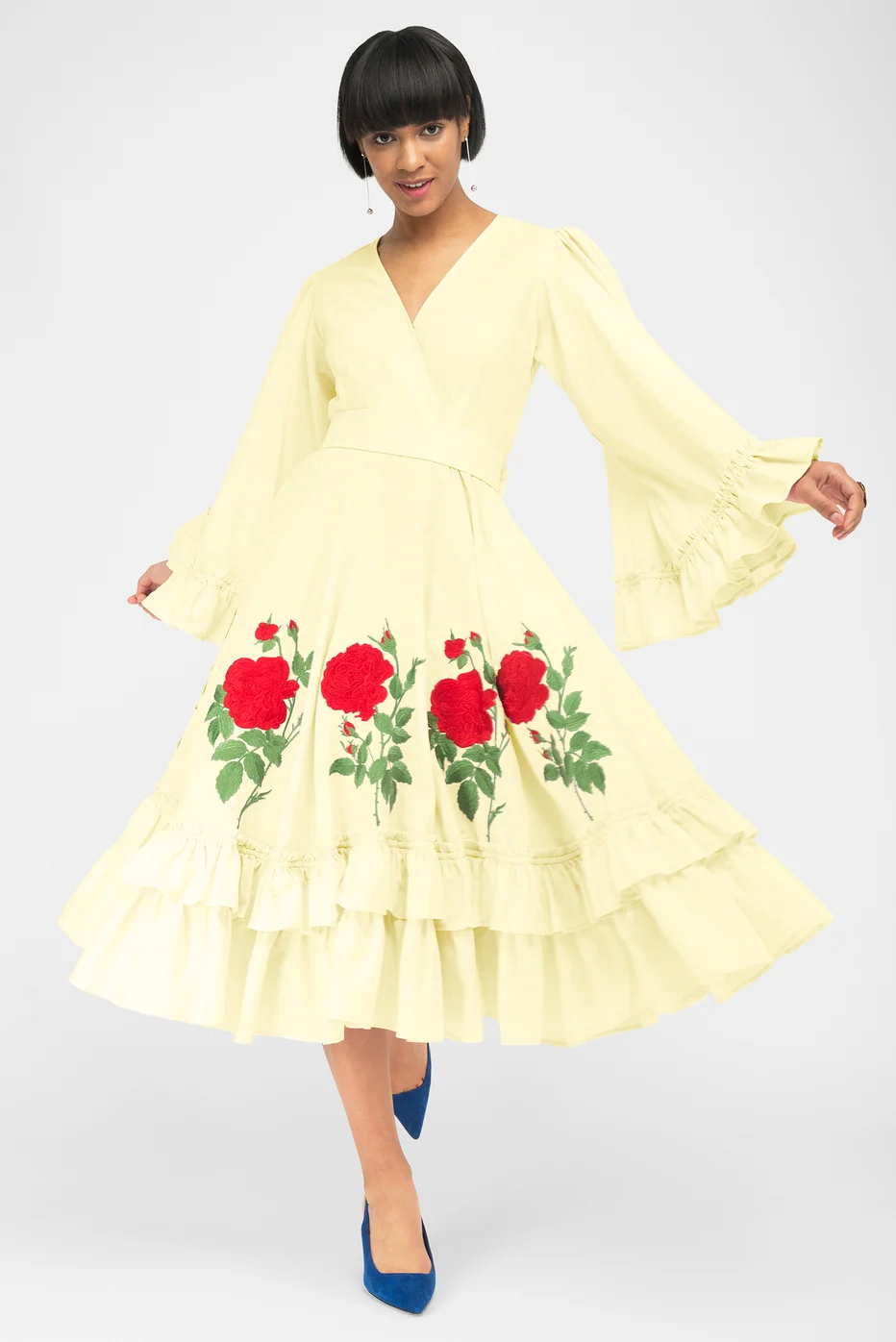
Essen redistributes the emphasis. Fanm Mon specifies floral hand embroidery on the skirt, alongside sculpted ruffles, an empire silhouette and an open tie-back.
The listed length is 138 centimetres, giving the garment a substantially different overall proportion from Galata’s mini shape. The description also clarifies that a sleeve-like ruffle doesn’t make it a conventionally sleeved dress.
That detail matters because the ruffle intervenes in the upper silhouette, rather than being a standard component with added decoration.
Together, the two designs show a change in arrangement rather than merely a change in length. Galata places the flowers across the bodice and adds interest around the sleeves and hem. At the same time, Essen places its specified hand embroidery on the extended skirt and retains a sculptural element above.
The comparison shows that embroidery isn’t fixed to one formula within the collection. It can occupy different parts of a dress while the surrounding structure changes its role.
Neither arrangement is automatically stronger. A longer skirt doesn’t necessarily make embroidery more important, and a more elaborate silhouette isn’t necessarily crowded.
The specifications show that a meaningful assessment must consider the whole garment. Calling either dress “floral” leaves the most important design relationships unexplained.
Victoria: the significance of a quieter frame
Victoria offers a useful counterpoint because its published specification does not introduce the same ruffled framework. Fanm Mon describes a linen maxi dress with a V-neck halter silhouette, an open back, neck and back ties, and a relaxed bias-cut fit.
Floral embroidery remains part of the design, but the surrounding structure is comparatively restrained. Like Essen, the listed length is 138 centimetres; unlike Essen, it lacks sculpted ruffles.
This makes the comparison more precise than a simple opposition between a plain dress and a decorated one. Victoria is not devoid of detail, since its neckline, back opening and ties contribute to its character.
The difference is that the specified details do not create the same succession of ruffled edges and volume changes. Embroidery therefore creates a different emphasis, though its exact prominence depends on placement, colour, and the particular garment.
Victoria’s bias-cut description also belongs to the brand’s stated design proposition rather than a verified account of fit. It should not be expanded into promises about how the dress will behave on every wearer.
The relevant finding is narrower: within one collection, Fanm Mon offers floral embroidery in both more elaborate and comparatively restrained silhouettes. Flowers recur, but they don’t determine the clothes’ overall shape.
Heritage, technique and place are different questions.
Fanm Mon describes its 2013 founding as an ode to Haitian heritage. Fashionista’s 2020 profile likewise dates the brand to 2013 and describes founder Sophia Demirtas as Haiti-born, while The Ethos links the label to the hand embroidery she learned in Haiti.
The brand’s own account also notes engagement with Ukrainian artisanal techniques while it was based there, followed by a later home in Turkey. That history places the practice within several cultural and geographical relationships rather than a single uninterrupted account of origin.
Each selected dress is listed as made in Turkey. That information establishes the stated manufacturing location, but it does not identify the cultural source of every motif or the origin of every technique.
Equally, the brand’s Haitian inspiration does not make every embroidered element an example of a specifically Haitian tradition. Those distinctions keep the history meaningful without asking heritage to explain details that haven’t been attributed.
For these three dresses, the most immediate evidence lies in design and product specifications. Essen’s listing explicitly describes floral hand embroidery; that wording should not automatically be extended to every embroidered treatment elsewhere in the range.
A fuller account of making would need to establish who develops the motifs, how placement is planned, and which processes are used for each piece, using the same standard we apply to verify a fashion brand’s fabric claims. This comparison can identify distinctions in the published descriptions without inventing an atelier process to fill the gaps.
Why the particular version matters
The selected product pages advertise custom size and colour combinations and note that embroidery size and placement can vary slightly. That means the product name does not fully describe every possible finished version.
A garment photographed in one colour combination is a reference point, not necessarily a complete representation of every available choice. The brand would need to confirm the precise scope of customisation.
This matters for interpretation because the effect of embroidery depends partly on its relationship to the ground fabric. However, the availability of choices does not itself demonstrate the success of any particular combination, and variation does not automatically prove superior craftsmanship or inadequate consistency.
The useful conclusion is that close criticism should identify the version being examined. One catalogue image is not evidence for every dress produced under that name, and the product page should also credit who made what, as we argue in what a heritage fashion product page should clarify.
What the comparison establishes
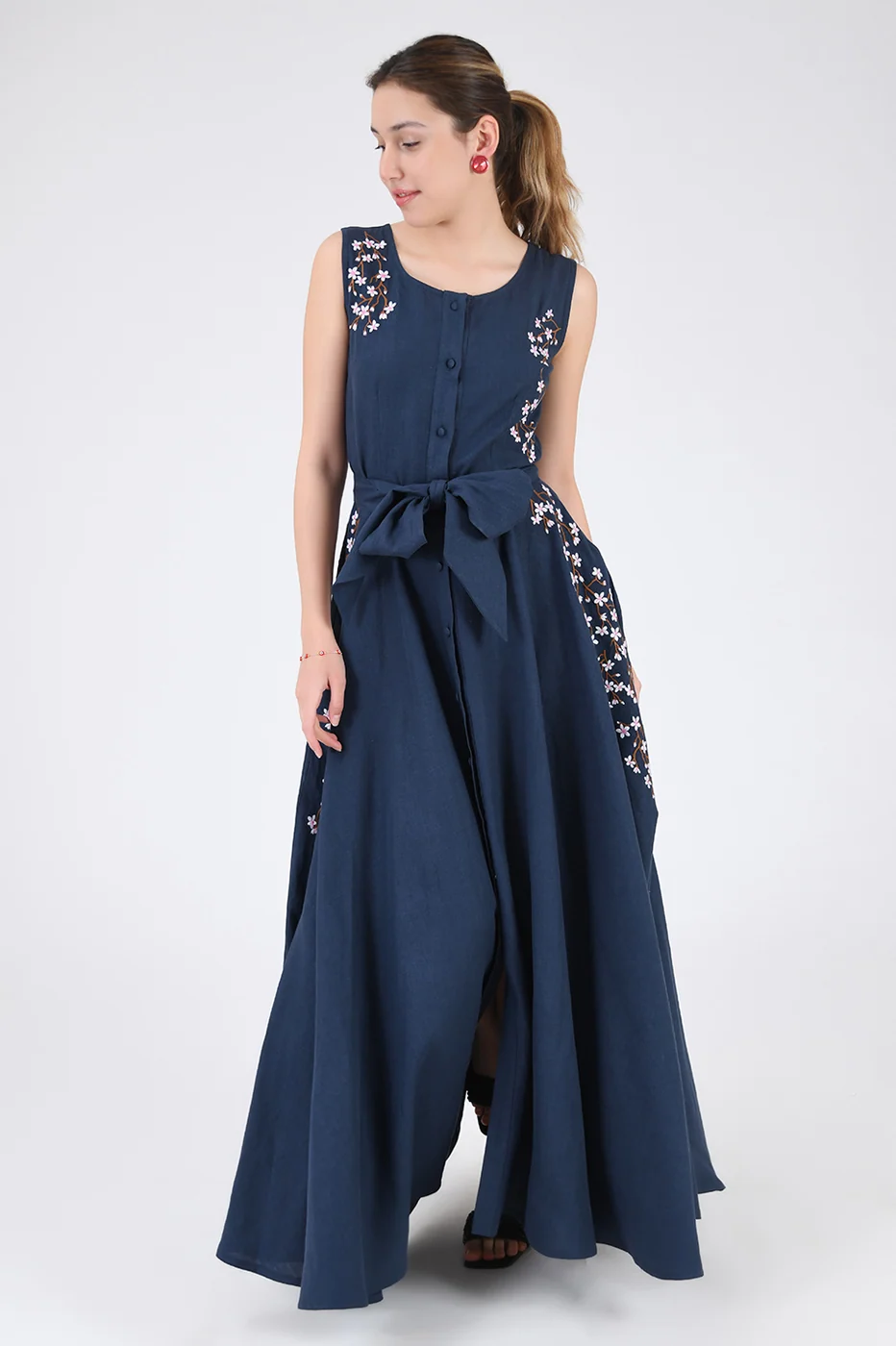
Galata, Essen and Victoria are most revealing when considered as different arrangements of detail. Galata combines bodice embroidery with a shorter, ruffled silhouette, Essen places specified hand embroidery on a longer skirt while retaining sculpted volume above, and Victoria offers a comparatively restrained halter framework without the same listed ruffle treatment.
These are concrete distinctions within a shared collection, not three interchangeable examples of an embroidered linen dress.
The comparison does not establish a definitive ranking of execution. It establishes something more limited but useful: Fanm Mon’s floral vocabulary operates across different structural propositions.
To assess whether each is fully resolved, the next level of examination must consider exact placement, scale, colour and the relationship between embellished and unembellished areas. Judge the design by those relationships, not simply for containing embroidery.
Omiren Argument
The defining issue is composition. Across these Wanga dresses, embroidery is one part of a larger arrangement involving length, neckline, volume and exposed areas of the body.
Galata, Essen, and Victoria show different ways of organising those elements, even when the underlying floral language is shared.
That distinction moves the discussion beyond a general celebration of craft. Embroidery deserves attention not only because it is present, but because of the role it plays within a garment. While heritage provides context, the design relationship still requires its own judgement.
Also Read:
- Lagos Fashion Designers Who Stay Are Not Compromising. They Are Winning.
- Made in Benin: Designers and Brands to Watch in 2026
- African Designers Buyers Should Act On in 2026: A Three-Tier Shortlist
- Craft, Culture, and Creative Power: The Designers Who Made AMVCA 2026 Africa’s Most Important Fashion Weekend
Frequently Asked Questions
What is Fanm Mon?
Fanm Mon is a fashion brand founded in 2013. Its account traces its origins to Haitian heritage and describes its later engagement with artisanal techniques in Ukraine and Turkey.
Which Wanga Collection dresses does it compare?
The article examines Galata, a mini dress; Essen, an empire-silhouette maxi dress; and Victoria, a halter maxi dress. Each combines floral embroidery with different structural details.
Where are these dresses made?
The product pages for Galata, Essen and Victoria each identify Turkey as the manufacturing location. This is a product-specific statement, not an independently verified claim about every item in Fanm Mon’s catalogue.
Can customers request different colours or sizing?
The selected product pages advertise custom size and colour combinations. Customers should confirm the available options directly, including which aspects of the fabric, embroidery and sizing can be changed.