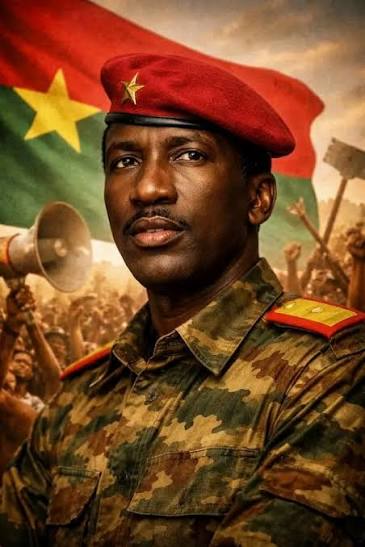
The African fashion market is worth 31 billion dollars. Within that market, the clearest historical example of a government using a textile as an industrial policy instrument is also one of the most frequently misread: Thomas Sankara’s promotion of Faso Dan Fani in Burkina Faso between 1983 and 1987. The standard retelling describes Sankara as a leader who promoted national dress out of cultural pride, a president who asked his people to wear their heritage. That framing is accurate and insufficient. Sankara did not promote Faso Dan Fani because it was traditional. He promoted it because Burkina Faso was growing cotton, exporting the raw fibre, and then importing finished clothing made from that same cotton. He used the state apparatus to close that loop. The cloth was the policy. The wardrobe was the manifesto.
Faso Dan Fani, the handwoven cotton textile whose name translates from Dioula as “woven cloth of the homeland,” already existed before Sankara came to power. What he did was transform it from a community textile into a national instrument, making it the visible evidence of an argument he was making on every available platform: that African nations should process their own raw materials, build their own industries, and wear the results. When Sankara appeared in Faso Dan Fani at the United Nations, he was not making a fashion statement. He was making an economic case.
Thomas Sankara used Faso Dan Fani as value-chain politics: a cloth that closed the gap between cotton production and imported clothing. Here is the full argument.
Who Thomas Sankara Was
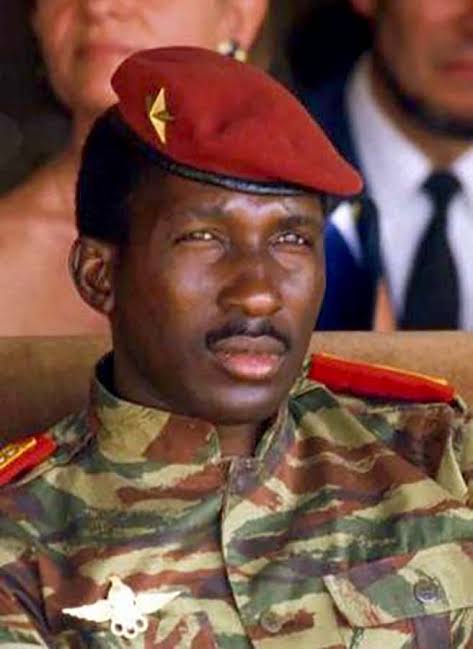
Thomas Sankara led Burkina Faso from 1983 until his assassination in 1987. A military officer who came to power through a revolution, he built a political programme around economic self-sufficiency, agricultural reform, anti-colonial positioning, women’s rights, and the decolonisation of everyday life. As documented academic research on Sankara’s political programme confirms, his policies consistently placed the question of who controls economic value at the centre of governance. Food, agriculture, infrastructure, and culture were all addressed through the same lens: stop sending raw materials out and stop paying for finished goods to come back in.
In 1984, he renamed the country from Upper Volta to Burkina Faso. As documented by Advance.hr’s historical record of Sankara, the name drew from three of Burkina Faso’s principal languages: “Burkina” from Mòoré meaning men of integrity, “Faso” from Dioula meaning fatherland, and the suffix “be” from Fulfuldé meaning people. The national cloth took its name from the new country’s name. The renaming and the textile promotion were expressions of the same argument: that Burkina Faso would define itself on its own terms.
What Faso Dan Fani Is
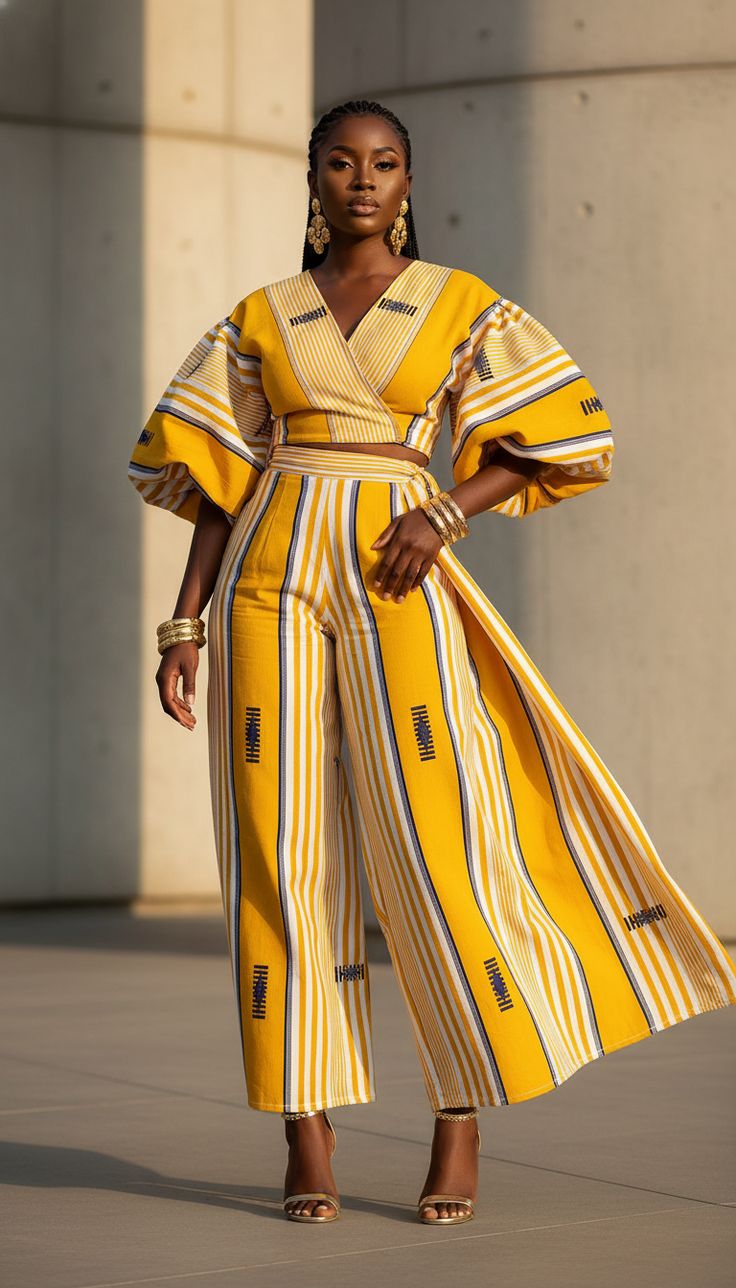
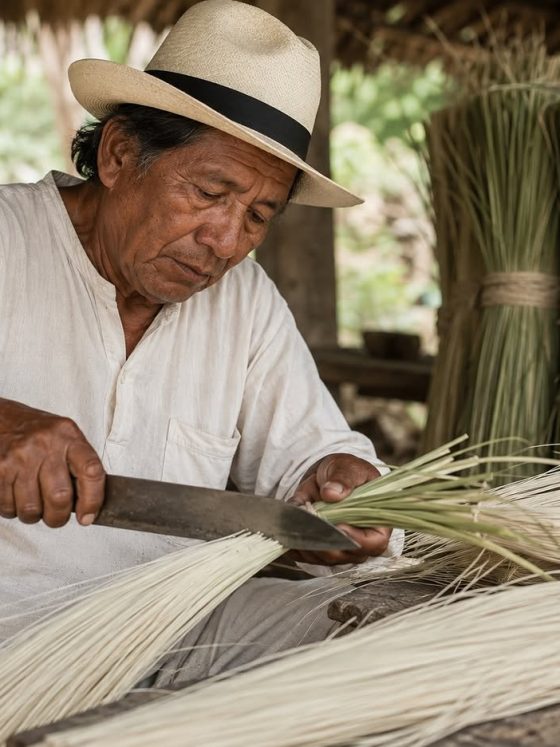
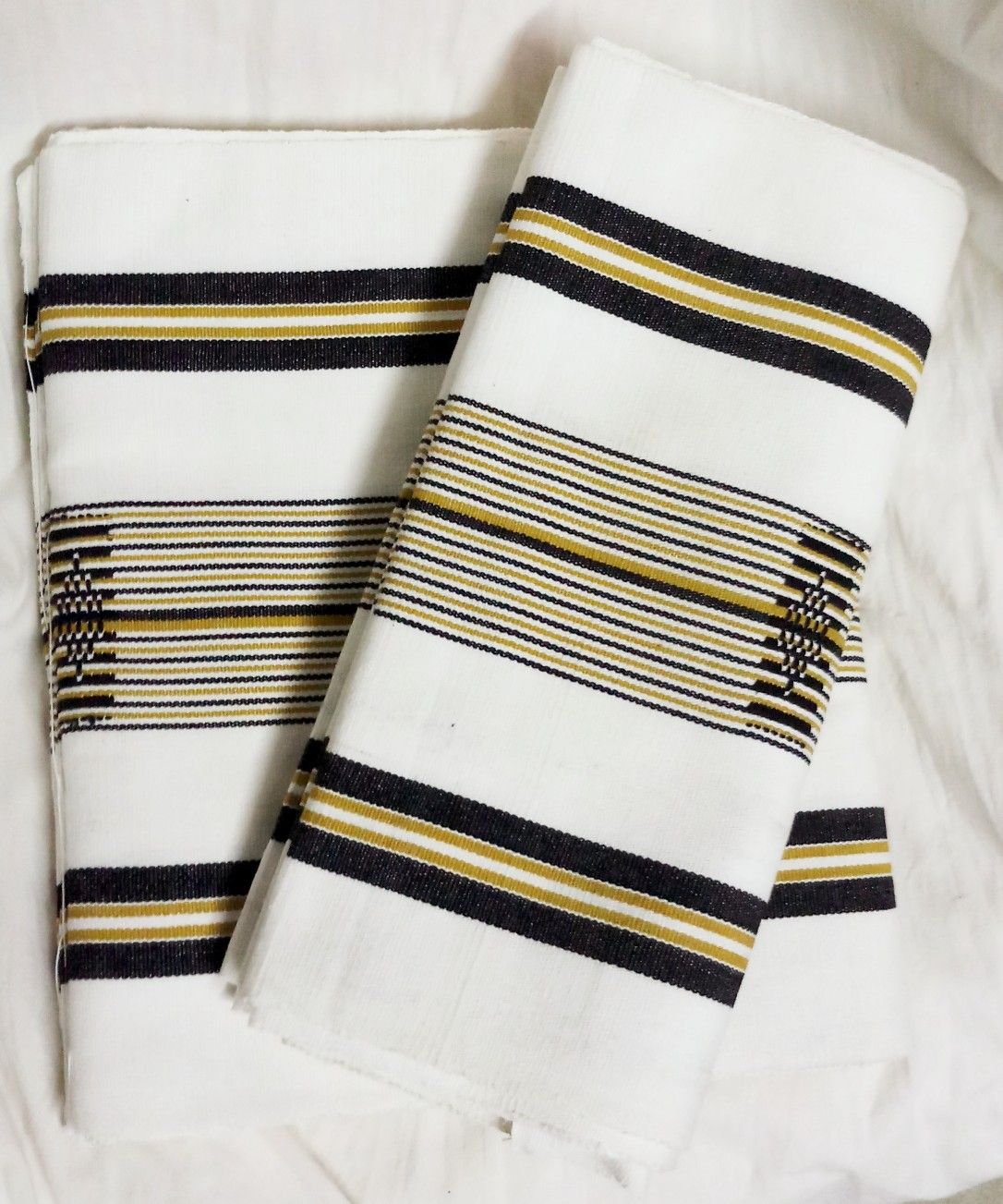
Faso Dan Fani is a traditional handwoven cotton textile whose production involves cotton cultivation, spinning, dyeing, weaving on traditional narrow-strip looms, and finishing. As CABES, the Burkinabe textile cooperative, documents, the cloth emerged from male weaving traditions in which skilled artisans produced narrow strips that were then stitched together into larger panels. Each piece carries the slight variations in tension, colour, and pattern that mark it as handworked rather than industrially produced. The cloth is structural rather than decorative: its vertical striping and firm cotton weave create an architecture of restraint, a fabric that communicates authority before tailoring begins.
Historically, women were responsible for growing, ginning, spinning, and dyeing the cotton. At the same time, traditionally male griot weavers, whose role placed them at the intersection of cloth production and community memory, handled the loom. The griot weaver was not simply a craftsman. He was a historian working in thread. By the early 1980s, the practice had been significantly eroded as imported fabrics displaced local production. Sankara’s intervention was a direct response to that erosion.
Faso Dan Fani was not cultural promotion. It was value-chain politics. Sankara identified where Burkina Faso’s cotton wealth was escaping the country and used the state’s dress code to force a correction.
The Economic Logic Behind the Policy
Burkina Faso has long been one of Africa’s leading cotton producers. As WTO documentation on Burkina Faso’s agricultural economy confirms, the cotton sector can contribute more than 10% of GDP, with annual seed-cotton production ranging between 400,000 and 600,000 tonnes in strong years, and approximately 4 million people dependent on cotton income directly or indirectly. Yet the structural problem Sankara identified was precise: almost none of that cotton was processed domestically into finished textiles. The fibre left Burkina Faso as a raw material and returned as clothing.
Sankara’s approach was direct. He stated his position without abstraction: “Produce what we consume and consume what we produce.” The mandate that civil servants and state officials wear clothing made from locally woven cotton was not symbolic. It was the state itself becoming a customer of the domestic textile industry, forcing the production chain to function end-to-end within the country. Every government official dressed in Faso Dan Fani was a daily demonstration that the full value chain, from cotton field to finished garment, could operate in Burkina Faso.
The structural challenge Sankara identified has not been resolved. As FAO data on Burkina Faso’s cotton sector confirms, the majority of cotton produced in Burkina Faso continues to be exported as raw fibre while finished garments are imported. The argument he made in 1983 remains unresolved in 2026.
How Faso Dan Fani Became a Political Symbol
Before Sankara’s presidency, Faso Dan Fani was a community textile worn at ceremonies and cultural occasions. His government institutionalised it as a national symbol through a combination of mandate and example. As French-language Wikipedia’s documentation of the cloth confirms, between 1983 and 1987 wearing Faso Dan Fani was strongly encouraged and, for civil servants, effectively required as part of a broader policy to promote local production and economic autonomy.
Sankara’s own wardrobe was the most visible expression of the policy. At international events, including the United Nations General Assembly and the Organisation of African Unity summit, he appeared in Faso Dan Fani rather than the European suiting associated with heads of state. The choice was deliberate and legible: the president of a cotton-producing country wearing cotton that his country had grown, spun, dyed, and woven. The garment carried the argument without a speech.
This is the dimension of Sankara’s Faso Dan Fani policy that distinguishes it from other instances of leaders promoting national dress. He was not asking his people to wear heritage clothing as a cultural gesture. He was requiring the state apparatus to wear locally produced clothing as an economic act. The politics of colour in African dress have a long history of communicating social and political position, and Sankara understood this with precision. Faso Dan Fani in the presidential wardrobe was not dress. It was governance.
Was Faso Dan Fani a Mandatory National Uniform?
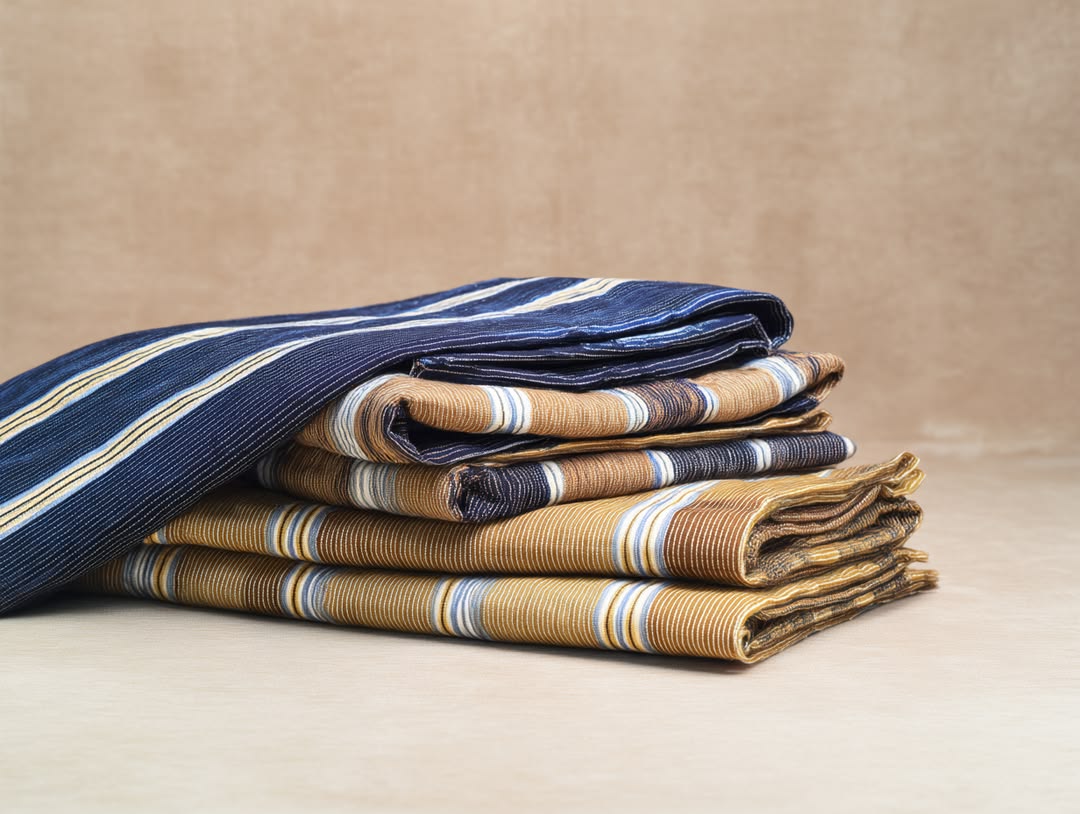
The reality is more precise than either the myth (that it was mandatory for all citizens) or the understatement (that it was simply encouraged). Civil servants and state officials were required to wear clothing made from locally woven cotton. This was an enforced standard for the state apparatus. For the wider population, Sankara’s speeches and campaigns urged the choice of local textiles as an ethical and political act, framed as solidarity with Burkinabe cotton workers and weavers. As CABES documents the policy, the objective was less about policing personal taste and more about shifting the default: making Burkinabe textiles the standard prestige choice rather than imported brands.
What makes this distinction important is that Sankara’s approach did not require a law compelling private citizens to change their wardrobe. It required the state to lead by example and make the economic argument visible through the dress of every government official every day—the mandate operated at the level where Sankara had direct authority. The campaign operated at the level where he sought to change attitudes. Both worked together.
The Artisans and Women Behind the Cloth
Sankara’s promotion of Faso Dan Fani also brought visibility to the people who produced it. The cloth depends on a production chain involving cotton farmers, spinners, dyers, weavers, and tailors. WTO documentation confirms that rural women contribute significantly to the renown of Faso Dan Fani through their work in cotton cultivation and related textile processes. Women’s labour in spinning and dyeing underpins the cloth’s authenticity and cultural specificity.
For Sankara, economic development required making the people behind local production visible and valued. Promoting Faso Dan Fani was not only about the finished cloth. It was about the farmers, spinners, dyers, weavers, and tailors whose work the imported-clothing economy had made invisible. As Omiren Styles has documented in its coverage of how African handloom cooperatives survive market pressure, the structural challenge facing artisan textile producers across Africa is precisely the one Sankara attempted to address through policy: that imported industrial production displaces local craft because the market does not account for the cultural and economic value that craft creates.
What Happened After Sankara
After Sankara’s assassination in 1987, official promotion of Faso Dan Fani declined significantly, and imported fabrics regained their dominant position. The cloth survived through cultural ceremonies, artisan networks, and its deep connection to Burkinabe identity. As Africahot’s documentation of the cloth’s trajectory confirms, Faso Dan Fani maintained a presence in traditional dress and ceremonial contexts even as state promotion disappeared.
In recent years, the cloth has experienced a renewed political and cultural revival. Media reports from 2023 to 2026 document decrees encouraging or mandating the wearing of Faso Dan Fani and other local textiles in public institutions, military ceremonial dress, and school uniforms, reflecting a return to the Sankarist logic that the state should lead its own textile economy by wearing it. As Standard Media’s 2023 reporting on Burkina Faso’s military uniform policy confirms, Burkina Faso has moved to introduce handwoven traditional uniforms for military cadets, placing Faso Dan Fani back at the centre of state dress. New textile production initiatives also aim to process more cotton domestically, combining industrial capacity with the heritage patterns that make the cloth recognisable.
In contemporary fashion beyond Burkina Faso, Faso Dan Fani is increasingly visible in designers’ collections across the continent and internationally. The Omiren Styles analysis of how Faso Dan Fani is entering haute couture documents how the cloth’s vertical striping, structural weight, and handworked specificity have made it attractive to designers working in what the industry now calls “quiet luxury,” a vocabulary that Faso Dan Fani embodied decades before the term existed.
Omiren Heritage Fashion Record
| Textile | Faso Dan Fani |
| Country | Burkina Faso |
| Name meaning | “Woven cloth of the homeland” (Dioula) |
| Material | Handwoven cotton, narrow-strip loom production |
| Political figure | Thomas Sankara, president 1983-1987 |
| Period of promotion | 1983-1987 |
| Policy mechanism | Civil servant mandate + national campaign; not a universal legal requirement for all citizens |
| Economic logic | Burkina Faso produces cotton; Sankara used state dress to close the raw-export/finished-import gap |
| Cotton sector | Over 10% of GDP in strong years; 400,000-600,000 tonnes annual production; ~4 million people dependent on cotton income |
| Post-Sankara | Survived in artisan networks and ceremony; revived politically 2023-2026, including military cadet uniforms |
| Modern role | Heritage fashion, sustainable textiles, design authority, and renewed state policy instrument |
| African market context | African fashion market valued at 31 billion dollars |
ALSO READ:
- The Cloth That Refused to Fade: How Faso Dan Fani Is Quietly Entering Haute Couture
- Mozambique Capulana Cloth: From Everyday Fabric to Modern Silhouettes
- Cameroonian Toghu Embroidery in Modern Tailoring
- Botswana Men’s Beadwork Accessories and What They Signal
The Omiren Argument
The African fashion market is worth 31 billion dollars. Within that market, the Faso Dan Fani story is the clearest available historical proof that clothing is not a cultural category separate from economic policy. It is the same category. Sankara understood this because he was running a government, not a design house. Burkina Faso was growing cotton, exporting the fibre, and paying for clothing to come back in. The value chain of his country’s most important agricultural product was being captured at every stage by other countries. His response was to make the state wear the solution. Every government official who put on Faso Dan Fani was closing a loop that the global cotton economy had deliberately left open. The cloth was not a cultural symbol that happened to have economic implications. It was an economic instrument that used cultural visibility to make its argument in public, every day, without a speech. The fact that Burkina Faso is still debating the same question in 2026 — whether to process its cotton into finished textiles or continue exporting raw fibre — does not diminish Sankara’s intervention. It confirms that he identified the right problem. What he did not have was time. The cloth, however, survived him. And its presence in haute couture collections, in military cadet uniforms, and in contemporary designers’ wardrobes across the continent is the continuation of the argument he started in Burkinabe cotton and finished in front of the world.
Frequently Asked Questions
What is the connection between Thomas Sankara and Faso Dan Fani?
Sankara elevated Faso Dan Fani during his presidency from 1983 to 1987 as an instrument of economic policy and a symbol of national pride. He used the cloth to close the gap between Burkina Faso’s cotton production and its dependence on imported finished clothing by mandating that civil servants wear locally woven garments, and by wearing Faso Dan Fani himself at international events including the United Nations and the Organisation of African Unity.
Was Faso Dan Fani a mandatory dress code under Thomas Sankara?
Civil servants and state officials were required to wear clothing made from locally woven cotton. There was no universal law compelling all citizens to wear Faso Dan Fani, but Sankara’s campaigns strongly encouraged the choice of local textiles as an economic and political act. The mandate operated at the level where Sankara had direct authority, the state apparatus, while public campaigns aimed to shift attitudes more broadly.
What does Faso Dan Fani mean?
Faso Dan Fani is a Dioula name commonly translated as “woven cloth of the homeland.” Faso means homeland, Dan refers to woven, and Fani means cloth. The name reflects both the textile’s production method and its connection to Burkinabe national identity, taking its form from the same word, Faso, that appears in the country’s name, Burkina Faso.
Why did Sankara promote locally made clothing in Burkina Faso?
Sankara’s core economic argument was that Burkina Faso should produce what it consumes and consume what it produces. The country grew cotton but exported most of it as raw fibre while importing finished clothing. His Faso Dan Fani promotion was a direct response to this value-chain problem. By requiring the state to wear locally woven cotton clothing, he created demand for the domestic textile industry and demonstrated that the full production chain could operate within the country.
How is Faso Dan Fani made and what makes it distinctive?
Faso Dan Fani is produced through a multi-stage process involving cotton cultivation, spinning, dyeing, and weaving narrow strips on traditional handlooms, which are then stitched together into larger panels. The handworked nature of the textile gives each piece slight variations in tension, colour, and pattern that mark it as individually produced. Its vertical striping and structural cotton weave give it an architectural quality that distinguishes it from printed fabrics and has made it increasingly attractive to designers working in contemporary fashion.
What is Faso Dan Fani’s role in modern African fashion?
Faso Dan Fani has experienced a significant revival in both contemporary design and state policy. Designers across Africa and internationally are incorporating the cloth into tailored dresses, suits, jackets, and accessories, attracted by its craft specificity, cultural authority, and structural qualities. Simultaneously, Burkina Faso’s current government has introduced policies including handwoven traditional uniforms for military cadets, reviving the Sankarist logic that the state should lead the domestic textile economy by wearing it.
Does the economic problem Sankara identified still exist?
Yes. Despite Burkina Faso being one of Africa’s leading cotton producers, with the sector contributing more than 10% of GDP in strong years and approximately 4 million people dependent on cotton income, the majority of cotton continues to be exported as raw fibre while finished garments are imported. The structural gap between production and processing that Sankara identified in 1983 remains the central challenge of Burkina Faso’s textile economy in 2026.
Explore More
Read the full Culture > Heritage Stories and Africa > Textiles and Craft sections for Omiren Styles’ documentation of African heritage textiles, the political and economic arguments encoded in them, and the designers carrying those arguments forward.