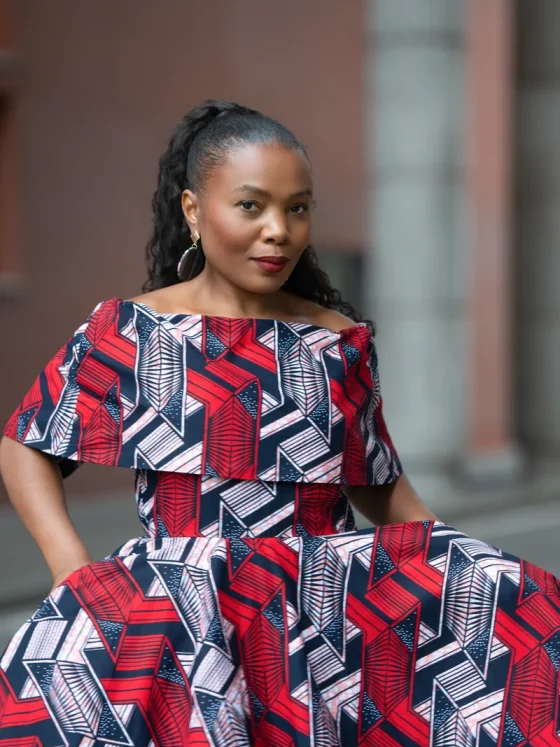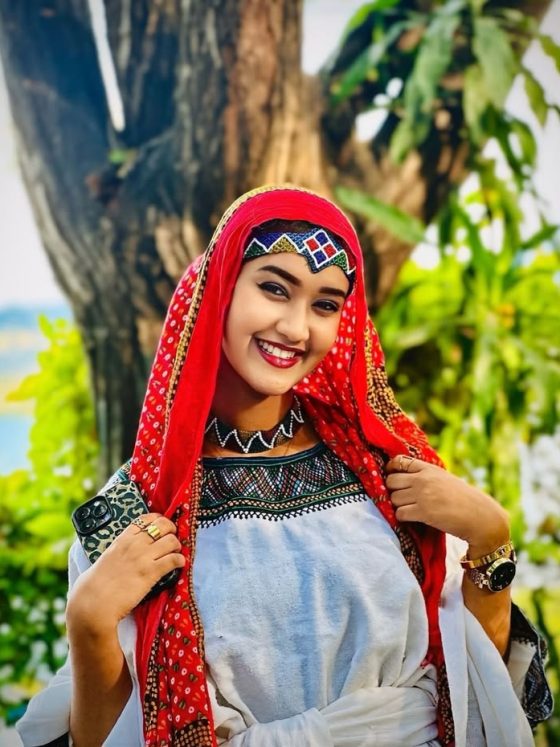
Fashion journalism has a version of Urhobo women’s traditional dress: the bold colour, the weight of coral, the elaborate headtie. It is accurate as far as it goes. What it rarely examines is the grammar behind the spectacle: why the beads are worn from the crown to the ankle rather than at the neck alone, what the camwood on a bride’s body is saying, which specific headtie style belongs to which ceremonial moment, and why a woman’s choice of how to carry her Oseba wrapper across her chest communicates something the garment’s colour alone cannot.
Urhobo traditional dress for women is a coordinated statement in which cloth, beads, and body preparation each carry specific meanings that amplify and complete one another. The Ewu blouse alone is not the full statement. The coral beads alone are not the full statement. The statement is the combination, read by a community that knows how to read it.
The Urhobo people occupy a significant part of Delta State in southern Nigeria, where they are the largest ethnic group. Their dress tradition sits within a wider Niger Delta visual culture shared with the Ijaw, Itsekiri, and Isoko, while maintaining a distinct Urhobo vocabulary in garment names, bead use, and ceremonial body preparation. Materials for the Urhobo dress have historically come from trade: European and Indian imports provided the tradition’s fabrics, including George fabric, whose quality now anchors the most prestigious versions of the ceremonial ensemble. The style, layering, naming, and social reading of the dress are entirely Urhobo.
The Ewu blouse and double wrapper are the garments. The coral beads from crown to ankle speak. This article reads the full vocabulary of Urhobo women’s ceremonial dress: cloth, bead and body as a single coordinated statement.
The Garments: Names, Structure and Layering
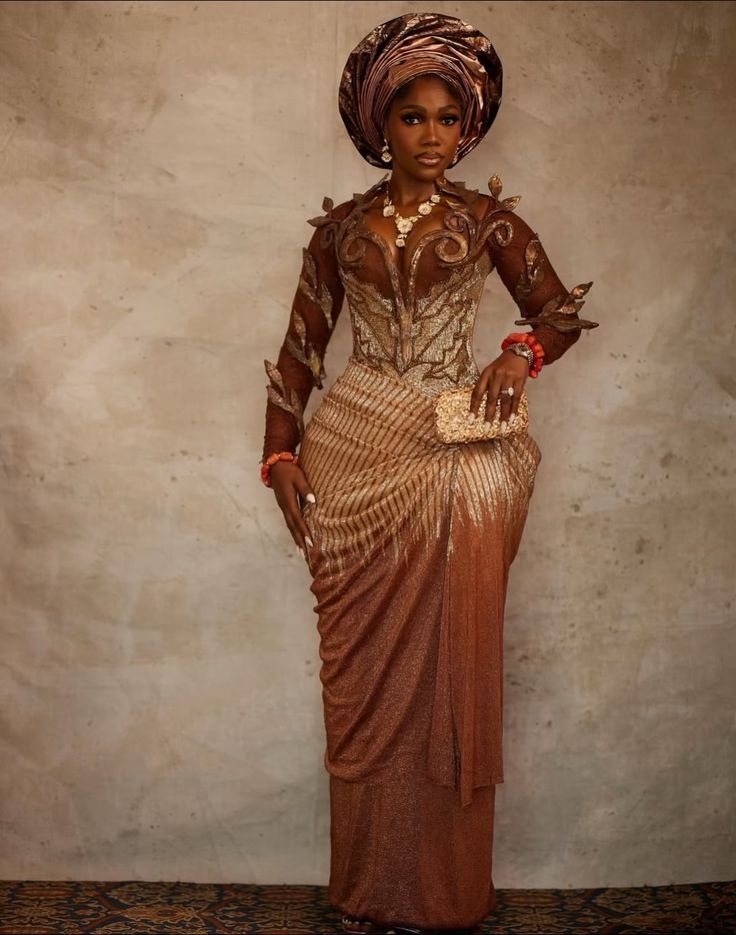
The Ewu Blouse
The woman’s blouse is called ewu. It is the garment layer worn above the waist in the traditional ensemble. It is made in fabrics ranging from plain cotton for everyday wear to the finest George fabric for the highest ceremonial occasions. The Ewu sits over the wrapper and is typically styled to fall at the hip, defining the waistline where the wrapper begins. Its cut and embellishment vary by occasion: a simple blouse serves a community gathering; an elaborately embroidered Ewu in heavy George with matching accessories signals the highest ceremonial investment. The Ewu is the garment element that can be modernised in cut without disrupting the ceremony’s dress grammar, which is why contemporary Urhobo ceremonial dress can feature modern tailoring in the blouse while retaining the traditional wrapper system beneath.
The Double Wrapper System
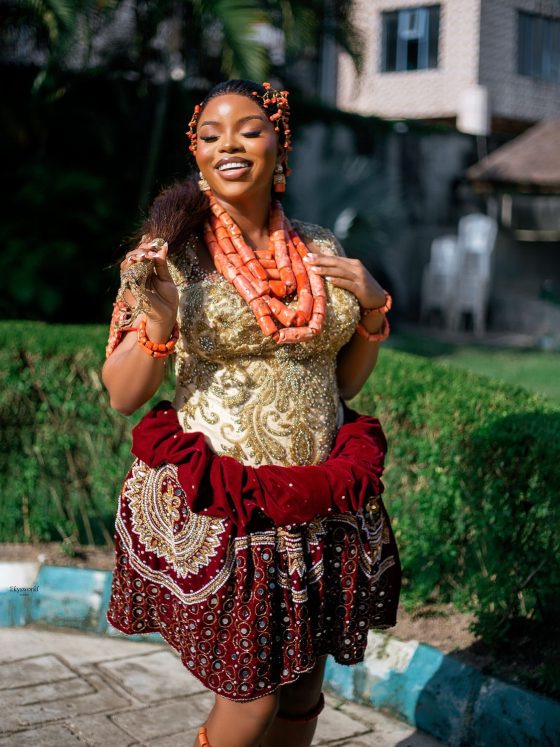
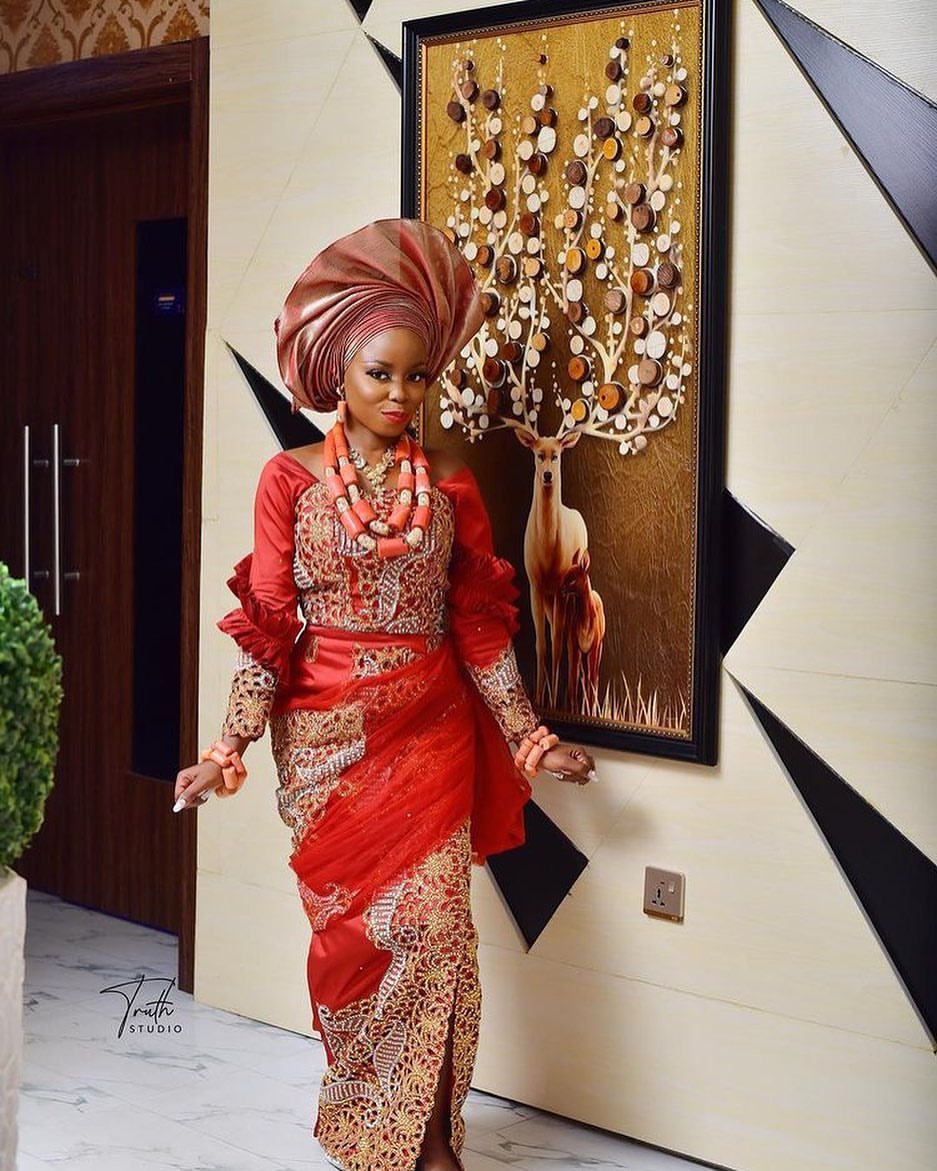
The foundational lower garment in Urhobo women’s traditional dress is a double-wrapper configuration. The inner wrapper, called the Aniku, is tied first at the waist and drapes to the heel. The outer wrapper, called the Oseba, is four yards of fabric tied over the Aniku and worn in the configuration appropriate to the occasion and the wearer’s status. The most formal configuration drapes the Oseba across the chest, securing it at the shoulder or tucking it at the bust, adding a third visible layer to the ensemble and communicating the highest ceremonial register.
How the Oseba is carried across the chest is not merely a styling choice. It is a social declaration: the woman who carries her outer wrapper at the chest rather than at the waist has put on her full ceremonial dress. A guest at a traditional ceremony who arrives with her Oseba at the waist has dressed for attendance. A woman whose Oseba is draped at the chest and who wears full coral from crown to ankle has dressed for the ceremony’s most significant role.
The double wrapper drapes to the heel. Its fullness at the hem, its movement when the wearer dances, and the quality of the fabric are all visible to the assembled community, which reads them against the occasion and the wearer’s known status. A woman who wears fine George in the most deliberate configuration at a naming ceremony is making a statement about what the child and the family mean to her, and the community receives that statement without it needing to be spoken.
The Headtie: Onerho or Uriofo
The headgear completes the garment layer. The Urhobo headtie is called the Onerho or Uriofo, depending on regional tradition and context. Unlike the Yoruba gele, whose sculptural tied form is its primary visual statement, the Urhobo headtie’s most significant ceremonial versions are worn with, or replaced by, the Okuku: a beaded headpiece that belongs to the bead vocabulary rather than the cloth vocabulary and specifically marks the bride’s status.
The double gele, in which a headtie is built in two layers for additional height and visual weight, is a contemporary adaptation widely used at Urhobo traditional ceremonies across Delta State and the diaspora. It draws from Niger Delta dress conventions without being specific to the oldest Urhobo ceremonial tradition, and its use alongside the full coral and George ensemble is now well-established as part of the contemporary ceremonial look.
The Bead Vocabulary
The coral bead is to Urhobo women’s ceremonial dress what the tilf embroidery band is to the Amhara meqenet and what the malam’s tambari motif is to the Senegalese grand boubou: a layer of communication that the garment alone cannot carry. Its presence, quantity, quality and placement on the body all say specific things to the people at the ceremony who know the vocabulary.
Coral Beads: Quantity and Coverage
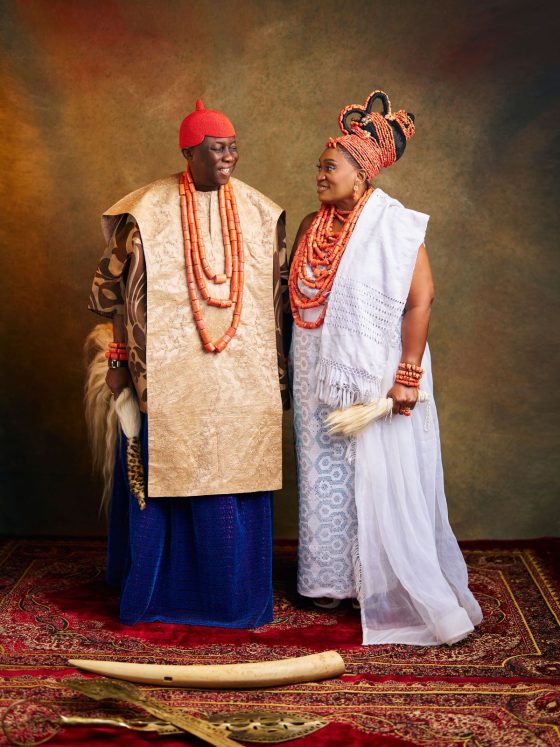
The most important dimension of coral bead use in Urhobo ceremonial dress is not the bead’s individual quality but the extent of its coverage. Red coral beads worn at the neck are a standard ceremonial accessory across multiple Niger Delta communities. In the most formal Urhobo ceremonial configuration, coral beads run from the crown of the head to the ankle: the Okuku beaded headpiece at the crown, multiple strands at the neck, beaded arm cuffs, waist beads, and ankle strands. The woman who wears coral at all of these points simultaneously is dressed in the fullest expression of the Urhobo ceremonial vocabulary.
The coverage communicates investment. A strand of coral at the neck requires a modest outlay. The full crown-to-ankle configuration requires substantially more. Coral beads in the Niger Delta are not costume jewellery; they are assets that families accumulate across generations and bring out for the ceremonies that warrant them. A bride’s coral often combines her mother’s and grandmother’s beads with pieces bought specifically for her ceremony, and the assembled strands represent the family’s material commitment to the occasion.
Coral Beads and Status
The social reading of coral in Urhobo culture is specific. A woman wearing coral at a ceremony announces her family’s standing and the ceremony’s importance at once. Those who know the market value of coral can read the quality and quantity of the beads and distinguish the finest Nigerian red coral from glass or plastic substitutes that look similar from a distance. At a traditional ceremony, the community is a community of readers, and the beads are part of the text.
Coral beads also communicate the wearer’s specific ceremonial role. There is no requirement that Urhobo women wear beads in any particular configuration, and their culture does not make it compulsory. But at a traditional wedding, anyone familiar with the tradition can tell the difference between a wedding guest wearing a single coral strand and a bride wearing the full crown-to-ankle configuration. The quantity of coral is a ceremony-specific signal.
Camwood and the Opha Bride
Young Urhobo women adorn their bodies with camwood, a natural red cosmetic, to indicate their passage through the sacred rites of passage into marriage. The bride is called ‘opha’ in Urhobo, and the camwood body preparation for the opha is among the most visually specific and culturally precise elements of Urhobo bridal dress. The camwood turns the bride’s body a vivid red, producing a luminous appearance that the Baltimore Museum of Art’s record of an early twentieth-century Urhobo bridal mask (circa 1900 to 1932) describes as a body that ‘glows red’. The mask’s own visual surface was treated with camwood encrustation to replicate this appearance, alongside white kaolin and blue indigo pigments.
The camwood preparation does not replace the garments. It adds a layer of ceremony-specific body preparation visible at the wrists, neck, and face above the garment line, signalling the precise ceremonial moment the bride is in. The vertical lines across the forehead mark the woman as specifically Urhobo in this ceremonial context, not simply as a bride but as an Urhobo bride at her rite of passage. The combination of camwood, coral, and the full garment ensemble creates an appearance whose components each carry meaning the others cannot substitute for.
Ceremonial Occasions and What Each Requires
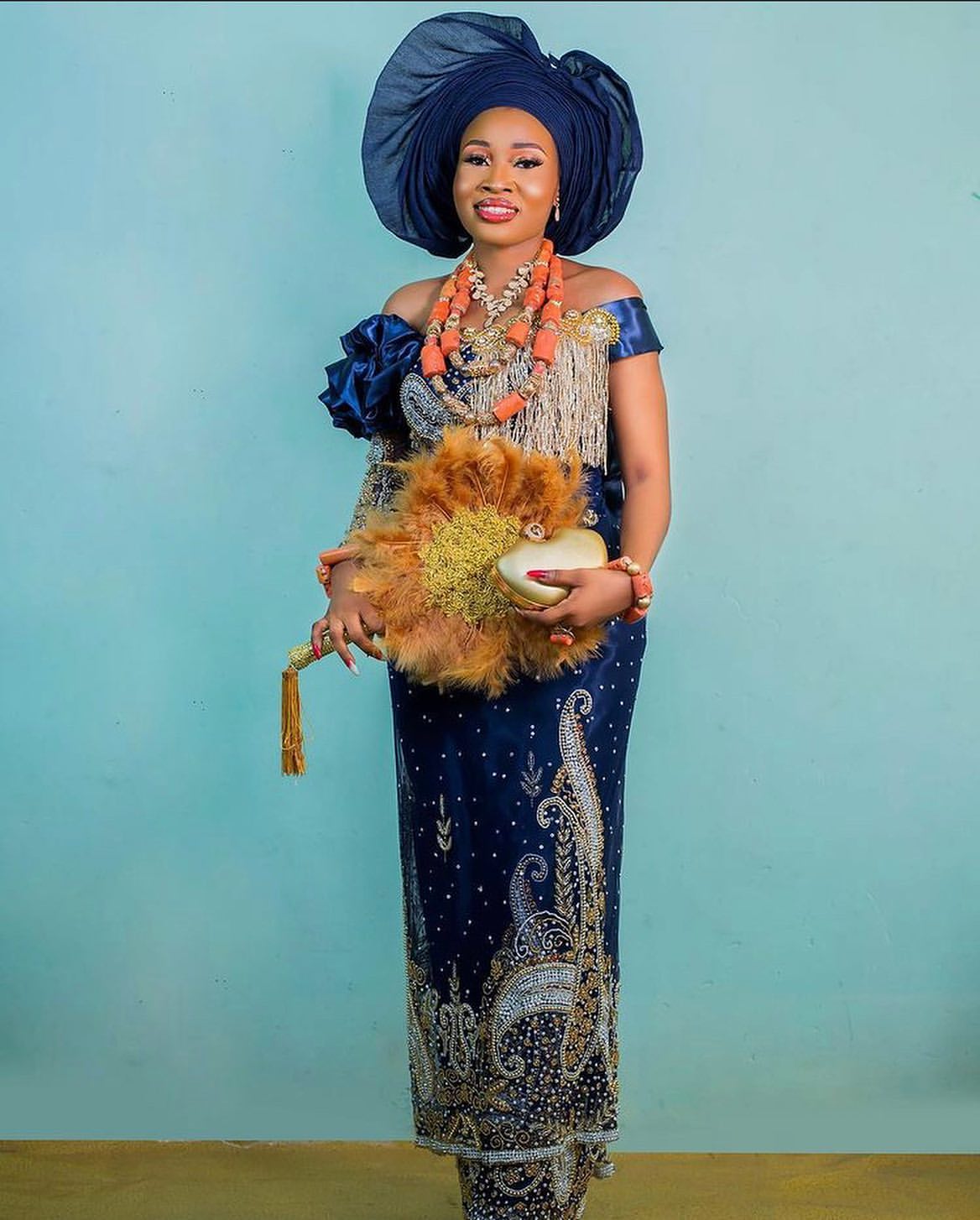
The Traditional Wedding
The bridal configuration for an Urhobo traditional wedding combines the finest Ewu blouse and double wrapper the family can provide, typically in the highest-quality George fabric, with coral beads worn from crown to ankle, the Okuku beaded headpiece, and ceremonial accessories that include hand fans, horse tails, and feathers. The camwood preparation may accompany the bridal dress depending on family tradition and regional practice. The entire configuration communicates the bride’s family’s investment in the ceremony and the community’s formal recognition of her transition to a new social status.
The groom’s family and their guests dress in corresponding formality, creating a collective statement about the ceremony’s weight. The most traditional version of the Urhobo wedding dress has both families in coral, with the quantity and coverage of each family’s beads providing a visible index of their respective standings.
Naming Ceremonies
The naming ceremony is a significant community occasion that warrants formal dress. Women attending an Urhobo naming ceremony dress in the Ewu and double-wrapper configuration, with coral beads at the neck and, for close family members, more extensive bead coverage. The headtie, or Onerho, is tied in the configuration appropriate to the occasion, and the overall dress sits below the wedding’s maximum formality while clearly marking the occasion as ceremonially significant.
Community Festivals
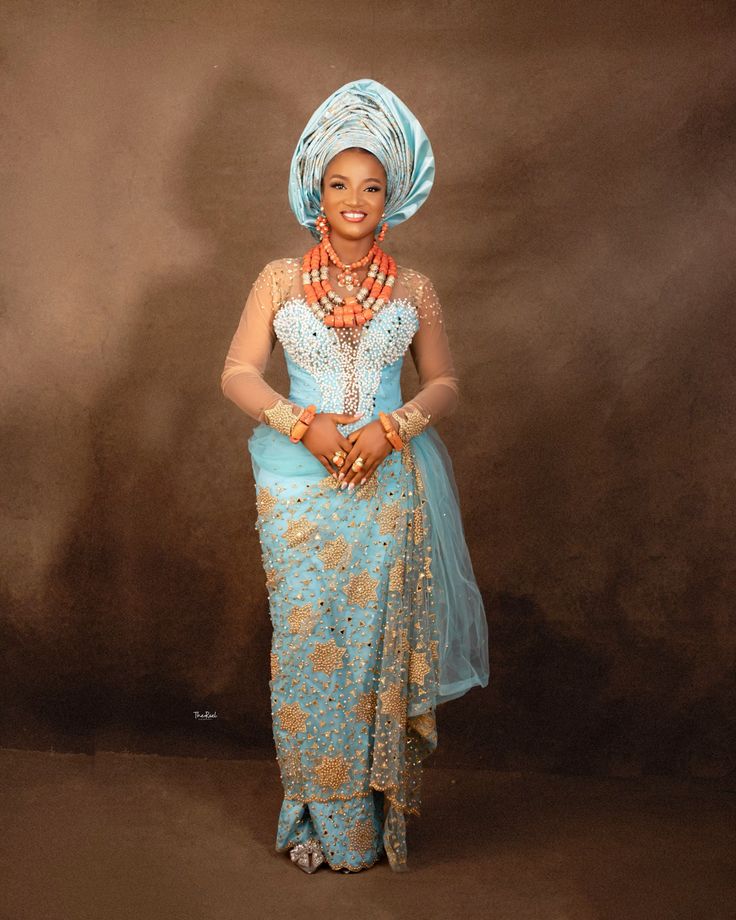
Community festivals and cultural events are occasions when the full range of Urhobo women’s traditional dress styles is visible at once. The wrapper-skirt version of the Urhobo ensemble, in which a tailored skirt replaces the wrapped configuration, appears alongside the traditional double wrapper. The assembled community reads both as Urhobo ceremonial dress. The contemporary forms have absorbed the garment’s essential components, the Ewu blouse, the George fabric, the coral beads and the headtie, into formats whose cut has been adapted without displacing the tradition’s visual identity.
The Contemporary Dress Conversation
The public debate about the Urhobo dress identity in contemporary Nigeria is live and specific. When a media aide publicly criticised actor Richard Mofe-Damijo for wearing Yoruba agbada rather than Urhobo attire at the 2024 Africa Magic Viewers’ Choice Awards on what he described as a global stage, the argument was about documentation and visibility: that a Urhobo man in a position of cultural prominence at a public ceremony has a responsibility to wear a Urhobo dress and make Urhobo tradition visible where it would otherwise not appear.
The argument is not about the agbada being wrong in absolute terms. It is about the specific cultural currency that traditional dress carries at a public event: that Urhobo dress, worn by an Urhobo person in a prominent moment, is itself an act of representation. The garments, the beads and the ceremony style are not only private ritual vocabulary. They are public statements about which traditions exist, which communities can dress themselves for the global stage on their own terms, and which dress codes define whose culture the mainstream fashion conversation treats as the default.
As Omiren Styles has established in its analysis of Niger Delta dress traditions across Ijaw, Urhobo, and Itsekiri communities, dress is a document, and the assembled community at a ceremony reads a statement about family, future, and communal investment. That argument applies with equal force at public ceremonies beyond the community: the Urhobo woman in full coral and George at a national event make a statement that the people who know the vocabulary can read, and whose presence in the visual record creates documentation that would otherwise not exist.
The Omiren Argument
The Ewu blouse, the Aniku and Oseba wrapper system, the Onerho headtie, the coral beads from crown to ankle, the Okuku at the crown and the camwood on a bride’s body are not interchangeable elements of a general ‘Nigerian traditional look. They are a specific vocabulary developed by a specific community in the Niger Delta over centuries, carrying meanings that are legible to those who know them and invisible to those who reduce what they see to its most spectacular surface.
The spectacle is real: Urhobo women’s ceremonial dress is visually extraordinary, and the weight of coral, the drama of the George wrapper and the density of the headpiece combination are genuinely arresting. The grammar behind the spectacle lets a viewer understand what they are looking at, rather than simply be impressed by it. The specific bead, the specific garment name, and the specific body preparation – these details convert a spectacular visual into a readable statement.
As Omiren Styles has argued throughout its coverage of West African heritage dress traditions, the Global South made fashion and never got credit. The Urhobo dress tradition, whose garment names, bead vocabulary and body preparation practices represent a distinct and precisely developed visual language, is one of the clearest available demonstrations of that argument in southern Nigeria. The fabric came from trade. The language is entirely Urhobo.
ALSO READ
- Five Traditional Styles Urhobo Women Wear and What Each One Carries
- The Niger Delta Dress Tradition: What Ijaw, Urhobo, and Itsekiri People Have Always Known
- The Grammar of Volume: How African Ceremonial Dress Communicates Status
- The Amhara Meqenet: Ethiopia’s Ceremonial Dress and What It Communicates
- The Global South Made Fashion. It Just Never Got Credit.
Frequently Asked Questions
What are the main garments in Urhobo women’s traditional dress?
The foundational garments are the Ewu (blouse), the Aniku (inner wrapper), and the Oseba (outer wrapper, four yards), worn as a double-wrapper system that drapes to the heel. The headtie is called the Onerho or Uriofo. Together, these constitute the core garment layers of Urhobo women’s traditional ceremonial dress. The most formal configuration carries the Oseba across the chest rather than at the waist, which signals the highest ceremonial register. The George fabric is the most prestigious material for the full ensemble; everyday and semi-formal occasions use less expensive fabrics while retaining the same garment structure.
What is the significance of coral beads in Urhobo women’s dress?
Coral beads in Urhobo ceremonial dress communicate wealth, status and ceremonial readiness. The extent of coverage is the primary signal: a strand at the neck is a standard ceremonial accessory, while the full crown-to-ankle configuration of the Okuku beaded headpiece, neck strands, arm cuffs, waist beads and ankle strands signals the highest ceremonial investment. Coral beads are assets accumulated across generations; the full bead configuration at a traditional wedding represents the family’s combined beadwork, not a single purchase. No cultural rule compels Urhobo women to wear beads, but at traditional ceremonies, the quantity and coverage read as specific social signals.
What is camwood and when is it used?
Camwood is a natural red cosmetic used in Urhobo bridal preparation. Young Urhobo women adorn their bodies with camwood to indicate their passage through the sacred rites of passage into marriage. The bride, called Opha in Urhobo, has her body prepared with camwood that produces a vivid red glow, which is the visual signature of the bride in her rite of passage. The Baltimore Museum of Art’s record of an early twentieth-century Urhobo bridal mask (circa 1900 to 1932) describes the mask’s camwood encrustation as representing ‘a body that glows red. ‘Vertical lines across the forehead in the camwood preparation mark the wearer specifically as Urhobo in this ceremonial context.
What is the Okuku?
The Okuku is a beaded headpiece worn at the crown by the Urhobo bride and other women in the most formal ceremonial configurations. It is part of the bead vocabulary rather than the cloth vocabulary: it replaces or sits alongside the traditional headtie to signal the wearer’s specific ceremonial role. In the full bridal configuration, the Okuku sits at the crown as part of the crown-to-ankle coral bead arrangement, making the head the topmost point of the continuous bead statement. The Okuku is one accessory that distinguishes the bridal configuration from the guest configuration at a traditional Urhobo wedding.
How has Urhobo women’s traditional dress changed in contemporary contexts?
The core vocabulary of Urhobo women’s dress has remained stable: the Ewu blouse, the double wrapper system, the Onerho headtie and the coral beads are all present in contemporary ceremonial dress across Delta State and the Urhobo diaspora. What has changed is the form of some garments: the wrapper skirt, in which a tailored skirt replaces the wrapped configuration, is now widespread at traditional ceremonies alongside the traditional double wrapper. The double gel, built in two layers for additional height and visual weight, is a widely adopted adaptation. The Ewu blouse may be cut in contemporary silhouettes. These adaptations absorb the tradition’s essential components without displacing its visual identity or social reading.
EXPLORE MORE
Read the full Heritage Clothing and Niger Delta Dress coverage at Omiren Styles for ongoing documentation of Urhobo, Ijaw and Itsekiri dress traditions, their garment names, bead vocabularies and the ceremony-specific knowledge that makes their dress systems legible. Discover travel and heritage intelligence across the Niger Delta, Nigeria and the wider African diaspora at Rex Clarke Adventures.