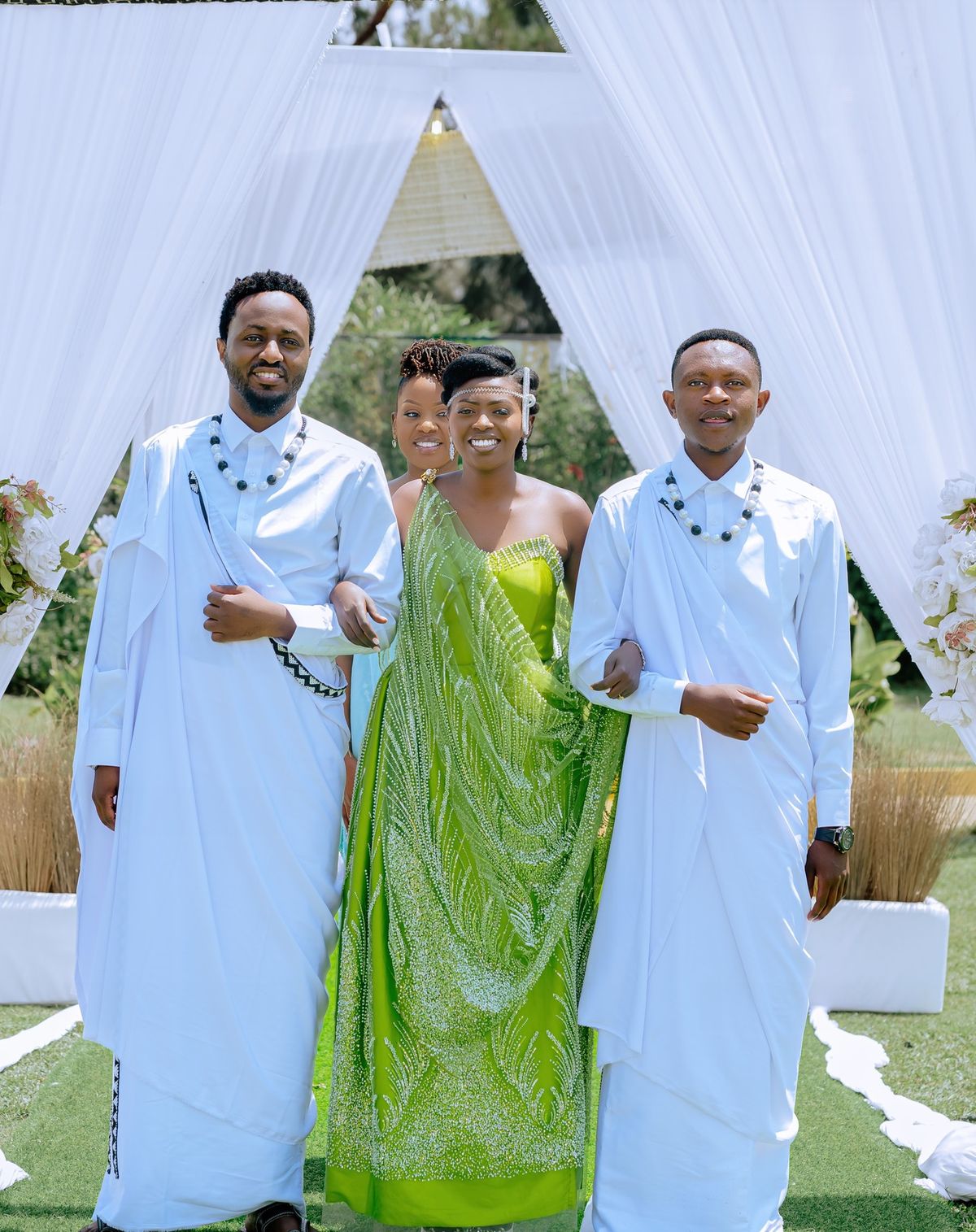
On the morning of a gusaba ceremony in Kigali, a Rwandan woman steps into a layered garment prepared for her. The inner piece, the mushanana, is a straight wrap of fabric secured at the waist. Over it goes the outer drape, the ikibwana, pulled across one shoulder and pinned or knotted in ways that vary by region, family, and the specific moment of the ceremony. On her head, a crown of woven fibre or beaded decoration. In her hand, a fan of woven grass. The whole composition is not simply a wedding outfit. It is a social document, and everyone in the room is reading every element of it.
The umushanana is the traditional dress of Rwandan women, most closely associated with formal ceremonies and, above all, with the gusaba, the traditional Rwandan engagement ceremony in which the groom’s family formally asks the bride’s family for permission to marry. Its name comes from the Kinyarwanda word for something draped or wrapped around the body. The garment consists of two primary pieces: the mushanana, a wrapped underdress that covers the body from waist to ankle, and the ikibwana, an outer drape typically pulled over one shoulder and left to fall in folds across the chest and back. Both pieces are traditionally made from the same fabric, though contemporary makers often introduce contrast and variation.
The fabric historically associated with the umushanana is imported barkcloth or woven plant fibre, though by the twentieth century, the garment was increasingly made from cotton, polyester, and later silk-look fabrics in a wide range of colours. White is associated with purity and is a common choice for the bride at the Gusaba itself. Darker, richer tones, including burgundy, royal blue, and forest green, are associated with the mothers and aunts attending the ceremony, as Rwanda’s Cultural Heritage, the umusd, is among the cultural practices of Rwanda that the government identified for preservation and promotion, alongside the agaseke basket, the inanga musical instrument, and other elements of Rwandan intangible cultural heritage.
Umushanana is Rwanda’s traditional bridal dress, worn at the gusaba engagement ceremony. Inside the garment, the ritual, and how Kigali is remaking both.
The Gusaba Ceremony and What It Demands
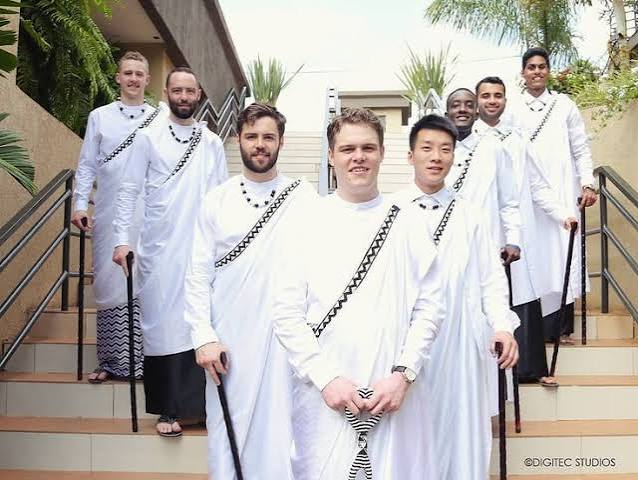
To understand why the umushanana matters, it helps to understand what the gusaba is. The gusaba is the traditional Rwandan marriage proposal ceremony, a formal and elaborate social negotiation between two families conducted through structured ritual, speech, gift exchange, and collective deliberation. It is not a single afternoon. In its fullest traditional form, it unfolds across multiple phases, each with its own dress code, protocol, and cast of participants. The Rwanda Governance Board’s documentation of traditional marriage practices confirms that the gusaba remains one of the most widely practised traditional ceremonies in Rwanda, maintained across urban and rural communities and across economic tiers, even as its specific protocols are adapted to contemporary circumstances.
The bride is prepared by her female relatives, with the application of the umushanana part of a broader process that includes the application of igisubi, a cream made from butter and herbs rubbed into the skin, the plaiting or styling of hair, and the addition of accessories, including intore headdresses,sses woven from plant fibre or decorated with beads. The process is communal rather than private. The women who prepare the bride are performing a social role as much as a practical one, and the quality, colour, and condition of the umushanana she wears reflect the occasion as much as individual taste.
The Om’s family presents gifts, including cattle, which is traditionally the most significant form of wealth exchange in Rwandan society. The bride’s family deliberates formally over the proposal. Speeches are made, beer is shared, and the whole event is conducted with a formality that the dress code is designed to match and reinforce. As Professor Clémentine Uwase, a cultural scholar at the University of Rwanda whose research focuses on intangible cultural heritage and ceremonial practice, has noted: “The umushanana is not decorative. It is structural. It tells everyone at the ceremony who the bride is, who her family is, and how seriously they are treating this moment.”
“The umushanana is not decorative. It is structural. It tells everyone at the ceremony who the bride is, who her family is, and how seriously they are treating this moment.” — Professor Clémentine Uwase, University of Rwanda
Kigali’s Bridal Boutique Economy
Kigali’s transformation into one of East Africa’s most commercially active and internationally connected cities has produced a wedding-fashion economy from an area that was not offered a decade ago. The city’s bridal boutique sector now sits alongside its hotel, catering, and events industries as part of a wedding economy that, according to the Rwanda Development Board’s 2024 creative economy report, has grown substantially alongside broader industrial and creative expansion. Boutiques continue to operate in Kigali’s Nyarutarama, Kimihurura, and CBD districts, serving clients who are navigating among a traditional gusaba, a civil registration ceremony at the local sector office, and often a white church or hotel wedding, all within the same weekend. That navigation produces specific commercial demand: garments that can serve multiple ceremonial contexts and are adapted to budgets ranging from the aspirational class to the established upper tier.
Designers and boutiques, including Inzuki Designs, Indira Dusingizimana’s studio, and the broader network of tailors and ateliers documented by KigaliWire’s coverage of the city’s fashion sector, have built practices around exactly this multi-ceremony client. An Inzuki Designs umushanana, for example, is not a heritage garment reproduction of a reproduction. Itorial piece built to the proportions and fabric quality of the traditional garment, adapted in colour, finish, and silhouette to serve a client who wants to look like herself at the gusaba rather than costumed in a reconstruction. Inzuki Designs has documented its practice explicitly around Rwandan cultural heritage and contemporary craft, producing umushanana pieces alongside modern evening wear and corporate attire.
How the Umushanana Is Changing
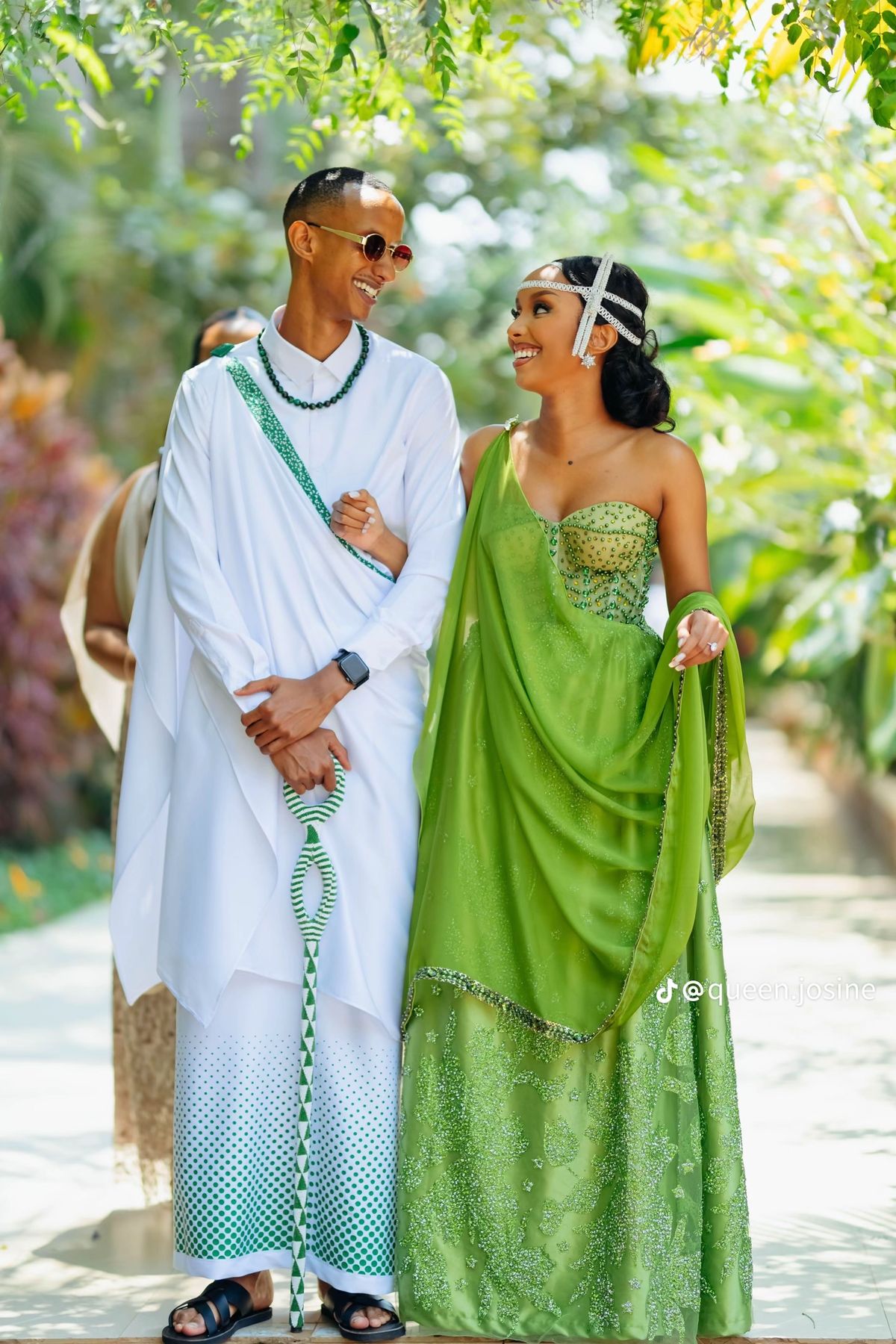
The most consistent evolution in contemporary umushanana is fabric. Where the traditional garment was made from barkcloth, plant fibre, or simple cotton, contemporary versions appear in silk-feel satin, chiffon, structured dupion, and lace-trimmed polyester, materials chosen for their visual effect in photographs as much as for their ceremonial appropriateness. The drone photograph and the wedding video have become part of the consideration set for how umushanana are designed and purchased, shifting some emphasis from the garment’s in-room social legibility toward its visual performance in digital documentation.
Embellishment has also expanded. Traditional umushanana were relatively austere in their decoration, relying on the quality of the fabric and the skill of the draping rather than added ornamentation. Contemporary boutique versions incorporate beading, embroidery, sequined detailing, and structured bodices that have more in common with West African aso-ebi gowns or South Asian occasion wear than with the historical garment. The cultural question this raises, about when adaptation becomes replacement and whether the traditional form of the garment needs to survive alongside the contemporary one, is actively debated within Rwandan cultural and fashion communities. As the Rwanda Cultural Heritage Academy has stated in its documentation of intangible heritage preservation priorities, the formal identity of the umushanana as a two-piece wrapped garment is the element considered most important to preserve. In contrast, variation in fabric is considered less important. At the same time, our decoration is understood as part of the garment’s natural evolution.
The Diaspora Demand
The Rwandan diaspora, concentrated in Belgium, the United Kingdom, the United States, Canada, and Uganda, has created a specific demand for umushanana that Kigali boutiques increasingly serve remotely. Diaspora clients who plan gusaba ceremonies abroad, or who return to Rwanda for ceremonies and need to be dressed appropriately, commission garments through WhatsApp consultations, Instagram boutique pages, and, in some cases, diaspora-specific networks in London and Brussels. As Omiren Styles has documented in its analysis of what it means to dress back home when you’ve never lived there, the relationship between diaspora communities and the ceremonial dress of their origin countries is never straightforward: the garment carries more weight in the diaspora than it does at home, because it is doing the additional work of asserting cultural continuity across distance.
A umushanana purchased in London for a gusaba in Brussels carries a different set of pressures than one purchased in Kigali for a ceremony at a Kimihurura residence. The diaspora bride is wearing the garment not only for her family but for a community that may not have seen one in years, and whose understanding of what constitutes a correct umushanana may have crystallised at the point of departure rather than tracking the garment’s contemporary evolution. That tension between preservation and evolution is one that Kigali’s boutique designers navigate daily.
The Omiren Argument
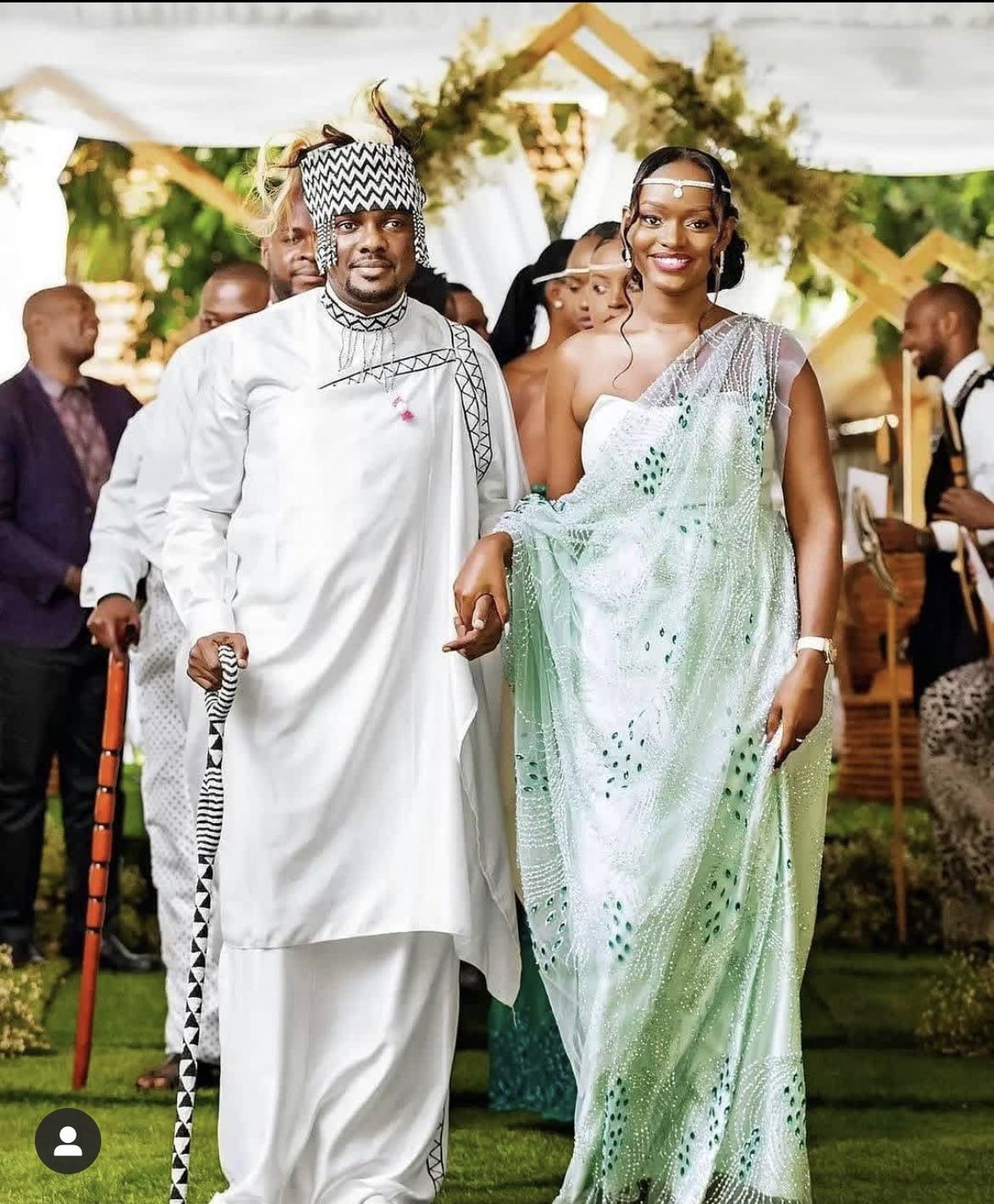
The umushanana’s current position in Rwandan fashion is the clearest evidence that the most dynamic creative tension in African traditional dress is not between tradition and modernity but between preservation and evolution within a living cultural system. Rwanda’s Rwanda Cultural Heritage Academy has formally identified the garment as a preservation priority. Kigali’s boutique designers are evolving it daily in response to client demand. The diaspora is commissioning it from a distance, weighed down by the specific anxiety of asserting cultural identity across continents. All three of these things are happening simultaneously, and none of them is cancelling the others out.
What the out gusaba cery preserves that the contemporary umushanana sometimes loses is the social logic of the garment: the understanding that it is a document being read rather than an outfit being worn. When Professor Uwase says the umushanana is structural rather than decorative, she is naming what the garment was designed to do. It communicates who the bride is, who her family is, and how seriously the moment is being treated. A beaded, silk-satin umushanana in a boutique window communicates something real about Kigali’s creative economy and about the aspirations of the contemporary Rwandan bride. Whether it communicates those things about the specific bride and her specific family with the precision that the traditional garment was built to deliver is the question worth asking. As Omiren Styles has argued in its analysis of African women’s fashion archives, the most important function of traditional dress is not that it looks right. It is its appearance that is specific and true about the person wearing it. The umushanana, in its best contemporary form, still does that. The question is how much of what it says is being preserved as the garment changes.
The Gusaba ceremony is not dying. The umushanana is not disappearing. What is changing is the conversation they are having with each other, and what that conversation will say in another generation.
ALSO READ
- What It Actually Means to Dress “Back Home” When You’ve Never Lived There
- African Women Have Been Keeping Fashion Archives for Generations. Museums Are Just Catching Up.
- East African Kikoi: The Coastal Fabric Making Waves in International Fashion
- Kanga Chronicles: The Living Language of East Africa’s Most Iconic Fabric
Frequently Asked Questions
What is umushanana, and when is it worn?
Umushanana is the traditional dress of Rwandan women, most closely associated with the gusaba engagement ceremony and other formal ceremonial occasions. It consists of two pieces: the mushanana, a wrapped underdress covering the body from waist to ankle, and the ikibwana, an outer drape pulled over one shoulder. The garment is traditional. An intore headdress, a woven grass fan, and accessories including beadwork, traditionally accompany the female relatives and the mothers and aunts attending the ceremony, with colour choices communicating the wearer’s role and the formality of the occasion.
What is the gusaba ceremony?
The gusaba is the traditional Rwandan marriage proposal ceremony, a formal social negotiation between two families conducted through structured ritual, speech, gift exchange, and collective deliberation. The groom’s family formally requests the bride’s family’s permission to marry, presenting gifts, including cattle, as the most significant form of wealth exchange. The Rwanda Governance Board confirms that the gusaba remains one of the Gusaba’s widely practised traditional ceremonies in Rwanda, maintained across urban and rural communities. The umushanana is the specific dress associated with the bride at this ceremony.
What colours are traditional for umushanana?
White is most closely associated with the bride at the gusaba, representing purity. Richer tones, including burgundy, royal blue, and forest green, are worn by the mothers and aunts attending the ceremony. In contemporary boutique versions, a much wider colour range is available, and brides increasingly choose colours that photograph well or that match a broader colour scheme for the ceremony rather than adhering strictly to traditional colour coding. The Rwanda Cultural Heritage Academy identifies the two-piece structure of the garment, rather than its colour, as the element most important to preserve.
Where can umushanana be purchased in Kigali?
Bridal boutiques concentrated in Kigali’s Nyarutarama, Kimihurura, and CBD districts serve the primary market for umushanana in Rwanda. Designers including Inzuki Designs, and the network of tailors and ateliers documented in Kigali’s fashion sector produce both traditional and contemporary versions. Many boutiques now serve diaspora clients remotely through WhatsApp consultations and Instagram boutique pages, shipping commissioned garments to the United Kingdom, Belgium, the United States, and Canada.
How is the umushanana changing in contemporary Rwandan fashion?
The most significant changes are in fabric, embellishment, and silhouette. Contemporary versions increasingly use silk-feel satin, chiffon, and lace-trimmed polyester rather than traditional barkcloth or plant fibre. Embellishment including beading, embroidery,idery, and sequined detailing has expanded significantly beyond the traditional garment’s relative austerity. Structured bodices and tailored proportions have been incorporated to serve clients attending multiple ceremonies in a single weekend. The Rwanda Cultural Heritage Academy identifies the two-piece wrapped structure as the core element to be preserved within this evolution.