Menu
  • AFRICA
    • African Fashion
    • African Designers
    • Textiles & Craft
    • Heritage Clothing
    • Made in Africa
    • Regional Style
  • DIASPORA
    • Diaspora Voices
    • Diaspora Connects
    • UK Scene
    • US Scene
    • Caribbean Diaspora
    • Afro-Latino Identity
    • Migration & Identity
  • CULTURE
    • Style & Identity
    • Ceremony & Ritual
    • Art & Music
    • Cultural Inspirations
    • Black Culture
    • Heritage Stories
  • FASHION
    • Trends
    • Street Style
    • Runway
    • Sustainable Fashion
    • Tailoring
    • Luxury Fashion
  • INDUSTRY
    • Editorial Intelligence
    • Market Trends
    • Brand Strategy
    • Retail & Commerce
    • Partnerships
    • Reports
    • Insights
  • BEAUTY
    • Skincare
    • Makeup
    • Hair & Hairstyle
    • Fragrance
    • Beauty Traditions
    • Natural Beauty
  • MEN
    • Men’s Style
    • Grooming Traditions
    • Traditional & Heritage
    • The Modern African Man
    • Menswear Designers
  • WOMEN
    • Women’s Style
    • Evening Glam
    • Workwear & Professional
    • Streetwear for Women
    • Accessories & Bags
    • Bridal
  • NEWS
    • Cover Stories
    • Fashion Weeks
    • Opinion & Commentary
    • Style Icons
    • Rising Stars
  • DIRECTORY
    • Designers
    • Brands
    • Boutiques
    • Stylists
    • Models
    • Photographers
    • Creative Teams
    • Events
    • Production
    • Materials & Suppliers
Omiren Magazine Partner With Us Advertise Style Index
Subscribe
OMIREN STYLES OMIREN STYLES

Fashion · Culture · Identity

OMIREN STYLES OMIREN STYLES OMIREN STYLES OMIREN STYLES
  • AFRICA
    • African Fashion
    • African Designers
    • Textiles & Craft
    • Heritage Clothing
    • Made in Africa
    • Regional Style
  • DIASPORA
    • Diaspora Voices
    • Diaspora Connects
    • UK Scene
    • US Scene
    • Caribbean Diaspora
    • Afro-Latino Identity
    • Migration & Identity
  • CULTURE
    • Style & Identity
    • Ceremony & Ritual
    • Art & Music
    • Cultural Inspirations
    • Black Culture
    • Heritage Stories
  • FASHION
    • Trends
    • Street Style
    • Runway
    • Sustainable Fashion
    • Tailoring
    • Luxury Fashion
  • INDUSTRY
    • Editorial Intelligence
    • Market Trends
    • Brand Strategy
    • Retail & Commerce
    • Partnerships
    • Reports
    • Insights
  • BEAUTY
    • Skincare
    • Makeup
    • Hair & Hairstyle
    • Fragrance
    • Beauty Traditions
    • Natural Beauty
  • MEN
    • Men’s Style
    • Grooming Traditions
    • Traditional & Heritage
    • The Modern African Man
    • Menswear Designers
  • WOMEN
    • Women’s Style
    • Evening Glam
    • Workwear & Professional
    • Streetwear for Women
    • Accessories & Bags
    • Bridal
  • NEWS
    • Cover Stories
    • Fashion Weeks
    • Opinion & Commentary
    • Style Icons
    • Rising Stars
  • DIRECTORY
    • Designers
    • Brands
    • Boutiques
    • Stylists
    • Models
    • Photographers
    • Creative Teams
    • Events
    • Production
    • Materials & Suppliers
Uncategorized

Kanga Chronicles: The Living Language of East Africa’s Most Iconic Fabric

  • Heritage Oni
  • January 16, 2026
Kanga Chronicles: The Living Language of East Africa’s Most Iconic Fabric
Total
0
Shares
0
0
0

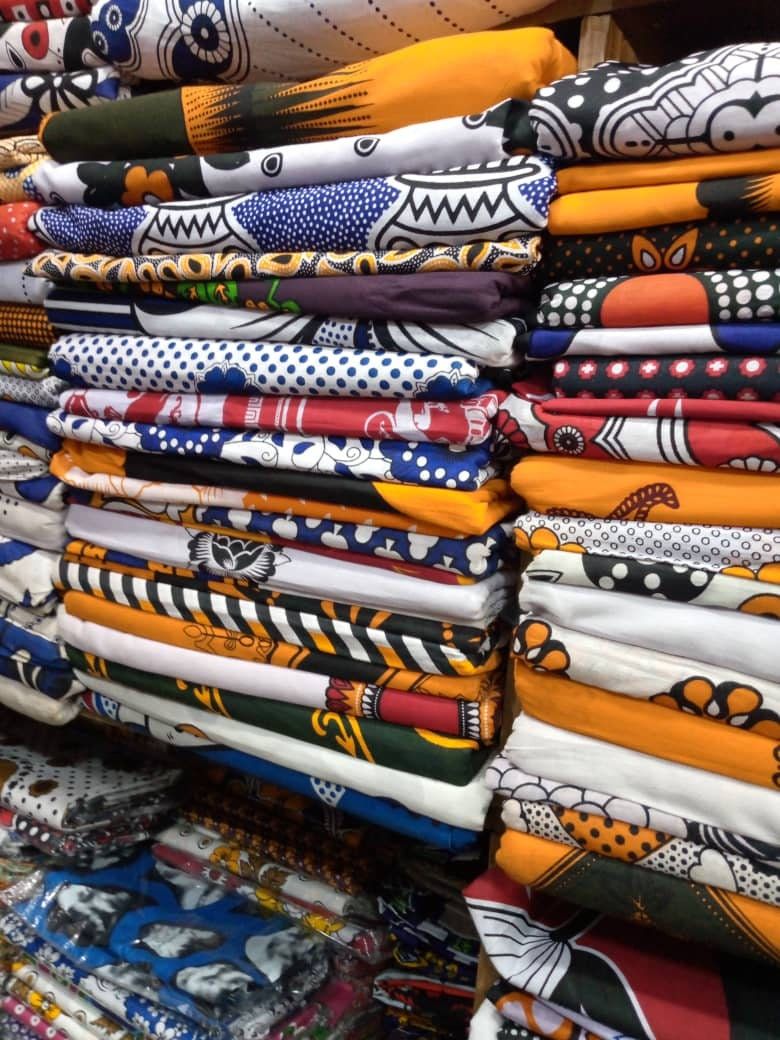
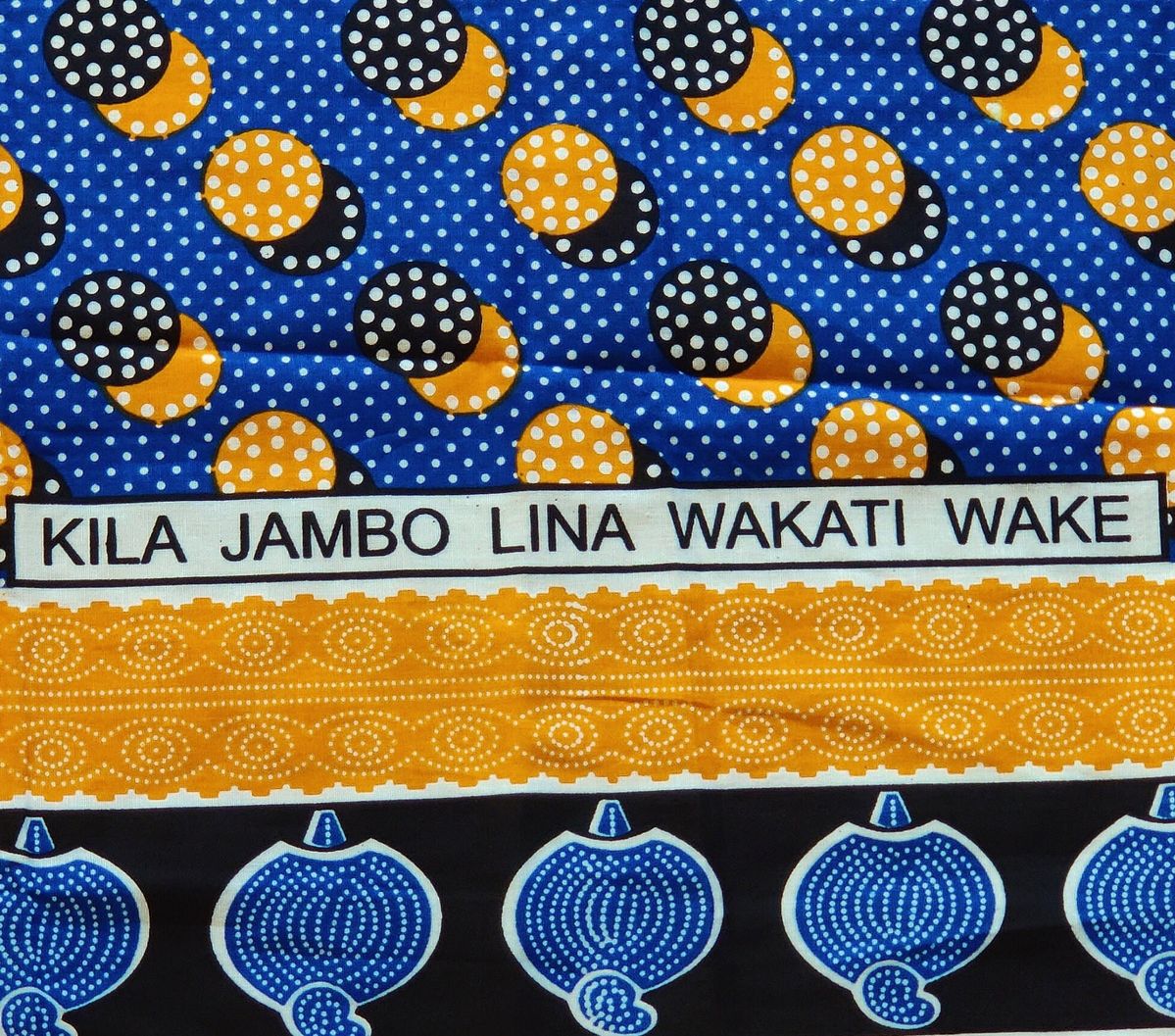
Walk through any coastal town in Zanzibar, Mombasa, or Dar es Salaam, and you will see it everywhere. People drape it over their shoulders. People wrap it around their waists. The kanga is hung on market lines, resembling the pages of an open book. The kanga is not just worn. It speaks.

At first glance, it looks simple. Bright cotton. Bold patterns. A brief Swahili phrase is printed along the edge. But behind that simplicity lives a layered history of trade, womanhood, resistance, fashion, and communication. The kanga is East Africa’s most intimate cultural archive. It records what people felt, feared, celebrated, and refused to say out loud.

To understand the kanga is to know how cloth can become language, how fashion can hold memory, and how everyday objects can carry power across generations.

From coastal trade routes to global runways, the kanga tells stories of identity, power, fashion, language and culture across Tanzania and Kenya 

A Fabric Born of the Indian Ocean World
A Fabric Born of the Indian Ocean World

The kanga emerged in the late nineteenth century along the Swahili Coast, shaped by the movement of goods and people across the Indian Ocean. American merikani cotton, Indian dye traditions, Arab aesthetics, and African design sensibilities converged in coastal trading towns. What began as plain clothes soon became personalised.

Women stitched pieces together, dyed them, and eventually embraced printed designs. The defining shift came when text was added. Swahili proverbs, observations, and declarations appeared along the border, transforming the cloth into a medium of expression. This feature was not an accidental decoration. It was authorship.

In a colonial society that frequently restricted the voices of African women, the kanga emerged as a socially acceptable mode of expression. Quietly. Publicly. Intentionally.

The Kanga as a Speaking Object

Every kanga carries a message. This is what sets it apart from other African textiles. The words are not ornamental. They are chosen.

A woman may wear a kanga to declare love, issue a warning, express grief, or assert dignity. The message might be tender or sharp. Occasionally, it is directed at a specific person. Occasionally, it is for anyone who understands. The genius lies in its ambiguity. Nothing is said directly, yet everything is communicated.

This practice turned the kanga into a social language system. Deciphering this system requires cultural literacy. To read a kanga correctly, you must understand tone, context, and timing. It is fashion that demands attention, not admiration.

Craft, Design, and Visual Intelligence
Craft, Design, and Visual Intelligence

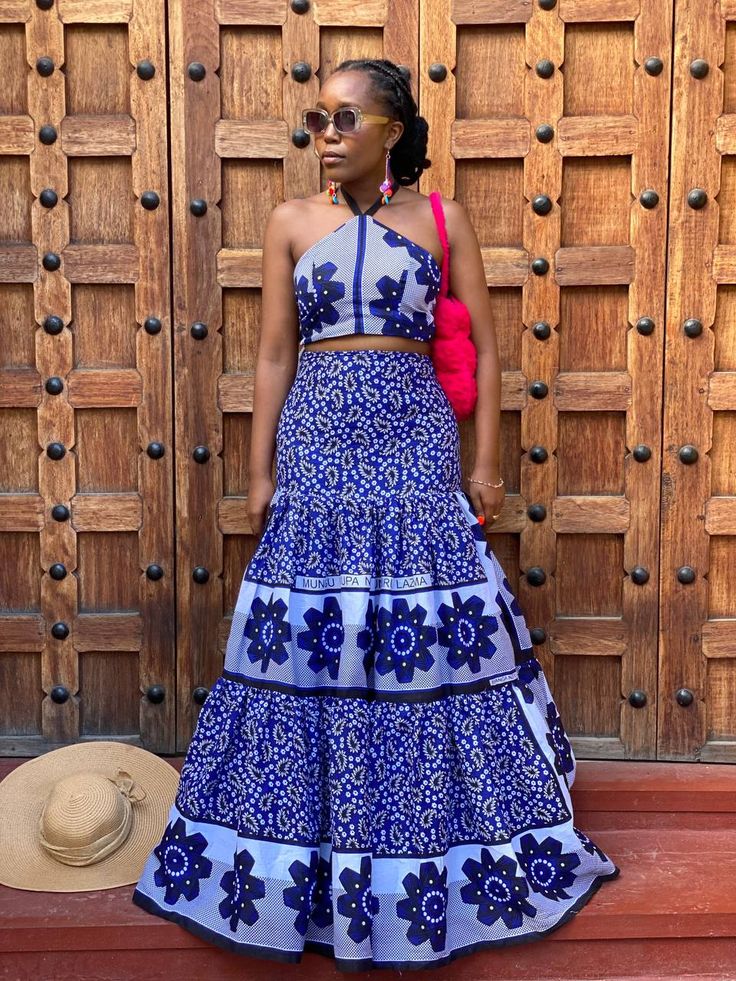
Structurally, every traditional kanga follows a deliberate design logic. The border frames the cloth. The central motif anchors the eye. The text completes the meaning. Colour choices are rarely random. Reds suggest emotion and urgency. Blues often imply calm or trust. Black-and-white combinations are frequently reserved for solemn moments.

Over time, motifs evolved. Early designs drew from flora, architecture, and geometric repetition. Later, Kangas referenced radios, bicycles, political symbols, and even global events. This adaptability is key to the kanga’s longevity. It absorbs the present without abandoning the past.

Today, contemporary designers reimagine the kanga through tailored silhouettes, silk blends, and luxury finishing. Yet the essence remains. Even when cut into a dress or reworked into accessories, the fabric still carries intention.

Read Also:

  • How African Languages Are Rewriting the Global Pop Script
  • The Evolution of African Fashion Style Beyond The Runway 
  • African Style Icons Who Turn Personal Identity Into Global Influence

Women, Power, and Everyday Luxury

The kanga has always belonged to women. It wraps the body through every stage of life It carries babies It appears at weddings, funerals, and religious gatherings. It moves seamlessly between the private and public spheres.

This everyday presence is what gives the kanga its quiet luxury. This luxury is not defined by price; instead, it is determined by its meaning. Owning many kangas is notan excess. It is preparedness. Each one is saved for a moment when the right words must be worn.

In this way, the kanga challenges Western ideas of luxury fashion. Its value lies in relevance, not rarity. Its value is found in its use, not in its display.

Global Movement and Diaspora Reinterpretation
Global Movement and Diaspora Reinterpretation

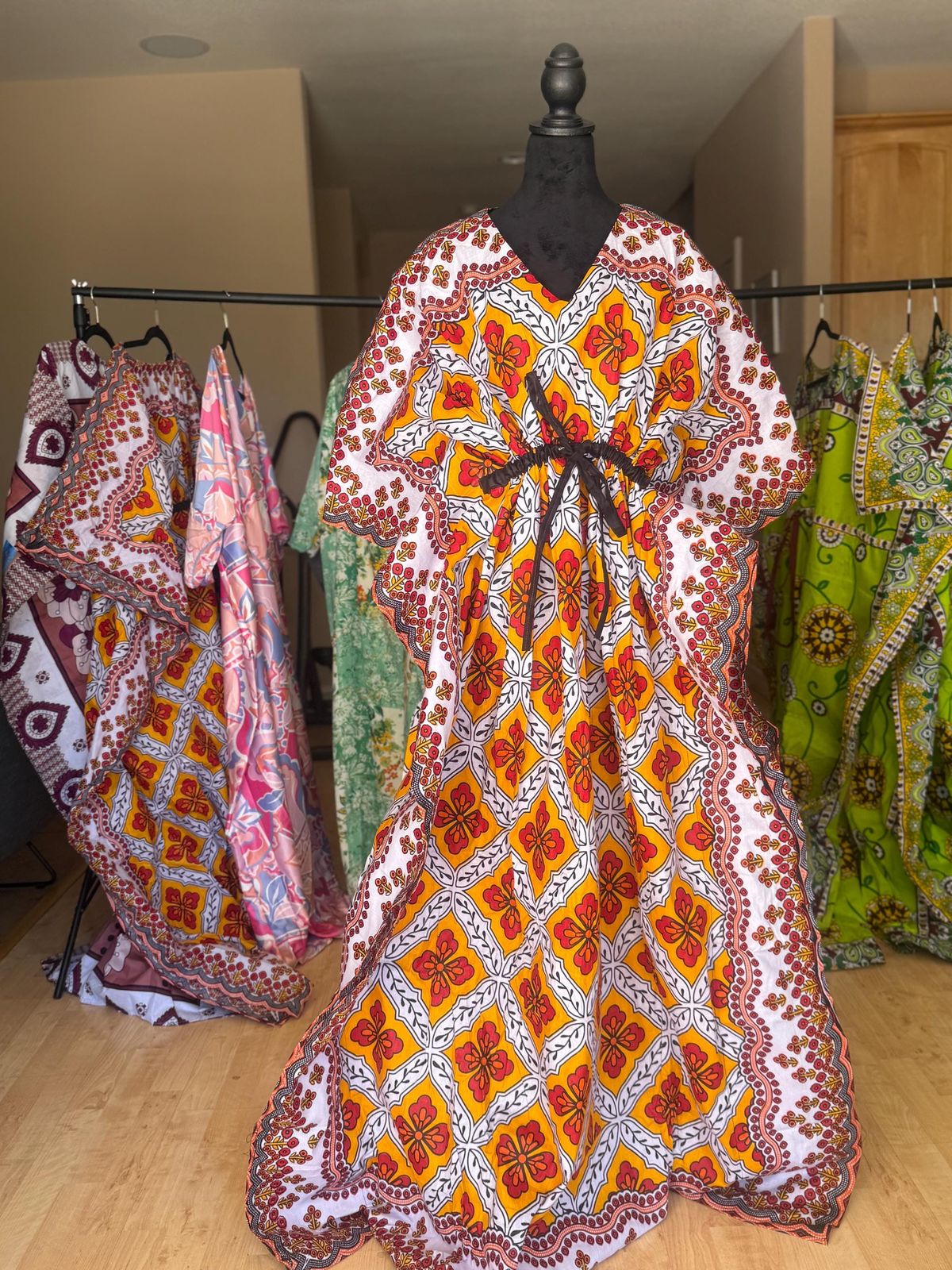
As East Africans moved across the world, the kanga travelled with them. In London, New York, Paris, and Toronto, it appears in fashion shows, art installations, and personal wardrobes. Diaspora creatives use the kanga to negotiate identity, blending heritage with contemporary life.

Global designers have also drawn inspiration from its graphic clarity and narrative power. When done with respect, this exchange expands the kanga’s reach without flattening its meaning. The fabric becomes a bridge between cultures, not a costume.

Sustainability and the Future of the Kanga

At its core, the kanga is a sustainable object. It is durable, multifunctional, and long-lasting. One cloth serves many purposes over the years. This ethos aligns naturally with modern conversations around ethical fashion.

There is growing interest in locally produced kangas, fair labour practices, and environmentally conscious dyeing methods. Protecting the cultural integrity of the kanga while adapting it for the future is now part of its story.

Conclusion

The kanga endures because it was never just fabric. It is the voice. Memory. Design intelligence. Cultural confidence.

In a world where fashion often chases novelty, the kanga reminds us that the most powerful style is rooted, intentional, and deeply human. It does not shout. It speaks. And for those who know how to listen, it says everything.

FAQs

  1. What makes the kanga different from the kitenge?

The kanga includes a written message in Swahili, while kitenge focuses solely on pattern and colour.

  1. Is the kanga traditionally worn only by women?

Historically, yes, though today it appears in gender neutral and contemporary fashion contexts.

  1. Why are kanga messages important?

They allow indirect communication, cultural expression, and social commentary through clothing.

  1. Where are kangas mainly produced today?

They are produced in East Africa and abroad, with Tanzania and Kenya remaining cultural centres.

  1. Can Kanga be considered luxury fashion?

Yes, when luxury is defined by meaning, craftsmanship, and cultural depth rather than price alone.


Post Views: 1,024
Total
0
Shares
Share 0
Tweet 0
Pin it 0
Related Topics
  • African Fabric Culture
  • African Fashion
  • East African Textiles
  • Swahili Cultural Identity
Avatar photo
Heritage Oni

theheritageoni@gmail.com

You May Also Like
Kingston to Milan: The Jamaican Aesthetic Exporting Style Without an Export Deal
View Post
  • Trends

Kingston to Milan: The Jamaican Aesthetic Exporting Style Without an Export Deal

  • Rex Clarke
  • September 4, 2026
Three African Designers and the Gaps They Reveal
View Post
  • FASHION

Three African Designers and the Gaps They Reveal

  • Tobi Arowosegbe
  • September 4, 2026
How Baile Funk and Football Shape São Paulo Fashion
View Post
  • Style & Identity

How Baile Funk and Football Shape São Paulo Fashion

  • Peace Vera
  • September 4, 2026
Why No One Talks About São Paulo Streetwear
View Post
  • INDUSTRY

Why No One Talks About São Paulo Streetwear

  • Adams Moses
  • September 4, 2026
The Women Running Carnival's Creative Economy
View Post
  • FASHION

Carnival Is a Design Economy. No One Tracks It.

  • Rex Clarke
  • September 4, 2026
The Art, Identity and Resilience of Borana Oromo Leather Attire, Ethiopia
View Post
  • Style & Identity

The Art, Identity and Resilience of Borana Oromo Leather Attire, Ethiopia

  • Meseret Zeleke
  • September 3, 2026
Aba Is a Supply Chain, Not a Craft Village
View Post
  • FASHION

Aba Fashion Industry: Nigeria’s Real Garment Supply Chain

  • Adams Moses
  • September 3, 2026
Oaxacan Weaving Is Not a Trend. It Is a Textile System.
View Post
  • Textiles & Craft

Oaxacan Weaving Is Not a Trend. It Is a Textile System.

  • Peace Vera
  • September 3, 2026

Leave a Reply Cancel reply

Your email address will not be published. Required fields are marked *

The Omiren Argument

African fashion and culture are not emerging. They are foundational. We document, interpret, and argue for the full cultural weight of African and diaspora dress. With precision. Without apology.

Omiren Styles Fashion · Culture · Identity

All 54 African Nations
Caribbean · Afro-Latin America
The Global Diaspora

Platform

  • About Omiren Styles
  • Our Vision
  • Our Mission
  • Editorial Pillars
  • Editorial Policy
  • The Omiren Collective
  • Campus Style Initiative
  • Sustainable Style
  • Social Impact & Advocacy
  • Investor Relations

Contribute

  • Write for Omiren Styles
  • Submit Creative Work
  • Join the Omiren Collective
  • Campus Initiative
Contact
contact@omirenstyles.com
Our Reach

Africa — All 54 Nations
Caribbean
Afro-Latin America
Global Diaspora

African fashion intelligence, in your inbox.

Editorial features, designer profiles, cultural commentary. No noise.

© 2026 Omiren Styles — Rex Clarke Global Ventures Limited. All rights reserved.
  • Privacy Policy
  • Editorial Policy
  • Terms of Use
  • Accessibility
Africa · Caribbean · Diaspora
The Omiren Argument

African fashion and culture are not emerging. They are foundational. We document, interpret, and argue for the full cultural weight of African and diaspora dress. With precision. Without apology.

Omiren Styles Fashion · Culture · Identity
  • About Omiren Styles
  • Our Vision
  • Our Mission
  • Editorial Pillars
  • Editorial Policy
  • The Omiren Collective
  • Campus Style Initiative
  • Sustainable Style
  • Social Impact & Advocacy
  • Investor Relations
  • Write for Omiren Styles
  • Submit Creative Work
  • Join the Omiren Collective
  • Campus Initiative
Contact contact@omirenstyles.com

All 54 African Nations · Caribbean
Afro-Latin America · Global Diaspora

African fashion intelligence, in your inbox.

Editorial features, designer profiles, cultural commentary. No noise.

© 2026 Omiren Styles
Rex Clarke Global Ventures Limited.
All rights reserved.

  • Privacy Policy
  • Editorial Policy
  • Terms of Use
  • Accessibility
Africa · Caribbean · Diaspora

Input your search keywords and press Enter.

Newsletter Subscribe

The Omiren Style Index

The reference directory for African, Caribbean and Afro-Latin fashion. New entries, taxonomy updates and intelligence signals — once a month. No noise.

.newsletter-form{
max-width:500px;
margin:auto;
text-align:center;
padding:30px;
}

.newsletter-form h3{
margin-bottom:10px;
font-size:28px;
}

.newsletter-form p{
margin-bottom:20px;
color:#666;
}

.newsletter-form input{
width:100%;
padding:14px 18px;
border:1px solid #ddd;
margin-bottom:15px;
border-radius:4px;
}

.newsletter-form button{
width:100%;
padding:14px;
background:#000;
color:#fff;
border:none;
cursor:pointer;
text-transform:uppercase;
letter-spacing:1px;
}