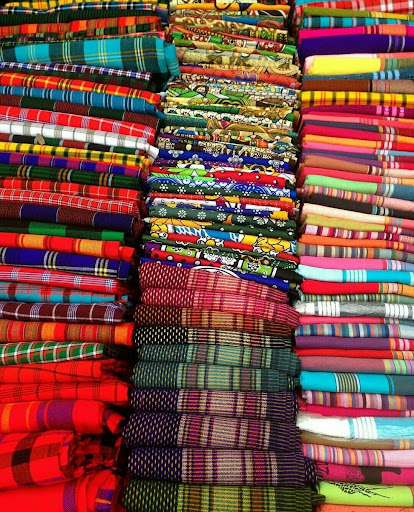
In the village of Boïfo in northern Benin, one male weaver continues to practise the cotton weaving tradition that once employed dozens of men across the Dendi region. He is, as far as researchers from the Endangered Material Knowledge Programme at the British Museum could document, the last active practitioner in his village of a textile system that, until the mid-twentieth century, was the primary industry of an entire region. The looms are gone. The indigo vats were abandoned in the early 1990s. What remains, carefully preserved and occasionally perfumed in household shrines, are the loincloths.
These loincloths are not textile relics. According to the testimony of a Dendi woman deeply involved in possession cults, the loincloth is intimately linked to the ganji, the spirits of possession. It was used not only to dress the possessed person during ceremonies but also to embody the ganji within the household, outside ceremonial contexts. A spirit can be addressed by praying on the loincloth and activating it with certain substances. Old loincloths are carefully preserved because they are powerful tools for acting on the present, not because they are remnants of the past.
This is where the story of Benin’s cotton begins. Not in a spreadsheet. Not at GDIZ. Not in the export statistics that place Benin at the top of Africa’s cotton-producing nations. It begins in a possession ceremony in Dendi, in which a piece of cloth woven from locally cultivated cotton is not a garment but a spiritual instrument. Everything that has followed, the royal fabric of Dahomey kings, the bridal exchange customs of the Bariba, the industrial zone outside Cotonou producing seven to ten million garments per year, is a later chapter of a story that started in that ceremony.
The Omiren Argument: cotton was Beninese identity before it was Beninese GDP. The loincloths that dressed possession ceremonies in Dendi, the kanvô that clothed Dahomey kings, and the garments now being exported to European brands from GDIZ are all part of the same material story. The Industrial Revolution is not the beginning. It is a new chapter in a very old book.
Benin is Africa’s top cotton producer — but how did that shape what its people wear? A deep dive into cotton, craft, and fashion identity in the Republic of Benin.
The Gendered Labour System That Built the North

The textile economy of northern Benin, documented in detail by the EMKP project at the British Museum, was a complete industrial system with a precisely defined gendered division of labour. Men cultivated the cotton and wove the cloth on horizontal looms. Women cleaned the raw cotton, carded it into loose rolls, spun it into thread on hand spindles, managed its storage, and supervised the dyeing process. Male specialist dyers processed the thread with indigo, using the plant Indigofera tinctoria, in workshops that operated across dozens of villages on the eve of the colonial occupation.
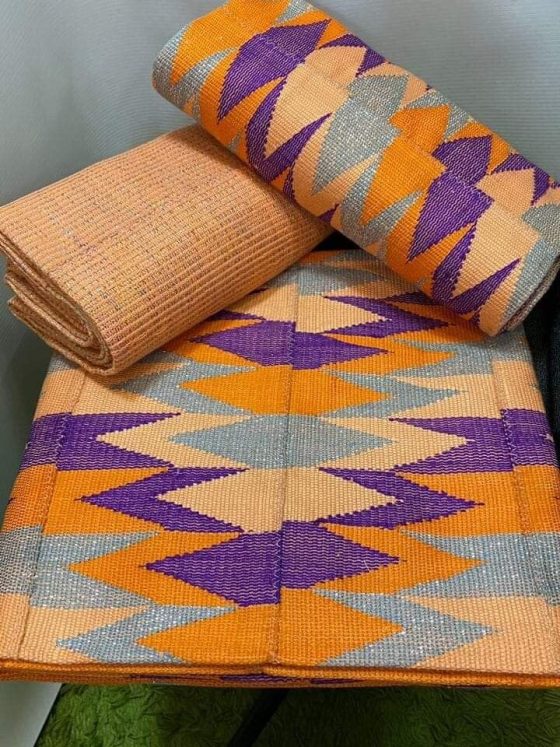
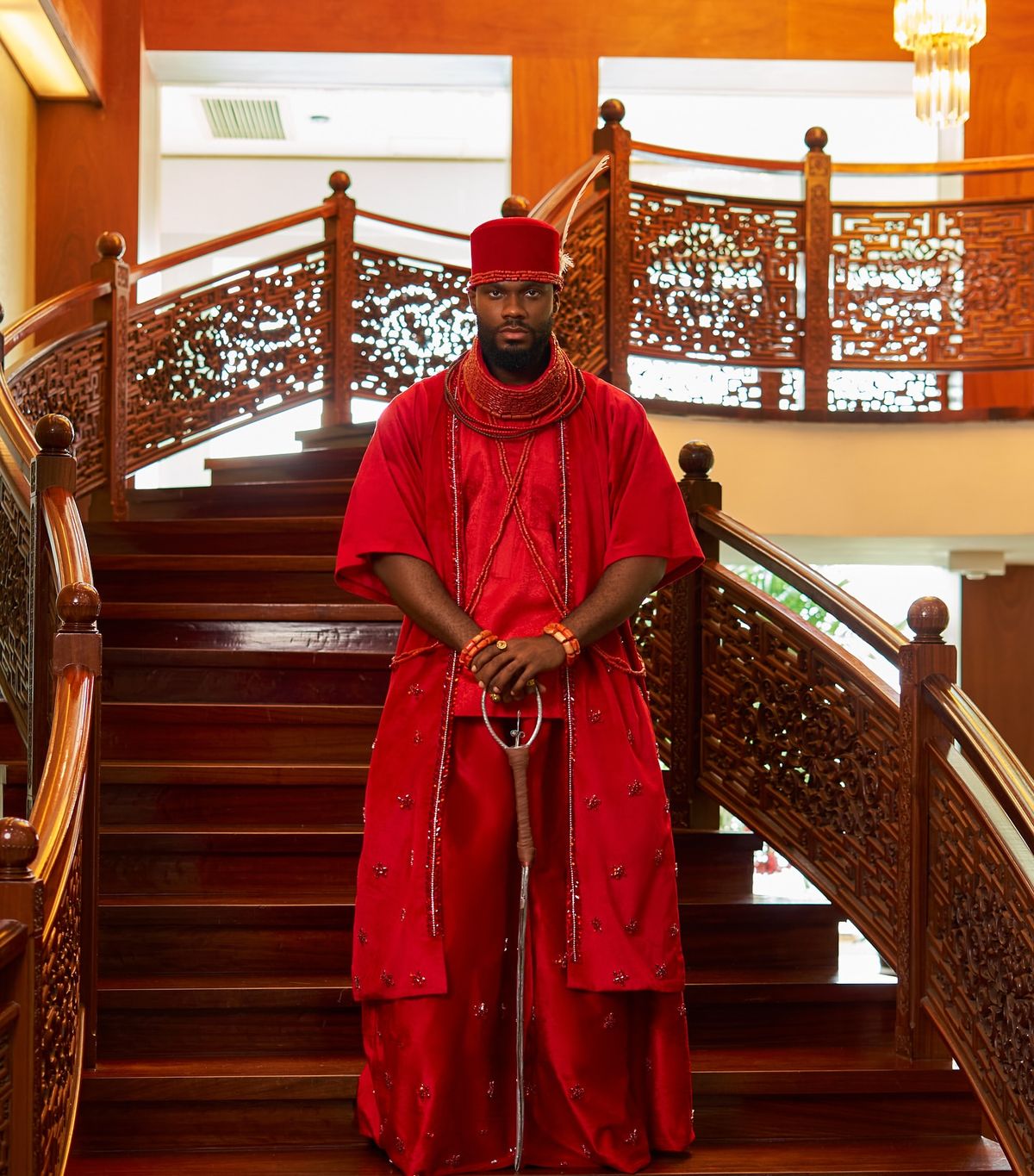
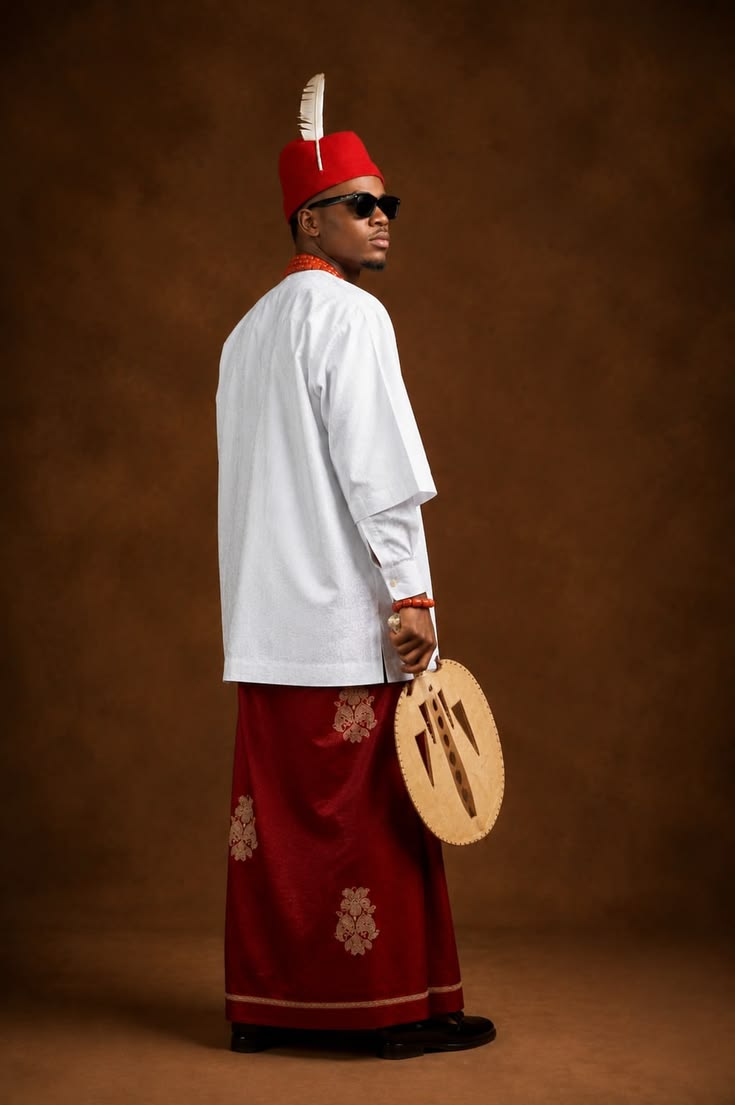
This was not a household craft. It was an organised industry with specialist roles, market transactions, and a product range that extended from everyday domestic cloth to prestige garments that encoded social rank. Notables and chiefs wore dark blue indigo boubous. Red cloth was reserved for crowned heads and appeared at the annual Gaani festival in Nikki, where it announced authority visibly to the assembled community. The geometric loincloths produced by northern weavers became standardised bridal exchange gifts in the 1950s and 1960s, when the mother of the bride traditionally presented two to the newlyweds: one to decorate the bridal chamber, one for the husband.
Indigo dyeing was the industry’s most technically demanding component. Dozens of workshops operated across the Dendi and Borgu regions until French colonial disruption gradually dismantled the local market. The activity persisted through the first half of the twentieth century and then declined into complete disappearance by the early 1990s. The researcher, who has spent more than a decade documenting these extinct techniques, describes finding only traces: an old shuttle covered with dust, a bag of spindles, and ashes near a former dyeing site. The industry that shaped the social order of northern Benin survived into living memory, only to vanish within a single generation.
Kanvô: Where Cotton Becomes Royal Authority
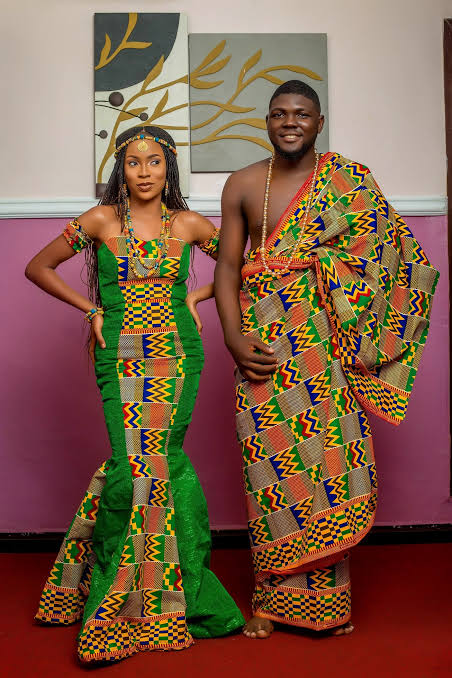
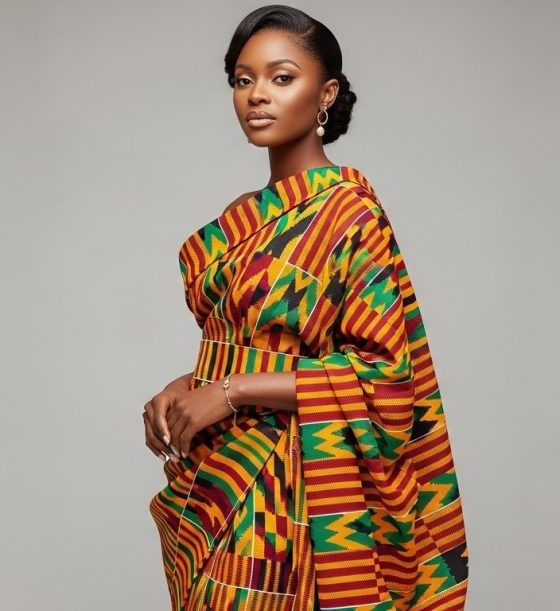
The southern tradition connects cotton to royal authority through kanvô, Benin’s handwoven textile, introduced to the Dahomey Kingdom by King Agonglo at the end of the 18th century. Kanvô is woven from cotton, linen, and hemp, making it directly dependent on the very materials that drive the country’s agricultural economy. When Dahomey kings wore kanvô on formal occasions, they were wearing cloth produced from Benin’s own land. The royal textile and the agricultural base were always the same thing expressed in different registers.
King Ghezo consolidated the kanvô tradition after Agonglo by establishing families of weavers throughout the Dahomey Kingdom. The weavers were not artisans operating independently. They were part of the court’s political economy, producing cloth that communicated royal power and cultural authority. King Behanzin, the last independent ruler of Dahomey before French colonisation, wore kanvô on great occasions. When the French dismantled the Dahomey court in 1894, they dismantled, among other things, the institutional support structure for a textile tradition that had taken more than a century to build.
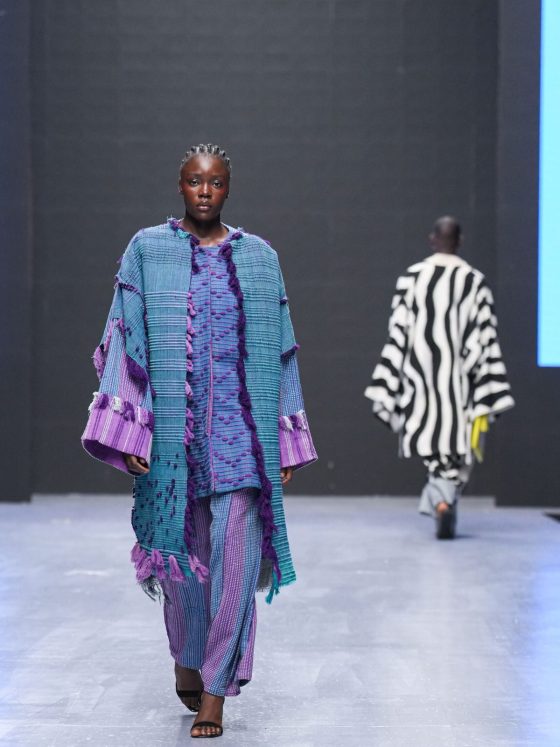
What survived that dismantling was the knowledge held by the weaving families and, eventually, the contemporary designers who rediscovered it. Elvira Akplogan of LOAN-H adopted kanvô as her brand’s signature material in 2017 and established a 100% Beninese production unit in 2019. The weavers that FARE’s Peter Toni-Basengula works with in Abomey trace their lineage directly to King Agonglo’s original court weavers. The thread connecting the 18th-century Dahomey court to the La Nuit de la Mode runway in Cotonou in 2025 is cotton, held by the same families across seven generations.
The Colonial Interruption and What It Cost
French colonisation of Dahomey, completed in 1894, disrupted the cotton textile economy at multiple levels simultaneously. The royal court that had patronised kanvô weavers was dismantled. The indigo dyeing workshops of the north lost their primary market as imported European textiles flooded the region. The gendered labour system that had structured communities around cotton production was progressively undermined as colonial administrators reorganised the agricultural economy around cash crop export rather than domestic textile production.
What colonisation introduced was a new relationship between cotton and identity. Instead of cotton travelling from field to loom to garment within the community, it now travelled from field to European market as raw fibre and returned as finished cloth with no Beninese labour added. The agricultural knowledge remained. The textile knowledge is fragmented. The identity that had been inscribed in locally produced cloth was partially transferred to imported wax-print pagne, which West African communities then transformed into a cultural medium of their own over subsequent generations.
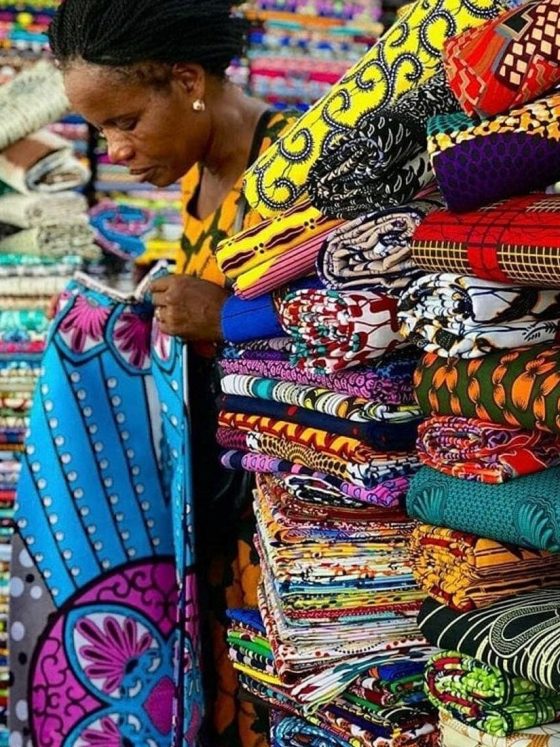
The wax-print pagne that is central to Beninese dress today entered the region through exactly this colonial-era trade route, manufactured in Dutch and British mills from Indonesian batik designs and sold to West African markets. Beninese communities absorbed it, adapted it, and made it their own over more than a century of use. It is now deeply Beninese, but its origin as an imported substitute for locally produced cloth is the structural consequence of colonial disruption of the indigenous textile economy.
ALSO READ
- Kanvô: Benin’s Royal Handwoven Fabric, Fully Explained
- Egungun Masquerade Costume: When Fabric Becomes a Portal to the Ancestors
- Benin Textiles and Symbolism
OBEPAB and the Organic Cotton Alternative
In 1996, agronomist Professor Simplice Davo Vodouhe founded OBEPAB, the Organisation Béninoise pour la Promotion de l’Agriculture Biologique, with support from Pesticide Action Network UK. He started with 17 farmers. The motivation was straightforward: conventional cotton farming in Benin was using pesticides at a scale that was poisoning farmers, contaminating water sources, and degrading the soil that communities depended on for food production. Organic cotton offered an alternative that preserved soil health, reduced health risks, and, in principle, allowed farmers to command a premium price for certified organic fibre. The programme has since trained approximately 9,000 farmers in organic practices, doubling the number of farmers who have switched to organic production and achieving Cotton Made in Africa certification for Benin’s organic cotton output.
OBEPAB’s work is not primarily a fashion story. It is an agricultural and community health story that has fashion implications. Organic cotton produced by small farmers in central and northern Benin can enter the supply chains of brands that have committed to traceable, certified sustainable fibre. This is the bottom of the fashion supply chain made visible: the farmer in Kpoddjkiki who has been growing organic cotton for fourteen years is connected, through the certification infrastructure that OBEPAB built, to the international fashion market that wants what his cotton can provide.
The distance between the possession-ceremony loincloth in Dendi and the organic-cotton certification process in Aklampa is not a journey from tradition to modernity. It is a journey through the same material, across different chapters of the same history. Cotton has always been both an identity instrument and an economic one in Benin. What changes is the scale and the institutional apparatus. What does not change is that the cotton grown in Beninese soil carries Beninese meaning, whether it is woven by a Dendi craftsman, bought by a diaspora bride, or exported in a container to a French fashion brand.
GDIZ: The Industrial Chapter of an Ancient Story
The Glo-Djigbé Industrial Zone (GDIZ), a 1,640-hectare industrial complex launched in 2020, roughly 45 kilometres from Cotonou, is described by its managing director, Letondji Behéton as processing 40,000 tonnes of cotton annually and producing between seven and ten million garments per year. It works with approximately 21,000 farmers across the country. Its first export to Europe, 80,000 children’s leggings for the French brand KIABI, was shipped in June 2024. The Children’s Place and US Polo Assn have since signed supply contracts. The African Development Bank has estimated that a thriving textile sector could contribute more than five billion dollars annually to Benin’s economy by 2030.
In May 2025, Benin announced a ban on raw cotton exports. Every tonne of cotton that previously left Benin as a raw agricultural commodity must now be processed domestically before it can be exported. This is a structural policy decision with direct consequences for the entire value chain, from the farmer to the garment. Benin is converting its position as Africa’s top cotton producer into that of Africa’s most ambitious garment manufacturer. As of early 2025, approximately one-third of Benin’s cotton is already being processed domestically, up from near zero a decade ago.
The 2024-2025 season is projected to produce 669,000 tonnes of cotton, placing Benin at the top of African producers. The record year was 2020-2021 at 728,000 tonnes. Mali, the closest competitor, is projected to produce 569,000 tonnes in 2024-2025. These are agricultural statistics. But they also describe the material base from which the Dahomey court wove its royal fabric, from which Dendi weavers produced their possession ceremony loincloths, and from which contemporary Beninese designers are building the next chapter of a material identity that is older than the industrial zone by several centuries.
President Patrice Talon, who earned the nickname “King of Cotton” by building his fortune in the cotton trade in the 1990s and 2000s before entering politics, has staked his presidency on the argument that cotton can transform Benin’s economy. The political and economic argument is new. The material argument is ancient. Benin has always known that cotton is its identity. What is new is the industrial scale on which that identity is being expressed.
“Cotton was Beninese identity before it was Beninese GDP. The loincloths that dressed possession ceremonies in Dendi, the kanvô that clothed Dahomey kings, and the garments now exported from GDIZ are all part of the same material story. The Industrial Revolution is not the beginning. It is a new chapter in a very old book.”
Frequently Asked Questions
Why is cotton called “white gold” in Benin?
Cotton is called white gold in Benin because it is the country’s most valuable agricultural export, accounting for approximately 40% of GDP and 80% of export earnings. Benin is Africa’s leading seed cotton producer, with production projected at 669,000 tonnes for the 2024-2025 season and a peak of 728,000 tonnes in 2020-2021. President Patrice Talon, who built his fortune in cotton before entering politics, is known as the King of Cotton. The nickname reflects cotton’s central role in the national economy.
How does cotton connect to traditional dress in Benin?
Cotton is the material base of Benin’s most significant textile traditions. In northern Benin, the Dendi and Borgu communities built a complete textile economy around cotton cultivation, hand-spinning, horizontal-loom weaving, and indigo dyeing. The loincloths produced were used in possession ceremonies as spiritual instruments and as bridal exchange gifts. In southern Benin, kanvô, the royal handwoven fabric introduced to the Dahomey court by King Agonglo in the late 18th century, is woven from cotton, linen, and hemp. The royal textile and the national agricultural crop are the same material expressed in different registers.
What is GDIZ, and what does it do for Benin’s fashion industry?
GDIZ, the Glo-Djigbé Industrial Zone, is a 1,640-hectare industrial complex launched in 202,0 approximately 45 kilometres from Cotonou. It is a joint venture between the Beninese government and ARISE Integrated Industrial Platforms. GDIZ processes approximately 40,000 tonnes of cotton annually and produces between seven and ten million garments per year. It exports finished garments to international brands, including KIABI (France), The Children’s Place, and US Polo Assn. In May 2025, Benin announced a ban on raw cotton exports, requiring all cotton to be processed domestically before export.
What are OBEPA and B, and how do they connect to fashion?
OBEPAB (Organisation Béninoise pour la Promotion de l’Agriculture Biologique) is a Beninese NGO founded in 1996 by Professor Simplice Davo Vodouhe with support from PAN UK. It began training farmers in organic cotton production, starting with 17 farmers and has since reached approximately 9,000 farmers. OBEPAB’s organic cotton has achieved Cotton Made in Africa (CmiA) certification. This connects Beninese small farmers directly to international fashion supply chains that require traceable, certified sustainable cotton fibre.
What happened to the traditional textile industry in northern Benin?
The traditional textile industry of northern Benin, which included cotton cultivation, hand-spinning, horizontal-loom weaving, and indigo dyeing, was fully organised until the colonial period. Indigo dyeing, which had operated in dozens of workshops across the Dendi and Borgu regions, declined through the first half of the twentieth century and had entirely disappeared by the early 1990s. The Endangered Material Knowledge Programme at the British Museum has documented the near-extinction of this tradition: in the village of Boïfo, one male weaver continues to practise. Old loincloths are preserved in household shrines, some of which are used as spiritual instruments in possession ceremonies.
How does kanvô connect to Benin’s cotton heritage?
Kanvô is woven from cotton, linen, and hemp, making it directly rooted in Benin’s own agricultural production. Introduced to the Dahomey court by King Agonglo in the late 18th century, it became the kingdom’s royal textile. The weaving families established by King Ghezo throughout the Dahomey Kingdom are the direct ancestors of the artisans working with contemporary designers, including FARE’s Peter Toni-Basengula in Abomey. The Beninese government officially labelled kanvô in 2020. Both kanvô’s artisanal tradition and GDIZ’s industrial processing begin with the same raw material: cotton grown in Beninese soil.
Explore more in our Culture section, where African material traditions are documented as foundational design intelligence rather than a heritage footnote.