In many parts of West Africa, indigo cloth is not remembered as a trend or a decorative surface. It is remembered as labour and as a specialised craft economy. The process behind it involves time, repetition, and technical control, all inseparable from the communities that developed it. Across Yoruba towns in southwestern Nigeria and dyeing centres in northern cities such as Kano, indigo has shaped both material culture and local economies for generations.
What is often described today as a fashion revival is better understood as a continuation of long-standing textile systems. Adire and indigo dyeing did not disappear and return. They shifted in visibility, moving between everyday use, ceremonial dress, and contemporary design markets while maintaining their core methods.
Explore indigo, Adire, and hand-dyed cloth traditions in Africa and how centuries-old textile systems are shaping modern African fashion today.
Indigo as a Material System, Not Just a Colour
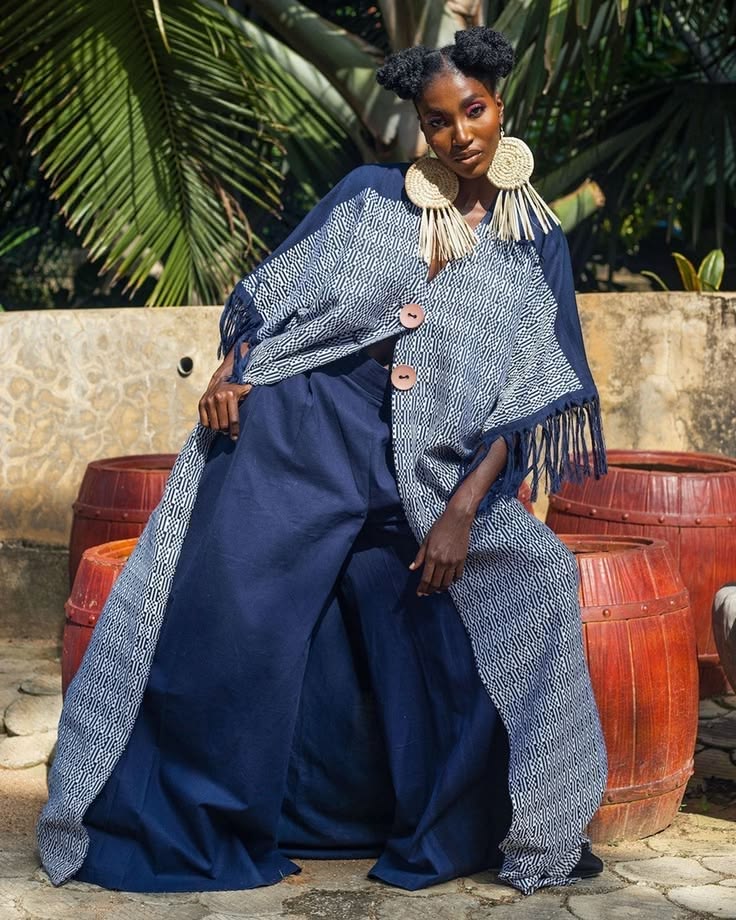
Indigo dye in West Africa is produced through plant-based processes that require controlled fermentation and repeated immersion of cloth in dye vats. The colour deepens not with a single application but through cycles of dipping and air exposure. Each cycle intensifies the tone and increases the labour invested in the fabric.
This process matters because it places value not only on the final cloth but on the number of actions required to produce it. In historical textile economies, deeper indigo shades often signalled greater skill and longer production time. Cloth was judged not only by appearance but also by the labour embedded within it.
In many communities, this made indigo textiles part of structured economic systems. The fabric functioned as both a clothing material and a form of stored value, moving through local and regional trade networks where craftsmanship determined price and status.
Adire as a Yoruba Textile Knowledge System
The Adire textile tradition is one of the most extensively developed and documented indigo-based textile traditions in West Africa. It is not defined by weaving but by resist-dye techniques applied to cotton cloth. These techniques include tied patterns, stitched designs, and starch-based painting methods that prevent dye from reaching selected areas of fabric.
Historically, Adire production developed strongly in Yoruba towns such as Abeokuta, where women organised dyeing into structured household and market-based systems. In many workshops, techniques are taught over years through apprenticeship rather than short courses, making the cloth a record of sustained intergenerational practice. This was not an informal craft activity. It operated as a recognisable economic network where production, pattern design, and distribution were closely managed within local trade environments.
The knowledge behind Adire is technical and cumulative. Patterns are not random decorations. They are constructed through controlled resistance to dyeing, in which each stage of binding, stitching, or starch application determines the cloth’s final visual structure. As Omiren Styles has noted in How to Shop African Fashion, Adire cloth is produced by master craftswomen in Abeokuta, working dye vats handed down through families. The result is a textile system in which design is inseparable from process, and the cloth’s authority comes from that inseparability.
Kano Indigo Dyeing and Guild-Based Production
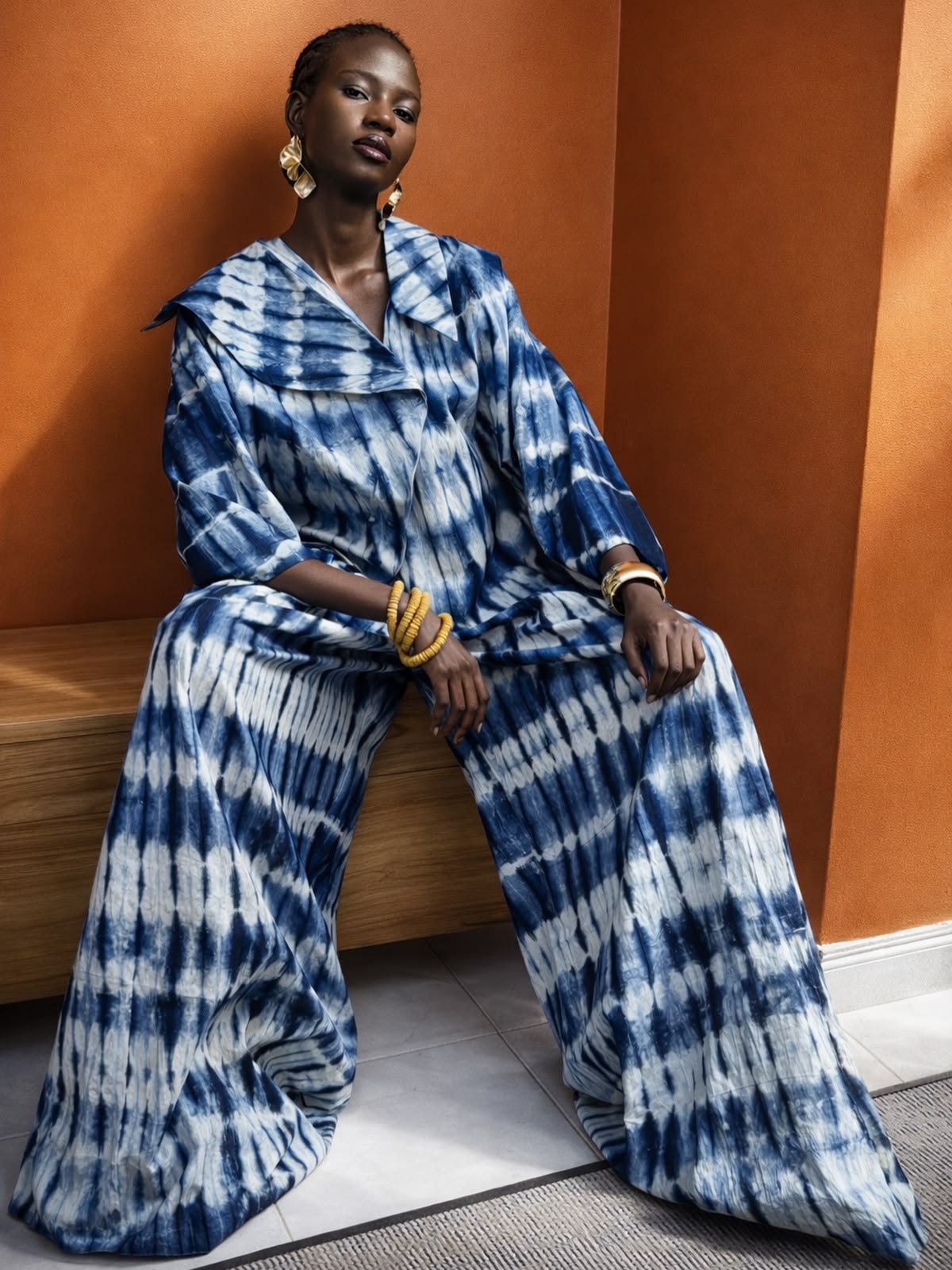
In northern Nigeria, particularly in Kano, indigo dyeing developed through a different structure. Rather than resist techniques applied to cloth, production centres on dye pits and immersion methods organised within guild-like systems. These dye pits are still visible in parts of the city and represent one of the most enduring textile infrastructures in the region.
Kano’s dyeing tradition is closely connected to historical trade routes that linked West Africa to the wider Sahel and trans-Saharan networks. Cloth produced in these systems circulated across regions as both a commodity and a cultural marker. The organisation of labour around dye pits created a system where production was collective, repetitive, and tied to established craft hierarchies.
Although Kano and Yoruba indigo systems share the same material base, they are structurally different. One is centred on resist patterning and household-scale production. The other is built around immersion dye infrastructure and organised craft labour. Both systems depend on long-term technical knowledge rather than individual artistic improvisation.
ALSO READ
- How to Shop African Fashion: The Complete Guide for the Culturally Literate Consumer
- Country Cloth: How Liberian Men Have Worn Power Since Before the Republic
- Imperfection as Intention: Why ‘Undone’ Dressing Defines 2026 High Fashion
- Awa Meité and Bogolanfini: Mud Cloth as a Living Archive of West African Memory
Colonial Disruption and Textile Reordering
The arrival of industrial textiles during colonial rule altered the position of indigo cloth in West African markets. Factory-made fabrics, often cheaper and more widely distributed, became dominant in everyday clothing, especially in urban centres. This reduced the centrality of hand-dyed textiles in daily wear.
However, indigo and Adire systems did not disappear. They shifted into new roles. In many cases, they became associated with ceremonial dress, cultural identity, and specialised production rather than mass consumption. The knowledge systems behind them remained active even when their economic dominance declined. This pattern appears across West African textile traditions. As Omiren Styles has documented in Country Cloth: How Liberian Men Have Worn Power Since Before the Republic, the arrival of Dutch wax print in the late nineteenth century displaced everyday use of hand-produced cloth without ending the craft itself. The same logic held for Adire and Kano indigo systems: redistribution of function across different social contexts, not disappearance.
What is happening now is not revival but repositioning.
Contemporary Fashion and the Repositioning of Indigo
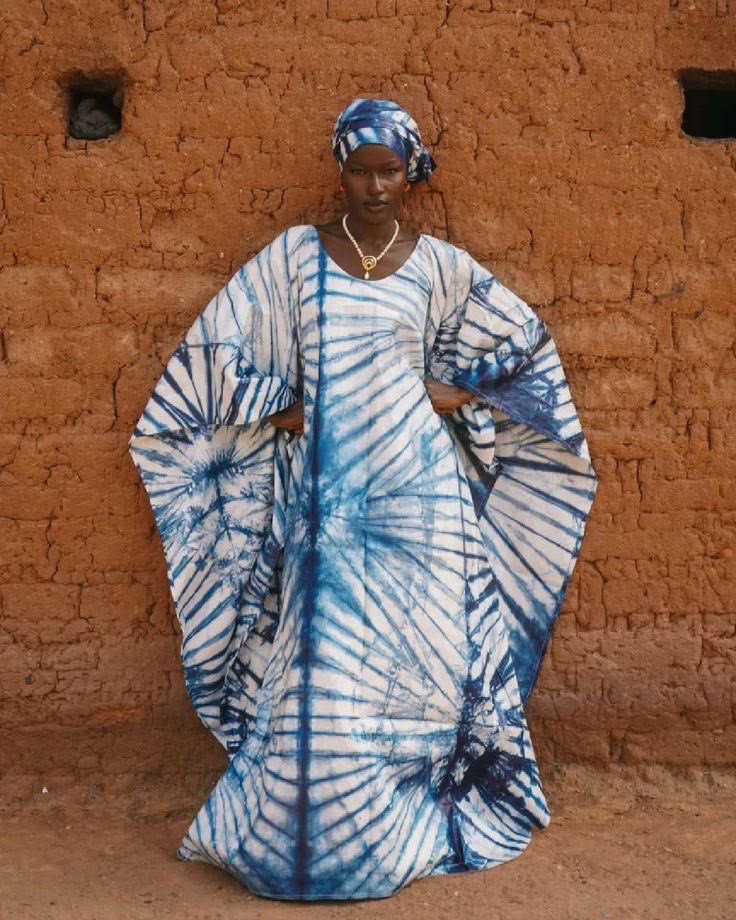
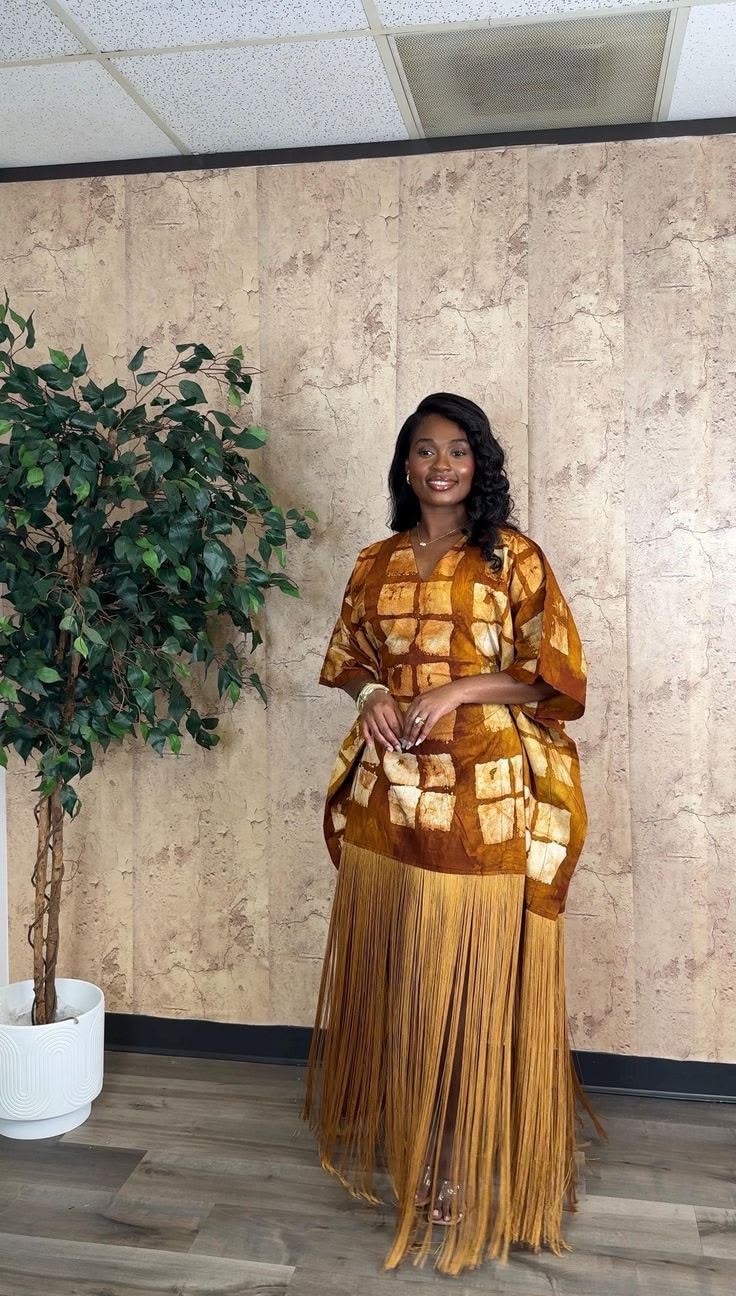
In contemporary African fashion, indigo and Adire textiles have re-entered broader visibility through design-led interpretation rather than sudden revival. Named designers working with hand-dyed cloth have been among the clearest examples of this repositioning. Malian designer Awa Meité, profiled by Omiren Styles in Awa Meité and Bogolanfini: Mud Cloth as a Living Archive, has built collections around hand-dyed West African textiles, commissioning cloth directly from artisan communities while placing their work within contemporary fashion markets. Her approach is the model: the material process remains the same; the final garment is recontextualised.
Across Lagos, Abeokuta, and Dakar, designers have integrated hand-dyed cloth into modern tailoring, adjusting silhouettes and fabric applications while retaining traditional dyeing methods. This shift involves the reorganisation of artisan networks into fashion supply chains. In many cases, dyeing communities continue their established practices while collaborating with designers who bring their work to global fashion markets.
A key feature of this contemporary phase is the movement from fabric as everyday wear to fabric as design language. As Omiren Styles has noted in Imperfection as Intention: Why ‘Undone’ Dressing Defines 2026 High Fashion, Adire develops tonal shifts shaped entirely by the resist process and the individual hand that applied it. No two pieces are identical. That variation, which industrial production would classify as a defect, is now precisely what makes these textiles valuable in a fashion landscape saturated with machine-made uniformity.
Labour, Lineage, and Material Meaning
The significance of indigo and Adire textiles lies in their connection to labour systems that have persisted across generations. These are not neutral fabrics. They are the result of controlled processes involving time, skill, and repeated engagement with material.
In Yoruba and Hausa contexts, textile knowledge is not separated from social identity. It is embedded in the organisation of work, the transmission of technique, and the economic structures that support production. This is why indigo cloth continues to carry meaning even when its form changes.
Contemporary fashion has not created this meaning. It has entered an existing system and adapted it to new markets.
THE OMIREN ARGUMENT
Indigo and Adire textiles are often framed as traditional crafts returning to relevance in modern African fashion. This framing overlooks the continuity of the systems that produce them. These textile traditions never stopped operating. They shifted between everyday use, ceremonial function, and market adaptation depending on economic and social conditions. The word “revival” misrepresents what is, in fact, a persistent system doing what persistent systems do: finding new contexts without abandoning their foundations.
What is happening now is repositioning, not revival. Hand-dyed cloth systems are being integrated into contemporary fashion economies without losing their technical foundations. The continuity of labour, knowledge, and dyeing practice is what allows these textiles to remain active across different historical moments. Their presence in modern fashion is not a rediscovery. It is the latest expression of a much older and still functioning craft infrastructure, one that was never waiting to be rescued by a trend cycle.
FREQUENTLY ASKED QUESTIONS
What is the history of indigo dyeing in West Africa?
Indigo dyeing in West Africa dates back centuries and has developed across regions such as Yorubaland and the Sahel. It was used in both household and guild-based systems to produce cloth for everyday wear, trade, and ceremonial use.
What does Adire fabric mean in Yoruba culture?
Adire is a Yoruba resist-dye textile tradition that uses techniques like tying, stitching, and starch application to create patterns. It represents both a cultural knowledge system and a long-standing women-led textile economy in southwestern Nigeria.
How is Adire fabric made traditionally?
Traditional Adire is made by applying resist techniques to cotton cloth before dyeing it in indigo. The resist blocks certain areas from absorbing dye, creating detailed patterns after repeated dyeing and drying cycles. Techniques are typically passed down through years of apprenticeship.
What is the difference between Adire and Kano indigo dyeing?
Adire is primarily a Yoruba resist-dye system focused on pattern creation, while Kano indigo dyeing in northern Nigeria is centred on immersion dye pits and guild-based production. Both use indigo but differ in technique, scale, and organisation.
Why is indigo dye important in African textile traditions?
Indigo dye is important because it represents skill, labour, and long-term craftsmanship. The depth of colour reflects repeated dyeing processes, making it a marker of technical expertise and textile value in many West African communities.
Is Adire still made in Nigeria today?
Yes, Adire is still actively produced in Nigeria, especially in places like Abeokuta and Lagos. Contemporary designers and artisan communities continue to use traditional methods while also adapting designs for modern fashion markets.
How is Adire used in modern African fashion?
In modern African fashion, Adire is used in tailored garments, contemporary dresses, and luxury collections, not as a nostalgic throwback but as a continued textile language appearing in new silhouettes. Designers often collaborate directly with traditional dyeing communities to incorporate hand-dyed fabrics into their work.