The word that follows Caribbean fashion into almost every international conversation is inspiration. A runway collection draws on Carnival; a pop star’s tour wardrobe channels mas; a luxury campaign borrows the colour story of a steel band on parade. Each time, the language is the same: inspired by. The word is generous in tone and evasive in function. It describes a feeling without describing a debt.
Inspiration implies that something existed loosely in the air, available to anyone with the sensitivity to notice it. What the Caribbean actually built was not ambient. It was a system: design, prototyping, materials science, labour organisation, and annual production cycles, refined over more than a century by named people working in named bands, in named cities, for reasons that had nothing to do with being noticed by fashion later.
Carnival fashion is a source of inspiration. It is closer to an unpaid design archive. Here is the difference, and why it matters.
What a Mas Band Actually Is
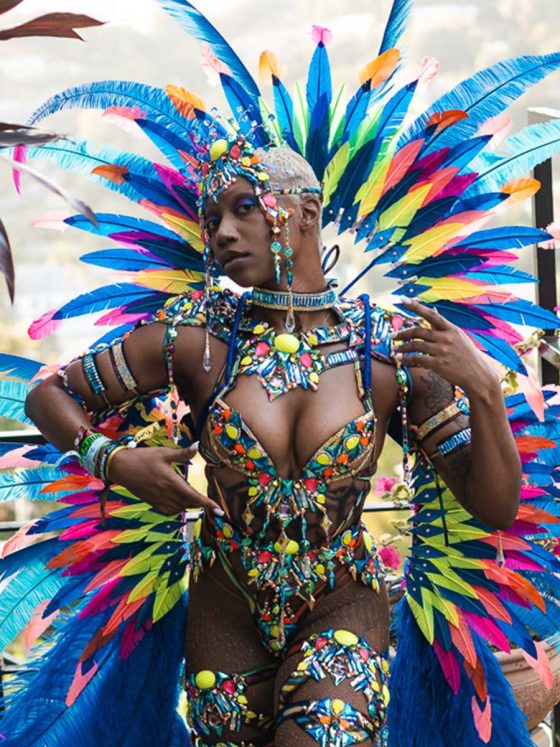
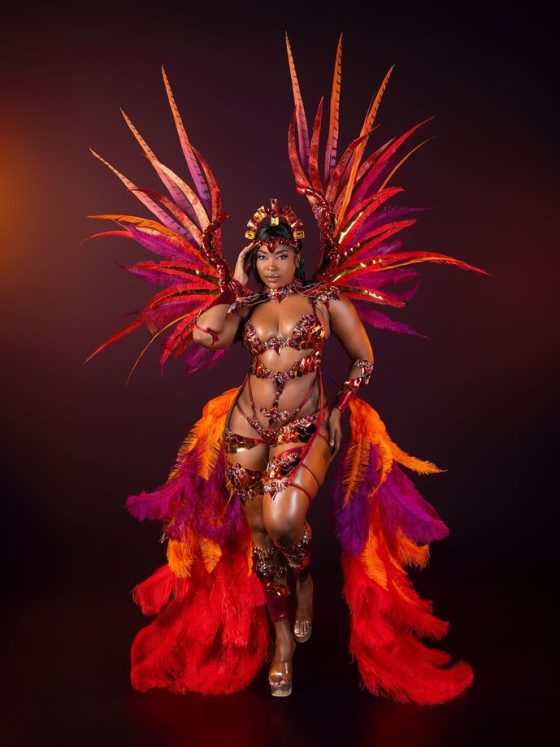
A large Carnival band in Port of Spain is not a costume workshop in the casual sense the word suggests. It operates more like a fashion house, with a single, brutal annual deadline. Designers sketch a theme months in advance, prototype sections, source and dye fabric, build wire armatures that must survive hours of movement in heat and crowd pressure, and coordinate the labour of hundreds of artisans so that thousands of masqueraders appear on the same morning in a coherent visual argument on the road. As Omiren Styles has already argued in Trinidadian Carnival Masquerade Is a Fashion System; It Is Time the World Called It That, the difference between this and a runway show lies in scale and venue, not in seriousness. Calling this a costume tradition rather than a fashion system is not a neutral classification; it is a decision about which kinds of design work get to count as design.
That decision has a history. Mas itself emerged from formerly enslaved people using their first windows of legal freedom in the decades after emancipation in 1838 to build something the colonial order had no category for: a fashion practice that was theirs, produced on their own timeline, judged by their own audience. Characters such as the Midnight Robber and the Moko Jumbie, the latter tracing its stilt-walking tradition directly back to West African spiritual practice, were not invented for spectacle. They were built as visible, wearable arguments about who got to be seen, and on what terms, in a society that had spent generations denying both. The system was built to resist scrutiny from an external observer. It is a particular kind of irony that the external eye has now arrived anyway, well over a century later, asking to borrow the silhouette without inheriting the history that produced it.
Inspiration is what you call a system after you have decided not to ask who built it.
Amplification Is Not the same as Creation.
The clearest recent case study is not Trinidad but Barbados. Every Grand Kadooment appearance Rihanna has made since 2013 has become an internationally covered fashion event, each look designed by Lauren Austin of Aura Experience. The coverage routinely credits the moment to Rihanna. As Omiren Styles has documented in Crop Over Fashion: Barbados Built Its Own Aesthetic System, and It Has Nothing to Do With Trinidad, Rihanna did not create Crop Over’s aesthetic. She amplified it. The architectural backpieces and the colour engineering calibrated to the way Caribbean light falls on skin were already in place, refined over decades of independent work by Barbadian costume makers building specifically within Crop Over’s own visual language, separate from Trinidad’s.
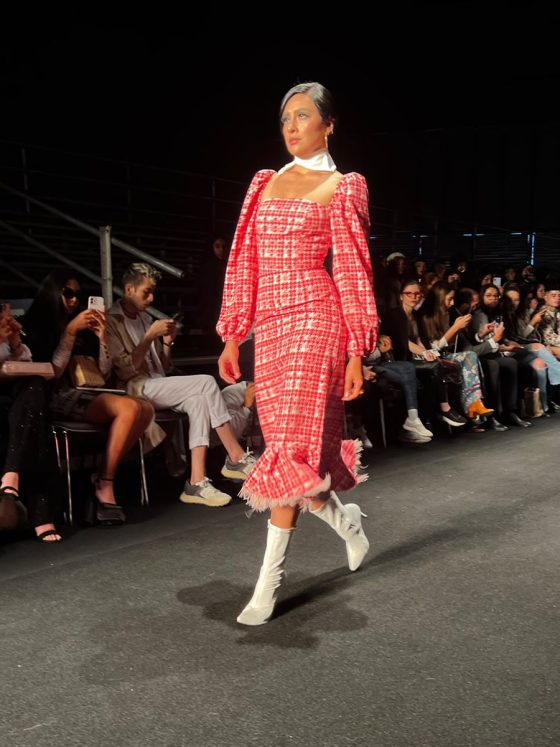
Amplification and creation are different verbs, and global fashion media constantly collapses them, almost always in the same direction: toward the famous person wearing the work, away from the system that produced it. The same pattern, run in reverse, shows what naming the debt actually looks like. In Diotima’s Spring/Summer 2026 collection, designer Rachel Scott built a runway show out of Carnival’s fringe, crochet, and embellishment vocabulary while explicitly dedicating the work to Trinidadian activist Claudia Jones. She names her source rather than letting the silhouette arrive as if from nowhere. That single choice, to name the debt instead of describing a feeling, is the difference this essay is actually about.
ALSO READ
- Trinidadian Carnival Masquerade Is a Fashion System; It Is Time the World Called It That
- Crop Over Fashion: Barbados Built Its Own Aesthetic System, and It Has Nothing to Do With Trinidad
What Naming the System Actually Changes
None of this is an argument against influence moving between Carnival and global fashion. Influence has always moved in every direction fashion has ever existed. The argument is about which word is used to describe that movement and what follows from that choice. Calling a Carnival-referencing collection inspired by Caribbean culture costs a brand nothing. Calling it built on a documented design system maintained by named Barbadian, Trinidadian, and Bajan ateliers requires acknowledging that a debt exists. Debts, once acknowledged, tend to come with an expectation of payment: a credited collaboration with the mas band whose silhouette was used, a licensing fee paid to the designer whose backpiece engineering inspired a runway construction, a commissioned partnership rather than a one-season reference. None of that is exotic. It is simply what crediting any other named design house already looks like.
The Caribbean and wider Latin American cultural and creative industries generate roughly $ 124 billion in revenue and support nearly 1.9 million jobs, according to figures from the Inter-American Development Bank and UNESCO. Carnival-related fashion and festival production falls within that number as a meaningful, ongoing industry, not a decorative footnote, much like the African and Caribbean fashion market, more narrowly defined, which has been independently valued at $ 31 billion. That is not the output of inspiration. It is the output of an industry, one that has been operating at scale, with its own economics and its own succession of named designers, long before any luxury house decided the aesthetic was worth a look.
THE OMIREN ARGUMENT
The fashion industry has a long-standing habit of treating credit as optional when the source is a culture it has already decided is decorative. Carnival is called an inspiration in the same breath as a Parisian atelier is called a house, and the asymmetry between those two words is the entire argument. A house has an address, a lineage, a name above the door. An inspiration has none of those things. It can be taken without anyone having to say from whom it is.
What this essay insists on is a correction at the level of the verb. The Caribbean did not inspire Carnival fashion into existence the way a sunset might inspire a painter. It built a fashion system, with designers, deadlines, materials science, and an economy attached to all three, and that system has been operating in full view for more than a century. The word that the rest of the industry owes it to is not inspired by. It is built by. Until that correction is made, every borrowed silhouette is a debt the borrower has simply decided not to record.
FREQUENTLY ASKED QUESTIONS
Did the Caribbean inspire global fashion, or did it build it?
Carnival fashion is consistently described in global media as an inspiration for runway and celebrity styling. Still, the underlying design work, prototyping, fabric sourcing, and annual production by named mas bands in Trinidad, Barbados, and across the region constitute a fashion system in its own right, built and operated independently of any external fashion institution.
What is a mas band, and how does it function as a fashion house?
A mas band is a Carnival organisation that designs, produces, and coordinates costumes for thousands of participants under a single annual theme, operating on design and production timelines comparable to a fashion house, but at street scale rather than runway scale, with the audience being the public rather than a seated show.
Did Rihanna create the Crop Over fashion aesthetic?
No. Rihanna’s annual Grand Kadooment appearances since 2013, designed by Lauren Austin of Aura Experience, brought international media attention to Crop Over fashion. Still, the design logic itself, including the architectural backpieces and colour engineering specific to Barbadian Carnival, was developed over decades by Barbadian designers independently of her involvement.
How large is the Caribbean Carnival and creative economy?
The Caribbean and wider Latin American cultural and creative industries generate an estimated 124 billion dollars in revenue and support approximately 1.9 million jobs, according to figures from the Inter-American Development Bank and UNESCO, a regional figure within which Carnival-related fashion and festival production sits as a substantial, ongoing economic sector rather than a seasonal cultural footnote.
Why does the word inspired by matter in conversations about Caribbean fashion?
Describing a collection as inspired by Caribbean culture avoids naming a specific source, designer, or system, while describing it as built on a documented design tradition implies a debt that typically carries expectations of credit, licensing, or collaboration. The distinction between “inspired by” and “built by” is therefore a meaningful editorial and commercial choice, not a stylistic preference.
Omiren Styles documents the Caribbean as a fashion authority rather than a fashion reference. Read the full Caribbean fashion cluster on Omiren Styles.