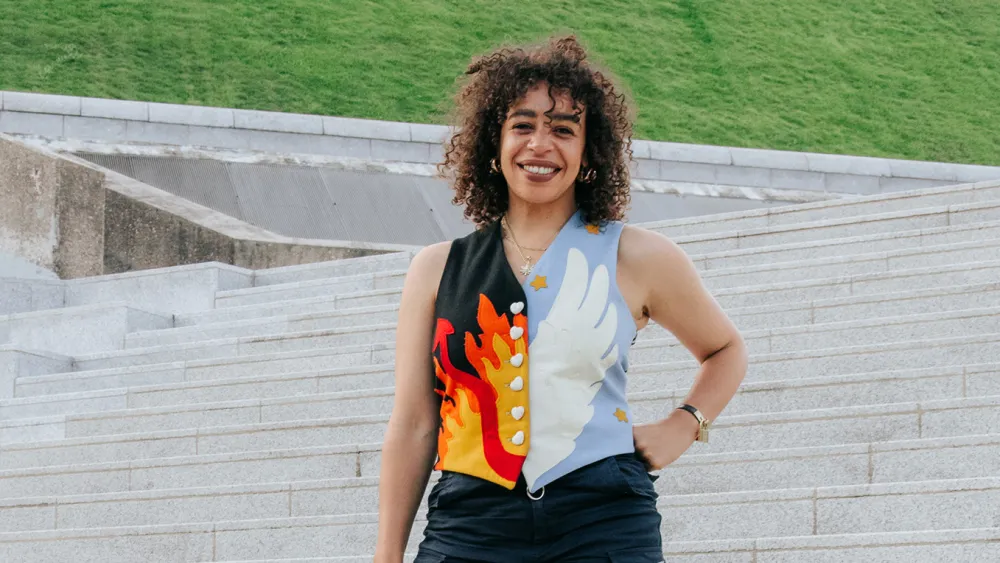
Martine Rose showed a collection in a Tottenham car park. Not as a conceptual gesture. Not as a statement about fashion week infrastructure. Because a car park in Tottenham was the right place for it, the collection was built from exactly the kind of life that happens in exactly that kind of space: British-Jamaican, subcultural, football-adjacent, queer, and entirely uninterested in the fashion industry’s approval.
That collection brought her recognition at the Fashion Awards for menswear, the most significant individual prize category in British fashion. In the mid-2020s, she debuted at Milan Fashion Week. She had been doing the same work, in the same communities, for more than a decade before either of those things happened.
The question this article is interested in is not how Martine Rose made it. It is what makes it actually mean when the work was already doing exactly what it needed to do before the industry said so.
Martine Rose, the British-Jamaican designer honoured at the Fashion Awards for menswear and who debuted at Milan Fashion Week SS25, building her practice from the South London community, rave culture, and Jamaican heritage.
Biography and Heritage: Croydon, Middlesex, and the Fashion East Years
Martine Rose was born and raised in South London, the daughter of Jamaican parents. She grew up in Croydon and Tooting, communities shaped by Jamaican migration and by the cultural formations that emerged from it: dancehall, sound system culture, the rave scene that moved through South London in the late 1980s and 1990s, and the overlapping of Jamaican heritage with British working-class identity.
She studied fashion at Middlesex University, graduating with a practice already oriented around the subcultures she had grown up in. Her early collections were produced independently, shown in non-traditional spaces, and built a following in the communities she was designing for before the industry took formal notice.
The turning point came in 2011, when Rose was selected for Fashion East, the not-for-profit organisation that has launched some of the most significant names in British fashion. Fashion East provided a platform at London Fashion Week while she retained complete creative independence. The collections she showed there established the vocabulary that would define her practice for the next decade: exaggerated proportions, subcultural references carried with genuine affection rather than ironic distance, gender-fluid silhouettes drawing on rave and dancehall in equal measure.
Her Jamaican heritage is not a component of her design language. It is the foundation. The relationship between Jamaican cultural production and British youth culture, how dancehall and sound system culture shaped rave, shaped football supporter culture, shaped the specific texture of South London life that Rose grew up inside, is the lived experience from which her entire practice emerges. She does not have to research it from the outside. She has always been inside it.
By 2015, Rose was consulting for Balenciaga, then under Demna’s creative direction. The relationship reflected mutual influence: Rose’s understanding of proportion and subcultural reference was already operating at the level that Balenciaga was moving toward.
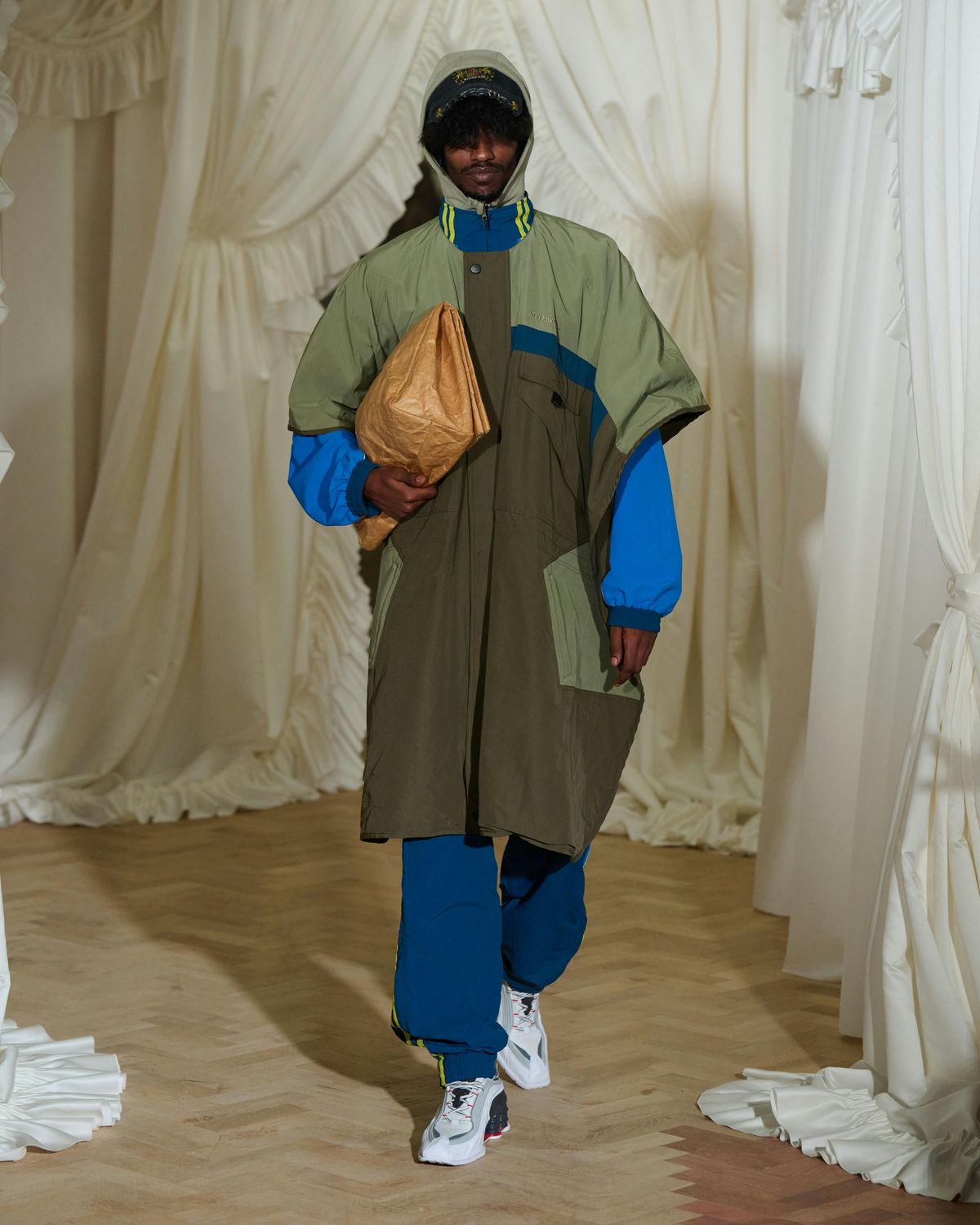
Her collaborations with Nike, Clarks, Supreme, Stussy, and Napapijri have expanded her reach without diluting her practice. Each partnership chose Rose because of what she does, not despite it. The Nike x Martine Rose training shoes became some of the most sought-after pieces in the sportswear collaboration market. Her Napapijri collaborations in the mid-2020s extended her design intelligence into performance outerwear.
Fashion Awards recognition for menswear followed, then Milan Fashion Week. Neither event changed the work. The work had not been waiting for them.
Design Signature: Exaggerated Proportions and the Emotions of Subcultural Dress
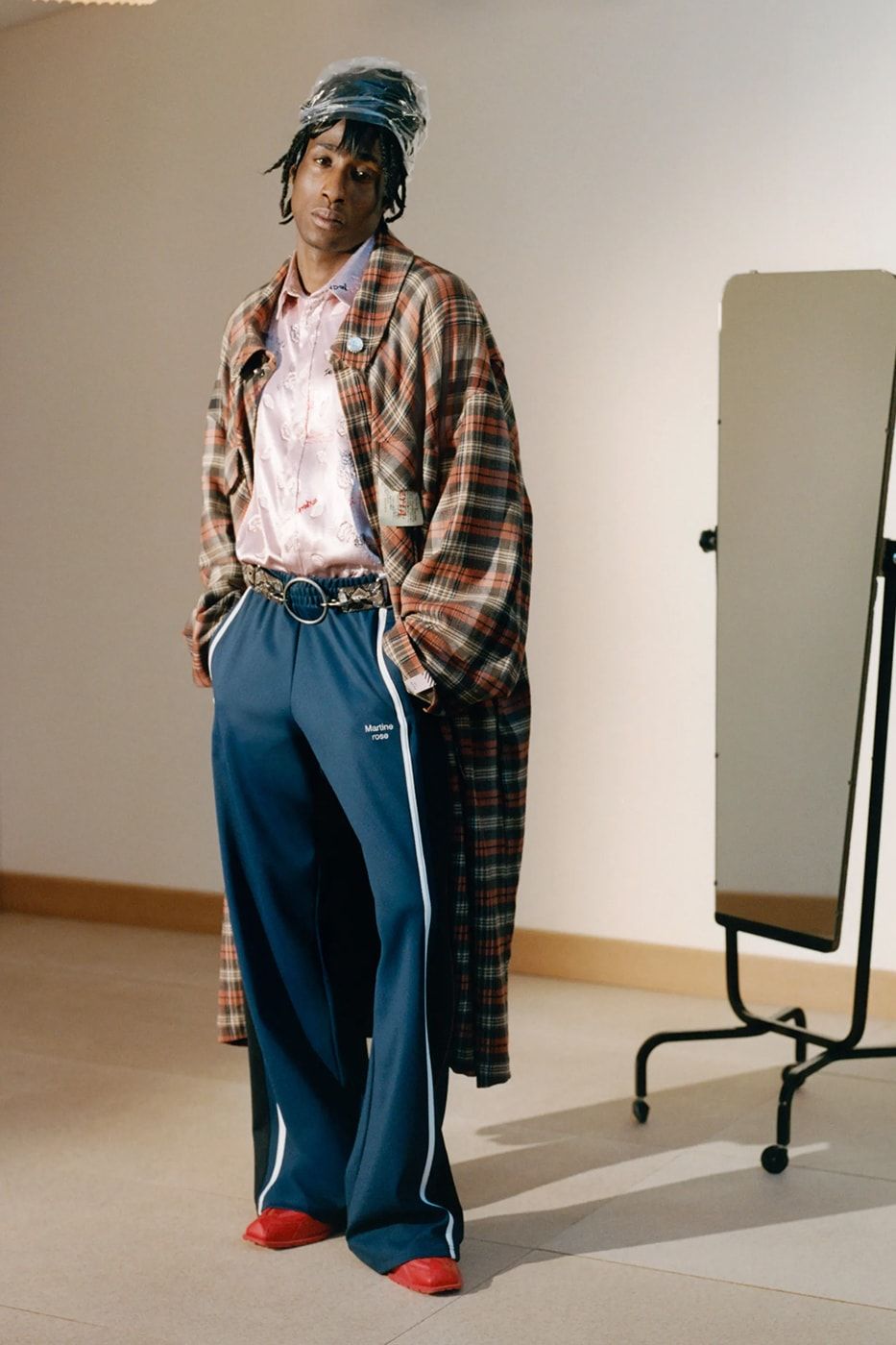
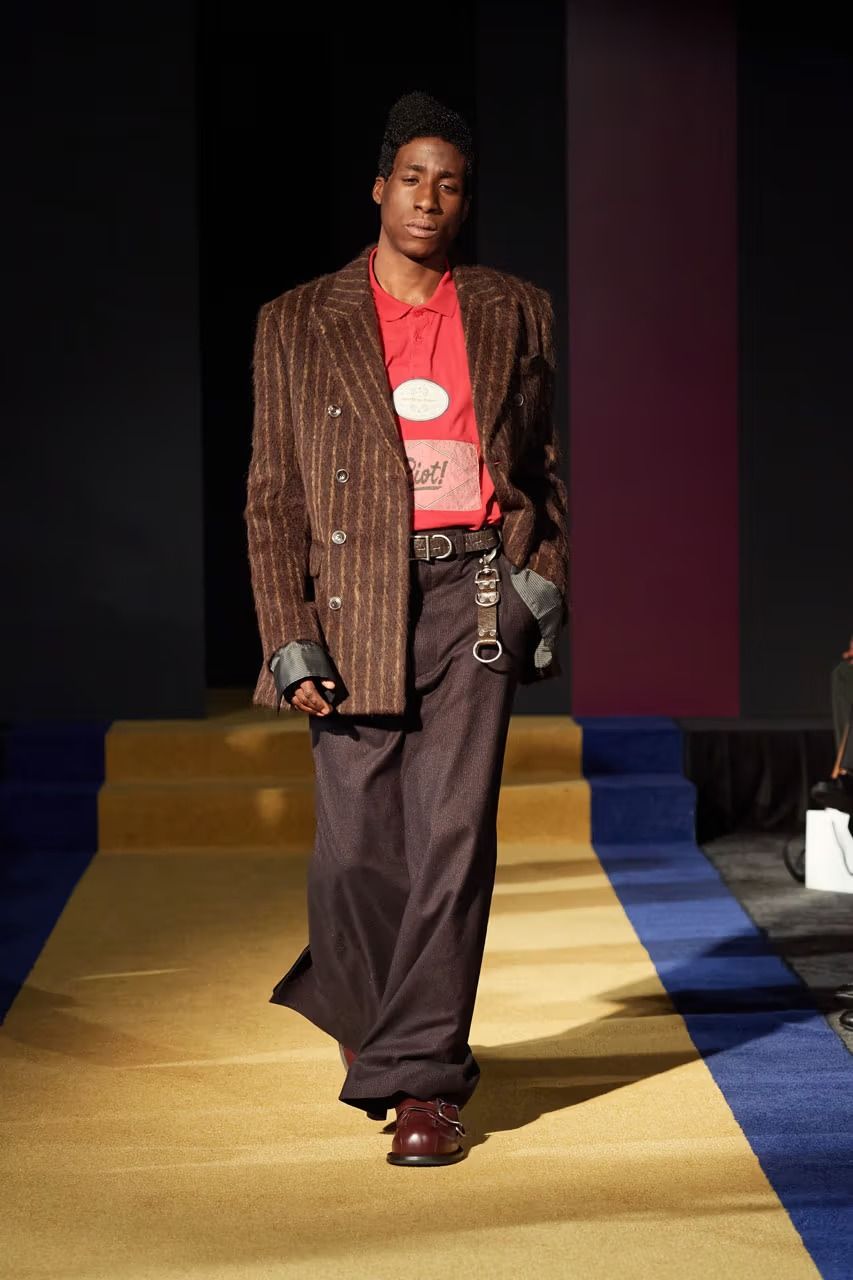
The Martine Rose signature is exaggerated, deliberately wrong proportions applied with extreme precision, drawing directly from South London subcultures: rave, dancehall, football, queer nightlife, rather than from fashion’s idea of them.
Shoulders sit wide. Trousers break heavily at the ankle or cut off mid-calf, referencing both workwear and leisure. Jackets extend beyond conventional length or compress into cropped configurations that reframe the body underneath. The proportions are always deliberate and always slightly wrong by the standards of conventional tailoring, which is precisely the point.
Rose designs for the body as it actually moves: through a crowd, on a dance floor, at a match, on the street. The clothes need to hold their character under those conditions. The exaggerated proportions result from precise pattern work, not looseness. The garments are made to be worn repeatedly in the situations that gave rise to their design logic in the first place.
The textile and print references are drawn from the same subcultural archive as the proportions: football club colours and typefaces, the visual language of rave flyers and sound system posters, the specific palette of Jamaican dancehall stage wear. Rose handles these references with the intimacy of someone who owns them. A Martine Rose piece does not signal subcultural knowledge. It carries it.
As she told an interview in 2019, she wants the clothes to feel “slightly undone” – like you are “buying an emotion,” not just a garment.
The gender-fluid dimension of Rose’s work is structural rather than strategic. She designs menswear that does not police the body into masculine performance, that allows tenderness, softness, and queer expression without making those qualities the subject of the collection. They are present as they are in the communities she designs for: not as a statement, but as a baseline. The intimacy between a garment and the body wearing it is something Rose builds into the construction itself. The clothes yield to the body rather than demanding that the body conform to them.
Her show formats are an extension of the design logic. A school gym in Kentish Town, a car park in Tottenham, a cul-de-sac in Highbury: the correct settings for work built from those communities’ lives. The fashion-week apparatus enters Rose’s community. She does not go to theirs.
Social Impact: Community, Representation, and the Politics of Subcultural Fashion
The social impact of Martine Rose’s practice is built into its structure. A designer who hires directly from South London British-Jamaican communities, shows in community spaces, and makes clothes that centre the queer, rave, and Caribbean British cultures of South London is not making gestures toward representation. She is doing the thing itself.
The hiring practice matters. Rose has consistently drawn her studio team from the communities her work is about. That can mean pattern cutters from South London, casting through community networks rather than agencies, working with local crews on shows. The knowledge that makes the clothes possible, the understanding of how dancehall culture sits in relation to rave culture, sits in relation to British Jamaican family life, is not available as research. It has to come from people who have lived it.
The representation of Rose’s runway and in her campaign imagery is non-performative. The bodies she casts are the bodies of the communities she designs for: South London, British-Jamaican, queer, diverse in size, age, and gender expression. This is accuracy, not correction. The clothes were designed for these bodies.
The community show format has its own social economy. When Rose shows up in a Tottenham car park, she brings the fashion-week apparatus into the spaces those communities inhabit. The power dynamic of the conventional fashion week, in which communities serve as a backdrop for the industry, is reversed. The industry is the visitor. The community is the host.
Rose’s rejection of the conventional seasonal calendar is also a social and labour position: controlled output, non-mass production, pieces made to last and to accumulate meaning with wear. This connects to a broader argument about what it costs to sustain the craft traditions that produce genuine quality, and about who bears that cost in the current fashion economy.
The gender politics of her work carry their own significance. Rose makes menswear that is explicitly gender-fluid without making gender fluidity the brand proposition. Queer identity and expression are present as they are in the communities she designs for: not as a statement, but as a baseline. This is considerably more radical than the performative queerness that parts of the fashion industry have adopted as a marketing strategy.
ALSO READ
- Grace Wales Bonner: The Jamaican-British Designer Making History at Hermès
- The Intimacy of Tailoring: How Clothes Learn the Language of Your Life
- Clothing as Cultural Identity: When Dressing Becomes Declaration
- Investing in Textile Heritage: The Business Case for Preserving What Western Fast Fashion Cannot Copy
Economic Impact: Collaborations, Wholesale, and the Commercial Architecture of Independence
Martine Rose’s economic model is built on a particular kind of independence: significant commercial revenue through high-profile collaborations and premium wholesale, while retaining complete creative control over the eponymous label. The two streams reinforce each other. The label’s cultural authority makes the collaborations desirable. The collaborations’ commercial reach extends the label’s visibility into markets it could not otherwise access.
In recent seasons, the label has been carried in the UK by Selfridges, Browns Fashion, Harrods, and Dover Street Market. Internationally, SSENSE provides the primary North American retail platform, with additional wholesale in Japan, Australia, and across Western Europe. Her Milan Fashion Week debut in the mid-2020s accelerated the European wholesale conversation, placing Rose on the Italian luxury buying calendar.
The Nike collaboration has been the most commercially significant of the partnerships. Nike x Martine Rose training shoes have commanded secondary-market prices that reflect the brand’s cultural desirability: pieces at retail have routinely appeared on resale platforms at two to three times that figure for certain sold-out styles. For Nike, the collaboration provides cultural credibility it cannot generate internally. For Rose, it provides mass-market reach at a scale the eponymous label’s production volume cannot match.
The Clarks collaboration extended the same dynamic to heritage British footwear, a natural connection given Clarks’ role in Jamaican and British-Jamaican style culture: the Wallabee has been a staple of Jamaican youth fashion since the 1970s. The Stussy and Supreme collaborations positioned Rose within the global streetwear economy. Her Napapijri collaborations in the mid-2020s extended her reach into performance outerwear.
Fashion Awards recognition for menswear has its own commercial value as a market signal. Buyers and stockists track award recognition as one indicator of a label’s trajectory. The recognition confirmed what the industry’s buying patterns had already suggested: Martine Rose is not an emerging designer. She is an established one.
The economic model Rose has built, with high cultural authority, selective production, strategic collaborations, and premium wholesale, is one of the more coherent approaches available to an independent label. The labels that endure over time are almost invariably those that have established a clear relationship between cultural authority and commercial structure. Rose’s practice demonstrates what that looks like when the two are built together from the beginning.
Where to Buy Martine Rose in the UK
In recent seasons, Martine Rose has been available in the UK at Selfridges (in-store and online), Browns Fashion (Brook Street and online), Harrods (Knightsbridge and online), and Dover Street Market London (Haymarket, in-store). SSENSE ships to the UK and carries the full seasonal collection online.
Ready-to-wear price points range from around 200 pounds for T-shirts and jersey pieces to 800 pounds and above for outerwear and tailored pieces. Nike x Martine Rose collaboration pieces have typically been priced at 130 to 220 pounds at retail, though secondary market prices are significantly higher for sold-out styles. Clarks x Martine Rose and Napapijri x Martine Rose collaboration pieces are available through their respective retail networks and selected stockists.
Omiren Argument
The fashion industry has a habit of framing designers like Martine Rose as crossover stories: subcultural figures who eventually made it into the mainstream. That framing has the power relationship backwards. Rose did not bring South London to fashion. She built a fashion practice in South London and made the industry come to her. The rave nights, the football terraces, and the Jamaican-British communities of Croydon and Tooting were never raw material to be refined into something the industry could recognise. They are the authority that the work derives from. The industry’s recognition of Rose is not an elevation. It is an admission.
Nike came to her. The Fashion Awards came to her. Milan came to her. They came because the work was already there, already authoritative, already exactly what it needed to be. What changed was not the work. What changed was the industry’s willingness to say out loud what South London already knew.
FAQs
Who is Martine Rose?
Martine Rose is a British-Jamaican menswear designer raised in South London, whose practice draws on Jamaican heritage, rave culture, dancehall, and British subcultural life. She founded her label after graduating from Middlesex University and was selected for Fashion East in 2011. She has been honoured at the Fashion Awards for her menswear and debuted at Milan Fashion Week with her Spring/Summer 2025 collection.
Where can I buy Martine Rose in the UK?
In recent seasons, Martine Rose has been available in the UK at Selfridges, Browns Fashion, Harrods, and Dover Street Market in London. SSENSE ships to the UK and carries the full seasonal collection. Nike x Martine Rose, Clarks x Martine Rose, and Napapijri x Martine Rose collaboration pieces are available through their respective retail networks and selected stockists.
What is Martine Rose known for?
Martine Rose is known for menswear built on exaggerated proportions, gender-fluid silhouettes, and deep engagement with South London’s Jamaican-British subcultures: rave, dancehall, football, and queer community. She shows in non-traditional South London community spaces rather than conventional fashion week venues. She has collaborated with Nike, Clarks, Supreme, Stussy, and Napapijri without adjusting her creative position for any of them.
What is the Nike x Martine Rose collaboration?
Rose has produced a series of Nike x Martine Rose footwear and apparel releases applying her design intelligence, exaggerated proportions, subcultural references, and South London sensibility to Nike’s training and sportswear silhouettes. The releases have been among the most sought-after in the sportswear collaboration market, with secondary resale prices routinely exceeding retail by two to three times for sold-out styles.
Why does Martine Rose show in non-traditional venues?
Rose shows in South London community spaces because those spaces share the social history of the communities her clothes are designed for. The venue is the right setting for work rooted in Jamaican-British community life, rave culture, and South London identity. It also reverses the conventional fashion week power dynamic: the industry comes into Rose’s community as a guest, rather than the community existing as a backdrop to the industry’s event.
CONTINUE READING