Omiren Styles has identified four strategic errors that repeat consistently across Western fashion brands entering African markets. This analysis names each error, traces its structural cause, identifies the commercial consequence, and offers a corrective principle. It is designed to be useful to African industry stakeholders as much as to the Western brands it describes.
The pattern of brand entry is remarkably consistent: a brand announces a flagship or partnership in a gateway city, generates press celebrating its commitment to Africa, underperforms against projections, and quietly retreats or recalibrates. This is not primarily a resource problem. The brands that fail frequently have more capital, more infrastructure, and more market intelligence than the local competitors they consistently underestimate. The failure is strategic.
Omiren Argument:
Brands that understand the structural differences between African markets and their home markets are the ones that build a durable commercial presence in Africa. The ones that do not keep repeating the same expensive misreadings, at scale, in markets that are growing too fast and too strategically important to misread indefinitely.
Western fashion brands keep making the same mistakes in Africa because they are applying strategic frameworks built for markets with fundamentally different characteristics. Africa is not a single market. The African consumer is not a single type. The relationship between cultural visibility and commercial infrastructure is not the same as in Europe or America.
Error One: Treating Africa as a Single Market
Africa has 54 countries, over 2,000 languages, and consumer markets that differ as fundamentally as France differs from Japan. A brand strategy built for Johannesburg, with its existing luxury retail infrastructure and consumer base familiar with European luxury codes, will not work in Lagos. It will not work in Nairobi, Accra, Dakar, or Casablanca. Each operates through distinct retail structures, cultural codes, and relationships between tradition and contemporary fashion.
Omiren Styles’ corrective principle: there is no Africa strategy. There are only Nairobi strategies, Lagos strategies, Johannesburg strategies, and Accra strategies. Each requires separate consumer intelligence, separate product calibration, and separate commercial infrastructure. Disaggregate before entering. Identify the specific country, city, consumer segment, and need, and build a genuine commercial infrastructure in one or two markets before announcing a continental presence.
Error Two: Routing Strategy Through Diversity Optics
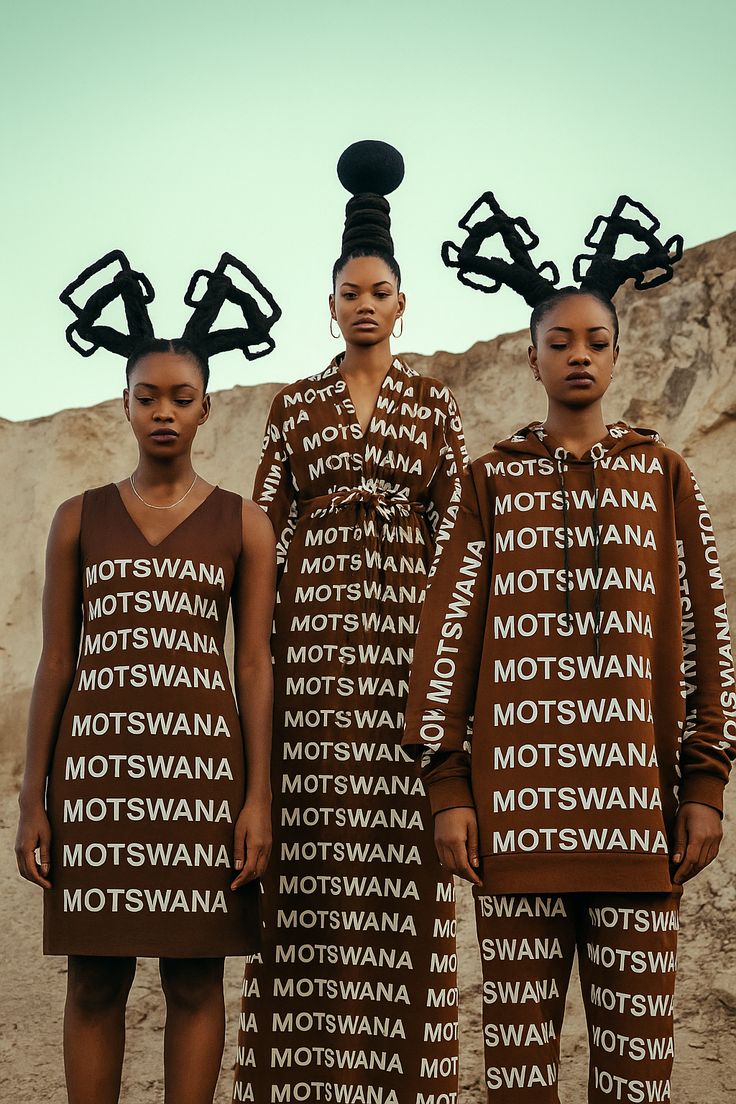
A meaningful number of Western fashion brands’ Africa strategies begin not in market analysis but in communications: a campaign featuring African models, a collaboration with an African artist, a charity partnership with an African organisation. These generate press in home markets and signal cultural awareness to Western audiences. They are not an African strategy. They are a Western communications strategy that uses Africa as content.
The commercial consequence is measurable. A brand that enters the Afrobeats cultural conversation through artist partnerships without building the payment infrastructure, distribution logistics, and product localisation that allow African consumers to purchase its products has not entered the African market. The African consumer, whose cultural output is being used as communication material, cannot buy the product. As Omiren Styles has documented in the luxury extraction series, this pattern is evident across virtually every major European luxury house. The cultural exchange flows inward. The commercial infrastructure does not follow.
Error Three: Underestimating Local Competition
Western brands entering African markets consistently underestimate the cultural authority of existing local competitors. The local competitor does not compete on the same terms. It competes on cultural authenticity, ceremony knowledge, artisanal credibility, and the social meaning of its garments within specific communities. A Western brand competing against a Lagos atelier for the Nigerian wedding market on product quality or price is not playing the right game.
Shein and Temu did not try to out-culture local African fashion. They out-infrastructured it on checkout, delivery, and price. By 2024, the two platforms held a combined 3.6% share of South Africa’s total clothing, textile, footwear and leather market, but an estimated 37.1% of the e-commerce segment of that sector, with Shein alone accounting for 28% of online ladies’ clothing, textile, footwear and leather sales. That growth came from superior infrastructure, not a deeper understanding of South African or Nigerian fashion culture. It is the most instructive competitive lesson available for Western brands considering their Africa strategy.
Error Four: Building for the First Sale, Not the Repeat

African fashion markets, particularly in the luxury and premium segments, are built on relationships: between a designer and a client, between a retailer and a community, between a brand and the specific occasions it becomes associated with. Western brands typically build for the acquisition, the launch moment, and the opening event. They under-invest in the relationship infrastructure that converts a first sale into a repeat customer and a repeat customer into a brand advocate.
Consumer data cited in the 2025 South African retail analysis shows that among high-income shoppers in South Africa, the share preferring in-store fashion shopping rose from 36% in 2023 to 52% in 2025, a 16-percentage-point shift in two years. The African luxury consumer has already told brands what she values. Western brands that read this purely as an infrastructure or channel preference are missing the point. She is signalling that the relationship-and-experience dimension is the competitive arena that matters. Most Western brands are not competing in it.
The African luxury consumer has delivered a clear signal: a 16-point shift toward in-store preference among high-income shoppers in two years. She is not asking for more e-commerce. She is telling brands which competitive arena matters. Most Western brands are not competing in it.
The Corrective Framework: Four Principles

Omiren Styles’ corrective framework for Western brands entering Africa rests on four principles. Disaggregate first: identify the specific market, consumer, and need before designing any strategy—no Africa strategy; only city-specific strategies built on separate consumer intelligence. Invest in infrastructure before visibility: payment systems, logistics, localised product, and in-market relationships must precede advertising spend. Respect local competition: understand what local competitors offer that you cannot, specifically cultural authority and ceremonial knowledge, and build your strategy around genuine structural advantages such as logistics infrastructure, capital, and global supply chain. Measure relationship depth, not just acquisition: repeat purchase rates, community engagement, and ceremonial association are the primary success metrics in African fashion markets.
ALSO READ
- Every Major Luxury Brand Has Now Dressed an Afrobeats Star. None of Them Has Invested in African Design Infrastructure.
- Shein Is Coming for the African Consumer. African Brands Are Not Ready.
- The African Luxury Market Is Not Where the West Thinks It Is
- African Consumers Are Locked Out of the Brands They Are Making Famous
FREQUENTLY ASKED QUESTIONS
What are the four strategic errors Western fashion brands make when entering Africa?
Omiren Styles has identified four errors that repeat consistently—first, treating Africa as a single market when it has 54 countries and consumer markets as different from each other as France is from Japan. Second, the routing of the Africa strategy through diversity communications, campaigns with African models, and artist collaborations, rather than building the payment infrastructure, logistics, and product localisation that allow African consumers to purchase. Third, underestimating the cultural authority of local competition in ceremonial and community fashion contexts. Fourth, building for the first sale rather than the repeat purchase and relationship depth that African fashion markets reward.
Why do Western fashion brands underperform in African markets despite significant resources?
According to Omiren Styles’ analysis, the primary cause is the application of strategic frameworks built for markets with fundamentally different characteristics. Western brand strategy is built around media visibility, retail distribution, and consumer acquisition. African fashion markets are built around cultural authority, community relationships, and ceremonial association. Consumer data cited in the 2025 South African retail analysis shows that 52% of high-income shoppers in South Africa preferred in-store fashion shopping in 2025, up from 36% in 2023. That 16-percentage-point shift signals that the relationship dimension of purchase is the primary competitive arena in African luxury fashion, not price or product quality alone.
How should Western fashion brands enter African markets?
Omiren Styles’ four-principle corrective framework: First, disaggregate the continent into specific city-level markets before designing any strategy. There is no Africa strategy; there are only Lagos, Nairobi, Johannesburg, and Accra strategies, each requiring separate consumer intelligence. Second, invest in commercial infrastructure before marketing visibility: payment systems, logistics, localised product, and in-market relationships must precede advertising spend. Third, build for the relationship and repeat purchase rather than the launch acquisition. Fourth, study local competition to understand what they offer that Western brands cannot, specifically cultural authority and ceremonial knowledge, and build a strategy around genuine structural advantages such as logistics infrastructure, capital, and global supply chain.
Why is treating Africa as a single market a strategic error?
Africa has 54 countries, over 2,000 languages, and consumer markets that differ as fundamentally as any two markets on any other continent. According to Omiren Styles, a strategy built for Johannesburg’s luxury retail infrastructure will not work in Lagos, where the fashion economy operates through different retail structures and cultural codes. A strategy built for Lagos will not work in Nairobi, Accra, or Dakar. Brands that announce an Africa strategy without disaggregating the continent into its actual commercial geographies discover collections of Africa misses rather than the single Africa success implied by their communications.
What does Shein and Temu’s success in Africa teach Western fashion brands?
Shein and Temu accounted for roughly 37% of South Africa’s e-commerce clothing, textile, footwear, and leather sales in 2024, while holding only about 3.6% of the overall clothing, textile, footwear, and leather market, according to a Localisation Support Fund report cited by Reuters and other outlets. They achieved this not by understanding South African or Nigerian fashion culture better than local brands, but by building superior infrastructure to enable consumers to complete a purchase: local payment rails, mobile-first checkout, and frictionless delivery. Omiren Styles identifies this as the most instructive competitive lesson for Western fashion brands: competing on cultural authority in African markets is a game most cannot win. Competing on infrastructure, where they have genuine structural advantages, is the right game.
Omiren Styles covers the business of African fashion with precision and without apology. Subscribe for brand strategy analysis, market intelligence, and the industry reporting that the African fashion press is not doing. African fashion and culture are not emerging. They are foundational.