In 1924, Haile Selassie, then Ras Tafari and regent of Ethiopia, visited Jerusalem on a state trip. He was welcomed by a brass band made up of children orphaned by the Armenian genocide. He brought them back to Addis Ababa, where they became known as the Arba Lijoch, the Forty Children, and, under their band leader, Kevork Nalbandian, who would later compose the Ethiopian national anthem, they changed the sound of music in Ethiopia. Western instruments entered the Ethiopian court. Brass and wind joined the krar and the masinko. Ethiopian pentatonic scales began to move through new soundscapes. By 1973, when American jazz legend Duke Ellington came to Addis Ababa and performed with Mulatu Astatke on the same stage, the city called Swinging Addis had been producing music of extraordinary originality for nearly a decade. The fashion of that encounter, the imperial city at the height of its musical culture, the jazz musicians performing in hotel ballrooms and nightclubs, the court aesthetic of Haile Selassie’s Ethiopia intersecting with the contemporary visual language of international jazz, is one of the most photographically rich and editorially undocumented periods in African music history. This is where Omiren Styles begins documenting it.
The African fashion market is now worth 31 billion dollars. The visual culture of Swinging Addis contributed to building the authority that makes that figure possible, not through fashion weeks or press campaigns, but through the sustained production of a performance culture whose dress standards were set by an imperial court and refined by musicians who understood that appearance on a stage in a city watched by the world carried its own specific argument. Fashion from the Ethio-Jazz era has no dedicated editorial coverage. It has no Éthiopiques equivalent in fashion — no series that collects and presents the visual record of what musicians wore when Addis was swinging. Omiren Styles is the publication that should begin that documentation.
In the 1960s and 1970s, Addis Ababa produced a music and fashion culture of extraordinary sophistication. Almost none of it has appeared in fashion editorial. Here it is.
Ethiopian Jazz and Haile Selassie: How the Court Created the Musical Platform
The relationship between Haile Selassie’s imperial court and the musicians who built Ethio-Jazz is not incidental. The Emperor actively commissioned the cultural infrastructure through which the genre emerged. When Haile Selassie brought the Arba Lijoch to Ethiopia in 1924 and installed them as the Royal Imperial Brass Band, he was not simply acquiring entertainment for court functions. He was importing a musical vocabulary that would fuse with Ethiopian tradition over the following decades into something entirely new. As the SHFL guide to Ethio-Jazz documents, the Emperor’s penchant for big brass bands made instruments such as the saxophone and the electric keyboard ubiquitous in Ethiopian performance culture before the 1960s had properly begun. Nerses Nalbandian, commissioned directly by Haile Selassie to compose for the National Theatre, created the first documented fusion of Ethiopian and Western music in an institutional context. The court was the laboratory.
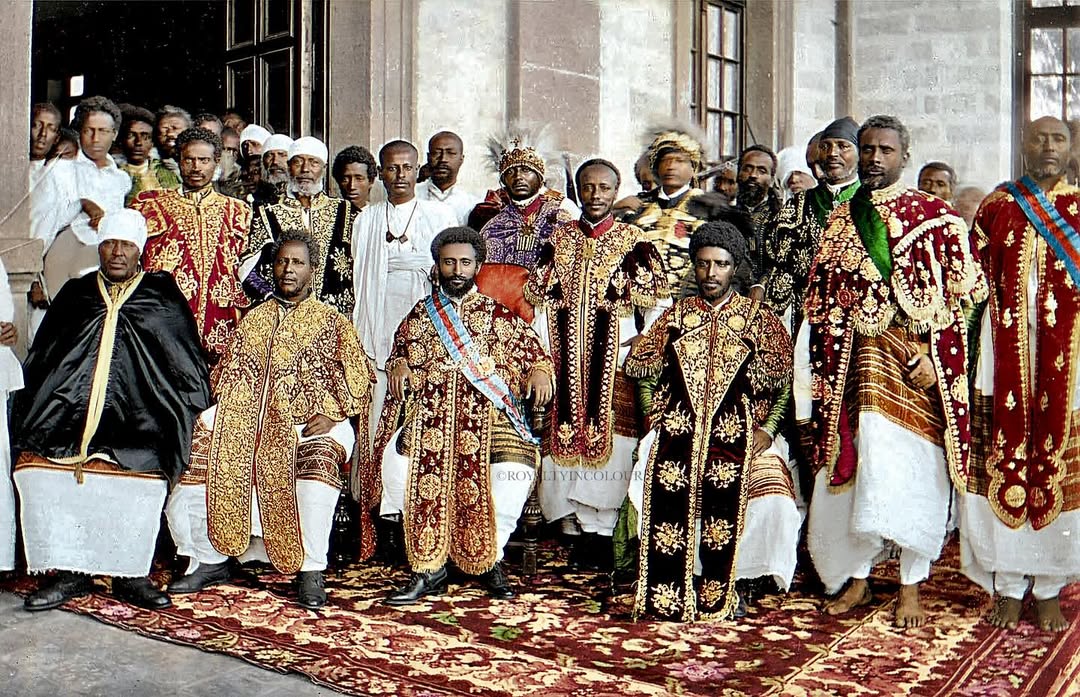
The dress culture that surrounded this musical development was equally specific. Haile Selassie maintained a court in which formal dress carried the weight of both Ethiopian imperial tradition and European diplomatic protocol. His public appearances ranged from full ceremonial Ethiopian regalia, including a lion’s mane-trimmed military uniform and the decorations of the Order of the Seal of Solomon and the Order of the Holy Trinity, to European formal wear appropriate to the international diplomatic context he consistently navigated. He was the only African ever inducted into the Most Noble Order of the Garter. His court followed his lead: the fusion of Ethiopian ceremonial textile tradition with European formal construction was not a compromised identity but a deliberate statement of equal standing on both registers simultaneously. The musicians who performed for this court and in the nightclubs and hotel ballrooms of the city it presided over dressed within the same visual grammar.
Swinging Addis: The Golden Age Fashion No One Has Documented
Between the late 1960s and 1974, Addis Ababa became known internationally as Swinging Addis. As the Vinyl Factory’s definitive introduction to Ethio-Jazz confirms, the belle époque of Ethio-Jazz ran from the late 1960s until the military coup of 1974 that overthrew Haile Selassie and installed the Derg. During that period, countless jazz orchestras and ensembles performed across the city, in the nightclubs of the Piazza district, in the ballrooms of the Addis Ababa Hilton Hotel, where the Walias Band played as house musicians, in the Ghion Hotel, where Hailu Mergia and the Dahlak Band built their following, and in the National Theatre, where the tradition had begun. These were not informal venues. They were the performance infrastructure of a city that understood itself as a capital in the full sense, politically, culturally, and sartorially.
Mulatu Astatke, born in 1943 in Jimma, is the figure whose trajectory most precisely encodes the relationship between music and cosmopolitan identity of the Ethio-Jazz era. He left Ethiopia in 1959 to study at the Trinity College of Music in London, becoming one of the first Africans to study there. He moved to New York and studied at Berklee College of Music, where he met John Coltrane and absorbed the influence of the New York jazz scene of the early 1960s. He released his first albums in New York before returning to Ethiopia in 1969, bringing with him a musical intelligence formed in London, Boston, and New York, which he applied to the pentatonic scales and rhythmic structures of Ethiopian tradition. The music he made was new. The dress he performed in occupied the same dual register: the suit of an internationally educated cosmopolitan worn on the stage of a city whose court had established formal dress as the language of authority.
Tilahun Gessesse, known as the Voice of Ethiopia, brought a distinct dimension to the visual culture of the Ethio-Jazz era. His ability to blend traditional Ethiopian songs with contemporary Ethio-Jazz sounds made him the era’s most beloved vocalist, and his public presence drew on the performance tradition of the azmari, the class of traditional Ethiopian entertainers who had long understood that appearance was inseparable from authority. Mahmoud Ahmed, Alemayehu Eshete, and Getatchew Mekuria, described by the Rough Guide to Ethiopian Jazz as a saxophone wildman, each brought their own visual intelligence to the city’s performance culture. The photographs that survive from this period show musicians in suits of European cut worn with an Ethiopian ease, a formality that is not imported deference but claimed equivalence. They were not dressing like jazz musicians from somewhere else. They were dressing like people whose city was as important as anywhere else.
In 1973, Duke Ellington came to Addis Ababa and performed with Mulatu Astatke. The fashion of that encounter — the imperial city, the jazz musicians, the Hilton Hotel ballroom — is one of the most photographically rich and editorially undocumented moments in African music history.
The Court Dress System That Set the Standard
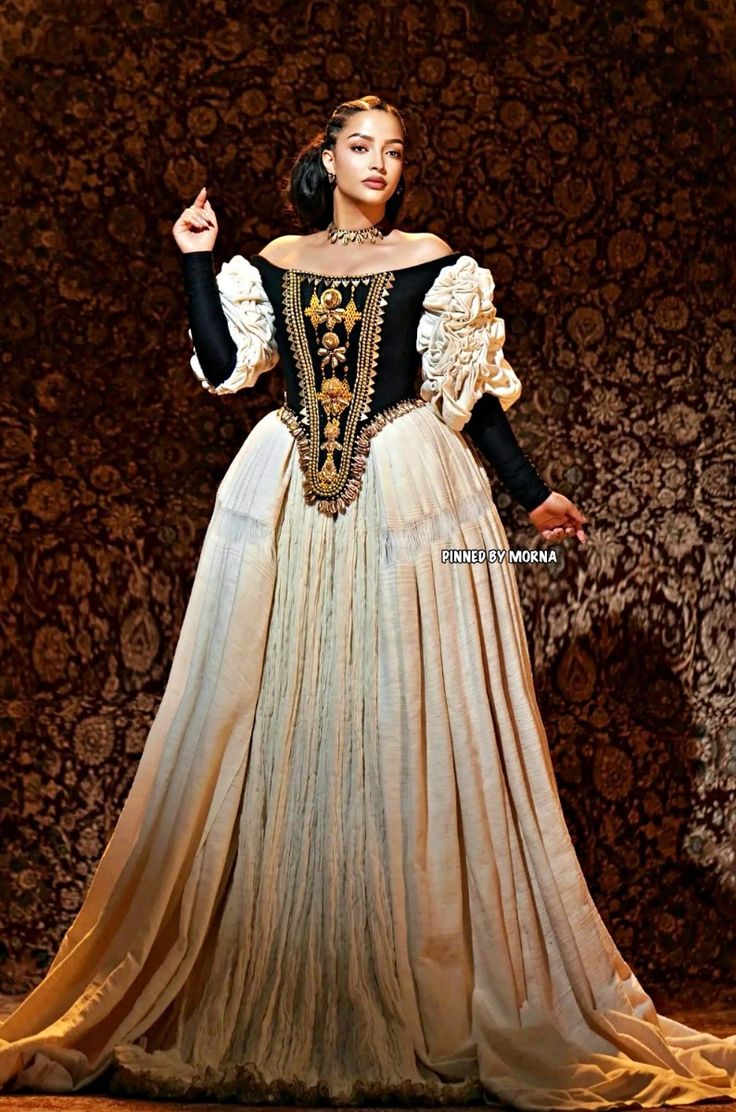
The visual grammar that the Ethio-Jazz era’s musicians performed within was not created by the musicians. It was set by the Haile Selassie court and then influenced by the concentrated cosmopolitan exposure that the Golden Age brought to Addis Ababa. Haile Selassie’s Ethiopia received state visits from Queen Elizabeth II, President Eisenhower, President Kennedy’s First Lady Jacqueline Kennedy, Crown Prince Akihito of Japan, and heads of state from across Africa and the non-aligned world. The court dress at these events established a visual protocol in which Ethiopian ceremonial textiles, the shamma, the netela, and the embroidered ceremonial garments of the imperial household coexisted with European formal wear, asserting their equivalence rather than their hierarchy.
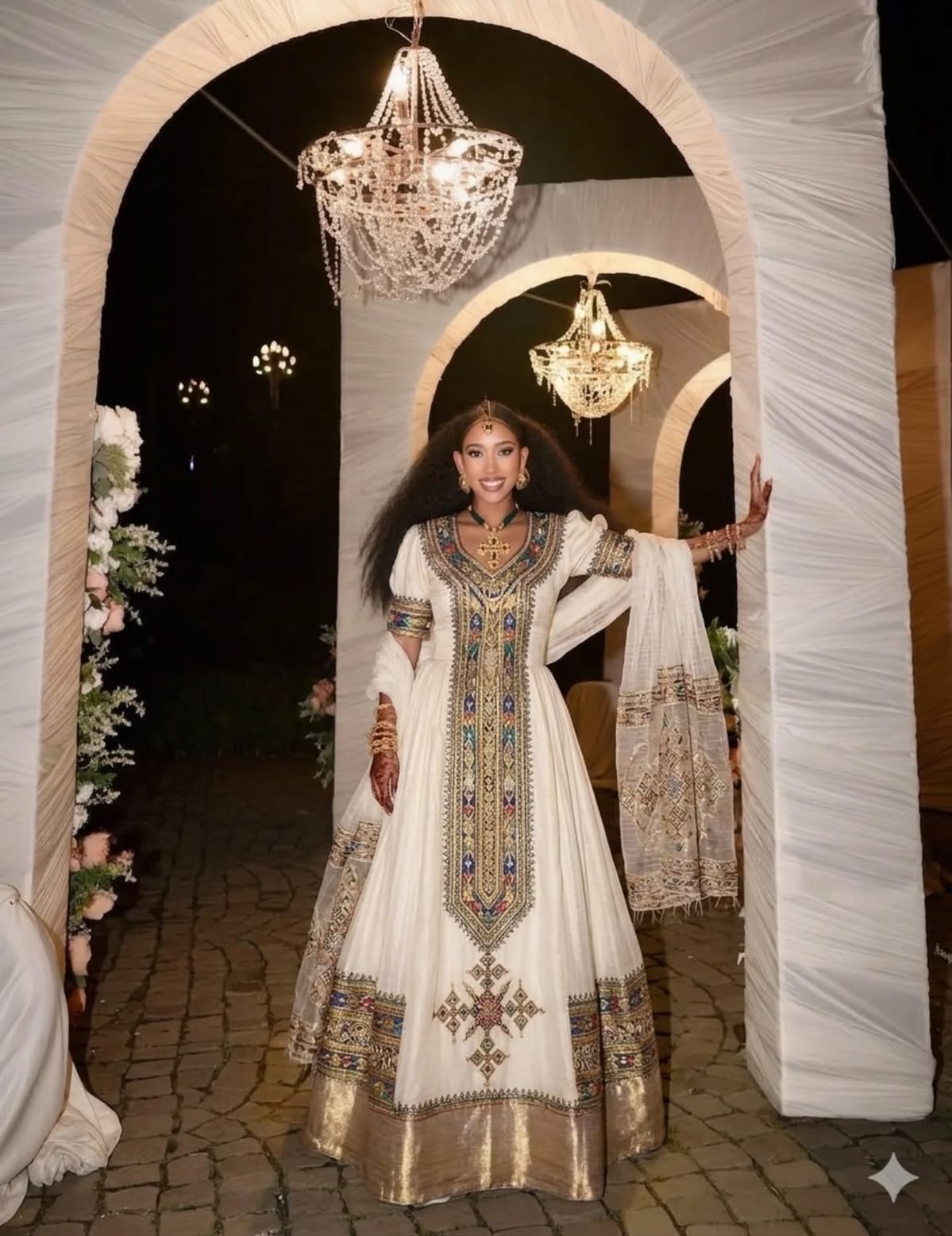
The Ethiopian shamma is a white cotton wrap of extraordinary versatility, worn by men and women alike, capable of conveying different social registers through its draping and the quality of its weave. As Ethiopian fashion documentation confirms, the shamma and the netela are not simply traditional garments. They hold deep cultural significance, with intricate patterns and colours representing different regions and ethnic groups. The court’s deployment of these garments at events where European heads of state appeared in their own ceremonial dress made a specific argument: Ethiopian textile tradition is complete, authoritative, and appropriate to the highest diplomatic occasion. The musicians who performed in this court environment and in the nightclubs of a city shaped by this visual philosophy absorbed the same argument.
The Walias Band’s residency at the Addis Ababa Hilton Hotel captures the convergence precisely. The Hilton in Addis in the 1970s was not an outpost of Western hospitality culture imposed on Ethiopian soil. It was the venue where Addis Ababa’s elite, diplomats, visiting musicians, and the cosmopolitan community that had gathered in the city during its Golden Age came together in a space that required a specific dress standard. The Walias, playing five nights a week in that ballroom, dressed for the room. The music they made was Ethio-Jazz: the clothing they wore in that room was the physical expression of the same cultural fusion — Western construction and form, Ethiopian identity and authority.
Also Read:
- Congolese Rumba and La Sape: The Music That Dressed a Movement
- Ghanaian Highlife and the Origins of Afrocentric Formal Dress
- Fela Kuti’s Stage as Political Manifesto: How the Father of Afrobeats Used Fashion as Revolutionary Argument
Why the Fashion Editorial Record Is Empty and What That Costs
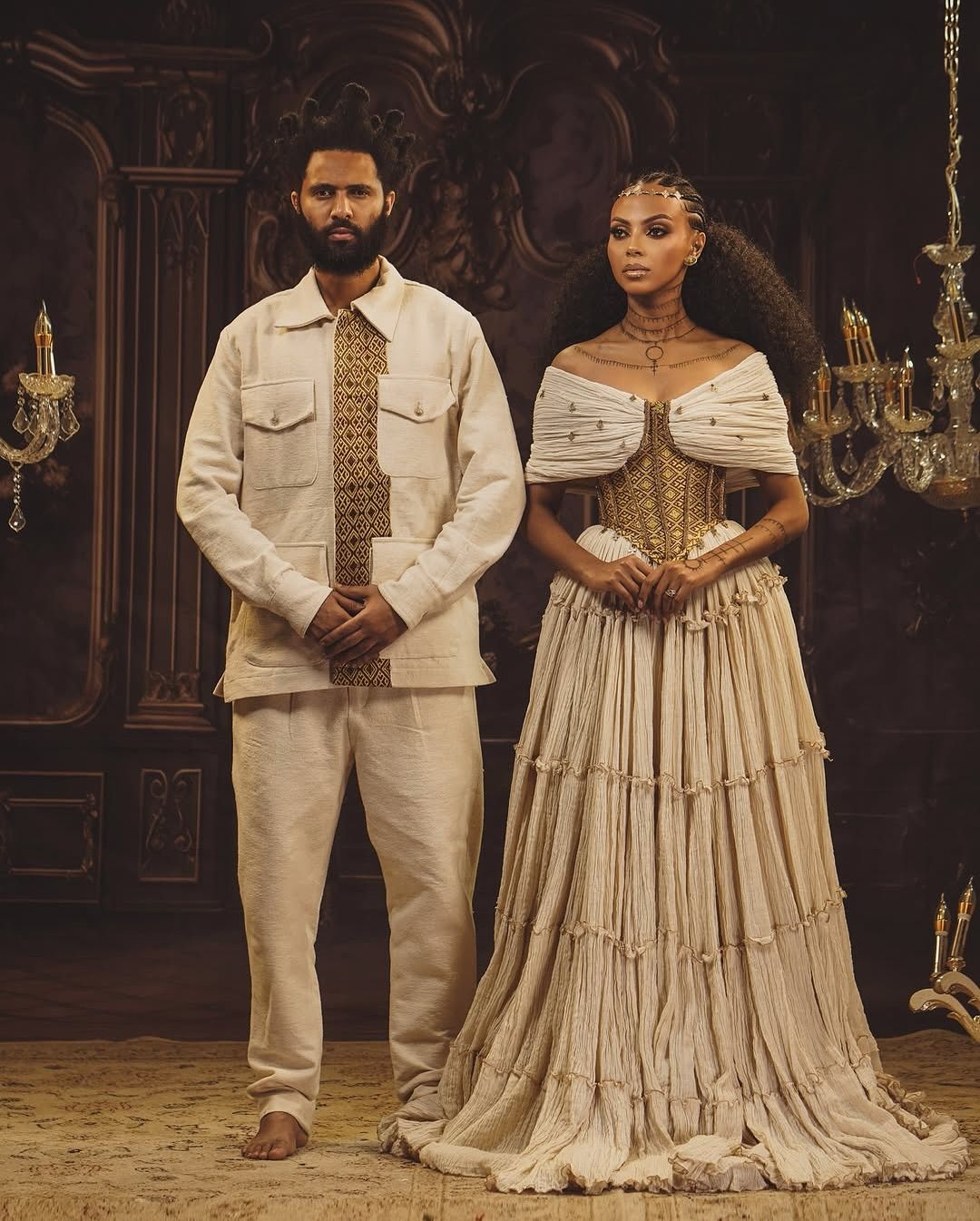
In 1974, the Derg overthrew Haile Selassie, imposed mandatory curfews, censored music that did not celebrate the regime, and effectively ended the Golden Age. Many of the musicians who had built Swinging Addis fled to exile in North America and Europe. As On the Jungle Floor’s comprehensive account of the period confirms, the coup’s consequences for the music scene were profound. The Éthiopiques series, launched by French musicologist Francis Falceto on Buda Musique in 1997, brought the musical record of the Golden Age back to world attention a quarter century after it was suppressed. The fashion editorial equivalent of Éthiopiques does not exist. Nobody assembled the visual record of what Swinging Addis looked like in the same way Falceto assembled the sonic record.
The cost of that absence is specific. The Ethio-Jazz era produced a complete fashion culture — a fusion of imperial court formality, Ethiopian textile tradition, and international jazz cosmopolitanism, that has no editorial home. The photographs that survive from the period are held in archives, in personal collections, and in the visual documentation of state visits and concert performances. They have not been assembled into a coherent fashion, an editorial argument about what Addis Ababa was producing in those years. That argument can be made. The visual record is extraordinary. And the fashion intelligence it documents, the specific way a specific city at a specific historical moment fused African imperial authority with international cultural engagement and dressed its musicians accordingly, is precisely the kind of primary fashion subject that Omiren Styles exists to cover.
The Omiren Argument
The Golden Age of Ethio-Jazz produced one of the most complete and least documented music-fashion fusions in African cultural history. Addis Ababa, between the late 1960s and 1974, was a city in which the visual standards of an imperial court whose dress argued for Ethiopian equivalence on the world stage, the cosmopolitan exposure of musicians educated in London, New York, and Boston, and the performance culture of hotel ballrooms and nightclubs that required their own specific dress came together in a fashion moment that has no fashion editorial. The Éthiopiques series documented the sound. Nobody has yet documented the dress with the same seriousness. Mulatu Astatke’s suit on a Hilton Hotel stage in 1973, worn in the same year that Duke Ellington performed alongside him in a city the world called Swinging Addis, is a fashion statement that the global fashion press never covered because it did not know how to look.
Omiren Styles begins the documentation here because the argument that the Ethio-Jazz era’s fashion makes is the same argument Omiren Styles makes in every article: African cultural production sets its own standards, asserts its own authority, and requires no Western editorial validation to be significant. Haile Selassie’s court established the visual protocol in which Ethiopian ceremonial textile and European diplomatic formality were equal registers of the same authority. The musicians of Swinging Addis performed in accordance with that protocol. They inflected it with the cosmopolitan intelligence of people who had been educated in the world’s jazz capitals and returned to make something the world had never heard. The fashion was the same argument made in cloth and cut. The editorial gap around it is not the story of an absence. It is the story of a fashion press that has yet to learn to read what Addis Ababa wrote in the 1960s and 1970s.
Frequently Asked Questions
What is Ethiopian Jazz, and when did it develop?
Ethiopian Jazz, or Ethio-Jazz, is a genre that fuses traditional Ethiopian music, built on the pentatonic scale and asymmetrical rhythms of the Tizita Qenet tradition, with Western jazz instrumentation and harmonic structures. Its foundations were laid in the 1950s when Emperor Haile Selassie commissioned Armenian refugee musician Nerses Nalbandian to compose for the Ethiopian National Theatre. The genre was revolutionised by Mulatu Astatke, who studied at the Trinity College of Music in London and Berklee College of Music in Boston before returning to Ethiopia in 1969. The period from the late 1960s to 1974 is known as the Golden Age, a time when Addis Ababa was called “Swinging Addis” for its extraordinary concentration of jazz orchestras and ensembles.
Who is Mulatu Astatke, and what was his role in Ethio-Jazz?
Mulatu Astatke, born in 1943 in Jimma, Ethiopia, is the father of Ethio-Jazz. He left Ethiopia in 1959 to study at the Trinity College of Music in London, becoming one of the first Africans to study there. He then studied at Berklee College of Music in Boston, where he encountered John Coltrane and the New York jazz scene. He returned to Ethiopia in 1969 and used Ethiopian pentatonic scales and rhythmic structures as the foundation for a new jazz form he called Ethio-Jazz. He performed alongside Duke Ellington in Addis Ababa in 1973. His music was later introduced to new international audiences through Francis Falceto’s Éthiopiques series in 1997 and through his soundtrack for Jim Jarmusch’s film Broken Flowers in 2005.
What was the fashion culture of Swinging Addis in the 1960s and 1970s?
The fashion culture of Swinging Addis in the Golden Age of Ethio-Jazz (late 1960s to 1974) was shaped by three converging forces: the visual standards of Haile Selassie’s imperial court, which fused Ethiopian ceremonial textile tradition with European diplomatic formality; the cosmopolitan exposure of musicians educated in London, Boston, and New York who returned to Addis Ababa with an international fashion intelligence; and the performance culture of hotel ballrooms and nightclubs, particularly the Addis Ababa Hilton Hotel where the Walias Band served as house musicians, which required their own specific dress standards. The result was a fusion dress culture in which suits of European construction were worn with an Ethiopian authority that asserted equivalence rather than deference.
How did Haile Selassie’s court influence Ethiopian fashion?
Haile Selassie’s court established a visual protocol in which Ethiopian ceremonial textile tradition and European formal wear were deployed as equal registers of authority rather than as a hierarchy. The Emperor’s public dress ranged from full ceremonial Ethiopian regalia, including a lion’s mane-trimmed military uniform, to European formal wear appropriate for diplomatic contexts. He was the only African inducted into the Most Noble Order of the Garter. The court received state visits from Queen Elizabeth II, President Eisenhower, Jacqueline Kennedy, and heads of state from across Africa and Asia, and the dress at those events asserted Ethiopian textile tradition as fully equivalent to European ceremonial dress on the world stage. These musicians performed in this court environment dressed within the same visual grammar.
Why is the Ethio-Jazz era’s fashion almost absent from fashion editorial?
The Golden Age of Ethio-Jazz was abruptly ended by the 1974 Derg coup, which overthrew Haile Selassie, imposed curfews, censored the music scene, and caused many of the era’s musicians to flee into exile in North America and Europe. The musical record of the period was brought back to international attention through Francis Falceto’s Éthiopiques series, launched on Buda Musique in 1997. No equivalent effort has been made to assemble and present the visual and fashion record of Swinging Addis with comparable seriousness. The photographs that document the era exist in archives and personal collections but have not been assembled in a coherent fashion or as an editorial argument. Omiren Styles identifies this as one of the most significant gaps in African fashion editorial.
Explore More
Read the full Culture > Art & Music section for Omiren Styles’ documentation of the music, performance cultures, and visual systems through which African artists built the continent’s most consequential fashion arguments — from the Swinging Addis ballrooms of the 1960s to the township parking lots of Johannesburg today.