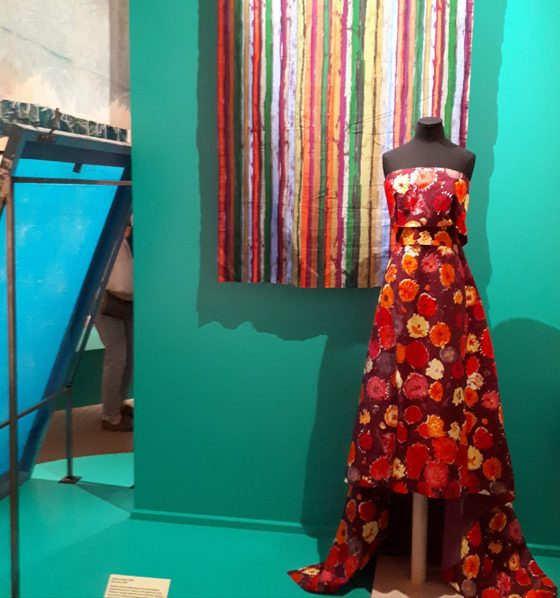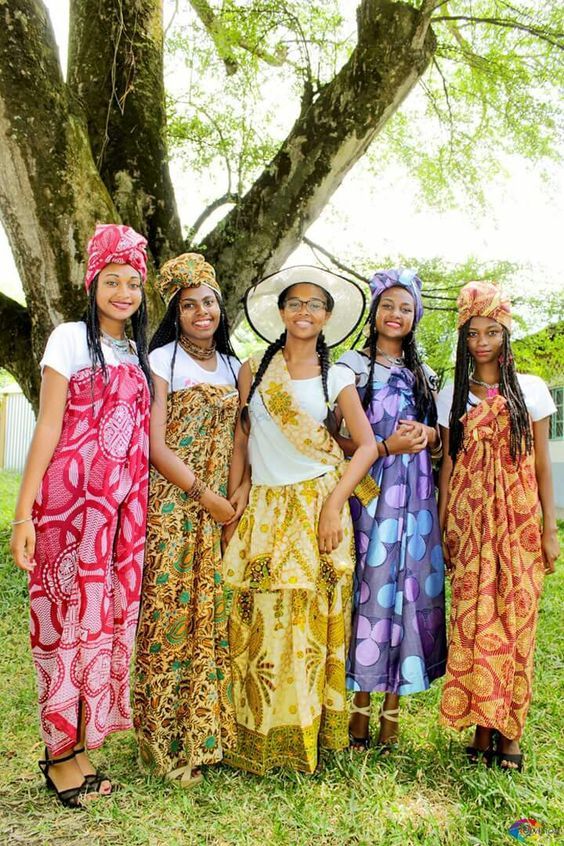
Malagasy lamba cloth is not waiting for fashion to discover it. In 1886, Queen Ranavalona III of Madagascar presented U.S. President Grover Cleveland with two silk lamba akotofahana as diplomatic gifts: one multicoloured, one white-on-white. Both are now on display at the Smithsonian National Museum of African Art in Washington, D.C., as documented in the museum’s exhibition on Malagasy textiles. That exchange happened before the language of luxury heritage textiles existed in the form that now shapes how contemporary buyers talk about provenance and slow fashion. The lamba was already making that argument.
This piece documents what the lamba is, how akotofahana is made and revived, what cultural weight the cloth carries, and why its artisan logic aligns with the direction luxury resortwear is moving. As Omiren Styles has documented in its analysis of African craft and state disinvestment, the traditions that institutional recognition discovers were never absent. They were producing work of the highest sophistication while the mainstream fashion conversation looked elsewhere. Malagasy lamba is one of those traditions.
Explore Malagasy lamba cloth, Madagascar’s iconic handwoven textile, its cultural significance, traditional weaving techniques, and growing relevance to sustainable luxury and resort fashion.
What Malagasy Lamba Cloth Is
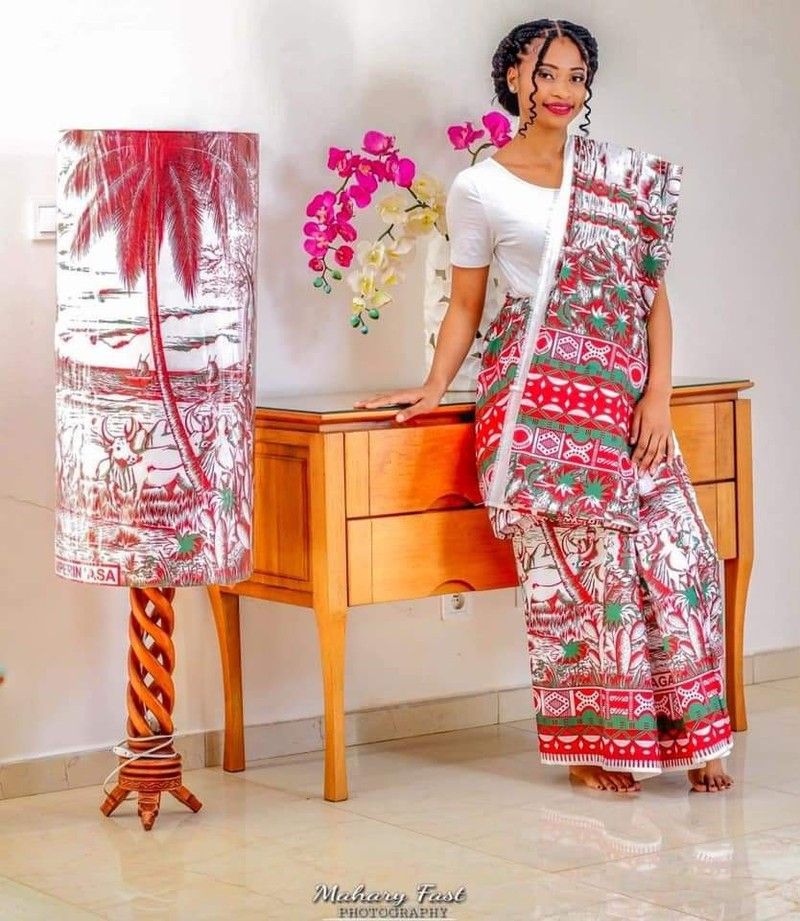
Lamba is the Malagasy word for cloth, but it covers a wider tradition than any single garment. As documented by the Smithsonian National Museum of African Art, and confirmed by Smarthistory’s documentation of Martin Rakotoarimanana’s lamba mantle, the term encompasses textiles worn as wraps, shawls, shoulder cloths, and burial cloths across Madagascar’s diverse ethnic communities. Each community has its own preferred materials, weaving techniques, and social occasions for which specific lambas are made and used.
The Visit Madagascar documentation of Malagasy textile traditions identifies several distinct types. Lambahoany is a printed cotton textile with proverbs, widespread in coastal regions and influenced by African kangas through historical trade. Lamba Akotofahana carries raised geometric patterns associated with Merina aristocracy. Lambamena is a large silk shroud used for ancestral burial in the highlands: Lambaa Landy, a fine silk lamba of the central highlands, signals status and ceremony. Colours carry meaning: red lambas are associated with vitality and protection; white with mourning and spiritual purity.
A lamba is not, in other words, a single garment with a fixed meaning. It is a material vocabulary whose specific combinations communicate occasion, community, region, and social position. As Africa Fashion Network documents, the cloth functions as engagement exchange, burial wrapping, child-carrying, cushioning for heavy loads, and diplomatic gift in the same material tradition. That range of function is not unusual in African textile cultures. It is the rule rather than the exception.
The lamba is a living cultural object that carries social, spiritual, and historical meaning — not primarily a fashion item that also happens to carry meaning.
How Lamba Is Made: Natural Fibres and Weaving Techniques
Traditional lamba is woven from cotton, indigenous wild silk (landibe), mulberry silk, and, in some regions, raffia fibres. As The Colourful Cloth’s documentation of lamba traditions confirms, the horizontal ground loom is the foundational tool for producing these textiles, with women traditionally serving as weavers. The blend of fibres creates varying tactile approaches: from modestly coarse cotton pieces to supple silk blends like Lamba Arindrano and the raffia-infused Jabo-Landy.
The most technically distinguished form is akotofahana. As Smarthistory documents, weavers create the textile on a horizontal, fixed heddle loom with a continuous weft and warp. Geometric designs are created by adding supplementary weft threads that float over the woven ground. That supplementary-weft technique produces the raised, textured surface that distinguishes akotofahana from other lamba forms and makes it a textile associated with the Merina royal court. Beginning in the nineteenth century, the silk was locally grown. The tradition was abandoned by the late nineteenth century as cheaper European textiles entered the market.
The Revival: How Akotofahana Was Reconstructed
The revival of akotofahana is one of the most precisely documented cases of heritage textile reconstruction in African craft history. As the Smithsonian National Museum of African Art’s documentation confirms, British art historian Simon Peers combined forces in the 1990s with a group of Merina weavers who shared his respect for the historic art form. Together they created the weaving workshop known as Lamba SARL. The group researched and recreated many nineteenth-century akotofahana patterns found in the collections of the Queen’s Palace of Antananarivo (destroyed by fire in 1995) and the British Museum in London.
Lamba SARL textiles are not merely faithful recreations. They combine nineteenth-century patterns and techniques with new ones, reviving laborious and complex weaving methods that had been abandoned by the late nineteenth century. Each Lamba SARL textile is unique and handwoven. As documented by the Smithsonian, Lamba SARL creations are now part of museum and private collections in Europe and the United States. The Metropolitan Museum of Art holds a 1998 revival akotofahana by Imerina master Martin Rakotoarimanana. The British Museum holds a circa 1875 to 1900 akotofahana featuring Merina geometric patterns woven in magenta, blue, and yellow. The Grokipedia documentation of lamba as cultural artefact confirms that the American Museum of Natural History also holds an akotofahana woven entirely from the silk threads of golden orb-weaver spiders.
That institutional presence across the Smithsonian, the Met, and the British Museum is not incidental. It documents a revival that produced work of sufficient technical quality to be acquired by the world’s most selective textile collections. The lamba’s position is not that of a tradition preserved in aspic. It is a living practice that survived abandonment, reconstructed itself from museum collections, and produced work of international institutional standing. As Omiren Styles has argued in its analysis of Southern African beadwork deserving runway recognition, the cultural authority of African material traditions does not require external validation to be real. The lamba had it before Simon Peers arrived.
What the Cloth Communicates: Cultural Meaning and Social Function
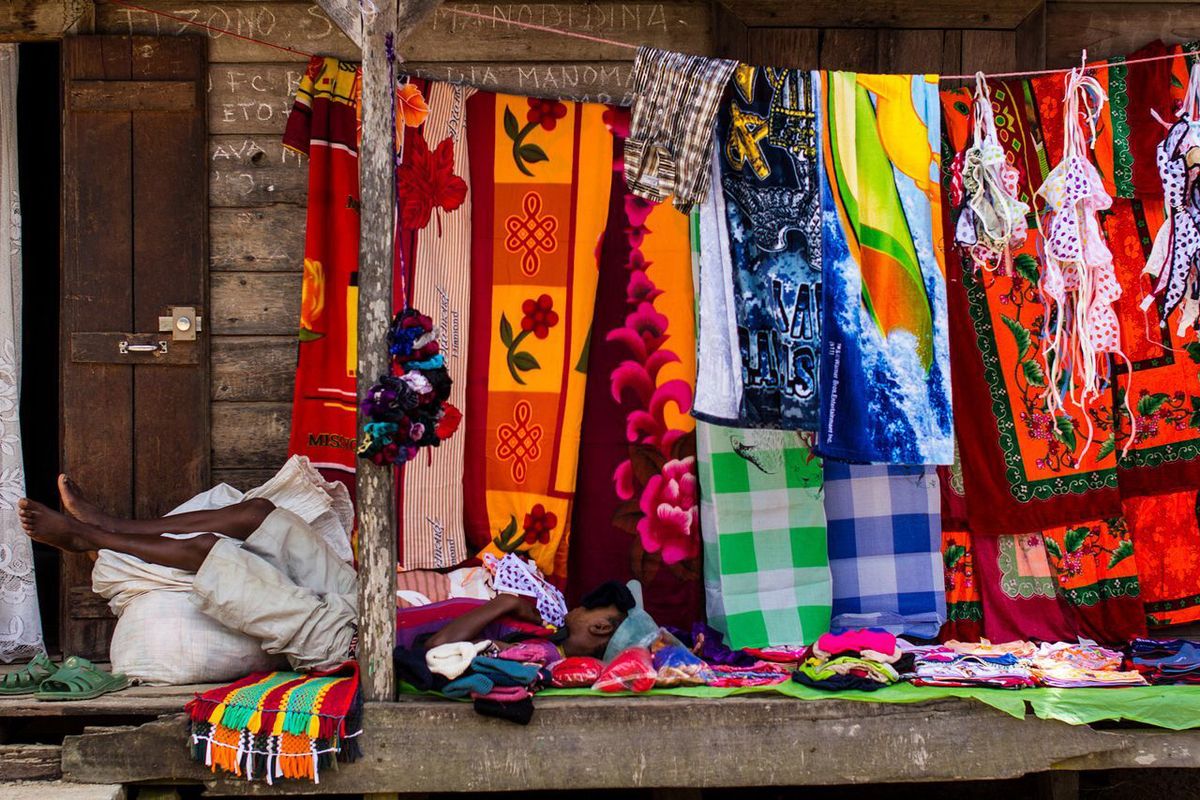
The 1886 gift to Grover Cleveland is the most frequently cited evidence of the lamba’s diplomatic prestige, and the specific details matter. As Africa Fashion Network documents, Queen Ranavalona III presented two detailed silk lamba akotofahana: one multicoloured, one white-on-white. The gesture was designed, as the Smithsonian account documents, “to forge strong ties of friendship and support between the two nations.” A textile was the vehicle for state diplomacy. That is not the role of a craft item. It is the role of a prestige object with understood cultural authority on both sides of the exchange.
Beyond the diplomatic register, lamba functions across the full range of Malagasy social life. It is worn at births, marriages, and funerals. It is exchanged between families as part of engagement ceremonies. It wraps the deceased for burial and is placed on tombs as a sign of respect for the soul. It carries children on their mothers’ backs. It cushions heavy loads. This range of function is not a dilution of the cloth’s significance. It is evidence of how deeply embedded the lamba is in the structures of Malagasy life, from the most intimate domestic use to the most formal diplomatic occasion.
As Omiren Styles has documented in its analysis of Setswana wedding dress traditions, the textiles that carry the deepest social meaning in African communities are those whose use spans the full lifecycle of the people who wear them. Lamba is precisely such a textile. The value the luxury market is now rediscovering in heritage cloth, the idea that a garment should mean something beyond its price point, is something the lamba has demonstrated for centuries.
Why Luxury Resortwear Fits: The Alignment by Principle
The QC for this piece identifies the strongest argument precisely: lamba aligns with resortwear not by imitation but by principle. As Omiren Styles has documented in its analysis of African jewellery brands achieving global market access, the contemporary luxury buyer’s stated preferences- breathable natural fibres, traceable production, handmade quality, cultural authenticity, and a sense of grounded seasonal dressing- are the properties that Malagasy lamba has embodied for generations without calibrating itself to those preferences.
The wrap logic of traditional lamba, the fluid drape of cotton and silk woven on a horizontal ground loom, the visible texture of supplementary-weft patterns on the akotofahana surface: these are not qualities that need to be adapted for resortwear. They are the qualities that contemporary resortwear design is attempting to produce through conscious choice. The lamba already has them as a function of how it has always been made.
The point the article draft makes correctly is that this alignment operates at the level of principle rather than aesthetics. A European designer who reproduces the visual appearance of lamba without engaging its production system and cultural logic is making a different kind of object. The value of lamba for the resortwear conversation is not as a surface to be borrowed. It is as evidence of an already-existing design intelligence that produces the specific qualities the luxury market claims to seek.
Challenges and What the Future Requires
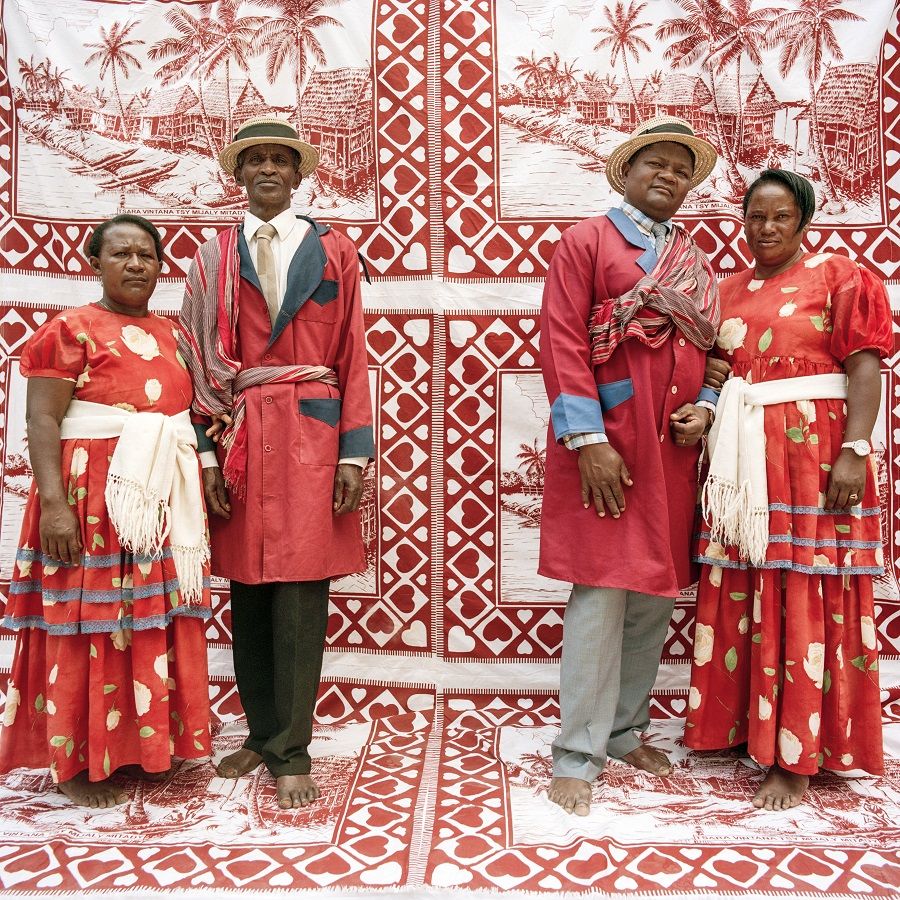
Malagasy weavers face familiar structural obstacles: limited access to international markets, competition from cheaper mass-produced fabric, infrastructure gaps in rural production areas, and the challenge of transmitting technical knowledge to younger generations without formal institutional support. These are not small problems, and the akotofahana revival of the 1990s itself depended on a combination of external art history expertise and Merina weaving community commitment that cannot be assumed to be automatically available for every strand of the tradition.
The future of lamba is not in volume. As Omiren Styles has argued in its analysis of African craft fashion and state disinvestment, when the commercial infrastructure of a creative economy systematically underrewards the practitioners who hold core knowledge, the knowledge erodes. The akotofahana revival demonstrates that erosion can be reversed. It does not demonstrate that reversal is automatic. What the lamba’s future requires is what the QC identifies correctly: preservation, careful market positioning, and access to niche luxury markets that value origin as much as design. Scarcity, in that market, is not a problem to be solved. It is the condition that creates the value.
OMIREN TEXTILE RECORD
| Textile | Lamba (and Lamba Akotofahana) |
| Country | Madagascar |
| Traditional Materials | Cotton, indigenous wild silk (landibe), mulberry silk, raffia (varies by region and purpose) |
| Production Method | Handwoven on horizontal ground loom; akotofahana uses supplementary-weft technique |
| Primary Uses | Everyday wear, weddings, ceremonies, funerals, ancestral rituals, diplomatic gifts |
| Key Institutions | Smithsonian National Museum of African Art; Metropolitan Museum of Art; British Museum |
| Revival | Lamba SARL workshop (Simon Peers and Merina weavers, 1990s); Martin Rakotoarimanana’s 1998 Met acquisition |
| Modern Opportunity | Sustainable luxury, artisan heritage fashion, niche resortwear, traceable textile market |
The Omiren Argument
Malagasy lamba is not a traditional cloth waiting for contemporary fashion to give it relevance. Its relevance predates the contemporary conversation by at least a century: the diplomatic prestige of the 1886 akotofahana gift, the institutional standing of the 1990s revival in the collections of the Smithsonian and the Metropolitan Museum of Art, and the specific technical sophistication of supplementary-weft silk weaving document a tradition whose authority is internal rather than conferred. What the luxury resortwear market is now articulating as its values- natural fibres, artisan production, cultural provenance, and the alternative to trend-chasing- are the values the lamba has always embodied. The cloth is not arriving at those values. Those values are arriving at the cloth. As Omiren Styles has argued, African fashion has always been making arguments that the mainstream fashion industry was not yet equipped to receive. Malagasy lamba is one of those arguments. The question now is whether the market builds the relationship with it that its quality deserves.
The lamba does not need to become resortwear to be relevant to the resortwear conversation. It already demonstrates, at the level of principle, everything that conversation is trying to say.
ALSO READ
- Zambia’s Textile Industry: Cotton Export Gap, Local Production Deficit, and What the Mulungushi Reopening Changes
- Rastafari Dress Codes: How Jamaica’s Colours, Hair, and Cloth Refused Colonial Uniform
Frequently Asked Questions
What is Malagasy lamba cloth and how is it used in Madagascar?
Malagasy lamba is a traditional woven cloth encompassing textiles worn as wraps, shawls, shoulder cloths, and burial cloths across Madagascar’s diverse ethnic communities. As documented by the Smithsonian National Museum of African Art, it functions across the full range of Malagasy social life: births, marriages, funerals, ancestral ceremonies, engagement exchanges, and diplomatic gifts. It is a living cultural object rather than primarily a fashion item.
What materials are used to make traditional Malagasy lamba?
Traditional lamba is woven from cotton, indigenous wild silk (landibe), mulberry silk, and, in some regions, raffia fibres. As Visit Madagascar documents, the choice of material depends on the textile’s purpose and region: silk lamba is traditionally associated with highland ceremonial and high-status occasions; coastal lamba typically uses lighter cotton. The horizontal ground loom is the foundational production tool.
What is akotofahana weaving?
Akotofahana is a traditional Malagasy silk weaving technique in which geometric designs are created by adding supplementary weft threads that float over the woven ground, producing raised, textured patterns. As Smarthistory documents, the technique was historically associated with the Merina royal court and abandoned by the late nineteenth century as cheaper European textiles entered the market. It was revived in the 1990s by Simon Peers and Merina weavers working as Lamba SARL, reconstructing nineteenth-century patterns from museum collections in London and Antananarivo.
Where can I see authentic lamba akotofahana in museum collections?
The Smithsonian National Museum of African Art in Washington, D.C. holds the two silk lamba akotofahana presented by Queen Ranavalona III to U.S. President Grover Cleveland in 1886, as confirmed by the museum’s own documentation. The Metropolitan Museum of Art holds Martin Rakotoarimanana’s 1998 revival akotofahana. The British Museum holds a circa 1875 to 1900 akotofahana featuring Merina geometric patterns in magenta, blue, and yellow. The American Museum of Natural History holds an akotofahana woven from golden orb-weaver spider silk.
Why is Malagasy lamba relevant to contemporary luxury resortwear?
Because the values contemporary luxury resortwear markets claim to prioritise, breathable natural fibres, traceable artisan production, cultural authenticity, and visible craftsmanship, are the properties lamba has embodied for centuries as a function of how it is made rather than as a response to market demand. As Omiren Styles has argued, African textile traditions have always been making arguments that the mainstream fashion industry was not yet equipped to receive. Lamba’s relevance to the resortwear conversation is not as a surface to be borrowed. It is as evidence of an already-existing design intelligence that produces the specific qualities the luxury market claims to seek.
What challenges do Malagasy weavers face today?
Limited access to international markets, competition from cheaper mass-produced fabric, infrastructure gaps in rural production areas, and the challenge of transmitting technical knowledge to younger generations without formal institutional support. As Omiren Styles has documented in its analysis of African craft fashion, when commercial infrastructure systematically underrewards the practitioners who hold core craft knowledge, the knowledge erodes. The akotofahana revival demonstrates that erosion can be reversed. It does not demonstrate that reversal is automatic.