When the British colonial administration in Jamaica in the 1930s encountered men in the Kingston hills and St. Andrew parishes who were growing their hair long, wearing red, gold, and green, and refusing to dress in the ways that colonial respectability demanded, their response was predictable: they labelled the practice dangerous, the practitioners savage, and the hair “dreadful locks.” The mockery became the name. What colonial authority intended as a term of contempt, the Rastafari movement claimed as identity. The dreadlocks were dreadful to the colonial system because they refused the system’s aesthetic authority. That refusal is what the entire Rastafari dress code is built on.
Rastafari dress is not a costume or an aesthetic preference. It is a complete theological and political argument, encoded in colour, hair, and cloth, whose every element carries a specific meaning derived from scripture, Pan-African ideology, and the specific historical experience of Black people in Jamaica and the wider African diaspora. Understanding that argument requires reading each element precisely rather than treating Rastafari style as a generic cultural aesthetic. As Omiren Styles has documented in its analysis of the Mau Mau dreadlocks tradition in Kenya, resistance dress earns its meaning through the specific history of what it refused. The Rastafari case is one of the most thoroughly documented examples of that refusal in the African diaspora.
Rastafari dress is a complete theological and political argument encoded in colour, hair, and cloth. Red, gold, green, black: here is what each element carries and why.
The Origins: Jamaica in the 1930s
The Rastafari movement emerged in Jamaica in the early 1930s, following the coronation of Ras Tafari Makonnen as Emperor Haile Selassie I of Ethiopia in November 1930. Several preachers and community leaders in Jamaica, reading Marcus Garvey’s prophecy that a Black king would be crowned in Africa, interpreted Selassie’s coronation as the fulfilment of that prophecy and the beginning of a spiritual movement centred on the divinity of the Ethiopian emperor, the repatriation of African-descended people to Africa (specifically Ethiopia as Zion), and the rejection of what Rastafari theology calls Babylon: the colonial, Eurocentric, and oppressive world order.
Leonard Howell, often described as among the first Rastafarians, founded the Pinnacle community in the Jamaican mountains in 1940, as documented by Rastaverse’s Rasta symbols documentation. It was at Pinnacle, rather than in the movement’s earliest years, that dreadlocks became associated with Rastafari practice. This is a documented historical distinction: the early Rastafarians of the 1930s typically wore short hair or afros. Dreadlocks emerged in the 1940s from the Pinnacle community’s practice of the Nazirite vow, as confirmed by Lucerna’s Rastafari ideology documentation. The term “dreadlocks” was coined as mockery by Jamaican society, who described the locked hair as “dreadful locks.” The Rastafari movement reclaimed the term as a declaration of identity rather than a mark of shame.
The Colour Code: What Red, Gold, Green, and Black Carry
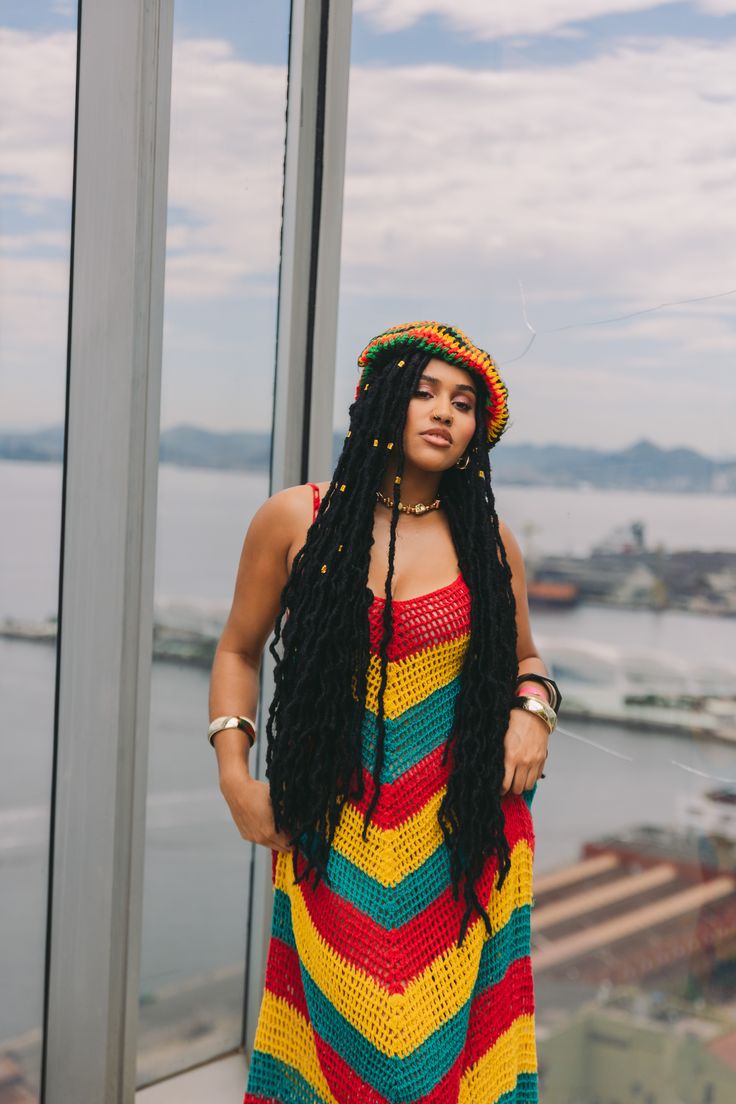
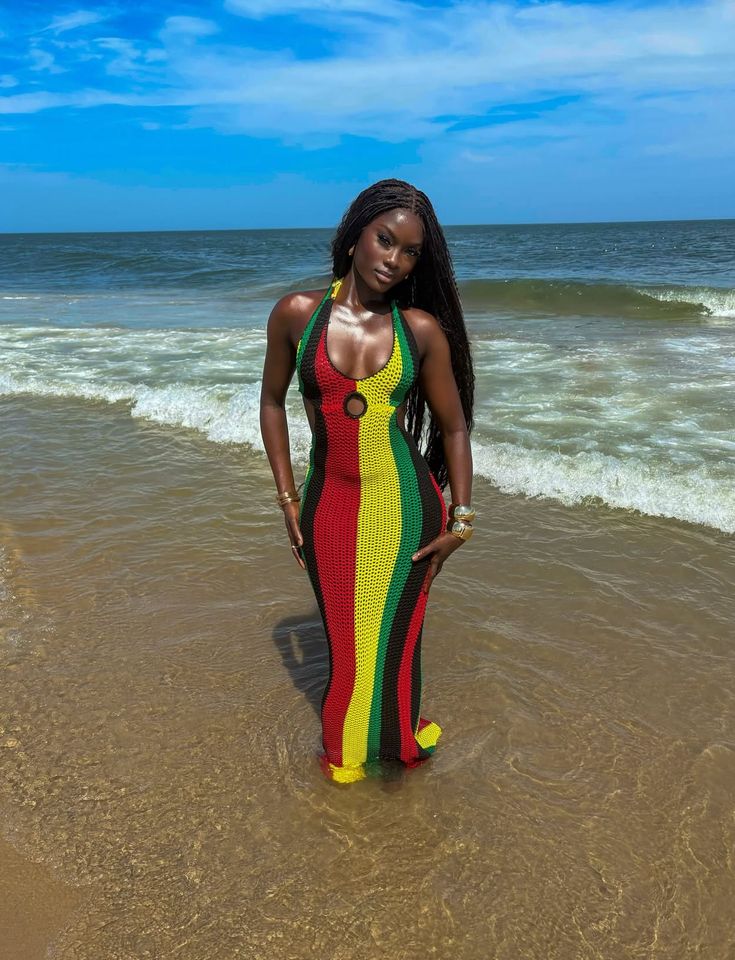
The four colours of Rastafari dress, red, gold, green, and black, derive their meaning from three interlocking sources: the Ethiopian flag’s tricolour of red, gold, and green, which the Solomonic dynasty of which Haile Selassie was the claimed descendent used; Marcus Garvey’s Pan-African movement, whose banner used red, black, and green; and Rastafari theology’s own interpretation of those colours as a unified system of meaning. As Fifth Degree’s documentation of Rastafari clothing symbols confirms, these colours appeared across every category of Rastafarian clothing and accessories, and each carries specific meaning that the wearer is consciously invoking.
Red represents the blood of martyrs: the African people who died in slavery, in colonial resistance, and in the ongoing liberation struggle. As Fifth Degree’s Rastafari clothing guide documents, red is “the colour of sacrifice, of the price paid by those who came before, and of the fire of Rastafari’s prophetic tradition.” It is the colour of historical memory and of ongoing resistance simultaneously.
Gold, sometimes rendered as yellow, represents the natural wealth of Africa and the light of the sun. As Rastaknowledge’s documentation of the colour meanings confirms, gold “signifies the vast wealth and riches which belong to the African continent.” The Rastafari use of gold is a reclamation of African prosperity against the colonial narrative that positioned Africa as primitive and underdeveloped.
Green represents the land of Ethiopia, Zion in Rastafari theology, and the natural world more broadly. The Rebel One Mart colour documentation confirms green as representing “the land of Ethiopia and natural abundance,” connecting dress to the specific geographic and spiritual homeland that the repatriation movement was oriented toward.
Black, sometimes included as the fourth colour, honours African identity specifically and the dignity of Black people globally. Its addition to the Ethiopian flag’s original tricolour reflects the incorporation of Marcus Garvey’s Pan-African black into the Rastafari colour system, connecting the movement explicitly to the broader Pan-African political tradition.
“These colours are not aesthetic preferences. They are a language. In Rastafari culture, each of these four colours carries specific meaning, historical significance, and spiritual weight. Together they form one of the most recognisable and widely worn cultural symbols in the world.” — Rebel One Mart Rasta Colours Documentation, 2026
Dreadlocks: The Nazirite Vow and Its History
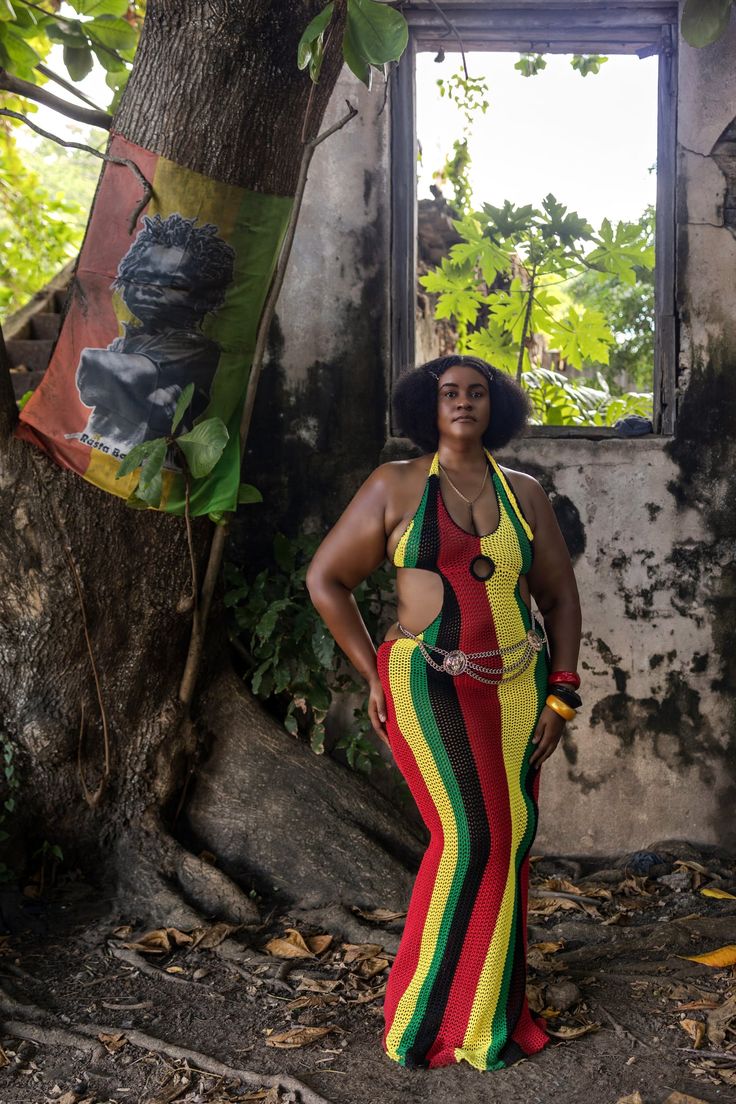
The Rastafari theological justification for dreadlocks rests primarily on the Nazirite vow as described in Numbers 6:5 of the Old Testament: “All the days of the vow of his separation there shall no razor come upon his head: until the days be fulfilled, in the which he separateth himself unto the Lord, he shall be holy, and shall let the locks of the hair of his head grow.” Supporting justification comes from Leviticus 19:27 and 21:5, which prohibit cutting the corners of the head and making baldness on the head, respectively. As ToZion’s Rastafari dreadlocks documentation, these biblical injunctions are the primary reason Rastafari grow locks, with the Nazirite vow understood as a separation from the world and a closer relationship to Jah.
The story of Samson, whose strength was bound to his uncut hair and who lost that strength when Delilah had it cut, is the narrative that Rastafari theology uses to explain the spiritual power of the locks, as documented by LionLocs’s dreadlock culture documentation. Dreadlocks are understood as a physical connection to divine power, as a sign of the wearer’s covenant with Jah, and as a semi-permanent symbol of devotion that cannot be easily concealed or removed. This last quality made them specifically threatening to colonial authority: the dreadlock was a visible, persistent declaration of religious and political identity that could not be dressed over.
Some sources note a possible connection between the early Rastafari adoption of locked hair and news reports from Jamaica about Mau Mau fighters in Kenya, whose dreadlocks were themselves a documented resistance symbol, as ToZion documents. This connection is noted in Rastafari oral history. Still, the primary documented justification for locks within Rastafari theology is consistently the Nazirite vow and the Samson narrative rather than the Mau Mau parallel. As Omiren Styles has documented in its dedicated analysis of the Mau Mau dreadlocks tradition, the two practices share the function of using locked hair as a resistance signal against colonial authority. However, they developed in distinct religious and cultural contexts.
Babylon and the Rejection of Colonial Dress
The theological concept of Babylon is the organising framework for understanding why Rastafari dress functions as a refusal rather than simply as a cultural preference. Babylon, in Rastafari theology, is the term for the oppressive systems of the world: colonialism, slavery, Eurocentric cultural authority, and the institutions that perpetuate them. As Fifth Degree’s Rastafari dress documentation confirms, “Rasta dress codes emerged from a need to reclaim African identity and reject colonial narratives. When traditional institutions silenced voices, Rastafarian style became a language of rebellion, pride, and faith.”
Colonial dress codes in Jamaica, as across the British Empire, demanded conformity to European aesthetic standards as a condition of respectability and social acceptance. The suit, the short hair, the absence of African cultural markers in dress: these were the visible signs of what the colonial system called civilisation. The Rastafari refusal of those signs was understood by both the Rastafari themselves and by colonial authority as a political act rather than a mere aesthetic choice. Wearing red, gold, and green explicitly referenced the Ethiopian Empire that had resisted European colonisation. Growing locked hair explicitly violated the grooming standards that colonial respectability required. Wearing natural, undyed, unprocessed cloth was a rejection of the manufactured and imported goods that colonial commerce depended on.
This refusal extended to language (Rastafari developed its own lexicon, including “Babylon,” “Jah,” and “Ital,” to create a communication system that operated outside the colonial linguistic framework) and to food (the Ital diet, emphasising natural and unprocessed food, was a rejection of colonial food systems as much as a spiritual practice). Dress was one component of a total rejection of colonial culture that encompassed every aspect of daily life. As Omiren Styles has documented in its analysis of African fashion as political identity, the most persistent pattern in colonial cultural management is the use of dress as a marker of complicity or refusal. Rastafari understood this and used it deliberately.
Bob Marley and Global Dissemination
The global dissemination of Rastafari dress codes is inseparable from the global dissemination of reggae music, and specifically from the international career of Bob Marley, whose work from the early 1970s onward brought Rastafari colour symbolism, dreadlocks, and the theological framework of Babylon resistance to audiences across the world. As the Reggae Cultural Movement’s colour documentation notes, Rastafari musicians “carried red, gold, and green into album artwork, stage designs, posters, and clothing. By the 1970s, the connection between reggae and Rastafari visuals was undeniable.” The red, gold, and green of a Marley concert poster is the same theological statement as the red, gold, and green of the original Pinnacle community’s dress. The global audience that received it through music did not always receive the full theological context, but the visual code travelled intact.
The global spread of Rastafari aesthetics created both increased visibility for the movement’s theological dress codes and the inevitable commodification that visibility brings. Red, gold, and green became available on tourist merchandise, festival wristbands, and fashion brand seasonal collections whose connection to Rastafari theology was nominal at best and exploitative at worst. The distinction between wearing the colours as a theological statement, as Rastafari practise them, and wearing them as a generalised Pan-African cultural identification or as a lifestyle aesthetic is a distinction the dress code itself cannot enforce once it has left its original context. What it can do is retain the meaning for those who understand it, as a living practice rather than a reference.
The Rastacap and the Ital Aesthetic
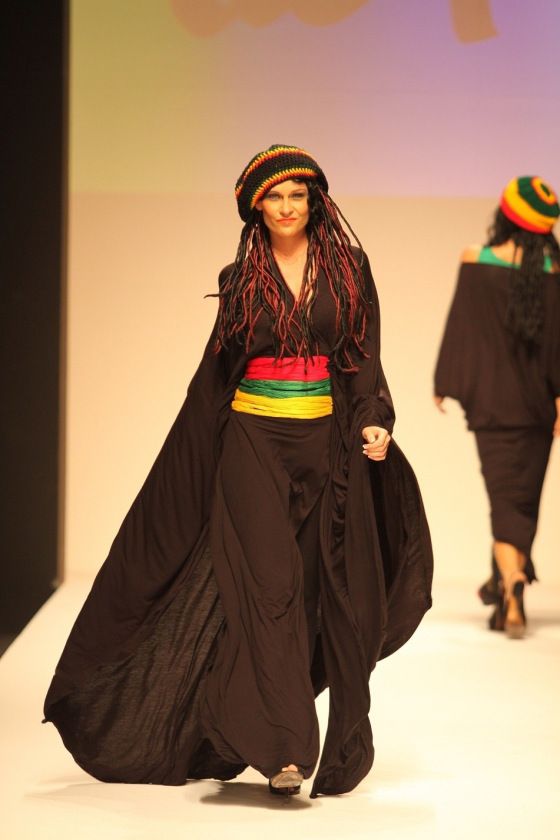
Beyond the colours and the dreadlocks, Rastafari dress includes the rastacap (also called a tam or crown), a large crocheted hat designed to cover and contain dreadlocks while incorporating the red, gold, and green colour system. As the Wikipedia rastacap article documents, the cap functions as both a practical garment for managing locked hair and a visible theological marker. The crocheted construction, typically in red, gold, and green stripes, places the colour code directly on the head: the most spiritually significant part of the body in Rastafari theology, where divine energy is understood to concentrate.
The Ital aesthetic that governs Rastafari dress at its most strict is built on the same principle as the Ital diet: natural over processed, local over imported, unmodified over manufactured. Ital cloth is natural fibre, undyed or naturally dyed, loose in cut to allow movement and airflow, and free from the synthetic materials and tight constructions associated with Babylon’s fashion system. Not all Rastafari practise Ital dress at this level of strictness, and the movement has no single governing body or uniform code. But the principle of naturalness as resistance is present across the full spectrum of Rastafari dress, from the most strictly Ital to the most mainstream use of the colour symbolism.
ALSO READ
- Tunisia’s Textile Export Industry: From European Manufacturing Power to Nearshoring Contender
- Garifuna Dress in Belize and Honduras: Afro-Indigenous Identity and West African Ancestry
The Omiren Argument
Rastafari dress is the most comprehensively documented example of what Omiren Styles calls resistance dress in the African diaspora: a complete system in which every element of appearance, the colour chosen, the hair grown or left natural, the fabric preferred, the accessories worn, constitutes a specific theological and political statement rather than an aesthetic preference. The colonial system that mockingly named the locks “dreadful” understood this more clearly than many subsequent commentators who have described Rastafari style as a cultural aesthetic without engaging its argument. The locks were dreadful to colonial authority because they were a visible refusal of the aesthetic authority that colonial systems use to mark compliance and resistance.
As Omiren Styles has documented in its analysis of the Mau Mau dreadlocks tradition, the dreadlock as resistance signal connects Jamaica to Kenya, the Pinnacle community to the Mau Mau forest, Rastafari theology to anti-colonial guerrilla practice, through the shared function of locked hair as a visible, persistent declaration that the colonial aesthetic system has been rejected. The form is the same. The theological and historical contexts differ in documented and important ways. What they share is the understanding that dress is never merely dress when it is being used to make a political argument on the body of the person wearing it.
Red for blood. Gold for Africa’s wealth. Green for the promised land. Black for the people. Locks for the covenant. Every element of Rastafari dress is a sentence in an argument that colonial authority tried to mock and could not silence.
Frequently Asked Questions
What do the colours red, gold, green, and black mean in Rastafari dress?
Each colour carries a specific meaning derived from the Ethiopian flag, Marcus Garvey’s Pan-African banner, and Rastafari theology. As documented by Fifth Degree’s Rastafari clothing guide, red represents the blood of martyrs and the sacrifices of the African diaspora throughout slavery and colonial resistance. Gold represents the natural wealth of Africa and the divine abundance that colonialism obscured and extracted. Green represents the land of Ethiopia, Zion in Rastafari theology, and the natural world. Black honours African identity and the dignity of Black people globally. The colours are not aesthetic preferences. They are theological and political statements encoded in cloth.
Why do Rastafari grow dreadlocks?
The primary theological justification is the Nazirite vow as described in Numbers 6:5: “All the days of the vow of his separation there shall no razor come upon his head.” Supporting justification comes from Leviticus 19:27 and 21:5, which prohibit cutting the corners of the head. As ToZion’s Rastafari dreadlocks documentation confirms, these biblical injunctions are the primary reason Rastafari grow locks. The story of Samson, whose divine strength was tied to his uncut hair, provides the narrative framework for understanding locks as a source of spiritual power. Historically, dreadlocks were not part of the movement’s earliest years in the 1930s; they emerged from Leonard Howell’s Pinnacle community in the 1940s when the Nazirite vow was adopted as community practice.
When did dreadlocks become associated with Rastafari?
Dreadlocks were not part of early Rastafari practice in the 1930s. Early Rastafarians typically wore short hair or afros, as documented by Lucerna’s Rastafari ideology study. Dreadlocks emerged from the Pinnacle community that Leonard Howell founded in the Jamaican mountains in 1940. Community members grew their hair in accordance with the Nazirite vow. The term “dreadlocks” was coined as mockery by Jamaican society, who described the locked hair as “dreadful locks,” but was reclaimed by the Rastafari movement as a badge of identity. By the 1950s and into the 1960s, dreadlocks had become the defining visual marker of Rastafari practice.
What is Babylon in Rastafari theology and how does it relate to dress?
Babylon in Rastafari theology is the term for the oppressive systems of the world: colonialism, slavery, Eurocentric cultural authority, and the institutions that perpetuate them. Colonial dress codes in Jamaica demanded conformity to European aesthetic standards as a visible marker of respectability. The Rastafari refusal of those standards, through locked hair, Ethiopian flag colours, and natural cloth, was understood by both practitioners and colonial authority as a political act. Wearing red, gold, and green referenced the Ethiopian Empire that had resisted European colonisation. Growing locked hair violated the grooming standards colonial respectability required. The dress code was, from its origin, a refusal of Babylon’s aesthetic authority.
How did Rastafari dress codes spread globally?
The global dissemination of Rastafari dress codes is inseparable from the global spread of reggae music, specifically through the international career of Bob Marley from the early 1970s onward. As the Reggae Cultural Movement documents, Rastafari musicians carried red, gold, and green into album artwork, stage designs, and clothing, and by the 1970s the connection between reggae and Rastafari visuals was undeniable. The global spread created both increased visibility for the theological dress code and its inevitable commodification as a generalised cultural aesthetic, a distinction the dress code itself cannot enforce once it has left its original context.