When a Yoruba family in Nigeria buries their dead, the aso-ebi they coordinate for the burial is rarely black. The colours selected are white, cream, ash grey, or light blue. The corpse itself is clothed in a fine white dress before being laid on a mat for mourners to gather around. White camwood is applied to the body as a purification rite. The colour white communicates what the Yoruba understand death to be: a transition, a purification, a movement into the spiritual realm where the ancestors reside. It is not the colour of absence. It is the colour of arrival.
The assumption that black is the universal colour of mourning is a Victorian imposition. Before Queen Victoria spent forty years dressed in black mourning Prince Albert after he died in 1861, and before her example globalised through the social influence of British colonial power, white was the most common mourning colour in the fifteenth and sixteenth centuries in France and England. Wealthy European aristocrats adopted black and then spread outward through social aspiration and colonial contact. African mourning traditions had their own colour systems long before that spread, built on their own theology of what death is, what happens after it, and what the living owe the dead. Those systems were not black. They were white, red, coral, and the community’s specific fabrics. They were a complete language of communication that the Victorian assumption has spent a century obscuring.
Black is not the default colour of African mourning. It never was. White, red, and community-specific codes have governed African grief dress for centuries. Here is what they say.
White Mourning Dress in Africa: The Traditions and What They Say
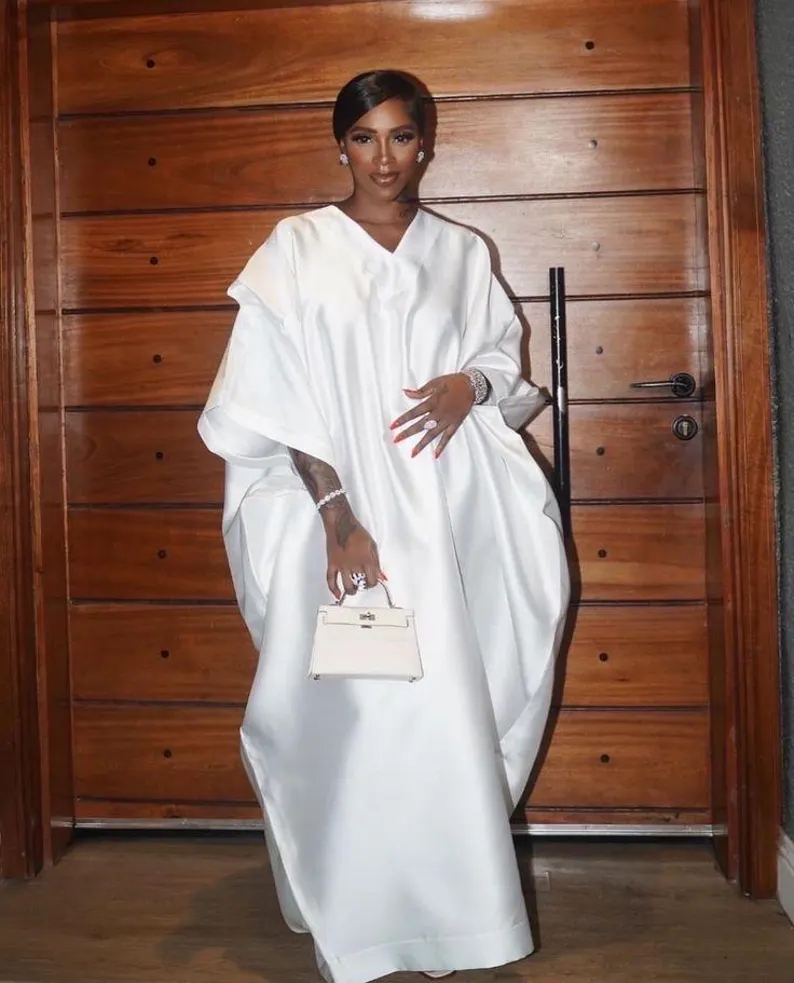
The Igbo tradition of white mourning dress is among the most thoroughly documented in the academic literature on West African funeral practice. A peer-reviewed study published in the Ohazurume journal confirms that in Igbo funeral rites, widows wear white as the primary mourning garment, often beginning with the Okuru cloth and then transitioning to white baft. Close female relatives wear white. Children of the deceased wear white during the funeral service. The study notes explicitly that white mourning dress is not peculiar to Igbo people, pointing out that white was worn in mourning by most people in the West for centuries before the wealthy aristocracy adopted black as the mourning colour. The Igbo practice is not an African exception to a global rule. It is part of a global tradition that the Victorian exception displaced.
In Yoruba tradition, the theology of death directly shapes the colour of grief. The Yoruba understand death not as an ending but as a transition: the spirit of the deceased is expected to join the ancestors and potentially reincarnate through the family in future generations. The Isinku burial rites involve the purification of the corpse, its dressing in white, and guiding the spirit to the next realm through specific ritual actions. Mourners at Yoruba burials wear white or brightly coloured attire as a statement of peace, spirituality, and the afterlife. The colour communicates the theological position. White is not absent. White is where the dead go.
The Nigerian funeral aso-ebi system, which Celebrate Them’s 2026 guide on Nigerian funeral attire confirms is rarely black, coordinates the community’s collective colour statement at burial. The family selects one or two fabrics. Immediate family may wear one aso-ebi; extended family and friends wear another; church groups, alum associations, and professional colleagues each get their own fabric within the colour system the family establishes. The coordination is managed by a designated family member, often a sister, daughter, or wife of the deceased. The aso-ebi is not a fashion. It is a form of social communication: it tells everyone present which relationship they have with the deceased, and it tells the spirit how many people gathered to witness the transition.
Ghana’s Colour Grammar: When White, Red, and Black Each Say Something Different

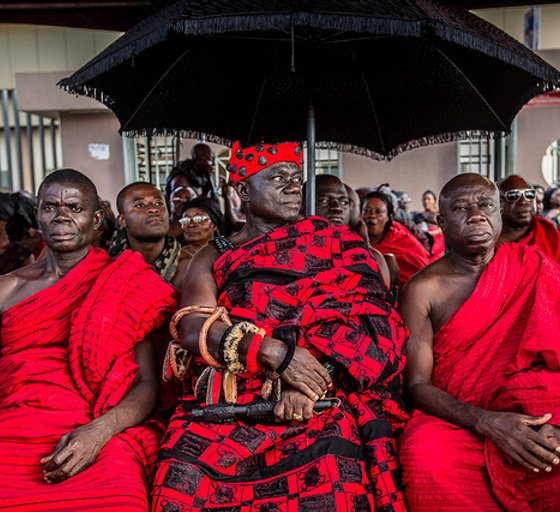
Ghana’s funeral colour system is among the most elaborate on the continent and among the most legible as a complete communication grammar. As the SevenPonds documentation on Ghanaian funeral fabrics confirms, red and black are worn together by close relatives to signal deep personal grief. White and black together indicate grief alongside the acknowledgement that the person lived a life worthy of celebration and praise. White alone, worn by all mourners, is reserved for the death of a person aged seventy or older, because the length of their life is considered a victory. On the final Sunday of the funeral rites, white is worn by all present to signify the assurance that the deceased has successfully transitioned into the spirit world.
The Ghanaian system contains more information per garment than most fashion editorial systems produce per season. White alone communicates age and victory. Red and black together communicate intimate grief. White and black together communicate grief with gratitude. And white on the final day communicates the community’s theological confidence that the transition is complete. A community member who can read this system knows, from the colour of every person in the room, their relationship to the deceased, the nature of their grief, and the community’s collective assessment of where the dead person now is. The colour is the text. The mourner is the page.
The red worn by close family members in Ghana carries its own specific weight. GhanaWeb’s documentation of Ghanaian funeral attire confirms that red indicates how deeply the mourner feels the loss, the colour of blood and of passion, worn only by those whose relationship to the deceased was close enough to justify the most intense statement of grief. The distinction between who wears red and who wears black or white is the distinction between intimate loss and communal mourning. The colour-coded system prevents the flattening of grief into a single undifferentiated black that says nothing except that someone has died.
African mourning dress was never black by default. The colour of grief across the continent is a complete communication system that tells the community who the mourner is, what they lost, and where the dead are going.
Edo, Hausa, and the Coral Dimension of Southern Nigerian Grief
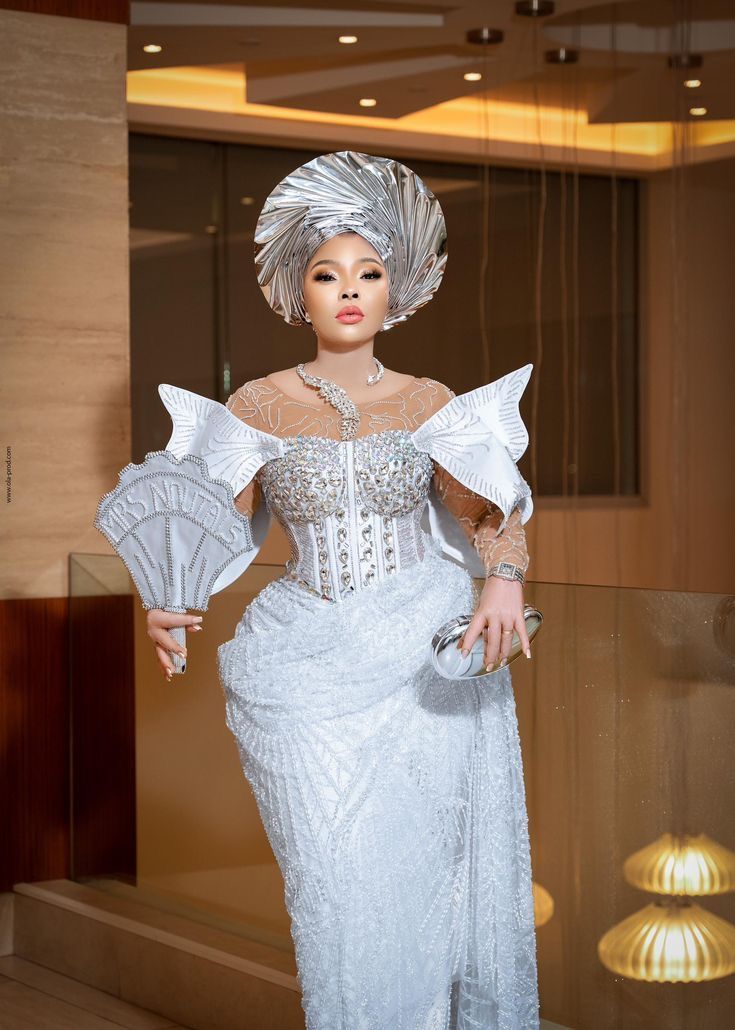
In Edo and South-South Nigerian funeral traditions, white is worn by close family members. Still, the full dress system includes coral beads and specific accessories worn by titled individuals that carry additional layers of meaning. The Nigerian funeral attire guide for 2026 states that, in Edo funerals, red and coral accessories are worn by those of title alongside white base garments, and that senior family members wear traditional coral beads. The coral in this context carries the same weight it does at the AMVCA Cultural Night: a marker of prestige, spiritual authority, and connection to Edo royal tradition, no less significant at a funeral than at a celebration. The dead are sent off with the full weight of the community’s ceremonial language.
Hausa Muslim funerals follow Islamic tradition, in which white dominates. The janazah, the funeral prayer, is conducted with mourners in white. The body is wrapped in simple white shrouds for burial, the kafan, expressing the Islamic principle of equality in death. The emphasis in Islamic mourning dress is on restraint and modesty rather than on colour-coding relationships, reflecting a theology in which the simplicity of the grave is the great leveller. The white shroud and the white dress of mourners communicate the same position: that before God, the dead are equal, and the living acknowledge that equality in what they wear.
The South African mourning colour tradition is the most directly traceable to the colonial disruption of an existing system. The apartheid-era adoption of red as a mourning colour, representing the bloodshed during the struggle, is a documented response to political violence rather than an ancient cultural practice. Zulu widows adopted black mourning dress partly through Western Christian missionary influence. The Tswana maintain tribal colour traditions specific to their community. The Xhosa require head attire at funerals as a mark of respect. South African mourning dress reflects a country whose pre-colonial mourning colour traditions were interrupted and partially replaced by colonial, missionary, and political influences more aggressively than in West African contexts.
Also Read:
- AMVCA 12 Cultural Night: When Nigerian Stars Dressed With Memory
- The Egungun Masquerade: What the Yoruba Ancestral Festival Tells Us About Fashion and the Spirit World
What the Victorian Black Did to the World’s Colour Vocabulary of Grief

The global spread of black as the default mourning colour is a documented historical event with a specific cause. Queen Victoria began her extended mourning of Prince Albert in 1861, wearing black. She maintained it for the remaining forty years of her life. Her public example, amplified by the social influence of the British Empire at its peak, created a global fashion norm around mourning that spread through colonial contact, missionary influence, and the prestige of adopting European customs. The Metropolitan Museum of Art has documented how black mourning dress reached a peak during Queen Victoria’s reign, when social expectations around wearing black for defined periods became especially strong. Before that peak, white, grey, and purple were all common mourning colours in European tradition. The Victorian black that globalised through the empire was not the original European mourning system. It was a specific nineteenth-century innovation that colonialism spread as though it were universal.
The academic paper on Igbo funeral fabrics makes this point with historical precision: black was not always the colour of mourning in the West. For centuries, white was worn in mourning by most people in the West before the wealthy aristocrats adopted black. The aristocratic innovation became the colonial norm. The colonial norm became the assumed universal. The assumed universal was applied to African mourning traditions that had never been black to begin with, producing the misreading that Omiren Styles is here to correct. African mourning dress was not waiting to discover black. It had developed its own colour systems, built on its own theology of death and transition, centuries before Queen Victoria decided the answer was black.
The Omiren Argument
African grief dress is a colour communication system of extraordinary specificity and depth. The white worn by a Yoruba family at a burial communicates the theological position that death is a transition to the spirit world, not an end. The red worn by a Ghanaian close relative communicates the intimacy and blood depth of their loss. The white worn on the final Sunday of Ghanaian funeral rites conveys the community’s confidence that the transition is complete and that the spirit has arrived. The coral beads worn by a titled Edo family member at a burial communicate the same institutional authority they communicate at any ceremonial occasion, because the dead deserve the full weight of the community’s ceremonial language. This system was not assembled in imitation of anything Western. It was built from within theological positions about what death is, what happens after it, and what the living owe the dead that predate Victorian black by centuries.
The fashion industry’s engagement with African funeral dress has been primarily visual, treating the elaborate celebration funerals of Ghana as spectacular events and the aso-ebi coordination of Nigerian burials as an extension of the same tradition that governs weddings. What it has not engaged with is the colour grammar that gives the dress its meaning. Omiren Styles is the publication that reads that grammar. White is purification and arrival. Red is intimate grief and blood. Coral is an institutional authority and an ancestral connection. The combination of white and black is grief that knows the value of the life it is marking. These are not colour choices. They are complete theological statements, dressed in cloth, delivered to the community, and comprehensible to anyone who carries the vocabulary the tradition has built.
Frequently Asked Questions
Why do many African traditions use white rather than black for mourning?
In many African theological frameworks, death is understood as a transition rather than an ending. The spirit of the deceased moves into the realm of the ancestors, where it continues to influence the living and may eventually reincarnate within the family. White communicates this theological position: it is the colour of purification, of the spirit world, of arrival at the next stage rather than departure from the living world. The Yoruba dress the corpse in white and send it to the ancestors in white. The Igbo widow wears white to mark her mourning. Ghana reserves white for the death of elders whose long life is a victory, and for the final day of funeral rites, when the spirit is understood to have successfully transitioned. The colour encodes the theology.
What is the origin of black as the global default mourning colour?
The global spread of black as the default mourning colour is traceable to a specific historical event: Queen Victoria’s adoption of black mourning following the death of Prince Albert in 1861, which she maintained for forty years. Her example, amplified through the social influence of the British Empire at its peak, created a global norm that spread through colonial contact and missionary influence. Before the Victorian era, white, grey, and purple were all common mourning colours in European tradition. African traditions that used white, red, and community-specific colour systems for mourning were not pre-black. They were operating systems that colonial influence partially displaced with the Victorian default.
How does Ghana’s funeral colour system work?
Ghana’s funeral colour system is among the most comprehensive on the continent. Red and black worn together signal deep personal grief among close relatives. White and black together indicate grief alongside acknowledgement that the deceased lived a worthy life. White alone is worn by all mourners when the deceased was aged seventy or older, because the length of their life is considered a victory. White is also worn on the final Sunday of funeral rites to signal the community’s confidence that the spirit has successfully transitioned to the spirit world. Each colour combination communicates a different relationship to the deceased and a different theological assessment of the death.
What is the role of aso-ebi in Nigerian funeral dress?
Aso-ebi, meaning “clothes of the family” in Yoruba, is the tradition of coordinating matching fabrics at significant social occasions. At Nigerian burials, the family selects one or two fabrics and coordinates who wears which fabric: the immediate family may wear one aso-ebi, the extended family and friends another, and specific groups, such as church members or colleagues, their own fabric within the colour system the family establishes. The burial aso-ebi colour is rarely black. White, cream, ash grey, and light blue are the typical choices. The aso-ebi communicates relationship proximity to the deceased and the family’s theological statement about the nature of the death being marked.
How does mourning dress differ between Nigeria’s ethnic groups?
The variation is significant and precise. Yoruba burials use white or brightly-coloured aso-ebi, with the corpse dressed in fine white and the body purified with white camwood. Igbo tradition uses white as the primary mourning colour for widows and close female relatives, with the widow wearing Okuru cloth, then white baft. Edo and South-South funerals use white for close family,y with red and coral accessories for titled individuals and coral beads for senior family members. Hausa Muslim funerals follow Islamic tradition with the janazah prayer being white-dominant, and the body wrapped in white shrouds. Each system encodes different theological positions about death, relationship, and community through its specific colour and textile choices.
Explore More
Read the full Culture > Ceremony & Ritual section for Omiren Styles’ documentation of the ceremony dress traditions, colour systems, and theological frameworks that African communities have used for centuries to communicate with each other and with the dead.