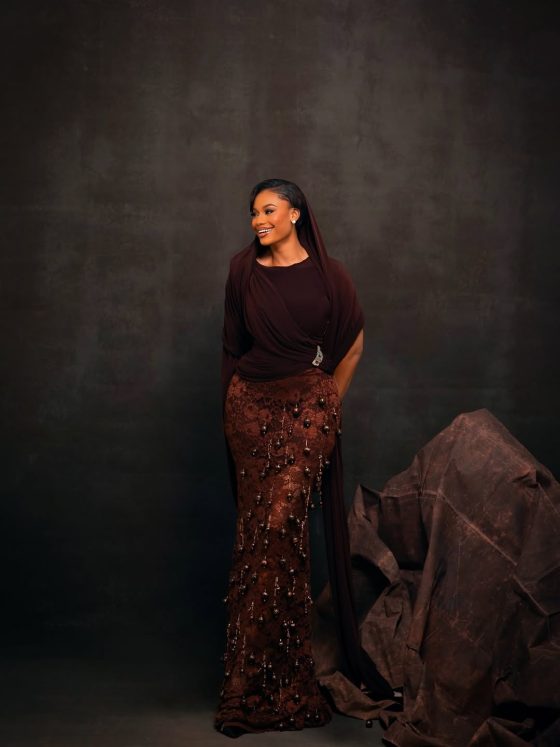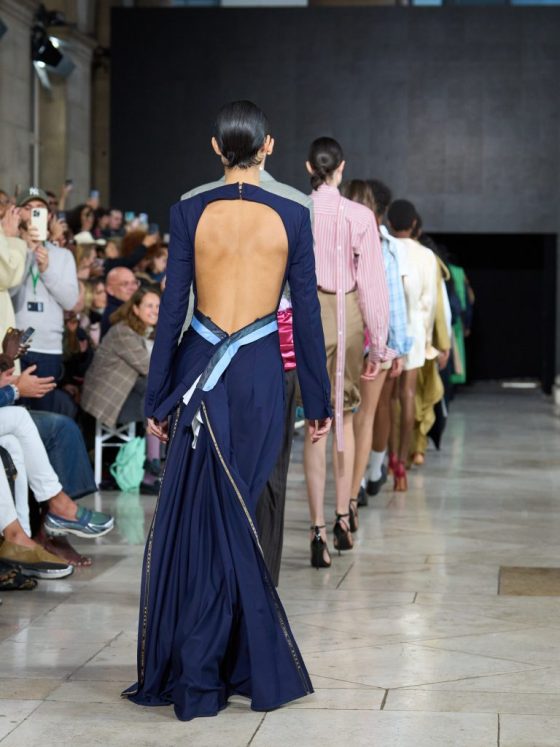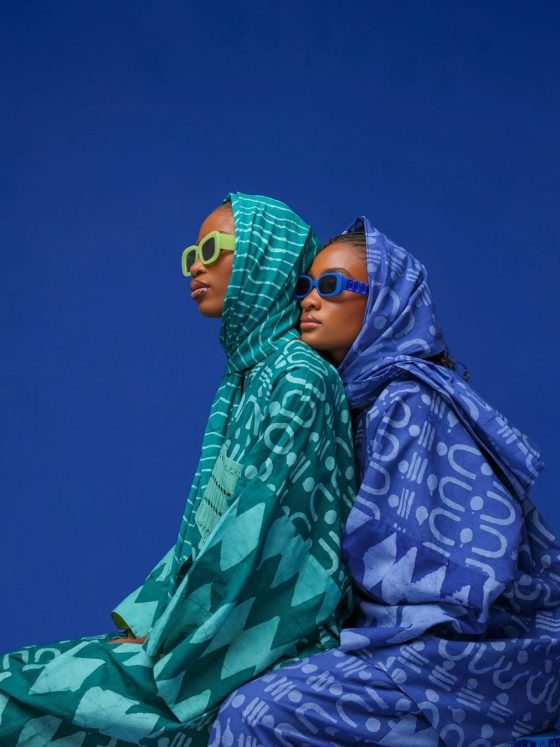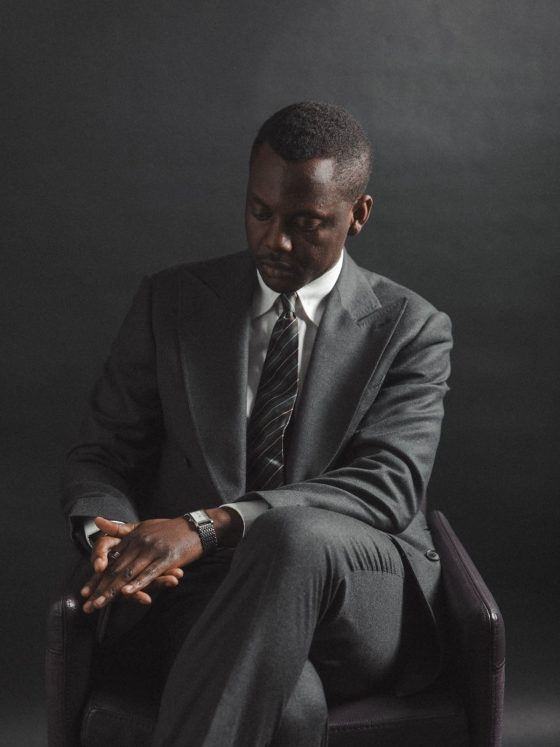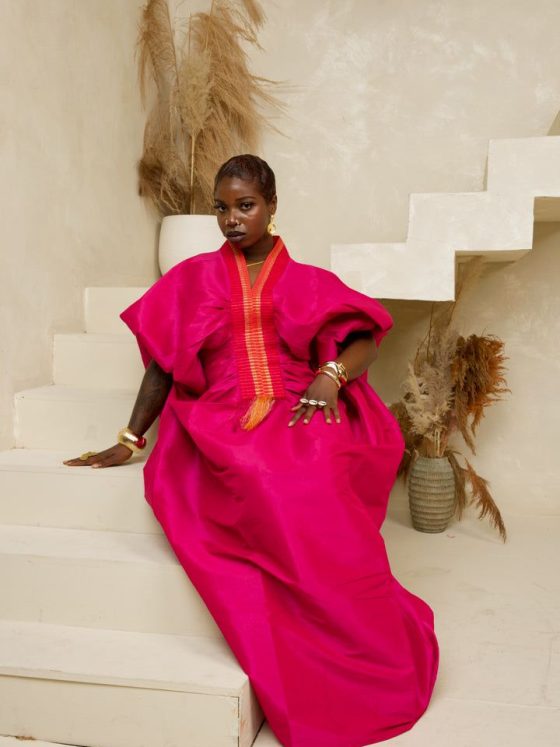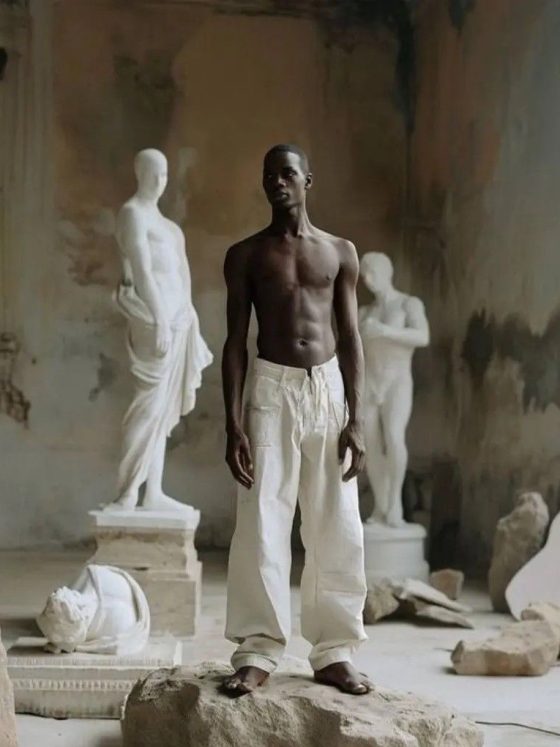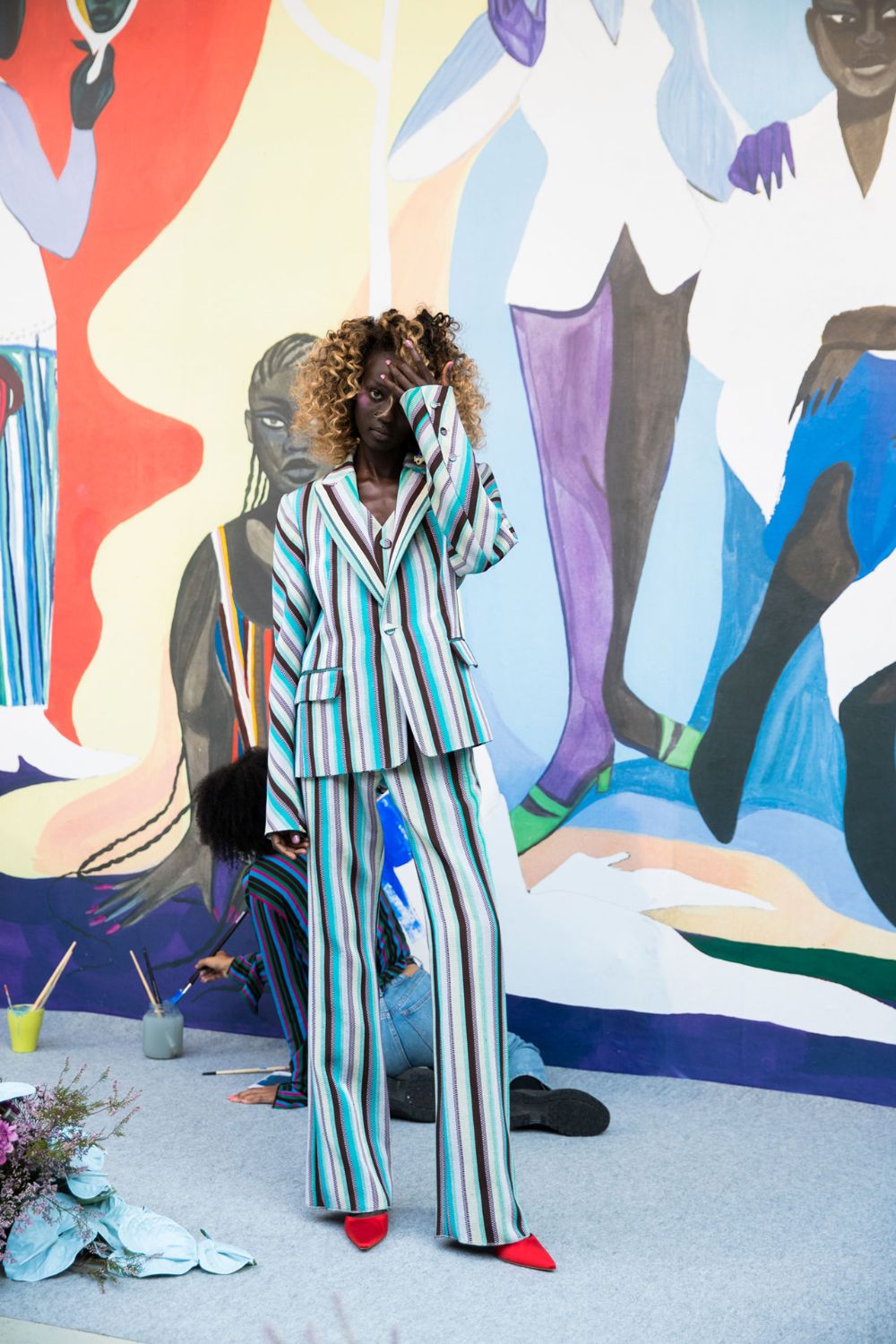
In February 2020, Paris Fashion Week opened with a Nigerian designer for the first time in its history. Kenneth Ize, born in Lagos, raised in Vienna, working from a studio in the Lagos suburb of Sabo Yaba with weavers in the western Nigerian city of Ilorin, walked into the Palais de Tokyo with a co-ed collection built on aso-oke, a handwoven Yoruba fabric that most of the international press in the room had never examined up close. Naomi Campbell and Imaan Hammam walked the show. The collection received widespread acclaim. Ize’s retail network had doubled to 18 stockists in the run-up to the show, including Browns in London, Machine A, Ikram in Chicago, and Addicted in Seoul.
That moment was significant in every direction it pointed. It confirmed that aso-oke could carry a luxury fashion collection on the international runway that matters most to Western buyers. It confirmed that a Nigerian designer working with five weavers and building a production centre in Ilorin could open Paris Fashion Week. And it confirmed something the industry had been circling for years without naming precisely: that the handwoven cloth itself was the brand’s primary asset, not the designer’s biography, not the celebrity attendance, and not the runway spectacle. The aso-oke question, which is the question of what it means to build a luxury business on a craft that cannot be scaled industrially without ceasing to be itself, was the one Ize’s entire career had been built on answering.
Kenneth Ize built a luxury label on a cloth most of the world had never heard of. Here is what the Aso-Oke question actually demands — commercially, culturally, and creatively.
Kenneth Ize, Aso-Oke, and the Fabric as Foundation
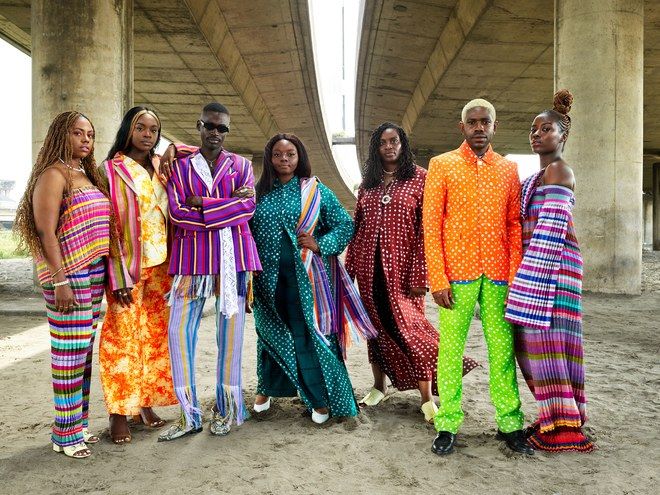
Aso-oke means top cloth in Yoruba. The fabric is woven on a narrow horizontal loom by Yoruba artisans across Oyo, Oshun, and Kwara states in Nigeria. The weaver holds the pattern in memory across hundreds of warp threads, making decisions about the float pattern, the supplementary weft structure, and the colour sequencing that determine the finished cloth’s geometry. Each strip is narrow. Finished garments are assembled from multiple strips. The construction visible in the seams of a genuine aso-oke piece is not a design choice. It is the structural consequence of how the cloth is made. Kenneth Ize’s weavers, based in Ilorin, Kwara State, produce the aso-oke that becomes part of his collections. As Ize told Another magazine, it takes a person to create the fabric, and it takes days to make, within a community, weaving the cloth. The soul being put into that fabric is the designer’s primary material. Not the colour. Not the silhouette. The making.
Ize was born in Lagos in 1990 and moved to Vienna with his family at the age of four. He studied fashion at the University of Applied Arts Vienna under Bernhard Willhelm and Hussein Chalayan, graduating in 2013. He launched his label at Lagos Fashion Week that year. After a two-year return to Vienna for his master’s degree, he relaunched in 2015 with collections that centred the aso-oke fabric as both the creative proposition and the commercial differentiator. His connection to the fabric came not from academic study but from personal observation: his mother’s wardrobe, his family’s relationship to cloth as a bearer of identity and occasion. The design language he developed with it at the University of Applied Arts, the technicolour suiting, the androgynous silhouettes, the graphic colour-blocking, translated the Yoruba cloth into a visual idiom that international buyers had not seen before.
The LVMH Prize 2019 finalist selection confirmed that the translation worked on the most rigorous institutional assessment the industry applies to emerging talent. Ize did not win, but the connections made in Paris during the selection process doubled his retail network and led directly to the 2020 Paris Fashion Week opening slot. The trajectory from Lagos Fashion Week 2013 to Paris Fashion Week 2021 opening, when Kenneth Ize became the first African designer to open the event, was built entirely on aso-oke. Not on-brand diversification. Not on a product category pivot. On one cloth, woven in one region of Nigeria, by weavers whose knowledge Ize has spent a decade learning to amplify rather than abstract from.
The Craft Economy Behind the Brand
The business model that Kenneth Ize built around aso-oke is instructive for the broader question of how African heritage textiles translate into luxury brand economics. Ize works directly with a core team of women artisan weavers in Ilorin. He has built a production centre in the city that functions as both a manufacturing facility and a training site. His stated ambition, documented in CNN reporting on the brand, extends to bringing aso-oke weaving into the Nigerian school curriculum and training adults at the Ilorin centre as a form of cultural and economic investment. The weavers are not part of the supply chain. In Ize’s design philosophy, they are co-creators. Their technical decisions about how to execute the patterns Ize develops with them shape the final garment in ways that no industrial process could replicate or control.
The commercial consequence of this model is limited volume. Aso-oke garments take days to produce. A collection built on handwoven cloth cannot scale to the production volumes that wholesale relationships with major department stores typically require. Ize has navigated this by positioning the label as luxury from the beginning, rather than attempting to reach mass-market price points through volume economics. The Browns stockist relationship, which involves a curated selection of pieces rather than a full wholesale order, is the appropriate commercial format for the scale of production the craft permits. The brand’s presence on Farfetch provides global reach without requiring production volumes that would compromise the handwoven foundation.
The FW26 collection, titled JOY and presented at Berlin Fashion Week in January 2026, combined aso-oke with velvet, wool, lining, and denim. The collection was built through conversation: Ize described absorbing dialogues with collaborators, including James Tennessee Braindt, Rodney Patterson, KK Obi, and Giovanni Mareschi, then weaving those exchanges into textiles. Materials associated with warmth, protection, and interiority were used to blur the boundary between inside and outside. The aso-oke within this expanded material palette was not decorative. It remained the structural and conceptual anchor. The denim and velvet were brought into dialogue with the handwoven cloth, not the other way around.
The constraint of Aso-Oke is not a limitation Ize works around. It is the creative proposition he works from. Every decision the brand makes follows from the cloth.
The Return and the Berlin Chapter
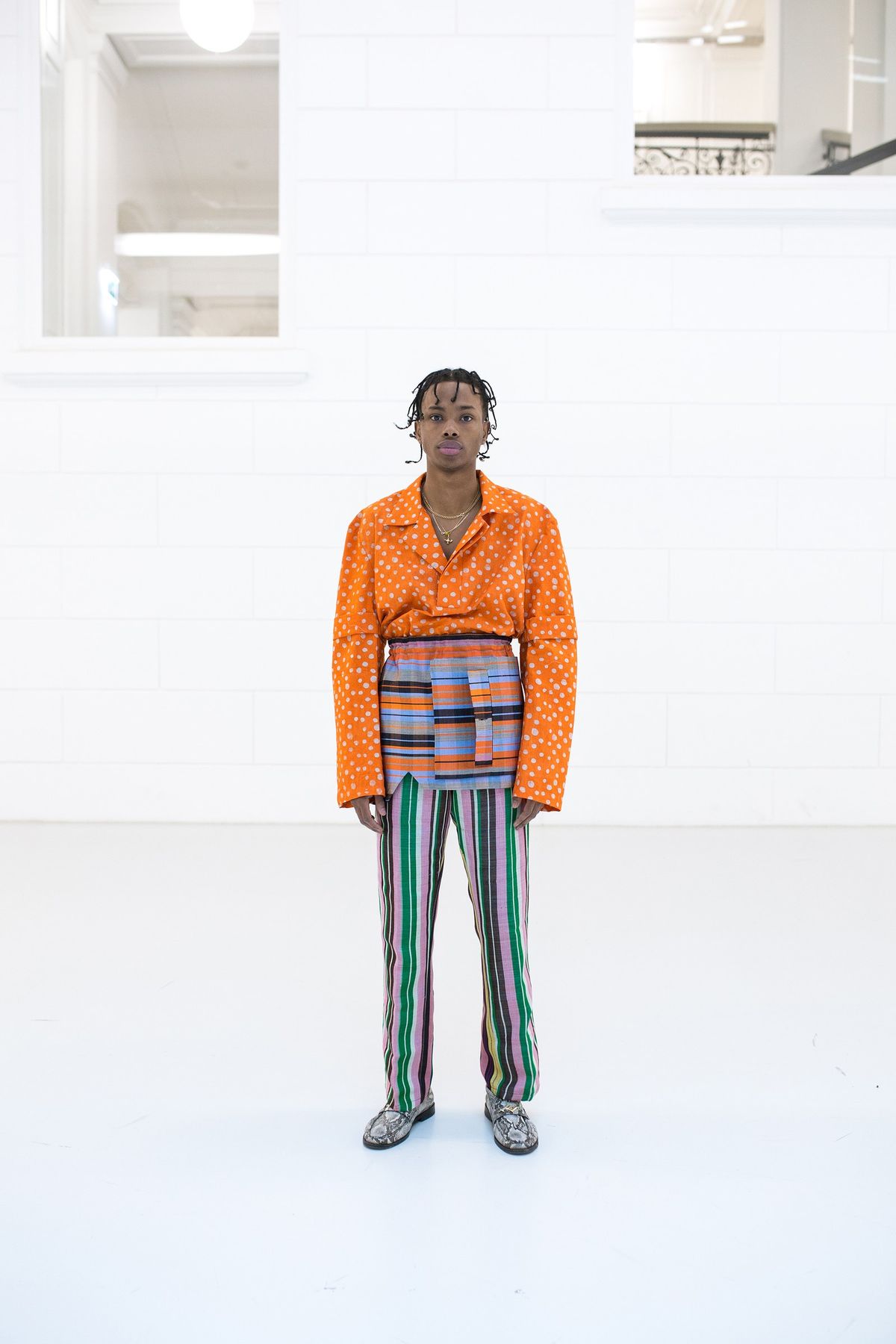
Kenneth Ize’s return to the runway at Berlin Fashion Week AW26 in January 2026 was, as Africa Reimagined documented, a modest collection of 14 looks but a significant one. The brand had been through a period of reduced public visibility between the Paris Fashion Week peak and its Berlin return. That gap, whatever its cause, did not represent a retreat from the aso-oke proposition. The collection confirmed that the creative position had not changed. The fabric remained primary. The tailoring remained clean and technically assured. The show’s theme, joy not as escapism but as emotional resistance, applied the brand’s characteristic intellectual seriousness to the question of what garments owe the people who wear them in difficult times.
Berlin Contemporary, the prize programme that provided 25,000 euros to each selected designer to fund the show, was the structural mechanism that enabled the return. The programme, funded by Berlin’s Senate Department for Economic Affairs and the European Regional Development Fund, offered what the Africa Reimagined analysis described as an alternative pathway into European fashion weeks compared to the invitation-led systems of Paris and Milan. For Ize, which had already proven the Paris pathway, Berlin provided a funded reentry point into the European runway circuit at a time when the brand was rebuilding its international presence. The Brussels Contemporary support model is precisely what the Paris cost analysis published by Omiren Styles identified as a prerequisite for African designer participation in European fashion weeks: institutional support that absorbs the structural cost differential.
The Berlin show drew Orange Culture and Buzigahill alongside Kenneth Ize, three African brands on the same European fashion week schedule at the same time, supported by the same institutional programme. This is the model the industry needs to scale: not individual brand heroism navigating a hostile cost structure, but institutional investment in creating the conditions for multiple African brands to present simultaneously, build buyer relationships, and develop the European presence that drives commercial return.
Also Read:
- Bubu Ogisi of IAMISIGO: The Designer Who Refuses to Make African Fashion Legible to the West
- Investing in Textile Heritage: The Business Case for Preserving What Western Fast Fashion Cannot Copy
- The Real Cost of Showing at Paris Fashion Week for an African Designer
- What African Fashion Brands Get Wrong About Scaling — and the Three That Got It Right
What the Aso-Oke Question Actually Demands
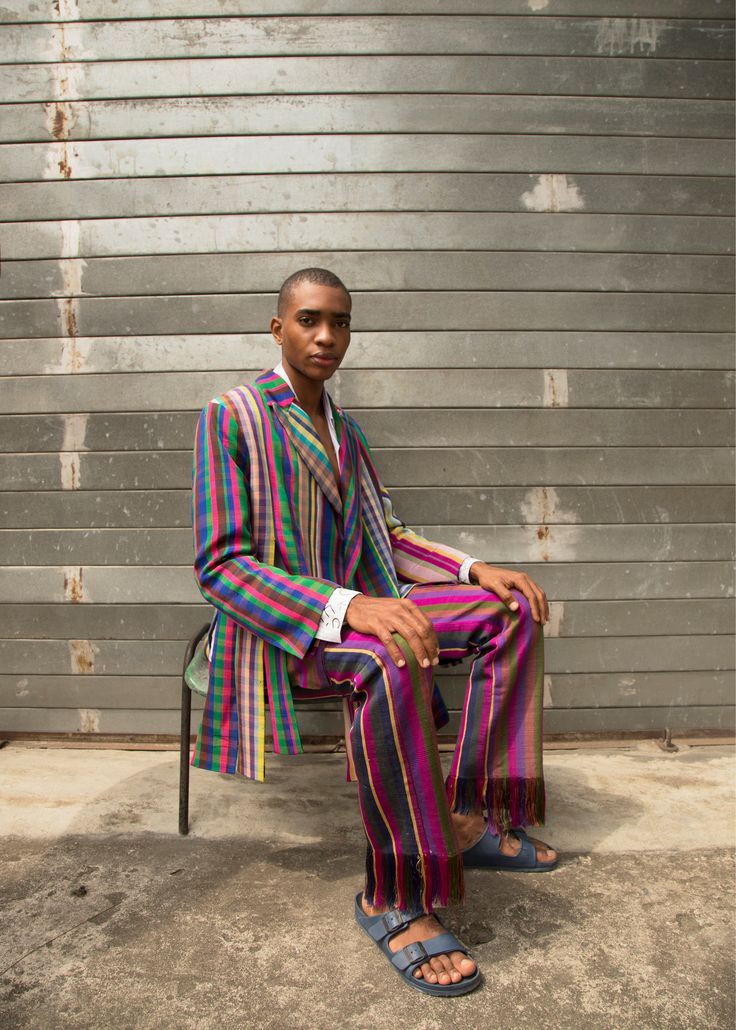
The aso-oke question is not purely a creative one. It is a business architecture question, and Ize’s career is the most sustained answer to it in the contemporary African fashion landscape. Building a luxury brand on a handwoven cloth means accepting that the cloth sets the production limit, the price floor, and the supply chain geography. You cannot commission aso-oke from a mill in China. You cannot accelerate production beyond what your weavers in Ilorin can physically produce without either abandoning the handwoven foundation or scaling your weaving community. Ize has chosen to scale the community. The training centre in Ilorin, the ambition to bring weaving into the school curriculum, and the nine women artisans directly employed: these are not corporate social responsibility initiatives. They are the brand’s production strategy.
The business case for this approach is clearer in 2026 than it was in 2013. Global luxury consumer demand for provenance-verified craft is documented and growing. The Kente GI framework, launched by Ghana in September 2025, provides the legal architecture for aso-oke to follow a comparable protection pathway. As Omiren Styles argued in its textile heritage investment analysis, heritage textiles whose value resides in a specific knowledge system rather than in a replicable design carry durable premium value that fast fashion cannot neutralise. Kenneth Ize has been demonstrating this commercially for over a decade. The 18 stockists in his retail network at the time of his Paris debut, including stores on four continents, were buying aso-oke. Not just the silhouettes. The cloth.
The Omiren Argument
Kenneth Ize’s career makes a specific argument that the African fashion industry has not yet fully absorbed: the handwoven cloth is not a design element in the brand. It is the brand. Every commercial decision, every production choice, every platform selection the label has made since 2013 has been an answer to the question of what kind of business can be built on aso-oke without asking aso-oke to become something it is not. That question has no simple answer, and the career shows the complexity: the hiatus periods, the scale constraints, the dependency on institutional support to access European platforms, the training centre in Ilorin that represents an investment in the supply chain, and the brand needs to grow without abandoning the craft that makes it worth growing. None of this is a design problem. It is all a business architecture problem.
The Omiren Styles position is that the aso-oke question Ize has been answering since 2013 is the central strategic question for African luxury fashion more broadly: how do you build a commercially durable business on a craft that cannot be industrialised without ceasing to be itself? The answer requires accepting the craft’s production limits as business parameters rather than obstacles, building the weaving community rather than outsourcing the supply, and finding commercial formats such as curated wholesale, direct-to-consumer, and institutional platform support that are appropriate for the volumes those limits permit. Kenneth Ize has done all of this. Not without difficulty. With consistent creative conviction. The industry that learns from that record will build more durable businesses than the one that ignores it.
Frequently Asked Questions
Who is Kenneth Ize, and what is the brand known for?
Kenneth Ize is a Nigerian designer born in Lagos in 1990 and raised in Vienna. He studied fashion at the University of Applied Arts Vienna under Bernhard Willhelm and Hussein Chalayan, graduating in 2013. He launched his label at Lagos Fashion Week that year. The brand is known for its use of aso-oke, a traditional Yoruba handwoven fabric produced by artisan weavers in the western Nigerian city of Ilorin. His collections translate the cloth into contemporary tailoring, technicolour suiting, and gender-fluid silhouettes that have earned him international stockists and recognition, including a 2019 LVMH Prize finalist position.
What is Aso-Oke and why is it central to Kenneth Ize’s work?
Aso-oke means top cloth in Yoruba. It is a handwoven fabric produced on narrow horizontal looms by Yoruba artisans across Oyo, Oshun, and Kwara states in Nigeria. The weaver holds the pattern in memory across hundreds of warp threads, making structural decisions about float patterns, supplementary weft embellishment, and colour sequencing that determine the finished cloth’s geometry. The narrow-strip format means finished garments are assembled from multiple pieces, and the construction visible at the seams is a structural consequence of the weaving method. Ize works directly with a core team of women artisan weavers in Ilorin and has built a training centre in the city to expand the community’s capacity and preserve the knowledge system.
What was significant about Kenneth Ize’s Paris Fashion Week appearance?
Kenneth Ize made his Paris Fashion Week debut in February 2020, opening the womenswear ready-to-wear season at the Palais de Tokyo with a co-ed collection built on aso-oke. He was the first Nigerian designer to show at Paris Fashion Week at that level, and later became the first African designer to open Paris Fashion Week in 2021. The 2020 show featured Naomi Campbell and Imaan Hammam. By the time of the show, his retail network had doubled to 18 stockists, including Browns, Machine A, Ikram in Chicago, and Addicted in Seoul. The network expansion had been driven by the LVMH Prize 2019 finalist selection, which made the Paris connections that led directly to the debut.
What was Kenneth Ize’s AW26 collection, and what did it explore?
Kenneth Ize’s AW26 collection, titled JOY, was presented at Berlin Fashion Week in January 2026 as part of the Berlin Contemporary prize programme. The collection consisted of 14 looks and was described as both a question and a confession. It reframed joy not as escapism but as emotional resistance, built through collaboration with friends and creative partners whose dialogues Ize wove into the textiles. Aso-oke, velvet, wool, and denim were combined to blur the boundaries between inside and outside, using materials associated with warmth and protection to express vulnerability, community, and self-awareness.
How does Kenneth Ize’s production model work, and what are its commercial implications?
Ize works directly with a team of women artisan weavers in Ilorin, Kwara State, and has built a production centre there that functions as both a manufacturing facility and a training site. The handwoven production method means garments take days to produce, and output cannot be scaled industrially without abandoning the handwoven foundation. The brand has navigated this by positioning itself as a luxury brand from the beginning rather than pursuing volume economics. Commercial formats include curated wholesale relationships with Browns and Farfetch, as well as direct-to-consumer channels. The training centre and ambition to bring aso-oke weaving into the Nigerian school curriculum are both a production strategy and a cultural investment.
Explore More
Read the full Designers archive at omirenstyles.com/category/designers/ for profiles of the designers building African fashion’s next chapter from the inside, on craft foundations that the industry is only beginning to account for properly.