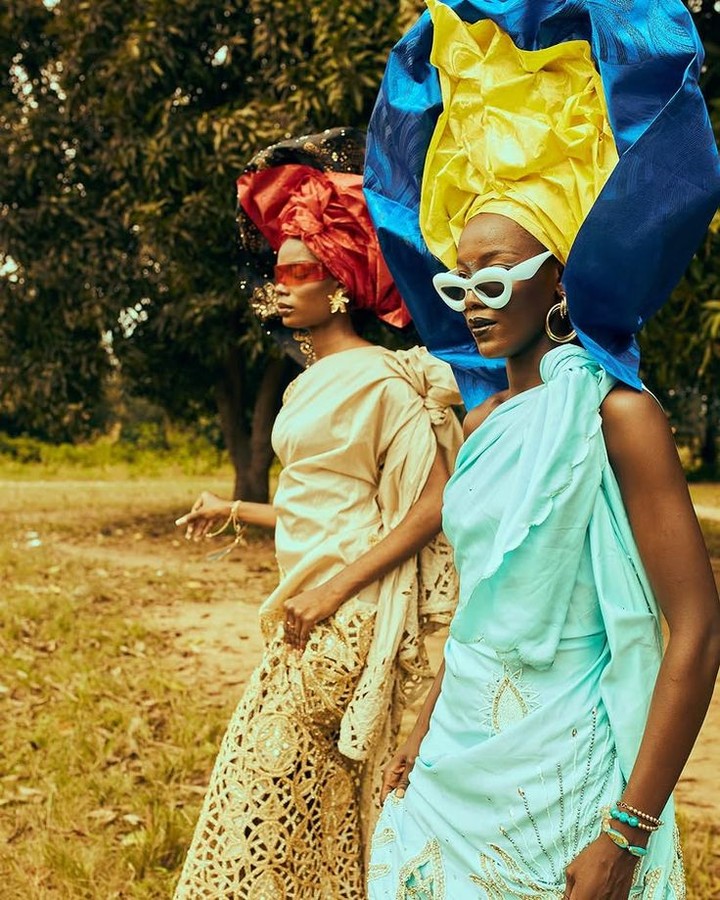
A gèlè takes shape through the handling of cloth: folding, pleating, pinching, tucking and spreading. In textile curator Susan Brown’s account, those actions allow a headwrap to be retied for different occasions and personal aesthetic choices. The cloth is not simply placed on the head. It is arranged into a silhouette. Gèlè is associated with Yoruba dress in south-western Nigeria. The V&A describes headties whose fabric can stand away from the head, creating forms that extend beyond their natural outline. Viewing gèlè through this lens brings the act of tying into focus. The material matters, but so does what happens to it: where it is gathered, how it is folded and which parts are allowed to rise or spread.
A textile in the Cooper Hewitt collection provides one starting point. Records of J. D. ’Okhai Ojeikere’s photographs offer another. Together, they allow a focused examination of arrangement, not a complete history of gèlè, but a closer account of how cloth becomes form.
Explore how folding, pleating and arrangement shape Yoruba gèlè through a museum textile and records of Ojeikere’s headtie photographs, and why it matters.
A Textile Made to Be Rearranged

The headwrap discussed in Brown’s Cooper Hewitt essay, “Yoruba Complete”, is patterned, handwoven cotton made in Nigeria in the early to mid-20th century. Her account places it within a practice of retying, responding to fashion, occasion and individual taste. That possibility of rearrangement is central to the object’s use. The textile remains, although its presentation can change. Brown’s description identifies several distinct actions. Folding brings one part of the cloth against another. Pleating organises it into repeated folds. Pinching, tucking and spreading help determine where fabric gathers and where it opens out. Her account makes the handling itself part of the aesthetic practice.
This distinction is useful for fashion writing. Describing the textile’s pattern or colour does not fully describe the headtie. The finished arrangement also has proportions, edges and a relationship to the wearer’s head. The same length of cloth need not produce the same silhouette every time. In Brown’s account, retying creates opportunities for renewed expression rather than merely restoring a fixed shape.
Material and Arrangement
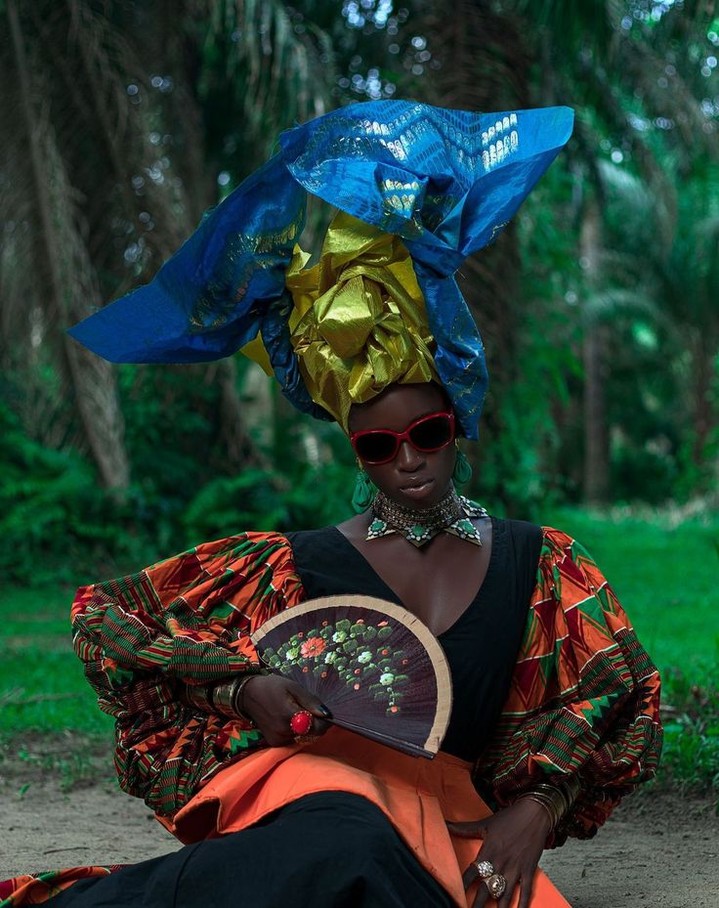
The V&A identifies aṣọ òkè as a traditional material for gèlè, describing a stiff, handwoven cloth that can be manipulated to stand away from the head. That description connects a material property to a design possibility. A fabric that holds an elevated form offers different opportunities than one that falls closely around the head. It does not, however, establish that every gèlè is made from the same textile. Nor should a catalogue description such as “silky” be treated as a confirmed identification of fibre or weave. The photographic records considered here do not specify the precise construction of every headtie they describe.
The useful approach is to keep material and arrangement connected without confusing them. Where the cloth is identified, name it. Where only its appearance or shape is recorded, describe that more limited evidence.
Ojeikere and the Documentation of Form
- D. ’Okhai Ojeikere’s photographic work gives headtie arrangements a sustained place in the visual record. The V&A links his Headties photographs to his broader documentation of Nigerian culture, which he began in 1967. It also notes the consistent rear viewpoint shared with his Hairstyles series, directing attention towards the shapes and patterns created by hair and cloth. He described these forms as “sculptures for a day”. The phrase gives temporary arrangements a particular weight. A form need not be permanent to merit close attention or documentation.
Two V&A records indicate the variation within his headtie photographs. In Untitled, HG-689-05, photographed in Nigeria in 2005, the museum describes patterned cloth tied towards the back-left side of the head and fanning out in folds beyond its width. In Untitled, HG 423-04, photographed in Nigeria in 2004, the recorded form is different: a large, ruffled V, with the right side rising higher than the left and extending beyond the frame. These descriptions establish distinct silhouettes: one broad and fan-like, the other rising upwards with unequal heights. The cited collection pages do not currently display reproductions, so they support a comparison of the recorded descriptions rather than an independent close reading of the photographs.
Even within that boundary, “elaborate headtie” is plainly an incomplete description. It registers an impression without distinguishing one arrangement from another.
Occasion and Personal Choice
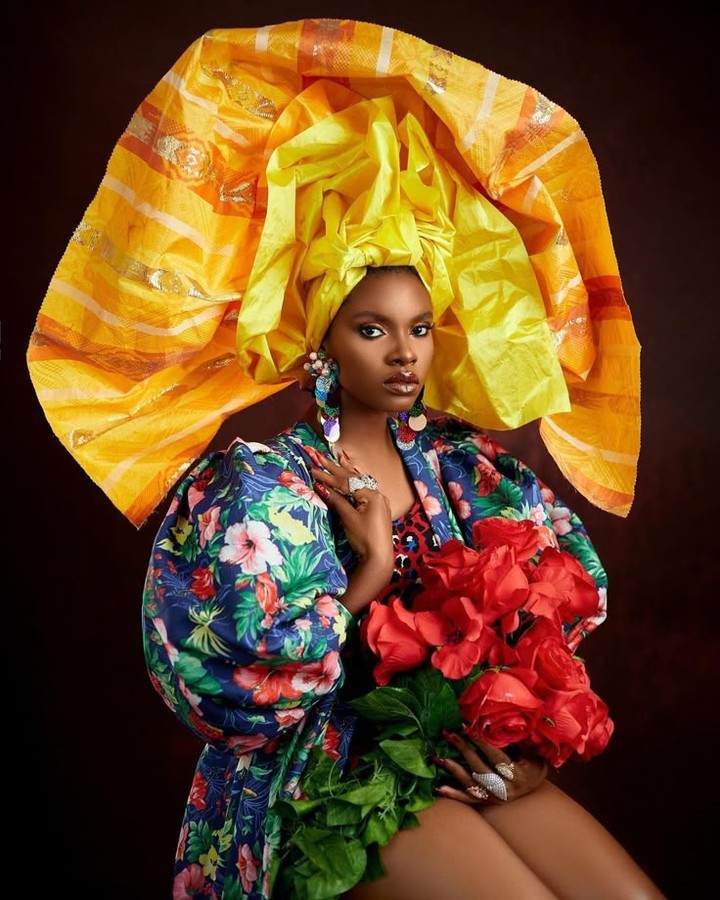
Gèlè’s forms belong to social life as well as to fabric handling. Brown connects retying with occasion and personal aesthetic expression. The V&A places gèlè within Yoruba ceremonial dress. These accounts help explain why the headtie should be considered as worn clothing rather than an isolated sculptural object. They do not explain every wearer’s choices. A photograph may preserve a silhouette without recording who tied it, why that arrangement was selected or how the wearer understood it. Those questions require their own evidence. Cultural context can inform an account without becoming a fixed code through which every fold is interpreted.
What the sources do establish is a relationship between cloth, arrangement and use. Gèlè can be discussed through all three, without reducing it either to a formal exercise or to a general symbol of tradition.
The Omiren Argument
The act of arrangement belongs in the discussion of fashion design. For gèlè, identifying the textile is only part of describing the finished appearance. Folding, pleating, gathering and spreading give the cloth its particular form. Accurate coverage should make room for that work rather than relying solely on adjectives such as “bold”, “regal” or “traditional”. Credit also needs precision. The textile’s maker, the person who ties it, the wearer and the photographer can occupy different roles. Where the evidence identifies those contributions, they should remain distinct. Where it does not, uncertainty should not be filled with assumption.
Gèlè does not need to stand for every African headwrap to command attention. Its specific name, material possibilities and documented arrangements already offer a substantial fashion subject.
Also Read:
- When the Gele Speaks: The Cultural Language of Yoruba Head-Tying
- Top 5 Aso-Oke Styles for Yoruba Women 2026 – Diaspora Looks
- The Meaning Behind the Headwrap: History, Resistance, and Diaspora Pride
- The Madras Headwrap: How Caribbean Women Turned a Colonial Textile into a Declaration
Frequently Asked Questions
What is gèlè?
Gèlè is a headtie associated with Yoruba dress in southwestern Nigeria. The published accounts used here discuss its arrangement, personal aesthetic expression and ceremonial contexts. In curator Susan Brown’s account, folding, pleating, pinching, tucking and spreading allow a headwrap to be retied for different occasions and individual taste.
What is the relationship between gèlè and aṣọ òkè?
Gèlè names the headtie; aṣọ òkè is a textile traditionally used to make it. The V&A describes its stiffness as allowing the cloth to be arranged into forms that stand away from the head. This does not establish that every gèlè uses aṣọ òkè, and a catalogue word such as “silky” does not confirm a fibre or weave.
What do Ojeikere’s Headties photographs document?
They document particular head tie arrangements. The V&A highlights a rear viewpoint that concentrates attention on the shapes and patterns of the cloth, connecting the series with Ojeikere’s photographic study of hairstyles. He began documenting Nigerian culture in 1967 and described these forms as “sculptures for a day”.
Can a photograph explain why a gèlè was tied a certain way?
Not on its own. A photograph may preserve a silhouette without recording who tied it, why that arrangement was selected or how the wearer understood it. Those questions require their own evidence, and the V&A records used here describe the photographs in writing without displaying reproductions.