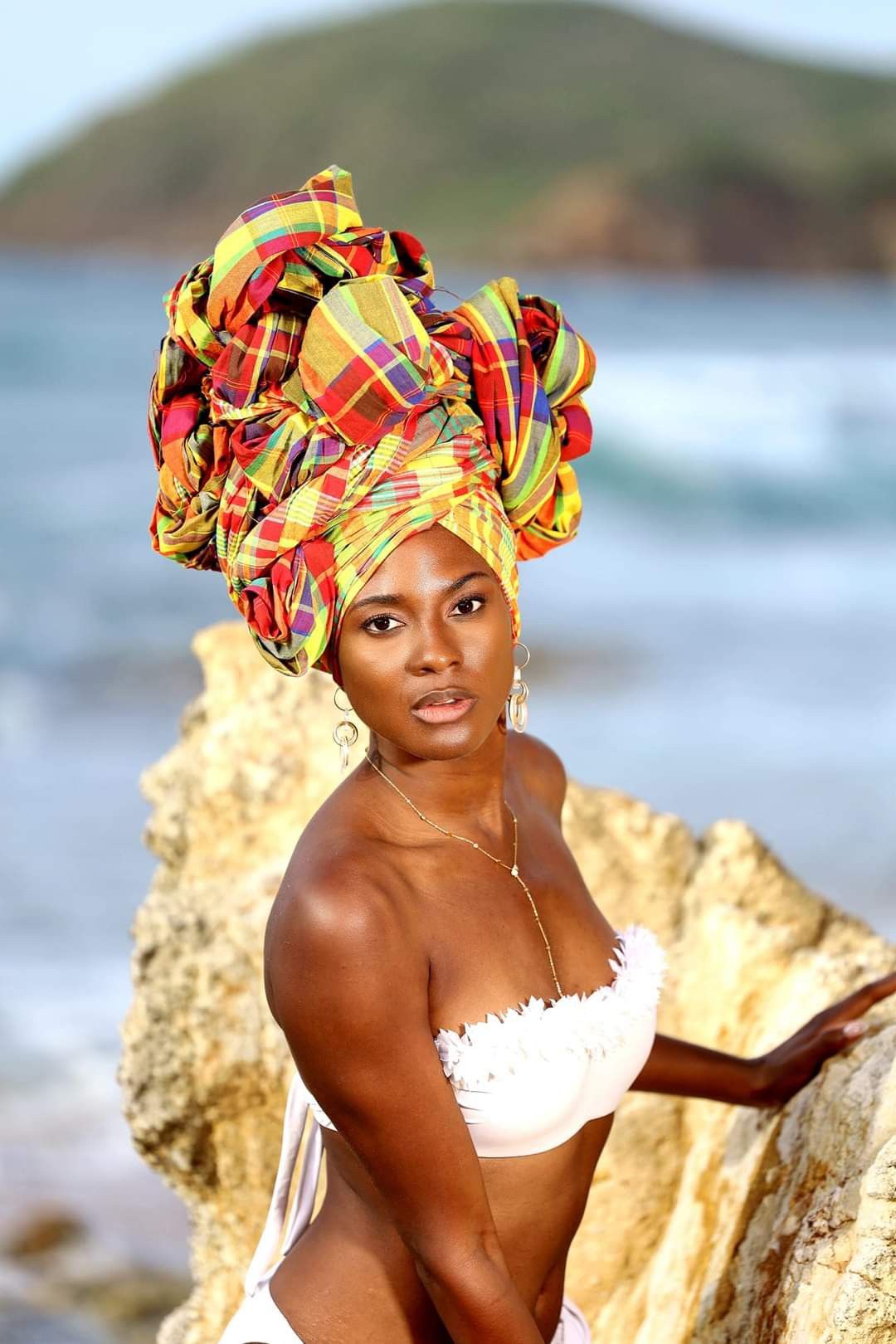
It started as a trade commodity. Madras cloth, named after the city in southeast India where it was produced, entered the Caribbean through French and British colonial shipping routes in the eighteenth century. It was a cheap, lightweight, plaid-woven cotton: practical, available, and entirely indifferent to the people it was being traded around to. It had no cultural meaning of its own in the Caribbean. It was fabric.
What Caribbean women did with it is one of the most extraordinary acts of creative transformation in the history of dress. Over more than two centuries, particularly in Martinique, Guadeloupe, St. Lucia, and Dominica, the madras headwrap evolved from an imposed head covering into a sophisticated form of communication. The number of points tied into the fabric told anyone who knew how to read it exactly who you were, what your situation was, and whether you were available. Utility cloth became a language. That transformation did not happen by accident. It happened because the women who built it refused to let a colonial object stay colonial.
Madras arrived in the Caribbean as a colonial trade cloth. Caribbean women, particularly in Martinique and Guadeloupe, developed a precise code in which every fold and point signified something. This is that story.
The Cloth That Crossed Three Continents
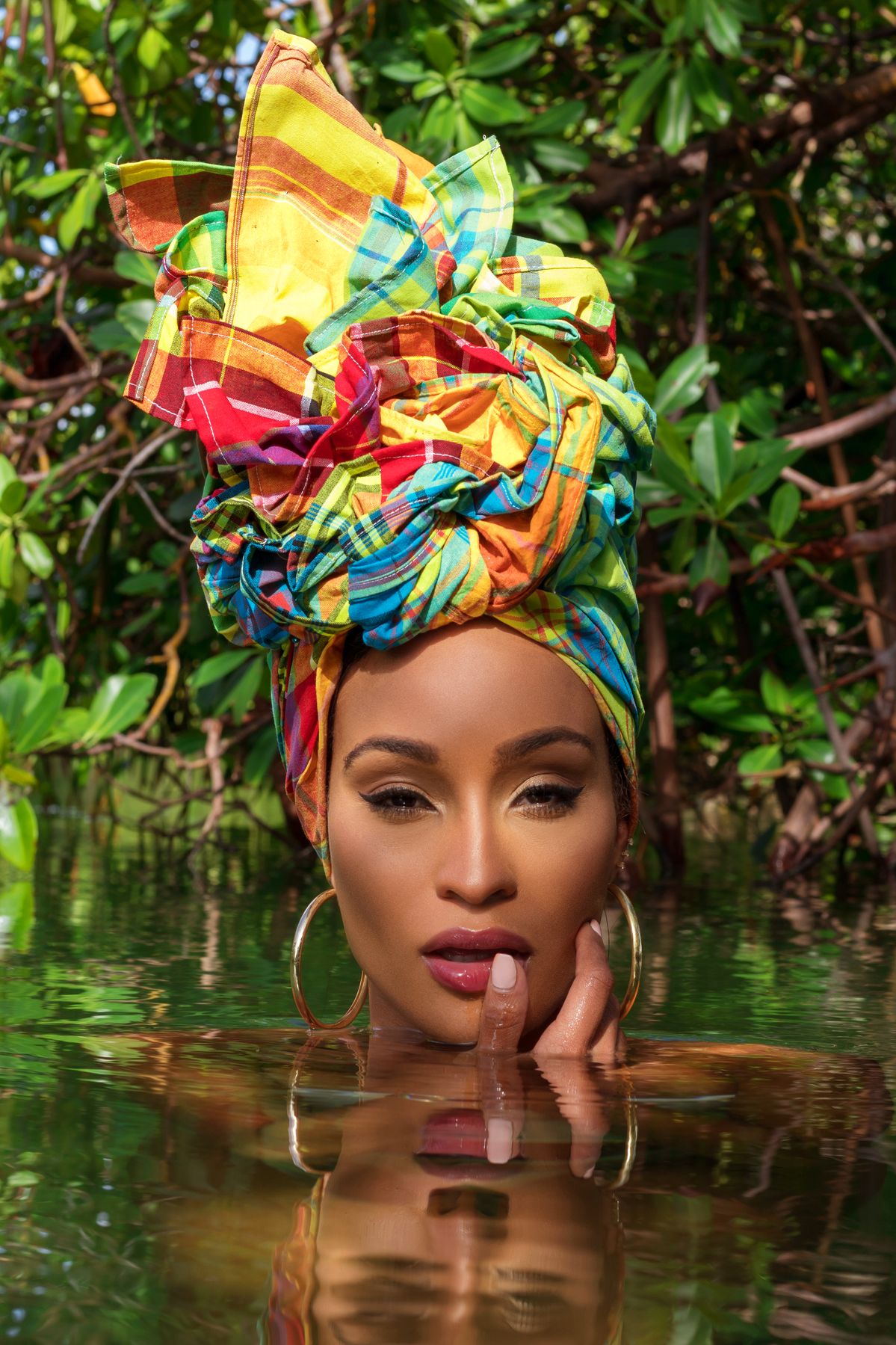
Madras fabric originates in the Chennai region of southeastern India, where its distinctive hand-woven plaid pattern in bright vegetable dyes has been produced for centuries before European traders made it a commodity on global shipping routes. The Portuguese carried it first. The British and French followed, and by the seventeenth and eighteenth centuries, Madras was moving across the Atlantic through both legitimate trade and the slave trade’s commercial infrastructure.
What gave madras its specific resonance in the Caribbean was the way it entered Black women’s lives. Initially, enslaved women were given scraps of madras, often mismatched and undyed remnants, by their enslavers to fashion into headwear. The cloth that arrived as a plantation handout would eventually become the most coded garment on the island. That reversal is the whole story in miniature: something given as a mark of servitude, taken and rebuilt into a mark of identity.
The Law That Made the Headwrap Political
The politicisation of the headwrap was not gradual. It was forced. Colonial sumptuary laws across the Caribbean and Louisiana mandated that free and enslaved women of African descent cover their hair in public. The stated logic varied by colony, but the underlying purpose was consistent: to mark Black women as socially inferior and to curtail the social mobility that their beauty, dress, and presence in public life represented. In Louisiana, the 1786 Tignon Laws formalised this requirement explicitly, introduced by Governor Esteban Miró to control women who, in the words of historian Virginia Gould, had become too light-skinned or dressed too elegantly, competing too freely with white women for status.
The response to these laws is now well documented: Caribbean women did not submit to the spirit of the restriction. They kept the headwrap and made it magnificent—bright madras in reds, yellows, and blues. Jewels and ribbons worked into the folds. Wrapping techniques so elaborate and individual that the historian Carolyn Long noted they enhanced the beauty of their wearers rather than diminishing it. The law intended a badge of dishonour. It received a fashion statement in return. The maré tèt, which translates from Antillean Creole as to tie the head, became not just permitted dress but a site of active resistance and self-authorship.
One fabric. Five Messages.
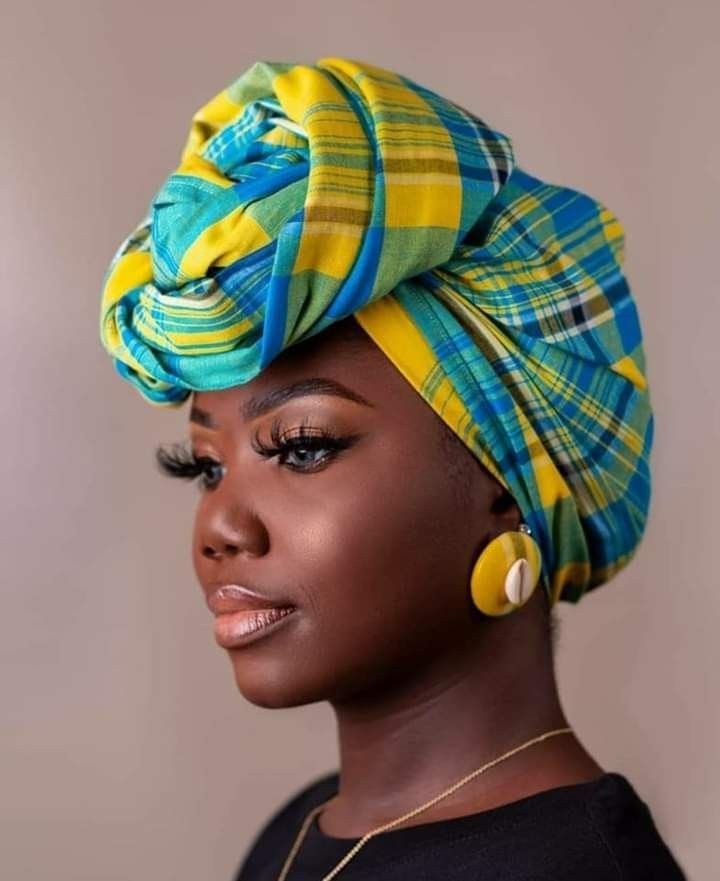
What developed in Martinique and across the French Antilles goes beyond personal style. The number of points tied into the madras headwrap became a precise social code, readable by any woman who understood the system. One point declared that the wearer was single and available. Two points communicated that her heart was taken, but you could still try. Three points said her heart was fully taken, and no approach was welcome. Four points announced that she was available to whoever desired her. The tèt-chaudière, a smooth wrap with no points, was reserved for ceremonial occasions.
This was not decoration. It was information architecture, worn on the head, updated by the wearer to reflect her current status, and legible to the community around her without a single word being spoken. The square or rectangular piece of madras, folded and tied with deliberate precision over the forehead, was communicating socially in real time. No other garment in Caribbean fashion history encodes this much specific meaning in the number of its points. The headwrap did not just adorn it. It spoke.
Martinique’s Douillette: The Headwrap’s Full Context
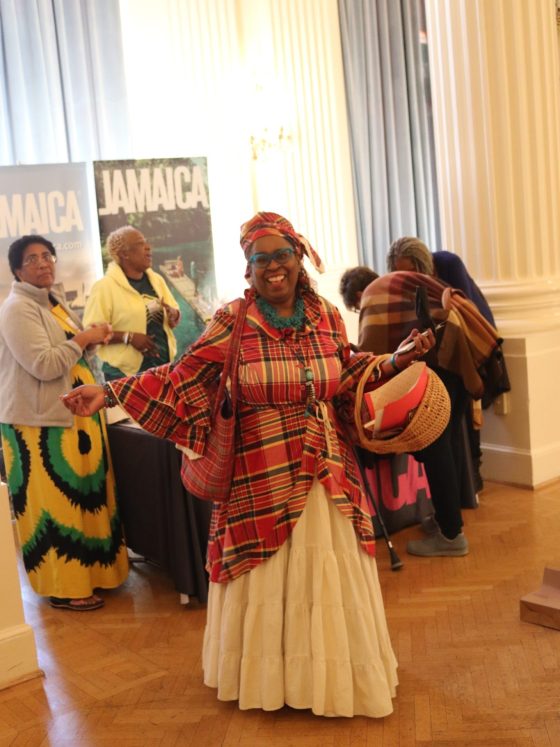
The madras headwrap did not exist in isolation. It was one element of a complete Creole dress system in Martinique, most fully expressed through the douillette, the traditional Martiniquan dress ensemble that paired the headwrap with a floor-length skirt, a blouse or chemise, a foulard shawl draped over the shoulders, and gold jewellery. The full ensemble, worn together, was a complete statement of Martiniquan Creole identity, and each element spoke to the others.
What is significant about the douillette tradition is that it was not folk dress in the condescending sense that term sometimes implies. It was refined, intentional, and codified. Paintings and photographic postcards from the nineteenth and early twentieth centuries show Martiniquan women in full douillette with striking composure: the foulard precisely draped, the madras headwrap immaculately tied, and the gold jewellery chosen with care. These were women who understood that how they dressed was a form of cultural assertion in a society that worked systematically to deny them that assertion. The headwrap was the crown of that system.
When the Code Went Silent
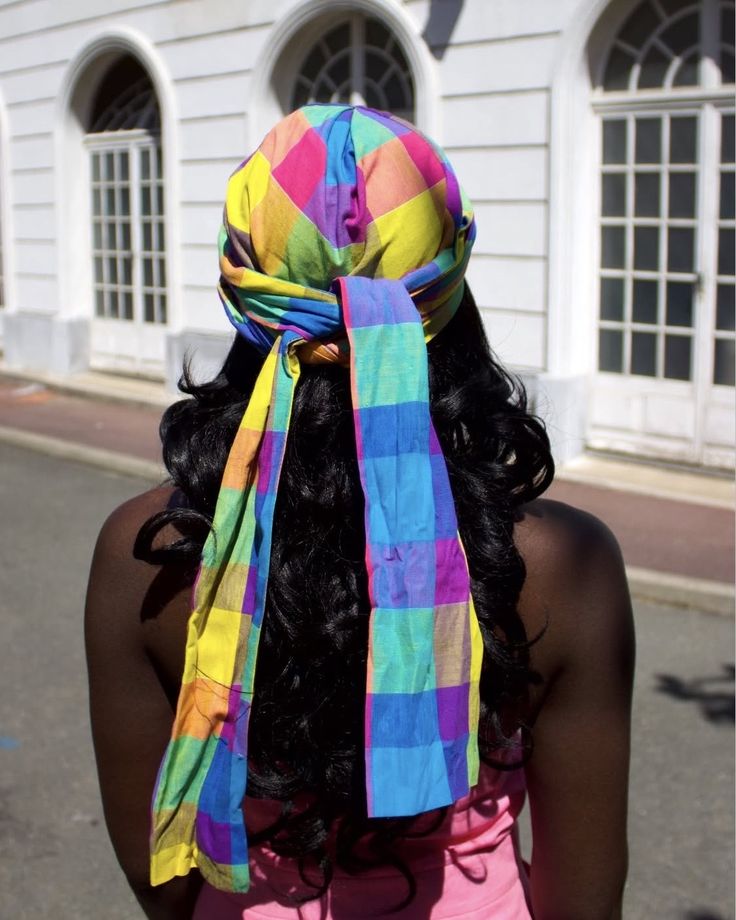
By the mid-twentieth century, the madras headwrap tradition had faded from everyday use across much of the French Caribbean. The social shifts of the post-war decades, permed hair as the dominant beauty standard, urban migration, and the lingering cultural legacy of associating traditional dress with poverty and the rural working class pushed the maré tèt out of daily life. A tradition that had been a living communication system became, for a generation, something worn only at folkloric events or by the very elderly.
This is a familiar trajectory for many African diasporic dress traditions: the same social pressures that colonialism introduced, the equation of European aesthetic standards with respectability and progress, continued to shape what women chose to wear long after formal colonial structures ended. Stylist and maré tèt artist Emmanuelle Soundjata of Martinique, who trademarked the name ‘Maré Tèt’ for her contemporary headwrap practice, has spoken directly about this gap. There was a period when the style was abandoned because women wanted to emulate Europeans, and the wrap was associated only with farmers and the lower class. The system of slavery may have ended, she noted, but the spirit of submission was still there.
Read Also:
- Crop Over Fashion: Barbados Built Its Own Aesthetic System, and It Has Nothing to Do With Trinidad
- Trinidadian Carnival Masquerade Is a Fashion System; It Is Time the World Called It That
The Return: YouTube, Natural Hair, and a Reclaimed Practice
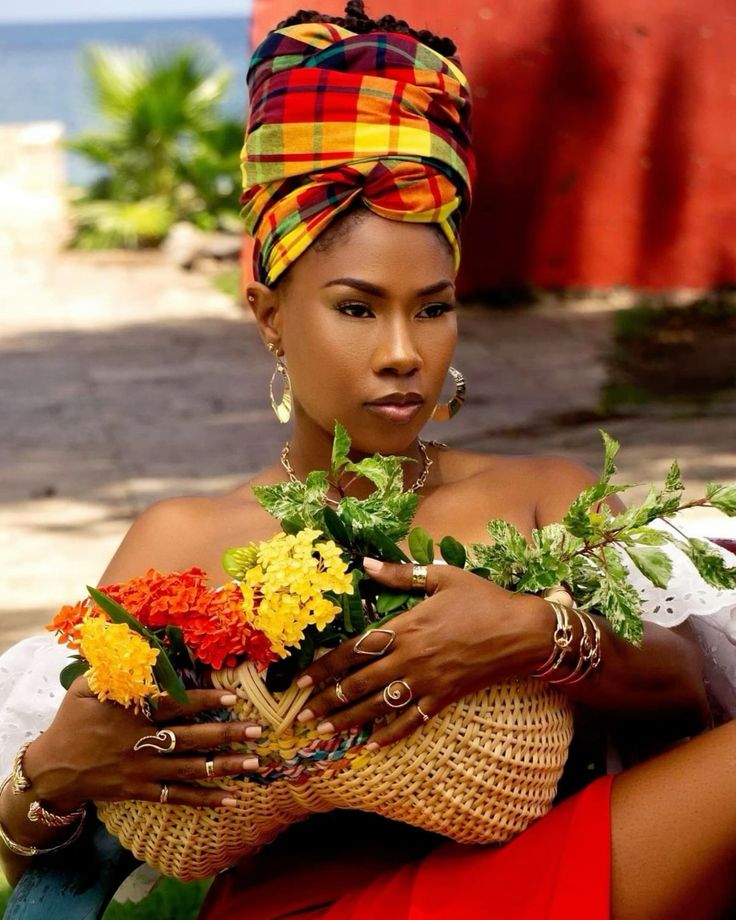
The revival of the maré tèt is not nostalgia. It is a contemporary reclamation driven by the natural hair movement, Caribbean cultural pride, and the same digital infrastructure that has revived craft traditions across the African diaspora. YouTube tutorials and headwrap workshops have proliferated across Martinique, Guadeloupe, the US Virgin Islands, and diaspora communities in France and North America, teaching younger generations the tying techniques that were nearly lost.
In December 2019, the US Virgin Islands passed legislation adopting their own national madras, a fabric specifically designed by a St. Croix textile designer, as a formal institutional recognition of the cloth’s cultural significance. Contemporary designers, including Haitian-American Paola Mathe, founder of the headwrap label Fanm Djanm, the Haitian Kreyòl phrase for ‘strong woman’, have built entire fashion practices around the tradition. Nigerian-British photographer Juliana Kasumu’s photographic essay From Moussor to Tignon documented the headwrap’s evolution across the Black Atlantic diaspora. The tradition once declared unfashionable for a generation is now worn by women who understand exactly what it means to choose it.
A Traded Fabric That Became a Territory
The madras headwrap’s full journey spans three continents and three centuries. It began as hand-woven plaid cotton in Chennai. It moved through Portuguese and British trade routes. It arrived in the Caribbean as a colonial commodity, was handed to enslaved women as scraps, was mandated by sumptuary laws as a marker of inferiority, and was taken by Caribbean women and rebuilt into a communication system precise enough to encode five distinct social states in the number of its folds.
That transformation is not a footnote in fashion history. It is one of the clearest examples in any culture of what happens when people who are systematically denied self-expression find a medium and refuse to let it stay controlled. The madras headwrap is a case study in what textile scholars call the third space: a position of cultural hybridity where Indian cloth, European colonial infrastructure, and African diasporic creativity produced something that belonged fully to none of its source cultures and entirely to the women who made it. It is in the Caribbean. It is Creole. It is specific to Martinique’s social history in ways no other island fully replicates. And it is, from any serious fashion perspective, extraordinary.
THE OMIREN ARGUMENT
Fashion history has a consistent habit of treating African diasporic dress traditions as reactive, as responses to oppression rather than as self-generated systems of meaning. The madras headwrap is usually presented in exactly those terms: colonial law imposed a head covering, and Caribbean women made it beautiful, a complete resistance story. That reading is true as far as it goes, but it stops too early. What Caribbean women built with the madras headwrap was not just beautiful resistance. It was a fully functional communication technology, operating in public without the consent of the colonial structures around it, encoding information that those structures could neither read nor control.
The point system of the maré tèt in Martinique did not ask permission to exist. It existed. It communicated. It documented social status across generations before anyone thought to write it down. That is not a folk tradition sitting at the margins of fashion history. That is fashion at its most precise, most purposeful, and most powerful. The only reason it has not been recognised as such is that the people who built it were not the people who historically got to decide what counted as serious fashion. That is the bias this article exists to correct.
Frequently Asked Questions
- What is Madras fabric, and where does it come from?
Madras is a lightweight, plaid-woven cotton textile originating in the Chennai region of southeastern India, historically known as Madras. It is characterised by bright colours and a distinctive plaid or checked pattern, traditionally produced using vegetable dyes on hand looms. The fabric entered Caribbean markets through Portuguese, French, and British colonial trade routes from the seventeenth century onward. While its name and origin are Indian, its most culturally significant incarnation developed in the French Caribbean, where it became the primary fabric of the traditional Creole headwrap tradition.
- What is the maré tèt and what does it mean?
“Maré tèt” is an Antillean Creole phrase meaning “to tie the head”, referring to the art of wrapping and tying the madras headwrap without pins or fasteners, using only folding and knotting techniques. In Martinique and across the French Antilles, the maré tèt developed into a sophisticated social communication system in which the number of points tied into the headwrap signalled the wearer’s marital and social status to the surrounding community. The practice was trademarked and revived for contemporary audiences by Martinican stylist Emmanuelle Soundjata, who teaches the technique through workshops and online tutorials.
- What do the different numbers of points in the Martinique headwrap mean?
In the traditional Martiniquan headwrap code, the number of points tied into the madras fabric carries a specific social meaning. One point indicates that the woman is single and available. Two points signal that her heart is taken, but you could still try. Three points convey that her heart is fully taken and that no approach is welcome. Four points announce that she is available to whoever desires her. The tèt-chaudière, a smooth ceremonial wrap with no points, was reserved for formal and ritual occasions. This system functioned as a real-time social communication tool, updated by the wearer to reflect her current situation and readable by any community member who understood the code.
- What were the tignon laws, and how did they shape Caribbean headwrap culture?
The tignon laws were colonial sumptuary laws that mandated women of African descent, both enslaved and free, to cover their hair in public. The most documented version was introduced in Louisiana in 1786 under Governor Esteban Miró, but similar laws were in effect across the French Caribbean colonies. The stated purpose was to mark Black women as socially inferior and curtail their public visibility and social mobility. Caribbean women responded by taking the mandated head covering and transforming it into a site of creative expression and social communication, wrapping madras fabric in elaborate and individually distinctive styles that enhanced rather than diminished their presence. The law intended submission. It produced a tradition.
- How did the madras headwrap tradition nearly disappear, and how is it being revived?
By the mid-twentieth century, the daily practice of the madras headwrap had faded across much of the French Caribbean, as permed hair became the dominant beauty standard and traditional dress was associated with poverty and the rural working class. The tradition survived mainly at folkloric events and among older generations. Its revival has been driven by the natural hair movement, Caribbean cultural pride, and digital platforms including YouTube, where tutorials teaching maré tèt techniques have proliferated. Contemporary practitioners, including Martinican stylist Emmanuelle Soundjata, who trademarked the Maré Tèt name, and Haitian-American designer Paola Mathe of Fanm Djanm, have built fashion practices that centre the headwrap tradition for new generations.