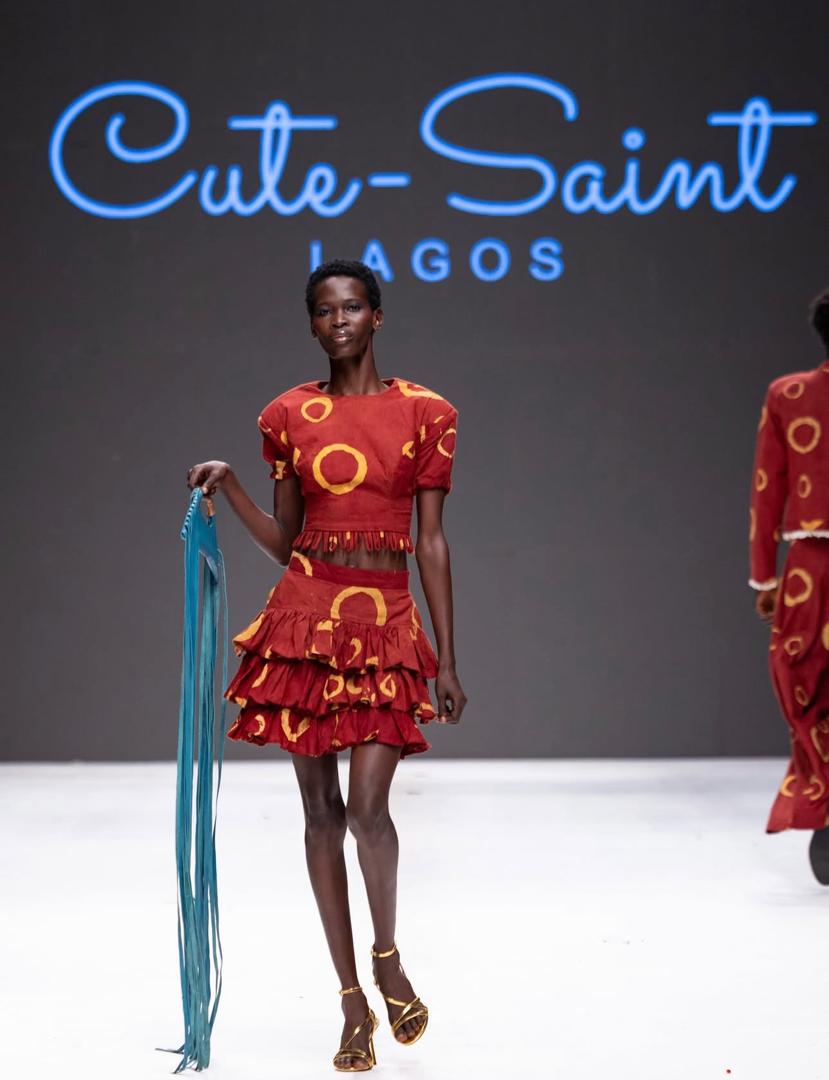
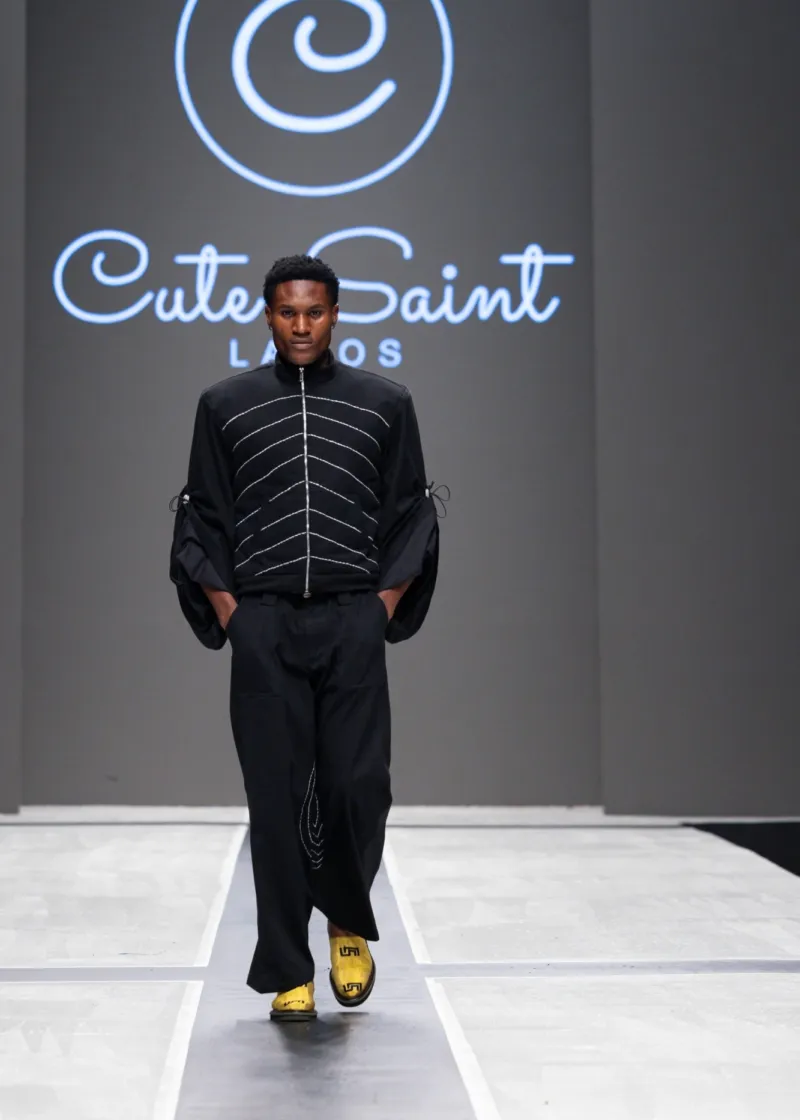
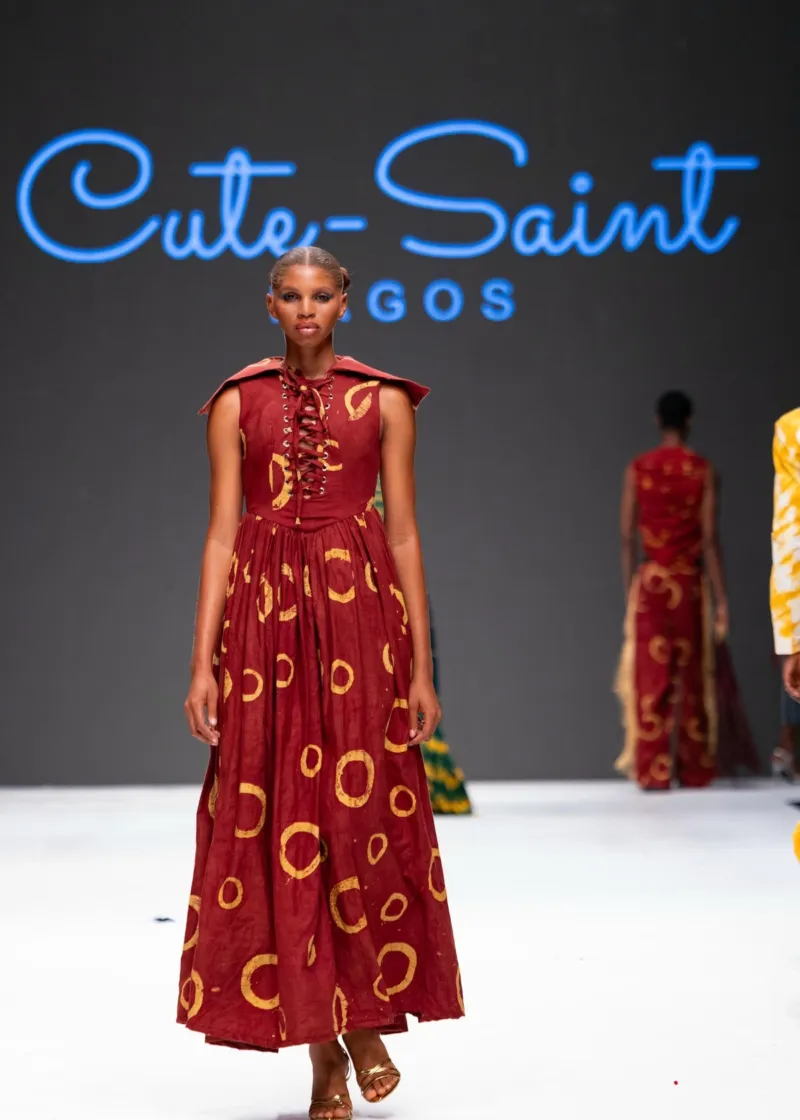
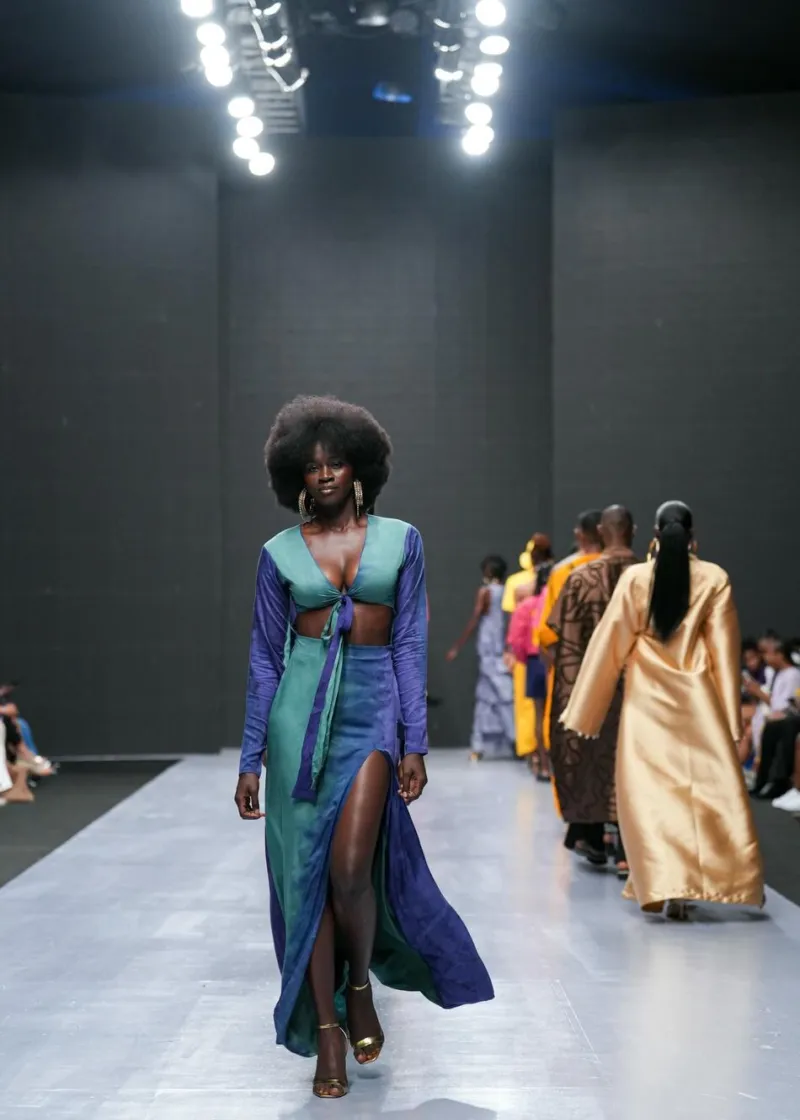
The handbags accompanying Cute Saint’s MO SA, MO WO collection at Lagos Fashion Week 2026 carried another brand’s creative identity: Paciencia.
In ThisDay’s account of the collaboration, Cute Saint founder and creative director Femi Ajose worked with Joy Fache James, Paciencia’s founder and creative director, to develop handcrafted handbags specifically for the collection. The presentation took place on October 29.
That credit changes how the accessories can be understood. Rather than remaining unnamed objects within Cute Saint’s styling, the bags become an identifiable contribution from another designer working through her own brand.
At an edition framed around craftsmanship, the partnership offers a focused example of what precise attribution can reveal: not simply that an object was handcrafted, but who contributed to its design and how it entered the presentation.
Paciencia’s Joy Fache James collaborated with Cute Saint’s Femi Ajose on handbags for Lagos Fashion Week 2026. Omiren examines the contribution.
Developed Through Collaboration
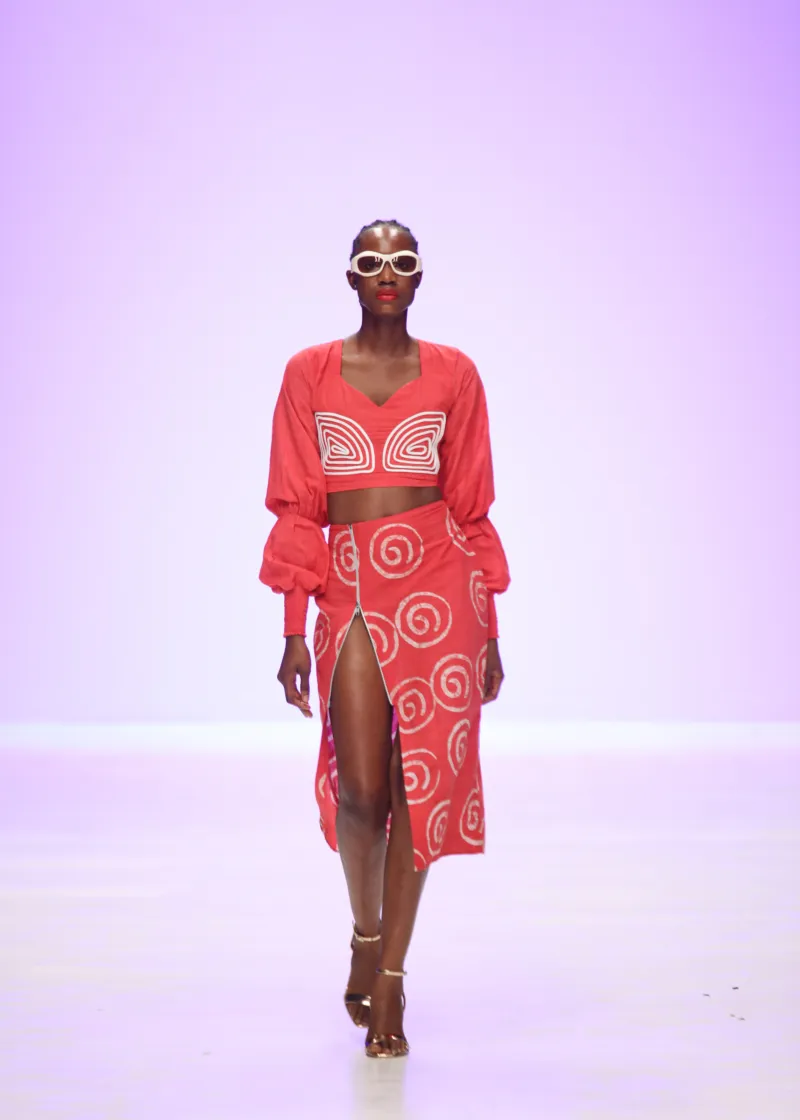
ThisDay describes a series of meetings between Ajose and James in which they exchanged ideas, refined concepts and considered how the handbags would respond to MO SA, MO WO. Its account presents James’s designs as developed for the collection while retaining Paciencia’s identity.
That places the accessories within the creative process, rather than describing them as existing products selected after the clothing was complete.
The distinction matters. Accessories can enter a presentation through several routes: styling selections, product loans or designs developed specifically for the occasion. Each involves a different relationship between the clothing label and the accessories brand.
Here, the published account identifies a development partnership. Ajose’s collection provided the context; James added an accessories designer’s perspective. That relationship is the documented story.
ThisDay translates MO SA, MO WO as “I Ran, I Watched.” However, its report does not explain how individual bags interpreted the title through their shape, materials or construction. Those details should not be inferred from the collection’s name or the language used to promote it.
Reading the Accessories as a Distinct Contribution
A collection and its presentation are connected, but they are not identical. Omiren’s guide to the difference between fashion collections, campaigns and presentations provides a useful framework for separating the designed products from the formats used to introduce them.
Applied here, that distinction allows the clothes and handbags to be considered together without assigning every part of the presentation to one label.
The bags were intended to complement Cute Saint’s collection. Their development was nevertheless credited to a collaboration involving Paciencia. Both facts belong in an accurate account.
This is not a claim that the collaborators contributed equally to every element. Nor does recognising James’s design role identify everyone who physically produced the bags. It establishes which creative contribution the published source assigns to her and her brand.
That specificity is more informative than a general acknowledgement of “artisans” or “craftsmanship.” It gives readers a person, a label, a product category and a described relationship between them.
What the Available Account Can Establish
The ThisDay article is descriptive and celebratory. It explains the partnership’s stated intentions but provides limited information for evaluating the finished products.
It does not give detailed material specifications, dimensions or a design-by-design account of the bags. It also does not disclose workshop responsibilities or the collaboration’s financial terms.
The resulting boundary is straightforward: the source supports an account of the named creative collaboration, not a complete production history or an independent assessment of the partnership’s economics.
Further reporting could examine the individual designs, the decisions behind them and the people involved in construction. That would deepen this story rather than replace the credit already on record.
The Omiren Argument
Authorship becomes clearer when you name a contribution and explain its role.
In this case, crediting Paciencia and Joy Fache James allows the handbags to enter the record as a distinct creative contribution within Cute Saint’s presentation. The published account also describes a process: discussion with Ajose and the development of designs intended for MO SA, MO WO.
That is a bounded but useful finding. It does not establish compensation, ownership or every stage of making. It does prevent the accessories from disappearing into a general description of the collection.
Within the wider platform examined in Lagos Fashion Week: The Institution Behind the Event, this kind of specificity helps build a more useful editorial record, one that recognises collaborations as well as headline labels.
The next step is not broader praise for craftsmanship. It is a closer account of the particular work: what was designed, who made the decisions and how the objects came into being.
Also Read:
- Lagos Fashion Week 2026: The Business Behind the Craft
- Lagos Fashion Week 2026: What Buyers Were Buying For
- The Handbag Was Never Just Fashion: The History of Women’s Bags, Mobility, Privacy, and Power
- Why Accessories Are Cultural Signifiers in Modern Women’s Style
Frequently Asked Questions
Who founded Paciencia?
ThisDay identifies Joy Fache James as Paciencia’s founder and creative director and describes the label as specialising in handcrafted handbags. In the collaboration, she worked with Cute Saint founder and creative director Femi Ajose, whose collection supplied the context, while James contributed an accessories designer’s perspective. The account does not detail Paciencia’s wider production.
What did Paciencia contribute to Cute Saint’s collection?
According to ThisDay, James collaborated with Femi Ajose to develop handcrafted handbags for Cute Saint’s MO SA and MO WO collections. The account describes meetings in which they exchanged ideas and refined concepts, and presents the designs as developed for the collection while retaining Paciencia’s identity.
When was the collaboration presented?
The published account places the presentation at Lagos Fashion Week on October 29, 2026, and ThisDay’s report is dated 2 November 2026. It translates the collection title MO SA, MO WO as “I Ran, I Watched.” The report does not explain how individual bags interpreted that title through shape, materials or construction.
What does the available account not establish?
It does not give detailed material specifications, dimensions or a design-by-design account of the bags. It also does not disclose workshop responsibilities or the collaboration’s financial terms. The source supports an account of the named creative collaboration, not a complete production history or an independent assessment of its economics.