In March 1900, British Governor Sir Frederick Mitchell Hodgson stood before the assembled Asante chiefs in Kumasi and delivered a speech that would start a war. He demanded the Golden Stool of the Asante, the Sika Dwa Kofi, so that he could sit on it as the representative of Queen Victoria. He wanted to sit on an object that the Asante believed contained the collective soul of their nation. He had no idea what he was asking for, because he had no framework for understanding what the object meant, what the regalia surrounding it meant, or what the dress of the Queen Mother seated in that assembly was already declaring to every Asante person present.
The African fashion market is worth 31 billion dollars. That figure sits inside a history in which African dress has functioned as governance infrastructure, philosophical archive, and political declaration simultaneously. To own gold in the Akan system was to participate in statecraft. The gold did not merely decorate the body. It legitimised it. When Yaa Asantewaa, Queen Mother of Ejisu, rose to lead the Asante resistance against the British in 1900, her regalia was not costume. It was a political communication system deployed at the moment of maximum consequence.
When Yaa Asantewaa led the Ashanti against the British in 1900, her regalia was not costume. Every element declared what the British demand was destroying. Here is what it said.
Yaa Asantewaa War Dress: The Queen Mother’s Visual Authority
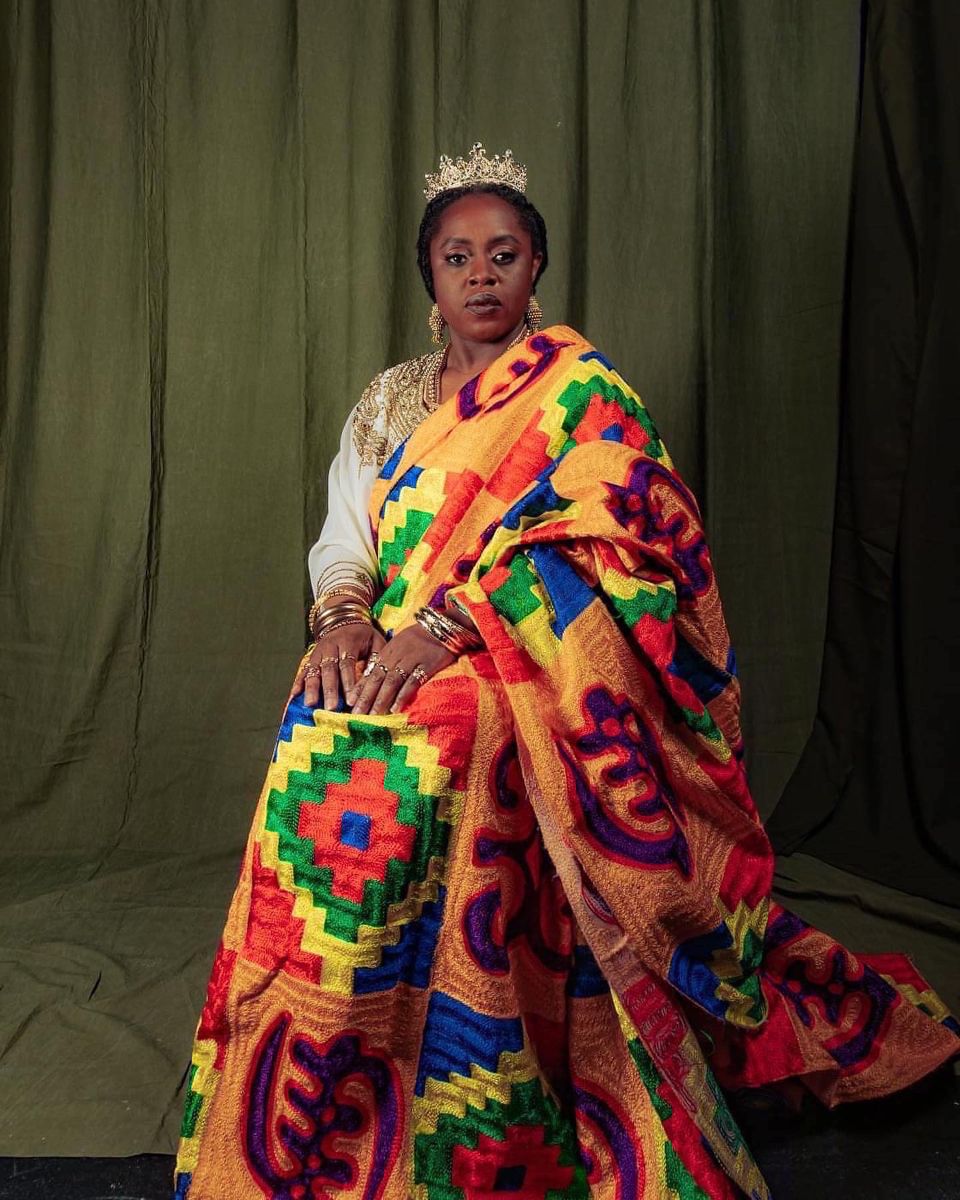
A Queen Mother’s regalia in the Asante system is not chosen for beauty. It is assigned by rank, occasion, and political function. Ashanti kente was historically reserved for the court, worn by kings and queens, and produced by weavers commissioned by and answerable to the palace. The social restriction was not incidental. It was the point. The cloth signalled membership in a specific class of political authority. Its colours carried specific meanings that the Ashanti court had codified: gold representing royalty and wealth, red representing confrontation and the willingness to engage in political conflict, green representing growth and renewal.
Yaa Asantewaa was the Queen Mother of Ejisu. Her title was not ceremonial. In the Asante political system, the Queen Mother holds specific governance functions: she nominates successors, holds political counsel, and in moments of crisis, holds the right to speak before the chiefs. When she stood in the assembly in 1900 and declared that if the men would not fight, the women would, she was exercising a constitutional function. The gold pieces she wore declared that function before she opened her mouth. The kente she wore announced her rank. The combination of those elements told everyone present, every Asante person who could read the visual grammar of the assembly, exactly who was speaking and with what authority.
When Governor Hodgson demanded to sit on the Golden Stool in 1900, he was asking to sit on the material embodiment of Asante sovereignty. Yaa Asantewaa understood that before she stood to speak. Her dress already said everything that her words confirmed.
The Meaning of Red in Asante War Regalia
In Akan colour grammar, red is not a neutral colour. As Omiren Styles’ documentation of traditional clothing in Ghana confirms, red signals passion, bloodshed, and political intensity in the Akan dress system. When Asante warriors and war leaders went into battle or into politically confrontational assemblies, red cloth signalled exactly what was happening and what the wearer was prepared for. The presence of red in regalia at a political assembly in 1900 was not a fashion choice. It was a declaration of the nature of the occasion as the Asante understood it: not a colonial administrative meeting, but a confrontation over fundamental sovereignty.
The Batakari, the war smock worn by Asante warriors, was sewn with specific talismanic amulets (leather pouches containing prayers and protective texts) that made the garment itself a spiritual defensive system. Senior figures who went into battle wore these protections alongside their rank-specific regalia. The garment was simultaneously armour, prayer, and declaration. Every element on the body of an Asante war leader communicated something specific about their status, their intentions, and the spiritual resources they were bringing to the confrontation.
Yaa Asantewaa’s position as Queen Mother meant that her personal regalia carried the specific protective and authority-declaring functions associated with her rank. The Akan understanding of war dress was not that one dressed for combat in utilitarian terms. One dressed to declare, to invoke, and to communicate to both the human and the spiritual audience what was being undertaken and why. The dress was part of the strategy.
The Golden Stool: What Hodgson Did Not Understand
The Sika Dwa Kofi, the Golden Stool of the Asante, is not a piece of regalia in the conventional sense. It is the material embodiment of the Asante nation’s collective soul. As the National Portrait Gallery’s documentation of the War of the Golden Stool confirms, the Golden Stool descended from the sky in 1701 before Asantehene Osei Tutu I and the priest Okomfo Anokye, and has been the supreme symbol of Asante sovereignty ever since. No one has ever sat upon it. It rests on its own stool, on its own leopard skin, carried by its own bearers.
When Hodgson demanded to sit on it, he was not making an insensitive cultural request. He was asking, in the terms the Asante understood, to possess the soul of their nation. The assembled chiefs went silent. The British interpreted that silence as submission. The Asante were in shock that anyone could be so comprehensively ignorant of what they were looking at. Every person in the room who was dressed in Asante regalia, whose gold pieces, kente, and Adinkra cloth constituted their participation in the political system that the Golden Stool anchored, understood instantly what Hodgson had just demanded. Yaa Asantewaa understood before anyone else what the demand meant and what the correct response was.
The Adinkra symbols that appeared in the regalia and dress of those present in that assembly were not decorative. In traditional Adinkra cloth, symbols are not placed randomly. An experienced reader can interpret not only individual symbols but the relationship between them and the argument their combination makes as a whole. The gold-ground cloths reserved for royalty and the specific Adinkra combinations that only the highest-ranking Asante could wear were present in that room. Every person wearing them was, by their dress alone, declaring that they were part of the political system whose sovereignty Hodgson had just threatened.
What Yaa Asantewaa Said With Her Body Before She Spoke
There is a documented oral account of the moment Yaa Asantewaa stood and spoke. The chiefs had been discussing whether to fight. Many were uncertain. Some had been exiled with the Asantehene Agyeman Prempeh I, who had been captured and deported to the Seychelles by the British in 1896. The remaining leadership was fragmented and afraid.
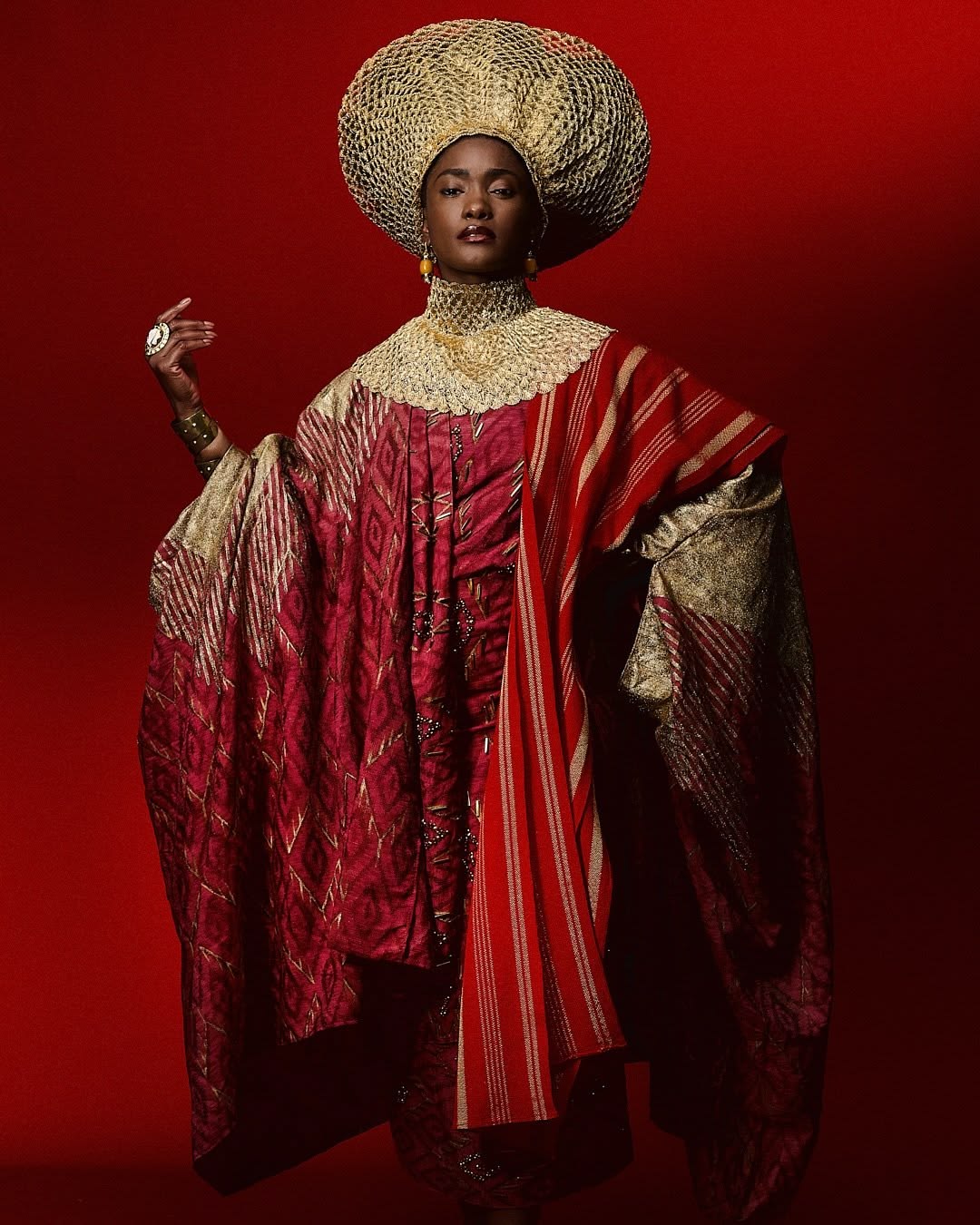
When Yaa Asantewaa rose, she had not yet said a word. But she had been visible throughout the assembly. Her Queen Mother’s regalia had been present in the room from the beginning, declaring her rank, her constitutional function, and her right to speak. The Akan political system does not require a Queen Mother to announce her authority verbally. Her dress has already announced it. When she finally spoke, it was to make explicit what her regalia had been saying throughout: this is a political crisis of the highest order, and I am the right person to address it.
The nine-month war that followed, ending with Yaa Asantewaa’s capture in September 1901 and her exile to the Seychelles, where she died in 1921, did not end with the capture of the Golden Stool. As scholarly documentation of the War of the Golden Stool confirms, the British never found the stool. It was hidden and protected through the war and remains in Kumasi to this day as the supreme symbol of Asante sovereignty. The war that Yaa Asantewaa led was not won militarily. But the thing it was fought to protect was never taken. The object whose meaning Hodgson could not read remained unread by the British. The dress that declared its importance remained, in the end, inviolate.
What Ashanti War Dress Arguments Mean for African Fashion Today
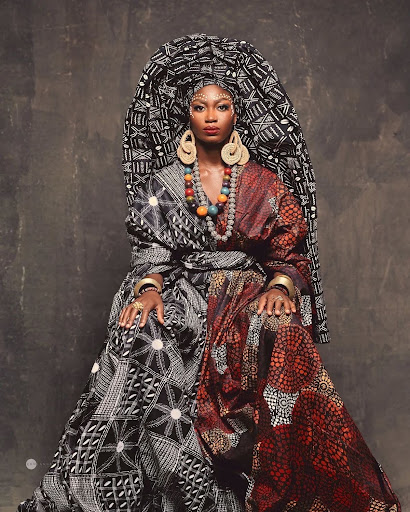
The argument that Yaa Asantewaa’s war dress made in 1900 is not historical. It is a live one. When Kwame Nkrumah wore kente to the United Nations, he was using the same visual grammar that Yaa Asantewaa used in that assembly room in Kumasi. He was declaring, through the cloth, that African political authority did not need Western dress to legitimate it. The argument is the same. The occasion is different. The dress is the same argument.
When contemporary Ghanaian women wear kente to professional settings, to boardrooms, to diplomatic occasions, they are wearing the most direct possible continuation of a political tradition that Yaa Asantewaa embodied in 1900. The dress that declared the sovereignty of the Asante nation before a British governor who could not read it is the same dress that declares the sovereignty of Ghanaian cultural identity before international audiences who may or may not be equipped to understand it. The argument has not changed. The audience has.
The Omiren Argument
Yaa Asantewaa’s war dress was the most precise political statement available to her in March 1900, and she used it with full understanding of what it said. The African fashion market is worth $ 31 billion. The Akan regalia system that Yaa Asantewaa wore into political confrontation with the British Empire was not fashion in the decorative sense. It was a governance infrastructure, encoded in gold, kente, Adinkra symbols, and the specific combination of colours that the Akan system had developed over centuries to communicate rank, function, intention, and the nature of the occasion being marked. Governor Hodgson could not read it because he had no framework for understanding that it was a language. Every Asante person present could read it perfectly. When Yaa Asantewaa stood to say that if the men would not fight, the women would, her dress had already said it. The war she led did not capture the Golden Stool for the British. The stool is still in Kumasi. What Omiren Styles documents here is not a military history. It is a fashion argument: that a Queen Mother made the most consequential deployment of African dress in the colonial period in a room full of chiefs, before she said a word, using the visual grammar of a regalia system that the colonising power could not read and therefore could not defeat.
ALSO READ:
- The Language of Adinkra: When Cloth Becomes Scripture
- Ewe Kente vs Ashanti Kente: Two Traditions, One Name, and a History That Colonial Borders Obscured
- Ghanaian Highlife and the Origins of Afrocentric Formal Dress
Frequently Asked Questions
Who was Yaa Asantewaa?
Yaa Asantewaa (c.1840-1921) was the Queen Mother of Ejisu in the Asante Confederacy of present-day Ghana. She led the War of the Golden Stool (also called the Yaa Asantewaa War) in 1900-1901 against British colonial forces, triggered when Governor Frederick Hodgson demanded to sit on the Sika Dwa Kofi, the Golden Stool, the material embodiment of Asante sovereignty. She reportedly declared that if the men would not fight, the women would, and led a nine-month guerrilla war before being captured in September 1901. She was exiled to the Seychelles, where she died in 1921.
What is the War of the Golden Stool?
The War of the Golden Stool (1900-1901) was the final Asante war against British colonial authority in present-day Ghana. It began when British Governor Sir Frederick Mitchell Hodgson demanded to sit on the Sika Dwa Kofi, the Golden Stool, which the Asante believe contains the collective soul of their nation. The demand was understood as an attempt to possess Asante sovereignty. The assembled Asante chiefs were reluctant to respond; Yaa Asantewaa, Queen Mother of Ejisu, led the resistance. The British never captured the Golden Stool, which remains in Kumasi as the supreme symbol of Asante sovereignty.
What did Ashanti royal regalia communicate?
Ashanti royal regalia communicated rank, political function, constitutional authority, and the nature of the occasion being marked through a codified visual grammar. Specific kente colour combinations were reserved for specific ranks: only the Asantehene could wear certain combinations. Gold pieces declared the wearer’s participation in the Asante political system. Adinkra symbols on cloth communicated philosophical positions and political intentions legible to every person who understood the visual grammar. Red cloth signalled confrontation and political intensity. The regalia was a complete communication system that required no verbal declaration.
Why was Governor Hodgson’s demand so significant?
Governor Hodgson’s demand to sit on the Golden Stool was, in Asante understanding, a demand to possess the collective soul of the Asante nation. The Sika Dwa Kofi descended from the sky in 1701 and has never been sat upon by anyone, resting on its own leopard skin carried by its own bearers. It is not a throne. It is the material embodiment of Asante sovereignty. Every person in the room wearing Asante regalia understood immediately that Hodgson was demanding the surrender of the entire Akan political system that their dress represented. Hodgson did not understand what he was asking because he had no framework for reading the language he was confronting.
What is the connection between Yaa Asantewaa’s war dress and contemporary Ghanaian fashion?
The political argument that Yaa Asantewaa’s regalia made in 1900 is the same argument that contemporary Ghanaian women make when they wear kente to boardrooms, diplomatic occasions, and professional settings. When Kwame Nkrumah wore kente to the United Nations, he used the same visual grammar. When Ghanaian women bring handwoven kente into the Kente 2.0 movement of contemporary fashion, they are continuing a tradition of using Asante dress to declare that African cultural authority does not require Western legitimation. The dress that declared Asante sovereignty to a British governor who could not read it is the same dress that declares Ghanaian cultural sovereignty to international audiences today.
Explore More
Read the full Culture > Heritage & Identity section for Omiren Styles’ documentation of African dress as political and cultural argument, from the Akan regalia system to the contemporary designers building on that inheritance.