On 22 June 1948, the Thurrock Gazette described the roughly 492 Caribbean passengers disembarking the Empire Windrush at Tilbury Docks as “dressed in an odd assortment of clothes, many wearing ties of dazzling designs.” That single sentence has been quoted and requoted across nearly every serious account of Windrush style written since: by the London Museum, by Refinery29, by the University Observer, by Black History Month UK. That consistency is itself worth noting. A single local newspaper’s description of what people wore stepping off a ship has become the fixed historical reference point for understanding an entire generation’s relationship to clothing in Britain. The sentence is not flattering. It has been carried forward anyway, because the evidence for what the Windrush generation actually wore, and why they wore it, is strong enough to absorb a condescending headline from a Thurrock local paper and still make the argument.
Tailored suits, trilby hats, and a 1948 newspaper headline still quoted 77 years later: how the Windrush generation’s arrival dress became a documented act of resistance, and why it still echoes on red carpets today.
Why Dressing Well Was Never Optional
The Windrush generation, a term covering Caribbean migrants arriving in Britain between 1948 and the 1971 Immigration Act, did not dress carefully by accident or by preference alone. The London Museum’s account of Windrush style is direct about the mechanism: as a Caribbean immigrant in Britain through the late 1940s to 1970s, “your body was constantly under the ‘white man’s gaze’ — scrutinised, judged and, sometimes, attacked,” and dressing smartly was a specific, practical response: a way to “gain respectability, potentially avoid racist attacks or even determine one’s success in a job interview.” This is not retrospective romanticism. It is a documented survival calculation.
Hackney Museum’s own archive of Windrush fashion frames the same point under a section titled “We Didn’t Come In Rags”: arriving well-dressed mattered specifically because Britain’s post-war economy meant new arrivals already stood out, and looking good was tied directly to being taken seriously in a country that had been sold to them as “the mother country.” Valentine Hanson, quoted in that archive, articulated the calculation plainly: “To do that you have to look good. You have to be presentable, because this was a life-changing opportunity.” The dress code was not vanity. It was strategy.
Preparation for the climate was formalised before departure. Passengers travelled with knowledge of a pamphlet titled “Going to Britain?”, produced by the West Indies High Commission specifically to prepare Caribbean migrants for England’s cold. A named, documented piece of official guidance, not something migrants worked out only after arrival. It is one more piece of evidence that the careful dress of the Windrush generation was planned, not improvised.
“Your body was constantly under the ‘white man’s gaze’ — scrutinised, judged and, sometimes, attacked. Dressing smart was a way to gain respectability, potentially avoid racist attacks or even determine one’s success in a job interview.” — London Museum, Windrush Generation Style documentation.
What Was Actually Worn
The garment specifics are consistently documented across multiple sources. Men’s Sunday best centred on sharp tailored suits, overcoats, highly shined shoes, belts, ties, and pinstripe patterns, accessorised with fedoras, broad-brimmed felt hats, and trilbies. The London Museum’s account states plainly that “trilby hats were one of the most packed items by men of the ‘Windrush Generation’ to start their new life” — a specific, checkable claim about what people prioritised bringing across an ocean. Fabrics ran from wool, leather, and suede to textiles carried directly from the Caribbean and Africa, mixed with British materials and combined in ways the University Observer’s account describes as smooth and rough textures paired deliberately, in shades ranging from muted to bright. Women’s dress ran to frilled blouses, dresses, cardigans, hats, brooches, heels, and jewellery.
This standard was not confined to arrival day. Howard Grey, photographing a later wave of arrivals at Waterloo station in 1962, expected a rowdy crowd and instead found people sitting and standing calmly in their Sunday best: footage that would not be developed for another fifty years, per Bridgeman’s account of the photographs. The consistency across a documented span from the first 1948 arrivals through the 1962 wave suggests this was not a one-off performance for the ship’s arrival but a sustained standard of dress carried through the following decades of settlement. Photographer Dennis Morris, who documented the Windrush generation and its children across the 1960s and 1970s, produced a body of visual evidence that confirms what the written accounts describe: people dressed with precision and consistency across time.
The Church as an Institutional Anchor
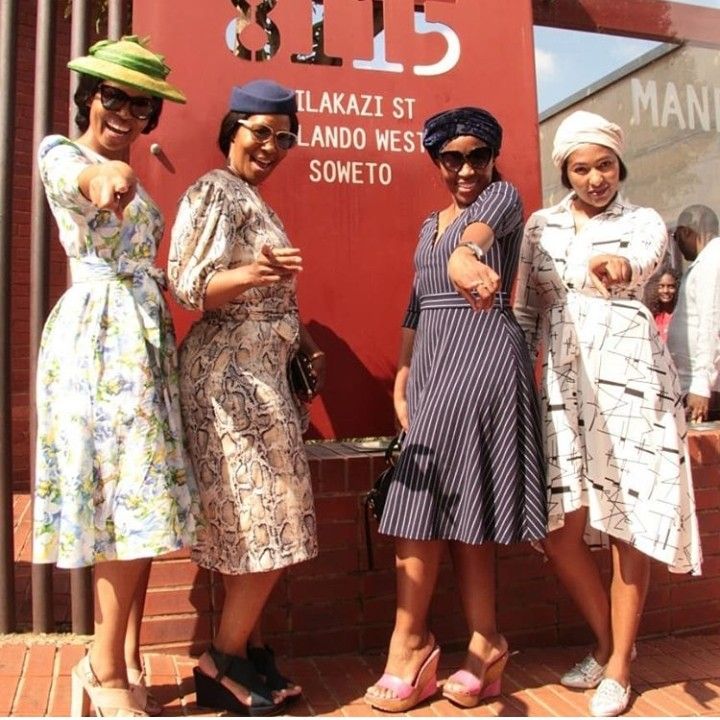
Hackney Museum’s account is specific about one institutional anchor for this dress standard. Local churches were central to building Caribbean community networks in Britain, and the tradition of wearing one’s smartest clothing to services meant worshippers dressed immaculately, often completing the look with gloves and a hat. That tradition is documented in the same archive that holds Windrush arrival photography, confirming that the arrival-day dress and the weekly Sunday dress were part of the same sustained practice rather than two separate phenomena. As Omiren Styles has documented in its analysis of UK diaspora dress codes, the church dress code is one of the most enduring and least documented fashion systems of the Black British experience. The church hat tradition that developed from this foundation deserves its own dedicated analysis.
Documented as Resistance, Not Just Style
Refinery29’s account of the Hackney Museum archive photography draws a direct, explicit line between Windrush-era dress and political meaning, describing the Sunday best suits and tailoring as embodying “the spirit of Black dandyism” and stating plainly that “they were seen, and this visibility formed part of the resistance.” That claim is worth taking seriously rather than treating as retrospective romanticism. It is consistent with the London Museum’s separately sourced account of dressing well as a practical defence against racist scrutiny, which means the resistance framing describes a documented survival strategy, not simply an aesthetic preference read backwards through a modern lens. The same act, wearing a tailored suit, carried the function of practical defence and the meaning of political presence.
As Omiren Styles has documented in its analysis of the Mau Mau dreadlocks tradition, and in its analysis of Rastafari dress codes, the most documented cases of resistance dress in the African diaspora are those where the political meaning and the practical function are not separable from each other. The Windrush generation’s Sunday best is another such case: the suit that gained respectability and potentially avoided a racist attack was the same suit that declared the wearer’s right to be taken seriously in a country that was looking for reasons not to. The resistance was not added to the dress after the fact. It was present in the original calculation.
Where This History Surfaces Today
The clearest evidence that this specific dress history remains active in contemporary culture rather than sealed in archives is the National Windrush Monument itself. Unveiled at London Waterloo station in June 2022 and created by artist Basil Watson, the bronze sculpture depicts three figures, a man, woman, and child, specifically dressed in their Sunday best, climbing a mountain of suitcases hand in hand. The monument’s design choice to render the figures in Sunday best rather than generic clothing is a direct, official acknowledgement that the dress itself carries the history. A national memorial commissioned by the UK government chose not to abstract its subjects into generic human forms but to render them precisely in what they actually wore. That is a form of institutional recognition of the political meaning of the clothing.
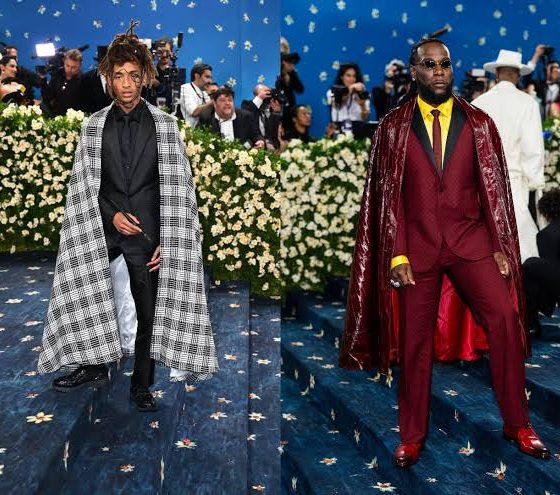
Refinery29’s reporting draws an even more current line. At the 2025 Met Gala, held under a theme explicitly engaging Black dandyism, Formula 1 driver Lewis Hamilton wore a suit by Black British designer Grace Wales Bonner that the reporting describes as paying subtle homage to Windrush-era style in its details. That is a specific, dateable, named example of the aesthetic surfacing on one of fashion’s most visible global stages, 77 years after the Thurrock Gazette described “ties of dazzling designs” on people stepping off a ship at Tilbury. The homage is not accidental. Wales Bonner’s entire design practice, now extended to the creative direction of Hermès Menswear, is built on the intellectual and aesthetic history of the African diaspora. The Windrush dress is part of that history, and its appearance on the 2025 Met Gala red carpet is what happens when the archive becomes a design resource in the hands of a designer who understands what the archive actually says.
Why the Specificity Matters
What distinguishes this history from a generic story about immigrants who dressed well is the precision of the available evidence: a named newspaper quote from the actual day of arrival, a named government pamphlet preparing migrants for the climate, named photographers whose images are held in specific museum archives, and a named contemporary designer whose documented work references this history directly. That level of specific, checkable evidence is what separates a documented cultural history from a plausible-sounding generalisation. It is the standard this series applies to every regional and diaspora dress tradition it covers. The Windrush dress history meets that standard fully. It is not a story about how immigrants probably dressed to make a good impression. It is a documented record of specific garments, specific calculations, and specific consequences that remains active in the culture 77 years later.
A trilby hat packed across an ocean. A tailored suit worn as armour against a stranger’s gaze. A monument cast in bronze, dressed in Sunday best, at Waterloo station. Three moments across 74 years, the same argument.
The Omiren Argument
The Windrush generation’s Sunday best was not a performance of aspiration. It was a practical strategy, documented as such by the people who wore it, by the museums that hold the archive, and by the photographers who recorded it over three decades. The political meaning that Refinery29 calls “resistance” and the practical function that the London Museum calls “gaining respectability” are not two different interpretations of the same dress. They are two descriptions of the same decision, made by people who understood that in a country that scrutinised their bodies and challenged their right to be there, how they dressed was one of the limited number of variables they could control.
As Omiren Styles has argued in its analysis of diaspora fashion diplomacy in Britain, African and Caribbean dress in Britain has been making arguments that British institutions are only beginning to record formally. The Windrush dress history is among the earliest and most completely documented of those arguments. The National Windrush Monument’s choice to render its figures in Sunday best, and Grace Wales Bonner’s choice to reference that aesthetic on the 2025 Met Gala red carpet, are both acts of recognition for something that was always there. The archive is not new. The attention is.
ALSO READ
- Diaspora Fashion Diplomacy in Britain: How African and Caribbean Style Shapes Culture and Identity
- Rastafari Dress Codes: How Jamaica’s Colours, Hair, and Cloth Refused Colonial Uniform
- When Dressing Becomes Declaration: Clothing as Cultural Identity
- African Fashion in London: Mapping UK-Based Designers, Boutiques and Cultural Hubs
Frequently Asked Questions
What does “Windrush generation” mean?
The term covers Caribbean migrants who arrived in Britain between the docking of the HMT Empire Windrush at Tilbury Docks on 22 June 1948 and the Immigration Act of 1971, which changed the terms of Commonwealth migration to the UK. The London Museum’s documentation uses this framing to describe the specific historical cohort whose arrival-era dress is the subject of this piece.
Why did the Windrush generation dress so formally on arrival?
Dressing smartly was a practical response to being under constant scrutiny in a country where new arrivals faced racism and discrimination. According to the London Museum’s account of Windrush-era style, looking respectable was tied directly to physical safety, social acceptance, and job prospects. Valentine Hanson, quoted in Hackney Museum’s Windrush fashion archive, stated the calculation directly: “To do that you have to look good. You have to be presentable, because this was a life-changing opportunity.”
What did Windrush-era men typically wear?
Sharp tailored suits, overcoats, highly shined shoes, ties, and pinstripe patterns, accessorised with fedora, broad-brimmed felt, or trilby hats. The London Museum specifically notes that trilby hats were among the most packed items men brought to start their new lives in Britain. Fabrics ranged from wool and suede to textiles carried from the Caribbean and Africa, mixed with British materials.
Does Windrush-era style still influence fashion today?
Yes, in two documented ways. The National Windrush Monument, unveiled at London Waterloo station in June 2022 by artist Basil Watson, depicts its three central figures specifically in Sunday best, an explicit design choice acknowledging that the dress carries the history. At the 2025 Met Gala, Lewis Hamilton wore a suit by Black British designer Grace Wales Bonner, which Refinery29 reported paid subtle homage to Windrush-era style details. Wales Bonner, now Creative Director of Hermès Menswear, has built her entire design practice on the intellectual and aesthetic history of the African diaspora, of which the Windrush dress tradition is a documented part.