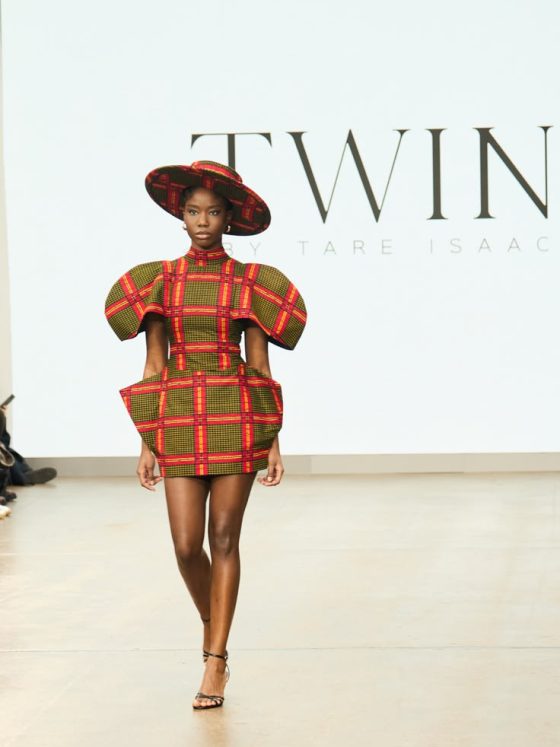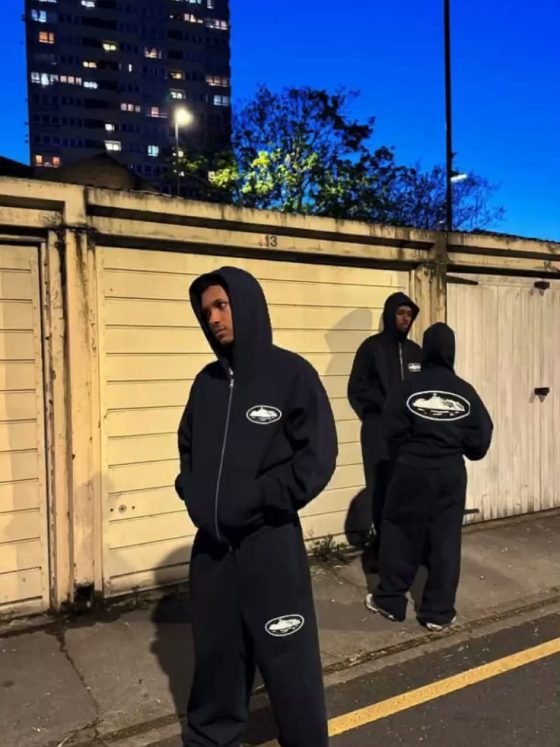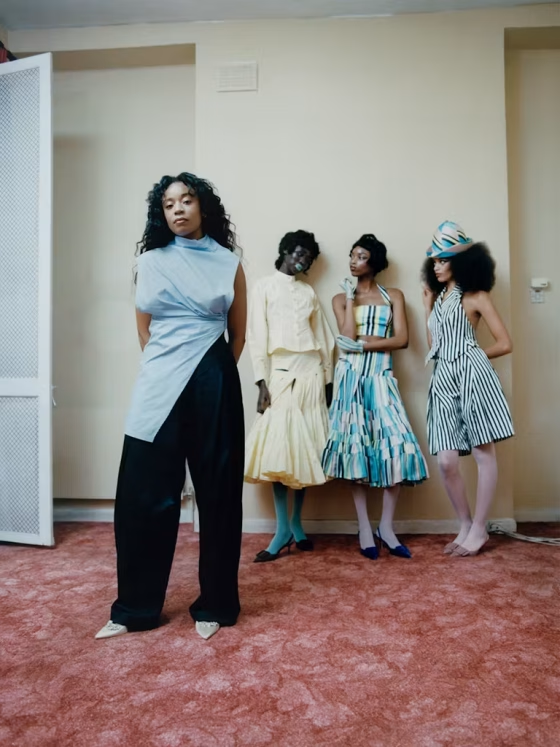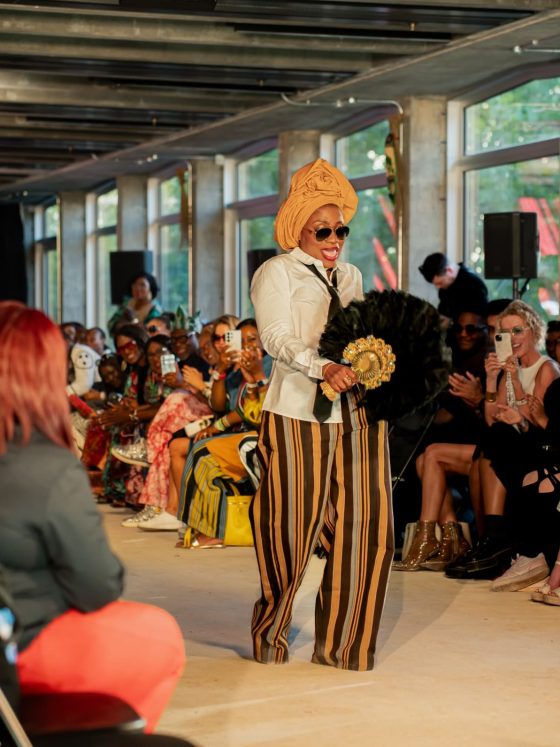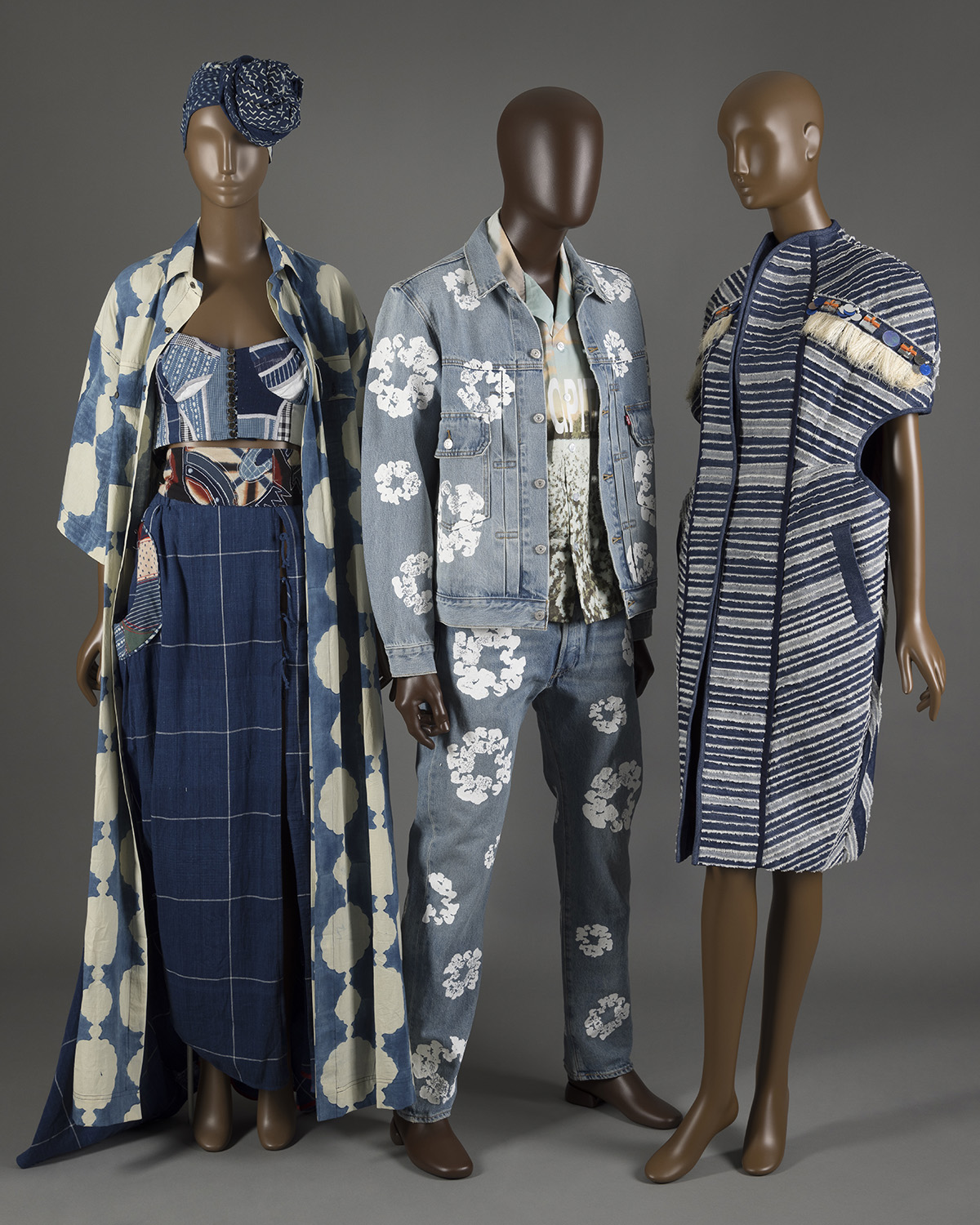
Fashion diplomacy, in the context of Britain’s African and Caribbean diaspora, is not a metaphor. It is a description of specific, documented mechanisms: a national museum staging its first-ever dedicated exhibition after 170 years of omission, a workplace code negotiated between activists and employers over legally contested hair policy, and a street festival born directly out of anti-racist organising in the aftermath of race riots. Each functions as a form of argument made through dress and culture rather than through parliamentary debate. Each has produced concrete, checkable outcomes in British public life. This article documents those outcomes and names the gap where the evidence runs out.
From the V&A’s first-ever Africa Fashion exhibition to the Halo Code’s fight against workplace hair discrimination: how African and Caribbean dress functions as cultural diplomacy in modern Britain.
What Fashion Diplomacy Means for Diaspora Communities
The term “fashion diplomacy” is used here in a specific sense: the use of dress, appearance, and cultural celebration as instruments of political and cultural negotiation between communities whose presence in Britain has been contested, managed, or ignored by majority institutions. The African and Caribbean diaspora in Britain has not had the option of treating dress as a purely aesthetic matter. The Notting Hill race riots of 1958, the workplace hair discrimination documented in employment tribunals, and the 170-year absence of African fashion from the V&A’s exhibition programme are all evidence that appearance in Britain carries political weight for Black and African-heritage communities, whether those communities choose to make it political or not. The acts of fashion diplomacy documented in this article are responses to that pre-existing weight, not impositions of politics onto a neutral aesthetic.
As Omiren Styles has argued in its analysis of African and Black British dress codes, the dress codes of Black British communities are specific, internally logical, and commercially significant in ways that the mainstream fashion press has not systematically documented. Fashion diplomacy is the name for what happens when those dress codes encounter institutions with the power to recognise or refuse them.
The V&A’s Africa Fashion Exhibition: A 170-Year Gap Closed
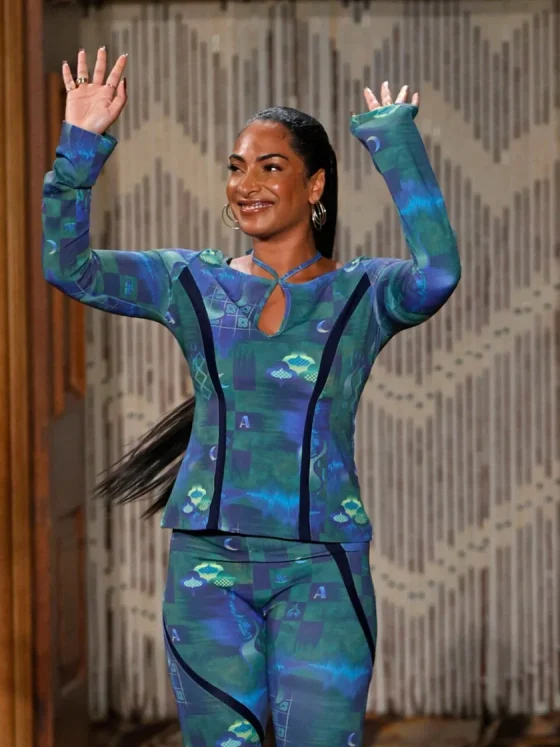
The Victoria and Albert Museum’s Africa Fashion exhibition, which ran from July 2022 to April 2023, was the first exhibition in the museum’s 170-year history to centre solely on African fashion. That is not a characterisation of the exhibition’s ambition. It is a statement of historical fact confirmed by the museum’s own account and by project curator Elisabeth Murray, who told AFP the show aimed to provide “a glimpse into the glamour and politics of the fashion scene.” The exhibition was curated by Christine Checinska and covered 45 designers from more than 20 countries, displaying over 250 objects.
The exhibition’s significance extends beyond what visitors saw during its run. As documented in the V&A’s own account of the Africa Fashion programme, the museum made over 100 new acquisitions from across Africa and the diaspora in 2022-23 alone, including the V&A’s first objects representing Rwanda and Eswatini specifically. A national collection with zero prior Rwandan or Eswatini fashion or textile holdings now has them, directly because of this exhibition’s acquisition programme. That is a dateable, measurable institutional shift whose consequences extend beyond the exhibition’s closing date: the collection that British schoolchildren, researchers, and future curators will work with is now permanently different because of what Africa Fashion acquired.
The museum’s programming around African and Caribbean diaspora identity in Britain extends further. The V&A’s own account documents two additional exhibitions: Staying Power in 2013 and Between Two Worlds in 2023, both centred on “multiple and varied African Caribbean identities in Britain” through twentieth-century material culture. The permanent collection now holds work by named Caribbean-heritage artists including Ronald Moody, Althea McNish, Tam Joseph, and Hew Locke, alongside historic African material spanning Egypt, Ghana, and Ethiopia and contemporary fashion from 22 of Africa’s 54 nations. The Africa Fashion exhibition was not an isolated event. It was the most visible moment in a sustained programme of acquisition and exhibition that has changed what the V&A holds.
“This is the first time in the V&A’s 170-year history that we have had a show centred solely on African fashion — it offers a glimpse into the glamour and politics of the fashion scene.” — Elisabeth Murray, V&A project curator, Africa Fashion exhibition, 2022
Notting Hill Carnival: Protest That Became Institution
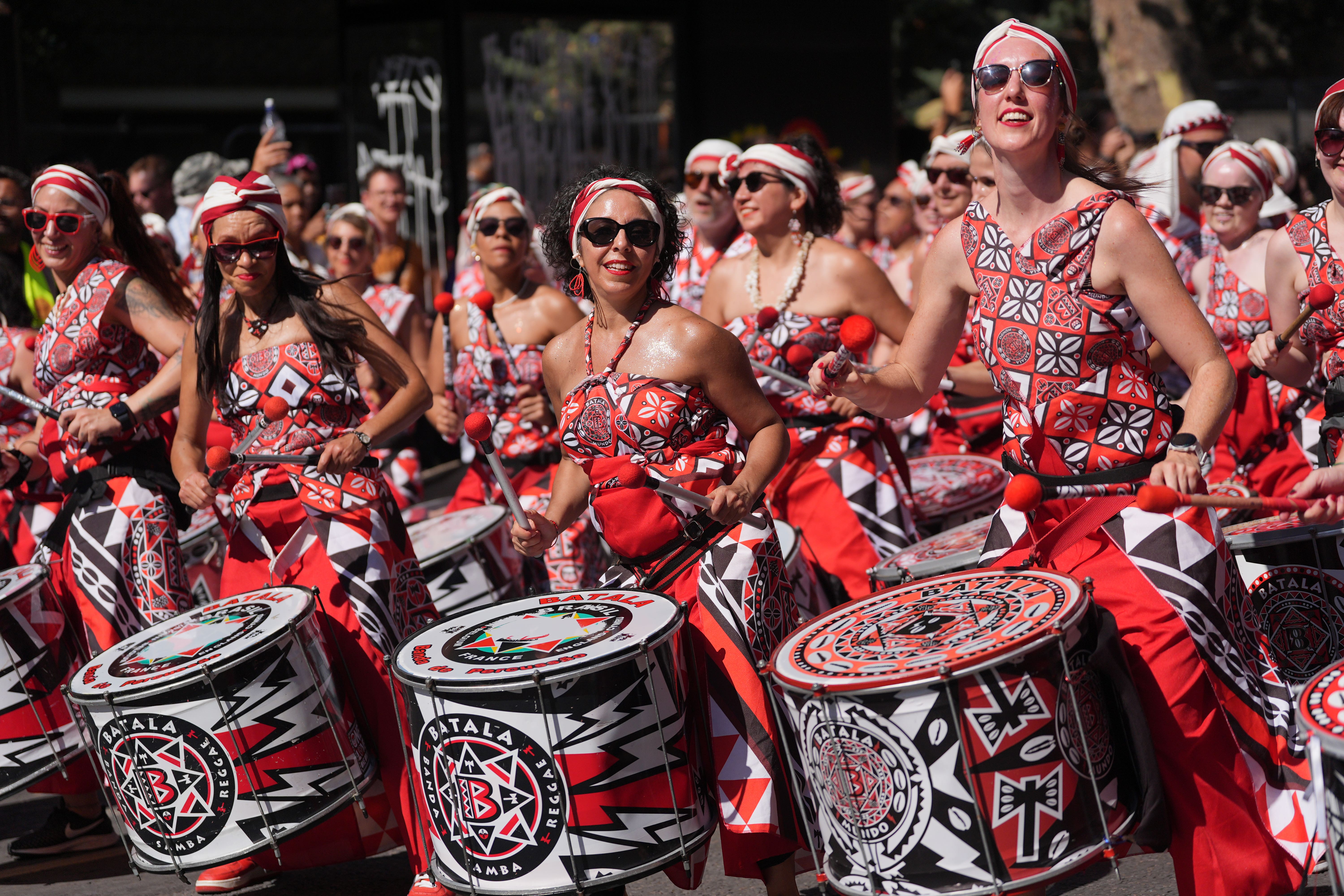
Notting Hill Carnival is the clearest case in Britain of dress functioning as protest that became an institution. Its origins are specific and dateable. Following the 1958 Notting Hill race riots and the 1959 racially motivated murder of Antiguan carpenter Kelso Cochrane, Trinidadian journalist and activist Claudia Jones organised an indoor Caribbean carnival at St Pancras Town Hall on 30 January 1959, broadcast by the BBC. This was a direct, organised response to racial violence: not a pre-existing festival that later acquired political meaning, but a cultural event designed from the outset as an argument for Caribbean presence and dignity in Britain.
The outdoor street tradition began later, in 1966, when steel band musician Russ Henderson led a crowd through Notting Hill’s streets. By the 1970s, under Carnival Organiser Leslie Palmer, the event was being used explicitly as political commentary. His 1973 “Mas in the Ghetto” theme was designed specifically to highlight poor housing conditions in the Royal Borough of Kensington and Chelsea, as documented by Google Arts and Culture’s history of Carnival developed with the Black Cultural Archives. The costume and masquerade tradition central to Carnival today has roots that trace back further still, to enslaved Africans in the Caribbean who were forbidden from participating in colonial balls and developed their own satirical festival drawing on African dance traditions instead.
The scale Carnival has reached is itself the political argument for its significance. As Findmypast’s documented history of Notting Hill Carnival confirms, the event now attracts up to two million attendees and around 40,000 volunteers annually. It contributes an estimated £93 million to the UK economy. Yet Ansel Wong, former Chair of the Notting Hill Carnival Board and a Trinidadian cultural and political activist, has stated directly that the event “is put on annually with very little government funding.” An event that contributes £93 million annually to the UK economy and began as an organised response to racist violence remains, by the account of its own former board chair, chronically under-resourced relative to its documented cultural and financial weight.
The Halo Code: Fashion Diplomacy in the Workplace
The most legally consequential arena of diaspora fashion diplomacy in Britain is not ceremonial. It is the ordinary workplace, and the specific fight over Afro-textured hair. Hair is not a protected characteristic under the Equality Act 2010. Still, where an employee experiences unfair treatment because of a hairstyle associated with their race or ethnicity, they can bring a discrimination claim under the Act’s race protections, as confirmed by legal analysis from Diversity and Inclusion Leaders. That distinction between hair as a category and race as a protected characteristic has produced real, named cases.
In 2023, Jarelle Jules applied for a job at The Ritz London, whose grooming policy explicitly stated staff could not have “unusual hairstyles such as spiky or Afro-style.” The Equality and Human Rights Commission separately funded and represented a Black woman’s employment tribunal case against an employer with roughly 46,000 employees worldwide, after she was told she could only wear braids if she carried a permission letter to show managers on demand. That case settled successfully through judicial mediation. These are not isolated incidents. They are documented instances of a pattern whose scale is captured in the Halo Code’s own campaign data: one in five Black women report feeling pressure to straighten their hair for work, and over half of Black students report experiencing bullying or uncomfortable questioning specifically about their hair.
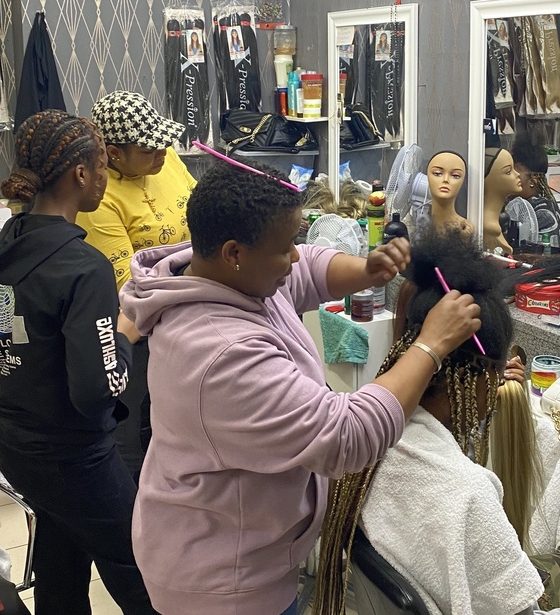
The organised response is the Halo Code, launched by the Halo Collective and co-founded by Edwina Omokaro, who was 21 when the Code launched. It is described as the UK’s first code of its kind, explicitly protecting employees who wear natural hair and protective styles, including afros, locs, twists, braids, cornrows, fades, and wraps, associated with their racial and cultural identity. Adoption has extended into major institutions. Unilever UK and Ireland has formally backed it, with the company’s VP for HR, Richard Sharp, calling it “a vital step in the fight to ensure racial justice and racial equity for the next generation.” Bates Wells became the first UK law firm to adopt it. The Code is the documented outcome of diaspora fashion diplomacy in its most everyday and most legally consequential form: a negotiation between the dress codes of Black British communities and the policies of the institutions in which those communities work.
Institutions and Recurring Platforms
Africa Fashion Week London, founded in 2011 by Queen Ronke Ademiluyi-Ogunwusi, a Yoruba Nigerian-British entrepreneur and lawyer, is the most established recurring annual platform for African fashion in the UK. As documented on the AFWL’s own site and confirmed by Vanguard News’s July 2026 profile of the founder, AFWL has hosted 15 editions across its history, empowering over 1,000 designers and artisans from across Africa. Its 2026 programme includes the launch of Shop The Runway, a retail-focused concept designed to connect designers directly with buyers. The distinction between AFWL and a single museum exhibition is significant: AFWL functions as ongoing rather than one-off cultural diplomacy, building commercial infrastructure year-on-year rather than generating a single institutional moment.
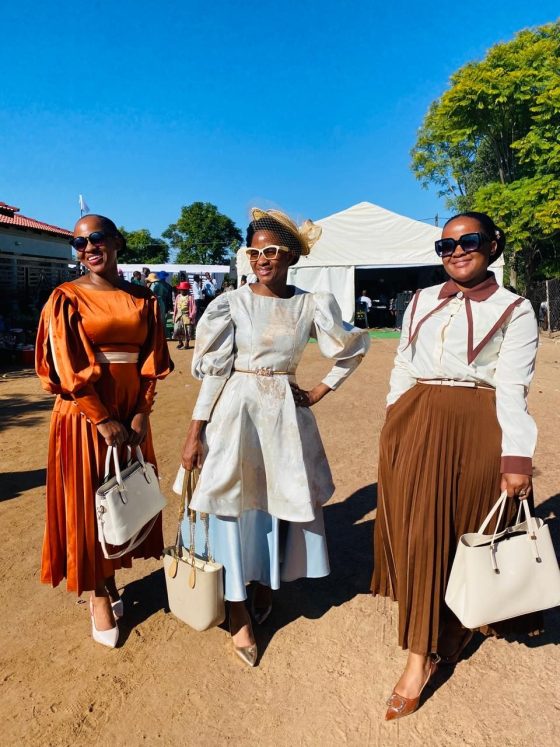
As Omiren Styles has documented in its analysis of the London African fashion ecosystem, the cultural hubs of Black and African-heritage fashion in London extend far beyond any single institution. Church communities whose Sunday dress codes carry social and cultural weight, the owambe economy of occasion-wear that the Nigerian diaspora has built across South and East London, the tailors and fabric markets of Peckham and Dalston: all are forms of cultural diplomacy operating at community level, decades before any museum decided to acquire the work.
Where the Evidence Runs Out
This section is honest about the limits of available sourcing, in the same way Omiren Styles has approached comparable gaps in its series on African and diaspora dress traditions.
The African and Caribbean fashion-diplomacy mechanisms documented above are each backed by specific, named, dateable evidence spanning decades. The V&A’s exhibition programme, Notting Hill Carnival’s institutional scale, the Halo Code’s legal and corporate adoption, and Africa Fashion Week London’s 15-edition record are all documented with precision. A comparably established UK-specific movement connecting Afro-Latin American communities to this same kind of institutional fashion diplomacy did not turn up in research for this piece. Britain has Latin American diaspora communities, and Omiren Styles’s own coverage of Afro-Colombian, Afro-Venezuelan, and Afro-Mexican dress traditions demonstrates that those traditions are real and documented at origin. The specific UK institutional and cultural infrastructure connecting Afro-Latin American dress to British public life, comparable to what exists for African and Caribbean communities, is either less developed or less documented in available sourcing. Naming that gap honestly is more useful than describing a frontier that is not yet visible in the evidence.
The Omiren Argument
The fashion diplomacy of Britain’s African and Caribbean diaspora is not aspirational. It is documented. The V&A spent 170 years not exhibiting African fashion and then spent one year acquiring over 100 new objects, including its first from Rwanda and Eswatini. Notting Hill Carnival was organised in 1959 as a direct response to racial murder and now contributes £93 million annually to the UK economy while remaining chronically underfunded. A 21-year-old co-founded the Halo Code in response to documented patterns of workplace hair discrimination that cost named women their jobs and their dignity. These are not symbolic achievements. They are the documented record of what diaspora communities can produce when they use dress and culture as political argument in the absence of other available institutional channels.
As Omiren Styles has argued, the traditions that institutional recognition discovers were never absent. Church dress codes, the owambe economies, and the Carnival costume workshops were producing cultural authority before any national museum decided to acquire their work. The V&A’s Africa Fashion exhibition is significant not because it created something that did not exist, but because a 170-year-old institution finally recognised something that had always been there. That recognition is real, and its consequences are dateable. The fashion diplomacy that produced it preceded the recognition by decades.
African and Caribbean dress in Britain has been making arguments for decades that British institutions are only now beginning to record formally. The Halo Code, the Carnival’s £93 million, and the V&A’s first Rwandan acquisition are the same argument, made in three different registers.
ALSO READ
- Palo de Mayo Bluefields Nicaragua: Creole and Garifuna Costume, Festival History, and What’s Documented
- Rastafari Dress Codes: How Jamaica’s Colours, Hair, and Cloth Refused Colonial Uniform
- Why UK Diaspora Dress Codes Change by Occasion: Owambe, Church, and the Office
Frequently Asked Questions
What was significant about the V&A’s Africa Fashion exhibition?
It was the first exhibition in the Victoria and Albert Museum’s 170-year history to centre solely on African fashion, running from July 2022 to April 2023. As confirmed by the V&A’s own documentation, it covered 45 designers from more than 20 countries, displayed over 250 objects, and led the museum to acquire over 100 new objects from across Africa and the diaspora, including its first pieces from Rwanda and Eswatini. These acquisitions are permanent: the V&A’s collection is now different because of what Africa Fashion acquired.
Is hair discrimination illegal in UK workplaces?
Hair itself is not a protected characteristic under the Equality Act 2010. Still, unfair treatment over a hairstyle associated with someone’s race or ethnicity can be challenged under the Act’s race protections, as confirmed by Diversity and Inclusion Leaders’ legal analysis. The Halo Code, the UK’s first code of its kind, was co-founded by Edwina Omokaro specifically to get employers to formally commit to protecting Afro-textured hairstyles including afros, locs, twists, braids, cornrows, fades, and wraps. Its campaign data documents that one in five Black women report feeling pressure to straighten their hair for work, and over half of Black students report experiencing bullying or uncomfortable questioning about their hair.
Who founded Notting Hill Carnival, and why?
Trinidadian journalist and activist Claudia Jones organised the first indoor Caribbean carnival at St Pancras Town Hall on 30 January 1959, broadcast by the BBC, in direct response to the 1958 Notting Hill race riots and the racially motivated murder of Antiguan carpenter Kelso Cochrane. The outdoor street carnival tradition began in 1966, when steel band musician Russ Henderson led a crowd through Notting Hill’s streets. By the 1970s, the event was being used explicitly as political commentary, with Leslie Palmer’s 1973 “Mas in the Ghetto” theme designed to highlight poor housing conditions in Kensington and Chelsea, as documented by Google Arts and Culture with the Black Cultural Archives.
How much does Notting Hill Carnival contribute to the UK economy?
An estimated £93 million annually, with the event now attracting up to two million attendees and around 40,000 volunteers each year, as documented by Findmypast. Former Carnival Board Chair Ansel Wong has stated directly that the event “is put on annually with very little government funding” — a significant disparity between an event’s documented economic contribution and its institutional funding that this article documents rather than explains away.
Who founded Africa Fashion Week London?
Queen Ronke Ademiluyi-Ogunwusi, a Yoruba Nigerian-British entrepreneur and lawyer, founded Africa Fashion Week London in 2011. As documented on the AFWL’s own site and by Vanguard News’s July 2026 profile, AFWL has hosted 15 editions, showcased over 1,000 designers and artisans from across Africa, and operated partnership programmes including the British Council’s Creative DNA initiative. Its 2026 programme includes the launch of Shop The Runway, a retail-focused concept designed to connect African designers directly with buyers.