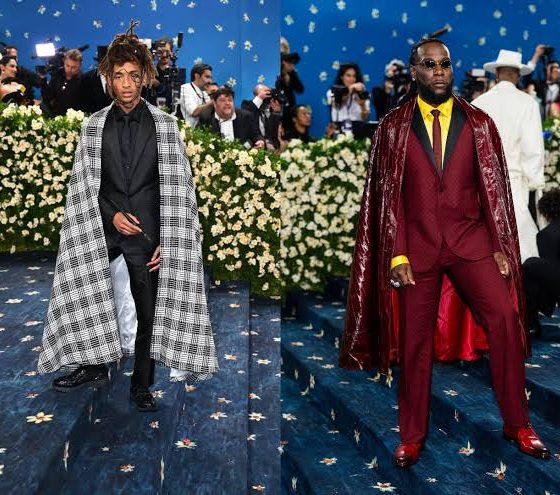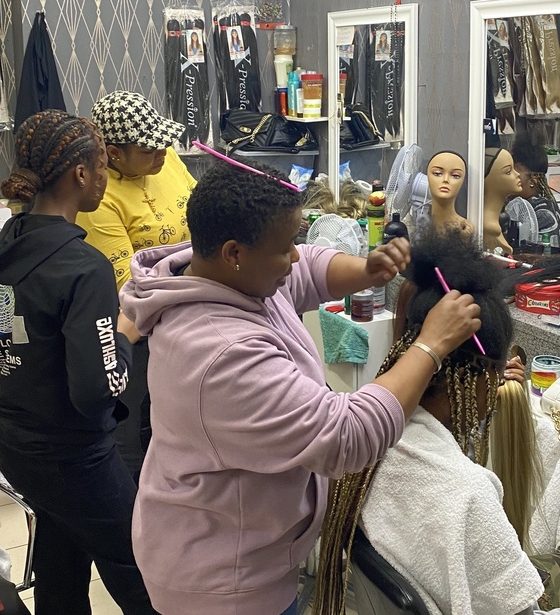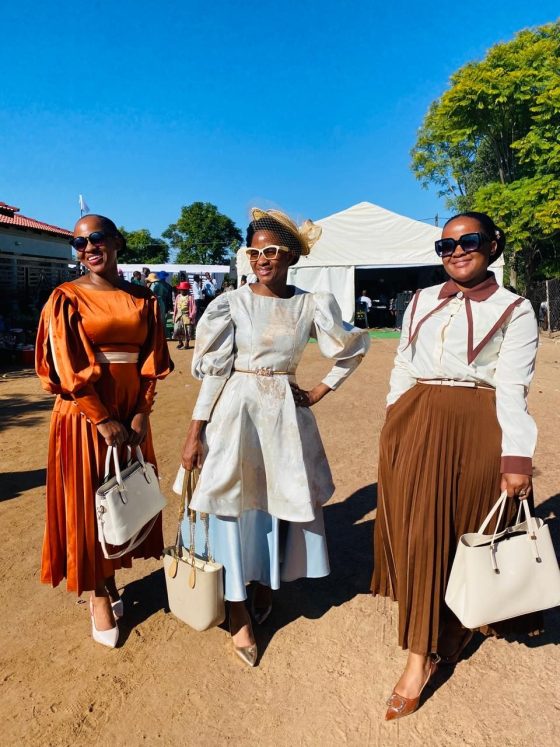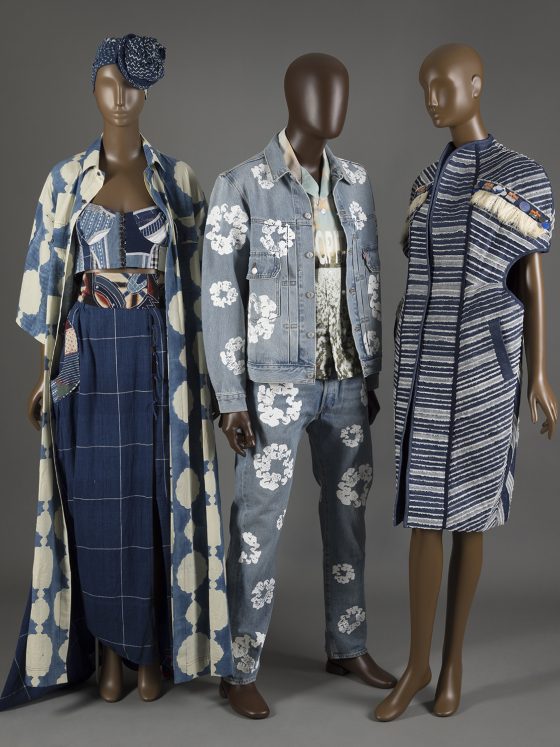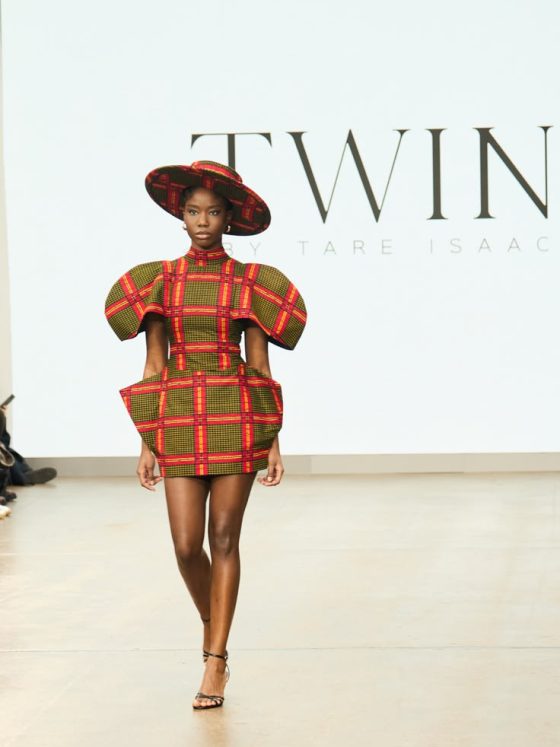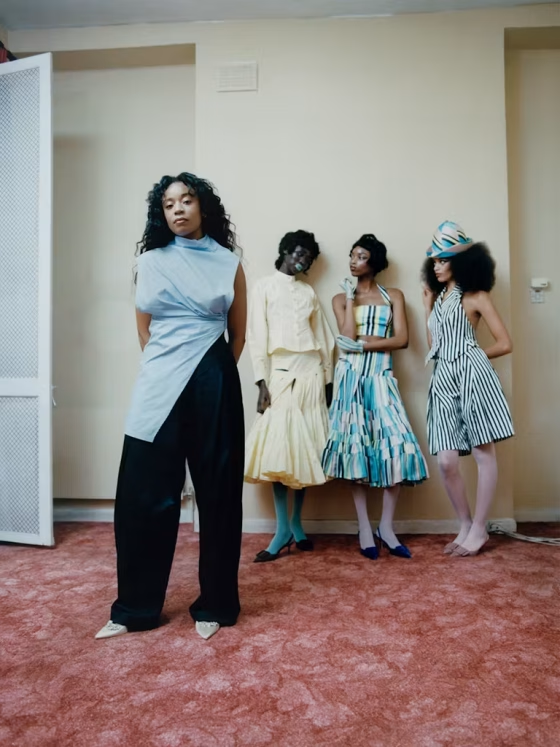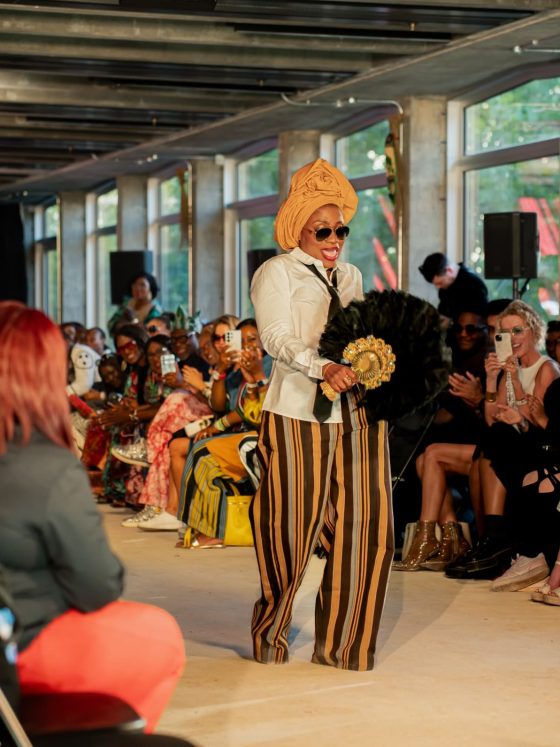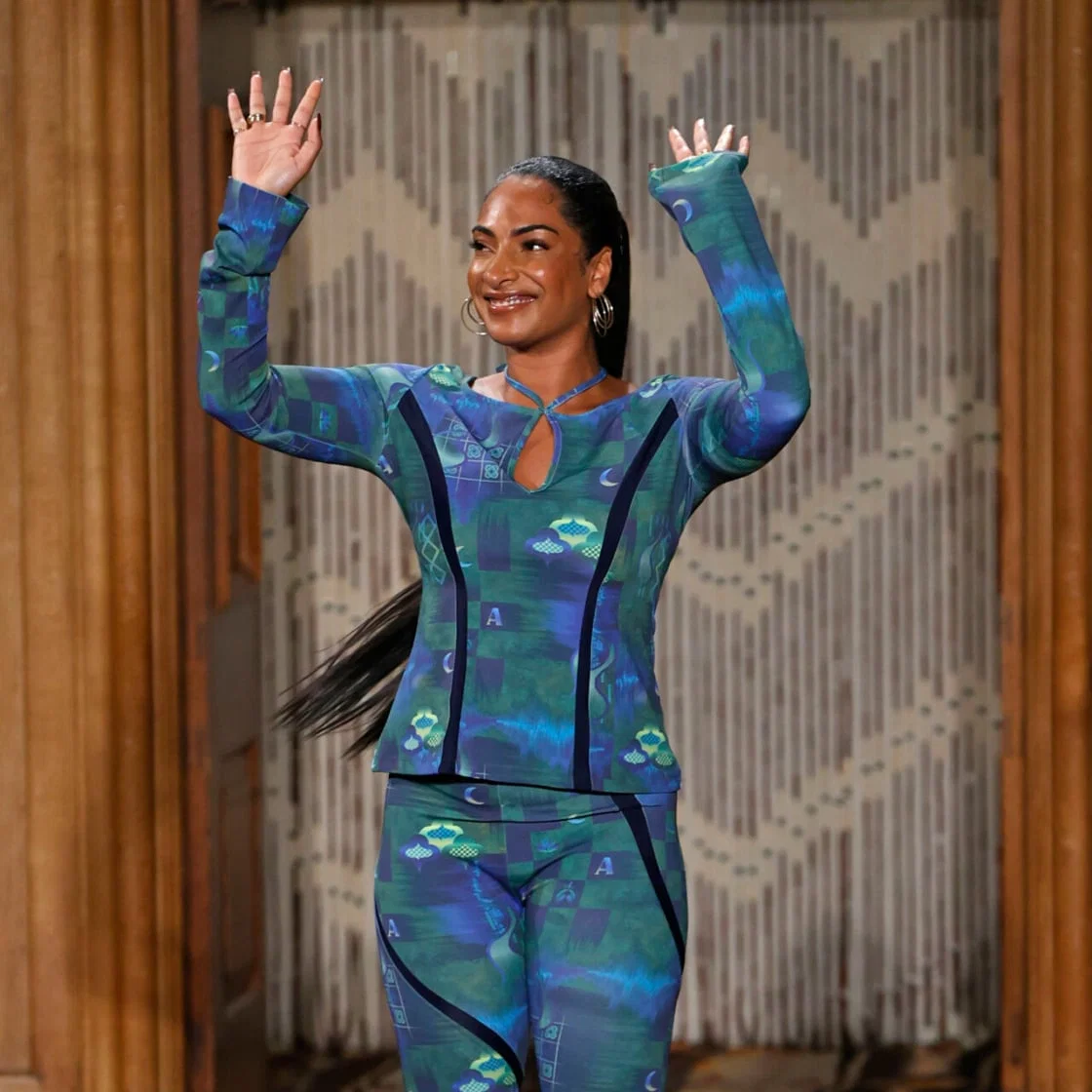
Priya Ahluwalia was born in Tooting, south-west London, to a Nigerian father and an Indian mother. Her stepfather is Jamaican. She grew up surrounded by magazines in her grandfather’s newsagent, absorbing images and stories. She studied at the University for the Creative Arts in Epsom, then completed the MA Menswear course at the University of Westminster, graduating in 2018. That same year, she launched her eponymous label. She has won the LVMH Prize (2020), the Queen Elizabeth II Award for British Design (2021), the BFC/GQ Designer Menswear Fund, three consecutive Fashion Awards for Leader of Change, and a British Vogue cover. Her Spring Summer 2026 collection, titled Affinity, was shown at the NoMad Hotel London during London Fashion Week.
The African fashion and beauty market is part of the continent’s 31-billion-dollar economy. Priya Ahluwalia’s practice belongs to that economy’s diaspora dimension: a British designer whose design intelligence is built from Nigerian, Indian, and British inheritances that are not fused into a visual style but held simultaneously as different registers of a single, continuously thinking practice. Her own account of how her research works is the clearest articulation of this. As documented in The Glossary Magazine’s February 2025 interview with Ahluwalia, she says, “My mood boards are huge and filled with creative research that always comes from different elements of thinking about the Black and Brown diasporas.” The London influence is more instinctive: when I’m designing, because I’m thinking about the people I know, it makes a sensibility come through naturally. There are things about my taste that I’m sure would be different if I were born in New York. The design intelligence described there is not a hybrid of three cultures. It is a London designer thinking from inside an inherited world that she did not have to construct.
Priya Ahluwalia’s Nigerian, Indian, and British inheritances do not produce a hyphenated look. They produce a distinct design intelligence. Here is the evidence.
What Double Diaspora Produces
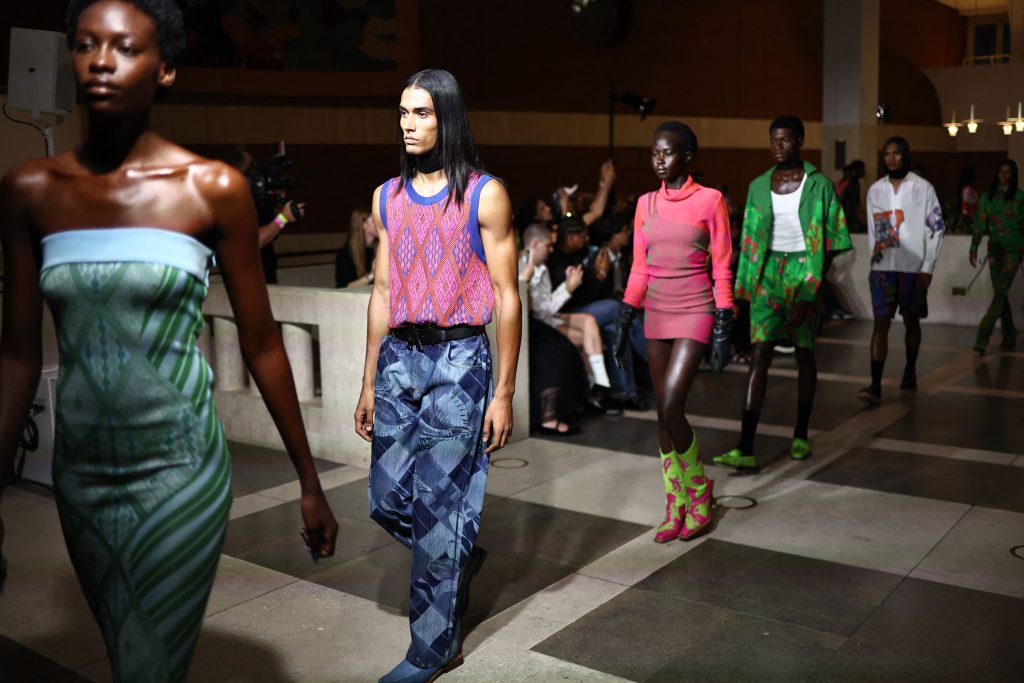
The term double diaspora describes a specific condition: inheriting two separate diaspora histories simultaneously rather than one. For Priya Ahluwalia, Nigerian and Indian diaspora histories are not two halves of an identity that combine into one. They are two complete inheritances, each with its own specific material culture, textile traditions, dress vocabulary, music, family structure, food, and aesthetic logic. Being born inside both, in a south-west London neighbourhood whose own cultural composition is itself a diaspora geography, does not produce a blend. It produces a specific kind of attention: the capacity to hold multiple visual and cultural grammars in mind simultaneously without needing to resolve them into one language.
This is what the From Bollywood to Nollywood collection was named in 2022, the first collection Ahluwalia showed as an independent runway event at London Fashion Week. The title did not propose a fusion of two cinemas. It proposed a conversation between two vast popular visual cultures, each producing its own specific aesthetic of excess, glamour, labour, storytelling, and collective pleasure. The collection’s design language reflected that conversation: not one thing meeting another thing, but two things being fully present simultaneously in the same garment.
My mood boards are huge and filled with creative research that always comes from different elements of thinking about the Black and Brown diasporas. The London influence is more instinctive: when I’m designing, because I’m thinking about the people I know, it makes a sensibility come through naturally. There are things about my taste that I’m sure would be different if I were born in New York.
The Research Methodology: Lagos to Panipat
Ahluwalia’s founding research methodology is documented in her first book,k Sweet Lassi, which explored the secondhand clothing industry in the Global South. As The Industry Fashion’s interview with Ahluwalia documents, during a 2017 trip to Nigeria to visit her father, she noticed hawkers on the streets of Lagos wearing secondhand clothing from the UK. She was confused and started asking questions. That curiosity led her to the Lagos secondhand market and then to Panipat in India, a city described as the garment recycling capital of the world, where she encountered the colossal scale of discarded Western clothing being sorted by colour and recycled. The research circuit she followed, London to Lagos to Panipat, traces exactly the triangular material relationship between British consumption, Nigerian trade, and Indian manufacturing that characterises both her heritage and the global garment economy.
The research did not produce a sustainability position that was added to her design practice from outside. It produced the design practice itself. Understanding that clothes travel across the world in specific circuits- that a British charity donation becomes a Nigerian street market item, becomes an Indian recycling mountain, becomes a Panipat fabric- gave her the material system within which her design methodology operates. Vintage and deadstock sourcing, giving existing materials new life through textile techniques: these are not ethical choices added to an otherwise conventional design process. They are the design process, shaped by the specific knowledge that her research produced.
The Collection Timeline as Argument
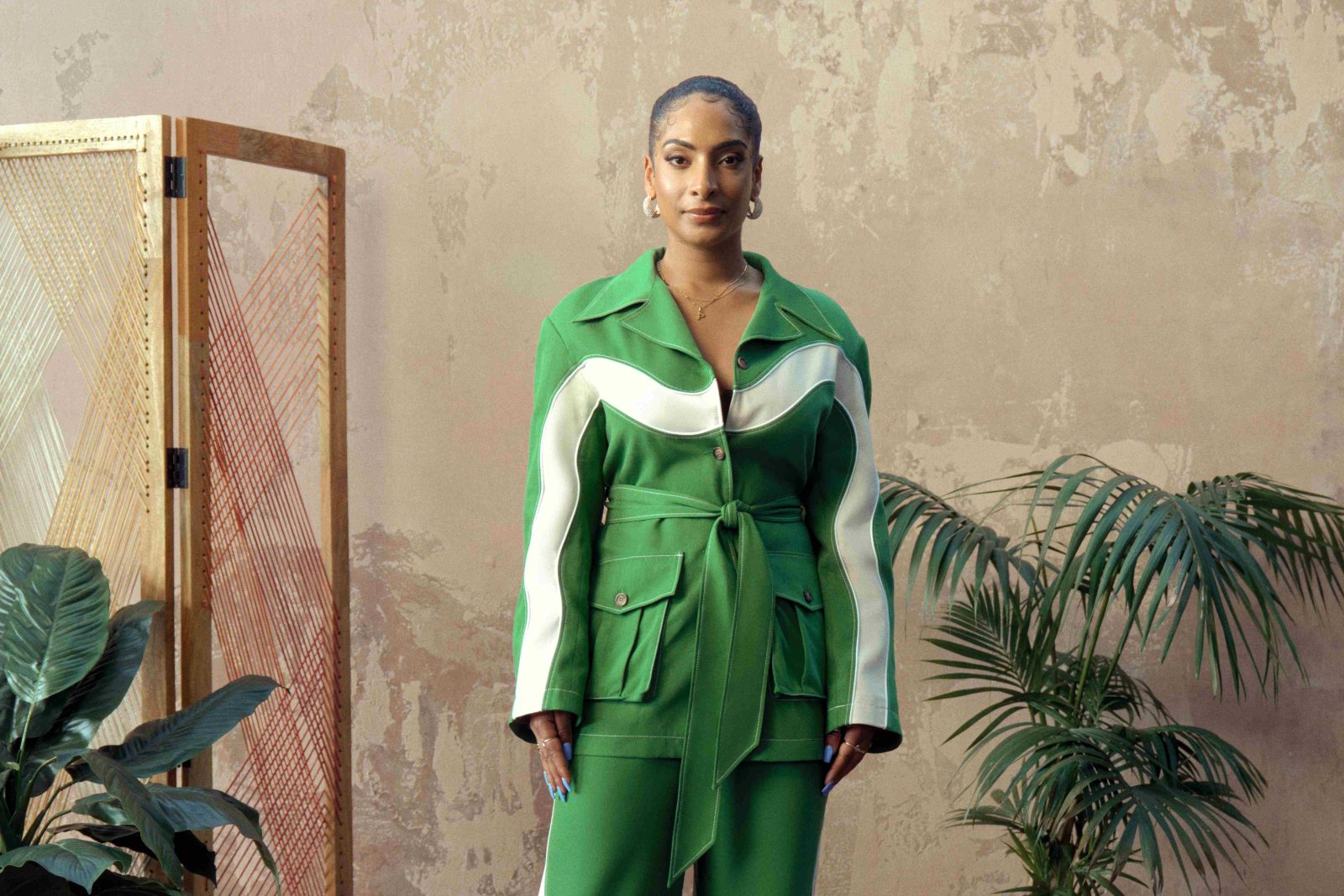
The Ahluwalia collection timeline, as documented on the official brand website at ahluwalia. is the most precise record of how her design intelligence has developed across eight years of practice. Each collection title names a specific intellectual or emotional territory: SS23 Africa Is Limitless, AW22 From Bollywood to Nollywood, SS24 Acknowledgements, AW24 Reveries, SS25 Home Sweet Home, SS26 Affinity. As the official Ahluwalia brand record confirms, the collection venues have been chosen as precisely as the titles: the British Library for SS24, Church House Westminster for SS25, Central Hall Westminster for AW24, and the NoMad Hotel for SS26. Each venue carries its own institutional and historical associations that the collection is placed in dialogue with. The British Library is not a neutral location for a designer whose practice draws on the research of the Black and Brown diasporas. It is a statement about what kind of knowledge gets archived and in whose institution.
The Symphony collection of AW23, staged in a former baroque church hall with models walking to jazz-infused renditions, elicited an emotional response Ahluwalia described in detail: she could not stop crying at the dress rehearsal. That emotional connection to the work is not sentimental. It is the evidence that the research is personal, that the diasporas she is thinking from are not reference points she has chosen for their visual richness but inheritances she carries because they are hers. The difference between those two things is the difference between a designer who references double diaspora and a designer who thinks from inside it.
The Sustainable Design Question
The fashion industry has consistently labelled Ahluwalia a sustainable designer, a designation she has explicitly pushed back against. As documented in Stylist’s December 2025 profile, Ahluwalia was described as speaking about identity without theory or tension. The Stylist profile captures her design intelligence at its most pragmatic: All design is about proportion. You’re just doing it on a smaller scale. I like working this way because it’s the right thing to do, and I find it inspiring—the Industry. Fashion interview documents her explicit resistance to the sustainable designer label: she is so much more than just that. The sustainable methodology is one output of a design intelligence that is simultaneously cultural, material, social, and aesthetic.
Sustainable practice and diaspora intelligence are not separate commitments that happen to coexist in a single designer. They are the same thing viewed from different angles. The research trip that produced the Lagos-to-Panipat understanding of the global garment circuit produced both the sustainable methodology and the cultural argument that the clothes’ journeys make visible. A Nigerian secondhand hawker wearing donated British clothing is evidence of a global material circuit that is simultaneously a sustainability crisis and an argument about whose consumption decisions shape whose material life. Ahluwalia’s design practice holds both of those things in the same garment.
The Brand Building: Awards, Stockists and Collaborations
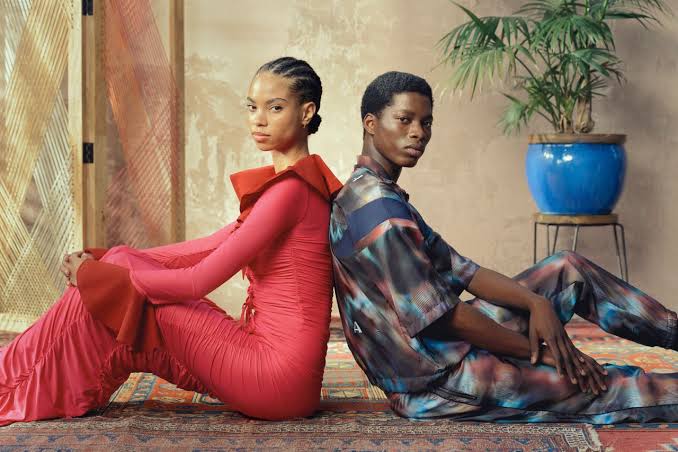
The institutional record of Ahluwalia’s commercial and cultural recognition is extensive. The LVMH Prize in 2020, the Queen Elizabeth II Award for British Design in 2021, and three consecutive Fashion Awards for Leader of Change at the Fashion Awards document a sustained institutional recognition of the practice’s quality. SSENSE and Browns as stockists document international retail access. Collaborations with Mulberry, GANNI, Paul Smith, PUMA (the Suede by Ahluwalia trainer), and the Microsoft Circulate platform each represent a major institution recognising the design intelligence as commercially and institutionally valuable. The Fashion Play collaboration with Barbie, transforming recycled textile waste into fabrics for a Barbie capsule, demonstrated that the methodology scales across formats without losing its rigour.
British Vogue’s January cover recognition, Edward Enninful’s Vogue Forces for Change dinner acknowledgement, and the Elle inaugural 2024 Green List inclusion confirm press recognition at the highest levels of British fashion media. Priya Ahluwalia’s directorial debut with Black Dog Films for the short film Beloved, presented at Salter’s Hall, extends the design intelligence into moving image. The Ahluwalia world is not a clothing brand with a sustainability message. It is a total creative practice whose medium happens to include clothing.
The Omiren Argument
Priya Ahluwalia’s design intelligence is not the product of a blend. It is the product of a double diaspora heritage held simultaneously as multiple complete registers rather than synthesised into one. The African fashion and beauty market is part of a 31-billion-dollar continental economy. When Ahluwalia describes her mood boards as filled with creative research from different elements of thinking about the Black and Brown diasporas, she is not describing a multicultural aesthetic. She is describing a specific methodology: holding multiple complete cultural grammars in mind at the research stage, letting them generate their own specific creative logic, and producing garments that do not split the difference but carry the tension productively. From Bollywood to Nollywood is not a fusion. It is two complete cinemas of glamour, excess, and popular pleasure being held in the same creative space. Africa Is Limitless is not a slogan. It is a research position. The collection timeline from 2018 to 2026 is an argument about what a double-diaspora designer who takes her inheritances seriously can produce: not a look but an intelligence, specific enough to be recognised across eight years of distinct collections, and coherent enough to carry it all simultaneously.
Also Read:
- African-Indian Design Is Not a Fusion Trend: It Is a Fashion History the Industry Has Failed to Name
- Black British Designers Are Changing Who London Luxury Is Allowed to Credit
- Diaspora Style Is Not Fashion’s Trend Reservoir
- Who Should Define Cultural Authority in Fashion? Start With the Makers
Frequently Asked Questions
What is Priya Ahluwalia’s design process?
Priya Ahluwalia’s design process begins with research: building large mood boards drawn from creative research across different elements of thinking about the Black and Brown diasporas, in her own words. This research feeds into collections whose conceptual framework is named in the collection title and developed through the choice of venue, collaborators, music, and materials. She works primarily with vintage and deadstock materials, sourcing from existing clothing rather than producing new fabric where possible. Her foundational research trip to Lagos and Panipat established the global material circuit that the brand’s sustainable methodology addresses. Each collection title names a specific intellectual or emotional territory: Africa Is Limitless, From Bollywood to Nollywood, Home Sweet Home, Affinity.
What is double diaspora in fashion?
Double diaspora describes the condition of inheriting two separate diaspora histories simultaneously rather than one. In the context of Priya Ahluwalia’s design practice, it refers to holding Nigerian diaspora and Indian diaspora inheritances simultaneously, alongside a British upbringing in Tooting, south-west London. The design argument is that this double inheritance does not produce a hybrid look or a fused aesthetic, but rather a distinct design intelligence: the capacity to hold multiple complete cultural grammars in mind simultaneously at the research and design stages, producing work that carries both inheritances without resolving them into one.
What collections has Priya Ahluwalia shown?
Priya Ahluwalia’s documented collection timeline includes: SS26 Affinity (NoMad Hotel London); SS25 Home Sweet Home (Church House Westminster); AW24 Reveries (Central Hall Westminster); SS24 Acknowledgements (British Library); AW23 Symphony (formerly baroque church hall); SS23 Africa Is Limitless (Salter’s Hall); AW22 From Bollywood to Nollywood (Ahluwalia’s first independent runway show). Earlier collections include SS22 and collaborations with GANNI, Paul Smith (menswear capsule), Mulberry, PUMA (Suede by Ahluwalia trainer), and a Fashion Play Barbie capsule using recycled textile waste.
What is the Ahluwalia brand?
Ahluwalia is a London-based menswear and fashion label founded by Priya Ahluwalia in 2018, following her graduation from the MA Menswear course at the University of Westminster. The brand is built on vintage and deadstock sourcing, research into dual Indian-Nigerian heritage, and a commitment to cultural storytelling through design. Stockists include SSENSE and Browns. The brand has won the LVMH Prize (2020), Queen Elizabeth II Award for British Design (2021), the BFC/GQ Designer Menswear Fund, and three consecutive Fashion Awards for Leader of Change. The brand website is ahluwalia.world and the Instagram is @ahluwalia.world.
How does Nigerian Indian heritage influence Ahluwalia designs?
Nigerian and Indian heritage influences Ahluwalia designs not through direct visual references but through the research methodology and conceptual framework that generates each collection. Ahluwalia describes building mood boards from creative research across different elements of thinking about the Black and Brown diasporas. Collections including From Bollywood to Nollywood (AW22) and Africa Is Limitless (SS23) name their heritage references explicitly as research positions rather than decorative themes. The Lagos-to-Panipat research circuit that produced her sustainable methodology traces the material circuit connecting Nigerian trade markets and Indian recycling infrastructure through British consumption patterns, making the heritage and the methodology inseparable.
Explore More
Read the full Culture > Heritage Stories section for Omiren Styles‘ documented profiles of designers whose heritage inheritances constitute a distinct design intelligence rather than a stylistic reference point.
Discover travel and heritage intelligence across Nigeria, India and the African diaspora at Rex Clarke Adventures.