Every physical fashion sample costs twice as much.
It costs the fabric, the labour, the pattern-making, the construction, and the finishing that produce it. And it costs in shipping: a physical sample moving between a designer in one city and a buyer or factory in another incurs between USD 10 and USD 50 per unit in freight costs, plus seven to fourteen days of transit time before anyone can review it, request changes, and restart the cycle. A typical collection development process that requires five rounds of physical samples before a final approval is paying those costs five times, generating waste from every rejected sample and losing the compounding time of every transit round-trip.
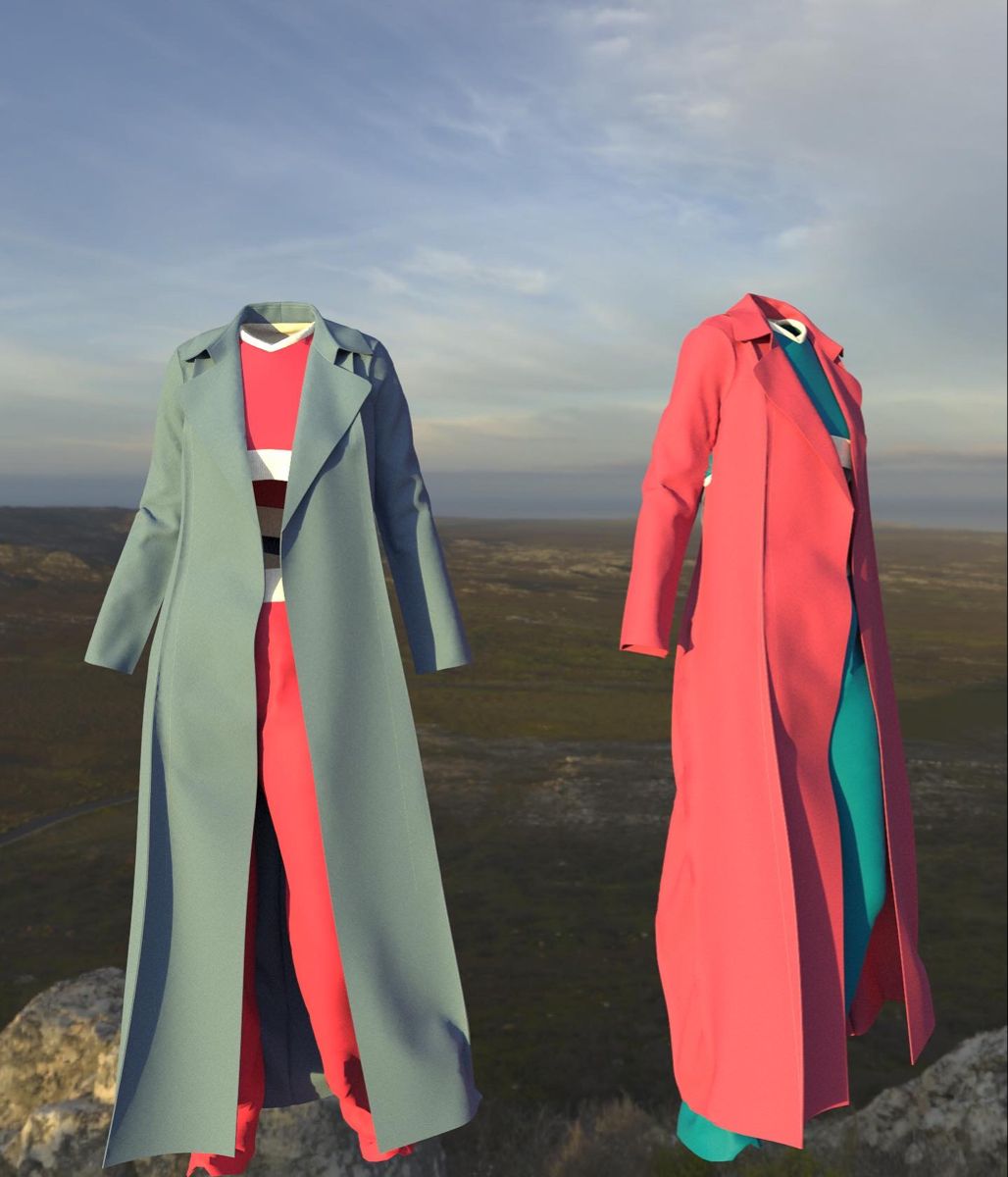
Virtual sampling addresses this by replacing physical samples with digital prototypes: 3D simulations of a garment whose fabric drape, body fit, surface texture, and movement are rendered with sufficient realism for a designer, buyer, or production team to review and approve without a physical object yet to exist. The economics of this replacement are, at sufficient volume and with sufficient infrastructure, compelling. McKinsey’s 2025 sustainability report found that brands adopting digital twins saw up to 60% reductions in physical sampling costs. The 3D fashion design software market reached approximately USD 2.7 billion in early 2026, projected to USD 4.8 billion by 2035.
The commercial case at scale is clear. The question for this series is: clear for whom? The answer requires distinguishing between the sampling problem of a major brand producing at industrial scale and the sampling problem of an independent designer in Lagos, Lomé or Kingston producing at fifty to two hundred units a season, and asking whether the technology whose adoption rate is 68% among global fashion executives is also the technology that is accessible and relevant to the designer operating in the missing middle.
The solution is not abandoning digital sampling. It is using 3D validation strategically to reduce the number of physical samples from five rounds to one or two targeted rounds. That framing, from a digital sampling analysis published in August 2026, identifies the most commercially accurate description of what the technology currently delivers at an accessible scale: not the elimination of the physical sample, but the compression of physical sample rounds. That is a meaningful improvement. It is also a more modest proposition than the 80% reduction headline that technology providers advertise.
Virtual sampling cuts physical sample production by 60-80% and saves up to USD 5,000 per sample for major fashion brands. This guide explains what the technology does, what it costs and where it does and does not work for independent designers in the Global South.
What Virtual Sampling Actually Does
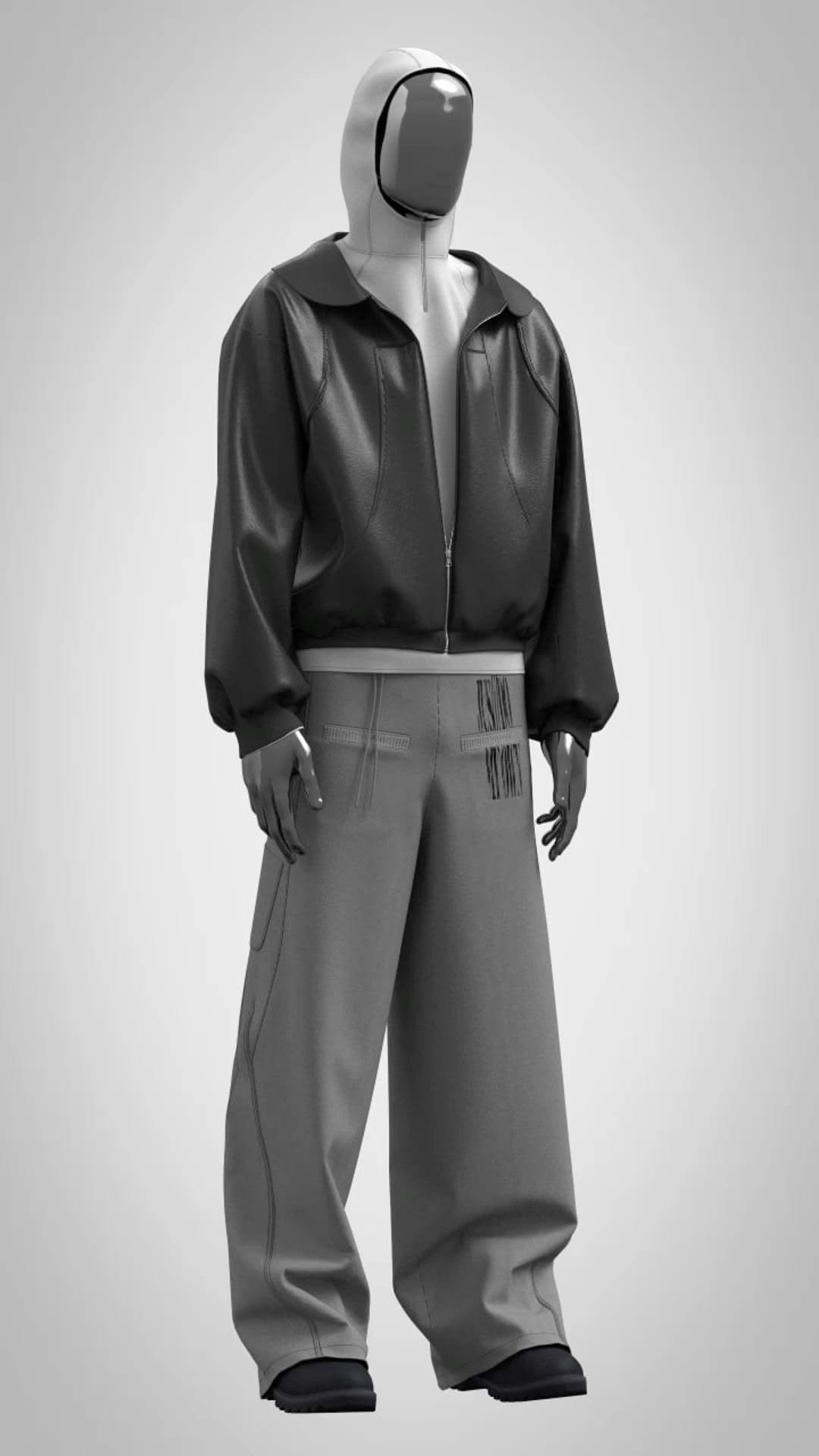
Virtual sampling is the creation of a digital garment prototype using 3D design software that simulates how a physical garment will look, fit and move on a human body.
The process requires three inputs: a digital pattern file (the two-dimensional shapes that will be cut from fabric and sewn together to create the garment), a digital fabric file (a simulation of the specific fabric’s physical properties, including its weight, stretch, drape and surface texture), and a digital avatar or body model (a representation of the human body in the specific size and proportion for which the garment is being designed). From these three inputs, physics-based simulation engines calculate how the fabric would drape over the body, how it would move with the body’s movement, where it would wrinkle under stress and how it would sit at the garment’s neckline, hem, sleeve opening and other critical fitting points.
The output of this simulation is a rendered 3D image or animation of the garment that a designer can review, annotate and send to a buyer or production partner for feedback, without any physical fabric having been cut. Changes to the pattern, the fabric simulation, or the garment’s style lines can be made digitally, and a new simulation can be generated in minutes rather than the seven to ten days that a new physical sampling round requires.
The major 3D fashion design platforms currently in commercial use include CLO3D, which is widely described as the most accessible 3D garment simulation tool for independent and emerging designers; Browzwear, which has positioned itself as an enterprise solution for global supply chain integration; and Style3D, a platform originating from China whose 2026 update integrates neural material recognition. Each platform has different pricing tiers, learning curves, and levels of suitability for different production contexts and garment types.
The Evidence: What the Technology Delivers at Scale

As documented in a digital sampling analysis published in August 2026, the cost of a physical sample avoided by digital sampling ranges from USD 450 to USD 5,000, depending on the garment’s complexity, the fabric’s cost, and the production context. Software licensing for 3D fashion design tools costs between USD 3,000 and USD 15,000 annually. Training a technical designer to work proficiently in 3D fashion software takes two to three months. Development timelines are reduced by approximately 40% for brands that move to digital-first design workflows. Most brands see positive ROI within six to twelve months of adoption.
As Shijin Fashion documented in its April 2026 analysis of digital twin fashion, global adoption of virtual prototyping surged by 70% in 2025, driven by brands seeking an ROI from 3D fashion software exceeding 300% within the first year. Cloud collaboration tools allow a designer in Milan, a buyer in New York and a factory in Vietnam to simultaneously review and annotate the same 3D garment, eliminating the delays and costs of shipping physical samples internationally. Traditional sampling cycles require seven to ten days per iteration. Virtual sampling compresses this to hours.
The regulatory environment is reinforcing the commercial case. The UN Fashion Industry Charter for Climate Action, signed by over 100 companies, including adidas, LVMH, H&M, Nike, Kering, Chanel, and PUMA, commits signatories to a 30% reduction in greenhouse gas emissions by 2030. Virtual sampling’s documented contribution to reducing pre-consumer textile waste and eliminating sample-shipping emissions positions it as both a compliance and a cost tool for brands whose sustainability commitments require measurable evidence.
As Omiren Styles has established in its analysis of the EU Digital Product Passport and its potential impact on fashion, brands with established digital workflows, including digital sampling, will be better positioned to comply with the Digital Product Passport’s lifecycle documentation requirements. The digital record of a garment’s design iterations, material specifications and production decisions that a 3D sampling workflow generates is the same digital record whose existence the DPP requires. Brands that adopt virtual sampling for production efficiency reasons are building the documentation infrastructure that regulatory compliance will eventually require.
The Infrastructure Gap: What the Technology Requires
The impressive adoption statistics for virtual sampling are aggregate figures across global fashion brands. They include the brands that have the technical infrastructure to adopt the technology: reliable broadband internet connection sufficient to run cloud-based 3D software; computing hardware capable of rendering high-fidelity garment simulations; technical design staff with the skills or the training capacity to produce digital patterns and fabric files; and digital fabric libraries that provide accurate simulations of the materials the brand uses.
Each of these requirements is an infrastructure precondition whose absence in a designer’s working environment makes virtual sampling either impossible, impractical or dramatically less effective. 3D simulation software requires a graphics processing unit capable of running real-time physics engines. Running high-fidelity simulations on underpowered hardware yields results with rendering quality insufficient for buyer review. Running cloud-based 3D software over an unreliable internet connection produces interrupted workflows whose real-world time cost may exceed the time cost of a physical sample round.
The digital fabric library problem is the most underreported obstacle to virtual sampling at scale. The simulation of a garment’s appearance depends on the accuracy of the digital fabric file. A physics engine that simulates how a fabric drapes, stretches and catches light is only as accurate as the digital properties assigned to the specific fabric being simulated. A brand that produces technical fabrics in Europe or North America, with standardised physical property data available from major mills and fabric suppliers, has a library of digital fabric files it can draw on. A designer who produces in West African wax print, hand-woven kente, locally sourced batik or dead-stock cotton with no standardised digital properties available must either create those digital fabric files from physical samples, invest in fabric scanning equipment that generates the data, or accept that their digital simulation will not accurately represent the material they are actually working with.
As Omiren Styles has documented in its analysis of the missing middle and why independent designers struggle between the sketchbook and the factory floor, the documentation gap between intuitive design practice and the technical documentation a factory relationship requires is one of the primary barriers to independent designer commercial development. Virtual sampling requires the same technical documentation capability, specifically, the ability to produce accurate digital pattern files, as a factory tech pack. A designer who has not yet closed the tech pack documentation gap has also not yet closed the virtual sampling adoption gap. The two gaps are the same gap expressed in different contexts.
What Virtual Sampling Cannot Do?
The honest account of virtual sampling’s current capabilities requires naming what the technology cannot do as specifically as what it can.
Virtual sampling cannot replace the physical fit approval for garments whose fit is both the primary product quality criterion and the hardest dimension to simulate accurately. Swimwear and activewear whose fit must function during movement and physical performance at body temperatures and under sweating conditions are examples where the simulation’s accuracy at the static rendering level may not translate into an accurate prediction of the garment’s behaviour on a moving, sweating human body. The physical fit sample for these categories remains commercially essential even for brands whose digital workflows are otherwise comprehensive.
Virtual sampling cannot simulate artisan craft production with the same accuracy as it can simulate industrially cut-and-sewn garments. The physics engines that underpin 3D simulation software were developed for and validated against garments whose construction follows standardised industrial processes: machine-cut pattern pieces, machine-sewn seams, consistent material properties across the fabric. A garment whose surface is tie-and-dyed by hand, whose embroidery is applied by a human practitioner with technique-specific variations in tension and placement, or whose construction incorporates hand-finishing that introduces controlled irregularity into the surface, is a garment whose physical reality the simulation cannot accurately predict from digital inputs.
This limitation is directly relevant for African and Caribbean fashion producers whose aesthetic value derives precisely from the artisan production methods that virtual sampling cannot model. A Togolese brand producing garments with tie-and-dye surface treatment has a product whose physical sample serves a specific function that a digital simulation cannot replace: demonstrating to a buyer that the hand technique produces a result that matches the designer’s intent. No amount of digital rendering makes that demonstration obsolete, because the physical sample is not only an approval tool but a proof-of-craft that the digital version cannot substitute.
As Omiren Styles has established in its analysis of small-batch specialist manufacturing in African fashion, specialist manufacturing at small-batch scale is not a consolation prize for brands that cannot access industrial manufacturing. It is the correct production model for the cultural output and the commercial stage at which most African fashion brands operate. The same argument applies to physical sampling for artisan production: the physical sample is not a pre-digital inefficiency waiting to be replaced by virtual sampling. It is the appropriate quality assurance mechanism for production whose value is the specific material result of human craft, which a digital simulation cannot replicate.
Where Virtual Sampling Is Most Valuable for Independent Designers

The honest case for virtual sampling for independent designers is not that it replaces the physical sample. It is that it reduces the number of physical samples required, specifically by replacing the early-stage rounds of physical sampling, which are for design iteration rather than final quality approval.
An independent designer who currently produces five rounds of physical samples before a final buyer approval is paying the full sample cost five times. Virtual sampling that compresses those five rounds into one or two targeted physical sample rounds, with digital iteration replacing the earlier rounds, represents a real cost saving and a real timeline reduction even for a brand producing at fifty units a season. The USD 3,000 to USD 15,000 annual software investment becomes economically rational when it is measured against the cost of three or four avoided physical sample rounds across the season’s collections.
The digital presentation value of virtual sampling is also specifically relevant for Global South designers seeking to approach international buyers. A designer in Lomé whose collection is presented to a buyer in London through high-quality 3D-rendered imagery has removed the physical sample shipping cost from the buyer-approach process. The USD 10 to USD 50 per-unit shipping cost, plus the seven to fourteen-day transit time that a physical sample presentation to an international buyer requires, is a significant barrier for a designer whose production economics are already constrained. A digital lookbook of professional-quality 3D-rendered garment imagery changes the economics of the buyer approach without requiring any physical sample to cross a border.
The most accessible entry point for independent designers into virtual sampling is CLO3D’s independent designer subscription tier, which is priced substantially lower than enterprise licensing and has a learning curve documented as manageable within two to three months of focused training. Building a foundational 3D design capability at this tier creates a pathway toward the more comprehensive virtual sampling workflow that the production economics eventually justify as volume grows.
The Hybrid Approach: What Serious Adoption Looks Like

As The F-Word’s August 2026 digital sampling guide documents, the most successful brands approach virtual sampling not as an all-or-nothing transition from physical to digital, but as a strategic hybrid: using 3D validation to reduce physical samples from five rounds to one or two targeted rounds while maintaining physical sampling for the complex styles, novel fabrics and critical fit approval stages where physical validation remains necessary. This approach delivers the speed and cost benefits of digital sampling while maintaining the quality assurance of physical validation at the points in the development process where digital accuracy is insufficient.
The successful adoption of this hybrid approach requires a deliberate workflow redesign rather than simply acquiring the software. The brands that achieve the best results restructure their design process so that digital validation occurs at every stage where digital accuracy is sufficient, and physical production is reserved for the stages where it is not. This restructuring requires clear criteria for when a digital sample is sufficient and when a physical one is required, a digital fabric library that accurately represents the brand’s most-used materials, and technical design staff who can produce and review 3D files fluently enough to make the digital iteration stages genuinely faster than their physical equivalents.
For a brand building toward this hybrid model from a starting point of no 3D capability, the practical progression is: build a digital pattern making capability first (since this is required for both 3D sampling and factory tech pack production); create digital files for the twenty to thirty most-used fabrics from the brand’s material range (starting with fabrics for which supplier digital files may already be available); train one technical designer in 3D simulation software; and run the first season’s development process with 3D validation for design iterations and physical sampling reserved for final fit approval and craft-quality verification. That progression is achievable for a brand with the production intelligence to manage it and the commercial stage to justify the software investment.
The Omiren Argument
Virtual sampling is a genuinely useful technology whose commercial case is strongest at the scale of the brands that have adopted it most aggressively. For independent designers in the Global South, the question of relevance is not whether the technology works, but whether the infrastructure conditions of their specific context make it accessible, and whether the specific garments and production methods they work with are the ones the technology is most accurate for.
The answer to both questions is specific rather than general. A designer with a reliable broadband connection, a graphics-capable workstation and a technical design background who produces industrially cut-and-sewn garments in standard technical fabrics has a clear path into virtual sampling adoption that would compress their physical sample rounds and reduce their per-collection development cost. A designer who produces handmade garments in locally sourced artisan fabrics on infrastructure that cannot reliably support cloud-based 3D software faces a different situation, and the most valuable technology investment at their stage may be digital pattern-making and professional documentation capabilities rather than 3D garment simulation.
The physical sample problem that virtual sampling solves is not the same problem for every designer. Understanding which problem you are actually solving, and which technology is most relevant to that specific problem at your specific stage, is the production intelligence that this series has been arguing for throughout.
As Omiren Styles has argued throughout this series, the Global South made fashion and never got credit. The physical sample whose cost compounds across five rounds of international shipping is one of the mechanisms through which that credit gap is maintained: the designer whose per-collection development cost is structured by geography into uncompetitiveness is a designer who cannot build the commercial relationships that the series argues they deserve. Virtual sampling that reduces those costs, even partially, for the designers who can access and deploy it is a technology investment that serves the series argument. The question is how to calibrate the investment to the specific stage, context, and production method where it actually delivers returns.
ALSO READ
- Fashion Technology: A Guide to the Systems Changing What We Wear
- The Missing Middle: Why Independent Designers Struggle Between the Sketchbook and the Factory Floor
- Small Batch, Serious Standards: The Case for Specialist Manufacturing in African Fashion
- What Is a Digital Product Passport and What Could It Change for Fashion?
- The Global South Made Fashion. It Just Never Got Credit.
Frequently Asked Questions
What is virtual sampling in fashion and how does it work?
Virtual sampling is the creation of a digital garment prototype using 3D design software that simulates how a physical garment will look, fit and move on a human body. The process requires three inputs: a digital pattern file (the two-dimensional shapes that will produce the garment when cut and sewn), a digital fabric file (a simulation of the specific fabric’s physical properties, including weight, stretch, drape and surface texture), and a digital avatar or body model. Physics-based simulation engines calculate how the fabric would drape and move, generating a rendered 3D image or animation that a designer can review and share with buyers or production partners without cutting any physical fabric. Changes can be made digitally, and a new simulation can be generated in minutes rather than the seven to ten days a new physical sampling round requires.
How much does virtual sampling reduce physical sample costs?
According to The F-Word’s August 2026 digital sampling guide, the cost of a physical sample avoided by digital sampling ranges from USD 450 to USD 5,000, depending on garment complexity and production context. McKinsey’s 2025 sustainability report found that brands adopting digital twins saw up to 60% reductions in physical sampling costs, and development timelines were reduced by approximately 40% for brands that implemented digital-first workflows. Software licensing costs range from USD 3,000 to USD 15,000 annually, and training a technical designer to work proficiently in 3D fashion software takes 2 to 3 months. Most brands with sufficient sample volumes see positive ROI within six to twelve months. The most realistic expectation for most brands is reducing physical sample rounds from five to one or two targeted rounds, rather than eliminating physical samples entirely.
What are the limitations of virtual sampling for artisan and handmade fashion production?
Virtual sampling was developed for, and validates most accurately against, garments produced using industrially standardised processes: machine-cut pattern pieces, machine-sewn seams, and consistent material properties. It cannot accurately simulate artisan craft production techniques whose value derives from controlled human variation: tie-and-dye surface treatments, hand embroidery with technique-derived variation in tension and placement, hand-finishing that introduces controlled irregularity, or traditional weaving techniques whose surface characteristics emerge from the weaver’s practice rather than a digital material property. For designers whose product value comes from these artisan production methods, the physical sample serves a proof-of-craft function that digital simulation cannot substitute. Virtual sampling can still reduce early design iteration rounds for these designers, but it cannot replace the physical sample that demonstrates the craft result to a buyer.
Which 3D fashion design tools are most accessible for independent designers?
As StyTrix’s March 2026 digital sampling analysis documents, CLO3D is widely described as the most accessible 3D garment simulation tool for independent and emerging designers, with a subscription pricing model in which the independent designer tier is substantially lower than the enterprise licensing costs of more comprehensive platforms. Browzwear is positioned as an enterprise solution for global supply chain integration, and Style3D has positioned itself at the intersection of AI-assisted design and 3D simulation. For a designer beginning to adopt virtual sampling, CLO3D’s independent tier provides a manageable entry point with a two- to three-month learning curve and pricing at small scale that can be justified by even a modest reduction in physical sample rounds per season. The prerequisite is the capability for digital pattern making, since 3D simulation requires digital pattern files as input.
How does virtual sampling relate to EU Digital Product Passport compliance?
As Omiren Styles has established, in its analysis of the EU Digital Product Passport, brands with established digital workflows, including digital sampling, will be better positioned to comply with the Digital Product Passport’s lifecycle documentation requirements for textile products sold in EU markets. The digital record of a garment’s design iterations, material specifications, and production decisions that a 3D sampling workflow generates is the same digital record that the DPP framework requires brands to maintain. A designer who builds a virtual sampling capability for production efficiency reasons is simultaneously building the documentation infrastructure that EU market compliance will require by the late 2028/2029 textile DPP deadline. This alignment between production efficiency and regulatory compliance is one of the strongest arguments for beginning development of virtual sampling capabilities now rather than waiting for regulatory pressure to force it.
EXPLORE MORE
Read the full Industry and Intelligence sections at Omiren Styles for ongoing analysis of virtual sampling, 3D fashion design tools and the specific technology investments that are most relevant for fashion practitioners in Africa, the Caribbean and the Global South. Discover travel and heritage intelligence across Africa, the Caribbean and Latin America at Rex Clarke Adventures.