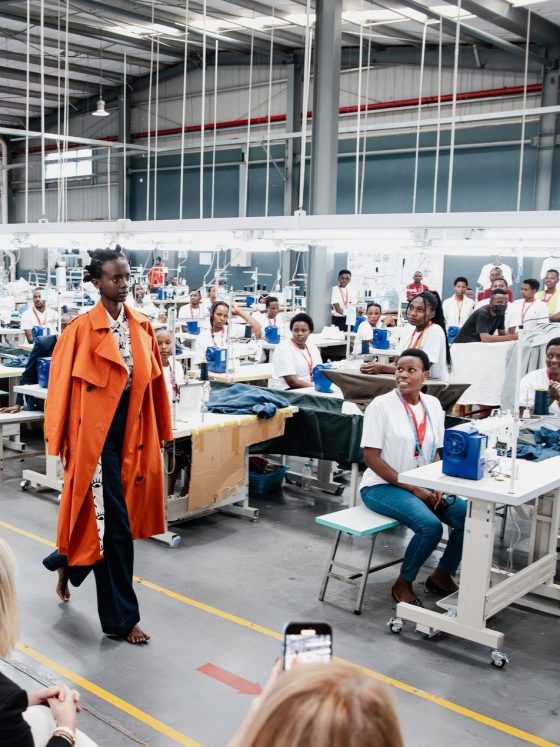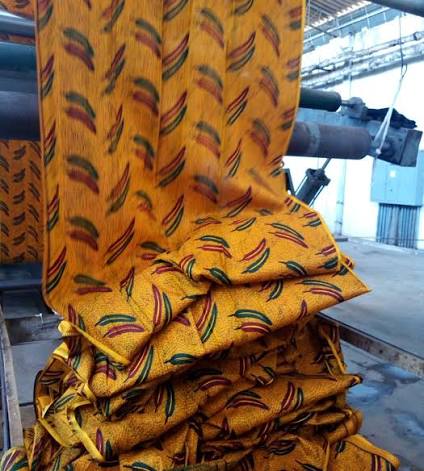
There is a well-documented space at the top of the fashion production chain.
The industrial manufacturer has a minimum order of five hundred to five thousand units, a certified social compliance record, a technical team that reads specification packs fluently, a quality control process that runs between production and shipment, and a delivery track record whose consistency has been verified by the brands whose wholesale orders sustain it. That manufacturer has the scale the fashion industry was built to work with. It has the certifications required by the buying manuals. It has the minimum order quantities that make the per-unit economics of industrial production viable. It is, in the language of the industry, a serious manufacturer.
There is also a well-documented space at the other end.
The individual tailor, the home-based maker, the single-artisan atelier producing to commission. That producer works without minimums. Every piece is specific to the customer who ordered it. The production scale is the scale of one: one commission, one fitting, one garment delivered to one customer in a direct transaction that requires no wholesale relationship, no specification pack and no delivery window beyond the one agreed with the person who will collect the garment in person.
The space that is almost entirely unserved by existing fashion development infrastructure is the space between these two points.
The independent designer who has moved beyond one-off production but cannot yet meet industrial minimums. Who has real commercial demand, documented buyer interest, and a collection that has been worn, photographed, and reviewed, but no production partner calibrated to their actual scale. Who has the design intelligence to fill a sketchbook with compelling work and the commercial intelligence to know that the work deserves to be on a retail floor, but lacks the specific production intelligence to convert the sketchbook into a factory floor order that a buyer can act on.
This is the missing middle. It is where most of the Global South’s fashion talent is currently stuck. And it is where almost no institutional support is designed to reach.
“A factory calls itself flexible, you build a plan around it, and the real minimum turns up with the quote. That gap is where emerging brands lose months.” That sentence, from production intelligence documentation published in 2026, describes the missing middle more precisely than most fashion development programmes acknowledge. The gap between what a factory says and what it will actually quote for is the gap between the designer who reaches production and the designer who does not.
Most fashion development infrastructure serves either individual makers or industrial factories. The independent designer between them is largely unserved. This is the missing middle, what it costs, and what would close it.
What the Missing Middle Actually Is

The missing middle is not a single gap. It is a sequence of gaps, each one capable of stopping a designer’s commercial development at the point where the next gap begins.
The first gap is the sampling gap. A designer who has produced one-off work or small commissions is producing from an intuitive understanding of how the garment should be constructed, which the maker transmits into the physical piece through their own skill and judgement. Moving from that production mode to a factory relationship requires translating that intuitive understanding into a technical document: a tech pack whose flat illustrations, measurement specifications, construction details, and material specifications communicate the designer’s intent to a production team that will execute the garment without the designer present. Most independent designers, particularly those who learned design through practice rather than formal technical training, lack the technical documentation skills required for a factory relationship. The sampling gap is not a creativity gap. It is a documentation gap.
The second gap is the minimum order gap. The global demand for small-batch production grew at a compound annual growth rate of 11.8% between 2020 and 2025, and 68% of emerging independent fashion brands now prefer manufacturers capable of handling initial order runs of fewer than 500 units. The market signal is clear: demand for small-batch production exists and is growing. But the minimum order quantities offered by manufacturers are not standardised, and the term small batch is not regulated. One factory’s small batch is 500 units per style. Another’s is 50. A designer planning around a factory’s self-described flexibility, only to discover that the real minimum is five times their actual production capacity when the quote arrives, has lost weeks of development time that a more accurately stated minimum would not have cost.
The third gap is the cost gap. Small-batch production carries a per-unit cost premium of 30 to 50% compared with bulk orders of 1,000 units or more. That premium reflects the real economics of small production runs: the same pattern grading, machine calibration and production setup costs that a thousand-unit run amortises across a thousand units must be amortised across fifty or a hundred instead. The premium is legitimate. But for a designer whose retail price architecture was developed against one-off production costs rather than small batch production costs, the discovery that small batch manufacturing is 30 to 50% more expensive per unit than the designer’s current production cost can make the economics of the factory relationship look worse, not better, than the current model. The cost gap is not solved by finding a cheaper factory. It is solved by understanding the full cost structure and building a retail price architecture that reflects it.
The fourth gap is the delivery gap. Industry data published in 2025 shows that 61% of independent apparel brands that missed a wholesale delivery in 2024 attributed the miss to a sourcing or sampling delay. The production timeline for an independent designer’s first factory relationship is almost always longer than the designer anticipated, and the delivery window that a buyer agreed to is almost always calibrated to the production timeline of an established brand whose factory relationships are operational rather than being built for the first time. A designer whose first factory run took four weeks longer than planned because the sampling phase ran over has missed their buyer’s delivery window. The delivery gap is the consequence of every other gap compounding at the point where commercial consequences are highest.
Why the Gap Is Worse in the Global South

Every element of the missing middle gap is more severe for independent designers in Africa, the Caribbean, and the broader Global South than for designers operating from established fashion capitals.
As Omiren Styles has established in its analysis of the fabric middleman and the fashion supply chain, the fabric converter, wholesaler, and jobber who sit between the mill and the designer add 2.0x to 2.5x markup at each stage of the intermediary chain, and the per-unit fabric cost disadvantage for small designers in African and Caribbean markets compounds across every fabric type and every season. A designer in the missing middle who also pays the full intermediary markup on every material they source enters the factory relationship with a unit cost structure that is already disadvantaged before the 30 to 50% small-batch manufacturing premium is applied.
The technical documentation gap is more severe in markets where formal technical fashion education is less accessible and where the connection between design schools and production facilities is weaker. A designer in Los Angeles whose work has reached the missing middle has access to an ecosystem in which pattern makers, technical designers, fabric sourcing specialists, and small-batch production advisers are geographically concentrated and commercially available. The city had approximately 2,000 registered garment manufacturers as of 2026, with 35-40% accepting small-batch orders of fewer than 150 units. That ecosystem provides the infrastructure through which a missing-middle designer can close their documentation, minimum order, and cost gaps with professional support at the scale the designer requires.
In most African and Caribbean cities, that ecosystem does not exist at equivalent density or accessibility. The pattern maker who can produce a tech pack to factory standard, the production adviser who knows which local factories actually accept orders of fifty to two hundred units at the price point the designer’s economics require, the quality control specialist who can assess a sample against specification before a production run is committed to: each of these is a professional whose service the designer needs and whose market is thinner, more expensive and less systematically accessible in Lagos or Kingston or Lomé than in Los Angeles or London or Lisbon.
As Omiren Styles has established in its analysis of what production intelligence means for African fashion brands, production intelligence is the specific knowledge that converts creative output into commercially deliverable fashion products. For a missing middle designer, production intelligence is not a background asset. It is the specific gap whose closure determines whether the designer crosses from the sketchbook to the factory floor. The designer who does not know how to write a tech pack, what minimum order quantities to expect from small batch manufacturers in their geography, how to calculate the total cost of a small batch production run or how to build a production timeline that accounts for sampling delay is a designer who will not successfully navigate the missing middle regardless of the quality of their creative work.
What Closing the Gap Requires
The missing middle gap has four components, each with specific institutional responses that have been implemented in some markets but not in others.
Technical documentation support refers to the professional services and training infrastructure that enable a designer to produce the tech pack, specification documents, and production communications required for a factory relationship. This is a trainable skill whose delivery through structured programmes, mentorship relationships, and accessible professional services would close the documentation gap for designers who have the creative capacity to fill the sketchbook but not yet the technical capacity to document their work for production.
As industry production documentation published in 2026 confirms, 70% of downstream production issues trace back to ambiguities introduced in the design lock, tech pack and fabric sourcing phases of a production timeline. Those three phases consume roughly eight to twelve weeks of a standard independent designer’s production timeline. The ambiguities that cause 70% of production problems are concentrated in the same phases where the missing middle designer’s documentation capability is weakest. Technical documentation support that closes the documentation gap at the beginning of the production timeline prevents the cascade of problems that cause delivery failures at the end.
Production matching infrastructure means the institutional knowledge of which manufacturers in a given geography actually accept the order quantities that missing-middle designers can commit to, at what price, with what timeline, and to what quality standard. The missing middle designer who discovers that a factory’s real minimum is five times their actual production capacity when the quote arrives has not made an error of judgement. They have encountered an information gap that more transparent, systematically maintained production intelligence would not have produced.
As Omiren Styles has established in its analysis of what makes a fashion manufacturer verified, the specific minimum order quantities, lead times, quality standards and verification credentials of a production facility are the evidence fields that allow a designer to make an informed sourcing decision. Production-matching infrastructure that maintains this information systematically, verifiably, and up to date for manufacturers accessible to missing-middle designers in Africa and the Caribbean is the institutional investment that would remove the information gap in the minimum-order problem.
Cost structure education means the financial literacy required to understand the total cost of a small-batch production relationship, including the per-unit manufacturing premium, the sampling costs, the quality inspection costs, the packaging costs, the logistics costs, the import duties and the payment terms, and to build a retail price architecture that sustains the production model rather than being developed against a production cost structure that does not reflect it. A designer who sets their retail prices based on one-off production costs and then discovers that small-batch manufacturing costs 30 to 50% more per unit has not made a creative error. They have made a financial planning error with commercial consequences: A cost structure for education that reaches designers before they enter their first factory relationship would prevent those consequences.
Production timeline management means understanding how long each phase of a production relationship actually takes in the specific geography and with the specific production partners available to the designer, and building the commercial commitments, including the buyer delivery windows, the wholesale order lead times and the payment schedules, around those actual timelines rather than around the timelines of established brands whose production relationships are operational rather than new. A missing middle designer who commits to a buyer-delivery window based on optimistic production-timeline assumptions and then delivers late has not failed commercially because their work was poor. They have failed because no one told them that 61% of independent apparel brands that missed a wholesale delivery in 2024 attributed the miss to a sourcing or sampling delay.
The Ecosystem That Would Hold the Middle

The missing middle is a gap in an ecosystem. Closing it requires building the ecosystem components whose absence creates the gap, not just supporting individual designers as they try to navigate that absence alone.
As Omiren Styles has argued, in its analysis of the case for specialist manufacturing in African fashion, specialist manufacturing at small-batch scale is not a consolation prize for brands that cannot access industrial manufacturing. It is the correct production model for the market, the cultural output and the commercial stage at which most African fashion brands currently operate. The ecosystem that would support those brands through the missing middle is not a scaled-down version of the industrial manufacturing support infrastructure. It is a specifically designed system whose components are calibrated to the specific gaps the missing middle presents.
That system includes: pattern makers and technical designers who work at the price point and order scale that missing middle designers can access; small batch manufacturers who are accurately and publicly described in terms of actual minimums, lead times and quality requirements; production advisers who can build the cost structure analysis and the production timeline that a missing middle designer needs before committing to a factory relationship; quality inspection services accessible to brands producing at fifty-unit scale rather than five hundred; and the institutional platforms, industry bodies, fashion weeks and development finance programmes that connect these services to the designers who need them.
Los Angeles developed its small batch manufacturing ecosystem because three conditions coexisted: a large population of independent fashion designers who needed small runs; steady demand for custom, short-run production from the entertainment industry; and an existing ecosystem of textile wholesalers, pattern makers and embellishment specialists that made small batch production economically viable in ways it is not in most other cities. The equivalent ecosystem for African fashion cities requires deliberate institutional construction rather than the organic concentration of complementary industries that Los Angeles’s specific economic geography produced. That construction is investable. It is not technically complex. It requires the will to build for the missing middle rather than for the industrial manufacturing scale that lies beyond it.
The 90% Who Never Cross the Gap
The fashion startup failure rate is consistently cited at approximately 90%. The analysis that attributes that failure rate to the missing middle gap is not speculative. The specific production failure points — missed delivery, mispriced product, wrong manufacturer, underestimated timeline, undocumented specification — are identifiable and preventable. They are the exact points at which the missing middle ecosystem’s components would have intervened.
The 10% who do cross the missing middle gap and build sustainable production relationships do so not primarily because they are more talented than the 90% who do not. They do so because they had access to the information, professional services, production infrastructure, and commercial education that the missing middle requires. In established fashion markets with functional production ecosystems, that access is a market product: designers can buy the services they need. In fashion markets where the missing middle ecosystem has not been built, access is a network privilege: the designer with a connection to a mentor who has navigated the gap before is more likely to cross it than the designer whose network does not include that knowledge.
Network privilege distributes across existing commercial and social networks. In the Global South fashion context, those networks are themselves distributed unequally: by geography, by prior access to education, and by the economic position that allows a designer to invest in professional services before generating revenue. The missing middle designer who needs the ecosystem most is often the one least likely to access it through existing networks.
The Omiren Argument
The missing middle is the fashion industry’s most important undocumented infrastructure gap.
It is more important than the marketplace problem, because a designer who cannot produce consistently and at quality cannot benefit from any marketplace, however well-designed. It is more important than the visibility problem, because visibility that generates buyer interest the designer cannot convert into fulfilled orders produces commercial debt rather than commercial momentum. It is more important than the cultural credit problem because a designer who cannot cross the missing middle will not remain in the industry long enough to make the cultural credit argument for their own work.
Closing the missing middle gap for independent designers in Africa, the Caribbean, and the Global South requires building the specific ecosystem components whose absence creates the gap: technical documentation support, accurate production-matching infrastructure, cost-structure education, and production-timeline management training. Each of these is buildable. Each is fundable. Each has been built in some fashion markets. None has been built systematically in the markets where the Global South’s fashion talent is most concentrated and most dependent on crossing the gap to sustain the commercial career their creative work deserves.
As Omiren Styles has argued throughout this series, the Global South made fashion and never got credit. The missing middle is the production mechanism through which that absence of credit is sustained: the designer who cannot cross the gap cannot build the production relationship, cannot fulfil the wholesale order, cannot build the commercial reputation that makes the next buyer relationship possible. The sketchbook is full. The factory floor is empty. The gap between them is the infrastructure investment that would change both.
ALSO READ
- Small Batch, Serious Standards: The Case for Specialist Manufacturing in African Fashion
- African Fashion Does Not Need Another Marketplace. It Needs Production Intelligence.
- What Makes a Fashion Manufacturer Verified? A Practical Framework for Emerging Brands
- The Fabric Middleman Is Part of the Fashion System
- The Global South Made Fashion. It Just Never Got Credit.
Frequently Asked Questions
What is the missing middle in fashion production?
The missing middle is the production gap between one-off, commission-based making and industrial factory-scale manufacturing. An independent designer in the missing middle has moved beyond producing single pieces for individual customers but cannot yet meet the minimum order quantities of industrial manufacturers, which typically start at 300 to 5,000 units per style. The designer has real commercial demand but no production partner calibrated to their actual scale. The missing middle is not primarily a creative gap. It is a sequence of specific production gaps: the documentation gap between intuitive making and tech pack production, the minimum order gap between what a factory advertises and what it will actually quote, the cost gap between one-off production cost and small batch manufacturing cost, and the delivery gap between an optimistic production timeline and the actual time a first factory relationship requires.
Why do so many independent fashion brands fail to scale beyond one-off production?
As industry production data from 2025 and 2026 confirms, 61% of independent apparel brands that missed a wholesale delivery in 2024 attributed the miss to a sourcing or sampling delay, and 70% of downstream production issues trace back to ambiguities introduced in the design lock, tech pack and fabric sourcing phases of the production timeline. These are the exact phases in which missing-middle designers have the weakest skills and the least support. The failure to scale is not primarily a creative failure. It is a production intelligence failure whose specific components — documentation skills, manufacturer knowledge, cost structure understanding, and timeline management — are each addressable with the right institutional support. Designers who have access to that support cross the missing middle. Those who typically do not fail on the first attempt to fulfil a wholesale order.
What is the per-unit cost difference between small batch and industrial production?
According to Powersweet Fashion’s 2026 comparison guide for small-batch production, small-batch production runs of 50 to 300 pieces carry a 30% to 50% per-unit cost premium compared with bulk orders of 1,000 units or more. This premium reflects the real economics of small production: the same pattern grading, machine calibration, and setup costs that a thousand-unit run amortises across a thousand units must be amortised across fifty or a hundred. The implication for the emerging-middle designer is that the retail price architecture must be built around the small-batch production cost, not the one-off making cost the designer was previously operating with. A designer who discovers a 30 to 50% premium after committing to a retail price structure based on one-off costs faces a margin problem that no amount of production efficiency can fully correct.
How does the missing middle gap affect designers in Africa and the Caribbean more than those in established fashion cities?
Every component of the missing middle gap is more severe in African and Caribbean fashion markets than in established fashion capital cities. The technical documentation support infrastructure, pattern makers, tech pack specialists and production advisers who work at accessible price points, is less dense and less systematically available. The production-matching information, knowing which local manufacturers actually accept orders of fifty to two hundred units at a price the designer can afford, is less systematically maintained and less publicly available. The cost structure education is less embedded in the formal and informal fashion education that precedes the missing middle. And the logistics and import costs of small-batch production in island or landlocked geographies add to the per-unit cost disadvantage already created by the small-batch premium. The missing middle designer in Lagos or Kingston faces each of these gaps simultaneously, in a market where the ecosystem that would help them navigate them has not been built at a density that makes it commercially accessible.
What would the ecosystem that closes the missing middle gap look like?
As Omiren Styles has established in its analysis of the case for specialist manufacturing in African fashion, the ecosystem that supports missing-middle designers requires four specific components. Technical documentation support: professional services and training that enable a designer to produce the tech packs, specification documents, and production communications required for a factory relationship. Production matching infrastructure: systematically maintained, verified information on which manufacturers in a given geography accept small-batch orders, along with their minimums, prices, timelines, and quality standards. Cost structure education: financial literacy covering the total cost of a small-batch production relationship and the retail pricing architecture needed to sustain it. Production timeline management: understanding how long each phase of a first factory relationship actually takes, enabling commercial commitments to buyers to be based on accurate rather than optimistic timelines. Each of these components has been built in some fashion markets. None has been built systematically in the fashion markets where the Global South’s missing middle designers are most concentrated.
EXPLORE MORE
Read the full Industry and Infrastructure, Institutions and Creative Power sections at Omiren Styles for ongoing analysis of the fashion production gap, the specialist manufacturing model and the ecosystem investments that would allow Global South designers to cross the missing middle. Discover travel and heritage intelligence across Africa, the Caribbean and Latin America at Rex Clarke Adventures.