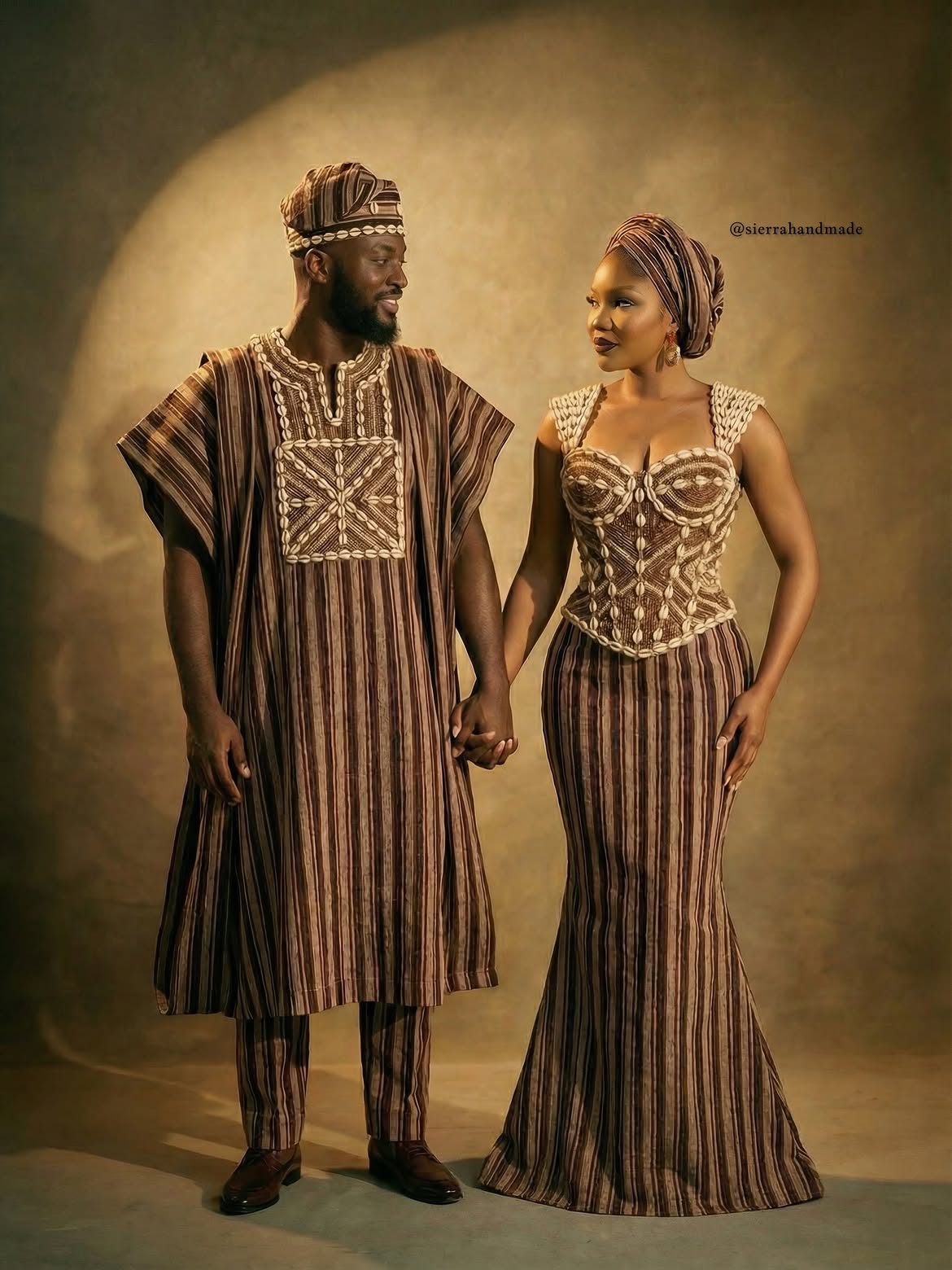
Sierra Leone’s textile history is most often told through gara: the indigo-dyed, resist-patterned cloth associated with the country’s most internationally visible textile tradition. Gara has global reach, a distinctive visual language, and a growing presence in contemporary African fashion design. It is not, however, the whole of what Sierra Leone has woven. Mende country cloth, known in the Mende language as kondi gula and in its most technically elaborate form as kpokpo, is a strip-weaving tradition of equal seriousness and greater structural complexity, whose finished textiles were historical markers of wealth, prestige, and ceremonial authority, often commissioned by chiefs and carried into the most significant moments of community life.
The African fashion and beauty market is worth 31 billion dollars. Country cloth and kpokpo belong to that market’s deeper historical layer: a material tradition that predates the arrival of Dutch wax print and absorbed its competition without disappearing, a textile whose production logic is as specific as any luxury house’s methodology, and a woven archive whose construction encodes the decisions of the spinner, dyer, weaver, and assembler in the fabric itself. As Sierra Leone Heritage’s institutional documentation of country cloth confirms, kondi gula is the Mende word for country cloth: a thick, heavy cloth traditionally made from locally grown cotton that is spun into thread, dyed, and woven into strips on a tripod loom, with strips then sewn edge to edge to form the finished cloth. Such cloth was regarded as a sign of wealth and prestige.
Sierra Leone’s country cloth is not gara. Kpokpo is built by strip-weaving on a tripod loom, using narrow bands with its own design vocabulary.
Why Country Cloth Is Not Gara
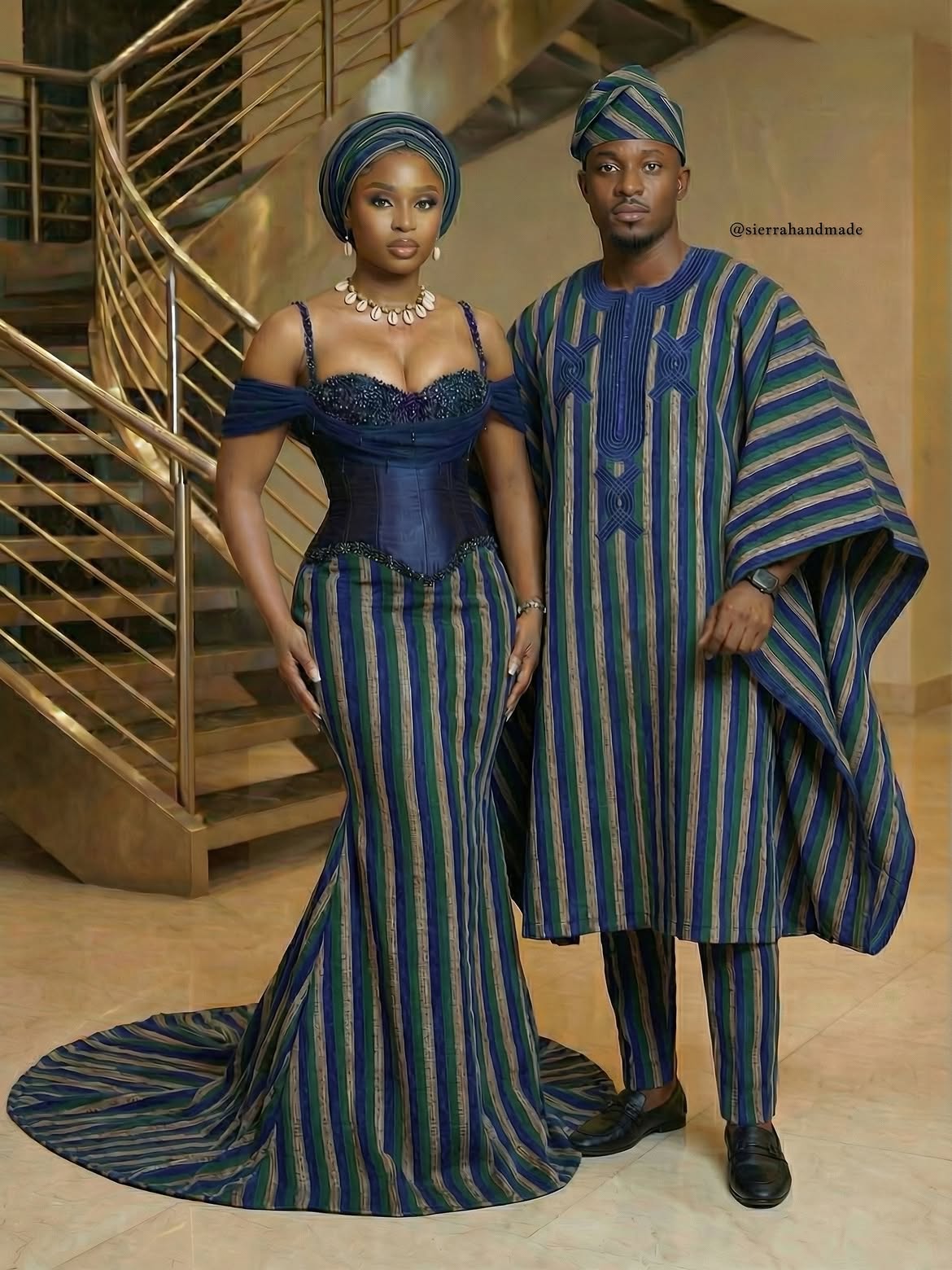
The distinction between gara and country cloth is a distinction between two different kinds of textile knowledge. Gara is primarily a dyeing and resist-design tradition: it begins with cloth and transforms its surface through tying, folding, stitching, wax-resist, and indigo immersion. The visual result is the record of those surface interventions. Country cloth is primarily a construction tradition: it begins with raw cotton fibre and produces cloth through spinning, dyeing yarn, weaving narrow strips on a tripod loom, and assembling those strips edge to edge. Its pattern emerges from the weaving process and the assembly sequence rather than from surface treatment after the cloth already exists.
The two traditions are not mutually exclusive. Country cloth may include indigo-dyed yarn. Gara may be used on cloth that was itself handwoven. But treating them as interchangeable produces a narrative in which one tradition’s specific methodology disappears into the other’s visual recognition. The distinction matters because the technical knowledge required for kpokpo, the knowledge of how to manage narrow strip production on a tripod loom and how to plan a large assembled composition from separate woven elements, is precisely the knowledge that disappears when country cloth is described only as a simpler or older version of Sierra Leone’s more internationally recognised textile.
The seams in country cloth are not evidence of incompleteness. They are evidence of how the design was made. Each sewn join between strips records a decision: which strip follows which, which colour meets which, how the full composition will read when the assembly is complete. The cloth’s meaning begins before the needle joins the selvedges.
The Tripod Loom and the Strip System
The tripod loom is the technological foundation of country cloth production and one of its most geographically specific features. As Leila Atelier’s documentation of the kpokpo tradition confirms, the traditional handloom cloth of the Gola and Mende peoples is woven by men from locally grown raw cotton, which is handspun on a drop spindle by women, then woven with a throw shuttle on a tripod loom. The tripod loom is found almost exclusively in Sierra Leone and neighbouring Liberia, making it one of the most regionally specific weaving technologies in West Africa. It produces strips approximately four inches wide as the standard width, though different sources document both four-inch and eight-inch strips depending on period, community, and cloth type.
The strip’s narrowness is not a technical limitation. It is the system’s design logic. A narrow strip contains its own complete weave: the warp threads, the weft insertions, the colour arrangement, and any supplementary weft patterns introduced during weaving. Once stripped from the loom, each band is a self-contained textile unit. When the maker begins assembling the cloth by sewing strips edge to edge along their selvedges, each join presents a compositional decision: a colour boundary, a pattern alignment, or a contrast between adjacent bands. The finished cloth is the record of all those decisions made simultaneously across the full textile.
Kpokpo: Pattern Through Assembly
Kpokpo is the form of country cloth that most fully demonstrates the tradition’s design capacity. As Sierra Leone Heritage’s documentation of the British Museum’s kpokpo cloth confirms, a kpokpo cloth composed of eight strips using undyed, indigo, red, light blue, and yellow cotton, sewn together to create an intricate chequered effect, is the most precise description of what assembly-based textile design can achieve. The chequered effect is not printed. It is not dyed onto a completed cloth. It is built from the sequence in which differently coloured strips are placed against each other. The colour composition is an assembly decision, planned before the strips are joined.
This is pattern through construction rather than pattern through surface. The kpokpo weaver must design the full cloth before beginning any individual strip, because the visual outcome depends on the relationship between all the strips in sequence. A strip that looks complete on its own may be the foundation of a diamond field, a checkerboard, or a series of contrasting bands only visible when six or eight or twelve strips are laid in order. The design thinking that produces kpokpo is therefore fundamentally spatial: the weaver holds the full composition in mind while executing each narrow section of it separately.
The Country Cloth Gown and Ceremonial Use
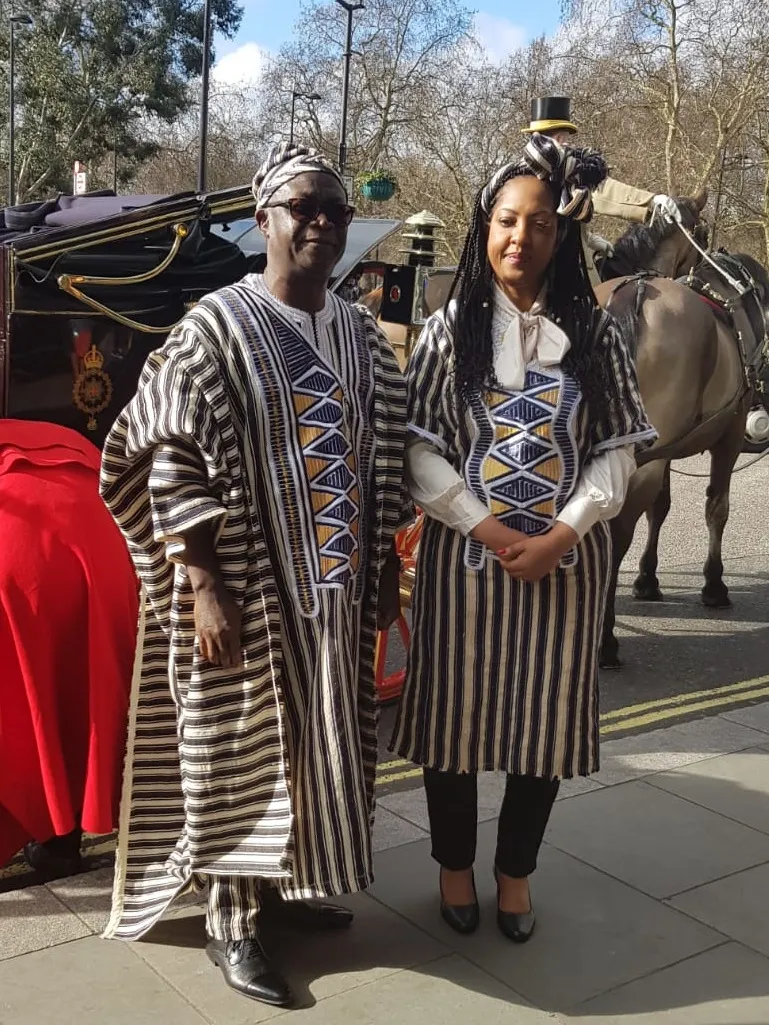
Country cloth moved beyond flat textile into tailored dress and ceremonial object. As Sierra Leone Heritage’s documentation of the country cloth gown confirms, a gown composed of seven strips of country cloth, sewn together to create intricate geometric patterns in indigo, pink and cream, was thought to be Mende, Sherbro or Vai. The patchwork effect created here by bringing together several contrasting patterns resembles kpokpo cloths from the turn of the 20th century. The country cloth gown demonstrates that the assembly logic that produces flat kpokpo display cloth could also be adapted into a tailored dress while retaining the strip-based design vocabulary.
The cloth’s ceremonial and social registers were equally significant. Country cloth commissioned by chiefs signalled political authority as much as personal wealth. It appeared in gbari robes worn for chieftaincy events and initiations. Some forms of kpokpo were associated with the puberty ceremonies of young women, where wall hangings of elaborate woven cloth marked the significance of the occasion. Beyond clothing, country cloth was used in hammocks, bedspreads, and display textiles: objects that organised social space and communicated status through material quality, design complexity, and the visible investment of skilled labour.
Kula Njawi and the Subgroups of Kpokpo
Within the kpokpo tradition, specific subtypes with their own names and structural characteristics are documented in the scholarly record. As the Adire African Textiles archive’s documentation of a Mende display cloth confirms, textile historians Lamb and Lamb, in their 1984 study Sierra Leone Weaving, identify kula njawi as a subgroup of kpokpo characterised by a central supplementary-weft float pattern block joined by diagonal weft float patterns to the border at each end. The decorative technique can vary: narrow weft stripes in indigo-dyed cotton alternating with single rows of supplementary weft float create the step patterns that distinguish individual pieces within the subtype. These named subtypes are significant because they demonstrate that country cloth was not a uniform category but a structured tradition with its own internal taxonomy.
Documenting named subtypes within kpokpo is important for fashion writing about Sierra Leonean textiles—a cloth described only as country cloth is accurately but incompletely characterised. A cloth identified as kpokpo, or as a kula njawi type within kpokpo, is described with the specificity the tradition deserves. The names are not decorative scholarly detail. They are the tradition’s own vocabulary for distinguishing between forms that look similar to an outside observer but carry different construction logic and different social meaning to the community that made and used them.
Dutch Wax Competition and the Tradition’s Current State
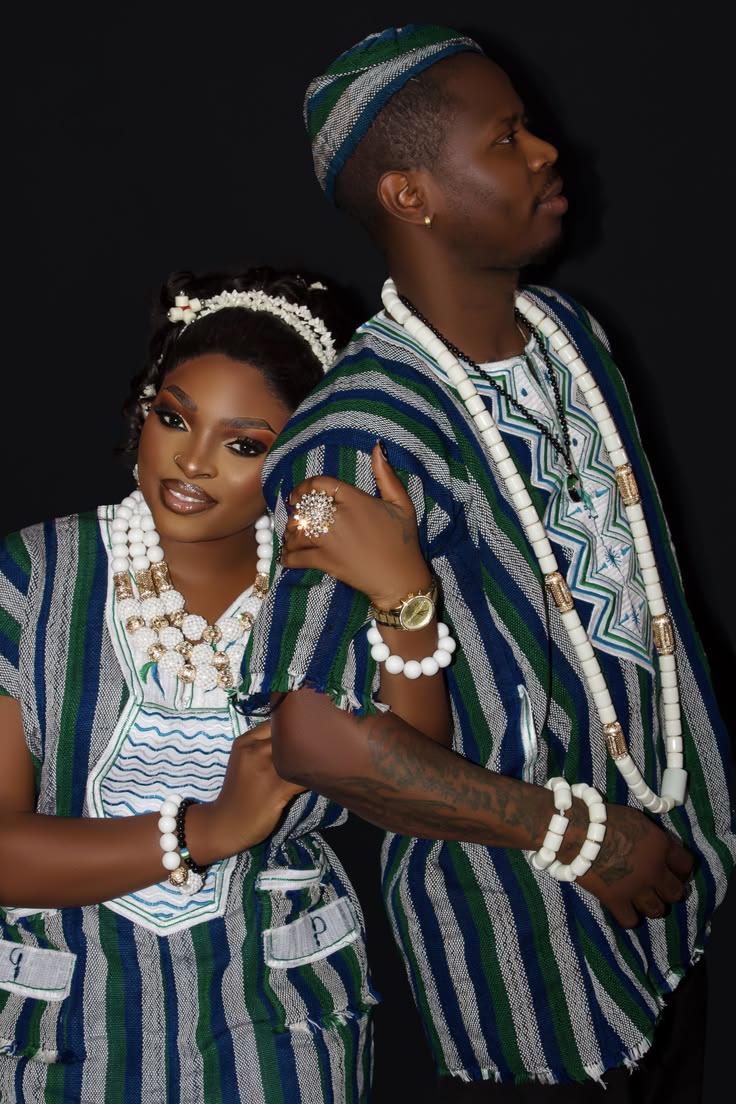
Country cloth’s place in Sierra Leone’s material life changed significantly with the arrival of mass-produced Dutch wax print cloth, which competed the handwoven tradition out of the everyday market through lower cost and faster production. The tradition did not disappear, but it contracted. Some simple-design strips continue to be made and sewn into men’s tunics. Some elaborately woven pieces continue to be produced for wall hangings at puberty ceremonies. Several organisations based in Sierra Leone, Liberia, and the surrounding region are actively working to train weavers and support the tradition’s revival.
The contemporary situation of country cloth reflects the same structural challenge that faces handwoven textile traditions across West Africa: the mass-produced alternative is cheaper, faster, and more widely available, but it cannot replicate the specific qualities of the handwoven tradition. The weight of a kpokpo cloth, the colour composition built strip by strip through the weaver’s planning, the seams that record the assembly’s logic, and the social memory attached to cloths that were commissioned by chiefs, gifted at initiations, and used at the most significant occasions of community life: these are qualities that Dutch wax print cannot reproduce, not because it tries and fails but because its production logic is entirely different.
The Omiren Argument
Sierra Leone’s country cloth is not Gara’s quieter alternative. It is a different textile system with its own technology, vocabulary, and history. The African fashion market is worth 31 billion dollars. Kondi gula is the Mende word for cloth built from cotton handspun on a drop spindle, woven into narrow strips on a tripod loom found almost exclusively in Sierra Leone and Liberia, dyed with indigo and kola nut, and assembled strip by strip into a larger textile whose composition is planned before the first strip is joined. Kpokpo is what that system produces at its most deliberate: eight strips in five colours creating a chequered field that is a weaving decision, not a printing decision. The country cloth gown is what the same logic produces when the cloth is cut and assembled into a dress. The kula njawi subgroup is what the tradition calls it when it needs to distinguish between forms that the outsider sees as similar and that the community sees as specific. When fashion writing about Sierra Leone describes gara rather than country cloth, it is not describing one textile tradition while omitting another. It describes the surface tradition and omits the structural one. Both deserve documentation on their own terms.
Also Read:
- Fabrics and Craftsmanship in Sierra Leonean Fashion
- Country Cloth: How Liberian Men Have Worn Power Since Before the Republic
- African Textile Reporting: 8 Editorial Shortcuts That Need Fact-Checking
- Kuba Cloth Is Not a Print: What Designers Need to Know Before Referencing It
Frequently Asked Questions
What is Mende country cloth?
Mende country cloth, called kondi gula in the Mende language, is a handwoven textile tradition produced by Mende, Gola, Sherbro, and related communities of Sierra Leone and neighbouring Liberia. It is made by handspinning locally grown cotton on a drop spindle, weaving the spun yarn into narrow strips (typically about four inches wide) on a tripod loom unique to the Sierra Leone-Liberia region, dyeing the yarn or strips with indigo, kola nut, and other natural dyes, and sewing the strips edge to edge along their selvedges to form a larger cloth. The finished textile was historically regarded as a sign of wealth and prestige, often commissioned by chiefs for significant social and ceremonial occasions.
What is the difference between gara and country cloth?
Gara is primarily a dyeing and resist-design tradition: it transforms a cloth’s surface through tying, folding, stitching, wax-resist, and indigo immersion after the cloth already exists. Country cloth is primarily a construction tradition: it produces cloth from raw cotton fibre through spinning, weaving narrow strips on a tripod loom, and assembling those strips edge to edge. Gara’s pattern appears on the cloth’s surface through dyeing. Country cloth’s pattern emerges from the weaving process and the sequence in which strips are assembled. The two traditions can overlap, but they are built on different technical foundations and should not be used interchangeably in textile documentation.
What is kpokpo cloth?
Kpokpo (also recorded as kpoikpoi) is the most technically elaborate form of Sierra Leone country cloth, produced by assembling strips in sequences that create complex geometric compositions including chequered fields, diamond patterns, and contrasting colour bands. A documented kpokpo cloth composed of eight strips in undyed, indigo, red, light blue, and yellow cotton, for example, creates an intricate chequered effect through the colour sequence of the assembled strips. The pattern in kpokpo is not printed or dyed onto the finished cloth; it is built through the weaving and assembly process. Named subtypes of kpokpo include kula njawi, characterised by specific supplementary-weft float patterns.
How is country cloth made?
Country cloth production involves several stages. Women traditionally card and spin locally grown cotton on a drop spindle to produce yarn. The yarn may be dyed with natural dyes, including indigo and kola nut, before or after weaving. Men traditionally weave spun yarn on a tripod loom into narrow strips approximately 4 inches wide. The strips may include supplementary weft floats, tapestry-weave sections, or colour arrangements planned to create specific patterns in the assembled cloth. Once the required number of strips is woven, they are sewn together edge to edge along their selvedges to form the finished cloth. A high-quality piece can take several days to complete.
What does kondi gula mean?
Kondi gula is the Mende language term for country cloth: the traditional handwoven strip textile of Mende and related communities in Sierra Leone. The term is the most specific and community-grounded name for the tradition, as distinct from the English descriptive term country cloth or the textile category name kpokpo. Using kondi gula in textile documentation acknowledges the Mende cultural ownership of the tradition rather than describing it only through English or colonial naming frameworks.
Explore More
Read the full Culture > Heritage & Identity section for Omiren Styles’ documentation of West African textile traditions, strip-weaving cultures, and the construction-based design systems that fashion writing most frequently underrepresents.
Discover travel and heritage intelligence across Sierra Leone and West Africa at Rex Clarke Adventures.