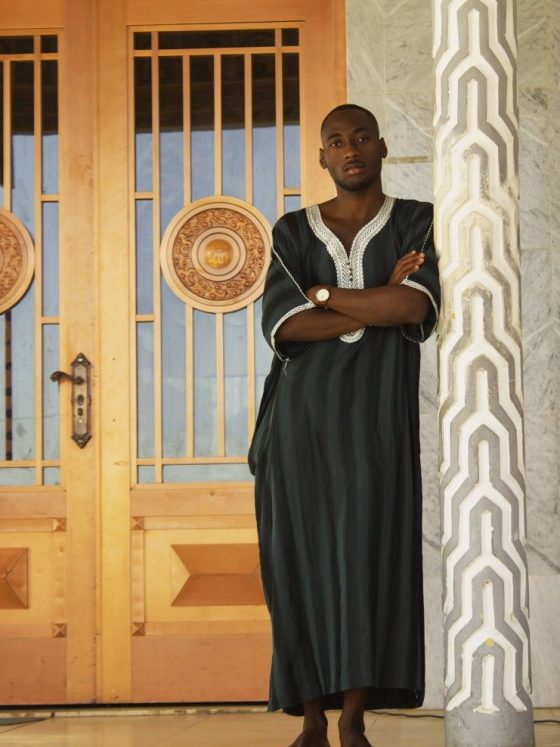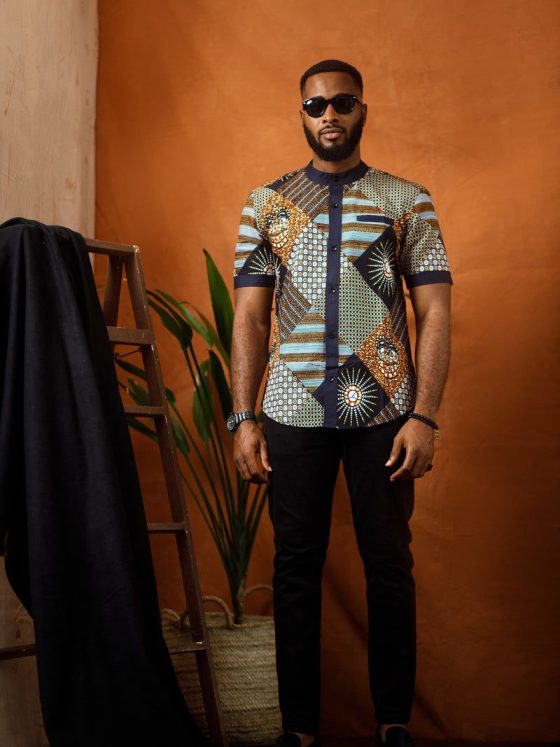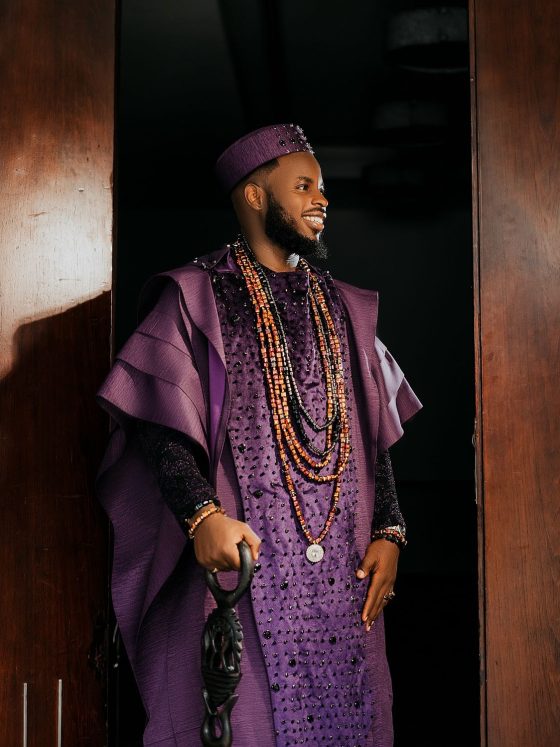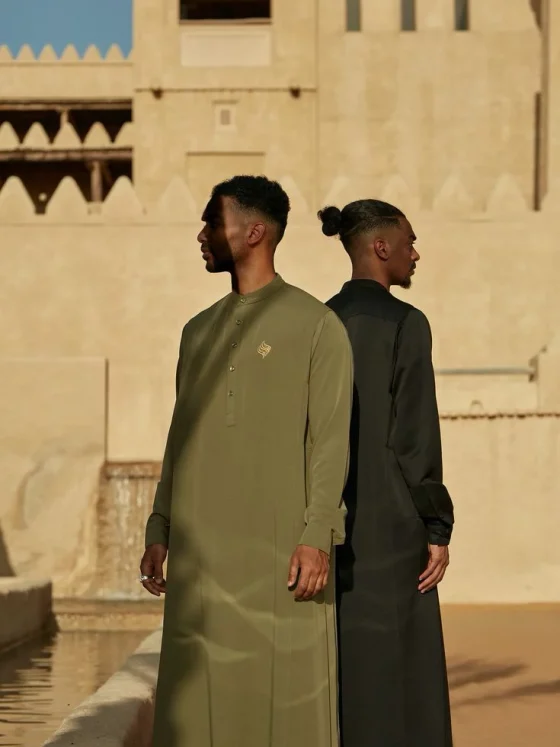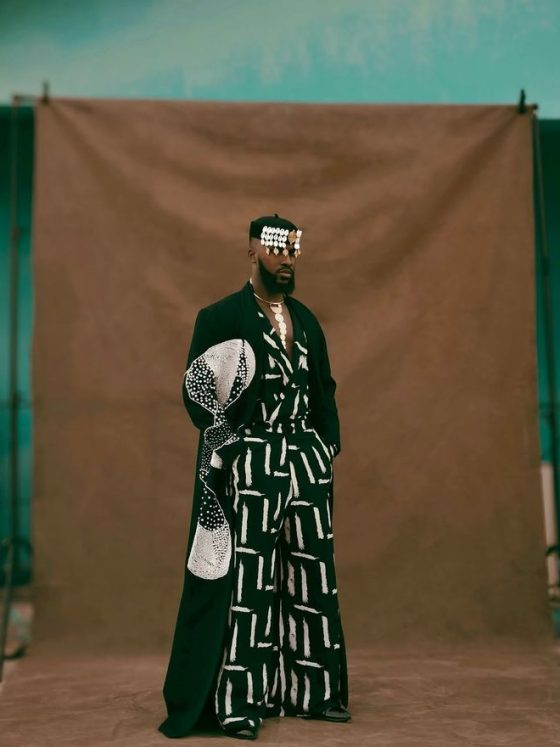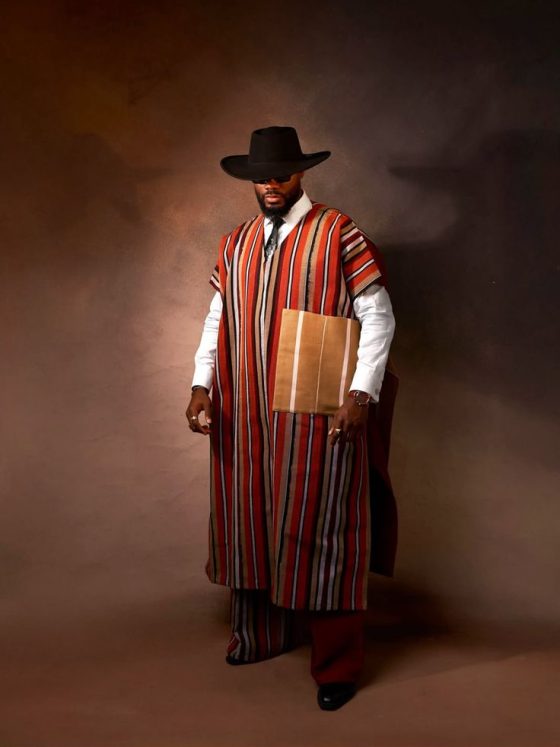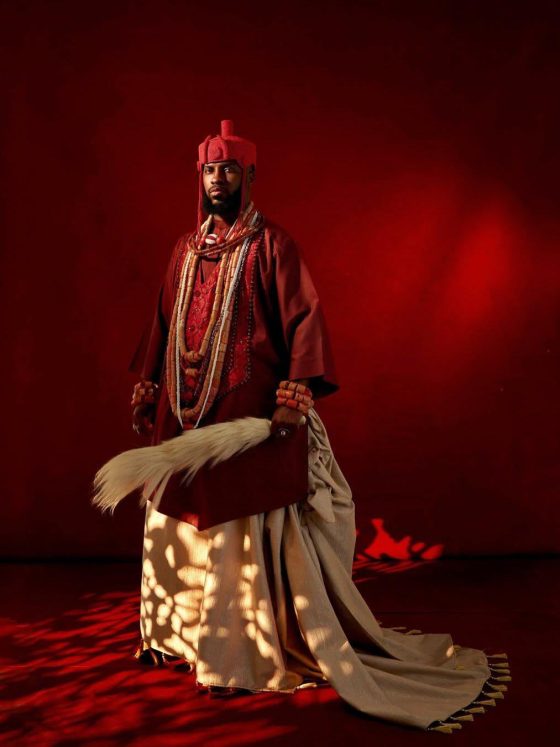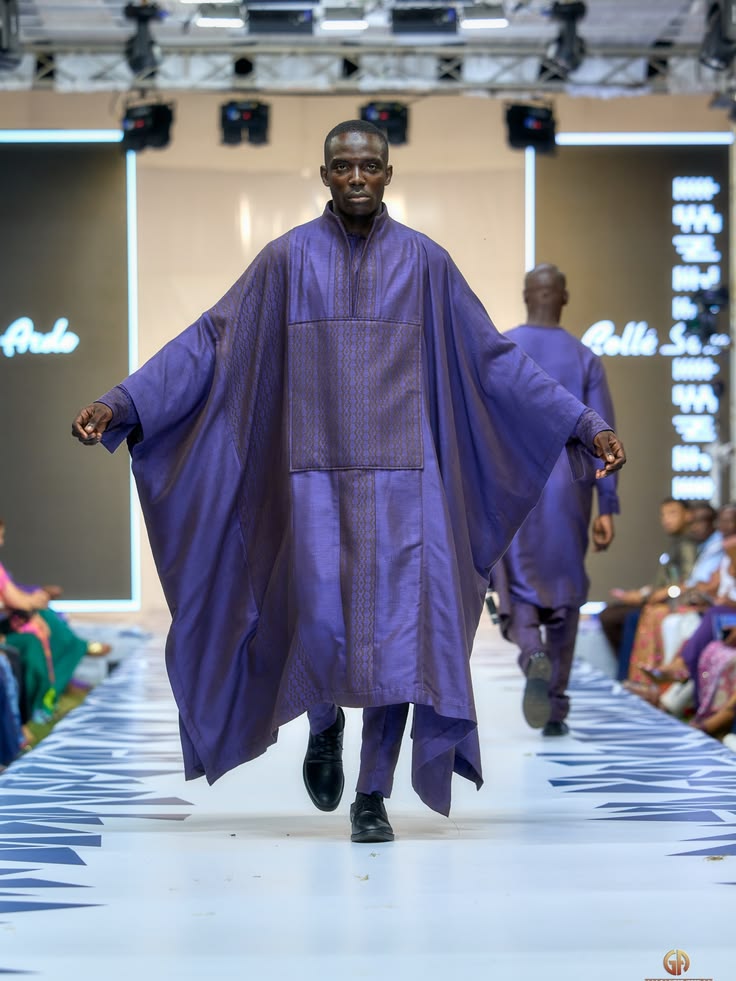
In Senegal, the boubou is not simply worn. It is assumed.
The moment a grand boubou settles over the shoulders, it alters posture, presence and perception. The garment is not placed on the body like a shirt. The body receives it, and the body responds: the posture straightens, the walk slows, the carriage lifts. The fabric carries social weight in the literal sense. A man in a well-cut grand boubou in quality bazin riche is not wearing a formal garment. He is occupying a social position that the garment makes visible and the community acknowledges.
This is not metaphor. It is the operational logic of a dress system that has developed in the Senegalese social context for centuries, producing a vocabulary of cut, fabric, embroidery, colour, and occasion specificity that communicates with the precision of a formal code to audiences who share its literacy.
The boubou cut is an argument. The sleeve width argues for generosity. The weight of the bazin argues for investment. The broderie at the collar argues for the occasion. The height at which the hem falls argues for occasion formality. A Wolof audience reads all four arguments simultaneously and without hesitation. That is not fashion appreciation. It is cultural fluency.
Omiren Styles has established, in its analysis of the agbada, boubou and grand boubou as power symbols across West Africa, that the Senegalese grand boubou is jom made visible. Jom is the Wolof concept that translates inadequately as dignity or honour, but that really describes a complete orientation toward life: a refusal of smallness, a commitment to composure, and an awareness that the community is always reading one’s bearing. The grand boubou is the garment in which jom finds its most complete visual expression. This article reads what that expression contains.
The boubou is not a garment. It is a communication system. The width of the sleeve, the weight of the fabric, the embroidery at the collar: each is a precise statement about region, status and occasion that an informed Wolof audience reads at a glance.
The Construction: Three Pieces, One Argument
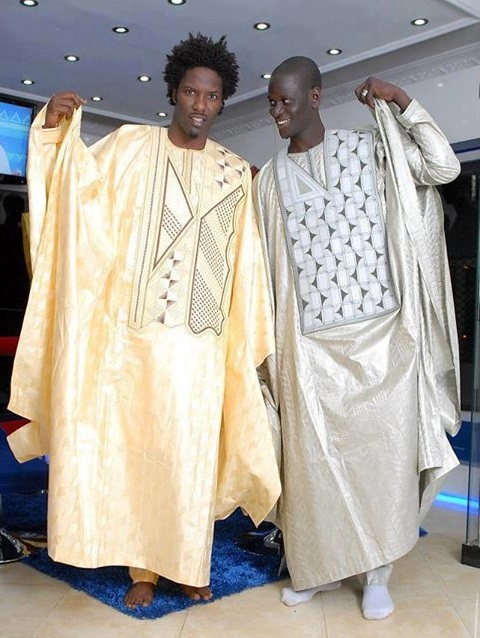
The Senegalese grand boubou is a three-piece ensemble. Understanding what each piece contributes to the whole is the precondition for reading what the cut communicates.
The inner garment, typically a long-sleeved shirt, sits closest to the body and is tailored to the wearer’s measurements. It establishes the base fit: how the garment will move, how the outer volume will drape, how the collar proportion will frame the face. In a well-made boubou, the inner garment is not an afterthought. It is the structural foundation on which the rest of the ensemble’s argument rests.
The drawstring trousers, known as sokoto in the Wolof tradition, match the outer robe in fabric. The matching is precise: colour, sheen and texture must align between the trousers and the robe, because any mismatch is visible at the hem when the man walks and is immediately read by his community as a quality failure. The sokoto is cut for volume at the seat and thigh and tapers toward the ankle, allowing freedom of movement within the flowing exterior while maintaining the clean silhouette that the overall ensemble requires.
The outer robe is what the observer reads first and longest. It is the ensemble’s primary communication surface, and its cut, fabric, colour, and embroidery vocabulary carry most of the social information the wearer is transmitting. The outer robe is typically sleeveless or wide-sleeved, cut from the same fabric as the inner garment and trousers. It falls to the ankle or slightly above, and the precise hem height communicates occasion formality: a formal ceremonial boubou falls to the ankle; a daywear boubou may fall slightly shorter for practicality.
The Fabric Hierarchy: What Bazin Riche Means
Omiren Styles has documented, in its analysis of the grand boubou’s fabric identity, that bazin riche is a mercerised cotton damask fabric that has become the most prestigious material for the Senegalese grand boubou. It is characterised by a distinctive sheen and stiffness that lets it hold a crisp, pressed form even in heat. The fabric’s structure demands, and rewards, good tailoring, and a well-cut grand boubou in quality bazin riche is immediately recognisable as an investment piece.
The choice of bazin riche communicates several things at once. The material itself is expensive relative to wax print or plain cotton alternatives; choosing bazin riche signals financial capacity. The stiffness and sheen of bazin riche hold their qualities only when the fabric is properly stored and correctly pressed: a man in bazin riche has invested not only in the garment but in its ongoing maintenance. The fabric structure also requires a specific tailoring skill to cut and construct correctly: a boubou in bazin riche that is poorly cut reveals the inadequacy of the tailor rather than the status of the wearer. The choice of bazin riche is therefore simultaneously a statement about financial investment, care discipline and access to skilled tailoring.
Below bazin riche in the fabric hierarchy sits a range of alternatives that communicate different registers. Wax print fabric is acceptable for everyday and less formal occasions. Plain cotton is everyday and domestic. Lace overlaid on bazin or satin is increasingly present at high-ceremonial occasions and is a contemporary elaboration of the prestige vocabulary. Damask variants with different weights and textures communicate intermediate positions in the hierarchy. A man whose boubou moves fluidly in lightweight cotton is comfortable. A man whose boubou holds its form with the structured authority of quality bazin riche is formally present.
Omiren Styles has established, in its analysis of the Wolof dressing tradition and the Dirriankhe ideal, that the Wolof dressing tradition is among the most sophisticated in West Africa, defined by a prestige ideal that centres elegance, composure and intentional self-presentation as core social values. The boubou’s fabric hierarchy reflects this same ideal: the choice of material is not a practical decision but a social declaration.
The Embroidery Vocabulary: Reading the Broderie
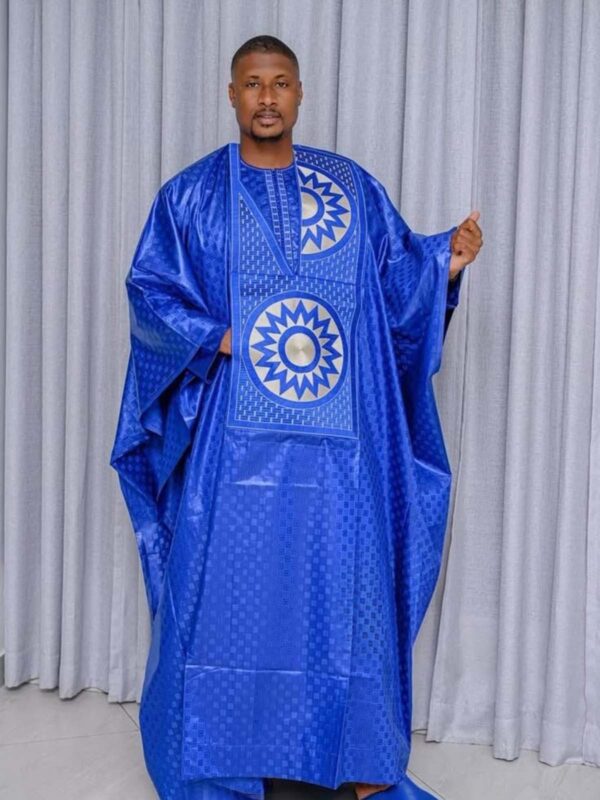
The embroidery — known locally as broderie — is the most precise communication layer in the boubou’s visual vocabulary. Where the fabric communicates investment, and the cut communicates occasion, the broderie communicates the wearer’s specific social position and aesthetic intelligence.
Omiren Styles has documented, in its analysis of traditional Senegalese clothing, that broderie plays a central role in Wolof clothing aesthetics. Tailors stitch detailed patterns around the neckline, chest, and sleeves to distinguish garments by occasion and formality. This distinction is precise and legible: a boubou with minimal broderie at the collar alone signals a different occasion register than a boubou whose broderie extends across the chest, down the placket, and along the sleeve edges.
The broderie vocabulary includes several elements whose specific characteristics communicate specific information. The position of the broderie — collar only, collar and chest, collar and chest and sleeves, full front panel — communicates the occasion level from semi-formal through formal to ceremonial. The density of the stitch — light outline versus filled patterns versus layered three-dimensional work — communicates the investment level and the quality of the atelier. The pattern vocabulary itself — geometric, floral, calligraphic — communicates regional tradition and sometimes religious affiliation, with patterns derived from Islamic calligraphic traditions appearing on boubous worn for religious occasions.
The colour of the broderie relative to the ground fabric is also a communication choice. Tone-on-tone broderie in the same colour as the fabric communicates understatement and confidence: the embroidery is visible to close observers as texture rather than contrast, and a man who chooses tone-on-tone broderie communicates that he does not need his embroidery to announce itself. Contrasting broderie communicates visibility and celebration: appropriate for occasions where the garment’s splendour is part of the social purpose. Gold-thread broderie signals the highest ceremonial register and is associated with religious celebration and life-stage ceremonies.
The Sleeve Width: Why It Matters

The sleeve width of a Senegalese boubou is one of the most socially precise elements of its construction and one of the most consistently misread by external observers.
The outer robe of the grand boubou has wide sleeves that, when the arms are raised, open into a large fabric panel, creating a wide silhouette. This opening is not accidental and not purely aesthetic. The breadth of the sleeve, like the breadth of the garment overall, communicates generosity, expansiveness and the social confidence of a man who occupies space rather than contracts to avoid using it.
Omiren Styles has established, in its analysis of the grand boubou as West Africa’s most prestigious garment, that the boubou is loose yet commanding, expansive yet dignified. These apparent contradictions are its social intelligence: it creates volume and then controls it. The wide sleeve best expresses this logic. When raised, it creates maximum fabric volume; when lowered, it falls into clean vertical lines, and the fall depends on the fabric’s weight and stiffness: bazin riche falls with authority because its structure holds the drape. A lightweight fabric falls softly. The choice between the two communicates different registers of formality.
The proportion of the sleeve width relative to the overall robe width is a tailoring decision that the most skilled Senegalese tailors have refined through practice. A sleeve that is too wide relative to the robe body creates visual excess. A sleeve that is too narrow relative to the robe body creates visual imbalance. The correct proportion produces the specific silhouette that Wolof aesthetic standards require: wide enough to claim presence, narrow enough to communicate control. This proportion is not written down. It is held in the hands and eye of the tailor and transmitted through apprenticeship.
Regional Variation: Wolof, Serer, Fulani and Diola
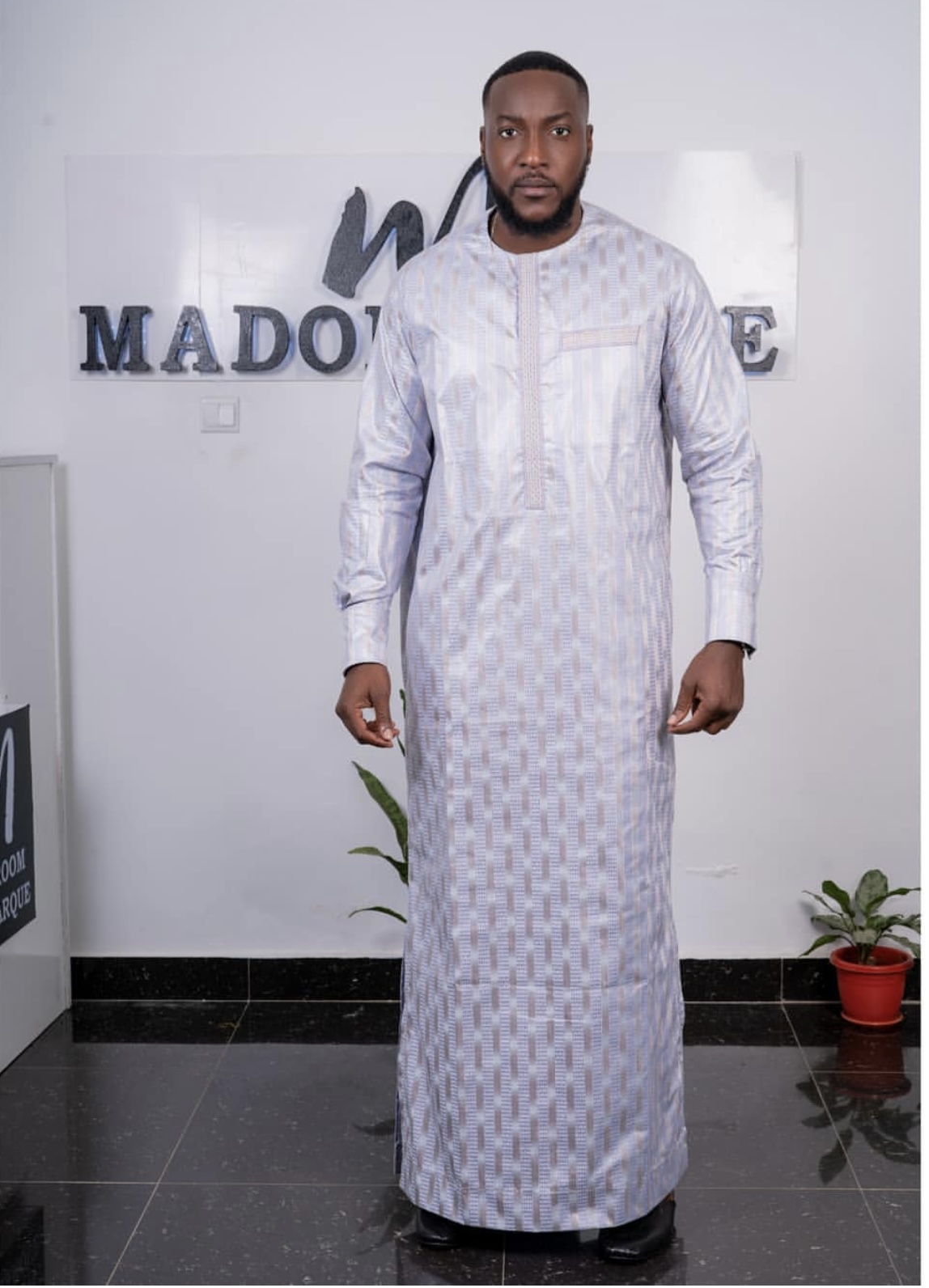
The Senegalese boubou is not one uniform garment worn identically across the country. It is a shared form adapted by each major ethnic community to reflect its own aesthetic values, occasion structures and regional identity.
Omiren Styles has documented, in its analysis of traditional Senegalese clothing, that tailoring culture operates across Wolof, Serer, Fulani, and Diola dress logics, each a tradition. As the largest ethnic group and the dominant culture in Dakar, the Wolof have strongly shaped expectations around the boubou. In Dakar, Wolof traditional dress shapes expectations around presentation, coordination, and public respect. Clothing is not just expression; it reflects discipline, maturity, and awareness of social settings.
The Serer tradition brings a different aesthetic register. Serer ceremonial dress is characterised by restraint rather than volume: the Serer boubou tends toward cleaner silhouettes, less elaborate embroidery and a deliberate understatement that is its own form of prestige. A Serer elder in a plain white boubou with no broderie is not wearing a simple garment. He is wearing the highest register of Serer ceremonial dress, in which the absence of embellishment communicates a standing so established that it requires no advertisement.
The Fulani tradition, rooted in the pastoral nomadic culture of the Sahel, takes a different approach to boubouroachesubou form. Fulani dress has historically favoured lighter fabrics and more portable garments than the structured grand boubou of urban Wolof culture. Fulani aesthetic values around dress centre on elegance, proportion, and fabric quality.
The Diola tradition of ceremonial boubou in southern Senegal has developed dress practices that reflect Casamance’s distinct ecological and cultural geography. The Diola boubou incorporates regional textile traditions and colour preferences that differ from the bazin-dominant Dakar aesthetic. The regional variation is visible enough that a practised observer can read a man’s ethnic and regional background from his boubou’s specific characteristics before he has said a word.
What Contemporary Tailoring Is Doing With the Form
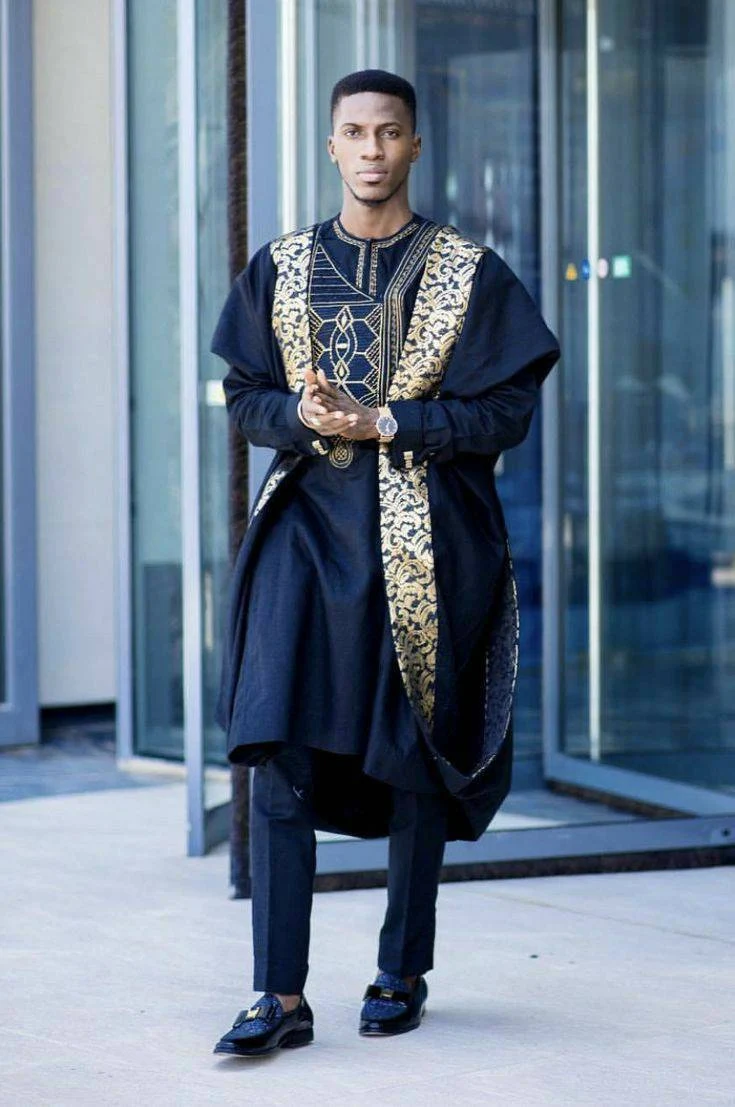
Omiren Styles has documented, in its analysis of the future of fashion in Senegal, that the boubou functions as a flexible garment framework rather than a fixed style. Tailors reinterpret fabric, embroidery and finishing techniques without abandoning the structure that makes the garment immediately recognisable across both daily and ceremonial life.
Contemporary Senegalese tailors in Dakar are working with the boubou form in ways that extend its social vocabulary without breaking it. Shorter versions that fall to mid-thigh rather than the ankle are being worn with contemporary trousers and leather sneakers in contexts where the garment bridges the daily and the semi-formal. The broderie vocabulary is being applied to new positions and departures, with stitching and contrasting colour blocking that are not traditional but are not visible; tre covisible orary elaboration,s of the prestige vocabulary rather than as departures.
Omi Styles documents and analyses street style, showing how people in Dakar navigate global influences while remaining rooted in local realities. A tailored boubou worn with contemporary trainers is not a category error in the Dakar context. It is the boubou system operating in a new register, producing a look that the city’s community can read as both culturally grounded and aesthetically current. That adaptation showcases tailoring trade as a one-off threat.
The people who take the boubou form most seriously are not those who extract its silhouette for international runway collections. They are the Dakar tailors who have spent decades learning fabric behaviour, embroidery vocabulary, and the community’s evolving aesthetic standards, and who apply that accumulated knowledge to new occasions, new client requests, and new fabricologies without losing the social intelligence that makes the boubou what it is.
The Omiren Argument
The boubou communicates because it was built to communicate.
Every element of its construction is a decision whose meaning is legible to a community that shares the code: the fabric weight, the embroidery position and density, the sleeve proportion, the hem height, the colour register, the occasion specificity. A Wolof man in Dakar reads another man’s grand boubou the way a sommelier reads a wine label: not because the information is displayed for reading, but because the code is known and the object embodies it precisely.
Fashion media’s engagement with the boubou consistently stops at the silhouette. The volume, the drape and the visual authority of the garment are photographed and reproduced. What is not reproduced is the reading. The international fashion editorial that places a model in a grand boubou and photographs the result has captured the surface of a communication system without reading a word of what it says. That is not documentation. It is extraction.
The $31 billion African fashion market includes the Senegalese tailoring economy whose practitioners hold the knowledge that makes the boubou communicate with the precision it does. The tailor whose hands know how to proportion a sleeve for a specific client’s ceremony, whose eye knows what broderie density is appropriate for a Friday prayer appearance versus a wedding reception, whose fabric knowledge tells them which bazin weight will hold its press through a six-hour ceremony: that practitioner holds a form of design intelligence that cannot be extracted through photography or trend coverage. As Omiren Styles has established throughout this series, the standard is not to make the boubou legible to external markets on external terms. The standard is to document it accurately enough that those who engage with it understand what they are engaging with. The boubou cut is a sentence in a language that millions of Senegalese men speak fluently, and that fashion has been unable to read. This article is the beginning of the translation.
ALSO READ
- Agbada, Boubou, Grand Boubou: One Silhouette, Four Countries, Four Arguments About Power
- Grand Boubou: The Most Prestigious West African Garment
- Traditional Clothing in Senegal: The Elegance of Boubou and Cultural Identity
- Top 5 Bazin Styles for Wolof Women in 2026: The Dirriankhe Ideal
- How North African Kaftan Tailoring Operates as Contemporary Menswear
- The Fugu, the Boubou and the Kanzu: A Guide to African Traditional Menswear Beyond Nigeria and Ghana
Frequently Asked Questions
What does the cut of a Senegalese boubou communicate?
Omiren Styles has established, in its analysis of the boubou as a power symbol, that the grand boubou is a complete communication, not one with optional decorative features. The fabric weight communicates financial investment and occasion formality: bazin riche, a mercerised cotton damask with distinctive sheen and stiffness, signals a higher social register than plain cotton or wax print. The sleeve width communicates social presence and confidence. The embroidery position and density communicate occasion formality: broderie at the collar only signals a different register from broderie extending down the chest and along the sleeves. The hem height communicates occasion level: ankle-length is the most formal. Together, these elements constitute a reading that an informed Wolof audience processes simultaneously and without effort.
What is jom and how does it relate to the Senegalese boubou?
Jom is a Wolof concept that translates inadequately as dignity or honour, but describes a way of life: composure and a sense of community that is not a mood or an attitude. It is a sustained social practice. The grand boubou is the garment in which jom finds its most complete visual expression: the volume of the sleeve, the weight of the fabric, the structured fall of quality bazin riche, the precision of the broderie — each element of the boubou’s construction is a component of jom’s material expression. A man who wears his boubou correctly is not simply dressed. He is performing jom in its most visible form.
What is bazin riche and why is it the prestige fabric for the Senegalese boubou?
Bazin riche is a mercerised cotton damask fabric characterised by a distinctive sheen and a stiffness that allows it to hold a crisp, pressed form even in heat. Its prestige in the Senegalese boubou tradition rests on three specific qualities. It is expensive compared with other fabrics, making its choice a signal of financial investment. Its stiffness and sheen require correct storage and pressing to maintain, making its condition a signal of ongoing maintenance discipline. Its structure requires skilled tailoring to cut and construct correctly, meaning that bazin riche reflects the quality of the atelier as much as the investment. Wearer’s investment: It was imported primarily from Europe and Asia but has been so thoroughly absorbed into Senegalese dress culture that it is now inseparable from the identity of the grand boubou tradition.
How does the boubou differ across Senegal’s ethnic communities?
Omiren Styles has documented, in its analysis of Senegalese dress culture, that the boubou reflects distinct aesthetics across Wolof, Serer, Fulani and Diola communities. The Wolof tradition, dominant in Dakar, favours structured volume in quality bazin riche with elaborate broderie that clearly signals formality. The Wolof tradition of a plain white boubou with no embroidery communicates the highest ceremonial standing in a system where the absence is clearly established. The Fulani tradition favours lighter fabrics and narrower proportions, reflecting pastoral origins and a different relationship to mobility. The Diola tradition of the Casamance reflects the south’s distinct ecological and cultural geography through specific textile traditions and colour preferences. A practised observer can read canonical background.
How are contemporary Senegalese tailors adapting the boubou form?
Contemporary Senegalese tailors treat the boubou form as a canonical background rather than a fixed standard, without breaking it. Shorter versions falling to mid-thigh are worn with contemporary trousers and trainers, occupying a new register between everyday and semi-formal. The broderie vocabulary is being applied to positions and positions andialsllic thread and colour-blocked panels, which rea- as contemporary elaborations of the prestige vocabulary rather than departures from aailoring tradition: a tailorin grlying communication system remains intact. In contrast, the specific vocabulary responds to new occasions and aesthetics. The tailors who do this most successfully are those who have spent years learning the commu. In contrast, evolving aesthetic standards from within rather than from outside.
EXPLORE MORE
Read the full Fashion and Menswear sections at Omiren Styles for ongoing documentation of Senegalese tailoring traditions, West African menswear systems and the social communication embedded in the boubou form. Discover travel and heritage intelligence across Senegal and West Africa at Rex Clarke Adventures.