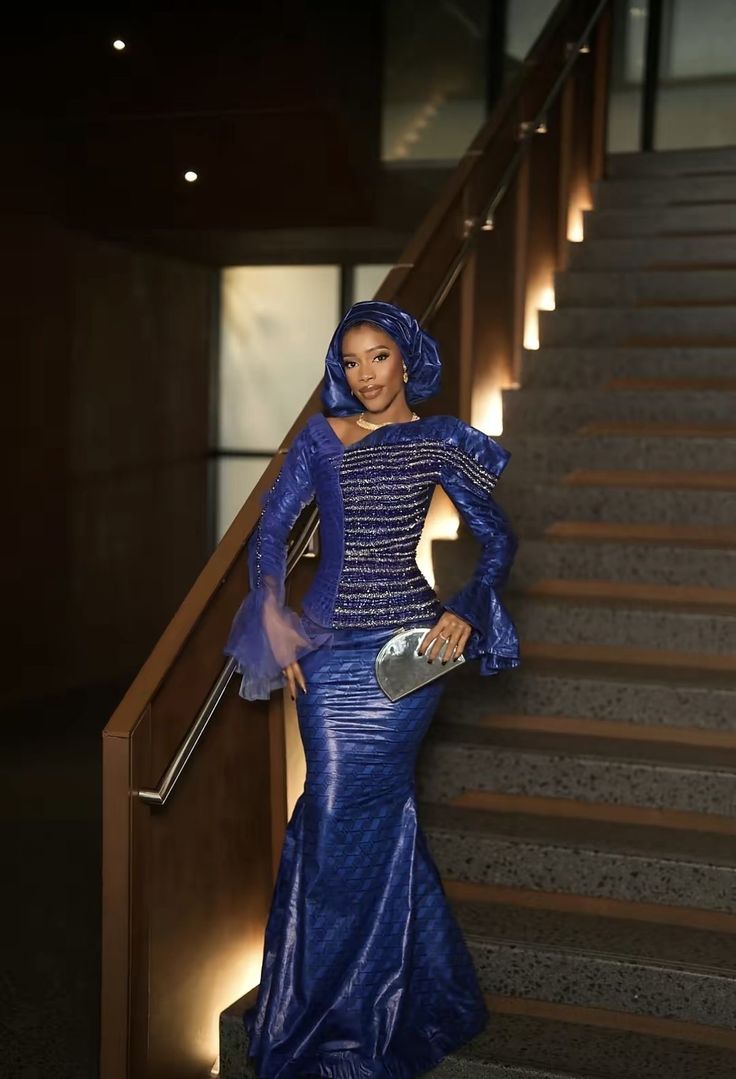
There is a walk-in in Dakar that embodies an entire philosophy of dressing. Slow. Deliberate. The fabric moved with the woman, not ahead of her. It is called the Dirriankhe walk, from the Wolof word ‘dirri’, meaning ‘to drag’, and it belongs to the woman who has mastered the art of wearing Bazin in a way that makes the room understand, before she has said a word, exactly what kind of woman has entered. Bazin styles for Wolof women are built around this philosophy. Not the hurried outfit. The considered arrival. Clothing, as a social declaration, status architecture, and cultural argument, is worn simultaneously on the same body.
The Wolof are the largest ethnic group in Senegal, comprising approximately 40% of the population, and their language has become the country’s lingua franca, spoken across all 12 ethnic groups from Dakar to the Gambia River. Their dressing tradition is among the most sophisticated in West Africa, and Bazin, the stiff, luminous, hand-dyed cotton damask that is the fabric of ceremony across the Sahel, is the cloth they have made most entirely their own. This article covers the five most significant Bazin styles in Wolof women’s dress, the history of the fabric, the Dirriankhe ideal that gives the dressing tradition its logic, and the full occasions guide for how the cloth moves through Wolof ceremony in 2026.
From the grand boubou to the tailored co-ord, discover the top 5 Bazin styles for Wolof women in 2026. The history, the Dirriankhe ideal, and a full occasions guide rooted in Wolof and Senegalese cultural life.
The Fabric and Its Journey
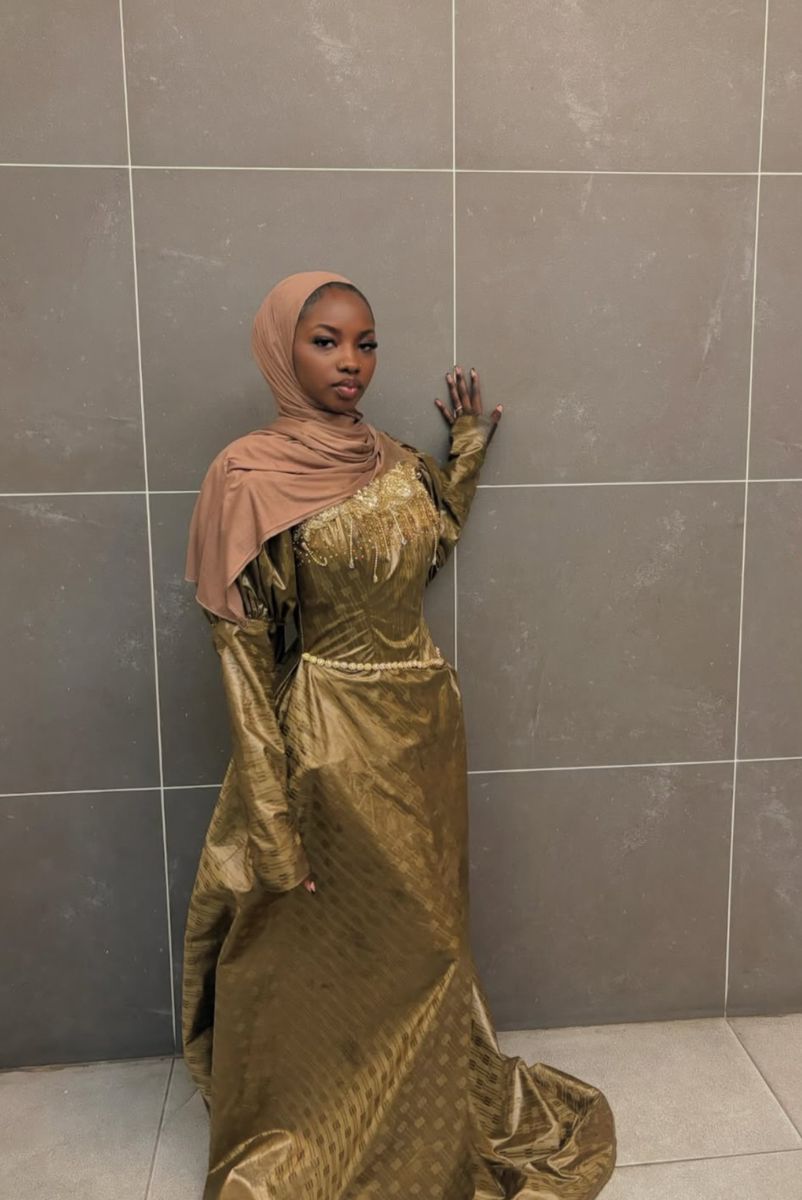
Bazin, also written as Basin, derives its name from the Italian word ‘bambagia’, meaning ‘cotton wadding’. It is a cotton damask, originally imported to West Africa from Europe, and later manufactured in Germany, the Netherlands, and China, where the raw white fabric is produced before being shipped to West African workshops for dyeing. That dyeing process, known in Wolof as ‘thioup’, is where the cloth becomes Bazin. Skilled dyers transform the white damask through elaborate hand-dyeing into the lustrous, stiff, brilliantly coloured fabric that makes a grand boubou fall from the shoulder with the particular architectural authority that no other textile in the world replicates.
The roots of Bazin in Senegal date back to French colonial influence in the 19th century, though the garments it is sewn into, principally the boubou, predate the colonial period entirely. The word “boubou” comes from the Wolof “mbubb”, meaning “garment slipped over the head”, and the tradition of flowing, voluminous robes worn at Wolof royal courts was established long before European traders arrived with cotton damask. What the trade routes brought was a superior canvas for an existing tradition. A history of the boubou’s evolution across West African courts is documented by the Smithsonian National Museum of African Art, whose textile collections include examples of West African ceremonial dress spanning multiple centuries.
In the 1980s, the informal trade sector in dyed fabric expanded dramatically across Senegal, and Bazin experienced a fashion boom that elevated it from wedding cloth to the most universally desired fabric in the country. In 2004, Senegalese singer Djiby Dramé founded La Grande Nuit du Bazin in Dakar, an annual festival celebrating the fabric through a display of grand boubous by Senegal’s most celebrated designers, including Oumou Sy and Collé Ardo Sow. The event has since expanded to Bamako and Abidjan, confirming what Wolof women already knew: the cloth is a cultural institution.
The boubou does not drape the woman. The woman commands the boubou. That is the difference between wearing Bazin and knowing how to wear it.
The Dirriankhe: The Philosophy Behind the Dress
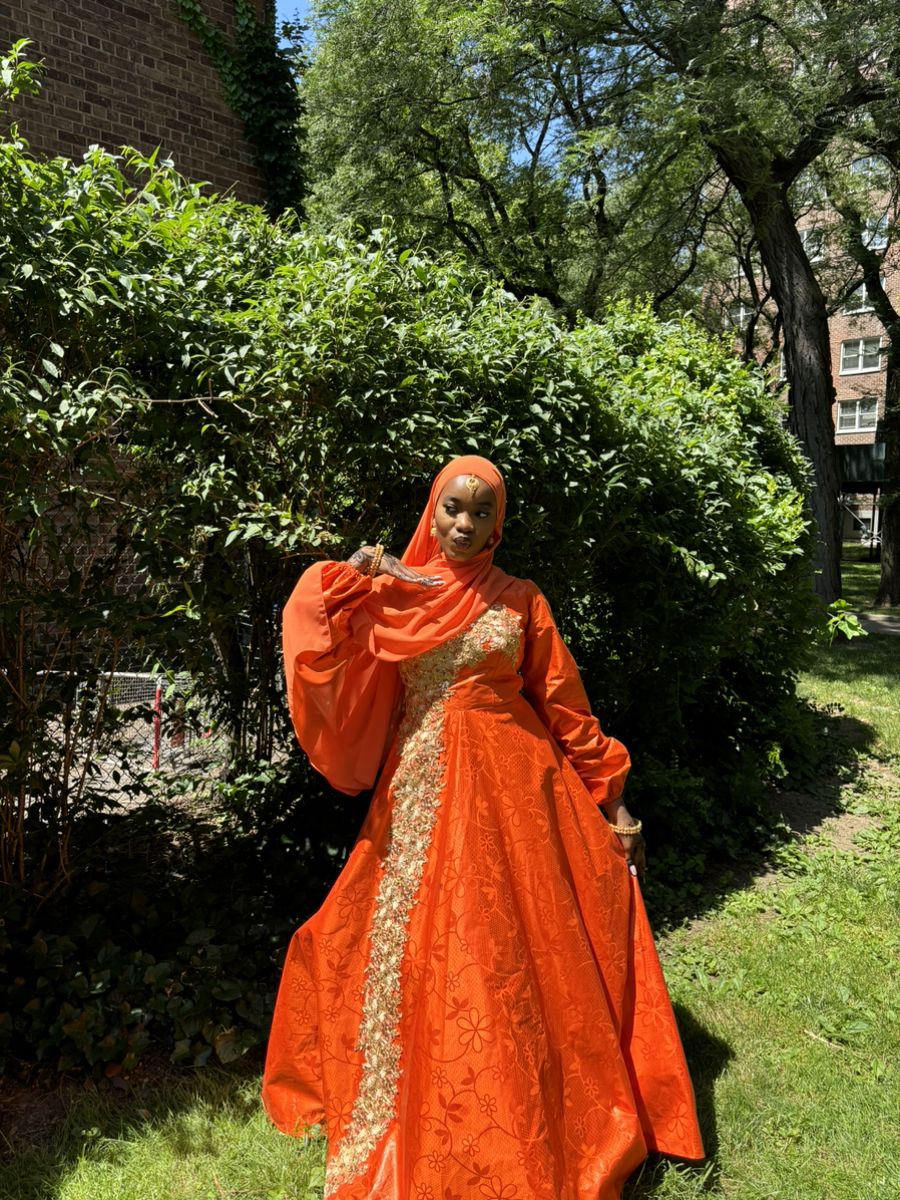
To understand Bazin’s styles for Wolof women, you must first understand the Dirriankhe. She is the Wolof ideal of feminine beauty and social presence, a woman who is large, sensuous, and independent in bearing, and who has mastered the art of public dressing to the degree that her appearance at a ceremony constitutes an event in itself. The Dirriankhe arrives in a stiffly starched grand boubou in Bazin riche, embroidered at the neck and chest, perfumed with incense smoke wafted through the folds of the fabric before she leaves her home. Her moussor headscarf is tied in the particular rakish knot that Wolof women have elevated into an art form. Her gold jewellery is visible but does not compete with the cloth. And she walks at the pace the cloth demands.
The Dirriankhe ideal is principally performed for other women. At Wolof weddings and naming ceremonies, the gatherings are predominantly female, and the social architecture of these events centres on women assessing, appreciating, and acknowledging each other’s mastery of dress. The Dirriankhe is not dressing to attract male attention. She is dressing for the judgment of women who understand exactly what the quality of the embroidery, the grade of the Bazin, and the precision of the moussor knot communicate about who she is. As we examined in Culture as Currency, the most significant fashion economies in Africa are not priced in markets. They are negotiated between women at ceremonies. The Dirriankhe is that argument made flesh.
1. The Grand Boubou in Bazin Riche
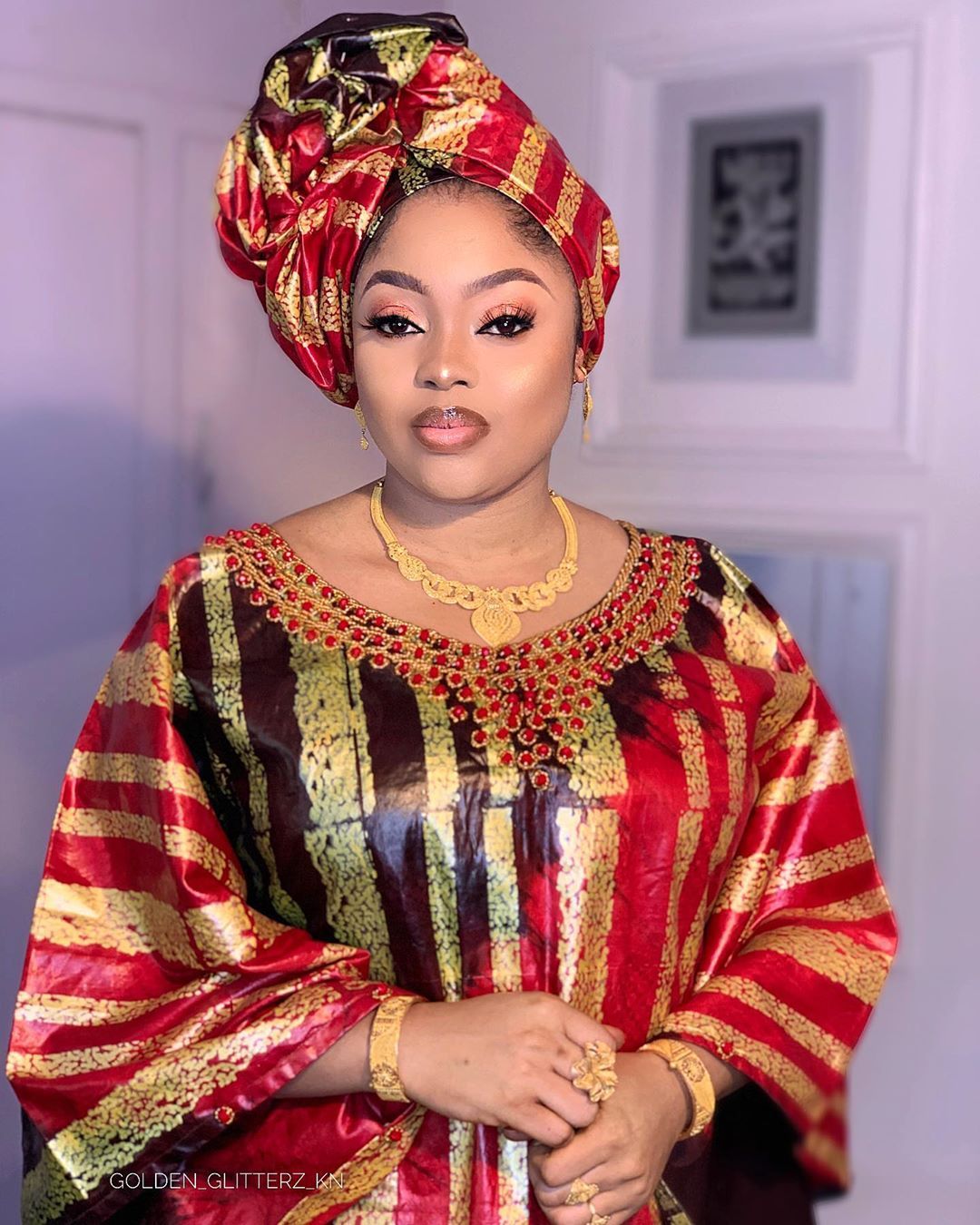
The grand boubou is the apex of Wolof women’s ceremonial dress and the garment around which the entire Bazin tradition in Senegal is organised. It is a flowing ankle-length robe, wide-sleeved, with a generously rounded neckline, accompanied by a matching wrapper tied at the waist and the moussor headscarf folded and arranged at the crown. The three-piece ensemble in Bazin riche, the premium grade of the fabric with its distinctive damask sheen, is the most expensive, most desired, and most culturally weighted thing a Wolof woman can wear.
The construction of a grand boubou in Bazin riche begins with the dyer. The white damask is cut to size before dyeing, which uses a resist-dyeing method called ‘tak’ in Wolof to create the cloth’s characteristic colour designs against the fabric’s luminous ground. Once dyed and dried to its characteristic stiffness, the cloth goes to the tailor, who adds the embroidery at the neckline, chest, and back. The finest embroidery is still hand-stitched by specialist embroiderers working in Dakar’s Medina and Marché Sandaga districts and accounts for a significant portion of the garment’s total cost. A grand boubou in quality Bazin riche with full hand embroidery is not a casual purchase. It is an investment in social presence.
In 2026, the grand boubou remains the centrepiece of Wolof ceremony dressing. Contemporary Dakar designers, including Oumou Sy, have pushed the silhouette in new directions, playing with embroidery placement, collar architecture, and colour saturation without compromising the garment’s fundamental logic. The cloth still has to move correctly. The woman still has to know how to walk in it.
2. The Three-Piece Bazin Set
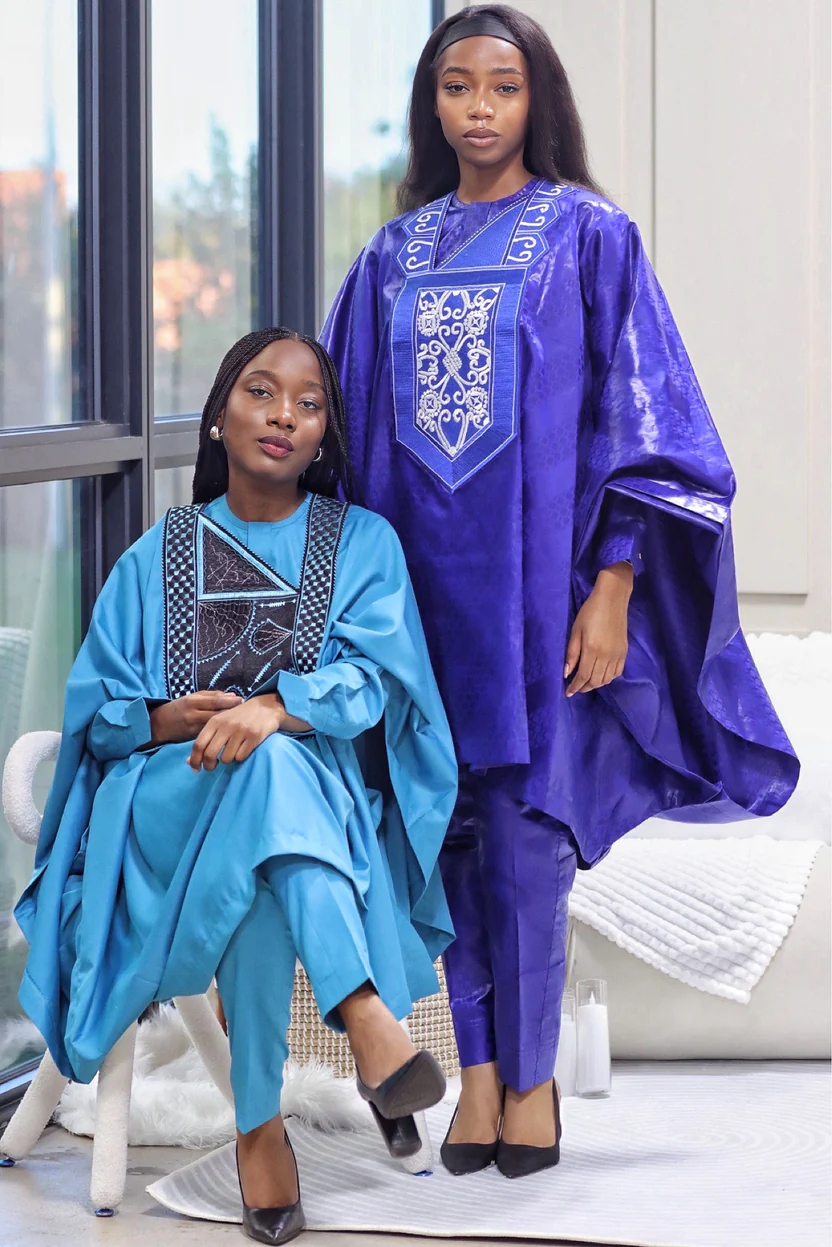
The three-piece set is the full formal Wolof women’s ensemble: a wrapper skirt tied at the waist, a fitted or semi-fitted blouse, and a grand boubou worn over both. In Bazin, this combination creates a layering of the same fabric across different body proportions and movements, the outer boubou flowing while the wrapper grounds the silhouette beneath it. For women who know how to compose this combination, the three-piece in Bazin is the most complete statement available in Wolof women’s dress.
The moussor is the fourth element that completes the three-piece set for formal occasions, technically making it a four-piece ensemble but traditionally counted as part of the three-piece convention. The way the moussor is tied is itself a declaration of status, skill, and personal style. Different generations of Wolof women tie headscarves differently, and different occasions call for different knots. The ability to construct the perfect mousseline is part of the social literacy that distinguishes a woman who is dressed from a woman who knows how to dress. For diaspora Wolof women reconnecting with this tradition, the moussor is often the last skill acquired and the one that most completely signals cultural fluency when mastered. For more on how cloth functions as a cultural declaration across West African traditions, read Clothing as Declaration.
3. The Embroidered Bazin Kaftan
The kaftan is the Bazin style that crosses most fluidly between the ceremonial and the contemporary. A long, flowing robe with full-length sleeves, a floor-length hem, and elaborate embroidery at the neckline, cuffs, and chest, the kaftan in Bazin carries the full weight of the formal tradition without the structural complexity of the grand boubou three-piece. It is one garment doing the work of three. For Wolof women in Dakar, Banjul, and across the diaspora who need to move between formal occasions and professional settings, the embroidered Bazin kaftan is the most versatile and serious garment in their wardrobes.
The embroidery on a Bazin kaftan is its primary cultural signifier. Simple chain-stitch at the neckline reads as an everyday dress. Elaborate multi-colour embroidery with gold or silver thread filling the chest and extending to the sleeves reads as a ceremony. The same silhouette, the same fabric, two completely different social communications delivered through the density and complexity of the needlework. Dakar’s thriving couture scene, documented annually at Dakar Fashion Week, has elevated the embroidered Bazin kaftan into one of the most internationally visible garments in West African fashion, with designers such as Adama Paris incorporating it into collections shown on global platforms.
4. The Bazin Wrapper and Fitted Blouse
The wrapper and blouse are the everyday Bazin style, worn to the market, to Friday mosque gatherings, and to a friend’s home for afternoon attaya tea. A two-metre length of Bazin cloth tied around the waist and falling to the ankle, accompanied by a fitted or lightly structured blouse in the same or complementary fabric. The combination is the foundation of Wolof women’s daily dress and the style in which most Wolof women are most fluent and most comfortable, because it is the style they have worn since childhood.
In contemporary Wolof dressing, the wrapper and blouse have become the style most actively explored by Dakar’s younger designers, who are pushing the familiar silhouette into new proportions: wider blouses, structured sleeves, and contrasting embroidery between the wrapper and the top. The Business of Fashion’s coverage of West African fashion has increasingly spotlighted Senegalese designers reworking everyday Bazin styles as a counterpoint to the ceremony-focused grand boubou tradition. A woman who chooses her wrapper colour thoughtfully for a Friday gathering is participating in the same social logic as the Dirriankhe assembling her grand boubou for a wedding. The scale differs. The intention does not.
5. The Contemporary Bazin Co-ord
The Bazin co-ord is where the tradition meets the moment. A tailored two-piece in Bazin cloth, structured trousers or a midi skirt and a matching top or jacket cut to contemporary proportions, using the same hand-dyed damask that has always been the fabric of Wolof ceremony. Several Dakar designers and diaspora labels have been producing Bazin co-ords over the past four years with increasing confidence, and the results are appearing at Dakar Fashion Week, in editorial shoots across the West African diaspora press, and on the social media accounts of Wolof women in Paris, London, New York, and Banjul.
The co-ord works for the same reason the Shuka co-ord and the Ewe Kente co-ord work: the fabric is so architecturally strong that a contemporary silhouette does not dilute it. Bazin carries the cultural argument. The tailoring simply extends the settings in which that argument can be made. For Wolof women in the diaspora, the Bazin co-ord bridges the Dakar wedding and the London boardroom without asking either space to compromise. The parallel evolution of this approach in East African dressing is explored in our article on Top 5 Ewe Kente Styles for Ewe Women in 2026.
When the Cloth Speaks: Bazin Across Wolof Ceremonies
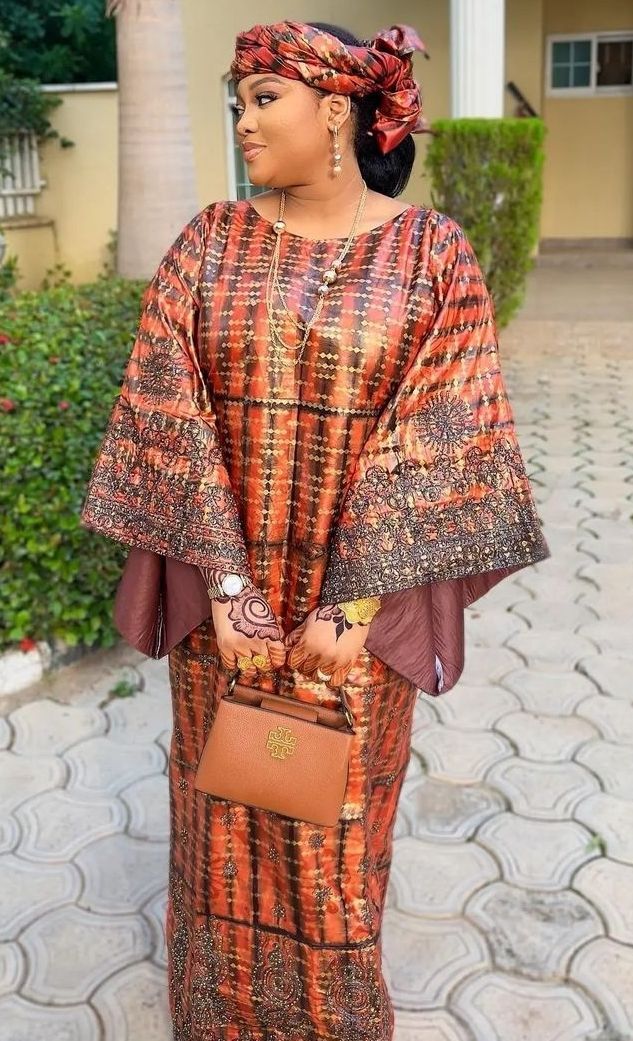
Bazin moves through Wolof life with the same purposefulness that the Dirriankhe moves through a ceremony. Each occasion has its own weight, its own colour register, and its own expectation of what the cloth should say when you arrive wearing it.
The Ngente: Naming Ceremony
The naming ceremony, held on the eighth day after a child’s birth, is one of the most important social occasions in Wolof life. The mother emerges from her post-birth seclusion dressed in her finest Bazin, the quality of the cloth marking both her recovery and her status in the community. Female guests arrive in their best dress, the gathering becoming a public assessment of each woman’s ceremonial wardrobe. The predominantly female social architecture of Wolof ceremony is most visible at the ngente, where women’s relationships with each other are organised around the arrival of new life. The UNESCO documentation of West African naming traditions recognises the ngente as a form of intangible cultural heritage embedded in the social fabric of the Senegalese community life.
Tabaski: The Feast of the Lamb
Tabaski, the West African name for Eid al-Adha, is the most important occasion in the Wolof dressing calendar. The purchase of a new Bazin outfit for Tabaski is not optional. Families who cannot comfortably afford it will find a way. Morning prayers at the mosque are followed by the slaughter of a lamb, family gatherings, and afternoon visits to friends, all conducted in the finest Bazin of the year. The grand boubou in Bazin riche appears most heavily at Tabaski, and the Dakar tailoring workshops are at their most productive in the weeks preceding the feast. The occasion is the annual demonstration of a community’s collective investment in the dressing tradition, and the quality of Bazin visible on the streets of Dakar on Tabaski morning is a reliable index of the city’s relationship with its own elegance.
Korité: Eid al-Fitr
The celebration marking the end of Ramadan carries the same dressing expectation as Tabaski: a new Bazin outfit for the occasion. Korité is typically lighter in ceremonial weight than Tabaski but equally demanding in dressing standards. The embroidered kaftan is particularly common at Korité; its slightly less formal register is appropriate to the spirit of the occasion while still communicating full cultural participation. Children receive new clothing, and the multi-generational dimension of Wolof dressing is most visible here, with grandmothers in full Bazin riche alongside granddaughters in contemporary Bazin co-ords, the tradition and the contemporary moment occupying the same family gathering without contradiction.
Traditional Wedding
The Wolof wedding is the fullest expression of the Bazin dressing culture in existence. The bride wears the highest quality Bazin riche available, her grand boubou with embroidery that may have taken weeks to complete, her moussor tied with full formal precision, her gold jewellery substantial and visible. The wedding gathering assembles some of the most carefully dressed women in Wolof social life, each one’s Bazin an argument for her own status and taste, the collective visual effect a demonstration of what Wolof dressing culture achieves when it is operating at full intensity. The stiff starched fabric, perfumed with incense before the ceremony, fills the room with a scent that becomes inseparable from the memory of the occasion. In Wolof social life, you smell Bazin and incense together, and you know exactly where you are.
Funerals and Mourning
Wolof mourning dress is sober in colour but not in quality. White and muted tones replace the vivid ceremony palette, but the Bazin remains. Elder women attending funerals dress with the gravity the occasion demands, the quality of their clothes marking the respect they bring to the loss. The mourning gathering is again predominantly female in its social organisation, with women assembling to support the bereaved, their collective presence in dignified Bazin a form of community holding that the dressing tradition makes visible and concrete.
In Wolof life, the cloth does not mark the occasion. The cloth is the occasion. You are not dressed for the wedding. You arrive at the wedding.
ALSO READ:
- Top 5 Ewe Kente Styles for Ewe Women in 2026
- Clothing as Declaration: What African Women Wear When They Mean Business
- Culture as Currency: Why Traditional Fabric Is the Most Valuable Thing in Your Wardrobe
The Omiren Argument
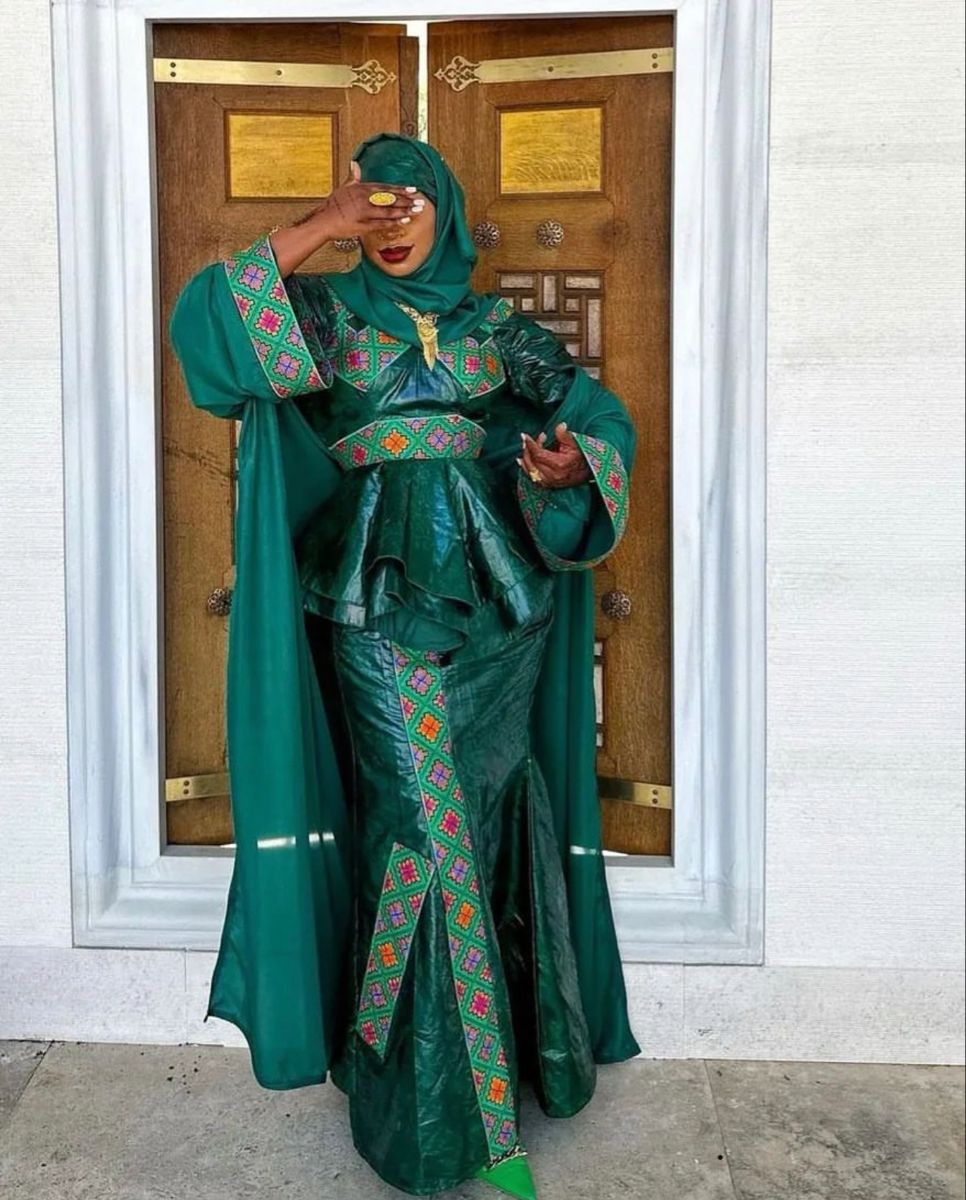
The Wolof dressing tradition is not a heritage in need of rescuing. It is a living system that has never stopped developing, never stopped demanding the best of the women who participate in it, and never confused fashion with meaning. The Dirriankhe does not follow trends. She sets the standard for her community and her moment, working with a fabric that has been the most expensive, most desired, and most culturally potent cloth in Senegalese life for over a century.
What the Bazin tradition asks of the women who wear it is not nostalgia. It is mastery. The mastery of the dyeing process. The mastery of the tailor’s collaboration. The mastery of the moussor knot and the walking pace, and the way the embroidery at the neckline tells the assembled women everything they need to know about who you are and what you have invested in being present. In 2026, that mastery will be available in Dakar, Banjul, Paris, London, and any city where Wolof women are carrying the tradition forward into new rooms.
Dress accordingly.
Browse the full African Style collection at Omiren Styles.
Frequently Asked Questions
1. What is Bazin fabric made from?
Bazin is a cotton damask, occasionally blended with silk or wool. The raw white fabric is manufactured primarily in Germany and the Netherlands before being exported to West Africa, where specialist dyers hand-dye it into the lustrous, stiff fabric used for grand boubous and formal dress. Bazin Riche is the premium grade, distinguished by its particular sheen and firmness. Standard Bazin is used for everyday combinations of wrappers and blouses.
2. What is the Dirriankhe?
The Dirriankhe is the Wolof ideal of feminine beauty and social presence. She is characterised by her mastery of public dressing, principally the art of wearing the grand boubou in Bazin riche with generous volume, expensive embroidery, incense perfume, and the slow, deliberate walk that the fabric demands. The Dirriankhe ideal guides the dressing standards of Wolof women at ceremonies and is performed primarily for the appreciation and social judgment of other women rather than for male attention.
3. What is La Grande Nuit, du Bazin?
La Grande Nuit du Bazin is an annual festival founded in Dakar in 2004 by Senegalese singer Djiby Dramé to celebrate Bazin fabric and the grand boubou tradition. The event brings together leading Senegalese designers, including Oumou Sy and Collé Ardo So,w for a display of boubous in Bazin riche. Visit the official La Grande Nuit du Bazin website for upcoming event dates. Its success led to sister events in Bamako and Abidjan, confirming the fabric’s cultural significance across the West African Sahel.
4. Where can I buy authentic Bazin fabric?
Authentic Bazin is available in fabric markets across Dakar, including Sandaga and Marché HLM, the principal destination for Bazin buyers in Senegal. Diaspora buyers can source Bazin through Senegalese fabric traders in Paris, London, and New York, or through West African fashion labels that work directly with Dakar dyers and tailors. The quality distinction between standard Bazin and Bazin riche is best assessed by handling the fabric: premium Bazin has a distinctive firmness and depth of sheen that imitations cannot replicate.