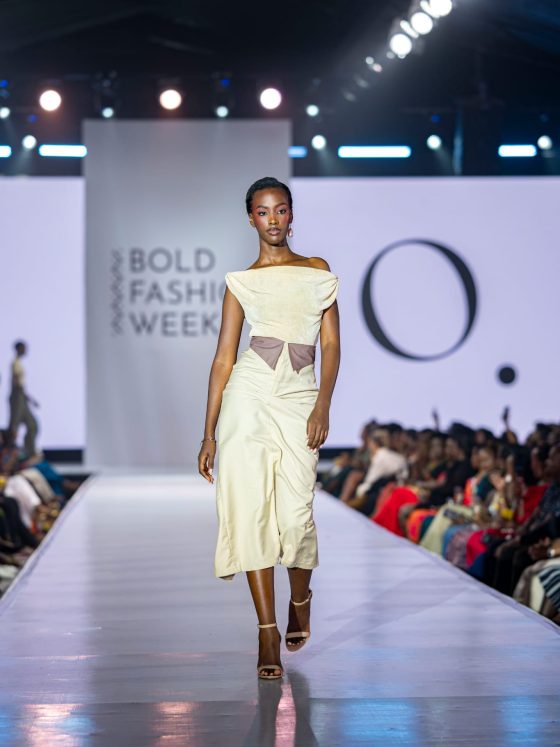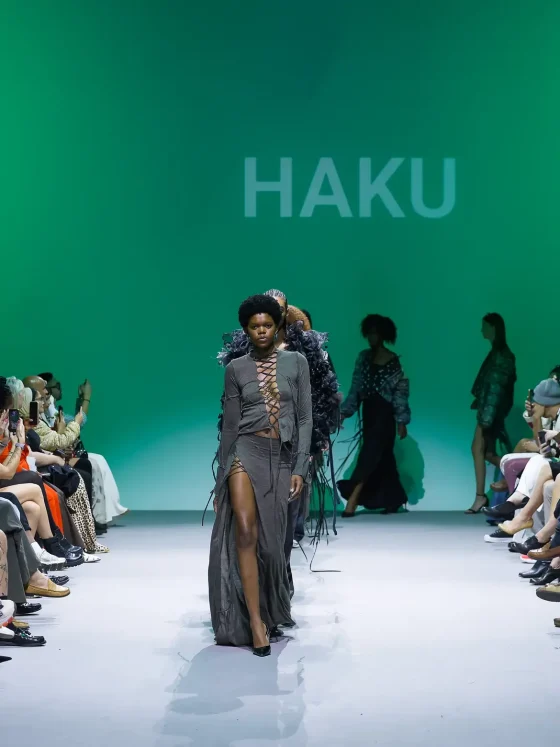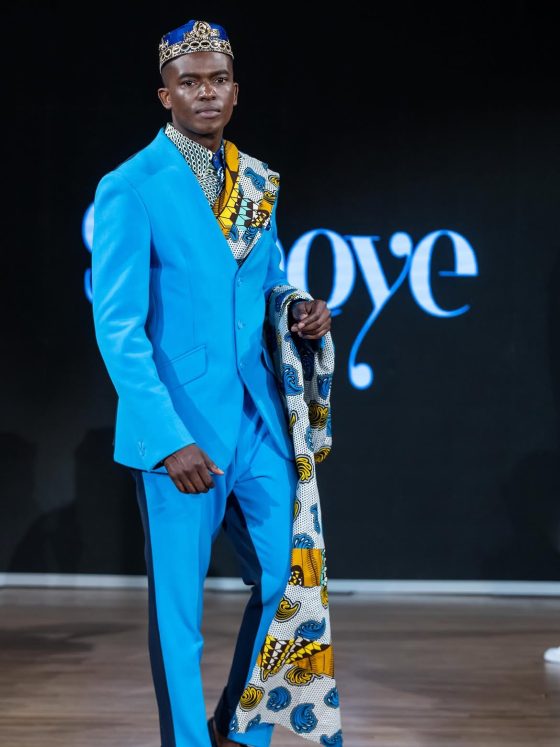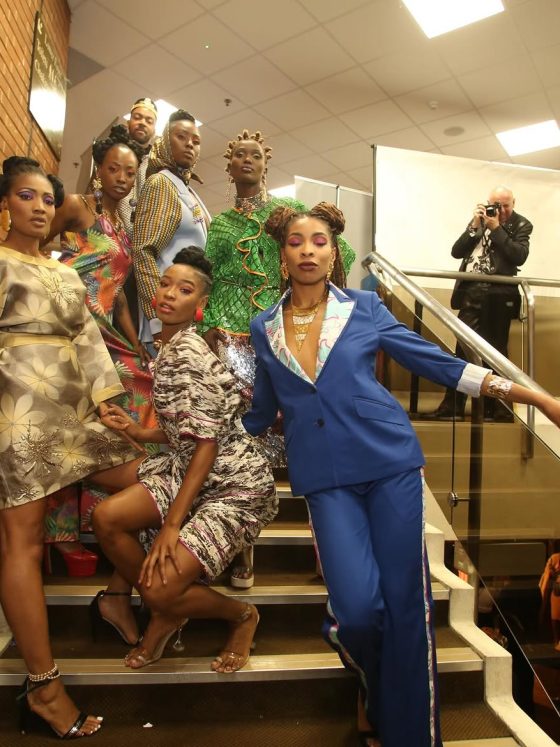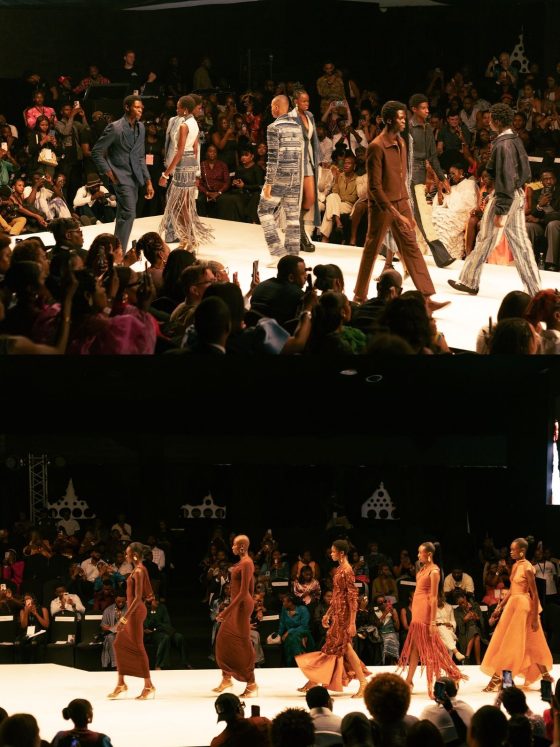
Museum Africa in Johannesburg holds a 14,000-piece ethnographic collection and a photographic archive of 11,000 images. It also holds the Bernberg Collection: approximately 16,000 fashion objects, predominantly European, predominantly white-owned, either imported into South Africa during the colonial period or made locally by settlers. The archive was built during apartheid. It preserves the dress of one community and classifies the dress of another under “ethnography.” These are not equivalent categories. Ethnography is the study of people. Fashion is the study of clothing. The classification tells you whose clothing was considered worth the word.
In November 2024, South African designer Wanda Lephoto, fashion curator Dr Erica de Greef, and UK-based researcher Alison Moloney opened Fashion Accounts at Museum Africa, a series of installations that worked directly with the museum’s existing archive. The exhibition had been six years in the making. Lephoto described it as being about “using fashion as a tool to confront the traumas embedded in museum practices and finding ways to preserve histories often excluded from the record.” Fashion Accounts ran until September 2025, extended by several months beyond its original close date due to public response. The gallery and the runway did not share a language in that exhibition. One was auditing the other.
African fashion did not enter the gallery. It was always there. The gallery simply spent a century refusing to recognise it. Here is what happens when African designers stop waiting for permission
The Border That Was Never Real
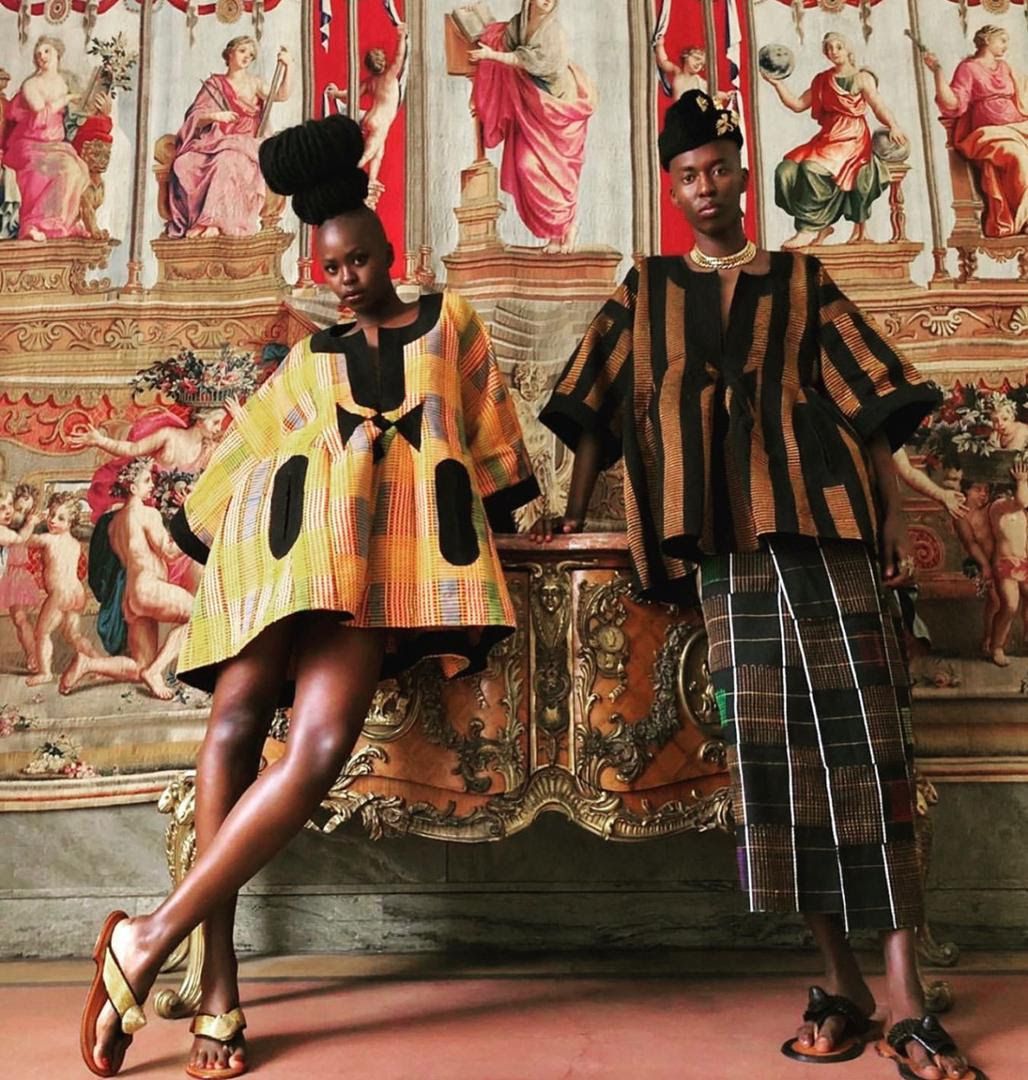
The disciplinary boundary between “art” and “fashion” is a European institutional construct, not a description of how creative practice actually works. In European academic tradition, fine arts (painting, sculpture, drawing) were ranked above applied or decorative arts, which included textiles, dress, and craft. Fashion fell into the lower category: something made for use, not for contemplation. This hierarchy was built into the academy, the museum, and the critical vocabulary of Western art history. It has nothing to do with the creative complexity of the practice it demotes.
In African creative traditions, no equivalent hierarchy operates. Dress is not a decoration applied to the body. It is a language spoken on the body: communicating ancestry, ceremony, social position, spiritual relationship, and political statement in a single garment. The Kente weaver, the aso-oke artisan, the adire dyer, and the portrait painter are all doing the same thing in different materials. The categorisation of one as “art” and the others as “craft” or “fashion” was imposed from outside. African designers who move between gallery space and the runway are not crossing a disciplinary border. They are operating within their own creative tradition, which recognises no such border.
This is what Fashion Accounts demonstrated with institutional precision. By working inside Museum Africa’s existing archive and confronting its colonial classification system, Lephoto and his co-curators made the argument physically: the absence of black South African fashion histories in the museum is not an accident of poor collection practices. It is the outcome of a system that decided whose clothing counted as heritage and whose counted as anthropological data.
“It is in the gaps, the absences, the fragments that we need to look to find ourselves when our stories are not acknowledged in the record.” Wanda Lephoto, Fashion Accounts, 2024
Thebe Magugu: The Collection as Exhibition
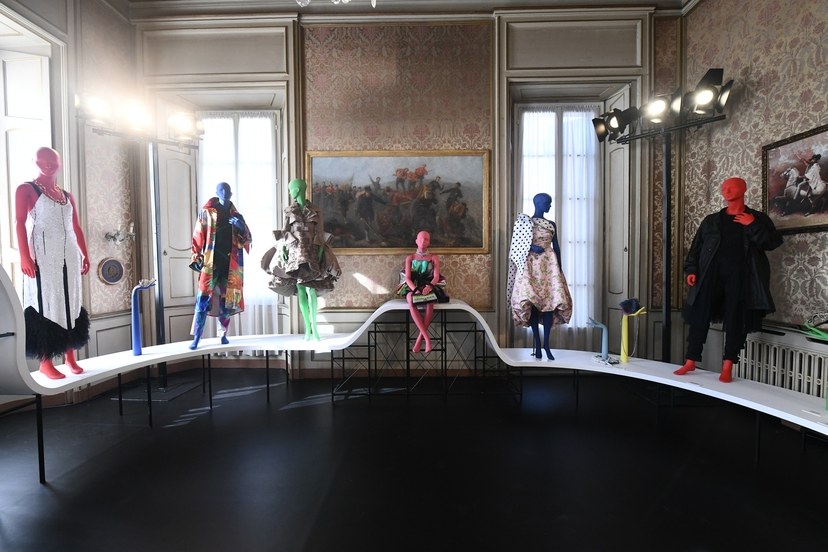
Thebe Magugu’s practice is the most documented current case of an African designer whose work operates simultaneously as fashion and as fine art, without treating the two as separate ambitions. His Folklorics AW23 collection debuted at the Sphere Gallery at the Palais de Tokyo in Paris during Fashion Week. The Palais de Tokyo is a contemporary art institution. The collection then entered the Metropolitan Museum of Art’s Costume Institute as Magugu’s fourth acquisition by the Met, as documented in the 2024 exhibition Sleeping Beauties: Reawakening Fashion. His Discard Theory collection debuted at the Victoria and Albert Museum during London Fashion Week in October 2022. Magugu House, his retail space, opened in May 2024 in a 1930s heritage building in Dunkeld, Johannesburg, and features two micro-galleries. In October 2024, an exhibition and capsule collection launched in the space in collaboration with visual artist Nelson Makamo.
This is not a fashion designer occasionally engaging with art. This is a creative practice that is indistinguishable, in its methods and intentions, from what a conceptual artist does. Magugu names his collections after university subjects: Geology, Gender Studies, Art History, African Studies, Alchemy, Genealogy, and Folklore. Each collection is a research project. Each garment carries an argument that can be stated in prose. Each debut is curated for a specific institutional context. The Met Costume Institute, the Palais de Tokyo, and the V&A are not fashion venues that occasionally exhibit designers. They are art institutions that have recognised a body of work serious enough to collect and exhibit.
Magugu himself stated in the context of the V&A Africa Fashion exhibition: “I feel like there are so many facets of what we’ve been through as a continent that people don’t actually understand. Now more than ever, African designers are taking charge of their own narrative and telling people authentic stories, not the imagined utopias.” The statement is curatorial in language and intent. He is not describing a design philosophy. He is describing an editorial position.
Mary Sibande and Palesa Mokubung: Sophie’s Closet
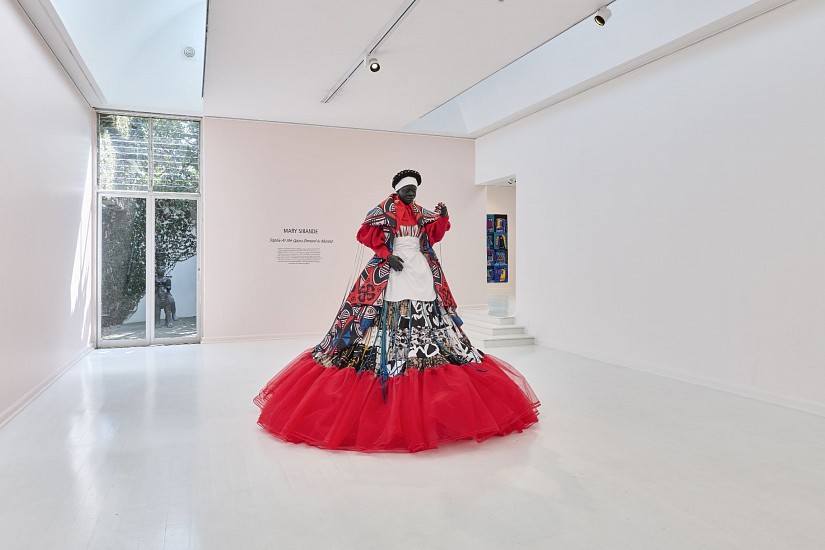
Mary Sibande is a South African sculptor, painter, and installation artist whose central subject is Sophie, her fictional alter ego. Sophie began in a blue Victorian domestic worker’s uniform, the dress of South African Black women in domestic service under apartheid: a specific garment carrying a specific political history. Sibande has stated that she originally wanted to be a fashion designer, and that “fashion and fine art aren’t far off from each other.” Her practice draws directly on dress construction: she tailors the uniforms and garments her sculptures wear, using colour and cut as primary artistic language. Sophie has exhibited at the Venice Biennale, the Met Breuer, the British Museum, the Zeitz MOCAA, and the Smithsonian National Museum of African Art. In 2024, Sibande received the Chevalier des Arts et des Lettres from the French government. Sophie’s Closet, a 2025 collaboration with Mantsho designer Palesa Mokubung, moved the central question of Sibande’s practice directly into the fashion space.
For Sophie’s Closet, Mokubung designed a bespoke Mantsho collection inspired by Sophie, the character. The installation’s centrepiece was Sophie at the Opera, a grand red dress in which the sculpture appeared not as a domestic worker but as a figure of sovereignty and spectacle. Sophie, who had spent decades in blue, wore red. The shift was not cosmetic. It was the argument: a Black South African woman, whose forbears served in other people’s houses, reimagined in operatic Afrocentric couture, in a gallery, as a cultural monument.
This is what collaboration between visual art and fashion looks like when both practices are rooted in the same political and cultural soil. Sibande and Mokubung were not fine artists working with a fashion designer as part of a creative exercise. They were two women making the same argument about Black South African womanhood in two different materials, brought together in a single installation. The gallery space was the location. The garment was the medium. The sculpture was the subject. None of those three things was subordinate to the other.
Also Read:
- How African Heritage Designers in Paris Are Challenging the Maison System
- Afrocentric Streetwear as Cultural Argument: Why Dakar, Kampala, and Monrovia Are Setting Global Youth Style
- Cultural Appropriation in Fashion: Why Sorry Is Not Enough
- How to Shop African Fashion: The Complete Guide for the Culturally Literate Consumer
Sindiso Khumalo: Textile as Archive
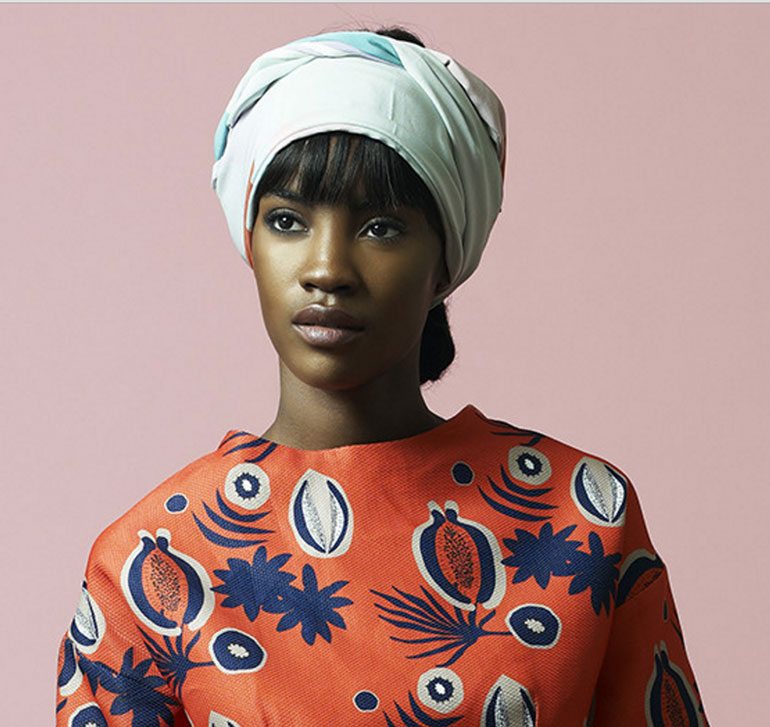
Sindiso Khumalo trained in architecture at the University of Cape Town, then studied Design for Textile Futures at Central Saint Martins. She designs the textile prints for her collections as watercolour paintings and collages before they become fabric. Her practice begins in a visual artist’s studio and ends on a wearer’s body. Her collections draw on Black female portraits from the 19th and early 20th centuries, Ndebele and Zulu heritage, and specific historical events: the JAGGER collection mourned the 2021 burning of the African Studies library at the University of Cape Town. “For us as Africans,” she said, “so few of what we have is documented. And so when a library burns, it really does feel like losing somebody.” That is an archival argument expressed through printed fabric.
Khumalo has exhibited at the Smithsonian Museum of African Art in Washington, the Louisiana Museum of Modern Art in Denmark, the Royal Festival Hall in London, the Zeitz MOCAA in Cape Town, and the V&A Africa Fashion exhibition in Melbourne. Her work has been in Fashion Accounts at Museum Africa alongside Thebe Magugu and The Sartists. These are not an accumulation of collaborations. They are a consistent record of a practice that the fashion industry calls fashion and the art world calls textile art, and that Khumalo herself calls working with a “beautiful voice in fashion” to speak about the things that matter.
Her signature prints are hand-painted in watercolour. They reference specific women, specific struggles, specific moments of Black history in South Africa and the diaspora. Each garment is a historical document that can be worn. The Smithsonian collecting her work and the body wearing it are both correct responses to what the work is.
The V&A Africa Fashion Exhibition: A Reclassification in Motion
The V&A Africa Fashion exhibition opened in London in July 2022 and toured Brooklyn, Portland, Melbourne, Chicago, and Montreal (September 2025 to February 2026). At the Portland Art Museum, the exhibition was described as the first of its kind to celebrate the irresistible creativity, ingenuity, and global impact of contemporary African fashions. It featured over 200 works, more than 50 designers from 21 countries, garments from the 1960s to the present day, as well as textiles, photographs, and videos. The New Yorker called it “vital and necessary.” Dr Christine Checinska, the V&A’s Senior Curator of Africa and Diaspora Textiles and Fashion, described its guiding principle as “the foregrounding of individual African voices and perspectives,” and its ambition as sparking “a renegotiation of the geography of fashion.”
A renegotiation of the geography of fashion is precisely what the exhibition accomplished. By placing Thebe Magugu, Imane Ayissi, IAMISIGO, Sindiso Khumalo, Moshions, and others inside institutions that the global art world uses to confer cultural authority, the exhibition was not arguing that African fashion deserved to be in the gallery. It was argued that the gallery had been withholding a classification that African fashion had already earned.
The McCord Stewart Museum in Montreal, the exhibition’s only Canadian stop, framed the exhibition as a landmark: “one of the largest ever dedicated to the African fashion scene,” presenting fashion as a self-defining art form that reveals the richness and diversity of African histories and cultures. That framing is the institutional admission. Fashion from the African continent is a self-defining art form. It was always that. The institution took until 2022 to say so publicly.
Fashion Accounts: The Archive Audited
Fashion Accounts at Museum Africa was the most structurally precise articulation of the art-fashion argument in African creative practice since the Sartists launched their Sports Series in 2014. The exhibition used Museum Africa’s existing ethnographic and photographic archives not as a backdrop but as evidence. The Bernberg Collection’s 16,000 predominantly European fashion objects, preserved and displayed, stood in explicit contrast to the violent absence of black South African fashion histories in the same institution. Lephoto, De Greef, and Moloney did not supplement the archive. They confronted it.
The Sartists Sports Series, included in the exhibition alongside new commissions by The Sartists and Mimi Duma, began in 2014 when Lephoto, Andile Buka, Kabelo Kungwane, and Xzavier Zulu created self-portraits in sportswear to reclaim and reimagine black South African history that segregation and apartheid had excluded from the archive. This is not a fashion shoot. It is a documentary practice in the language of dress, executed by a collective that describes itself as Sartorial Artists because, in their practice, sartorial and artistic are the same word.
Fashion academic Dr Erica de Greef articulated the project’s ambition precisely: “There is an urgent need to decolonise museum classification and representation practices. Fashion objects in museum collections offer powerful visual and material pathways for remembering more diverse South African histories, identities, and subjectivities.” This is curatorial theory. The people making this argument were, by professional classification, a fashion designer, a fashion curator, and a fashion researcher. The argument they were making was about archival justice. Fashion was both their subject and their methodology.
THE OMIREN ARGUMENT
African fashion is not visiting the gallery. It is reclaiming an archive built during colonialism to exclude it, and the designers doing that work are not crossing a disciplinary boundary between art and clothing. For them, that border never existed. Wanda Lephoto, auditing Museum Africa’s colonial archive, is not a fashion designer entering an art space. It is a creative practitioner who identifies what was taken from the record and places it back. Thebe Magugu debuting at the Palais de Tokyo and acquiring four works for the Met Costume Institute is not a fashion designer merely gaining art-world credibility. It is an artist whose medium happens to be garments, being recognised by institutions that took longer than they should have to understand that. Mary Sibande did not move from fashion into fine art. She moved from one material language to another to ask the same question: whose body gets to be sovereign?
The context is a Western cultural system that assigned African dress to the ethnographic archive rather than the fine art collection, that filed it under “anthropology” rather than “art history,” and that built museum collections in which 16,000 European fashion objects were preserved. The dress of the colonised was classified as a cultural artefact rather than a creative achievement. The Fashion Accounts exhibition at Museum Africa confronted this classification with a specific institutional vocabulary: installations, curatorial statements, new commissions, and academic co-curators. It used the language of the museum against the museum’s own exclusions. That is not fashion entering the art space. That is fashion reclaiming what the institution took in the first place.
The disruption is what happens next. The V&A Africa Fashion exhibition is now documented in the permanent collections of the V&A, the Brooklyn Museum, the Portland Art Museum, the NGV Melbourne, the Art Institute of Chicago, and the McCord Stewart Museum in Montreal. Thebe Magugu has four works in the Met. Sindiso Khumalo has worked at the Smithsonian. The Sartists are in Museum Africa. These are not isolated instances of African designers engaging with gallery space. They are the beginning of a reclassification of African creative practice, carried out by the institutions that previously made the wrong classification. The gallery and the runway share a language because they always speak the same one. The misunderstanding was entirely on the gallery’s side.
Frequently Asked Questions
1. What is the Fashion Accounts exhibition?
Fashion Accounts was an exhibition at Museum Africa in Newtown, Johannesburg, open from November 2024 to September 2025. Curated by Wanda Lephoto, Dr Erica de Greef, and Alison Moloney, it presented a series of installations that worked directly with Museum Africa’s existing collection to confront the violent absence of black South African fashion histories in its archive. The museum holds 14,000 ethnographic items and 11,000 photographs, as well as the Bernberg Collection of approximately 16,000 predominantly European, white-owned fashion objects. Fashion Accounts, which had been six years in the making, featured new commissions by The Sartists and Mimi Duma, as well as works by Thebe Magugu and Sindiso Khumalo. Entrance was free. The French Ministry of Europe and Foreign Affairs funded the exhibition.
2. Why does Thebe Magugu exhibit in galleries and not just on runways?
Thebe Magugu’s practice is structured as research and argument, not primarily as commercial fashion. He names collections after university subjects, debuts them in contemporary art institutions, and has had four works acquired by the Metropolitan Museum of Art’s Costume Institute. His Folklorics AW23 collection debuted at the Sphere Gallery at the Palais de Tokyo; Discard Theory debuted at the V&A during London Fashion Week; Magugu House, his Johannesburg retail space, features two micro-galleries. As Magugu stated in the context of the V&A Africa Fashion exhibition, African designers are now “taking charge of their own narrative and telling people authentic stories.” The gallery context is where that narrative is most legible to the institutions that have historically controlled the terms of cultural value.
3. What is the V&A Africa Fashion exhibition, and where did it tour?
The V&A Africa Fashion exhibition opened at the Victoria and Albert Museum in London in July 2022 and toured internationally. It ran at the Portland Art Museum on its West Coast US stop, and at the Brooklyn Museum, the NGV in Melbourne (May to October 2024), the Art Institute of Chicago, and the McCord Stewart Museum in Montreal (September 2025 to February 2026). The exhibition featured over 200 works, including couture, bespoke, and ready-to-wear fashions and body adornments, by more than 50 designers from 21 countries, covering the period from the 1960s to the present day. Curated by Dr Christine Checinska, V&A Senior Curator of Africa and Diaspora Textiles and Fashion, it has been described as a landmark attempt to renegotiate the geography of fashion.
4. What is Sophie’s Closet, and why does it matter to African fashion?
Sophie’s Closet is a 2025 collaboration between visual artist Mary Sibande and Mantsho designer Palesa Mokubung. Presented at the Everard Read Gallery in Johannesburg, the installation dressed Sibande’s iconic sculptural alter ego, Sophie, in a bespoke Mantsho garment for the first time, titled “Sophie at the Opera”. Sophie began her artistic life in a blue Victorian domestic worker’s uniform, referencing the forced domestic labour of Black South African women under apartheid. In the collaboration, she appeared in a grand red dress: a figure of sovereignty rather than servitude. The project matters because it demonstrates how visual art and fashion, when rooted in the same political history, produce a single argument across two materials, rather than two disciplines collaborating.
5. How does Sindiso Khumalo’s work connect fashion and visual art?
Sindiso Khumalo begins every collection with hand-painted and collaged designs before any fabric is cut. She trained in architecture and textile futures at Central Saint Martins, and her collections draw on Black female portraits from the 19th and early 20th centuries, Ndebele and Zulu heritage, and specific historical events, including the burning of UCT’s African Studies library. She has exhibited at the Smithsonian Museum of African Art, the Louisiana Museum of Modern Art, the Royal Festival Hall, the Zeitz MOCAA, and the V&A Africa Fashion exhibition. Her work was included in Fashion Accounts at Museum Africa. The classification of her practice as “fashion” rather than “textile art” is a trade category, not a description of the creative practice, which is indistinguishable from what an artist who works in watercolour, research, and social justice would do.
6. What is the relationship between African fashion and the colonial museum archive?
The colonial museum archive, as demonstrated by Fashion Accounts at Museum Africa, was built during colonial rule to preserve European material culture as heritage and to classify African material culture as anthropological data. Museum Africa’s Bernberg Collection contains approximately 16,000 predominantly European fashion objects; its ethnographic archive contains 14,000 items classified under categories including “Dress: Zulu” and “Dress: Women.” African dress was not absent from the archive. It was present in a category that removed its cultural authority. Fashion Accounts confronted this classification directly, asking who was collected, how they were named, and whose absence in the fashion archive reflected a systematic decision rather than an oversight. The relationship between African fashion and the museum is therefore not one of fashion seeking entry. It is one of the fashion identifying an institutional debt.
The Archive Is Being Rewritten
Omiren Styles covers African fashion as a creative practice with a history, an argument, and an institutional reckoning in progress—the Culture section documents what is being made and what it means. Subscribe for editorial intelligence that names things correctly.