There is a familiar pattern in the way fashion brands discuss handmade production.
The collection notes describe the piece as handcrafted. The campaign emphasises the artisan, the tradition, the time. The retail price reflects the perception of exclusivity that handmade work commands. And then the purchase order arrives at the producer, and the price it specifies was calculated using the same methodology the brand uses for its factory-produced pieces: material costs plus a standard cut-and-make rate based on industrial production assumptions, with a margin structure that leaves no room for the time handmade actually takes.
The artisan is then invited to reduce their hours, simplify their technique, work faster, accept the rate on offer or lose the order.
The craft is preserved in the marketing. It is erased in the payment.
This is not a peripheral problem in fashion’s relationship with handmade production. It is the central one. It happens consistently across markets, product categories, and the full range of producers, from small cooperative weavers to established atelier operations, because the costing framework most fashion brands use was built to calculate industrial production costs and was never adjusted for the specific economics of artisan work.
The cost of a handmade piece is not the same as that of a factory piece, even with extra care. It is a different cost structure entirely: one in which labour is the primary input, time is the primary variable, and skill is the primary asset.
Fashion brands consistently undercost handmade production by applying industrial metrics to artisan work. This guide names the correct costing framework, the llabour-rateconversation ,and the pricing approach that sustains craft rather than erasing it.
Why Industrial Costing Fails Handmade Production
Industrial garment costing is built on the efficiency logic of factory production: how many units can be produced per hour, how many hours per day, how many operators per style, and what the standard-minute value of each operation is.
That logic produces accurate costs for industrial production because it is designed to be efficient: operators perform the same motion repeatedly, patterns are cut in bulk, and quality control catches deviations from a standard rather than appreciating variations that distinguish individual pieces.
Applied to handmade production, the same logic produces systematically wrong numbers.
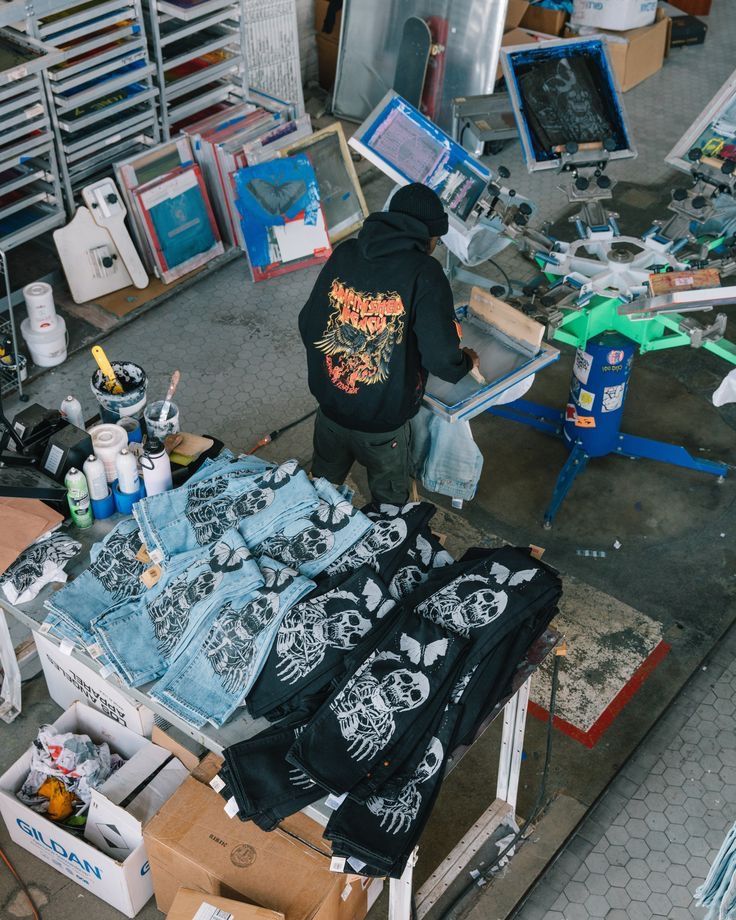
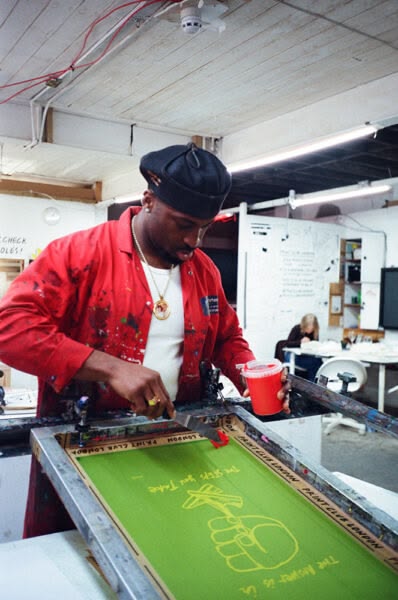
A handwoven textile takes as long as it takes. The weaver cannot be timed against a standard-minute value that assumes mechanised production. An embroidered surface requires the actual hours the embroiderer spent, not an estimate of what an industrial embroidery machine would take. A tie-dye garment whose surface pattern results from a process that cannot be precisely reproduced, because no two resist placements are identical, cannot be costed as though it were printed by a screen that delivers 500 identical units per hour.
When an industrial costing model meets handmade production, it does one of three things: it undervalues the labour by applying a rate that does not reflect the skill level or the actual time required; it underestimates the time by applying an efficiency assumption that the production model cannot deliver; or it produces a cost that the brand decides is too high and sends back with a request to ‘simplify’ the design, which is a request to remove the handmade quality that justified the marketing narrative.
None of these outcomes is a fair representation of what the handmade piece actually costs.
The Correct Framework: What a Handmade Cost Includes
The cost of a handmade garment has the same components as any fashion garment cost: materials, labour, and overhead. What changes is how each component is calculated.
Materials
Material costing for handmade production follows the same principles as any fashion garment, with one specific addition: waste and variation. An industrial cut plan minimises waste because the pattern pieces are laid to a standard. A handmade cut plan may have more variation, particularly where the fabric itself varies in weight, density, or hand-feel along its length. The cost should reflect the actual material consumption of the handmade process, not the optimised consumption of an industrial cut.
Where the material itself is handmade, the cost should also reflect the full material production chain. A length of handwoven kente, aso-oke, or bògòlanfini carries the weaver’s labour cost in its price. A brand that negotiates the fabric price down to the point where it no longer reflects the weaver’s fair wage has exported labour erasure into the material before garment production has even begun.
Labour: The Core Calculation
As Craftybase documented in its 2026 analysis of handmade labour costing, the most reliable method is to break the production process into individual steps, time each step across several sessions and average the results. Most experienced handmade producers in 2026 should aim for $20-$30 per hour for skilled production labour. Specialised or high-skill work, including complex weaving, fine embroidery, lost-wax casting and intricate hand-finishing, can command $50 per hour or more. The US federal minimum wage of $7.25 per hour is an absolute floor, not a target: it is the legal minimum for unskilled labour in the cheapest labour market in the formal US economy. Skilled artisan production labour is not the same category and should not be priced at the same level.
These are US market benchmarks. Labour rates in Lagos, Lomé, Kingston and Accra differ in currency and in absolute terms, but should be anchored to the same principle: what does a skilled artisan need to earn per hour to sustain their practice, cover their living costs, and invest in their skills? That calculation does not start from what the brand can afford. It starts from what the artisan’s time is worth.
The labour cost for a handmade garment has three components: production time, design amortisation and skill premium.
Production time is the actual hours the artisan spends making the piece. This must be measured, not estimated. A brand that asks an artisan to estimate their hours and then negotiates the estimate downward is not costing: it is pressuring the artisan to misrepresent their time.
Design amortisation is the cost of the creative and technical work that went into developing the design, pattern or technique that the production time executes. If an artisan spent ten hours developing an embroidery pattern that they now execute in fifty minutes, some of that development time has value that should be recovered across the pieces that use it. In practice, this is difficult to calculate at small volumes and is often absorbed as investment by the artisan. A fair purchasing relationship acknowledges this and does not treat the artisan’s investment in their craft as a free input to the brand’s commercial production.
Skill premium is the difference between the rate for general sewing labour and the rate for the specific, practised skill required by the handmade technique. A weaver who has spent twenty years developing their pattern vocabulary commands a different rate from a sewing machine operator who can be trained to a basic standard in a few weeks. The skill premium is not an optional add-on: it is the cost of accessing the specific expertise that makes the handmade piece what it is. Remove the skill premium from the labour cost and you have paid for time but not for knowledge.
Overhead
Overhead costs for artisan producers include the costs of maintaining tools, equipment, and workspace, as well as materials storage and the technical knowledge required by the production practice. A handloom requires maintenance. A dyeing operation requires water, chemicals and handling infrastructure. A workshop requires rent, electricity and security. An artisan community requires training, coordination and quality management.
These overhead costs are real and must be included in the cost calculation. A brand that prices at materials plus labour and calls that a fair cost has ignored the overhead structure that makes the production possible. When overhead is not included in the price, the artisan absorbs it personally from their profit margin, meaning the apparent profit masks a real subsidy the artisan provides to the brand.
The Formula
The correct costing formula for a handmade fashion piece is:
Cost = Materials + (Labour hours × Labour rate) + Overhead allocation
Where the Labour rate is anchored to a fair wage for the skill level and market, not to industrial production efficiency assumptions; where the Labour hours reflects actual timed production rather than industrial standard minutes; where the Materials cost reflects the full material chain including fair-wage inputs; and where the Overhead allocation includes the full infrastructure costs of the artisan’s production practice.
The selling price is then built from this cost, not from a comparison to industrial alternatives. A handmade piece that costs three times as much to produce as a factory-made equivalent is not three times overpriced. It contains three times the labour, a different knowledge tradition, a different level of variation and uniqueness, and a different relationship between the buyer and the maker. The price should reflect that difference, because the marketing already claims it.
The Labour Conversation Fashion Brands Avoid
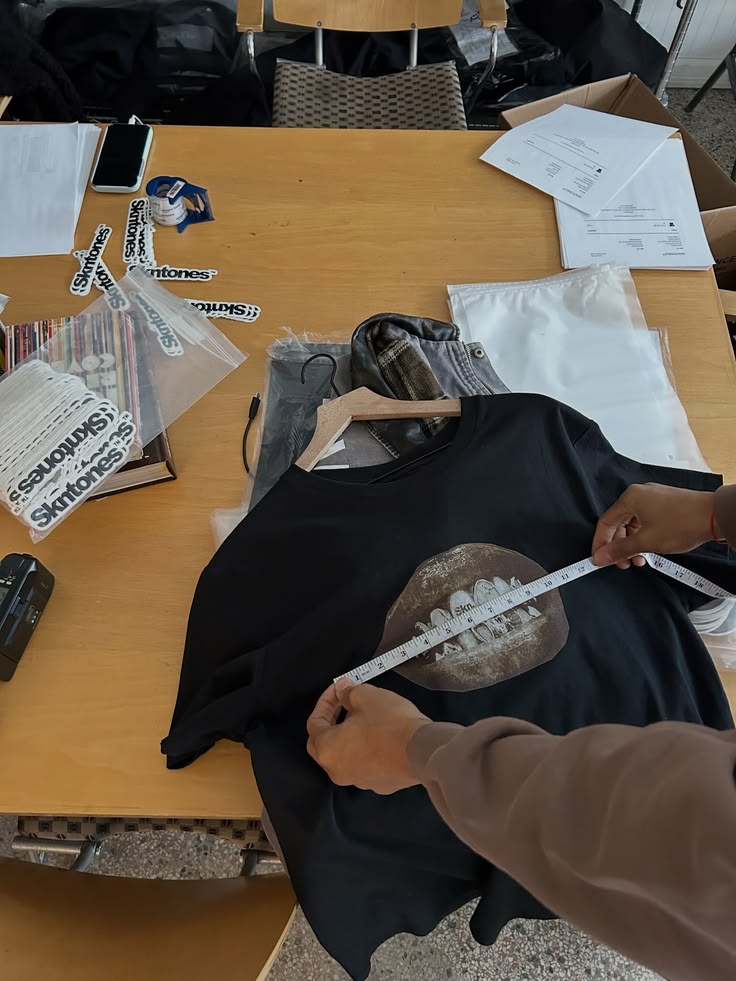
The most consistently avoided conversation in fashion’s relationship with artisan production is the one about labour rates.
Brands discuss material cost openly. They negotiate price transparently. They ask about lead times, quality standards, minimum orders and packaging. They do not, in most cases, ask the artisan what their labour rate is, how long the piece takes to make, whether the offered price covers all their costs or what they would need to charge to sustain their practice over time.
The labour rate conversation is avoided because answering it honestly often reveals that the offered price does not cover the actual cost. The gap is uncomfortable. It is easier to send the order and accept the artisan’s apparent agreement as evidence that the price was acceptable.
It was not. The artisan accepted the order because they needed the income, because they hoped the relationship would develop over time, because they absorbed the shortfall in their own time and financial reserves, or because they simplified the technique to fit within the offered price while the brand continued to describe the piece using the marketing language that the original technique had earned.
As Craftybase documented in its analysis of handmade pricing errors, sewn and embroidered goods have a high labour-to-materials ratio. A $4.55 materials cost on a piece that sells for $93 can seem puzzling at first, but the buyer is paying for the 80 minutes of skilled hand embroidery. At materials-only pricing, the piece would list for $9. The $93 price is the honest one. A common mistake for textile makers: underestimating the value of a well-developed design. If it took ten hours to perfect the embroidery pattern that the artisan now stitches in 50 minutes, some of that design time has value too, even if it is hard to recover from a single unit price.
The same logic applies when a brand is the buyer rather than the artisan being the seller. The brand purchasing a handmade piece at $9 when the honest price is $93 is not getting a bargain. It is participating in the erasure of labour, disguised as commercial negotiation.
Markup and Market Positioning for Handmade Production
Once the cost is correctly calculated, the question of markup and market positioning changes character.
Handmade fashion competes on attributes that industrial production cannot replicate: uniqueness, technique, cultural authority, maker identity and the specific relationship between a piece and the knowledge tradition that produced it. These attributes support a price premium that industrial production does not earn, and that premium is what makes the economics of handmade production viable.
A markup of 100% to 300% on the true cost of a handmade piece reflects the value proposition of handmade fashion in international retail markets. A 100% markup on a miscalculated cost that undervalues the labour results in a retail price that appears correct but conceals that the artisan was not fairly paid.
Market positioning for handmade production should be anchored to the full cost of production, not to the price of the industrial alternative. A brand that prices its handmade pieces to compete with industrial alternatives on price has made two errors simultaneously: it has undervalued the handmade piece to the buyer, and it has compressed the price to a level that the true cost of handmade production cannot sustain without erasing labour costs.
The correct positioning is different: this piece costs more because it takes more time, requires a specific skill and carries a knowledge tradition. The buyer who values those things will pay the correct price. The buyer who does not value them is not the customer for handmade production at its real cost.
What African and Global South Artisan Producers Face Specifically
The labour erasure dynamic is most severe for artisan producers in African, Caribbean and Global South markets, for two compounding reasons.
The first is currency asymmetry. When a brand based in the United Kingdom or the United States purchases from an artisan producer in Nigeria, Ghana or Togo, the exchange rate creates an apparent price advantage that obscures the real labour cost. A price that may seem like a reasonable wholesale cost in pounds or dollars may correspond to an hourly labour rate in the local currency that is below what the artisan needs to sustain their practice. The brand’s currency advantage is experienced as a cost saving. The artisan’s currency position is experienced as a wage that is structurally below fair value regardless of what the nominal price says.
The second is information asymmetry. An artisan producer in Lomé or Accra may not have access to the benchmark data that would allow them to negotiate from a position of knowledge: what international brands pay for equivalent handmade work in other markets, what the skill premium is for their specific technique, or what the international retail price of their work is once it leaves their hands. The brand that arrives with a purchase order already knows these things. The artisan often does not.
As Omiren Styles has established in its analysis of the documentation gap in fashion supply chains, the things the fashion supply chain fails to record are precisely the things whose documentation would make extraction harder to disguise. The labour rate conversation is part of the documentation gap: a purchase order that records the price paid but not the artisan’s actual labour rate, production time or cost structure is a document that conceals the sustainability of the relationship rather than revealing it.
As Omiren Styles has documented in its profile of Samson Feli’s Togolese fashion practice, the decision to produce everything within a 40km radius of Lomé, using dead-stock fabric and tie-and-dye technique, reflects a costing logic whose components are all local and all knowable: the material cost is what the dead-stock costs in Togo, the labour rate is what skilled artisans in the Lomé ecosystem are paid, and the overhead is what the workshop infrastructure in the 40km circuit costs to maintain. That costing transparency is what makes the brand’s sustainability claims verifiable rather than aspirational.
A Practical Checklist for Brands Working With Artisan Producers
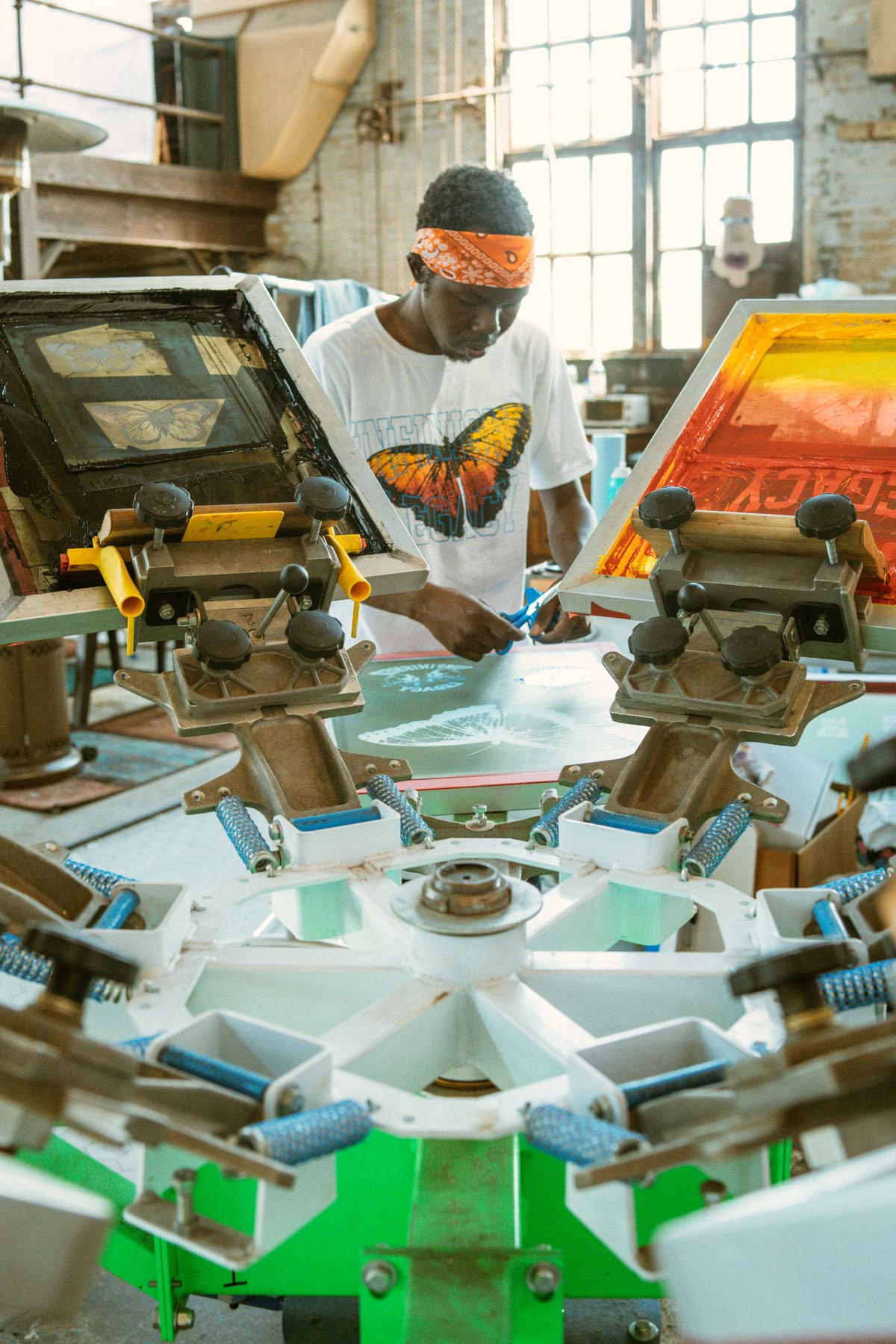
Before placing a purchase order with an artisan producer, a brand should be able to answer the following questions honestly:
- What is the actual production time for this piece, timed and averaged across several production sessions rather than estimated?
- What is the fair labour rate for the artisan’s skill level and market, anchored to what a skilled tradesperson in their market earns rather than to what the brand prefers to pay?
- Does the offered price cover materials at their actual cost, labour at the fair rate for the actual time required, overhead at the artisan’s real overhead allocation, and a margin that allows the artisan’s practice to be financially sustainable?
- Have we had the labour rate conversation directly with the artisan, or have we presented a price and accepted their willingness to proceed as evidence of agreement?
- Does the retail price we apply to this piece reflect its actual production cost and the premium that handmade quality commands, or have we priced it to compete with industrial alternatives?
- If we have asked the artisan to simplify the technique, reduce production time or accept a lower rate, have we updated the marketing language to reflect what we are actually buying?
- Are we building a relationship with this producer that will allow the costing conversation to deepen over time, or are we placing a one-off order that extracts a competitive price before moving on?
- Have we documented the labour rate, production time and cost structure in the purchase order, or only the price?
The Connection Between Costing and Cultural Accountability
Costing handmade production fairly is not only an economic argument. It is a cultural accountability argument.
The technique an artisan brings to a handmade piece is not a production method. It is a knowledge tradition that was developed, practised and transmitted over generations. When a brand pays for that technique at a rate that does not reflect the knowledge it embeds, it has taken the cultural authority the technique generates in the market and paid for it at the price of unskilled labour.
That is the same extraction this series has been documenting at the level of cultural reference: the knowledge is used, the commercial value is captured, and the people who hold the knowledge receive neither fair payment nor lasting recognition. In handmade production, extraction occurs not during the design process but in the purchase order.
As Omiren Styles has argued throughout this series, the Global South made fashion and never got credit. The costing conversation is where the credit can become commercial. The artisan whose skill creates the piece that sells the collection deserves to be paid at the rate that skill actually costs, to have that rate documented, and to have the relationship built on a foundation honest enough to sustain the practice rather than quietly depleting it. The price of craft is the price of the knowledge inside it. Pay that price, or stop claiming the craft.
ALSO READ
- Samson Feli: The Togolese Designer Making Handmade Fashion a Story You Can Wear
- Small Batch, Serious Standards: The Case for Specialist Manufacturing in African Fashion
- Production Field Note: Why Sampling Is the First Real Test of a Fashion Partnership
- The Documentation Gap: What Fashion Supply Chains Still Fail to Record
- The Global South Made Fashion. It Just Never Got Credit.
Frequently Asked Questions
How should a fashion brand cost a handmade piece?
A handmade fashion cost should be calculated as: Materials + (Labour hours x Labour rate) + Overhead allocation, where labour hours reflect the actual timed production time rather than an industrial efficiency assumption, and the labour rate reflects a fair wage for the specific skill level rather than a minimum or factory rate. Sewn and embroidered goods have a high labour-to-materials ratio: the buyer is paying for skill and time, and the correct price reflects that reality rather than suppressing it to compete with industrial alternatives.
What labour rate should be used for artisan fashion production?
As Craftybase documented in its 2026 analysis, most experienced handmade producers should aim for $20 to $30 per hour for skilled production labour, with specialised work such as complex weaving, fine embroidery or intricate hand-finishing commanding $50 or more per hour. These are US benchmarks. The equivalent rate in any other market should be anchored to the same principle: what does a skilled artisan need to earn per hour to sustain their practice, cover their living costs and invest in developing their skills? That calculation does not start from what a brand prefers to pay: it starts from what the artisan’s time and knowledge are worth.
Why do fashion brands underprice handmade production?
The most common cause is applying an industrial costing framework to artisan production without adjustment. Industrial costing is built on efficiency assumptions – standard-minute values, bulk cutting, repetitive operations – that do not describe what happens in handmade production. When a brand applies an industrial rate to artisan work, it systematically underestimates the production time, undervalues the skill premium and ignores the overhead structure specific to artisan practice. The result is a cost figure that appears plausible by industry standards but does not reflect the actual cost of handmade production. The second cause is avoiding the labour rate conversation: presenting a price to the artisan and accepting their agreement as evidence that the price was acceptable, without asking whether it actually covers their costs.
What is the relationship between fair artisan costing and cultural accountability?
The technique an artisan brings to a handmade piece is a knowledge tradition that was developed, practised and transmitted over generations. When a brand pays for that technique at a rate that does not reflect the knowledge it embeds, it has taken the cultural authority the technique generates in the market and paid for it at the price of unskilled labour. This is the same extraction dynamic documented across this series at the cultural reference level: the knowledge is used, the commercial value is captured, and the people who hold the knowledge receive neither fair payment nor lasting recognition. Costing handmade work fairly is not a separate practice from cultural accountability. It is the same accountability applied at the payment stage.
How do currency and information asymmetries affect artisan producers in Africa and the Global South?
Two compounding factors create structural undervaluation for artisan producers in African and Global South markets. Currency asymmetry means that an exchange rate that gives a brand a price advantage in its currency may translate into a local labour rate below what the artisan needs to sustain their practice, regardless of what the nominal price says. Information asymmetry means that the artisan producer may not have access to the benchmark data that would allow them to negotiate from a position of knowledge: what international brands pay for equivalent work in other markets, what the skill premium for their specific technique is, or what the international retail price of their work is once it leaves their hands. The brand arrives knowing these things. The artisan often does not. Addressing both requires the brand to have a transparent costing conversation and to anchor the offered price to what the artisan’s time and skill actually cost, rather than to what the brand’s margin structure can accommodate.
EXPLORE MORE
Read the full Industry and Production and Manufacturing sections at Omiren Styles for ongoing analysis of artisan production costing, fair labour frameworks and the commercial conditions that would make handmade fashion economically sustainable for the people who make it. Discover travel and heritage intelligence across Africa, the Caribbean and Latin America at Rex Clarke Adventures.