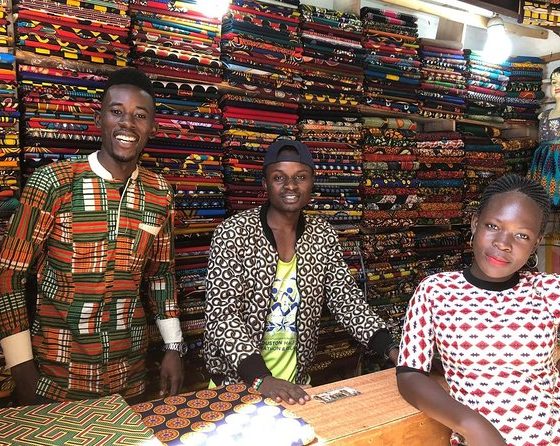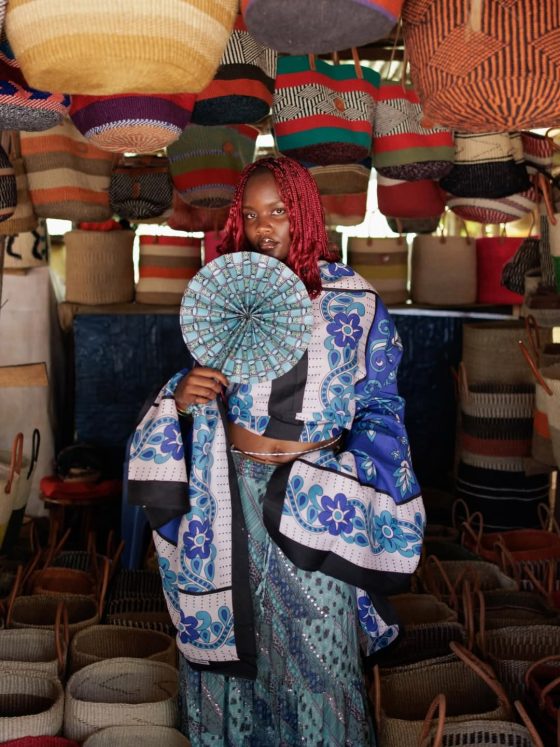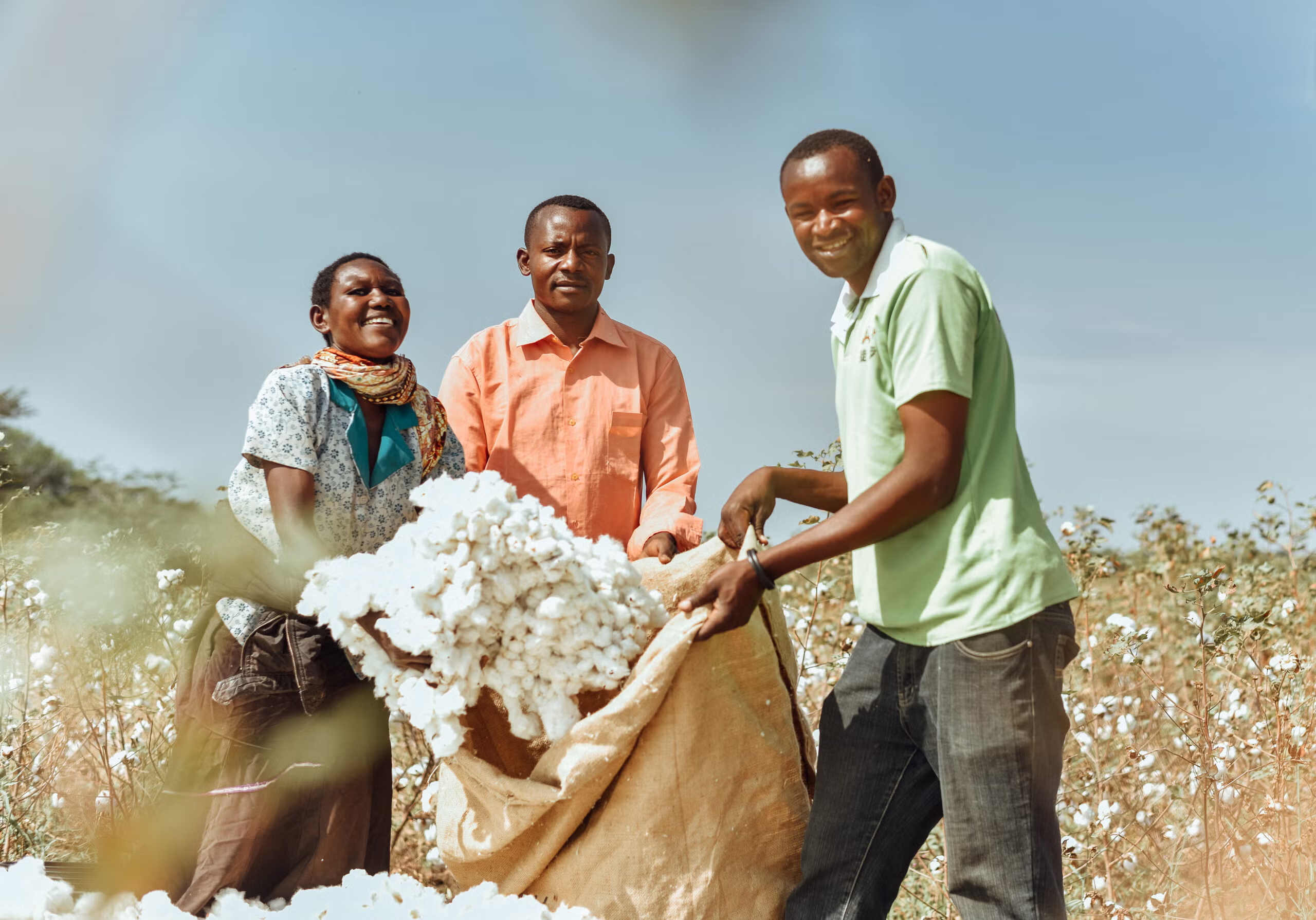
Africa grows the cotton. Someone else spins the thread, weaves the fabric and sells it back.
Africa produces approximately 6% of the world’s cotton. It exports around 90% of that raw fibre to Asian manufacturing hubs, principally China, Bangladesh, Vietnam and Indonesia, where it is spun into yarn, woven into fabric and finished into textile products. Those products are then sold back into African markets, where Africa currently spends approximately $50 billion annually on textile imports against the roughly $15 billion it earns from exporting raw cotton. A continent that produces the fibre is paying three times what it earns from it to buy the fabric back.
Then its fashion designers buy that fabric at international commodity prices, in local currencies that have been weakened against the dollar by exactly the kinds of economic pressures that raw material dependency produces. The fabric a Lagos designer sources for a wedding collection and the fabric an Accra designer uses for a ready-to-wear line are both priced in a global market that the designers did not shape, produced through a supply chain whose value they did not capture, and imported through a logistics system that adds cost at every stage.
The cotton leaves Africa at approximately $0.80 per kilogram. The same material, returned as finished fabric, commands between $3 and $80 per kilogram depending on the processing level. That range, from $0.80 to $80, is the measure of what Africa gives away every time a bale of raw cotton crosses the port to Asia rather than a spinning mill in Benin, a weaving factory in Mali or a finishing plant in Ghana.
This is not an abstract structural problem. It is the daily commercial reality for every African designer who has tried to build a fashion business on locally sourced fabric and found that, when it is available at all, it often costs more than imported alternatives. The structural distortion is so thoroughgoing that it has inverted the geographic logic of comparative advantage: the countries that grow the raw material pay a premium to access it in a usable form.
Africa produces 6% of the world’s cotton and exports 90% of it as raw fibre. It then spends $50 billion importing finished textiles back. Its designers are priced out of their own raw material. This is the cotton supply chain argument.
What the Numbers Say

According to the International Trade Centre, Africa exports 90% of its raw cotton to Asia and is a net importer of cotton fabrics and yarn. African manufacturers import only 7% of cotton yarn and 6% of cotton fabric from elsewhere on the continent — meaning that even where African textile production exists, other African manufacturers do not source from it. The continent controls less than 2% of global spinning, weaving, and knitting output, despite producing about 6% of the world’s raw cotton and having a labour force and agricultural base that should, in principle, support a much larger manufacturing sector.
African Business documented in August 2026 that the continent currently spends around $50 billion annually on textile imports compared to the roughly $15 billion it earns from exporting raw cotton, mostly to Asian manufacturing hubs. Africa’s major cotton producers in 2025 included Mali at approximately 1.3 million bales, Benin at 1.2 million bales, Côte d’Ivoire at 745,000 bales, Cameroon at 650,000 bales, Burkina Faso at 610,000 bales and Tanzania at 400,000 bales. These are not marginal quantities. They represent a continental raw material base of significant scale. The gap between that scale and the continent’s position in finished textile markets is not a natural market outcome. It is the legacy of structural decisions made during and after colonialism that orientated African economies toward raw material export rather than industrial processing.
The value gap between raw cotton and processed textile is the most precise available measure of what African fashion loses to the global supply chain before a designer has made a single design decision. Raw cotton is exported at approximately $0.80 per kilogram. Yarn spun from that cotton at $2 to $4 per kilogram. Woven cotton fabric at $3 to $15 per kilogram. Finished dyed and printed fabric at $5 to $25 per kilogram. A finished garment incorporating embellishment, construction and finishing at $20 to $80 per kilogram equivalent. The designer at the end of the chain is paying for every stage of processing that happened outside Africa, and the designers at the beginning of the chain — the cotton farmers of Mali, Benin and Burkina Faso, receive only the first figure.
The Ankara Argument
No fabric in African fashion illustrates the supply chain problem more precisely than Ankara, the wax-print cloth that has become the most globally recognisable visual signifier of West African fashion identity.
As documented by Ekinken in July 2026, wax print, which is synonymous with West African style, has its roots in Dutch industrial printing adapted to African tastes. Today, Chinese mass production and established European brands dominate the supply chain, outcompeting local printers on cost and scale. Woodin, the Ghanaian brand, represents regional efforts to print locally and build design identities, but even Woodin operates within a market saturated by imports. The fabric global fashion has come to associate with African creative identity is predominantly manufactured outside Africa by non-African producers, at cost structures African manufacturers currently cannot match because the industrial infrastructure, energy, logistics, and capital needed to compete have not been built.
The irony of this situation has a historical depth that the current market structure tends to obscure. The wax-print aesthetic developed as Dutch manufacturers attempted to reproduce Indonesian batik for the Javanese market in the late 19th century, failed to find that market and redirected their unsold stock to West Africa, where the visual language was adopted and transformed over generations into something entirely new. What is now read globally as distinctively West African visual culture was originally a European industrial product rejected by its intended market. The industrial capacity to produce it at scale has remained primarily in Europe and China. West African designers pay for this history every time they source fabric.
The designers who have been most successful at building independent sourcing relationships — who work directly with handweavers in Iseyin, with adire practitioners in Abeokuta, and with kente weavers in Kumasi- are working around the industrial gap rather than through it. That is a form of creative resilience, and it has produced some of the most valuable work in contemporary African fashion. It has not produced a structural solution to the supply chain problem.
What the Missing Middle Costs
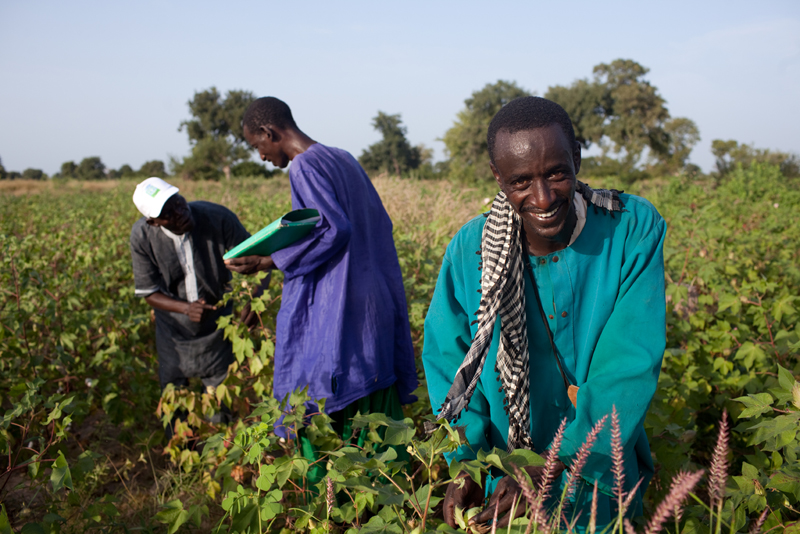
The stages between raw cotton and finished fabric- spinning, weaving, knitting, dyeing, and finishing — are described in textile economics as the missing middle of African industrial development. Africa exports the raw material. Asia or Europe processes it through the missing middle. Africa imports the finished product. The employment, infrastructure investment, technical knowledge, currency earnings, and industrial capability those processing stages generate are all created outside the continent.
For African fashion designers, the missing middle is not an industrial policy abstraction. It is the reason why a designer building a collection in Lagos, Accra, Nairobi or Dakar is paying international commodity prices plus import duties plus freight plus currency exchange costs for fabric that, if Africa’s textile processing capacity existed at scale, could be produced domestically at a fraction of the effective cost. The designer’s commercial viability is directly constrained by the missing middle’s absence.
The constraint compounds at every stage of production. Fabric import costs are passed into the garment’s price. Higher garment prices reduce competitiveness against imported ready-to-wear at the lower price points. Reduced competitiveness limits production volume. Lower production volume reduces the designer’s ability to achieve the economies of scale that would allow investment in better sourcing relationships, more efficient production, or wider distribution. The missing middle creates a structural ceiling on African fashion growth at the exact stage where growth requires the most investment.
As Omiren Styles has established, in its analysis of why capital can fix manufacturing but cannot fix the credibility gap African designers face, the barriers to growth in African fashion are structural rather than creative. The designers are not the constraint. The infrastructure they are trying to work within is the constraint. The cotton supply chain is the most upstream expression of that structural barrier: before a designer makes a single design decision, the supply chain has already extracted most of the value from the raw material their garments will be built from.
The Cotton Parallel With Other African Raw Materials
The structure of the cotton supply chain is not unique within the African export economy. It is one instance of a pattern that repeats across the continent’s most significant raw material exports.
As Omiren Styles has established in its analysis of shea supply chains and global beauty value, the women who collect shea nuts across the Sahel earn about $75 a year for labour that underpins a global beauty industry that earns billions from shea-containing products. The pattern is structurally identical to the cotton supply chain: a raw material produced by African labour at low commodity prices, exported to processing facilities outside the continent, transformed into a higher-value product and sold back into African and global markets at a price that bears no relationship to the original producer’s earnings. The extractive structure of the cotton supply chain is not a fashion industry problem. It is an African political economy problem that the fashion industry inherits.
The shea parallel is particularly instructive because both raw materials — cotton and shea — are foundational to industries whose cultural associations with Africa are commercially valuable in global markets. African fashion’s aesthetic authority, its relationship to specific textile traditions, and its capacity to command a premium for cultural specificity all ultimately rest on the raw materials that African communities produce and process. The value of those cultural associations accrues to the brands, retailers and designers who mediate between the raw material and the global consumer. The communities that produce the raw material receive commodity prices.
As Omiren Styles has documented in its analysis of the dyeing economy and why producers are left behind, education without economics leaves the producer in the same place. The same logic applies to the cotton supply chain: documentation of the gap without structural change to the supply chain leaves African designers paying commodity-priced, processed-outside-Africa fabric for their collections indefinitely.
What Regional Integration Could Change
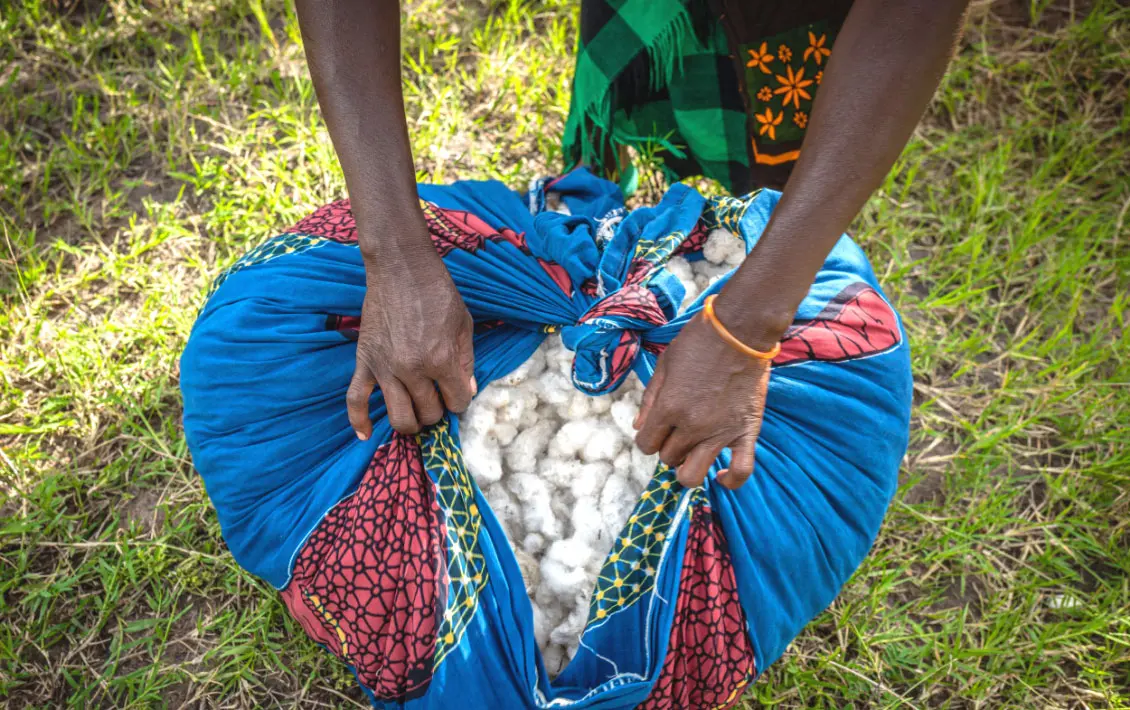
The African Continental Free Trade Area represents the most significant structural intervention in African economic integration in the continent’s post-independence history, and its implications for the cotton-to-fabric supply chain are specific and substantial.
Only 8% of Africa’s textile and apparel imports are currently sourced within the continent. If AfCFTA reduces the tariff and regulatory barriers that make intra-African textile trade more expensive than importing from Asia, that figure could change substantially. A designer in Lagos who can source woven cotton fabric from a Beninese mill at a competitive cost, rather than paying import duties on fabric shipped from China, has a fundamentally different cost structure. A Ghanaian kente weaver who can reach garment manufacturers across West Africa without navigating the export tariffs that currently make regional trade economically uncompetitive has a fundamentally larger addressable market.
The potential is real. The ITC projects that Africa could export €5.8 billion of cotton garments to both international and intra-African markets. Africa’s apparel market is projected to grow from $73.59 billion in 2025 to $88.68 billion by 2029 at a 4% compound annual growth rate. If even a modest share of that growth comes from African textile production rather than imported fabrics and garments, the economics of the cotton supply chain begin to shift.
The path from potential to reality requires specific investments: energy infrastructure that makes industrial textile processing economically viable, logistics networks that connect cotton-producing regions to spinning mills to weaving factories to garment manufacturers, financing that allows manufacturers to compete on the capital-intensive spinning and weaving stages of the supply chain, and training systems that build the technical workforce that textile manufacturing at scale requires. None of these investments is the designer’s responsibility. All of them determine the commercial conditions within which the designer works.
What Designers Are Doing in the Absence of the Infrastructure
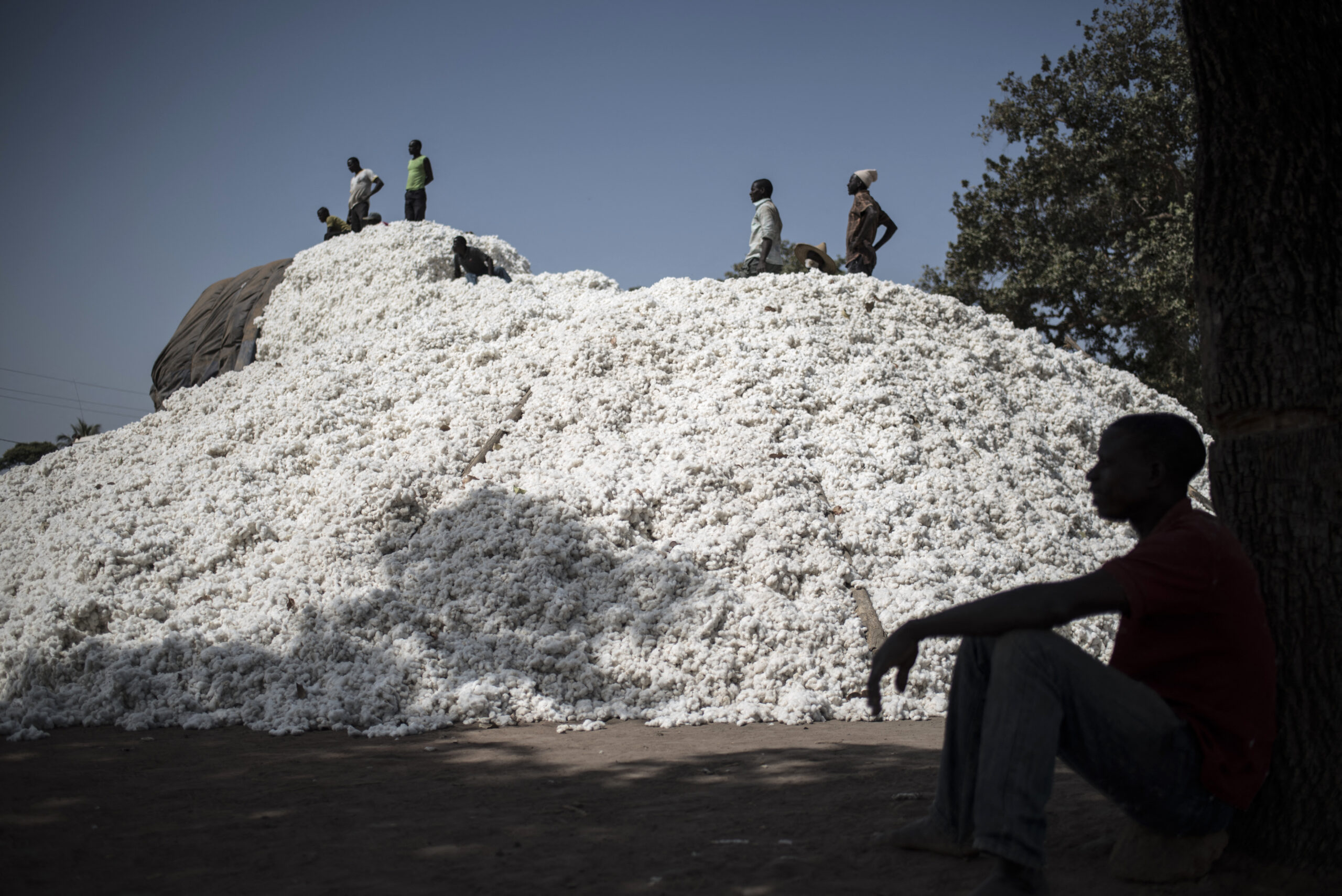
African fashion designers have not waited for the structural supply chain problem to be solved before building their practices. They have built around it, through it and sometimes in direct opposition to it.
The most commercially durable responses have been those that treated the supply chain constraint as a design brief rather than as an external barrier. Kenneth Ize’s decision to build his practice around handwoven aso-oke from Ilorin, commissioning directly from weavers and building the brand identity around the material’s specificity, is the model that turns the industrial gap into a competitive advantage: the handwoven fabric that no Chinese mill can replicate at any price is not constrained by the missing middle because it was never part of the industrial supply chain. The constraint becomes the proposition.
The adire, kente, aso-oke, and bogolan practitioners whose work feeds directly into designers’ collections are in the same position. They are not part of the industrial textile supply chain, whose absence creates the designer’s cost problem. They are part of a parallel craft economy that produces fabric at a higher cost per metre than industrial alternatives, but with a specificity, cultural authority and irreplaceability that industrial alternatives cannot provide. For the designers who understand this, the supply chain problem becomes an argument for working outside the industrial model rather than within it.
As Omiren Styles has argued, in its analysis of the sustainability metrics that cannot see a tailor, the frameworks that measure, certify and reward sustainability in fashion were not built to see craft production. The same analytical gap applies to the supply chain argument: frameworks that describe African fashion’s dependence on imported fabric tend to assume the solution is industrial: build the spinning mills, the weaving factories, the finishing plants. The craft economy already operating in Ilorin, Kumasi, Abeokuta and the weaving communities of Mali and Burkina Faso represents a different solution: not the industrialisation of the missing middle but the re-valuation of the craft economy that predates and survives it.
The Omiren Argument
Africa grows the cotton. The value is created elsewhere. African fashion designers buy back what their continent produced.
The gap between $0.80 per kilogram of raw cotton and $80 per kilogram of finished fabric is not the product of natural market conditions. It is the product of historical decisions about where industrial capacity would be built, where processing infrastructure would be invested and whose labour would be paid at the rates that industrial processing commands rather than at the commodity prices that raw material extraction attracts. Those decisions were made during colonialism, consolidated through the post-independence period and maintained through the structural adjustment programmes that tied African economies to raw material export models for the second half of the 20th century.
The $31 billion African fashion market, and the broader $73.59 billion African apparel market, represents a demand pool of extraordinary scale. The designers, producers, and artisans who have built that market are doing so within a supply chain that extracts most of its value before they have access to the fabric. The argument this article is making is not that African fashion designers should wait for the structural problem to be solved before building their practices. They should not, and they are not. The argument is that the supply chain problem is the most consequential infrastructure problem in African fashion, and that solving it, through AfCFTA, through investment in the missing middle, through the re-valuation of craft production, would change the economics of African fashion more fundamentally than any amount of marketing, trend coverage or international runway presentation.
As Omiren Styles has argued throughout this series, the Global South made fashion and never got credit. In the cotton supply chain, that argument has a specific and quantifiable form: Africa produces the raw material and receives $0.80 per kilogram. The credit goes to the spinning mills, the weaving factories, the finishing plants and the brands that convert that raw material into a product worth eighty times as much. Getting credit, in this context, means building the infrastructure to capture more of that value before it leaves the continent. Africa grows the cotton. It is time to also spin, weave and finish the argument.
ALSO READ
- After the Textile Explainer: A Dyeing Economy Cannot Grow by Leaving Its Producers Behind
- Shea Supply Chains: Where Value Is Created, Captured and Lost Between West Africa and Global Beauty
- The Sustainability Metrics That Cannot See a Tailor
- Capital Can Fix Manufacturing. It Cannot Fix the Credibility Gap African Designers Face.
- Credit Is Not Compensation: What Fashion Owes Beyond Naming a Cultural Source
- The Global South Made Fashion. It Just Never Got Credit.
Frequently Asked Questions
How much of the world’s cotton does Africa produce, and what happens to it?
According to the International Trade Centre, Africa produces approximately 6% of global cotton and exports around 90% of its raw cotton to Asia, primarily to China, Bangladesh, Vietnam and Indonesia. African manufacturers import only 7% of cotton yarn and 6% of cotton fabric from within the continent, meaning that even what little intra-African textile trade exists is minimal. Africa controls less than 2% of global spinning, weaving and knitting output despite producing a significant share of the world’s raw cotton. The result is that Africa earns approximately $15 billion from exporting raw cotton while spending around $50 billion annually importing finished textiles back.
What is the value gap between raw cotton and finished fabric?
The value gap is the difference between what Africa earns from exporting raw cotton and what it pays to import equivalent material as finished fabric. Raw cotton is exported at approximately $0.80 per kilogram. The same material, returned as yarn, woven fabric or finished garment, commands between $3 and $80 per kilogram depending on the level of processing. Each processing stage — spinning, weaving, dyeing, finishing, and garment assembly, adds value that is captured by the country and company performing that stage. Because Africa exports raw lint and imports finished products, the majority of that value chain premium accrues outside the continent. Closing the gap requires building the spinning, weaving, dyeing and finishing infrastructure that would allow Africa to process more of its own cotton before export.
What is the “missing middle” of the African textile supply chain?
The missing middle refers to the industrial processing stages between raw cotton and finished fabric: spinning cotton into yarn, weaving yarn into fabric, knitting, dyeing and finishing. Africa exports raw cotton and imports finished fabric, with the middle stages, which generate the majority of the value, employment and industrial capability in the textile supply chain, occurring primarily in Asia. The absence of this middle has two direct consequences for African fashion designers: fabric must be imported at international commodity prices plus freight and import duties, and the industrial infrastructure that would allow domestic fabric production at competitive cost does not exist at sufficient scale. Building the missing middle requires coordinated investment in energy, logistics, capital and technical training that no individual designer or brand can provide.
Why does Ankara fabric come primarily from outside Africa when it is associated with West African fashion?
As documented by Ekinken, wax-print Ankara fabric originated as Dutch industrial printing adapted to African tastes in the late 19th century, developed when Dutch manufacturers tried to replicate Indonesian batik and redirected unsold stock to West Africa, where it found an enthusiastic market. The aesthetic was transformed over generations into something distinctively West African. Today, the industrial printing capacity that produces the fabric at scale remains primarily in China and Europe, where cost structures that include cheaper energy, established logistics and economies of scale allow producers to undercut any local African printer. Regional efforts such as Woodin in Ghana demonstrate that local production is possible, but the market remains dominated by imports. The fabric most associated with West African cultural identity is predominantly manufactured outside West Africa.
What would AfCFTA change about the African cotton supply chain?
The African Continental Free Trade Area has the potential to change the economics of intra-African textile trade significantly, but the potential has not yet been realised. Currently only 8% of Africa’s textile and apparel imports are sourced within the continent, meaning that 92% comes from outside Africa despite Africa’s capacity to produce significant quantities of raw cotton. If AfCFTA reduces the tariff and regulatory barriers that make intra-African textile trade more expensive than importing from Asia, it could allow designers to source fabric from regional producers at competitive cost, allow cotton-producing countries to supply spinning mills in neighbouring countries and allow garment manufacturers to access yarn from within the continental market. Realising this potential requires investment in the industrial processing infrastructure, energy, logistics, machinery, and training — that the trade framework alone cannot provide.
EXPLORE MORE
Read the full Industry and Distribution, Retail and Value Capture sections at Omiren Styles for ongoing analysis of African fashion supply chains, textile economics and the structural conditions that determine who captures the value in the $31 billion African fashion market. Discover travel and heritage intelligence across Africa at Rex Clarke Adventures.