NGU Clothing’s reported London presentation introduced two things together: a new collection and a new crest. The distinction between them matters.
A collection consists of clothes whose proportions, surfaces and construction can be examined. A crest supplies a recognisable device through which those clothes may communicate a brand identity, and the available reporting explains the second more clearly than the first.
In its October 2026 account, the Saint Lucia Daily Post describes an emblem composed of a crown, a cross and two lions. It links those elements to purpose and ambition, the founder’s faith, and courage, strength, and leadership.
These are the meanings reported for NGU’s crest, rather than an interpretation supplied by Omiren.
The emblem adds a symbolic device to the direct verbal identity behind the initials: “Never Give Up”. But introducing a new device does not mean it replaces the previous identity, appears on every piece, or determines the collection’s entire visual character.
The central design question remains the clothes. NGU’s presentation must ultimately be demonstrated through the relationship between silhouette, surface, and styling, not assumed from the symbolism attached to a logo.
NGU Clothing’s reported London presentation introduced a new crest. We examine its visual identity, documented design history and the limits of the runway record.
A phrase and an emblem do different work.
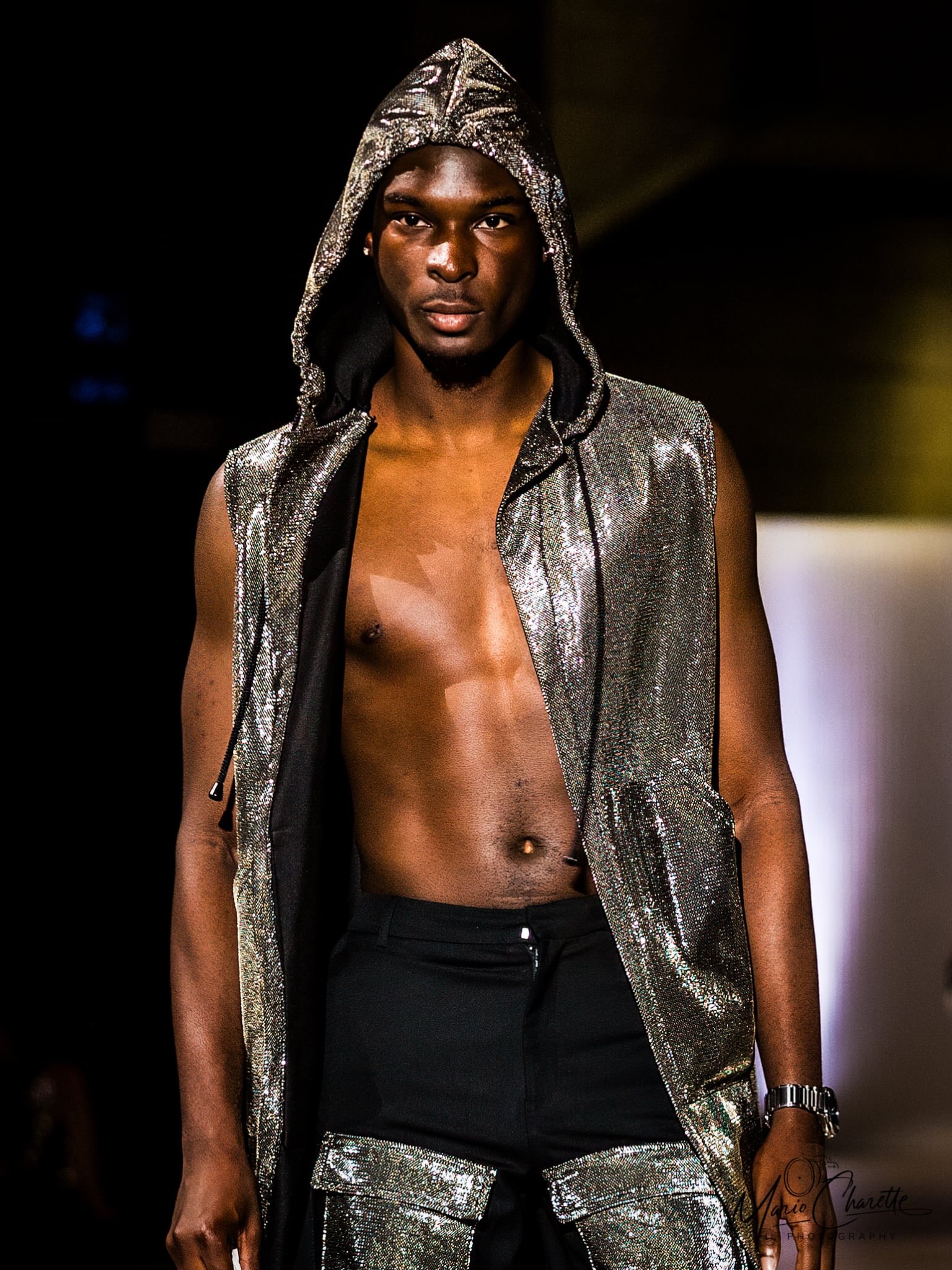
“Never Give Up” communicates through an instruction. A reader encounters its meaning immediately, whereas a crest brings several visual elements together and asks them to function as a recognisable whole.
For NGU, the reported crown, cross and lions give the identity a more elaborate structure. Their stated meanings extend the brand’s self-explanation beyond the founding phrase.
That is a development in how the label presents its values. It is not, by itself, evidence of a new approach to cutting or making.
“A slogan tells you what a brand says. A garment tells you what it can actually do.” Omiren Styles Editorial Intelligence
The difference matters especially in clothing. An emblem’s effect depends on its treatment: its scale, position, repetition, and relationship to the garment beneath it, design questions distinct from explaining what its symbols mean.
The published London account does not identify those relationships piece by piece. It does not establish whether the crest is embroidered, printed, applied or introduced through another technique.
The responsible finding is therefore specific: a new emblem was reported, with explicitly stated meanings, but its garment-level execution remains insufficiently documented.
NGU has a documented material history
Earlier reporting clearly distinguishes visual identity from material choice.
In 2018, SHIFTER described an anticipated New York presentation combining Saint Lucian madras fabrics with North American street style. Because the article was published before the event, it records a proposed direction rather than what ultimately appeared in every look.
The Voice reported the same year that the line combined Saint Lucia’s popular madras tradition with a modern street look. For wider background on the cloth, see our piece on the African women who dressed the Americas.
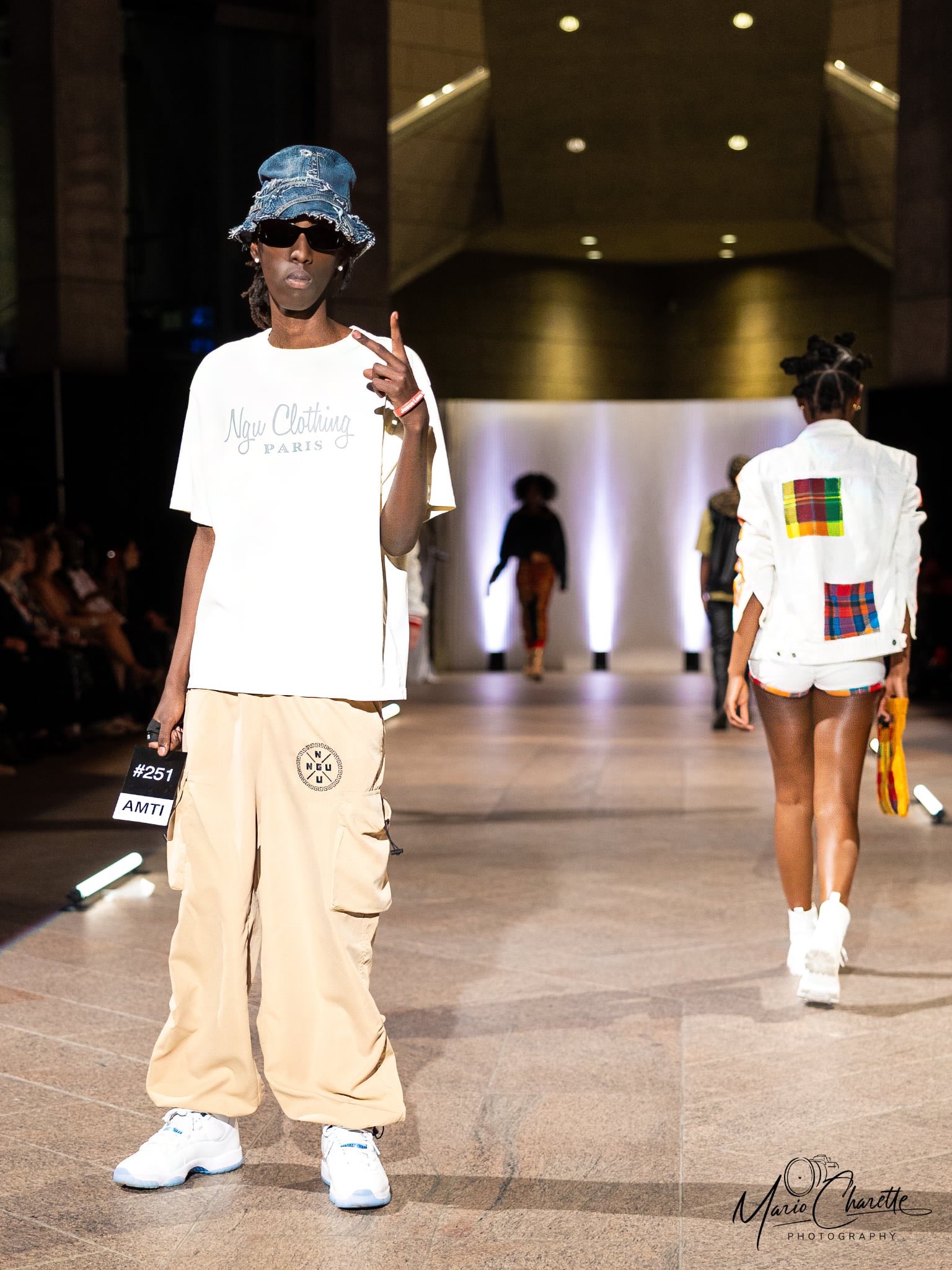
A later account of Paris City Fashion Week in October 2021 describes NGU’s “100% Ghetto Product” collection as streetwear incorporating Saint Lucian madras fabric. That report identifies a material reference within a named earlier collection.
This history matters because NGU’s design account is not limited to slogans. Published coverage has previously linked the label to a specific fabric and its place within a contemporary clothing category.
However, that earlier record cannot transfer to the 2026 London collection. The sources reviewed do not establish that the London garments used madras, repeated the earlier collection’s shapes or continued the same material treatment.
The distinction preserves the value of the history without using it to fill gaps in the present. Continuity must be shown, not presumed.
Streetwear is context, not a complete description.
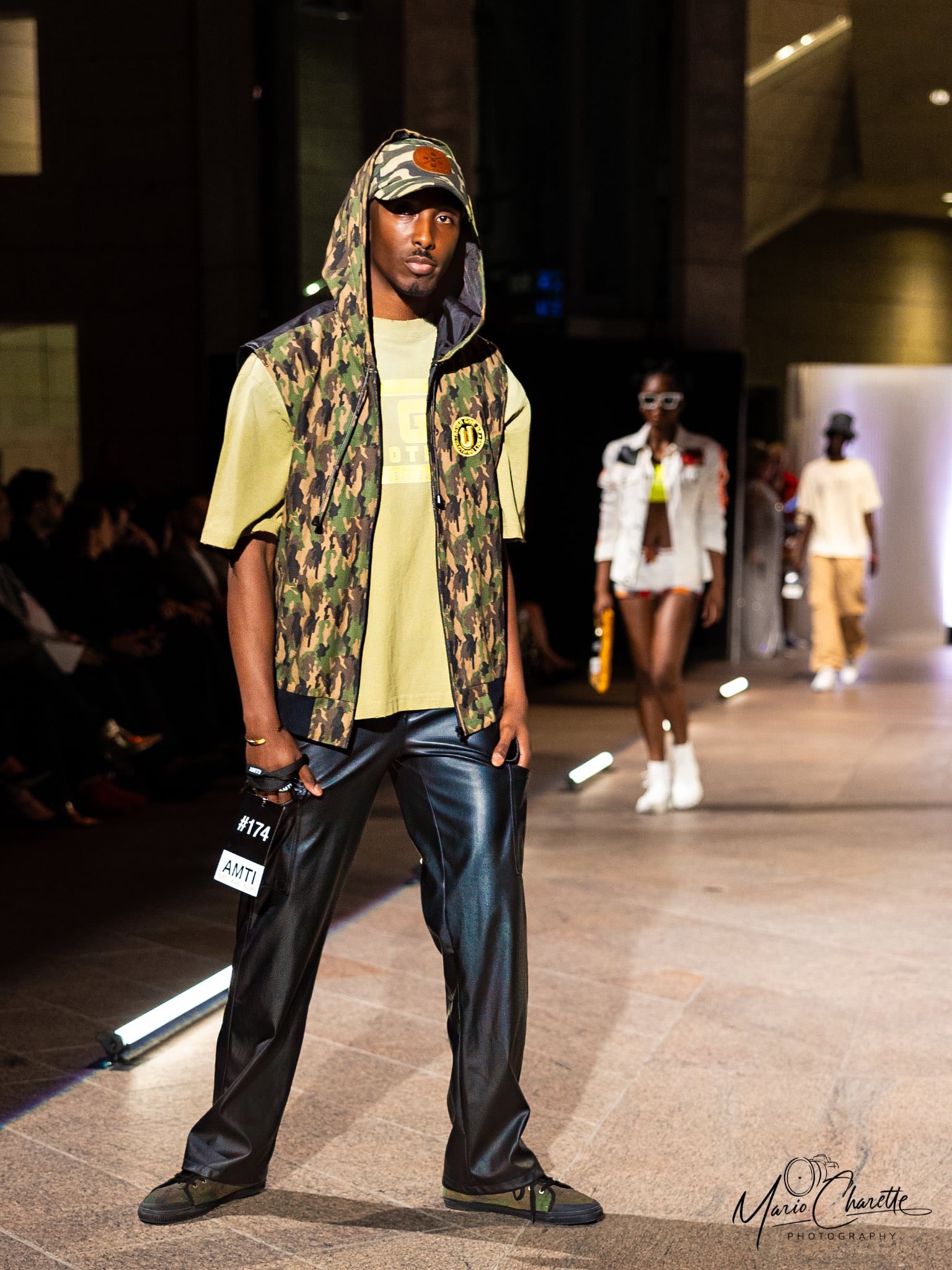
A historical profile hosted by Paris City Fashion Week describes NGU through street fashion and a message of perseverance. It identifies the label as founded in 2016 and names Saint Lucian-born designer Marshall Celestin.
The page refers to preparations for 2021 presentations, so it should be read as a historical brand account rather than a current product catalogue.
That context helps explain how the business has described its field of work. It does not settle what every later collection contains.
“Streetwear” can become an unhelpful shortcut when it replaces a description of the clothes themselves. It does not, on its own, establish a jacket’s shoulder, a trouser’s volume, a garment’s fabric, or how an outfit is styled.
For the London presentation, those details need their own evidence. The earlier category provides context, but it should not be allowed to produce a collection description by inference.
The same applies to the word “luxury”, which the Daily Post uses to describe the new crest. It is part of the report’s presentation of the emblem, not a verified assessment of the collection’s fabrics, finishing, or construction.
What the London record establishes
Export Saint Lucia reports that Marshall Celestine of NGU Clothing and Tamla Lionel of LUXATOIRE presented their work in London through House of iKons in September 2026. It identifies support from the Government of Saint Lucia and Export Saint Lucia.
The Saint Lucia Daily Post provides a more detailed account under a different event description. It names a “Premium Edition” showcase on 19 September at the Leonardo Royal London Tower Bridge Hotel and reports that Lionel presented within NGU’s slot.
The relationship between those event descriptions has not been independently reconciled. They should not be combined into a single fully verified record simply because they concern the same designers and month.
The shared point is the reported London appearance. The precise organiser terminology and presentation arrangement require confirmation before they support a definitive event history.
Neither source independently establishes inclusion in the British Fashion Council’s official schedule. No such status is claimed here.
The two labels must remain distinct.
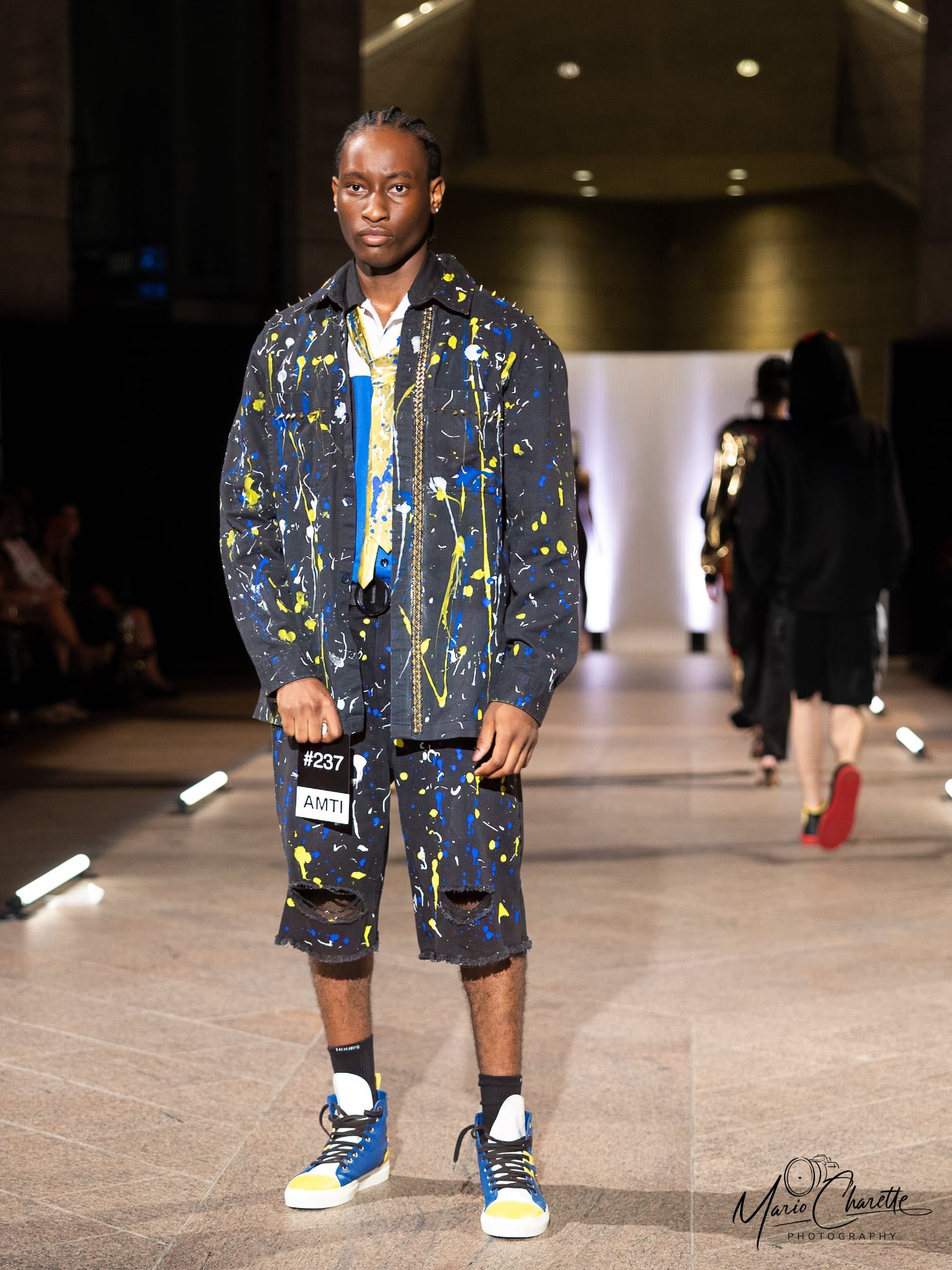
The sources place NGU and LUXATOIRE within the same London story, but their work remains separate.
Export Saint Lucia explicitly identifies A Caribbean Harvest as Lionel’s LUXATOIRE collection. It does not give that title to NGU’s work.
This is consequential for image selection. A mixed gallery caption naming both businesses does not necessarily identify the designer of each outfit. Before an individual look can support criticism of NGU, its attribution needs to be clear.
The same discipline applies to creative credits. A shared platform does not establish shared authorship, and an invitation to appear within a presentation does not make the clothes a joint collection, a point we develop in why the Global South never got credit for what it made.
For this article’s purpose, the distinction prevents another designer’s garments or statements from becoming substitute evidence for NGU’s runway language.
What would differentiate the garments?
A collection’s visual identity can emerge through repetition, contrast or a combination of both. The relevant evidence lies in identifiable choices across the looks: how shapes relate, where emphasis falls, and whether styling reinforces or changes the reading of the clothes.
The crest could form part of that account. If its treatment varies between garments, that variation may be significant, and if it appears only on selected pieces, its role may be more limited than the announcement suggests.
Those possibilities remain questions, not findings about this presentation. The available reports do not provide a numbered garment sequence or enough product information to establish them.
Nor do they document a complete collection title or look count. An accurate account should not invent either to make the presentation appear more comprehensively recorded than it is.
The text emphasises the announcement: the new emblem receives a specific explanation, while the garments receive substantially less detail. That difference reflects the public record, not necessarily the collection’s balance.
Visual impact and construction are separate assessments.
A runway image may support observations about visible proportion, colour placement and styling. It does not automatically reveal fibre composition, internal construction or the quality of a concealed finish.
This article has not inspected NGU’s garments. It therefore makes no finding about seam execution, comfort, durability or performance in wear.
Those limits should not be mistaken for criticism of the objects. No defect has been established, and equally, an elaborate image or a favourable response cannot verify construction quality.
The distinction allows visual criticism to remain meaningful without pretending to be a technical inspection. Once properly attributed photographs and garment information are available, the collection can be examined for what is visible, while other claims remain tied to appropriate evidence.
That is a more useful standard than either celebrating every runway image or refusing to discuss clothing until every production detail is known.
Participation, interest and orders are different outcomes.
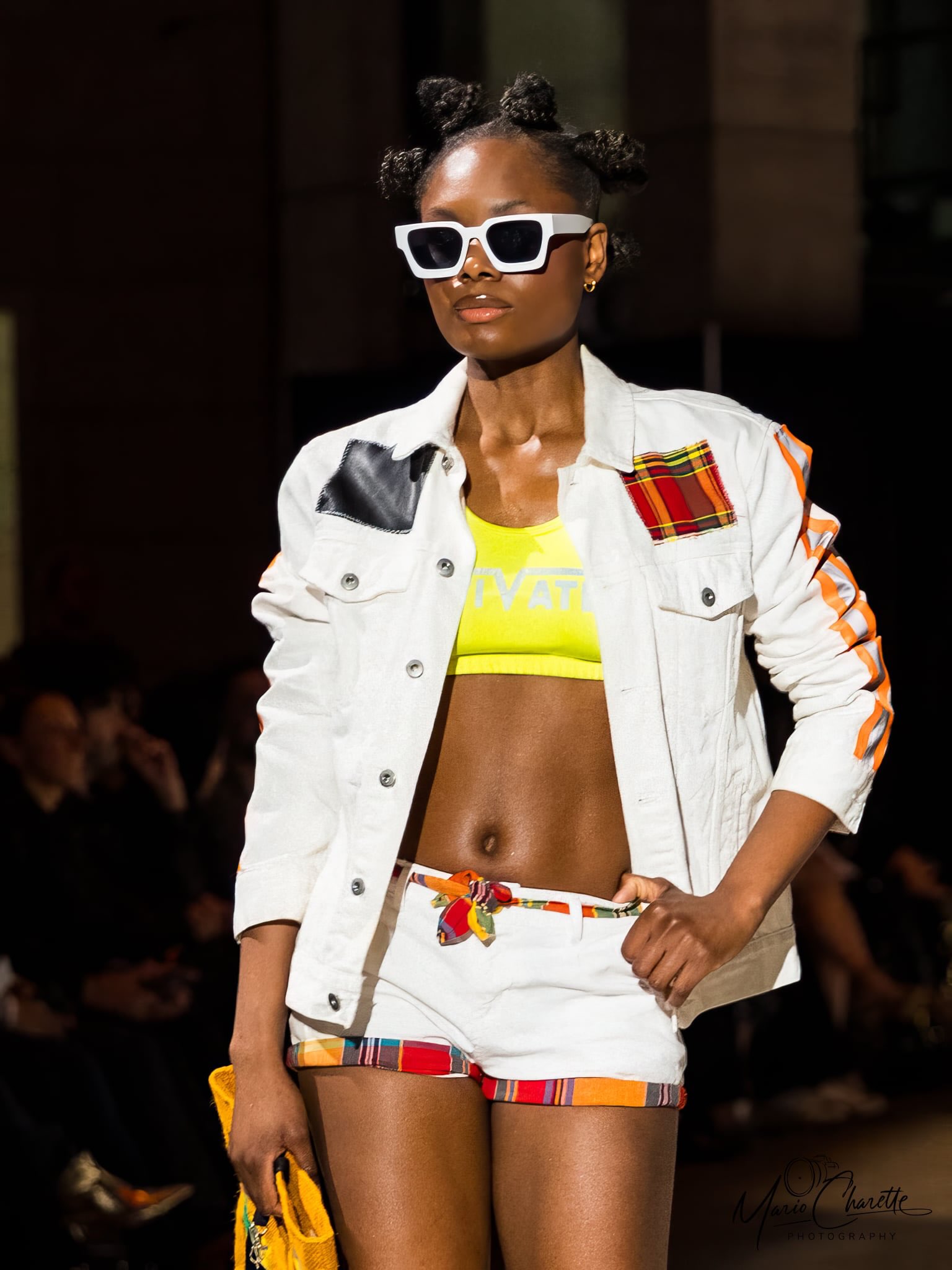
The Daily Post reports a standing ovation “according to NGU”. That is an attributed account of audience response, not an independently established measure of the collection’s reception.
Export Saint Lucia describes international platforms as opportunities to develop visibility, relationships and market access. Its statement explains the agency’s objective, and it does not document a particular buyer enquiry, order or retail agreement from this presentation.
Those outcomes must remain separate. Participation establishes an appearance, buyer interest requires evidence of a response, and orders require a more concrete commercial record.
The sources reviewed do not establish the latter two. Their absence from the reporting does not prove no commercial activity occurred; it means we cannot responsibly include such a result as a finding here.
The Omiren Argument
NGU’s London record establishes a new crest more clearly than it establishes a complete runway language. Its crown, cross and lions add an explicitly explained symbolic device to the founding phrase “Never Give Up”.
Earlier reporting also documents a material history involving Saint Lucian madras, but that history cannot be assigned automatically to the London garments.
The distinction is the critical finding.
An emblem can make a brand recognisable. A garment must do additional work through its shape, surface, and relationship to the wearer, and you cannot award the successful integration of those elements in advance through symbolism, biography, or an overseas destination.
Marshall Celestine’s runway language deserves an assessment grounded in his clothes. The published record provides a substantive beginning, but not a finished garment-level verdict.
Keeping those two stages distinct protects the work from both unsupported praise and unsupported dismissal. More of our Caribbean coverage is at Omiren Styles.
Also Read:
- The Madras Headwrap: How Caribbean Women Turned a Colonial Textile into a Declaration follows the cloth at the centre of NGU’s earlier work.
- The Rise of Caribbean Luxury Fashion Brands asks what luxury means in Caribbean fashion.
- When Dressing Becomes Declaration: Clothing as Cultural Identity explores how clothes carry identity.
- Trinidadian Carnival Masquerade Is a Fashion System; It Is Time the World Called It That puts Caribbean costume in a design frame.
Frequently Asked Questions
What was introduced at NGU’s reported London presentation?
The Saint Lucia Daily Post reports a new collection and crest. It does not provide a numbered look list or a detailed garment catalogue.
What does the crest contain?
The report identifies a crown, a cross, and two lions, with meanings tied to ambition, faith, courage, strength, and leadership.
Did the London collection use Saint Lucian madras?
The reviewed London sources have not established that. Madras is documented in reporting about NGU’s earlier work, including its 2021 Paris presentation.
Are buyer orders confirmed?
No orders or retail agreements are identified in the reviewed reports. This is a limitation of the available reporting, not evidence that no transactions occurred.