Counting who appears in fashion campaigns is a more specific act than it sounds. It requires defining a set: which campaigns, which brands, which seasons, which publications. It requires defining the categories: race, body size, age, gender presentation, disability. It requires deciding how to attribute the categories: by self-identification, by visual assessment, by model agency classification. And it requires deciding what the count is for: a publication’s annual report, a brand’s internal review, an academic study, a journalist’s investigation, an advocacy organisation’s pressure campaign.
Each methodological choice shapes the resulting number. The Fashion Spot’s annual diversity report, which has tracked major fashion campaign castings for over a decade, found that white models made up 54% of major fashion campaign castings in 2025 according to its methodology. Rawshot.ai’s analysis of Fashion Month casting data found that 48.6% of castings at Fall 2024 Fashion Month were models of colour. Different definitions of ‘major fashion campaigns’ and different racial-attribution methodologies produce different percentages. Both findings point in the same direction: white models retain majority representation in luxury and mainstream fashion campaigns, while models of colour are approaching parity but have not reached it.
A casting audit takes those numbers and asks what they mean. The numbers themselves are the easy part. The harder questions are structural: why does the pattern persist across decades of public pressure, editorial commitments and brand diversity statements? Who benefits from the current pattern? Who is made invisible by it? And what would change if the pattern changed?
A casting audit counts who appears in a defined set of fashion campaigns and produces a record. This analysis examines what luxury casting data shows for 2024 and 2025, what the pattern communicates, and why the distinction between visible diversity and structural inclusion matters.
What Casting Audit Measures
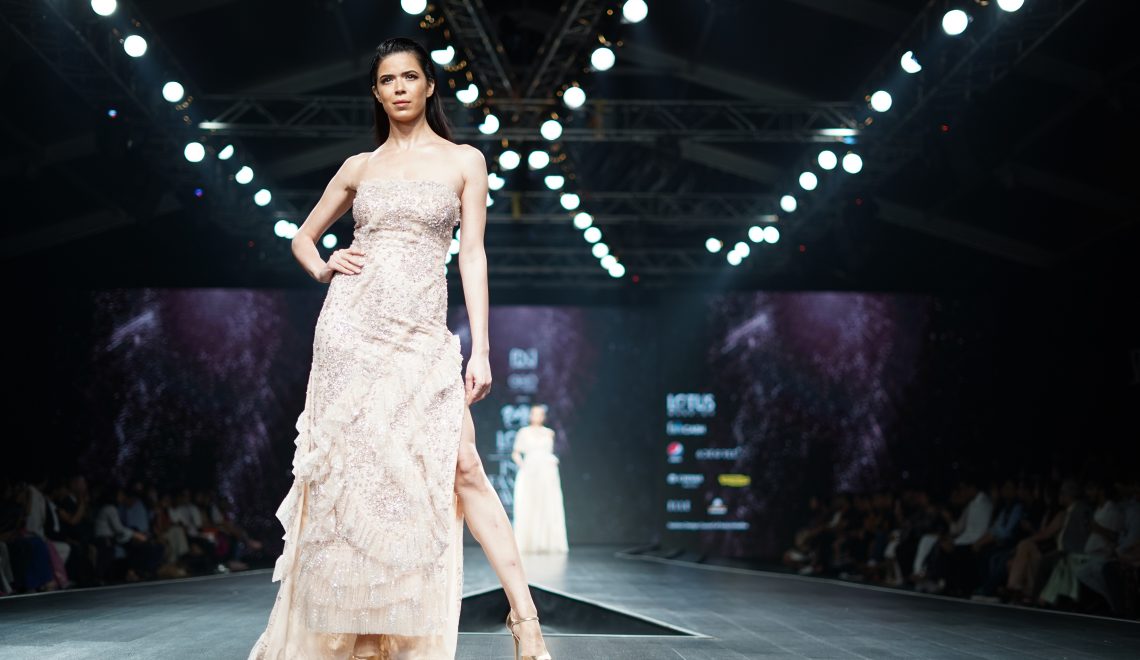
The simplest version of a casting audit counts faces. A researcher looks at a defined set of campaign images or runway photographs, assigns a racial or ethnic identity to each visible model, and produces a percentage breakdown. Researchers describe this method as visual assessment, and it has acknowledged limitations: it assigns race based on appearance rather than self-identification, which introduces errors and oversimplifications, particularly for models with mixed heritage or non-obvious ethnic backgrounds. Despite these limitations, it remains the most commonly used method in large-scale casting audits because it can be applied to large image sets without requiring researcher access to model demographic data.
A more sophisticated audit goes beyond face-counting. It tracks position within the campaign: which model leads the campaign, which model appears on the cover, which model gets the solo shot and which appears in the group. It tracks recurrence: which models are booked once and not again, and which become recurring faces for the brand. It tracks the campaign’s media placement: which images appear on billboards and which are confined to the brand’s social channels. Each dimension produces a different count, and the differences reveal something about the distinction between token inclusion and structural casting change.
The most critical dimension of a sophisticated casting audit is the one that requires the most information: economics. What were the models in this campaign paid for? The pay gap in fashion modelling by race is documented but inconsistently reported, because individual model fees are commercially confidential and the data depends on self-reporting or leaks from agents. What can be measured publicly is the indirect economic indicator: which models become brand ambassadors with long-term contracts and which are booked for single campaigns. The ambassador appointment is where the sustained economic relationship between a luxury brand and a model exists. The number of appointments reflects whose relationship with the brand is valued beyond its immediate commercial use.
What the Data Shows
The aggregate picture from casting data across 2024 and 2025 describes a fashion industry in which racial representation has measurably increased from its low points in the early 2000s, while remaining structured around white-majority representation at the top tier of luxury and campaign casting.
Shaare Agency’s April 2026 analysis of the French market found that 28% of models in 2025 French castings were racialised, compared to 14% in 2020. Of over 2,000 French advertising campaigns analysed in 2025, 62% included at least one non-traditional model, compared to 23% in 2019. This is a substantial increase over six years. The same analysis found that 85% of Parisian high fashion remains faithful to classic measurements and that only 34 of 450 Paris 2025 prêt-à-porter shows included larger sizes. That luxury is specifically the segment most resistant to change: ‘Luxury remains attached to a Eurocentric aesthetic. Some brands systematically place a Black or Asian model to check the diversity box without real editorial thought.’
The distinction in that last observation is between presence and position. A campaign that includes a model of colour in a secondary or group position while casting a white model in the lead position has changed its percentage count without changing its hierarchy. The percentage is real. The hierarchy is also real. A casting audit that counts only the percentage misses the hierarchy.
‘Visual diversity is the easiest form of diversity to achieve.’ That observation, from a working casting director speaking to Coveteur in June 2026, is the audit’s central problem in compact form. Counting faces is the metric the industry has learned to manage. The question behind the faces has not been managed.
The Ambassador Gap
When casting directors in 2026 describe where the real casting decisions happen, they identify the ambassador role rather than the campaign slot as the site of the most meaningful casting. ‘When you look at who gets the important campaign spots and the ambassador roles, it’s people with social media presence and reach,’ one casting director told Coveteur in June 2026. This observation has two dimensions. First, ambassador selection is driven as much by follower count and engagement metrics as by aesthetic fit with the brand. The second, which the observation leaves unstated, is that social media presence and reach are themselves products of prior visibility: a model consistently cast and promoted by major brands over several years builds the follower base that then qualifies them for ambassador selection. The metrics that appear to be objective measures of the market’s preference are in fact the accumulated product of prior casting decisions.
The ambassador count for major luxury houses over any five years produces a different picture from the campaign count. Campaign appearances are diffuse across hundreds of models; ambassador appointments are concentrated. The concentrated count reveals whose sustained commercial relationship with luxury the industry considers worth investing in, and that count has diversified more slowly than the campaign count the industry uses to demonstrate progress, even as casting diversity has nominally improved.
The Diversity-Washing Question
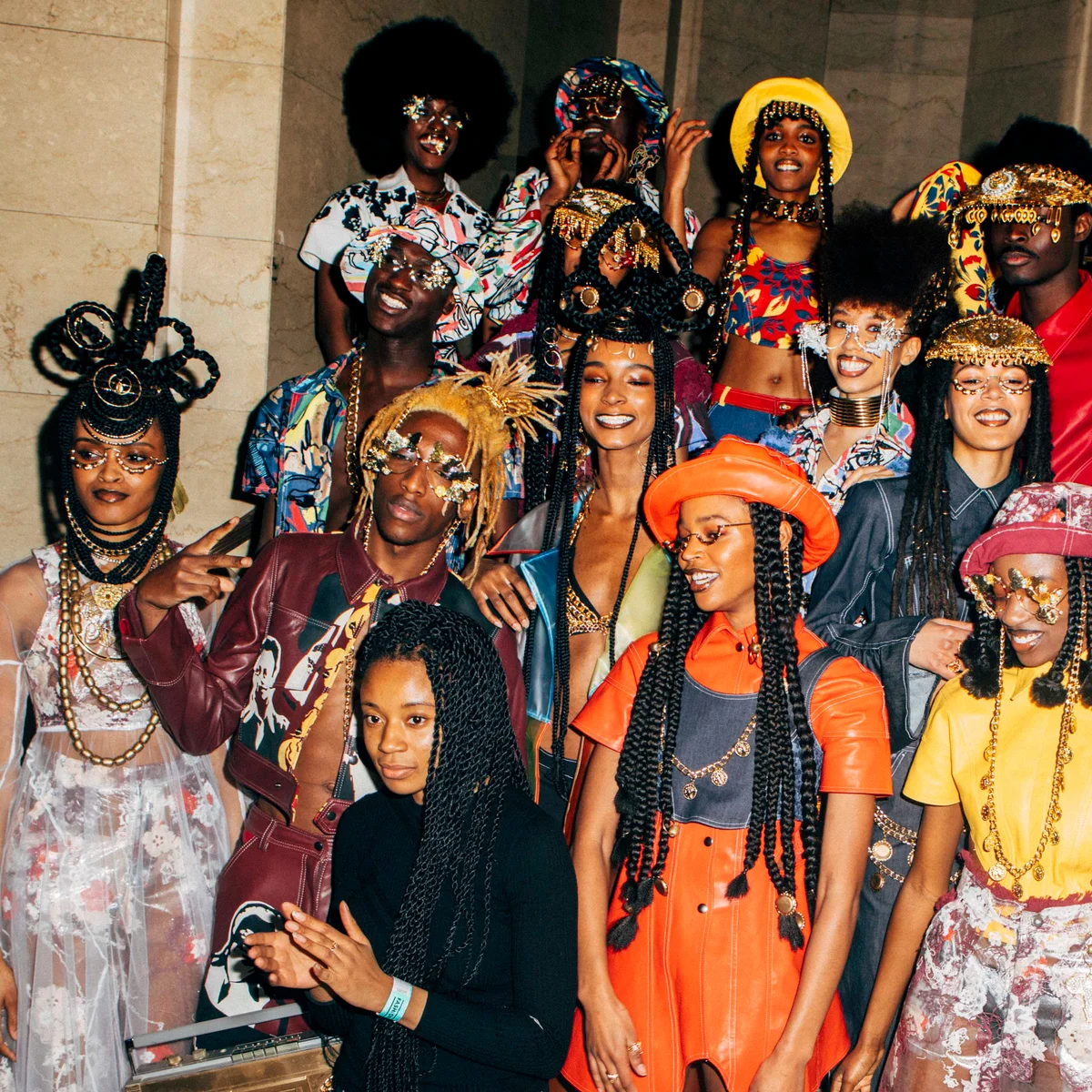
A 2026 peer-reviewed study published in the SAGE Journals investigated how Black consumers perceive their representation in fashion advertising, examining whether current portrayals reflect authentic inclusion or diversity-washing. The study uses semiotic analysis to assess not just whether Black models appear in campaigns but how they appear, what roles they occupy and what narrative the campaign constructs around their presence. The question it asks is the same as this article’s, but from a different methodological position: does inclusion in the count correspond to meaningful representation, or does it function as evidence of the brand’s diversity performance without changing the structural relationship between the brand and the communities whose image it uses?
A related finding from Mintel’s research into luxury brand diversity: 55% of Brits reported that brands’ support for minority groups can feel inauthentic. A consumer’s instinct that something is performative is not the same as systematic proof that it is. Still, it suggests the performance isn’t convincing the audience it is nominally directed at.
The CSA 2025 study, analysed in Shaare Agency’s April 2026 report, found that 73% of millennials and Gen Z are actively boycotting brands with unrepresentative campaigns. The number is striking because it is high enough to represent a genuine commercial pressure rather than a marginal concern. If that finding is directionally accurate, brands whose campaigns remain unrepresentative are not only failing an ethical standard; they are failing the commercial calculation that should make diversity in their own self-interest. The fact that the pattern persists despite that commercial pressure is the data point that requires a structural explanation rather than a market-preference one.
What the Audit Cannot Measure
A casting audit of campaign images has two constitutive blind spots that limit what the number can tell you.
The first is behind the image. A campaign photograph shows who was cast. It does not show who was considered and not booked, who was submitted by their agency and not called back, who was scouted and not signed, and who was never presented to the client because the agency’s own casting assumptions filtered them out before they reached the decision-maker. Visible casting is the outcome of a pipeline whose earlier stages are not captured in the campaign image and are not available to the auditor. An industry where diverse models are cast at the final stage of a pipeline that remains non-diverse at the scouting and agency stages produces diversity at the point of visibility while maintaining non-diversity at the point of formation.
The second is after the image. A campaign photograph shows that a model was cast. It does not show what was agreed, what the model was paid for, whether they were credited, whether they approved the final images, whether the shoot was a positive experience, or whether the brand booked them again. The cast model is not necessarily the included model. The included model is the one whose relationship with the brand extends beyond a single campaign appearance.
The Audit as Evidence in a Larger Argument
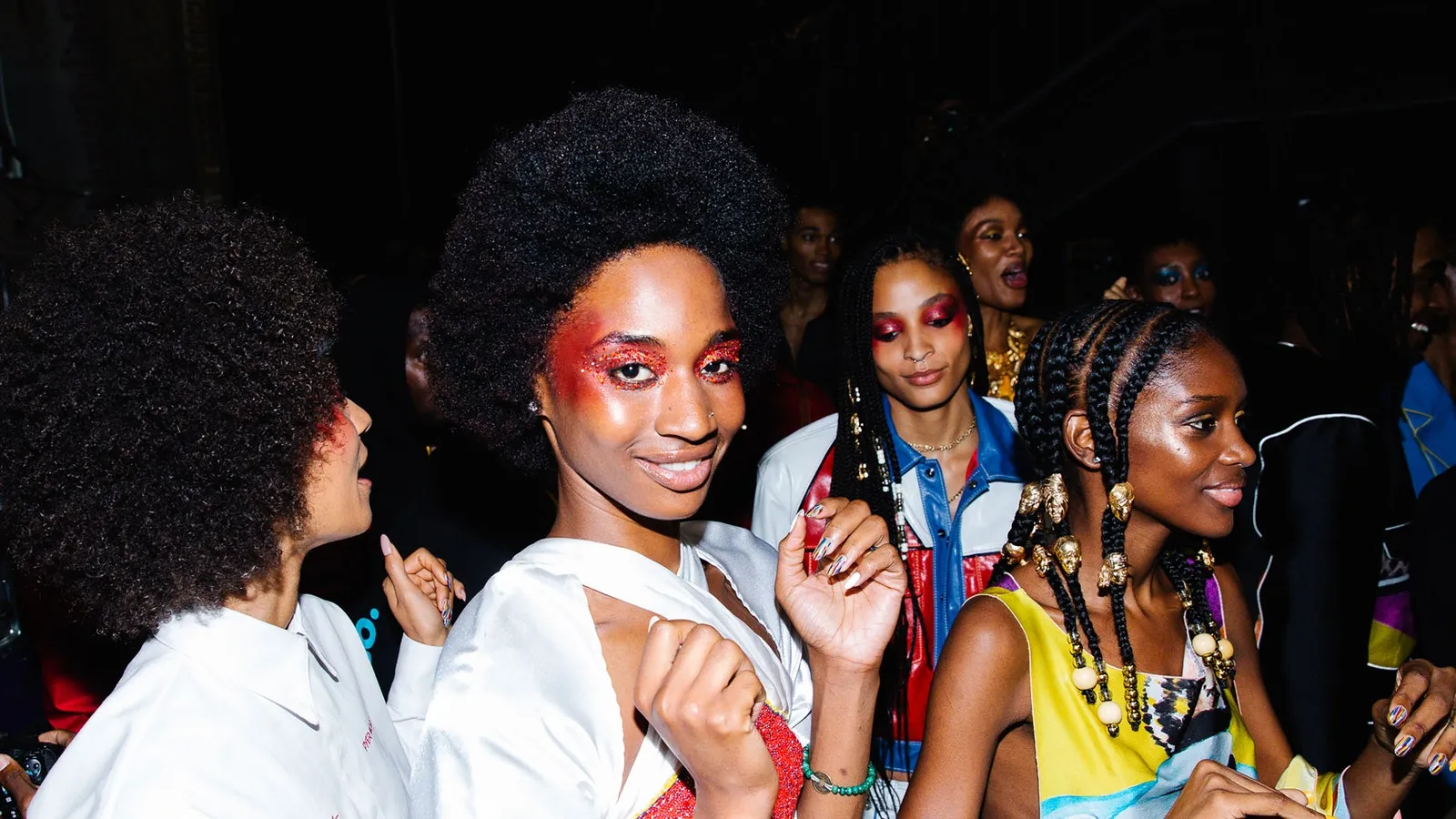
As Omiren Styles has established in its analysis of the documentation gap in fashion supply chains, existing records do not always attribute credit correctly. The casting audit attempts to produce a record where the fashion industry’s own records are incomplete or inaccessible. The industry records its casting in the campaign images themselves: who appears. What it does not systematically record, make public, or submit to external audit are the pipeline decisions, pay rates, and ambassador-appointment rationale that determine whether the campaign image reflects structural change or managed optics.
As Omiren Styles has established, in its analysis of how African fashion brands can expand without flattening their design language, the most meaningful engagement with African fashion from the international industry is not a function of how many Black models appear in a campaign but of whether the commercial relationship between the brand and the African creative economy is one of extraction or of genuine engagement. The casting count is a proxy for this question, but not an answer. A luxury brand that increases its use of Black models in campaigns without increasing its commissioning of Black photographers, Black creative directors or Black designers, and without investing in the African fashion industry as an economic partner rather than an aesthetic reference, has changed the cast count without changing the structural relationship.
The Omiren Argument
The luxury casting audit is a useful instrument and an insufficient one. It is useful because it produces a number that is harder to dispute than a qualitative claim: when 54% of campaign castings in 2025 are white models in an industry whose customer base and creative reference points are global, the number is evidence of a gap between what the industry says about representation and what its campaigns show. The number creates accountability.
The audit is insufficient because it measures the symptom, not the cause. The cause is the luxury fashion industry’s decision-making architecture: who runs the agencies, who sits in the creative director’s chair, who controls the budget for campaign photography, and who is in the room when the casting shortlist is approved. Those decisions aren’t recorded in the campaign image and cannot be extracted by counting faces. The casting audit is the evidence. The structural analysis is what the evidence is for.
As Omiren Styles has argued throughout its coverage of fashion representation and the Global South, the Global South made fashion and never got credit. The casting count is one dimension of that argument: who appears in the image that fashion uses to represent itself. But appearance in an image is not credit. Credit is the sustained economic relationship, the ambassador contract, the creative directorship, the commissioned work, the attributed design. The casting audit counts who is visible. The structural audit counts who is paid, who decides and who owns. The second count is the one the industry has not yet submitted to.
ALSO READ
- When Fashion Photographs Repair, Does It Show the Skill or Just the Worn Garment?
- The Documentation Gap: What Fashion Supply Chains Still Fail to Record
- How African Fashion Brands Can Expand Without Flattening Their Design Language
- The Global South Made Fashion. It Just Never Got Credit.
Frequently Asked Questions
What is a casting audit?
A casting audit is a systematic analysis of who appears in a defined set of fashion campaigns, runway shows or editorial features, categorised by race, body size, age, gender presentation and disability status. The most basic version counts the percentage of castings in each category across the defined set. More sophisticated audits also analyse position within the campaign (lead versus group, cover versus interior), recurrence (booked once or repeatedly), ambassador appointments and economic indicators such as reported pay rates. A casting audit aims to build an evidence base for claims about representation in fashion, moving beyond individual examples and brand statements to aggregate data that reveals patterns across a defined scope.
What does the data show about racial representation in luxury fashion campaigns?
The Fashion Spot’s 2025 Diversity Report found that white models made up 54% of major fashion campaign castings in 2025. Rawshot.ai’s analysis of Fashion Month casting found that 48.6% of castings at Fall 2024 Fashion Month were models of colour. In the French market, Shaare Agency found that 28% of 2025 castings were racialised models, up from 14% in 2020. These figures reflect meaningful improvement from the early 2000s. They do not reflect parity with the global population or the global customer base of luxury fashion. The luxury segment specifically has been identified as the slowest to change, with French luxury specifically noted for maintaining Eurocentric aesthetic standards at the top campaign tier.
What is the difference between diversity in campaigns and structural inclusion?
Diversity in campaigns measures who appears in the final image. Structural inclusion measures whether the people who appear in campaigns are genuinely embedded in the brand’s creative and commercial relationships, rather than being cast to demonstrate diversity performance. The distinction appears most clearly in ambassador appointments: brands with relatively diverse campaign castings may have markedly less diverse ambassador rosters, because ambassador selection reflects a longer-term commercial commitment that reveals the brand’s actual investment in sustained relationships with models of colour. A casting director interviewed by Coveteur in June 2026 described visual diversity as the easiest form of diversity to achieve, which is an industry admission that campaign diversity and structural inclusion are separable.
What is the ambassador gap?
The ambassador gap is the difference between a brand’s percentage representation of models of colour in campaign images and its percentage representation of models of colour in ambassador appointments. Campaign castings are diffuse: hundreds of models appear across a season’s worth of campaigns. Ambassador appointments are concentrated: a brand may have between two and ten ambassadors at any given time. Because ambassador appointments reflect a sustained economic relationship with the brand, ambassador count is a more precise measure of structural casting commitment than campaign count. The ambassador gap persists at luxury houses where campaign diversity has nominally increased because the commercial logic of ambassador selection has changed more slowly than the campaign logic of visible diversity.
How do consumers respond to fashion campaigns they perceive as unrepresentative?
A CSA 2025 study cited in Shaare Agency’s April 2026 analysis found that 73% of millennials and Gen Z are actively boycotting brands with unrepresentative campaigns. Mintel’s UK research found that 55% of Brits report that brands’ support of minority groups can feel inauthentic. A 2026 peer-reviewed study in the SAGE Journals examined how Black consumers perceive representation in fashion advertising, including whether portrayals reflect authentic inclusion or diversity-washing. The combination of these findings suggests that fashion’s primary growth demographic has a higher capacity to identify and respond negatively to performative diversity than to genuine structural inclusion, and that the industry’s current approach, which prioritises campaign diversity over ambassador and structural diversity, is generating the consumer response that corresponds to its actual practice.
EXPLORE MORE
Read the full Critical Analysis and Representation and Casting coverage at Omiren Styles for ongoing analysis of casting patterns, representation data and the structural questions behind fashion’s diversity claims. Discover travel and heritage intelligence across Africa, the Caribbean and Latin America at Rex Clarke Adventures.