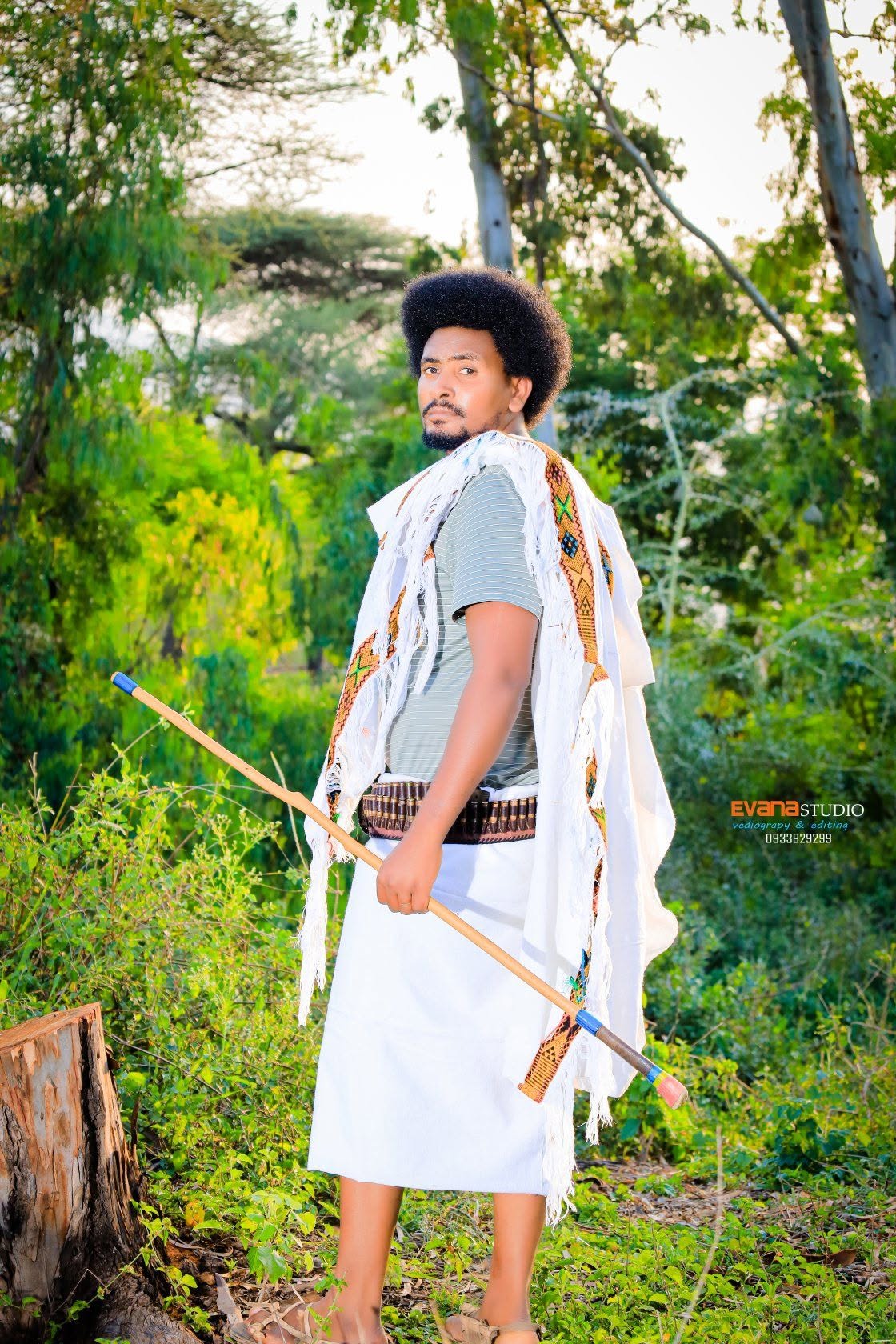
In the global lexicon of high-end fashion, menswear has found itself locked in a perpetual cycle of replication. While metropolitan runways constantly cycle through structural shifts, oscillating between hyper-tailored sportswear and fluid, oversized silhouettes, the core philosophy remains largely urban. Designers routinely strip clothing of its primal purpose: survival. Yet, tucked away within the dramatic topographical fractures of the Horn of Africa, down in the scorching river valleys and lowland plains of Wollo, Bete Amhara, and northern Shewa, an entirely separate universe has existed for centuries. This is the domain of the Lowland Amhara ensemble: an uncompromising masterclass in climate mitigation, environmental chemistry, and deeply complex behavioural codes.
Traditional clothing from this historic region is frequently consolidated into a single, uniform category defined by the pristine white cotton of the cool highland plateaus known as Eje Tebab. But descend thousands of feet into the punishing microclimates of the valley rifts (Kolla), and that immaculate highland aesthetic dissolves. In its place emerges an outfit built for intense heat, jagged volcanic rock, and defensive utility. This masculine uniform rests on four foundational pillars: the gonbiso (ጎንቢሶ) waist wrap, the translucent erbo (እርቦ) shoulder cape, the pristine Mewata dula (መዋጣ ዱላ) walking sceptre, and the back-strapped tereq chama (ጥርቅ ጫማ) toe-slip shoe. Far from being a mere regional costume, this attire is a brilliant design system in which every textile treatment, structural length, hidden border, and raw material is dictated by the environment and unwritten social protocol.
Explore the lowland Amhara men’s ensemble: the gonbiso wrap, erbo cape, Mewata dula staff and tereq chama shoes, and the butter-cured cotton behind it.
THE GONBISO
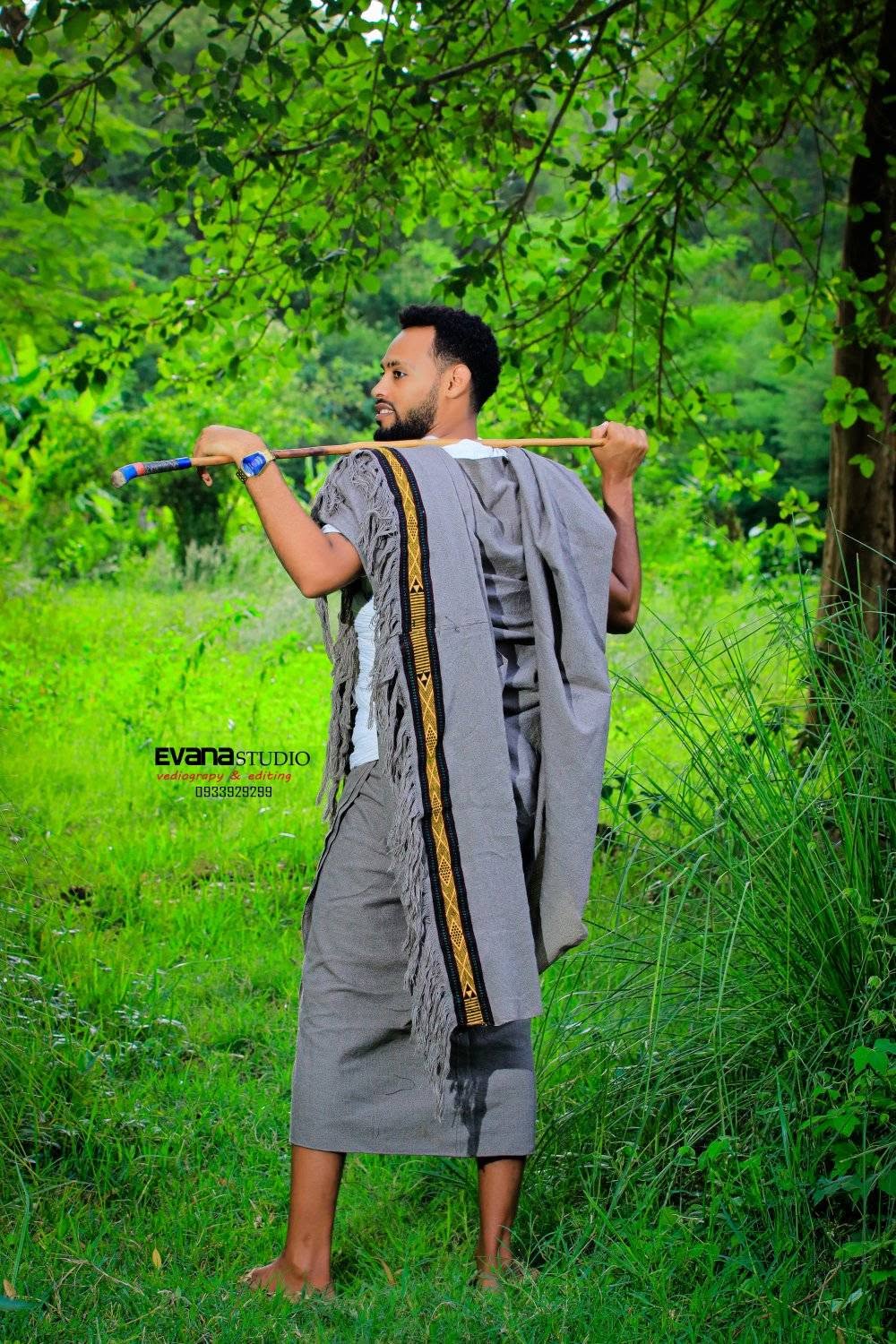
At the absolute epicentre of this lowland sartorial system lies the gonbiso (alternatively spelt genbiso or natively pronounced (ጎንቢሶ). The garment is a specialised, traditional waist wrap or loincloth (shirit) woven by local artisans. Structurally, it is deceptively simple: a broad, rectangular sheet of hand-loomed cotton fabric. However, the gonbiso’s engineering lies in how it balances the brutal demands of a high-temperature environment with the cultural requirement for masculine modesty and readiness.
Unlike the voluminous, multi-layered garments found in the mountainous areas, the gonbiso is streamlined to prevent excess fabric from trapping body heat. It is woven from natural, unbleached cotton threads, with a raw texture that lets air circulate freely around the lower body. The structural custom dictating how the gonbiso is mounted to the body is exceptionally rigid. By absolute cultural protocol, the bottom hem of the wrap must fall precisely across the mid-calf muscle. To wear it any longer would impede rapid movement through the rough lowland brush; to wear it any shorter would violate regional standards of mature public modesty.
The ornamentation of the gonbiso is a masterclass in aesthetic minimalism. In sharp contrast to the wide, multi-colored geometric embroidery (tibeb) that characterises festive highland tunics, the gonbiso features an exceptionally thin, single-finger-width border known as a tilet. This border is usually restricted to a muted, dark geometric line.
However, it is the strict cultural protocol governing this tilet that highlights the fascinating social semiotics of the attire. For everyday men, the wrap is worn inverted. The wearer rolls the thin embroidered border inward at the waist, burying it completely inside the folds of the fabric before securing the wrap with a tight woven or leather belt. When styled this way, the bottom hem of the wrap remains completely plain, raw, and functional.
In local youth and warrior culture, folding the gonbiso so that the border is hidden and flipping the garment upside down is an open, non-verbal declaration of an unyielding spirit (አልሸነፍም ባይ). It signals physical readiness, agility, and a defiance that defines the younger men of the valleys. Historically, if two young men crossed paths on a dust trail or at a regional market, both wearing their gonbiso inverted and rolled tightly at the waist, it served as a mutual acknowledgement that they were prepared to test each other’s physical prowess in traditional wrestling matches.
Conversely, allowing that thin embroidered tilet to be exposed at the bottom hem is an exclusive cultural privilege strictly reserved for senior elders with a recognised, heroic past. For an elder to let the border show at his calves is a silent, visual receipt of a lifetime of bravery, conflict resolution, and societal leadership. It commands immediate deference at community councils (ሽንጎ) and public assemblies, separating the young men who must conceal their borders from the veterans who have earned the right to display them.
THE ERBO
To complement the gonbiso, the upper body is managed with equal utilitarian brilliance. In the intense midday heat of the valleys, men frequently leave their torsos completely bare while working or herding livestock. However, when entering a marketplace, village centre, or holy ground, traditional decorum dictates an outer layer. The erbo (እርቦ) meets this need.
To understand the erbo, we must understand the mathematical logic embedded within traditional Amharic weaving terminology. The word ‘erbo’ literally translates to a quarter, or one-fourth. In the cooler highlands, a standard winter blanket wrap, the gabi or buluko, is composed of four heavy, dense layers of cotton woven together to insulate the body against alpine frosts. The erbo represents exactly one-quarter of that thickness. It is custom-woven as a single, ultra-thin, almost translucent layer of fine cotton fabric (fetel).
The erbo is the ultimate climate-appropriate accessory. It is an incredibly light, breathable scarf or cape that can be manipulated in seconds to match shifting environmental demands. During active travel under a scorching sun, a man will drape the translucent erbo flat across both shoulders, acting as an ambient shield that deflects UV rays without trapping a single ounce of body heat against the skin. If dust storms whip through the valley, the erbo is swiftly gathered and wrapped loosely around the head and mouth like a defensive turban. When physical labour requires total freedom of movement, it is folded into a narrow band and tied firmly around the waist over the gonbiso, acting as a supportive sash. It provides exactly the required coverage for traditional modesty while optimising heat dissipation.
THE BUTTER-CURING PROCESS
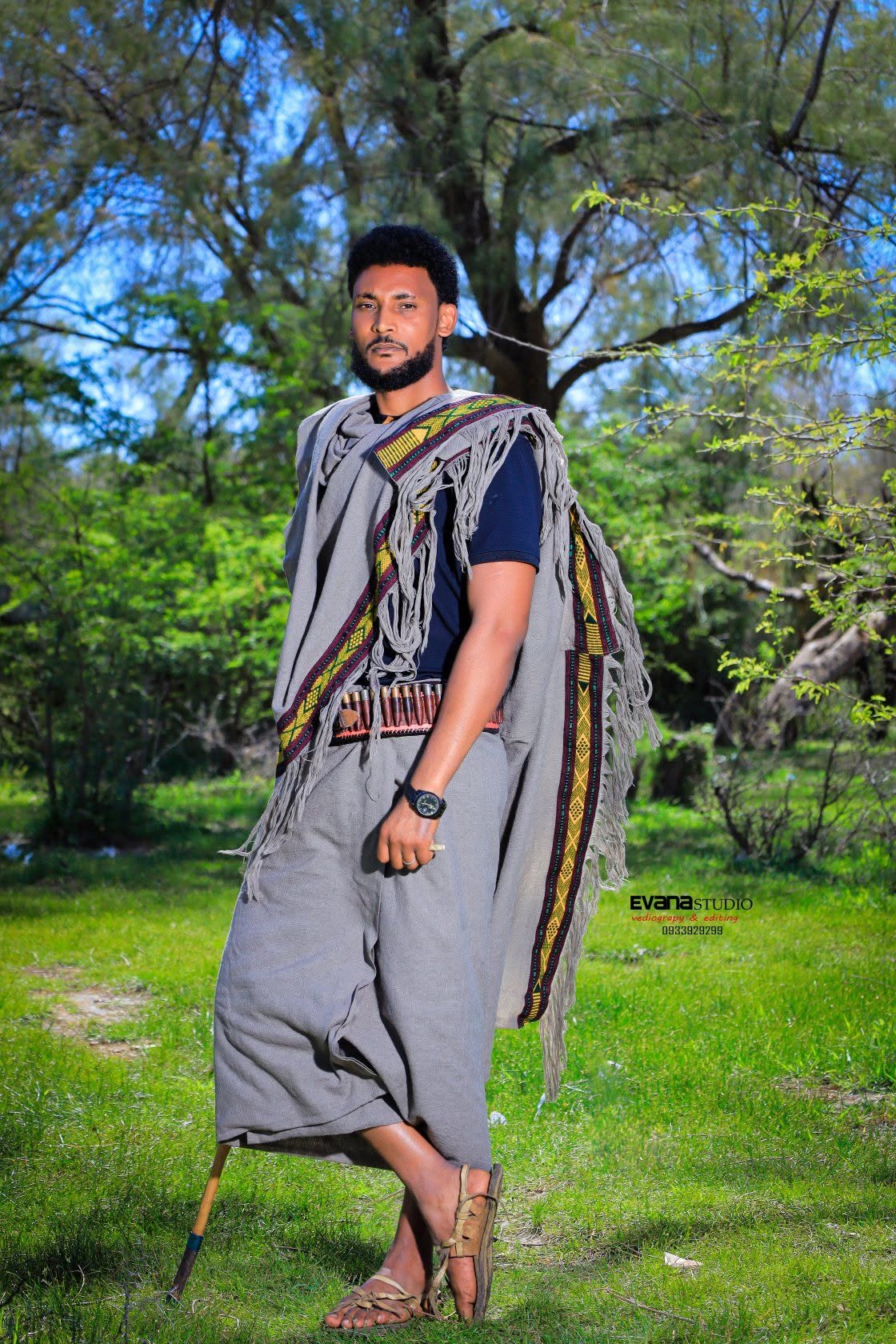
The defining characteristic of a genuine lowland ensemble is not its structural silhouette, but its colour and aroma. To an observer, the cotton of the gonbiso and erbo does not appear bright white; instead, it carries a distinct, smoky grey-brown shade, often described by locals as matching the hue of a heavy “winter cloud” (የክረምት ደመና). This iconic tone comes not from commercial dye or chemical pigmentation. Instead, it comes from an ancient organic conditioning process using plain, unrefined butter straight from the container.
In the valley landscapes, raw, untreated cotton is impractical. The dry heat makes the fibres brittle and easy to tear. To combat this, the hand-loomed fabric is soaked with fresh, unrefined butter. Once the textile is thoroughly saturated with the raw fats, the garment is spread out and left to cure under the baking lowland sun.
This simple application triggers a brilliant piece of environmental chemistry. The cotton fibres absorb the natural lipids, altering the material at a structural level. The process seasons the fabric, conceptually identical to seasoning a cast-iron skillet, making the cotton exceptionally tough, resilient, and supple.
Furthermore, this organic curing permanently transforms the cotton’s colour, turning the original off-white into that signature, cloud-grey patina. This shade serves a practical purpose: it naturally repels dust, resists sweat stains, and keeps the garment from looking instantly soiled during weeks of rugged outdoor use. The material becomes highly functional, requiring minimal washing in a climate where water is a precious, carefully guarded resource.
THE MEWATA DULA
An Amhara man dressed in a gonbiso and erbo never steps out into the valley empty-handed. His constant companion is the Mewata dula (መዋጣ ዱላ). This highly prestigious traditional walking stick serves as a practical tool, a defensive weapon, and a symbol of personal presence.
The name of this staff is tied directly to its geography of origin. The wood is harvested exclusively from Mewata, a rugged mountain locality historically celebrated for its native timber. Because of the Mewata region’s unique soil density and arid climate, the trees grow incredibly straight, tight-grained, and naturally dense. Wood cut from this locality does not warp when exposed to the fluctuating humidity of the lowlands, nor does it split or crack under the dry, intense heat.
Once an artisan harvests a straight branch from Mewata, it undergoes meticulous preparation. Artisans strip the bark and straighten the raw wood using localised heat treatments or weight-pressing techniques. Over months of handling, this treatment gives the Mewata dula a deep, polished, dark lustre that gleams in the sun.
In the valleys, the Mewata dula is essential. It helps navigate steep, loose volcanic rock pathways, brush aside thorny undergrowth, and manage livestock. Yet, its social role is even larger. When men gather for market disputes or community assemblies, the way they hold, lean upon, or plant their Mewata dula is a highly choreographed language of composure, authority, and masculine poise. It is a personal sceptre that grounds the entire outfit, transforming a simple wrap into a uniform of absolute dignity.
THE TEREQ CHAMA
The final foundation of the lowland ensemble is footwear, known natively as the ‘tereq chama’ (traditionally spelt ጥርቅ ጫማ). In an environment where the ground temperatures can soar to blistering heights and the trails are littered with sharp flint and volcanic gravel, footwear is a critical engineering requirement.
The Tereq Chama is uniquely constructed to balance maximum ventilation with secure physical stability. Structurally, it is built like an open-toe slip-on slipper, featuring a broad, heavy bottom made of premium Ethiopian cattle leather. This wide leather bottom is sturdy and comfortable.
However, a loose slipper or mule would easily fly off the foot when running, climbing, or herding animals down a steep valley ridge. To prevent this, the tereq chama features a structured leather strap that wraps securely around the back of the ankle. This back strap firmly anchors the shoe to the foot, ensuring it stays locked in place during high-exertion movement.
True to the region’s survivalist ethos, these shoes are crafted from dense, locally tanned leather that is massaged with the same unrefined butter used on the gonbiso. This constant treatment keeps the leather from hardening and cracking under the dry sun, maintaining a supple, comfortable interior that moulds perfectly to the shape of the wearer’s foot over time. The exterior leather frequently features subtle hand-tooled branding or geometric patterns, providing a quiet flash of artistry that rests elegantly beneath the mid-calf hem of the wrap.
THE GENDERED DOMAIN
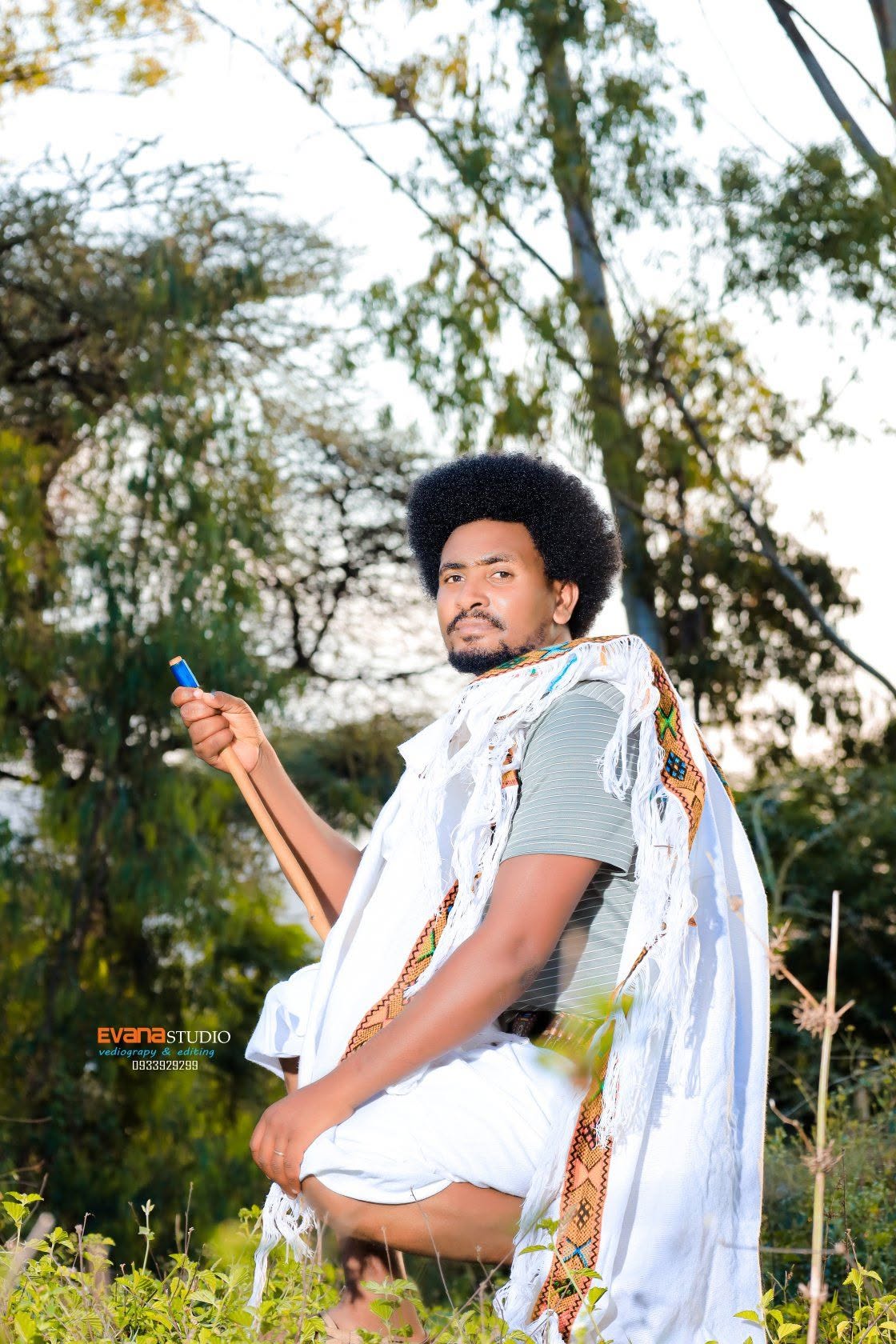
A rigid, defining principle of Amhara textile heritage holds that the entire lowland ensemble, the gonbiso wrap, the erbo cape, the Mewata dula, and the back-strapped tereq chama belongs strictly and exclusively to the male sphere.
Within this cultural matrix, fashion boundaries are not arbitrary aesthetic choices; they are deeply respected markers of gendered social responsibility and historical roles. The elements of the lowland uniform were forged through centuries of masculine activity: herding in punishing terrains, long-distance foot travel through wilderness trails, youth athletic wrestling, and village defence.
While modern international fashion houses often attempt to blur lines by converting historic drapes into unisex resort wear, traditional Amhara customs maintain a clear, respectful separation. Women command their own parallel universe of exquisite textile elegance, navigating the heat through the lightweight, ankle-length cotton dresses known as kemis and delicately embroidered netela wraps. This leaves the rugged architecture of butter-seasoned cotton, back-strapped leather-toe slippers, and walking sceptres to the men. It is a beautifully preserved system of dress that remains completely unswayed by outside trends, standing as an enduring triumph of authentic, environment-driven design.
Also Read:
- Kaba, The Royal Cloak of Ethiopia
- Eritrean Men’s Traditional Dress: Kidan Habesha, Gabi, and Why the Habesha Label Misrepresents It
- Sustainable Ethiopian Fashion: Handwoven Heritage Meets Global Responsibility
- The Art, Identity and Resilience of Borana Oromo Leather Attire, Ethiopia
The Omiren Argument
Read the lowland Amhara ensemble as a design system, not a regional costume. Every choice in it answers a condition: unbleached cotton for airflow, butter curing for durability, a mid-calf hem for movement, a back-strapped shoe for rough ground. The social codes sit on top of that logic, from the hidden or displayed tilet to the way a man carries his Mewata dula.
Omiren’s position is that this wardrobe belongs in any serious conversation about menswear, because it shows how climate, craft and conduct can be designed together. It also reminds us to name Amhara dress by place, since the lowland valleys and the cool highlands dress differently. Explore more heritage reporting at Omiren Styles.
Frequently Asked Questions
What is the lowland gonbiso?
The gonbiso is a traditional waist wrap, or loincloth, worn by Amhara men in the hot lowland valleys. It is a broad rectangle of hand-loomed, unbleached cotton. Custom requires its hem to fall across the mid-calf, allowing free movement through rough brush while meeting regional standards of modesty.
Why is lowland Amhara cotton cured with butter?
Raw cotton turns brittle in the dry valley heat and rips easily. Weavers soak the hand-loomed fabric in fresh, unrefined butter and cure it under the lowland sun. The fats make the cotton tough and supple, turn it a smoky grey-brown, and help it repel dust and resist stains, so it needs little washing.
What does the hidden or exposed border on the gonbiso mean?
Everyday men roll the thin embroidered border, called a tilet, inward at the waist, leaving the hem plain. Among young men, this inverted style signals readiness and an unyielding spirit. Letting the tilet show at the calves is a privilege reserved for senior elders with a recognised, heroic past.
What does the full lowland Amhara ensemble include?
It has four pillars: the gonbiso waist wrap, the translucent erbo shoulder cape, the Mewata dula walking stick and the back-strapped tereq chama shoes. Amhara heritage reserves the whole ensemble for men, while women wear their own dress, including kemis and netela wraps.