African fashion history does not begin at the loom. Across the Borana plains of southern Ethiopia, leather has long carried what cloth alone cannot: pastoral knowledge, social meaning, ceremony, protection and memory.
Borana Oromo leather clothing emerged from a way of life shaped by livestock, mobility, and the demanding ecology of the Horn of Africa, for the Borana Oromo, cattle, camels, goats, and sheep have never functioned merely as economic assets. They sit within systems of livelihood, kinship, belief and social organisation. Their hides, carefully prepared and adorned, become garments that protect the body while recording a community’s values.
The ancestral territory of the Borana Oromo extends across the semi-arid landscapes of southern Ethiopia and northern Kenya. In this environment, dress has historically responded to heat, cold nights, thorny vegetation, long journeys and ceremonial life. Leather offered durability, flexibility and local availability, but its importance reaches beyond utility.
Borana leather attire does not simply cover the body. It places pastoral knowledge, social standing and cultural continuity directly on it.
To look closely at a Borana leather dress is to see fashion operating as a public language. A garment may signal gender, age, life stage, ceremonial responsibility, family history and connection to the Gadaa system, the Oromo system of social and political organisation recognised by UNESCO as Intangible Cultural Heritage of Humanity. The leather garment is not an abandoned relic. It remains an important expression of Oromo identity, particularly at major cultural occasions and transitions.
Borana Oromo leather clothing carries pastoral knowledge, Gadaa identity and women’s craft traditions across southern Ethiopia.
Borana Leather Clothing Begins With Pastoral Knowledge
The making of Borana Oromo leather clothing begins with relationships between people, animals, land and labour. In pastoral societies, material culture often develops from close knowledge of the resources available in a particular environment. Leather offers a practical answer to a mobile life: it can protect the wearer, travel with them, withstand harsh conditions, and be repaired over time.
This does not make Borana leather attire merely functional. That framing misses the point. A carefully tanned, softened and decorated hide represents technical skill, aesthetic judgement and cultural knowledge developed across generations.
Women have traditionally held important roles in preparing, maintaining and ornamenting leather garments. The work demands patience. A hide must be cleaned, stretched, scraped, softened and treated until it can move with the body rather than resist it. The finished surface also needs to withstand wear, weather and repeated ceremonial use.
Different Oromo communities share related leather traditions, but writers and readers must avoid flattening them into a single uniform practice. Borana clothing has its own vocabulary, meanings and local forms. Its materials may include cowhide, goatskin and sheepskin, selected according to the kind of garment being made and the use it will serve. For a broader survey of how leather and cotton coexist across Ethiopia’s clothing traditions, the Wikipedia documentation of clothing in Ethiopia maps the country’s regional diversity.
From Hide to Garment: A Skilled Process
Leather clothing begins as a raw material, but Borana artisans transform it through labour-intensive processes of cleaning, drying, scraping, softening and preservation. The aim is not simply to make a hide wearable. The aim is to create a surface durable enough for pastoral life and refined enough for ceremonial dress.
After an animal is slaughtered, the hide requires immediate care. Artisans stretch it to dry, remove remaining tissue and hair where necessary, and work the surface until it reaches an even thickness. Repeated handling matters. A stiff hide cannot become a garment until skilled hands break down its resistance.
Traditional processing often draws on locally available resources, including natural oils, fats, smoke and plant materials. Butter and other fats can help soften leather, while smoking can contribute colour, scent and preservation. These methods show why Borana dress should be understood as material expertise, rather than simply as inherited costume.
A leather garment carries evidence of every stage of this work. Its weight, suppleness, smell, colour and texture tell a story about the craft behind it. What appears visually simple from a distance can contain hours of technical labour and knowledge that cannot be replicated through factory production.
The Gorfo and Women’s Cultural Authority
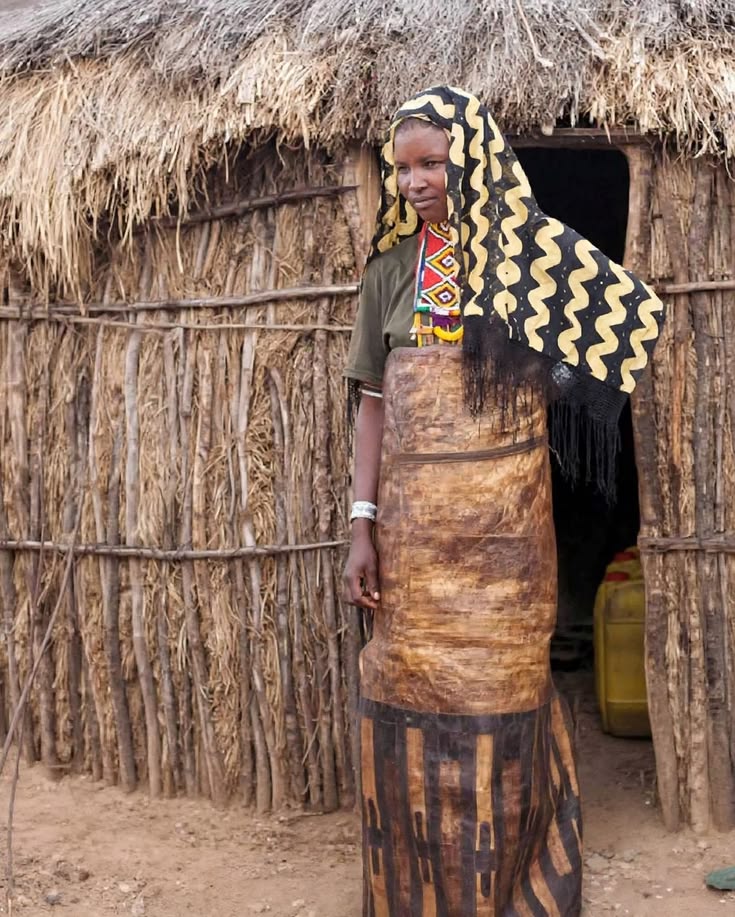
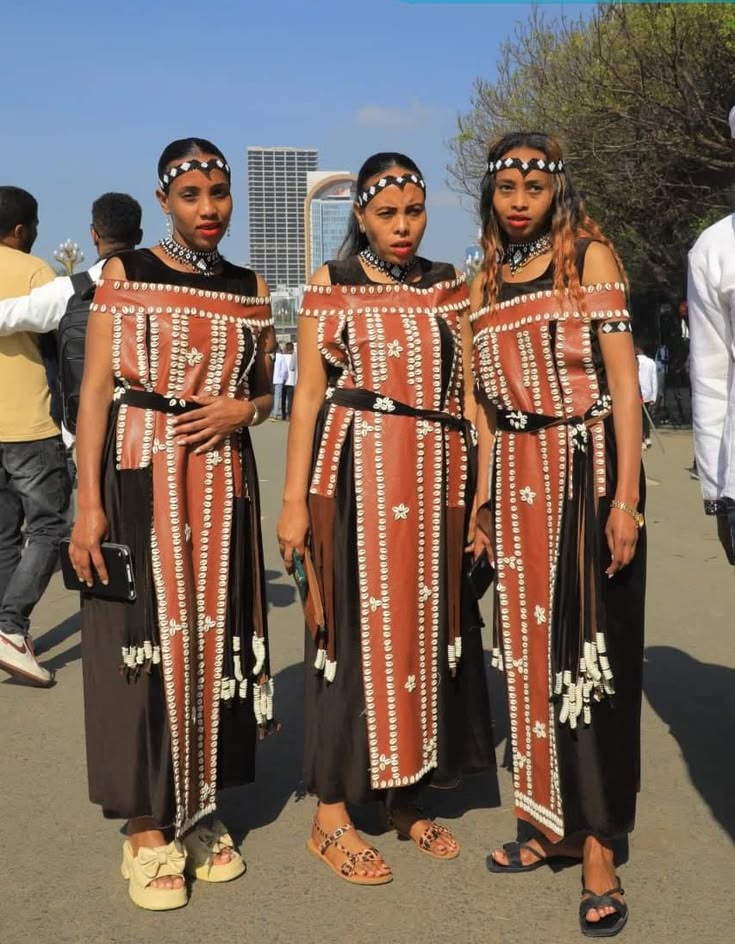
The gorfo, also rendered as gorfoo or gorffoo, holds particular significance within Borana women’s dress. UNESCO documentation identifies the gorfo as a leather dress made from cowhide and decorated with stripes; it also links the garment to women’s honoured maternal relationship with Dabballe, a category within the Gadaa system.
That context matters. The gorfo is not simply traditional clothing for women. It participates in a wider social world of respect, blessing, lineage, ceremony and communal recognition.
The exact construction and decoration of a gorfo can vary. Still, the garment commonly takes the form of a worked leather dress or wrap, secured around the body and shaped through careful cutting, joining and fastening. It belongs to a visual culture in which the body becomes a site for social meaning.
A gorfo can also represent collective female labour. It may involve knowledge passed down among mothers, aunts, older relatives, and younger women. A garment of this kind gains meaning through its making, its use, the ceremonies it attends and the memories it accumulates. It does not need a luxury label to qualify as an heirloom. Its value lies in the relationships, skill and continuity embedded within it.
Cowrie shells, beadwork and visual language
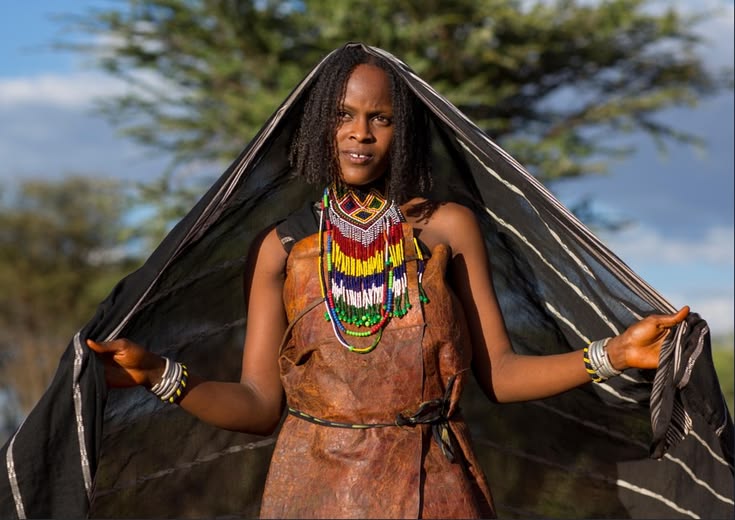
The contrast between dark treated leather and pale cowrie shells gives Borana women’s attire much of its visual force. Cowries, beads and other decorative elements can transform a hide into a surface dense with movement, sound and symbolic presence.
Cowrie shells appear across many African material cultures, but their meaning always depends on local context. Within Oromo dress traditions, shells and beadwork can mark beauty, social recognition, maturity, prosperity and ceremonial importance. The Wikipedia survey of Ethiopian clothing traditions documents how beadwork and shell decoration serve as a form of social language across multiple Ethiopian communities, not only among the Borana Oromo.
The visual impact is immediate. White shells catch the light against darker leather, while beadwork introduces colour, pattern and rhythm. Yet the ornament does more than beautify the garment. It can make status visible and turn dress into a form of public communication.
The details matter. A shell is never merely a shell when it appears on a ceremonial garment. A beaded belt is not just an accessory. In the right context, such elements can speak to womanhood, family standing, age, ceremonial role and the continuity of inherited craft.
Leather, Sound and Movement
Borana attire also challenges the narrow idea that fashion communicates only through sight. A leather garment moves differently from cotton, silk or synthetic fabric. It has weight. It creases, softens and responds to the wearer’s body over time. Its sound becomes part of its presence.
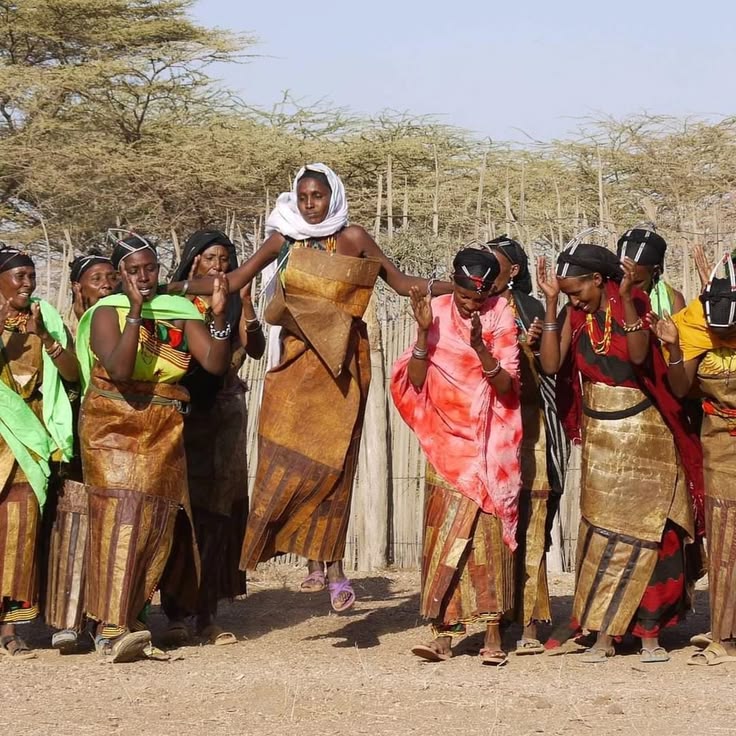
Decorative leather bands, belts, beads and metal elements can add another sensory dimension. As a wearer walks, the materials may rustle, chime or strike against one another. That sound can form part of the garment’s social expression.
This is one reason fashion writing must move beyond colour and silhouette. Clothing can hold scent, sound, texture, temperature, movement and memory. Borana leather attire makes that fact impossible to ignore. What does a garment say when it enters a space before its wearer has spoken? In Borana traditional dress, the answer can lie in the rhythm of leather, shell and ornament.
Men’s Leather Attire and Pastoral Function
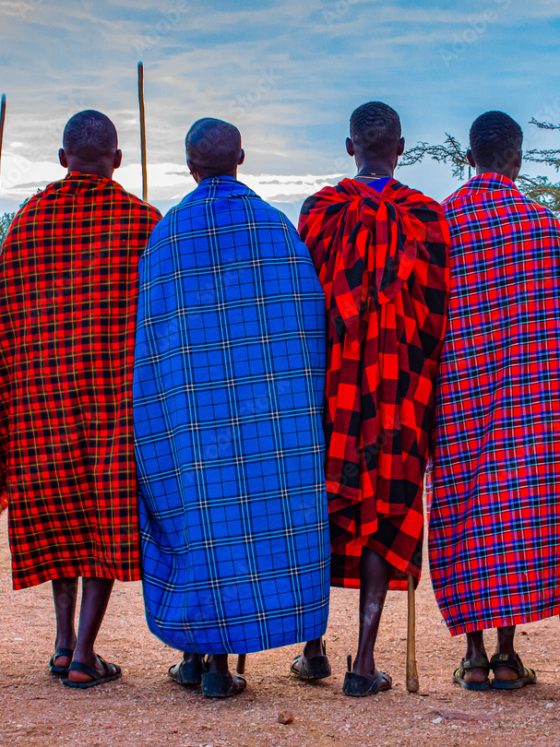
Borana men’s leather clothing has historically placed greater emphasis on mobility, shelter and physical protection, though utility should never be mistaken for a lack of cultural meaning. The qollo is widely described in Oromo dress traditions as a skin or leather cloak worn over the shoulders, often made from goat or calf skin. Its construction and usage can vary by community, occasion and individual status. In a pastoral environment, a cloak offers practical protection from temperature changes, vegetation and outdoor travel.
A hide cloak also makes sense within the logic of herding life. It can travel with the wearer, serve as a covering in changing weather and provide a durable layer during long periods away from home. Its design reflects an environment where clothing must work as protection rather than as spectacle alone.
Men’s leather wraps, skirts, and other garments may also be connected to age-grade progression and ceremonial life within the Gadaa system. The Gadaa framework regulates more than political leadership. It shapes social responsibilities, intergenerational relationships and the public meaning of adulthood. Dress can therefore become one visible expression of a person’s place within that system. UNESCO’s documentation of the Gadaa system records how this framework continues to organise civic and cultural life across Oromo communities today.
Gadaa: Clothing as a Social Record
The Gadaa system is an indigenous Oromo socio-political system organised through age grades, generational structures and rotating leadership. UNESCO added it to the Representative List of the Intangible Cultural Heritage of Humanity in 2016.
It would be a mistake to treat Gadaa as a historical curiosity or a decorative reference point for fashion writing. It is a living cultural framework whose meanings extend into ceremony, social conduct, leadership, land, responsibility and identity.
Within this framework, clothing can identify life stages and ceremonial standing. A leather garment may therefore do more than protect the wearer from the environment. It can register belonging. It can make an individual’s relationship to family, community and civic responsibility visible.
This is the deeper argument of Borana Oromo leather clothing: dress becomes a record. It carries the physical traces of pastoral life while also making a wider social world legible. The garment does not sit outside politics, spirituality or community. It belongs to all three.
Borana Leather and Ethiopian Textile Histories
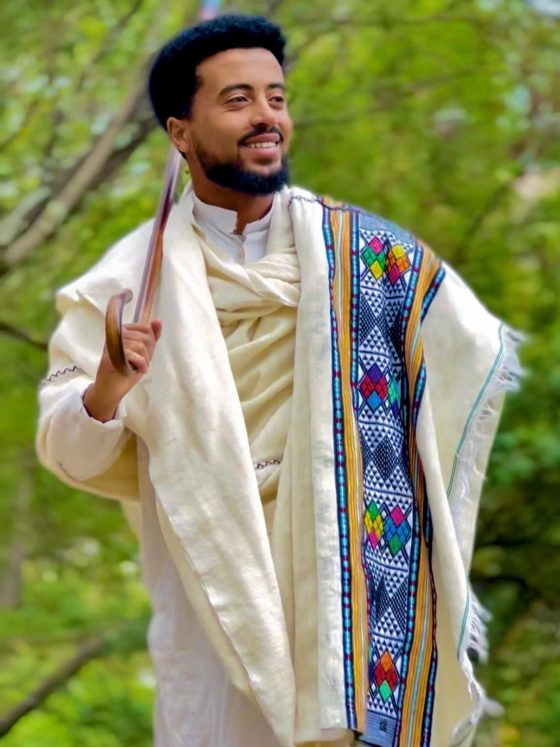
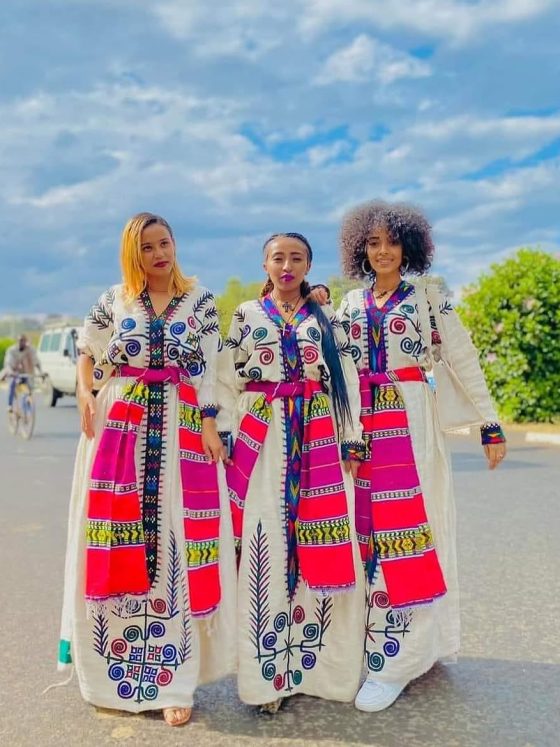
Ethiopia contains many rich and distinct clothing traditions. The highland textile cultures associated with cotton garments such as the netela, gabi and kuta have received substantial attention in visual culture, tourism and mainstream representations of Ethiopian dress. That attention can obscure the diversity of clothing systems across the country. For visitors planning to experience this breadth firsthand, the Rex Clarke Adventures Ethiopia travel guide maps out where and how to access the country’s regional cultures, from the northern historic circuit to the south.
Borana Oromo leather attire belongs to a different material history. It reflects pastoralism rather than settled cotton production. It responds to a semi-arid landscape rather than the agricultural settings that shaped many highland textile practices. It draws meaning from livestock, mobility and Gadaa social organisation.
This distinction should not produce a false hierarchy between leather and woven cotton, or between pastoralist and highland cultures. Ethiopia’s fashion and material history does not need a single dominant image. It needs better representation of its many regional, linguistic, ecological and cultural traditions.
The gorfo and qollo offer that corrective. They show that Ethiopian dress history cannot be reduced to white cotton wraps, embroidered borders or highland courtly imagery. Leather is also part of the country’s fashion archive, and Borana Oromo makers have preserved a sophisticated language of hide, shell, bead and body. For a broader view of how Ethiopia’s historical depth shapes contemporary heritage travel, read the Rex Clarke Adventures guide to ancient Axum and Ethiopia’s obelisks.
East African Leather Traditions Are Connected, Not Identical
Borana leather dress forms part of a wider East African history in which treated hides have served as clothing, protection, ceremonial material and social language. That shared material logic appears among many communities, but no two traditions carry the same meanings.
The Agikuyu (Kikuyu) of central Kenya also developed leather-based forms of dress before imported and industrially woven cloth became widespread. The Kikuyu githii has been described as a leather cloak worn by boys and men, while women’s garments and aprons could use leather, beadwork and shell decoration.
There are visual and material parallels between these traditions and Borana garments, including the use of hide as a base material and beads or shells to convey social significance. The Borana gorfo can also invite comparison with the Kikuyu miniuru, a decorated leather garment associated with women’s life stages in traditional Kikuyu dress.
Comparison is useful only when it remains precise. The point is not that all East African leather clothing is the same. The point is that many communities developed sophisticated forms of dress from local materials long before fashion institutions treated leather as a luxury category. For the broader geography of these cultures and how they connect across borders, read the Rex Clarke Adventures guide to the best countries to visit in East Africa.
East African leather traditions challenge a familiar fashion hierarchy. They remind us that craftsmanship does not become valuable only when it appears on a European runway, enters a luxury boutique or acquires a designer logo. It already possesses value through knowledge, technique, cultural meaning and community use.
Modernity Has Changed Daily Dress, Not Erased Meaning
Borana Oromo leather clothing now exists within changing social and environmental conditions. Drought, urbanisation, migration, education, religious change, globalised retail and the availability of inexpensive imported garments have altered everyday clothing practices across the Borana region.
Many people wear cotton, synthetic fabrics and contemporary ready-made clothing in daily life. That shift does not prove that traditional dress has disappeared or lost relevance. It shows that clothing systems adapt to changing economic realities.
A gorfo demands time, material knowledge and skilled labour. It cannot compete with a mass-produced garment on price or speed. Nor should it be judged by that standard. Its importance lies elsewhere: in ceremony, identity, intergenerational knowledge and the capacity to make a community visible to itself.
Traditional leather attire often takes on heightened significance at weddings, Gadaa ceremonies, cultural gatherings and other major milestones. In those moments, the garment does not become a costume. It reasserts continuity. It says that cultural change has not erased the authority of inherited knowledge.
The question is not whether Borana people wear leather every day in the twenty-first century. The more important question is this: who controls the meaning of Borana heritage as conditions change?
Borana Leather Clothing Is a Living Archive
Borana Oromo leather clothing deserves serious heritage coverage because it expands what dress can mean. It is not a trend reference, a mood board texture, or a generic example of “African heritage.” It is a material archive shaped by pastoral knowledge, women’s craft, ceremonial life, Gadaa social organisation and the realities of the Borana landscape. For travellers who want to understand how deep this material heritage runs, the UNESCO photo record of Gadaa system cultural practices offers visual documentation of the ceremonial life in which dress, like the gorfo, carries its meaning.
The gorfo, qollo and related garments show how dress can preserve memory without remaining fixed in the past. They make culture wearable. They carry the marks of labour, landscape, kinship and social responsibility directly on the body.
In the Borana plains, leather does not simply become clothing. It becomes continuity, made visible through handwork, movement and ceremony.
ALSO READ
- Ethiopia Travel Guide 2026: How to Go Beyond the Northern Circuit
- Ancient Axum and the Obelisks of Ethiopia: A Traveller’s Guide to the Kingdom of Aksum
- Best Countries to Visit in East Africa: A Complete Travel Guide
- Agbada Traditional Attire: History, Styles and Modern Trends for Men
- Igbo Fashion Identities: A State-by-State Guide to Wrappers, Weaves and Cultural Codes
Frequently Asked Questions
What is Borana Oromo leather clothing?
Borana Oromo leather clothing refers to the traditional dress system of the Borana Oromo people of southern Ethiopia and northern Kenya, made primarily from the treated hides of cattle, goats and sheep. It includes garments such as the gorfo, a decorated leather dress associated with women, and the qollo, a leather cloak worn by men. Unlike woven textile traditions, Borana leather attire reflects a pastoralist way of life in which livestock provide both livelihood and material culture. The garments carry social, ceremonial, and identity meanings associated with the Gadaa system of Oromo social organisation.
What is the gorfo and what does it mean in Borana culture?
The gorfo is a leather dress made from cowhide and decorated with stripes, recognised by UNESCO as part of the Borana Oromo women’s dress tradition. Beyond its physical form, the gorfo carries ceremonial significance connected to women’s maternal relationship to Dabballe, a category within the Gadaa system. It represents collective female knowledge passed through generations, gaining meaning through the ceremony it attends, the skill embedded in its making and the community recognition it receives. The gorfo is not everyday clothing. It is worn at major life transitions and ceremonial occasions, where it asserts cultural continuity and social standing. Full UNESCO documentation of the Gadaa system and its material culture provides further context.
What is the Gadaa system and why does it matter for understanding Borana dress?
The Gadaa system is an indigenous Oromo socio-political system organised through age grades, generational structures and rotating leadership. UNESCO added it to the Representative List of the Intangible Cultural Heritage of Humanity in 2016. It shapes social responsibilities, intergenerational relationships, civic conduct and the public meaning of adulthood. Within this framework, clothing is not only functional or decorative. It can identify a person’s life stage, ceremonial role and relationship to family and community. A leather garment connected to the adaa ceremony therefore becomes a social record as much as a physical covering.
How does Borana leather dress relate to other East African leather traditions?
Borana leather dress is part of a wider East African heritage in which treated hides served as clothing, ceremonial attire, and a form of social language across many communities. The Agikuyu of central Kenya, for example, also developed leather garments before industrially woven cloth became widespread, including the githii cloak and decorated leather garments associated with women’s life stages. The Borana gorfo invites comparison with the Kikuyu miniuru, a decorated leather garment used in similar ceremonial contexts. These parallels show that sophisticated leather dress traditions existed across the region, each with their own distinct meanings, materials and social logic.
Is Borana Oromo traditional leather dress still worn today?
Daily dress across the Borana region has changed significantly due to urbanisation, imported clothing, migration and economic shifts. Many Borana Oromo people wear cotton and synthetic garments in everyday life. However, traditional leather attire continues to be worn at ceremonies, weddings, Gadaa gatherings and major cultural occasions, where its significance is heightened rather than diminished by its relative rarity. In those moments, garments such as the gorfo and qollo do not become costumes. They reassert cultural continuity and make the authority of inherited knowledge visible.
Where can I learn more about Borana Oromo heritage and travel to southern Ethiopia?
Southern Ethiopia, including the Borana region, lies outside the itinerary most international visitors follow, which concentrates on the northern historic circuit of Addis Ababa, Lalibela, Axum and Gondar. Travellers interested in the cultural geography of the south should read the Rex Clarke Adventures Ethiopia travel guide, which covers the Ethiopia eVisa process, regional travel planning and how to move beyond the standard tourist circuit. The Britannica entry on the Borana Oromo also provides an overview of their territory, pastoralist economy and cultural organisation.
PLAN YOUR VISIT
Ethiopia rewards travellers who go beyond the standard northern circuit. The Borana region in the south offers a different encounter with the country’s cultural depth: a landscape shaped by pastoralism, ceremony and the Gadaa social framework. To plan your trip, start with the Rex Clarke Adventures Ethiopia travel and eVisa guide. For the full range of East African destinations to combine with Ethiopia, read the guide to the best countries to visit in East Africa. Follow Rex Clarke Adventures for ongoing coverage of African heritage, culture and travel.