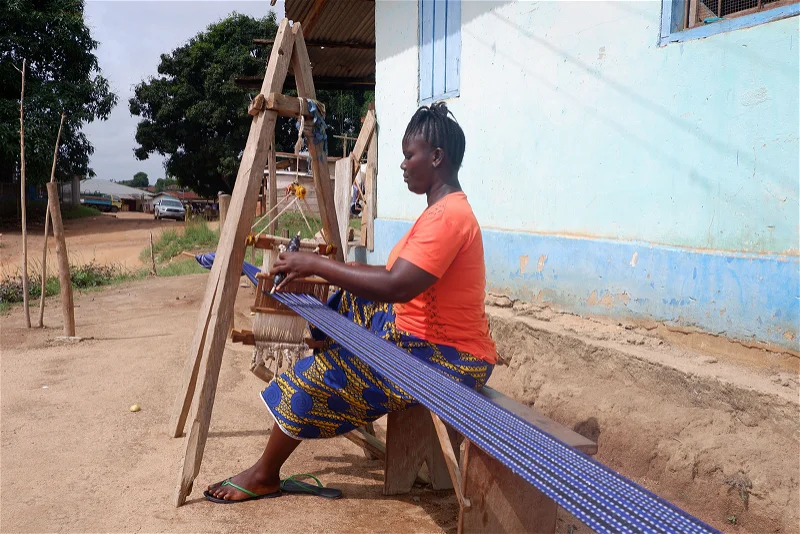
The African fashion market is worth 31 billion dollars. Liberia’s contribution to that figure is built on one of the most historically significant handwoven textiles in West Africa: country cloth, produced from locally grown cotton on narrow handlooms in Kolahun District, Lofa County, in the country’s northwest. As the Liberia Tourism Authority’s documentation of Kolahun confirms, Kolahun is one of the homes of Liberian country cloth, produced from homegrown Liberian cotton. Women at their wheels plait a variety of beautiful designs. That sentence understates what is happening in Kolahun. It is the seat of the weavers, in the words of Lofa County Superintendent J. Levalah Massaquoi, the recognised prime cotton-growing region of the country, and the location of the cooperative structures that are keeping the weaving tradition alive at a moment when it faces serious structural pressure.
Country cloth was once used as currency across West Africa. It was exchanged as dowry. Prominent male leaders wore it to mark formal occasions and signal political authority. The women who produce it in Kolahun today are not preserving a relic. They are maintaining the production system that gave the cloth its value in the first place, which is a different and more demanding thing entirely.
Kolahun is the seat of Liberian country-cloth weaving. The women keeping that tradition alive built a cooperative. Here is how it works and why it matters.
Liberian Country-Cloth Weaving Cooperative Kolahun: What the Cooperative Does
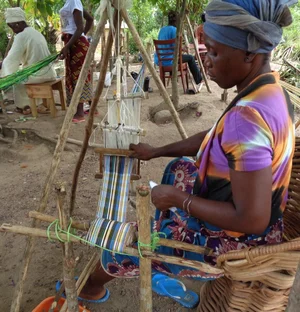
The Women’s Weaving Cooperative in Kolahun was formed in response to a specific crisis: the craft was dying. As Restore Hope Liberia’s documentation of the cooperative’s formation confirms, the craft had been slowly declining, primarily due to dwindling demand for the country cloth these women weave. The typical casual dress of women across Liberia today is a t-shirt and wrap skirt, both imported. The two women who were still skilled weavers and several others who were interested in weaving but lacked the requisite skills sat together and decided to form the Women’s Weaving Cooperative. In the heat of the afternoon, they made the decision that would keep the tradition alive.
The cooperative operates a structured apprenticeship programme. A six-month apprenticeship gives graduates the option to join the Women’s Weaving Cooperative on completion. Each cohort consists of twelve apprentices, with the two skilled weavers serving as the instructors. Sessions are held every Friday and Saturday before the women’s literacy lessons. The structure is deliberate: weaving instruction is paired with literacy development, treating craft survival and educational advancement as parts of the same programme rather than separate initiatives. The first dozen apprentices completed their training and graduated. A second cohort of twelve was subsequently enrolled.
Country cloth was once used as currency across West Africa and exchanged as dowry. The women in Kolahun who weave it today are not preserving a relic. They are maintaining the production system that gave the cloth its value in the first place, which is a different and more demanding thing entirely.
The Lofa Women Weaving Centre: Government Investment
The cooperative operates within a broader institutional framework that the Liberian government built in 2014. The Liberian government established the Lofa Women Weaving Centre through the Ministry of Commerce and Industry, a dedicated weaving facility designed to organise and train women in the region to produce high-quality textiles from locally grown cotton. The project was funded through the Liberia Innovation Fund for Empowerment (LIFE), with support from the Japanese government, representing the first formal government investment in the country’s cloth-weaving sector.
The Lofa Women Weaving Centre is a 3,000 square-foot facility incorporating a weaving component, a tailoring shop, and display and storage space for finished products. It is located in Kolahun District on 25 acres of land, with one acre housing the facility itself and the remaining 24 acres allocated to cotton farming. This integration of cultivation and production keeps the entire supply chain within the community: the cotton grown on the land adjacent to the centre is processed into the cloth sold from the same site.
The Wear Your Pride initiative, launched by the Liberian government in 2015, generated a substantial increase in demand for Lofa cloth in urban Monrovia. The female-led cooperatives in Kolahun now supply both local buyers in Monrovia and diaspora markets in the United States and Europe. The production method remains entirely traditional throughout this expanded supply chain: hand-spun cotton, natural dyes, narrow-loom strip weaving, and hand-stitched assembly. The cloth reaching diaspora customers in Chicago and London is made by the same methods that produced cloth exchanged as currency and dowry in pre-colonial West Africa.
What Country Cloth Is and How It Is Made
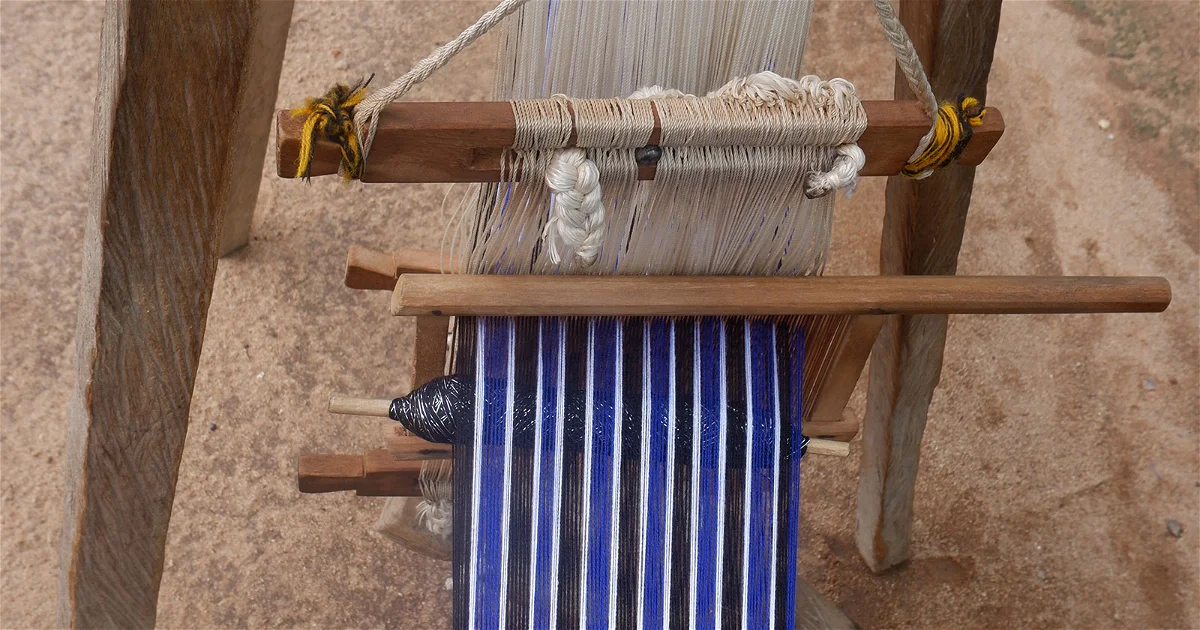
Country cloth is handwoven on narrow horizontal looms from locally grown cotton. The strips produced by these looms, typically five to eight centimetres wide, are sewn together along their lengths to create cloth of sufficient width for garments and wraps. The weaving process is technically demanding: maintaining the tension of the warp threads, coordinating the weft, and producing the specific patterns that distinguish Kolahun cloth require years of skill development. This is precisely why the apprenticeship programme runs for six months before graduates are considered skilled enough to join the cooperative.
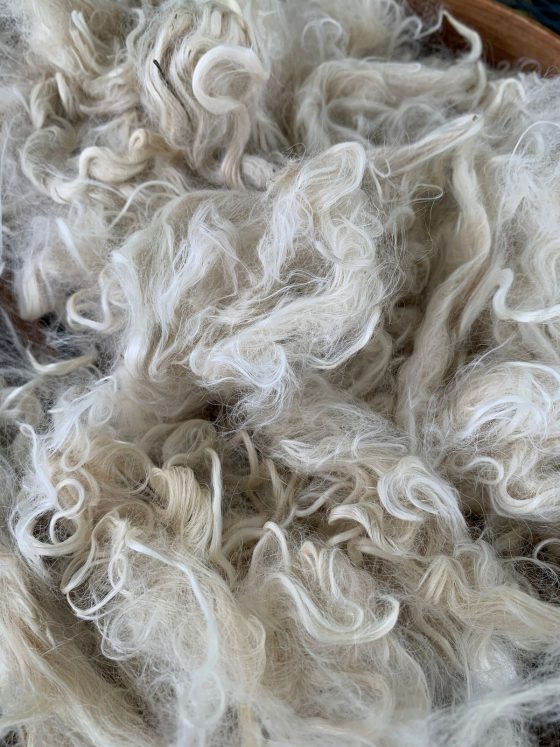
Natural dyes are used throughout the production process. Indigo, derived from the indigofera plant widely grown across West Africa, produces the deep blue-black that is one of country cloth’s most distinctive features. Other plant-based dyes produce the range of earthy tones, ochres, reds, and browns that characterise the cloth’s colour grammar. The dyeing process is itself technically complex, requiring knowledge of mordants, dye baths, and timing that is as demanding as the weaving. The two founding weavers of the cooperative carry this dyeing knowledge alongside their weaving skills.
The completed cloth is assembled by hand-stitching the narrow strips together along their lengths. The seam lines between the strips are part of the finished cloth’s visual grammar rather than concealed construction details. The strip-and-seam structure is evidence of the production method, worn on the surface. Anyone who knows country cloth can read how it was made from looking at it. This is the same logic that makes Gondar tibeb embroidery or Suriname Maroon patchwork legible as evidence of the community that produced it: the making process is not hidden. It is the argument.
The 2025 Burkina Faso Partnership
In April 2025, Kolahun received a three-day assessment visit from a Burkina Faso delegation focused on strengthening the textile industry. As FrontPage Africa’s reporting on the visit confirms, the delegation identified Kolahun District as a strategic hub for developing a local textile industry. The team included Emilien Ouedraogo, Liberia’s focal point in Burkina Faso; Justin Kouanda, the inventor of a large-scale weaving machine whose technology could transform the production scale; and Minadofini, an expert trainer in weaving, dyeing, and loom adjustment. Fifteen individuals were designated to be trained to produce the weaving machine locally, with additional training in textile weaving. Mary Kpoto, head of the Women’s Centre in Kolahun, received the delegation and pledged to utilise the prototype weaving machine for the growth and development of Kolahun.
The Burkina Faso partnership represents a significant moment for the cooperative structure. Emilien Ouedraogo emphasised the principle directly: the development of Africa must start with Africans investing in the continent. The partnership is specifically intra-African: Burkina Faso, which has its own sophisticated textile tradition in Faso Danfani cloth, brings technical capacity to Liberia’s weaving community rather than replicating the pattern of external investment that has historically extracted value from African craft communities without strengthening them. Superintendent Massaquoi framed the context precisely: the county has been actively seeking partners to revitalise the sector, ensuring that local cotton growers benefit from increased demand and better market access.
Why the Cooperative Model Matters
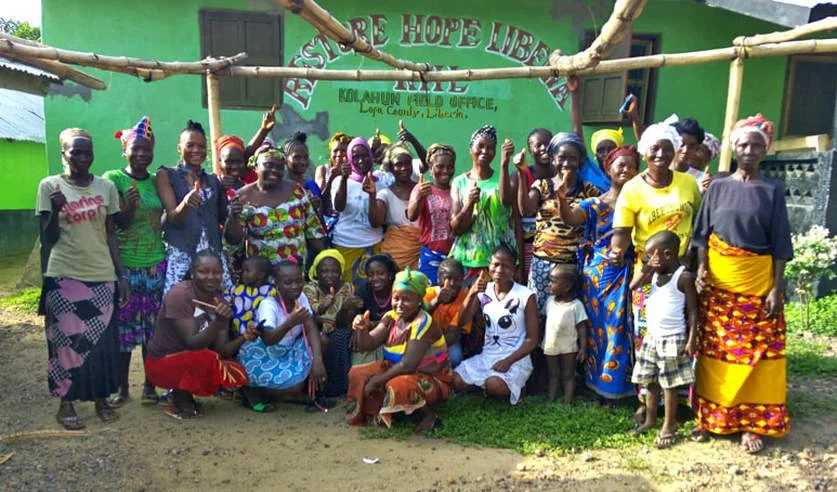
The Women’s Weaving Cooperative in Kolahun is a specific answer to a specific threat. When the two remaining skilled weavers looked at each other and decided to form the cooperative, they were not romanticising heritage. They were solving a production problem: the knowledge required to make country cloth was concentrated in too few people, and those people were ageing. The apprenticeship model is the solution. Twelve new weavers per cohort, trained by the two who still carry the knowledge, extending the base of skilled producers before the knowledge becomes irretrievably rare.
The cooperative model also addresses the economic problem. Individual weavers selling individual pieces have limited negotiating power with buyers and limited capacity to fulfil large orders. The cooperative pools production capacity, creates consistent quality standards, and enables the group to negotiate with buyers as a unit rather than as isolated producers. The female-led cooperatives supplying diaspora markets in the United States and Europe are not simply selling cloth. They are operating a supply chain that connects Kolahun’s cotton fields to international buyers through a production system entirely under community control.
The Omiren Argument
The Liberian country-cloth weaving cooperative in Kolahun is the most concrete example of cultural textile preservation as economic infrastructure in West Africa. The African fashion market is worth 31 billion dollars. The cloth produced in Kolahun was once used as currency across West Africa. The women who form the Women’s Weaving Cooperative decided in the heat of an afternoon to prevent that value from disappearing. They built a six-month apprenticeship programme, trained twelve women per cohort, paired weaving instruction with literacy development, operated within the institutional framework of the Lofa Women Weaving Centre, and expanded their supply chain to Monrovia and to diaspora markets in the United States and Europe. In April 2025, they received a delegation from Burkina Faso offering intra-African technical investment. The weaving machine prototype installed in Kolahun was not sent from Europe or America. It was developed by an African inventor and brought to Kolahun by an African delegation on the explicit principle that the development of Africa must start with Africans investing in the continent. Omiren Styles documents this cooperative not as a story about tradition surviving against the odds but as a story about women making precise, strategic decisions to protect a production system whose value they understood better than anyone outside the community. That is not preservation. That is governance.
ALSO READ:
- How African Designers Should Compare Fabric Suppliers Before Placing an Order
- Where Designers Actually Source Fabric: A Buyer’s Guide to Africa’s Major Textile Markets
- Sourcing Sustainable and Organic Cotton in Africa: From Burkina Faso’s Fields to the Finished Garment
Frequently Asked Questions
What is Liberian country cloth?
Liberian country cloth is a handwoven textile produced from locally grown cotton on narrow horizontal looms in Lofa County, particularly in Kolahun District. The weaving process produces narrow strips, typically five to eight centimetres wide, which are hand-stitched together to create cloth wide enough for garments and wraps. Natural dyes including indigo are used throughout production. The cloth was historically used as currency across West Africa, exchanged as dowry, and worn by prominent male leaders for formal occasions. Today it remains the formal garment for occasions requiring cultural declaration in Liberia.
What is the Women’s Weaving Cooperative in Kolahun?
The Women’s Weaving Cooperative (WWC) in Kolahun was formed when two remaining skilled weavers and several interested but less skilled women sat together and decided to prevent the craft from dying. The cooperative operates a six-month apprenticeship programme with twelve apprentices per cohort, taught by the two founding skilled weavers. Sessions are held on Fridays and Saturdays, paired with literacy lessons. Graduates of the apprenticeship programme earn the option to join the cooperative as full members.
What is the Lofa Women Weaving Centre?
The Lofa Women Weaving Centre is a 3,000 square-foot facility established in Kolahun District in 2014 by the Liberian Ministry of Commerce and Industry. It was funded through the Liberia Innovation Fund for Empowerment (LIFE) with Japanese government support, representing the first formal government investment in Liberia’s cloth-weaving sector. The centre includes a weaving component, tailoring shop, and display and storage areas. It sits on 25 acres, with one acre for the facility and 24 acres for cotton farming, integrating the entire supply chain within the community.
What happened with the Burkina Faso delegation to Kolahun in 2025?
In April 2025, a three-member Burkina Faso delegation completed a three-day assessment visit to Kolahun District. The delegation included Emilien Ouedraogo (Liberia’s focal point in Burkina Faso), Justin Kouanda (inventor of a large-scale weaving machine), and Minadofini (expert trainer in weaving, dyeing, and loom adjustment). The delegation installed a prototype weaving machine in Kolahun and designated 15 individuals for training to produce the machine locally. The partnership operates on the explicit principle of intra-African investment.
Why is Kolahun important for Liberian textiles?
Kolahun District in Lofa County is the recognised seat of Liberian country-cloth weaving, identified by the Liberian government as a prime cotton-growing region and a strategic hub for the country’s textile industry. It is home to the Lofa Women Weaving Centre, the Women’s Weaving Cooperative, and the female-led cooperatives that supply country cloth to buyers in Monrovia and diaspora markets in the United States and Europe. The 2025 Burkina Faso partnership selected Kolahun as the site for intra-African textile investment.
Explore More
Read the full Culture > Heritage & Identity section for Omiren Styles’ documentation of African textile traditions, craft cooperatives, and the communities building cultural and economic value from handwoven cloth across the continent.